This post contains affiliate links. As an Amazon Associate we earn from qualifying purchases, at no extra cost to you. Read our disclosure.
Key takeaways
- Pick the time you eat and count backwards. Cook times come from your recipes or the package, never from us.
- A one-oven kitchen needs one slot per oven temperature. Dishes at the same temperature share racks; others go before or after.
- Two burners hold two pots. Write which dish holds each one and when it moves off.
- In 2026, Dec 24 is a Thursday and Christmas is a Friday. Move cold dishes and anything your recipe says can be made ahead to Dec 24.
- Clear one fridge shelf and one counter section before the day. Space stalls a small kitchen as much as the oven does.
- For safe temperatures and leftovers, use the USDA pages linked below.
In this post8 sections
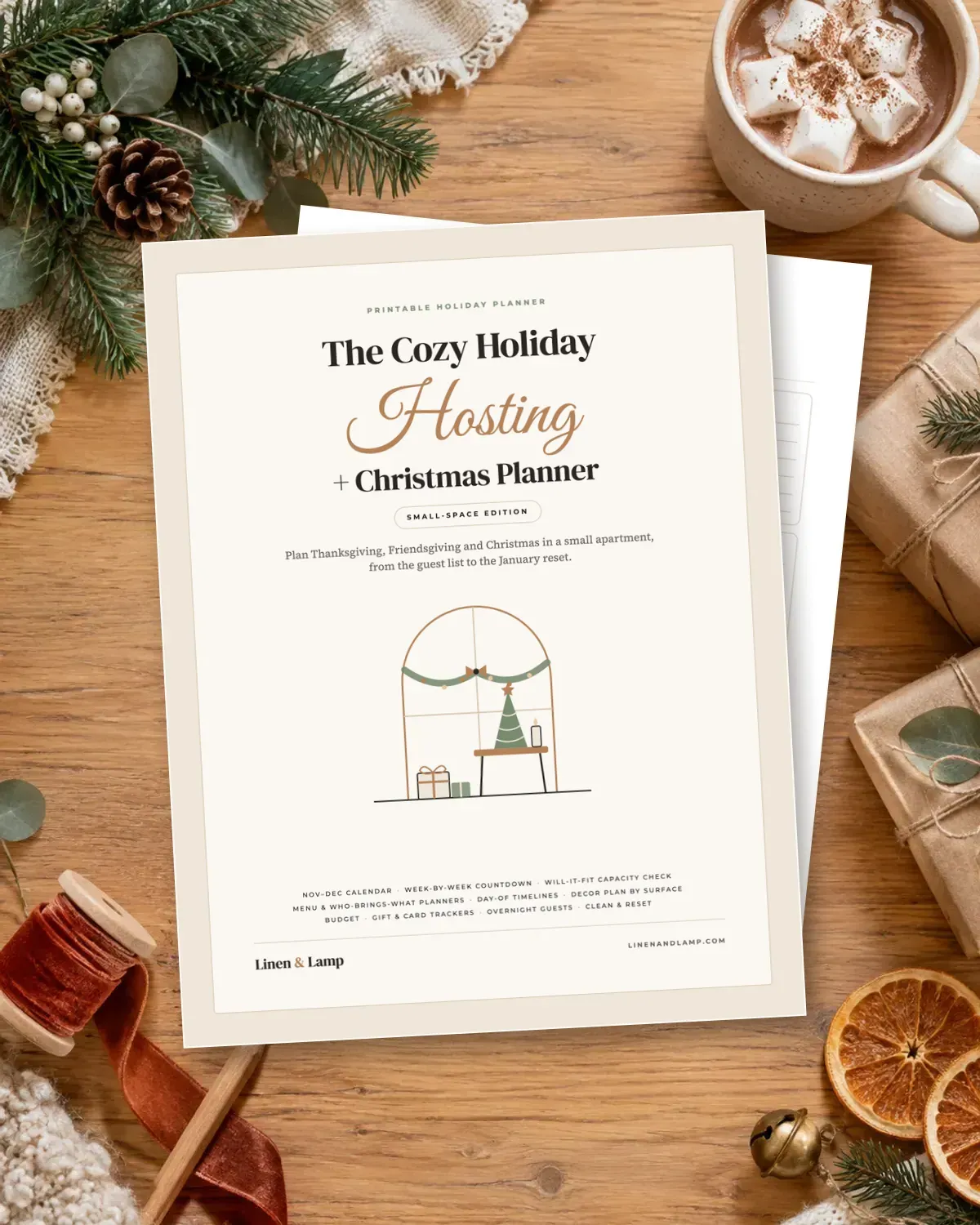
The free card is three pages. Page 1 is the timeline, with columns for the oven, two burners, counter or fridge moves and who does each job. Page 2 sorts your dishes by what they need and plans the fridge shelves, the counter zones, Christmas Eve and who does what. Page 3 is the page 1 timeline again in black and white, for low-ink printing.
How to plan Christmas Day in a one-oven kitchen
The usual advice starts with the turkey and counts back from it. In a small kitchen the oven is not the only limit, because two burners, a short counter and one fridge shelf can stall you just as fast. So the card plans the whole kitchen at once, starting from the minute you want food on the table.
-
Step 1: Write the time you eat
Put it in the top box on page 1. Every other time on the card is counted back from it, so pick it before you shop.
-
Step 2: List every dish once
Use the dish sorter on page 2. Tick the one column each dish needs most: oven, burner, or cold and no heat.
-
Step 3: Take cook times from your own recipe
Write each time from the recipe or the package. We do not give per-dish times here, because they change with the size, the cut and your oven.
-
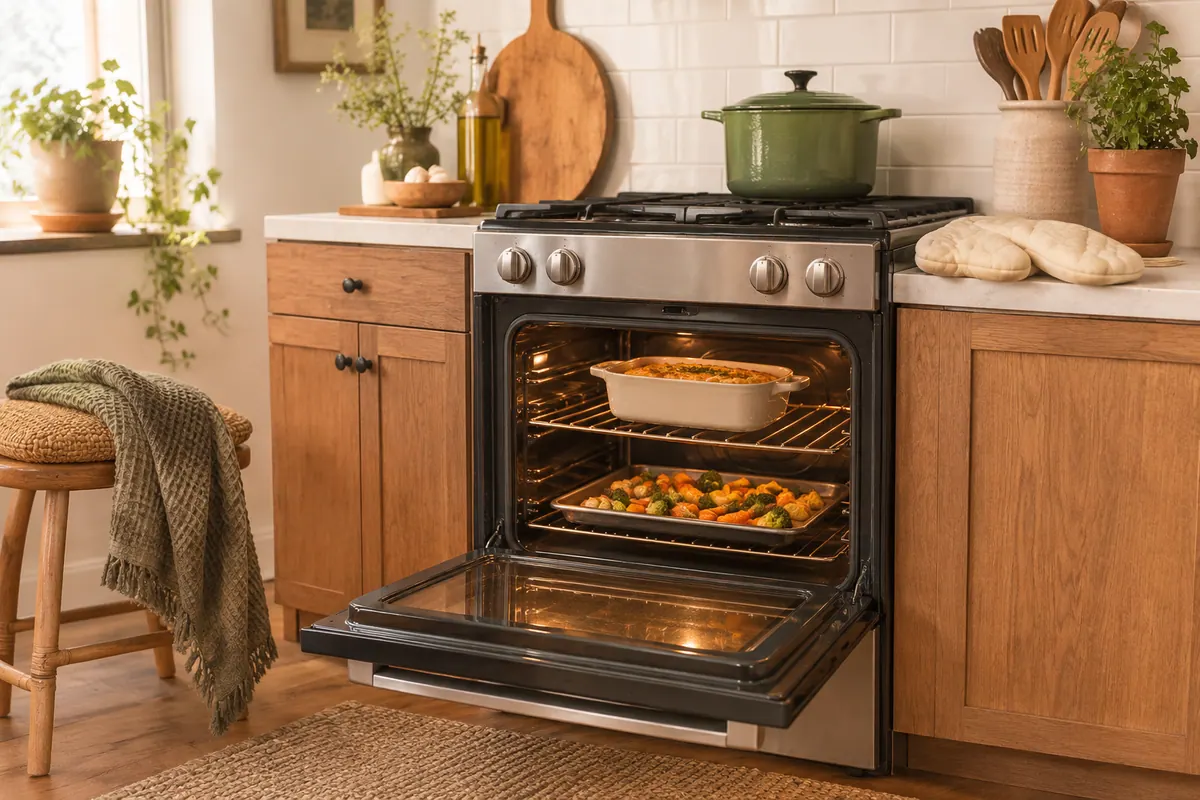
Step 4: Give the oven one slot per temperature
Dishes whose recipes call for the same temperature can share the oven on different racks. A dish at a different temperature goes in before or after, not beside.
-
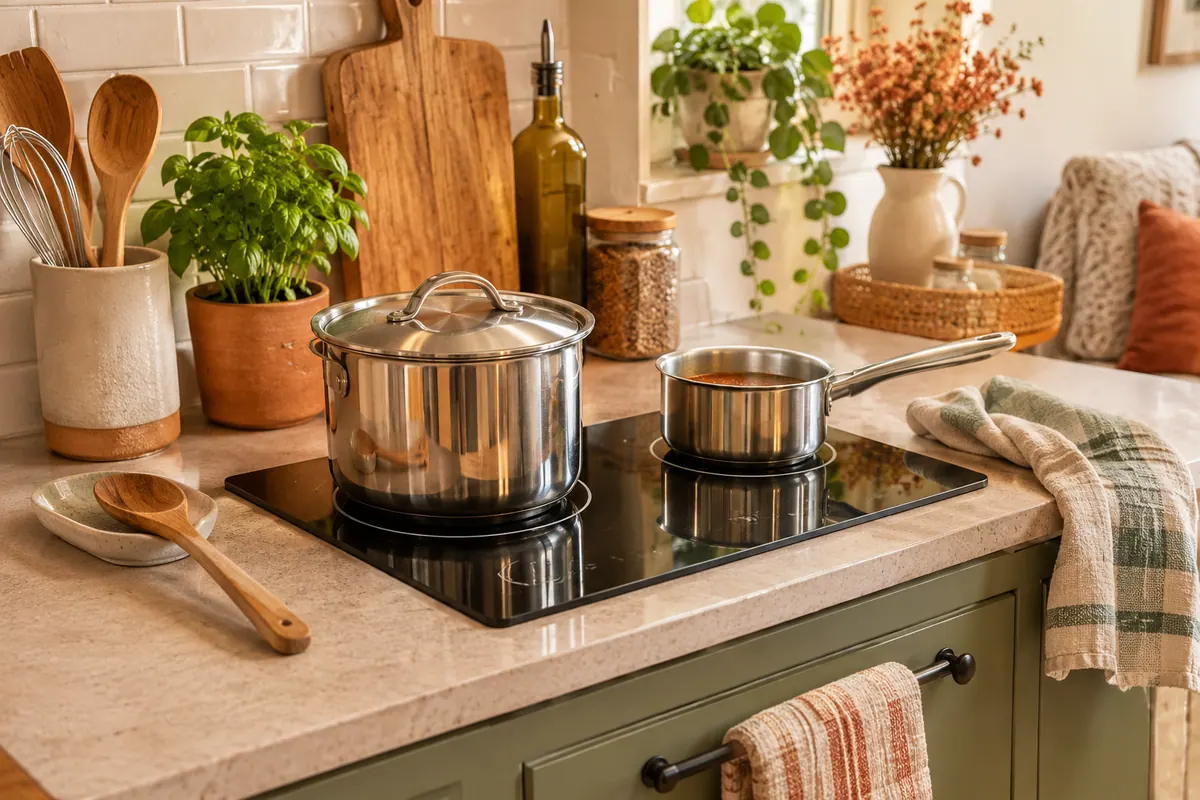
Step 5: Plan the burners as a pair
Two burners means two pots at a time. Write which dish holds each burner and when it moves off, so a third pot never waits with nowhere to go.
-
Step 6: Decide where every dish lives
Fill the fridge shelf plan and the counter zones before the day. A hot dish out of the oven needs a trivet and a spot already cleared.
-
Step 7: Give each job a name
Write a name in the Who column. A guest who offers to help is easier to use when the card already says what to do.
The one-oven rule: slots, not dishes
Think of the oven as a calendar with a few slots rather than a list of dishes. Each slot has one temperature, and each dish from your recipes lands in a slot that matches or in the gap between slots.
| Kind of dish | Where it goes on the card | What to check |
|---|---|---|
| The main (roast, bird or bake) | Longest oven slot, scheduled first | Cook time and any rest time from your recipe |
| Sides at the same oven temperature as the main | Share the slot on another rack | Rack space for both dishes before the day |
| Sides at a different oven temperature | Before the main, or after it while the main rests if your recipe has a rest time | Whether the dish can be reheated, per your recipe |
| Stovetop dishes | One of the two burners | Which burner frees up when |
| Cold or no-heat dishes | Made on Dec 24, in the fridge | Fridge shelf space |
| Rolls and anything that finishes fast | The last oven slot, or the toaster oven if you have one | Your package or recipe |
Our suggestion, not a rule: leave about 30 minutes between the last dish coming out and the time you eat, for carving, plating and the dish that runs late. Shorten it if your menu is small.
Split the work: Christmas Eve and Christmas Day
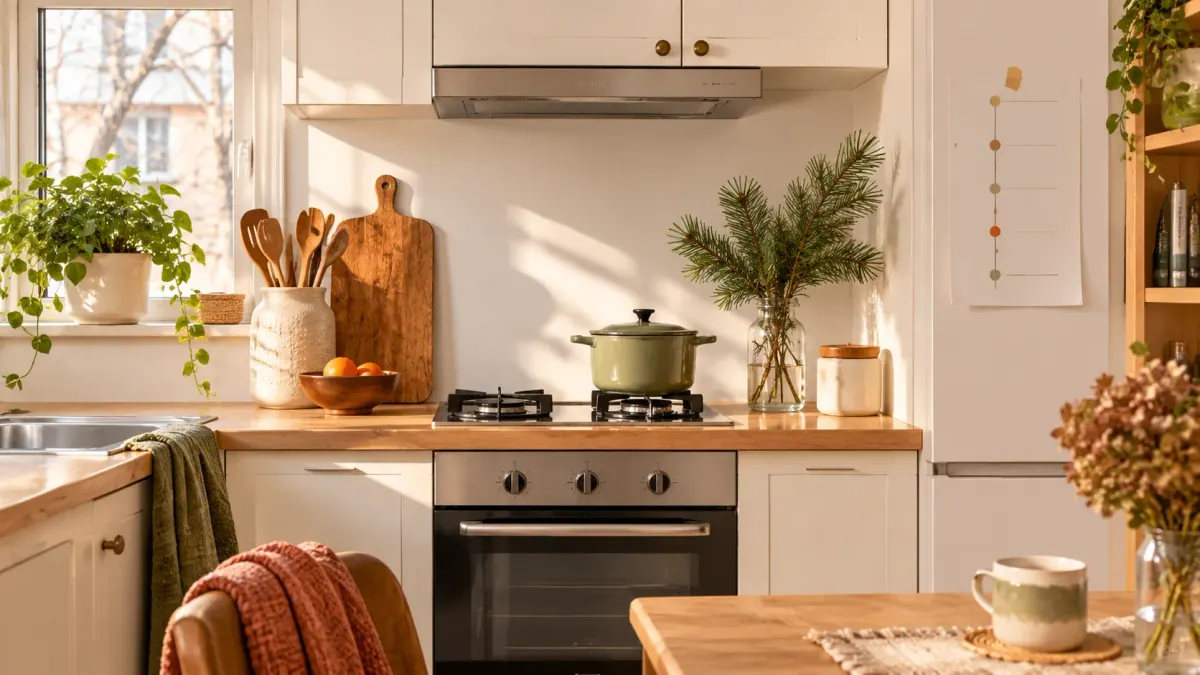
The easiest way to free the oven on the day is to move work to Dec 24. In 2026 that is a Thursday, and Christmas is on Friday, so most guests have the day to arrive and you have the evening to prep.
| Date | What to plan on the card |
|---|---|
| Mon Dec 21 | Finish the dish list and the shopping list; clear one fridge shelf for what you will store |
| Tue Dec 22 | Check the thawing guidance for your meat on the USDA page, and count your racks, pots and trivets |
| Wed Dec 23 | Shop for what is left; set out serving dishes with a sticky note for each dish |
| Thu Dec 24 | Make anything cold or marked make-ahead on page 2; cover and shelve it; pre-fill the Who column |
| Fri Dec 25 | Work the card from the top; the sink and one counter section are clear before the first dish comes out |
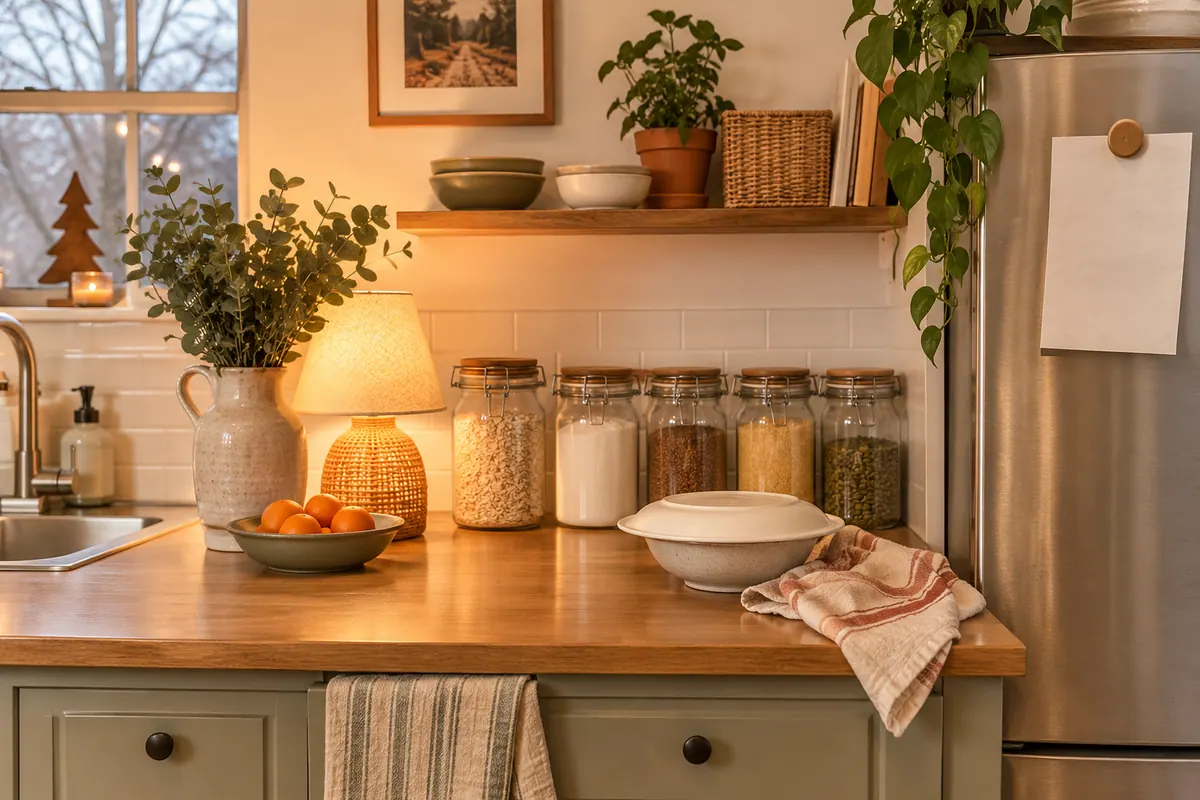
Which dishes can be made ahead depends on the recipe, so check each one before you commit. If a recipe does not say, leave it for the day and give it a slot on the card. The Christmas Eve hosting piece has ideas for the evening itself.
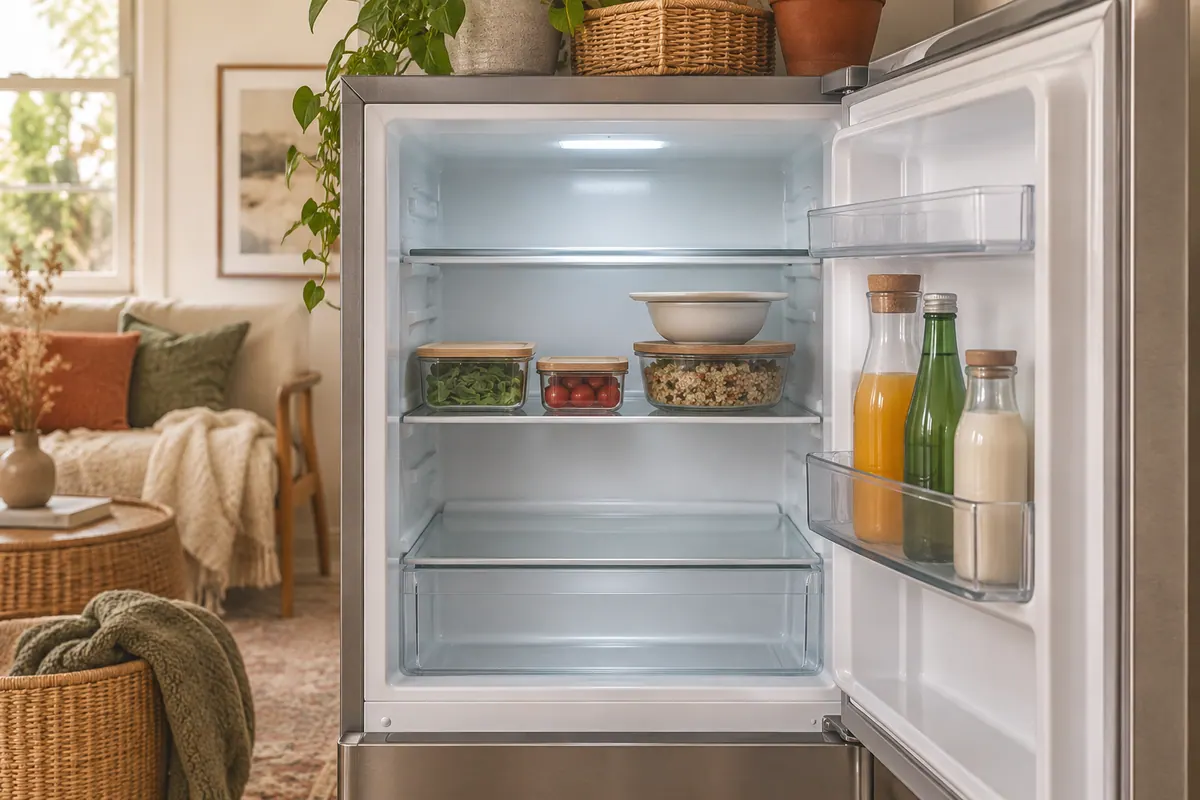
Fridge and counter space in a small kitchen
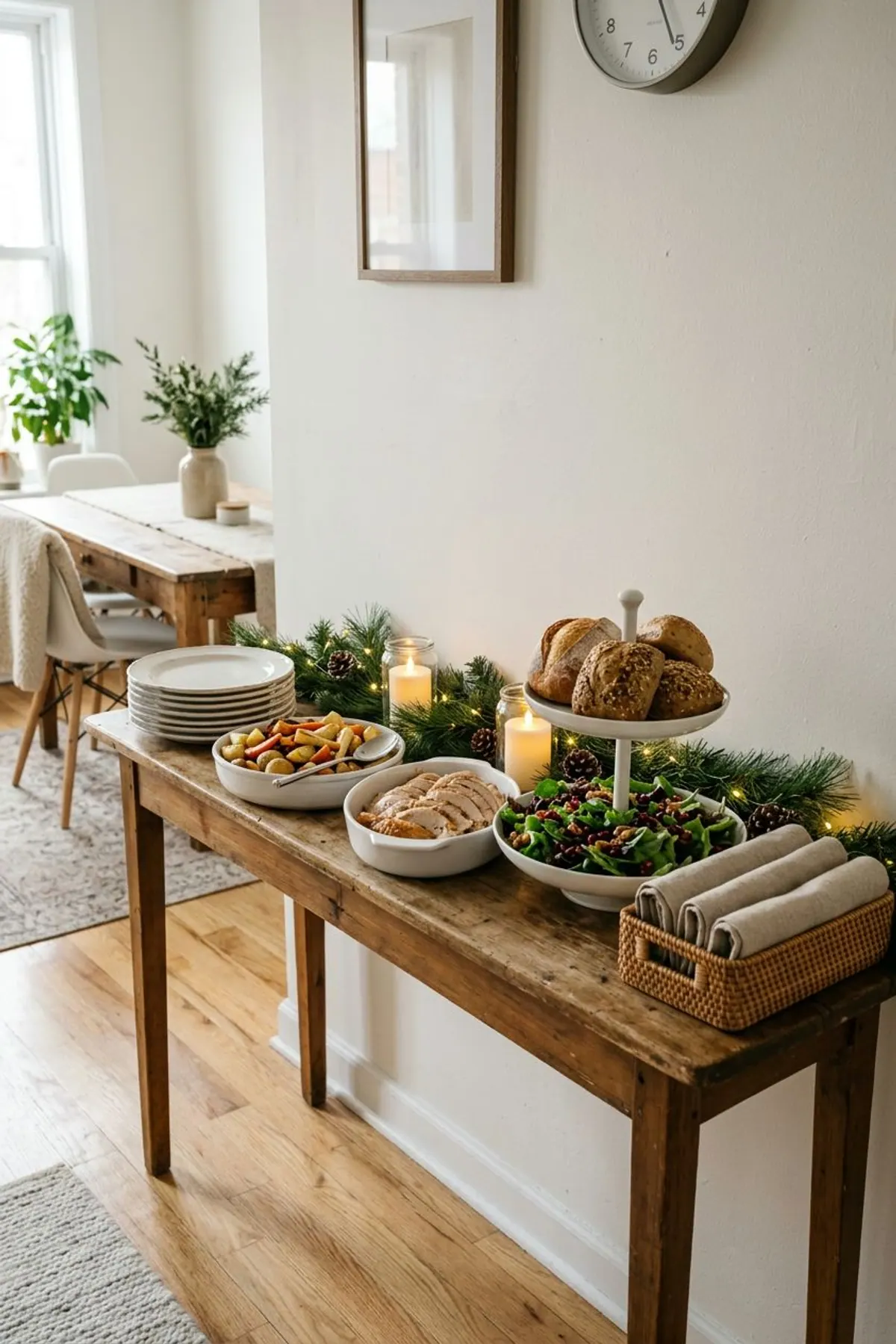
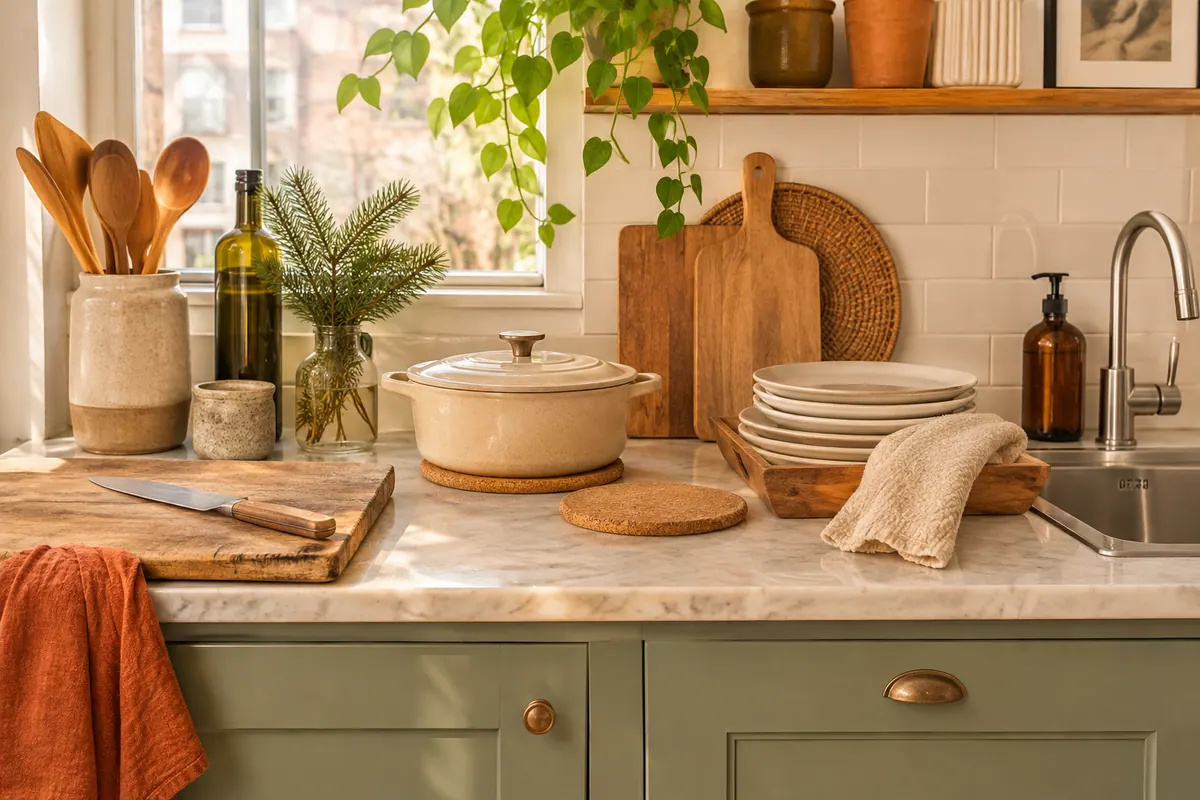
A one-oven kitchen almost always has a one-fridge problem as well. The card has a shelf-by-shelf plan on page 2, and clearing it is the cheapest fix on the page. Our Christmas cleaning checklist has a fridge day for this, and the buffet table piece shows where hot dishes can land once they are out.
Space check before Christmas Day
Food safety: use the official sources
We are a home decor site, so we give the schedule and leave the numbers to the people who set them. For safe cooking temperatures, use the USDA safe minimum cooking temperatures chart and a food thermometer. For how long cooked food can sit out, and how to store leftovers, read the USDA leftovers and food safety page. For thawing, read the USDA thawing guidance.
A few things that help in a small kitchen
For a one-oven Christmas Day
-
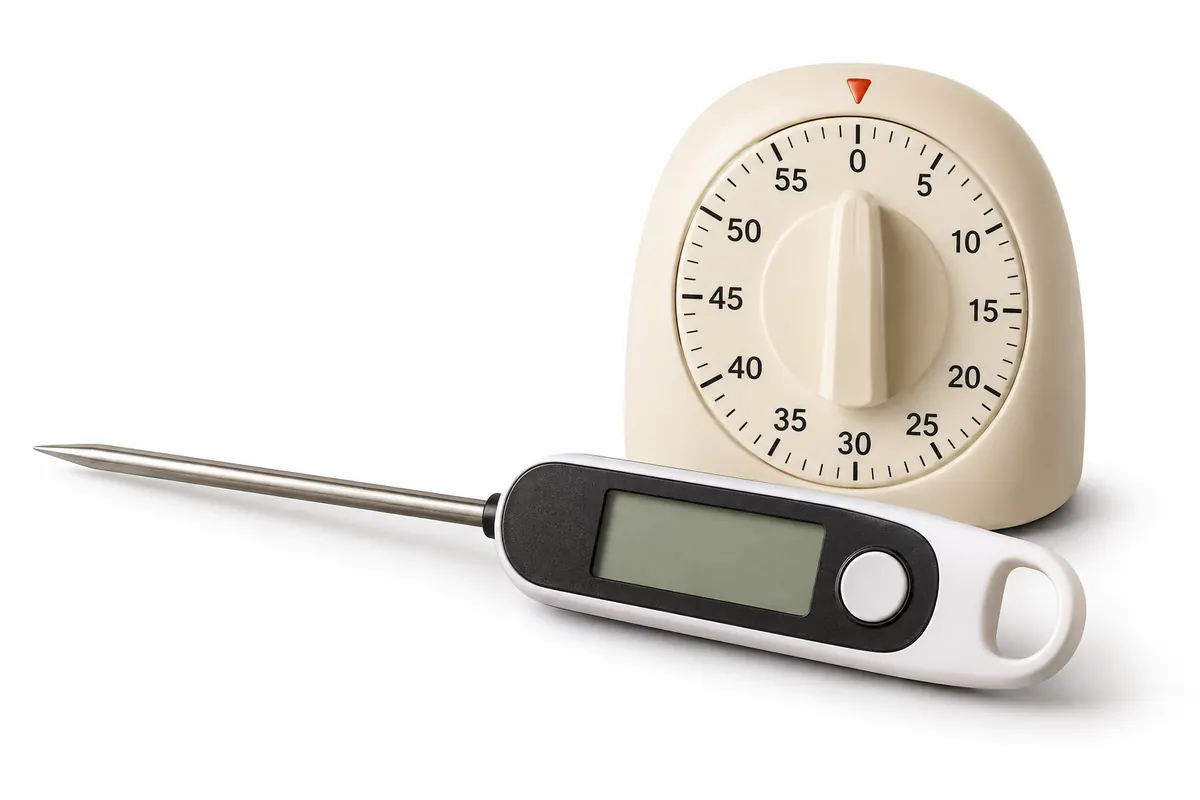
Instant-read food thermometer
Typically $10 to $30
Checks the main against the USDA temperature you wrote on the card, so you are not guessing.
Check price on Amazon for Instant-read food thermometer -
Stackable glass food containers with lids
Typically $20 to $40 for a set
Dec 24 dishes stack on one fridge shelf instead of spreading across three.
Check price on Amazon for Stackable glass food containers with lids -
Cork trivets or silicone mats
Typically $8 to $15
Every hot dish needs a landing spot on a short counter.
Check price on Amazon for Cork trivets or silicone mats -
Digital kitchen timer, two channels
Typically $10 to $20
Two dishes, two timers, no mixing up which one is ringing.
Check price on Amazon for Digital kitchen timer, two channels -
Long oven mitts
Typically $12 to $25
Useful when the oven is full and you are reaching to the back rack.
Check price on Amazon for Long oven mitts
Prices are rough, typical ranges as of November 2026, and they change. We earn a small commission on qualifying Amazon purchases at no cost to you.
Print the card and keep it where you cook
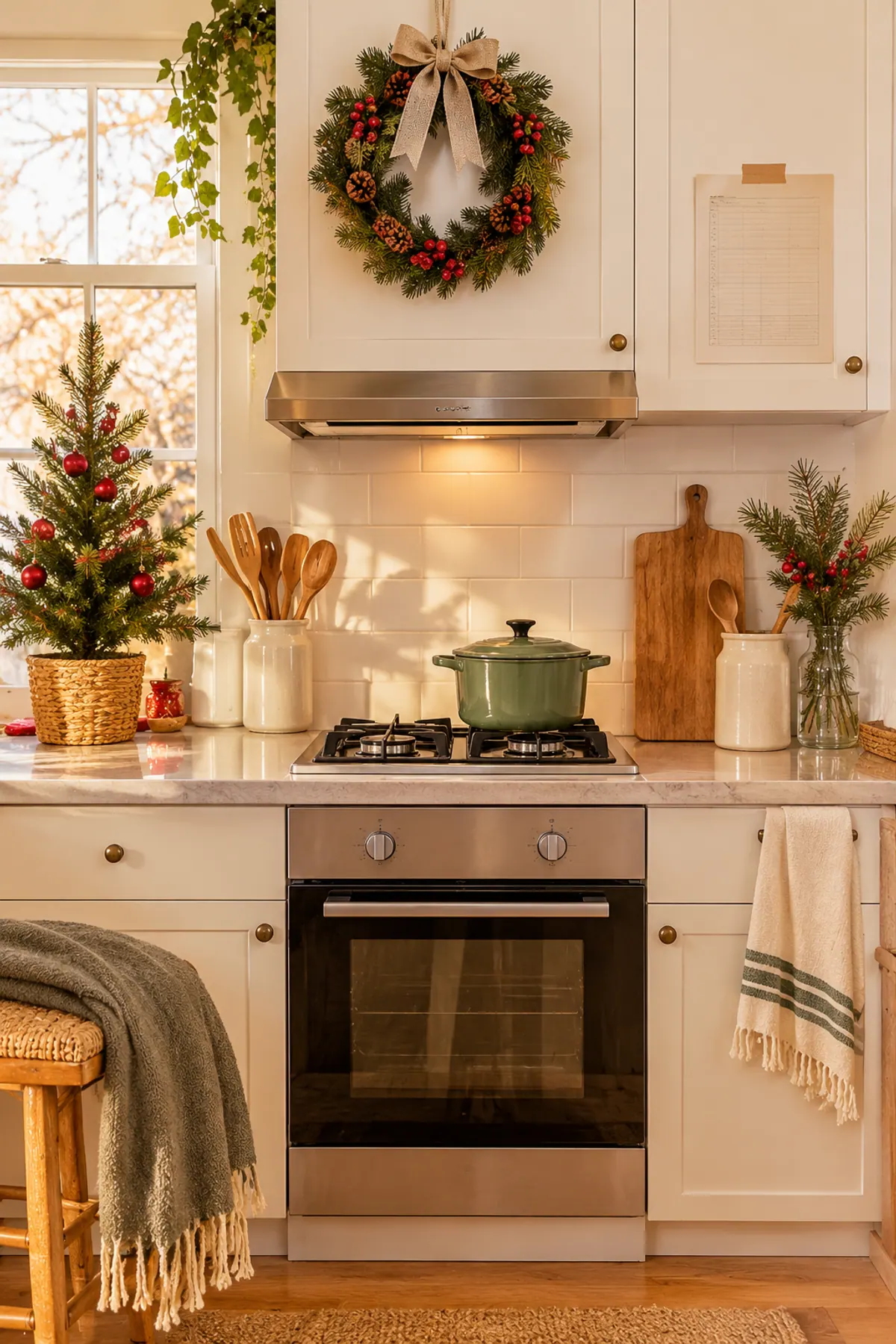
Print page 1 and tape it to a cabinet at eye level with painter's tape, which comes off without leaving a mark on most surfaces. Fill it in on Dec 21 and edit it in pencil on the day.
Frequently asked questions
How do I plan Christmas dinner with one oven?
Give the oven one slot per temperature, schedule the main first, and put side dishes at the same temperature on another rack. Dishes at a different temperature go before or after the main, and anything your recipe says can be made ahead moves to Dec 24.
How do I work out a Christmas dinner timeline?
Pick the time you want to eat and count backwards. Take each dish's cook time from its own recipe or the package, and leave a gap for carving and plating before you serve. The free card has a column layout for this.
What can I make on Christmas Eve to free up the oven?
Anything cold or any dish whose recipe says it can be made ahead. Check each recipe first. Cold dishes need fridge space, so clear a shelf before Dec 24.
How do I cook Christmas dinner with only two burners?
Treat them as a pair: write which dish holds each burner and when it moves off. Dishes that can finish in the oven or be served cold keep the burners free.
Where do I find safe cooking temperatures and the 2-hour rule?
On the USDA pages linked in the food safety section above: the safe minimum cooking temperatures chart, and the leftovers and food safety page. We do not quote the numbers here, so you always get the current ones.
Save it for later
Pin this to your Holiday Hosting board so it's there when you need it.
Save to Pinterest