This post contains affiliate links. As an Amazon Associate we earn from qualifying purchases, at no extra cost to you. Read our disclosure.
Key takeaways
- Keep what you use in a normal week plus one; the rest are backups you don't need.
- Use the 20/20 rule as a tiebreaker for just-in-case items.
- Work entry, bathroom, kitchen, closet, bedroom, living room, paper, then sentimental.
- Keep the donate pile by the front door with a seven-day deadline.
- Buy bins only after decluttering, measured to the space you have.
In this post12 sections
- Your minimalist decluttering checklist starts with 5 rules
- What you need before you start (not bins)
- Zone order for a small apartment, with times
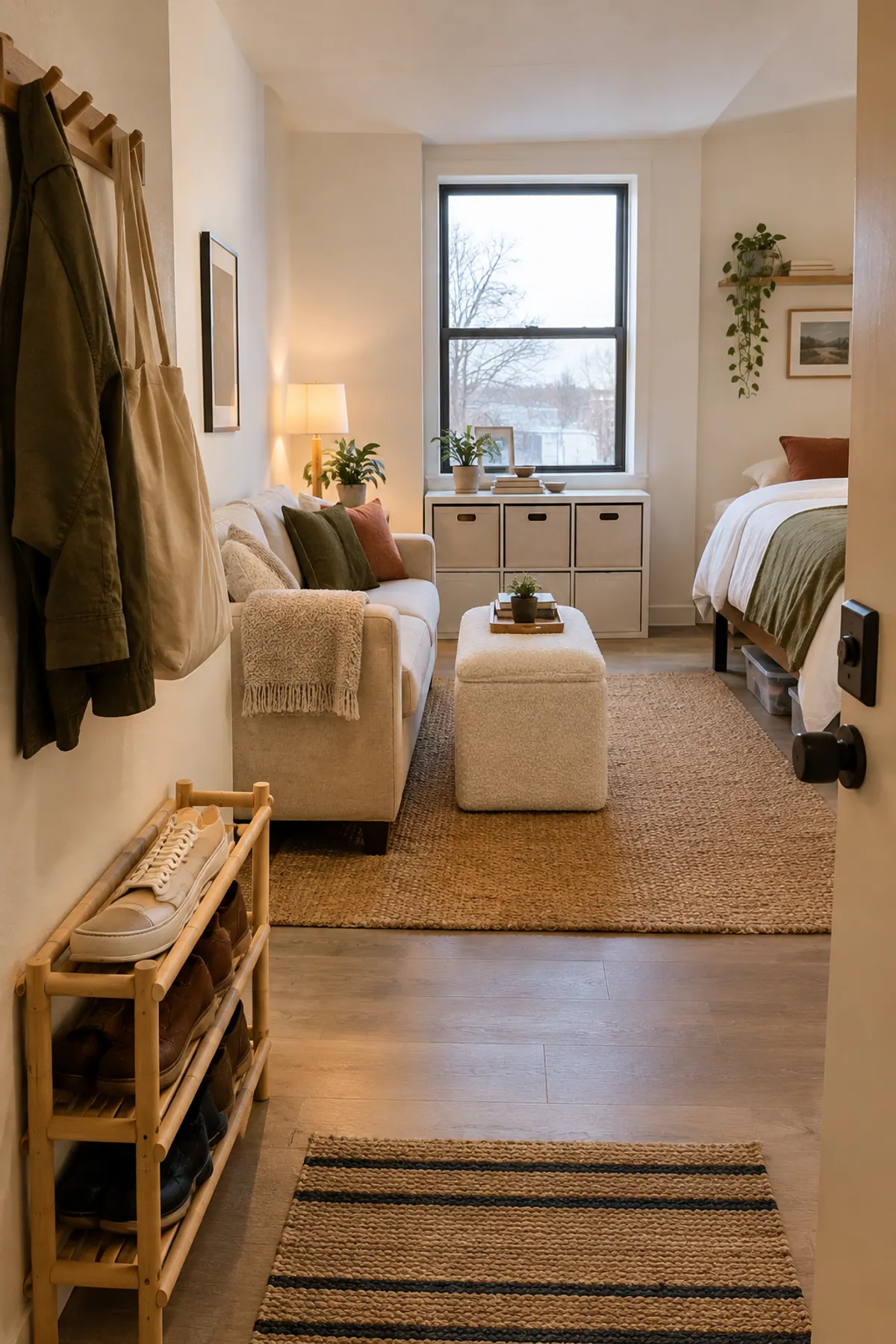
- Checklist for decluttering home: entry and bathroom
- Kitchen: duplicates and one-job gadgets
- Closet and bedroom: fit, wear and repair
- Living room, paper and digital
- Where the donate pile lives in a one-bedroom
- How to declutter with no storage space
- Mistakes that slow a small-apartment declutter
- Three ways to run it
- FAQ
A minimalist decluttering checklist works in a small apartment because it answers one question per object: does this earn its space? You don't need more storage. You need a faster yes or no.
This guide is the decision method: five keep-or-let-go rules, a timed zone order for a one-bedroom of about 600 square feet, and room checklists that say what leaves first. Where things go afterward is a separate job, and we link to it at the end.
Your minimalist decluttering checklist starts with 5 rules
Most decluttering stalls on the same item: the thing you might need someday. These rules decide it for you, so you aren't arguing with every spatula.
-
Step 1: Keep what you use in a normal week, not a busy one
Count how many mugs, towels or tote bags you actually go through in a week. Keep that number plus one. The rest are backups for a life you don't live.
-
Step 2: Use the 20/20 rule for just-in-case items
The Minimalists popularized this one: if you could replace it for under $20 in under 20 minutes from home, it can go. It is a tiebreaker for doubtful items, not a reason to toss things you use.
-
Step 3: Let the shelf set the limit
Pick the space first, then keep only what fits in it. If the books fill one shelf, one shelf is the book limit. The space decides, so you don't have to.
-
Step 4: Date the maybe box
Anything you truly can't decide on goes in one box with today's date on it. If you haven't opened it in 30 days, donate it without looking inside.
-
Step 5: Save sentimental things for last
Photos, letters and gifts take the longest decisions. Do them after you've built up speed on easy rooms, and give them their own session.
What you need before you start (not bins)
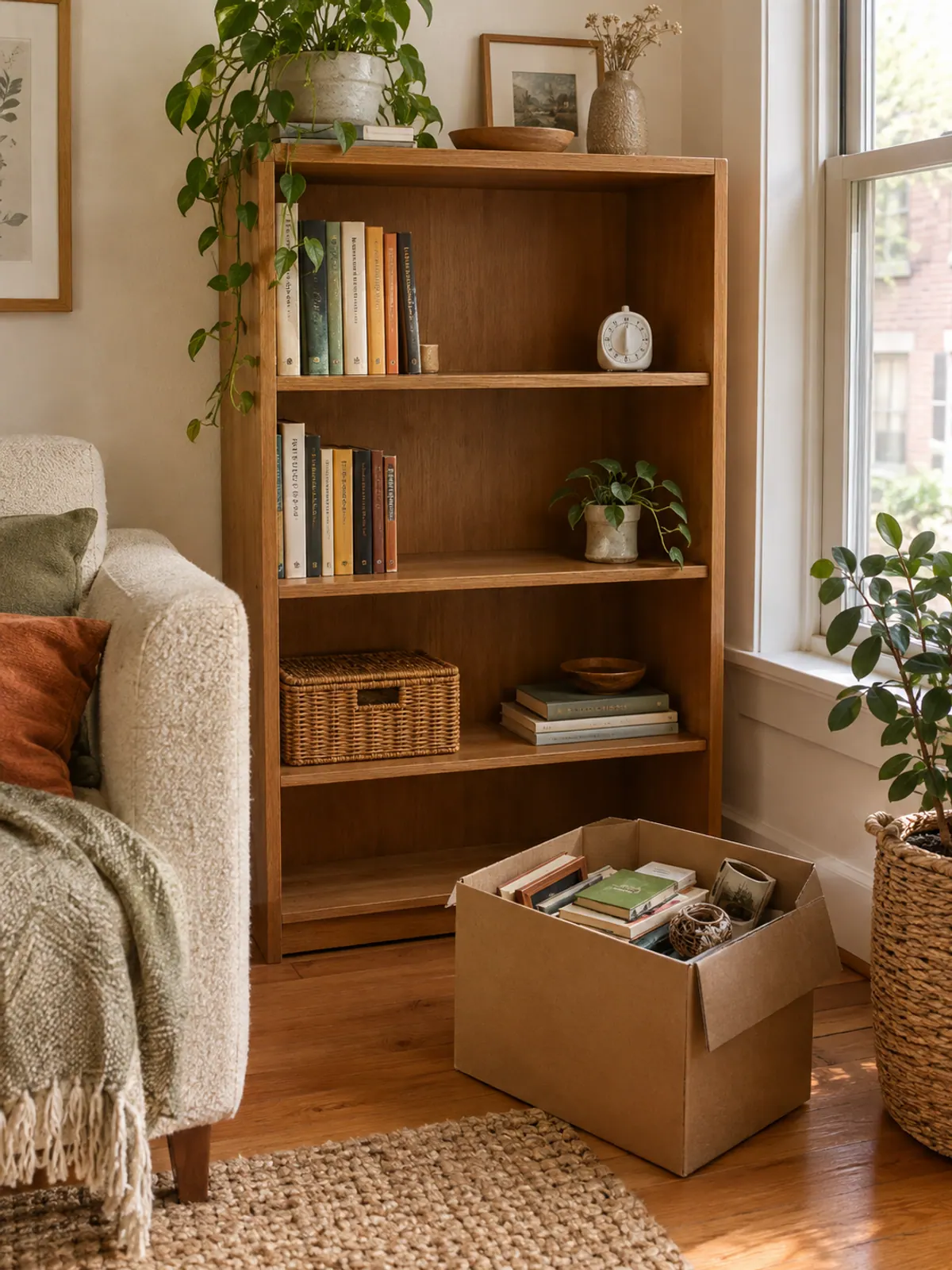
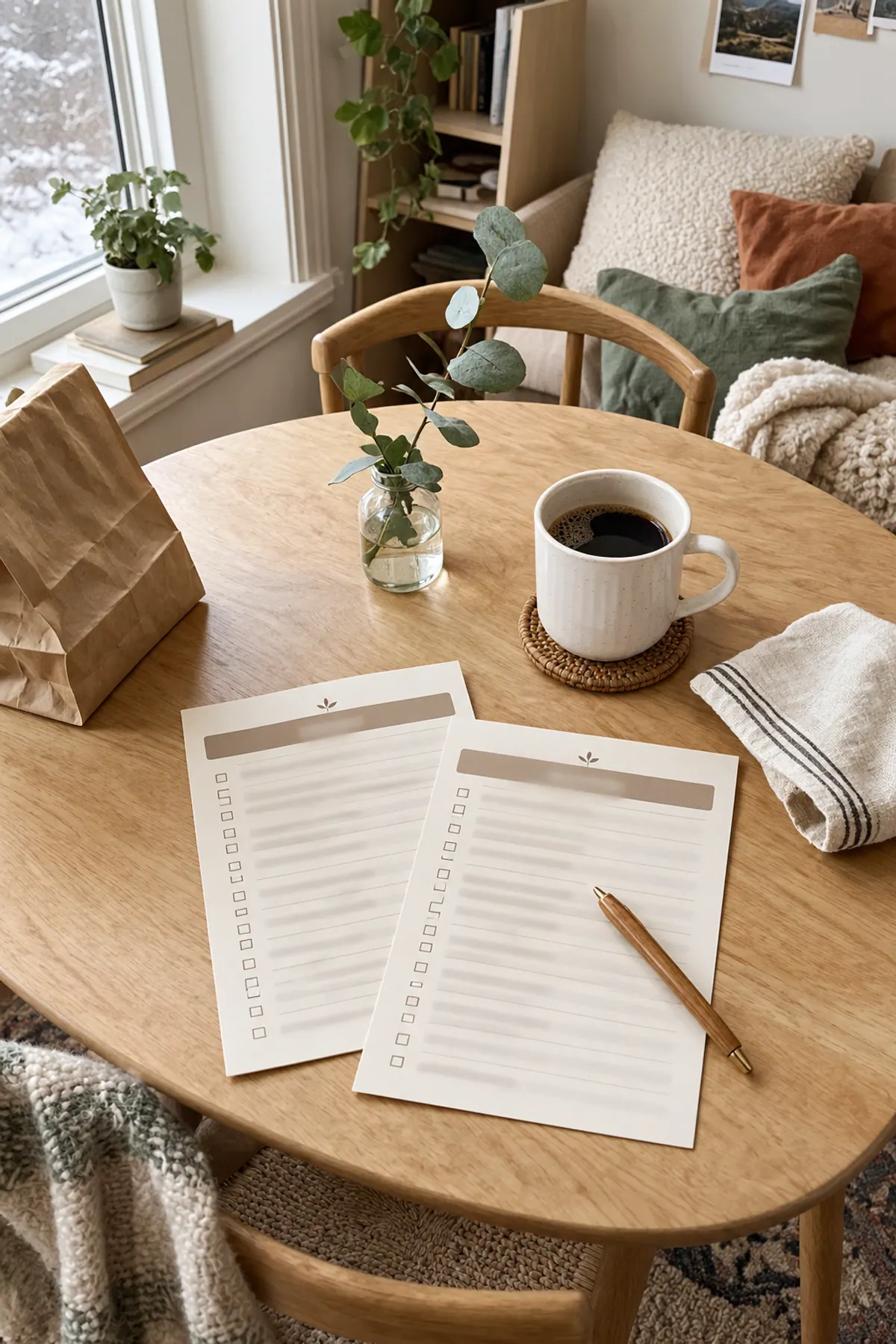
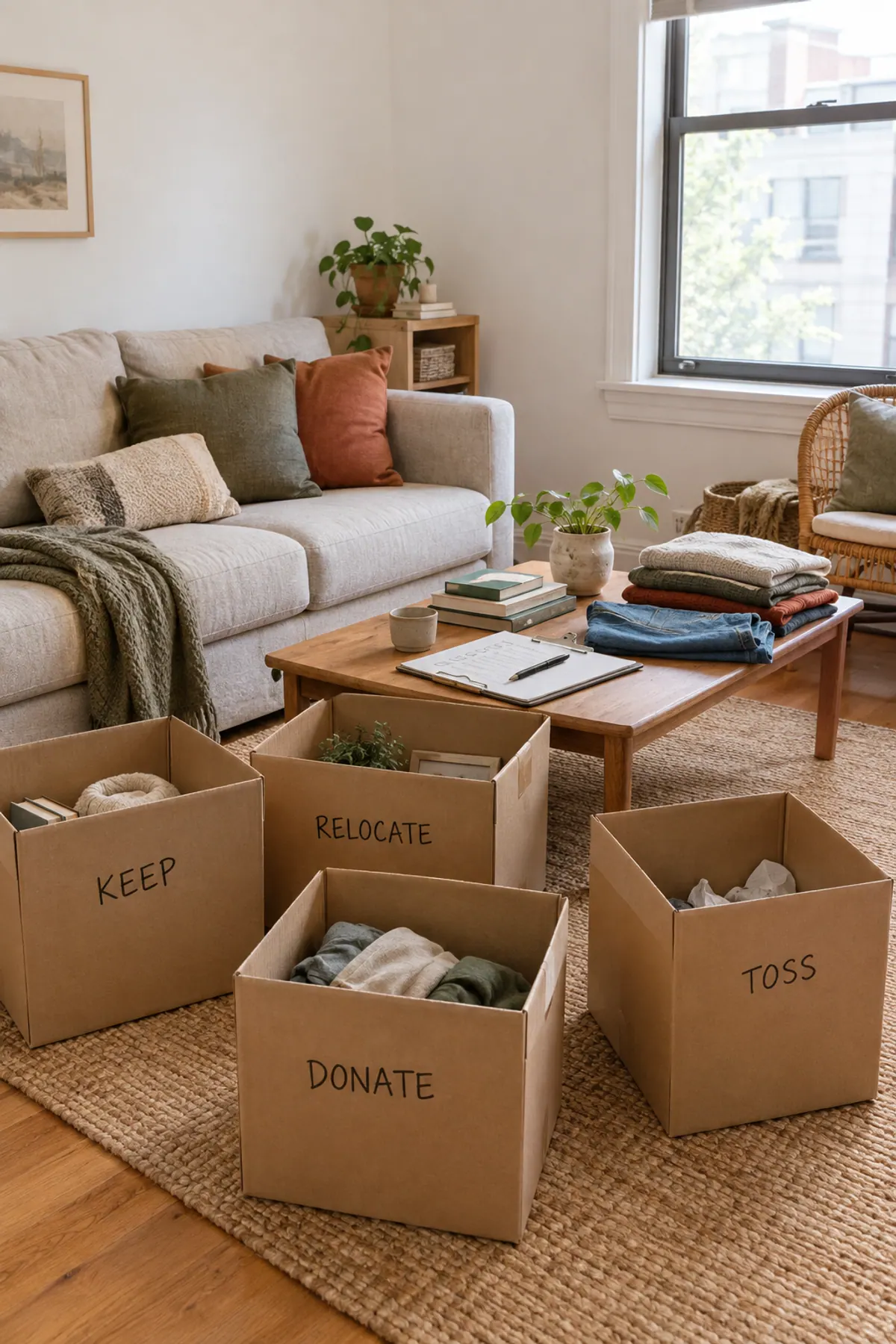
Gather four boxes or bags and label them Keep, Relocate, Donate and Toss. Add a roll of trash bags, a marker, a kitchen timer and one spot near the door where the donate bags will wait.
Don't buy bins or organizers yet. You won't know what size you need until the clutter is gone, and bins bought first tend to get filled with things you were about to let go.
Zone order for a small apartment, with times
Start where clutter is easiest to judge and most visible, then work toward the slow, emotional stuff. Times below are rough estimates for a one-bedroom of about 600 square feet; a studio takes less, a crowded closet takes more.
| Order | Zone | Rough time | What leaves first |
|---|---|---|---|
| 1 | Entry | 20 minutes | Shoes you don't wear, extra bags, junk mail |
| 2 | Bathroom | 30 minutes | Expired products, samples, old towels |
| 3 | Kitchen | 60 minutes | Duplicates, broken tools, gadgets you never use |
| 4 | Closet | 60 to 90 minutes | Clothes that don't fit or need repairs you won't make |
| 5 | Bedroom | 30 minutes | Nightstand and dresser-top clutter, extra bedding |
| 6 | Living room | 45 minutes | Books, decor and cables with no job |
| 7 | Paper and digital | 30 to 45 minutes | Old mail, manuals, duplicate files and photos |
| 8 | Sentimental | Its own session | Only after the rest is done |
Spread it over a week of evenings or two weekend days. Finishing one zone fully beats starting three.
Checklist for decluttering home: entry and bathroom
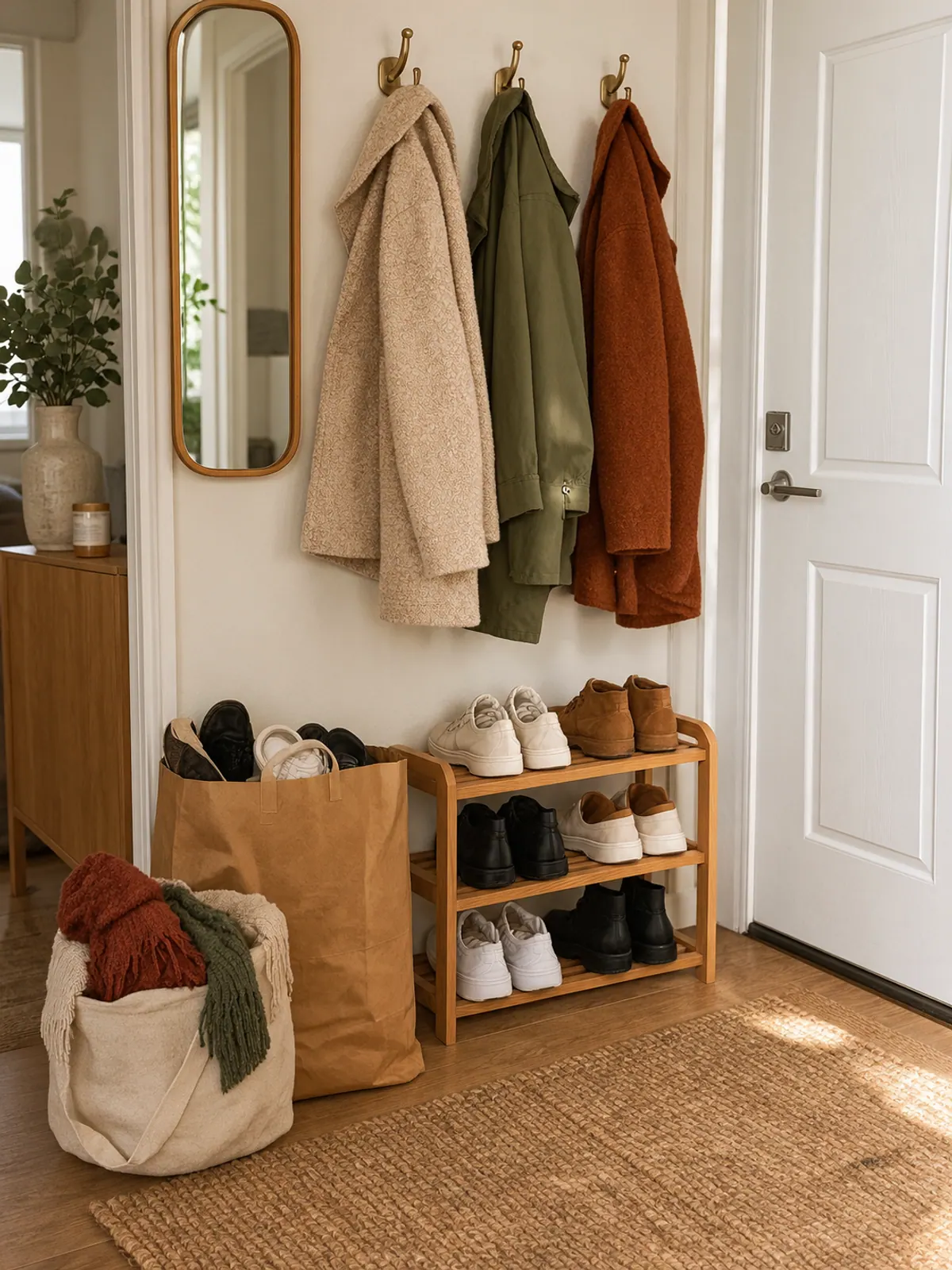
Entry: what leaves
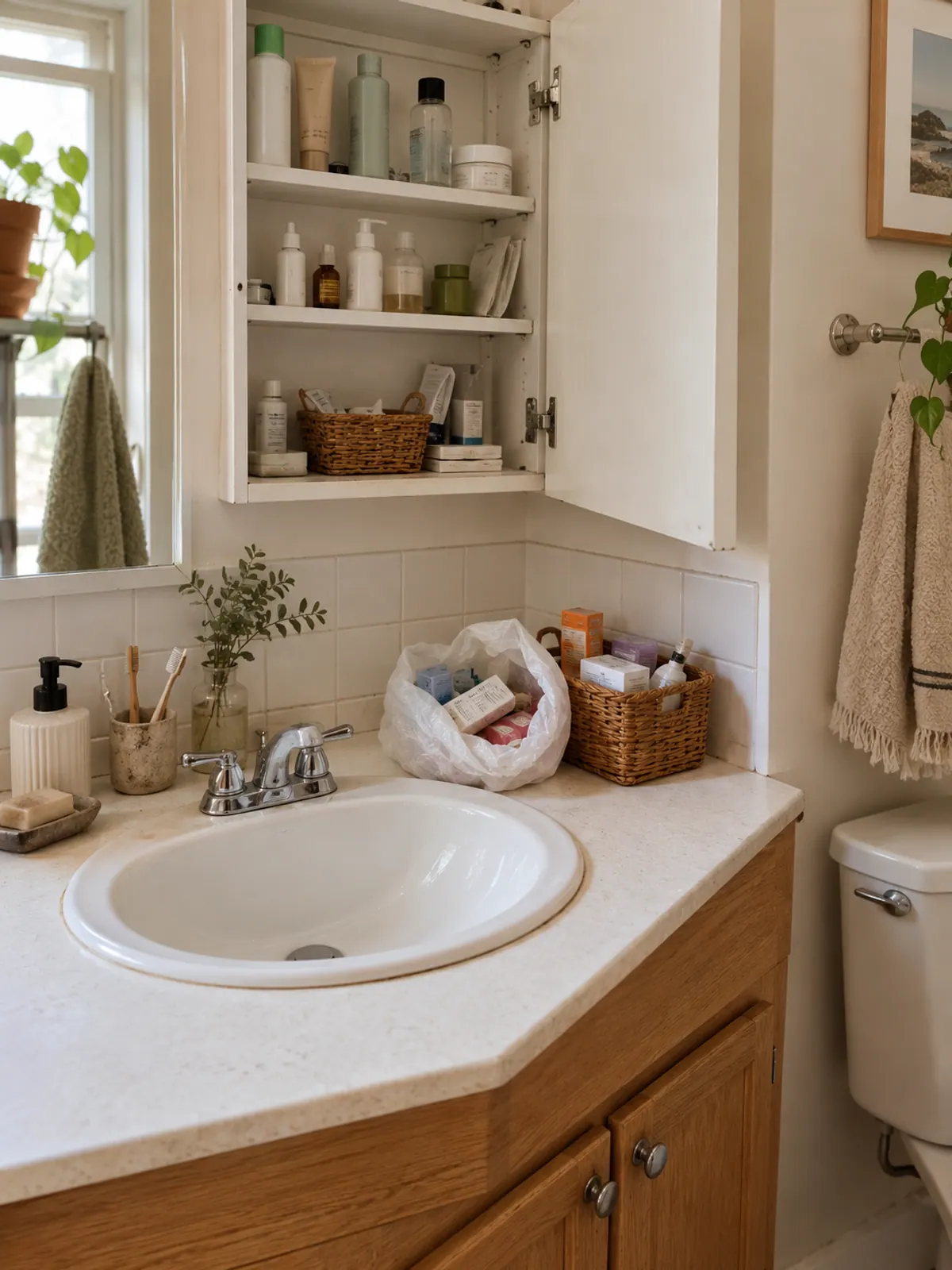
Bathroom: what leaves
Don't flush or bin old medicine. The FDA lists drug take-back sites, and many pharmacies have drop boxes.
Kitchen: duplicates and one-job gadgets
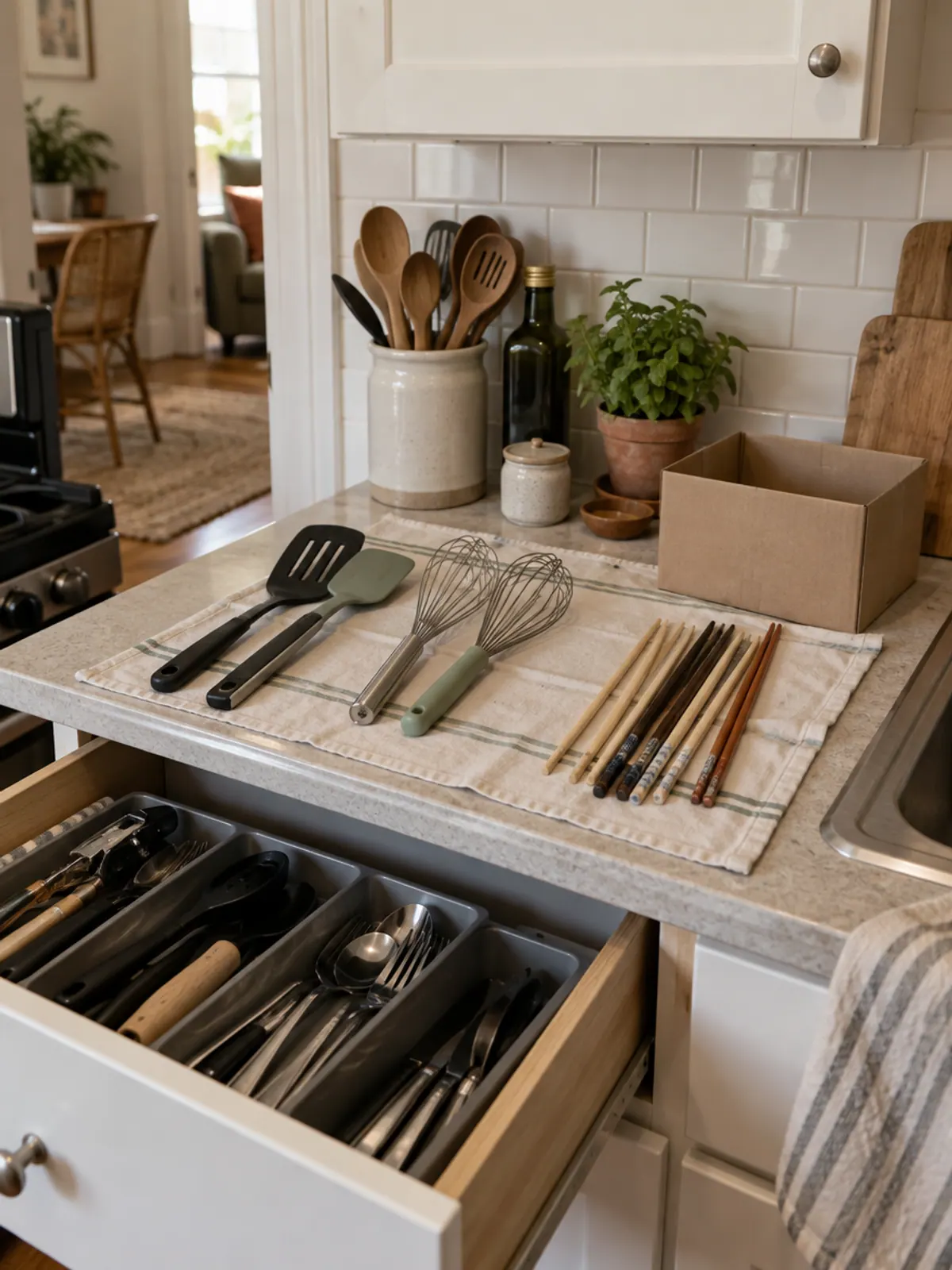
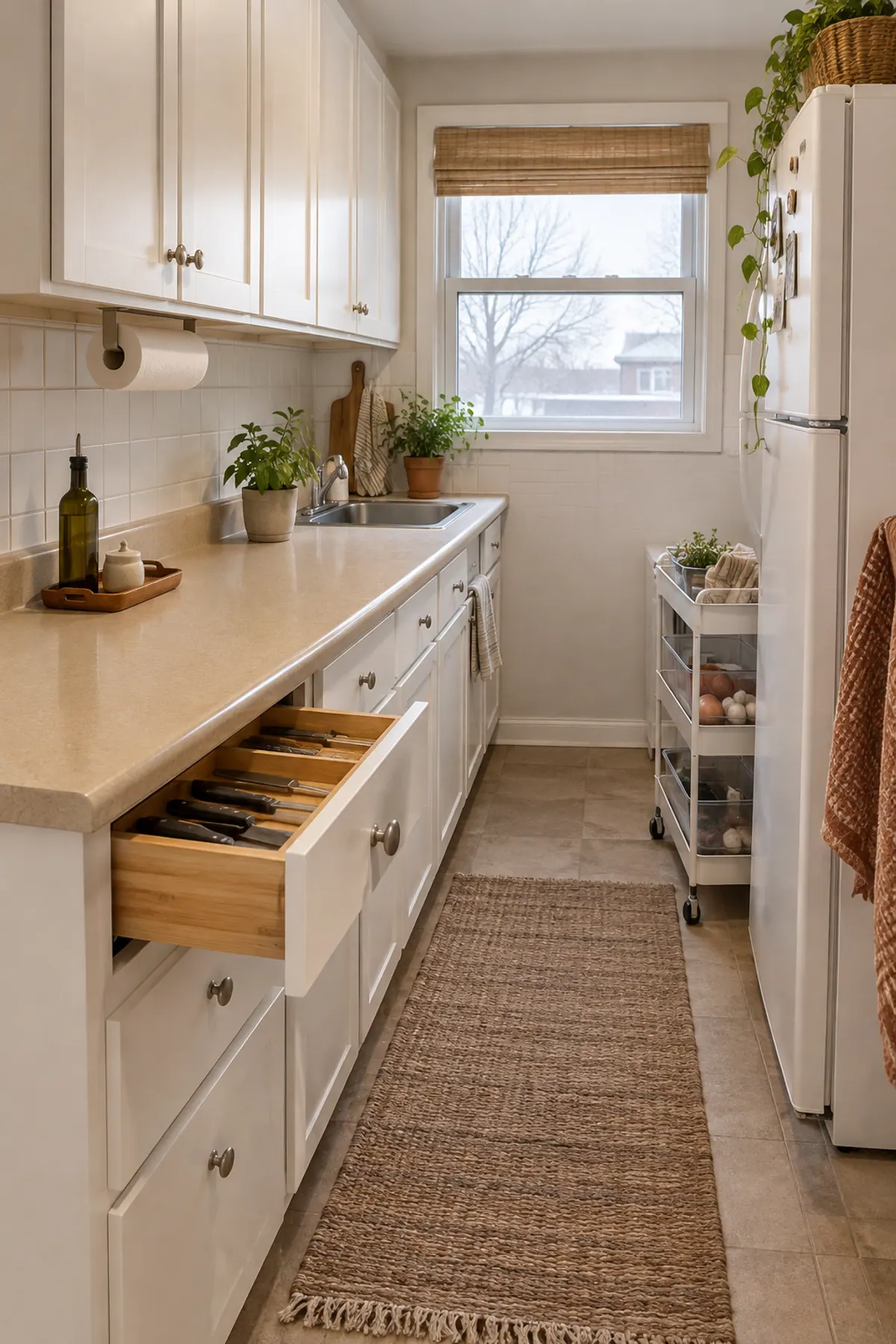
Empty one drawer onto a towel at a time. Seeing three spatulas side by side makes the choice obvious in a way a full drawer never does.
Kitchen: what leaves
Once the kitchen is edited, our kitchen organization ideas for small rental kitchens cover where the keepers go.
Closet and bedroom: fit, wear and repair
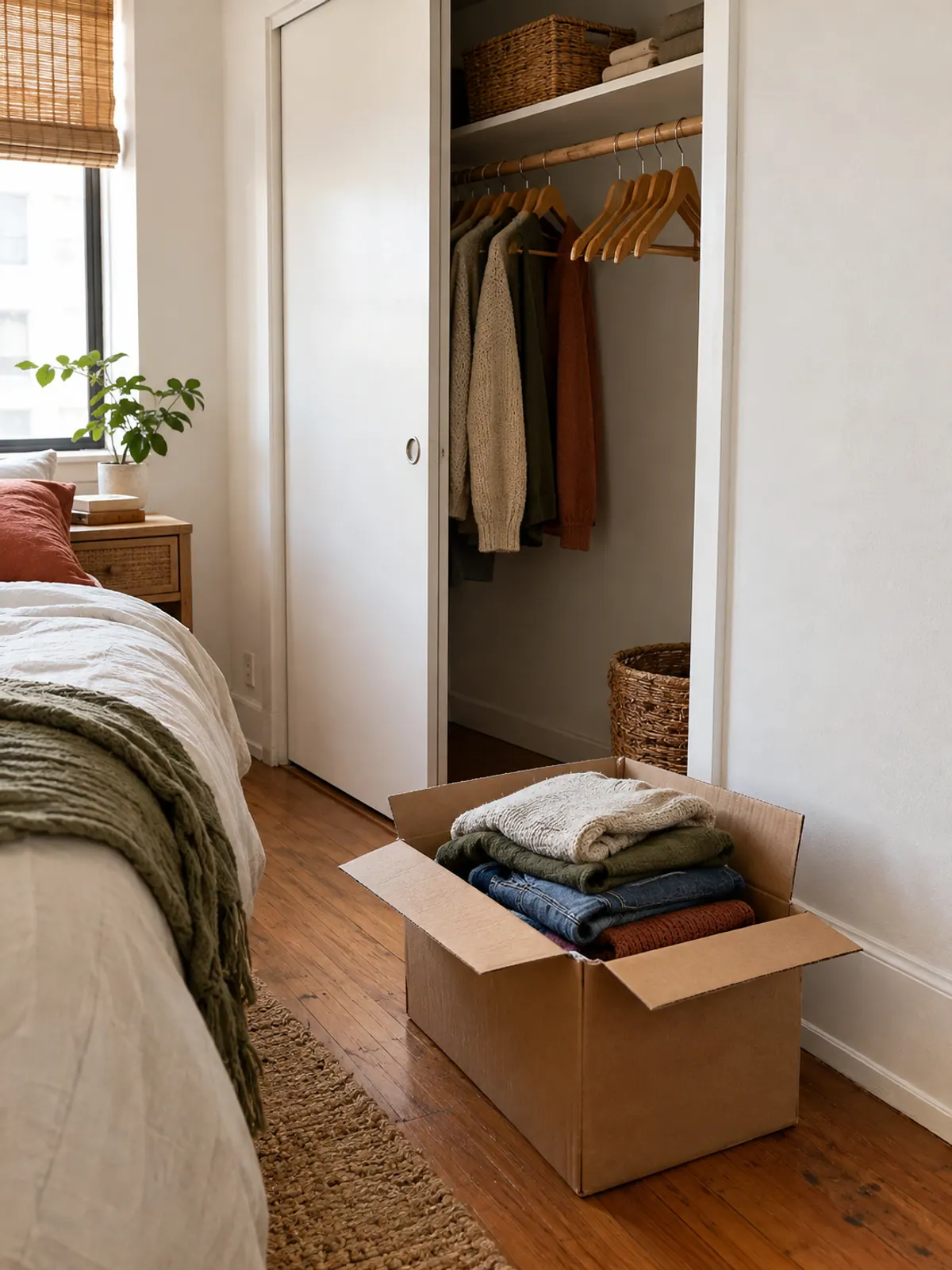
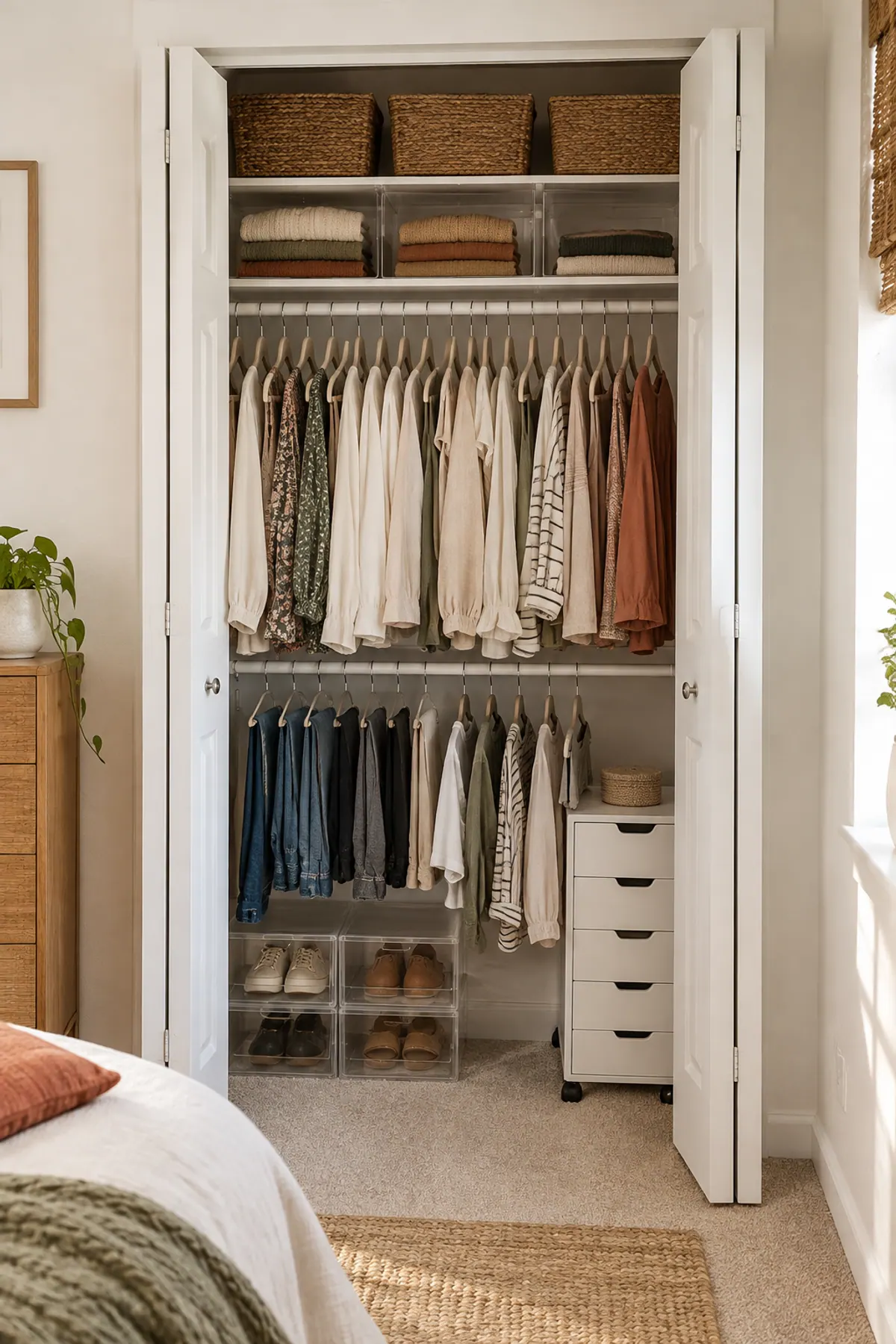
Clothes get three questions: does it fit now, do I wear it, and is it ready to wear? A no on any one means it leaves, or goes to a repair pile with a one-week deadline.
Closet: what leaves
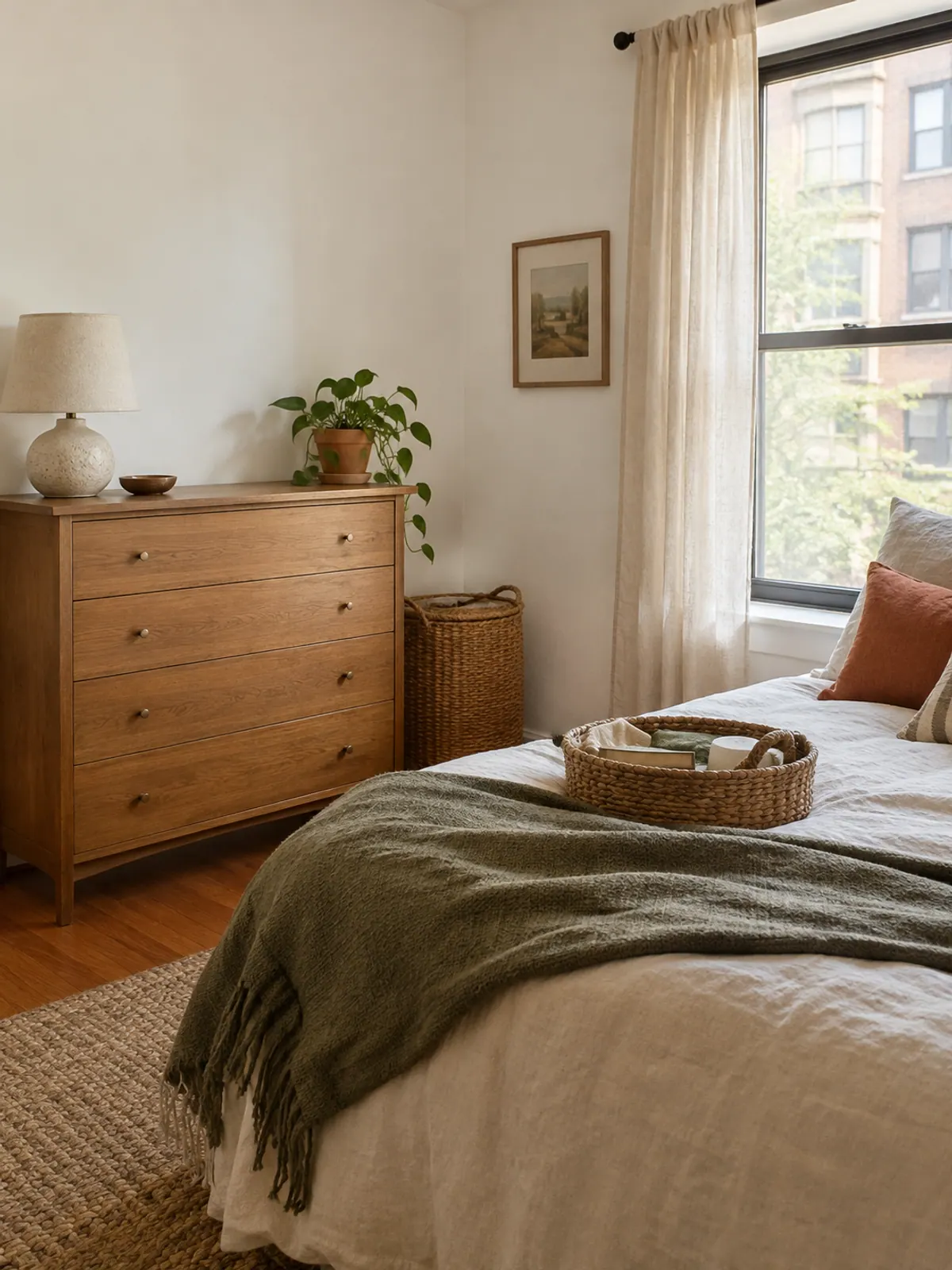
Bedroom: what leaves
For hanger tricks and keeping a small closet in order once it's edited, see our small closet organization ideas.
Living room, paper and digital
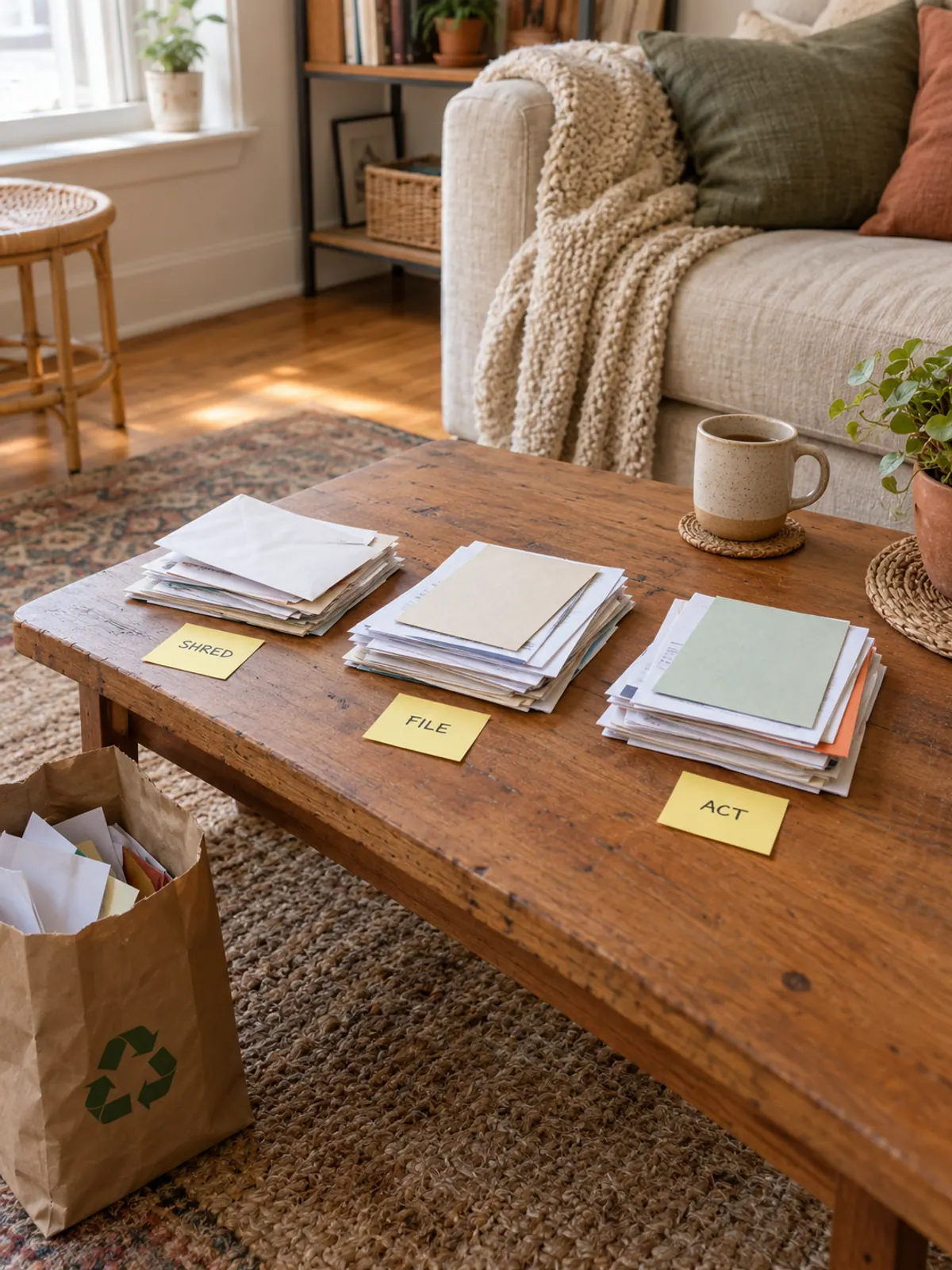
Sort paper into three piles: Shred, File and Act. Most of it is shred or recycle. The Act pile is bills and forms, and it should fit in one folder.
Living room and paper: what leaves
Digital clutter is a 20-minute job: delete duplicate photos and screenshots, clear the downloads folder and unsubscribe from five store emails.
Where the donate pile lives in a one-bedroom
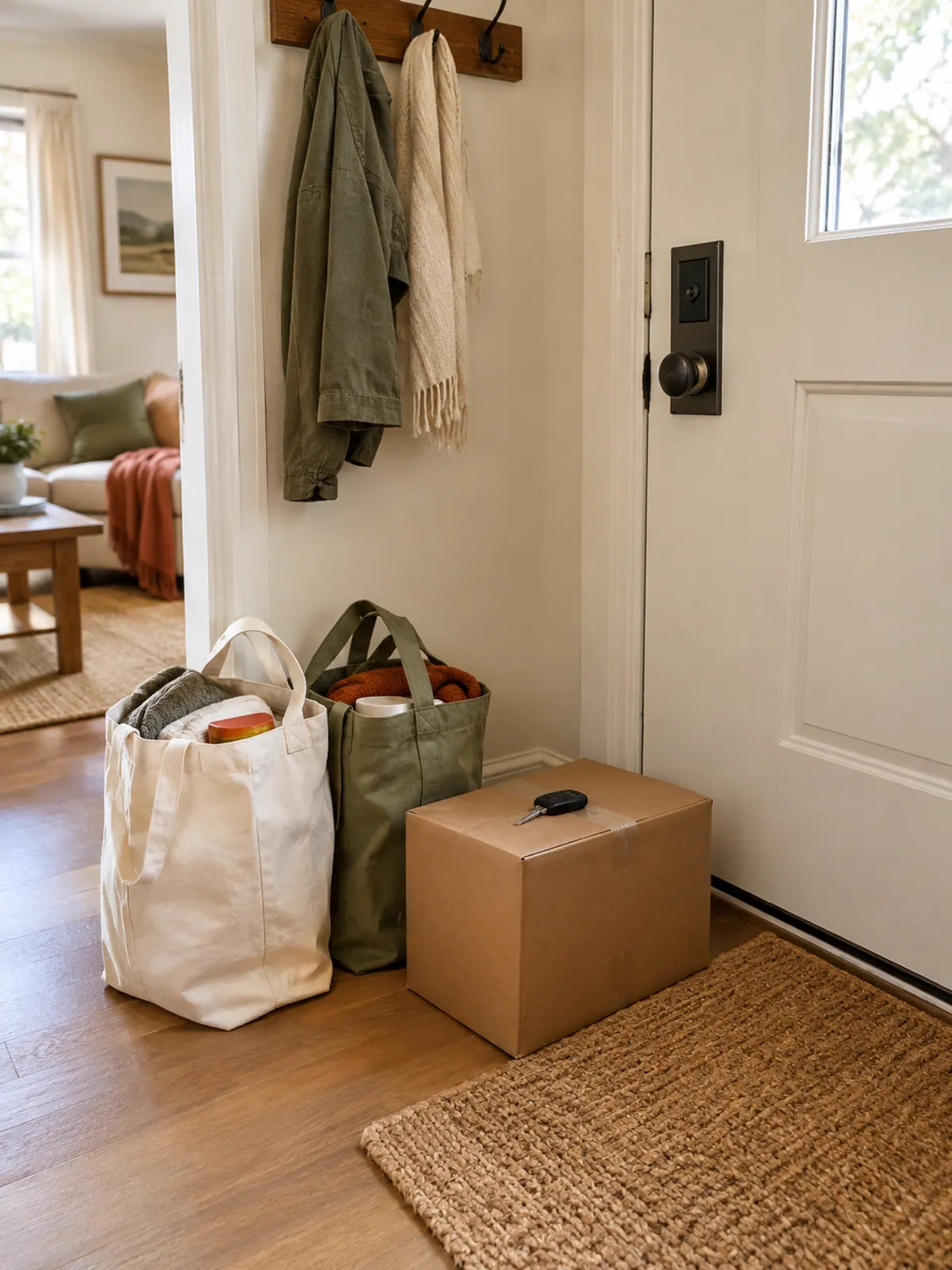
In a small apartment the donate pile needs one home: right by the front door, where you'll trip over it until it leaves. A closet hides it, and hidden bags become storage.
Give it a deadline of seven days. Drop clothes and housewares at a thrift store, offer furniture through a local Buy Nothing group, and check your city's site for e-waste and textile recycling.
How to declutter with no storage space
No closet space is the best reason to declutter first. Once the extras are gone, the storage you have usually covers what's left, and anything that still doesn't fit tells you exactly what bin or shelf to buy.
When you do buy, measure the shelf or under-bed gap first. Our small apartment organization ideas cover where everything goes next.
Buy after you declutter, not before
-
Clear storage bins, 6 qt, 10 pack
Typically $10 to $12
Small shelf and drawer zones once you know what's staying.
Check price on Amazon for Clear storage bins, 6 qt, 10 pack -
Clear latching storage tote, 28 to 41 qt
Typically $6 to $10
One bin per category on a closet shelf.
Check price on Amazon for Clear latching storage tote, 28 to 41 qt -
Under-bed storage bin, 66 qt
Typically $9 to $20
Seasonal clothes and spare bedding, out of sight.
Check price on Amazon for Under-bed storage bin, 66 qt
Mistakes that slow a small-apartment declutter
Pulling everything out at once. In 600 square feet you lose the floor, the bed and the couch. Do one drawer, shelf or zone at a time.
Keeping a maybe pile with no date. It turns into a permanent box. Date it and set a reminder.
Buying organizers first. Bins make clutter look tidy, not smaller.
Starting with photos and gifts. You'll stall on the first box. Leave them for last.
Three ways to run it
The 15-minute version. One zone row from the table each evening, timer on, done when it rings. A one-bedroom takes about two weeks this way.
The weekend version. Zones 1 to 4 on Saturday, 5 to 7 on Sunday, donations out Monday.
The moving version. Start a month before the move and pack the Keep box straight into moving boxes, so you only move what passed.
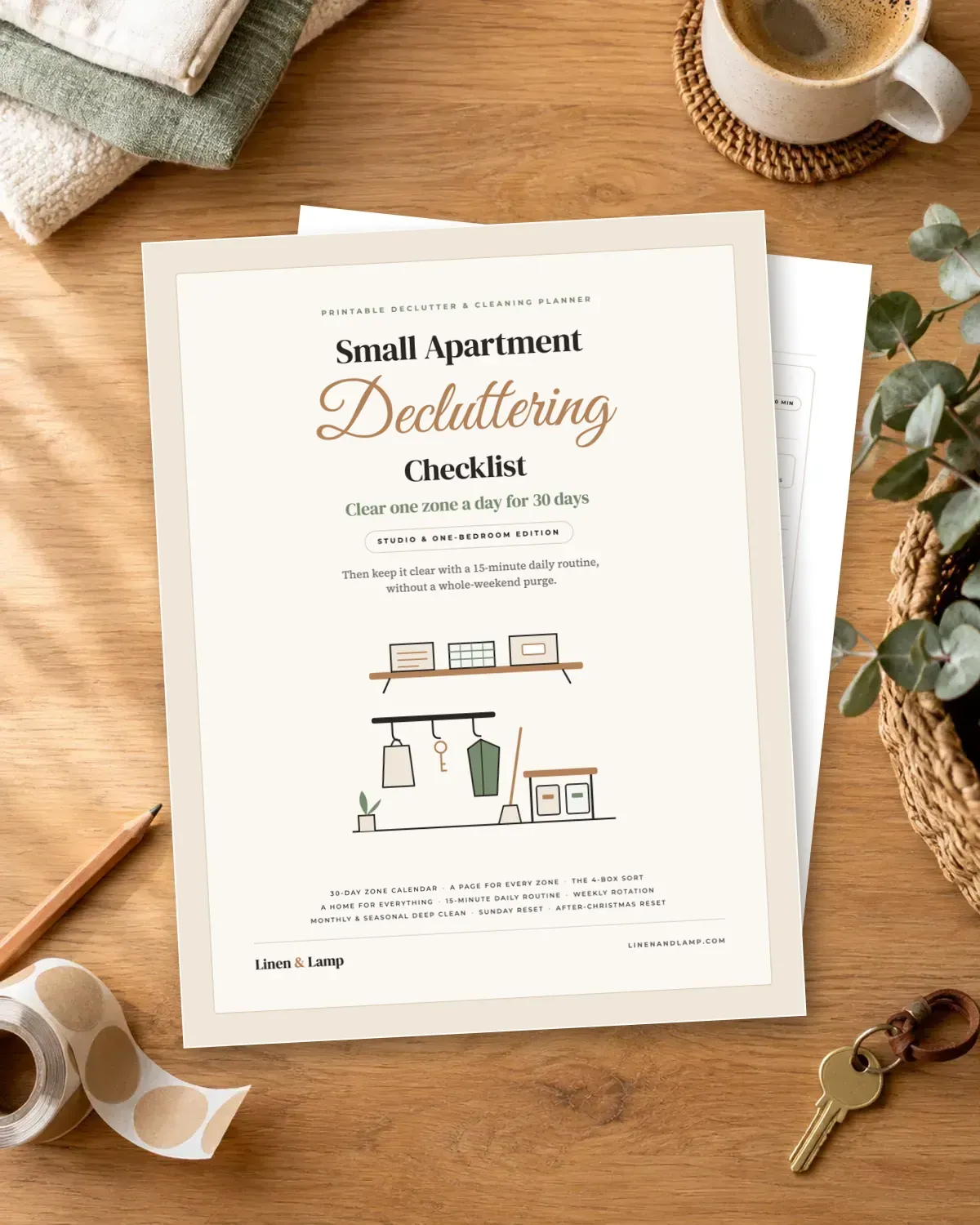
If you want a weekend plan with a free printable and nightly and Sunday routines to keep it clear, our new year home reset checklist has both. If you'd rather go slower, the 30-Day Small-Apartment Declutter + Cleaning Reset ($9, 32 pages) gives you one small zone a day, numbered not dated, with a timer length, an ordered checklist and a 4-box tally for each, plus a where-to-donate guide and a donation log.
Frequently asked questions
Where do I start decluttering a small apartment?
Start at the entry, then the bathroom. Both are small, full of easy decisions like expired products and extra bags, and visible every day, so you build speed before the kitchen and closet.
What is the 20/20 rule for decluttering?
Popularized by The Minimalists, it says that if you could replace an item for under $20 in under 20 minutes, you can let it go when you're unsure. Use it as a tiebreaker for just-in-case items.
How do I declutter with no storage space?
Declutter first and buy storage last. Once extras are gone, existing closets and shelves usually hold what's left. Then measure the gaps and buy bins to fit them.
What should I get rid of first?
Expired products, duplicates, broken things and trash: old mail, lidless containers, chargers with no device. They need no hard decisions.
How long does it take to declutter an apartment?
A one-bedroom of about 600 square feet takes roughly 5 to 6 hours of focused work, plus a separate session for sentimental items. Spread it over a week of evenings or a weekend.
Is there a free printable decluttering checklist?
Yes. Our new year home reset checklist is a free printable with a weekend zone plan and nightly and Sunday routines. Find it in the new year home reset article.
Save it for later
Pin this to your Organization board so it's there when you need it.
Save to Pinterest