This post contains affiliate links. As an Amazon Associate we earn from qualifying purchases, at no extra cost to you. Read our disclosure.
Key takeaways
- A full-width rod doubler adds a second rod of the same length for short clothes, which is what doubles hanging space.
- Empty and edit the closet before you buy any organizer.
- Measure rod width, rod height, depth and door type first.
- Use the gap under the shelf, the floor under short clothes and the back of a hinged door.
- Keep coats and heavy bags off tension rods and adhesive hooks.
In this post34 sections
- Start here: empty the closet and measure it
- Space saving hanging rod hacks
- 1. Hook a closet rod doubler under the existing rod
- 2. Swap to matching slim velvet hangers
- 3. Stack pants on tiered hangers
- 4. Hang outfits down with cascading hooks
- 5. Add a lower rod with a heavy-duty tension rod
- Bedroom clothing storage shelves: fold, file and divide
- 6. Clip shelf dividers between sweater stacks
- 7. Slide a wire basket under the shelf
- 8. Hang a fabric shelf organizer from the rod
- Bedroom clothing storage drawers
- 9. Roll a slim drawer unit under the short clothes
- 10. File-fold tees in drawers with dividers
- Bedroom clothing storage baskets
- 11. Line the top shelf with matching labeled baskets
- 12. Keep one donate bin in the closet
- Over-the-door ideas that need no drilling
- 13. Hang a clear-pocket organizer on the closet door
- 14. Add adhesive hooks inside the door for belts and bags
- Closet floor ideas: shoe boxes and bins
- 15. Stack clear drop-front shoe boxes
- Clothing storage open wardrobe: no doors, sliding doors and deep closets
- 16. Swap the closet doors for a curtain on a tension rod
- 17. Light the closet with a battery motion-sensor bar
- How to organize a small closet for two people
- 18. Split the rod by length, not by person
- DIY small closet organization under $20
- Make it look aesthetic: matching hangers, bins and light
- 19. Hang by type, then by color from light to dark
- Small closet organization mistakes that waste space
- Keep it organized: the 30-day reset closet days
- Shop the small closet organization list
- FAQ
Most rental closets are a reach-in: one rod, one shelf, a strip of floor and a door, usually 24 inches deep and somewhere between 36 and 60 inches wide. Every idea below fits that box, and every one hooks over, presses in, sticks on or stands on its own, so nothing needs a drill or a landlord's sign-off.
Start here: empty the closet and measure it
Organizers bought before the closet is edited just store clothes you no longer wear. Take everything out, sort it into keep, relocate, donate and toss, and only then measure. The free Cozy Small-Space Makeover Planner has a shopping list with a column for dimensions and the return window, which is where these numbers go.
| Measure | Typical in a reach-in | Why it matters |
|---|---|---|
| Rod width, wall to wall | 36 to 60 in | Sets the doubler width and how many hangers fit |
| Rod height from the floor | About 66 in on a single rod | Decides if a lower rod fits underneath |
| Closet depth | About 24 in | Hangers need roughly 22 in to swing clear |
| Gap from rod to shelf | Often 10 to 14 in | Room for under-shelf baskets |
| Door type and clearance | Hinged, bifold or sliding | Over-door racks only work on hinged doors that still close |
| Floor under short clothes | About 40 in of drop | Space for drawers or shoe boxes |
Space saving hanging rod hacks
This is where the title's promise comes from. In a reach-in, the hanging rod is the most valuable inch of storage, and most closets use only the top half of the height under it.
1Hook a closet rod doubler under the existing rod
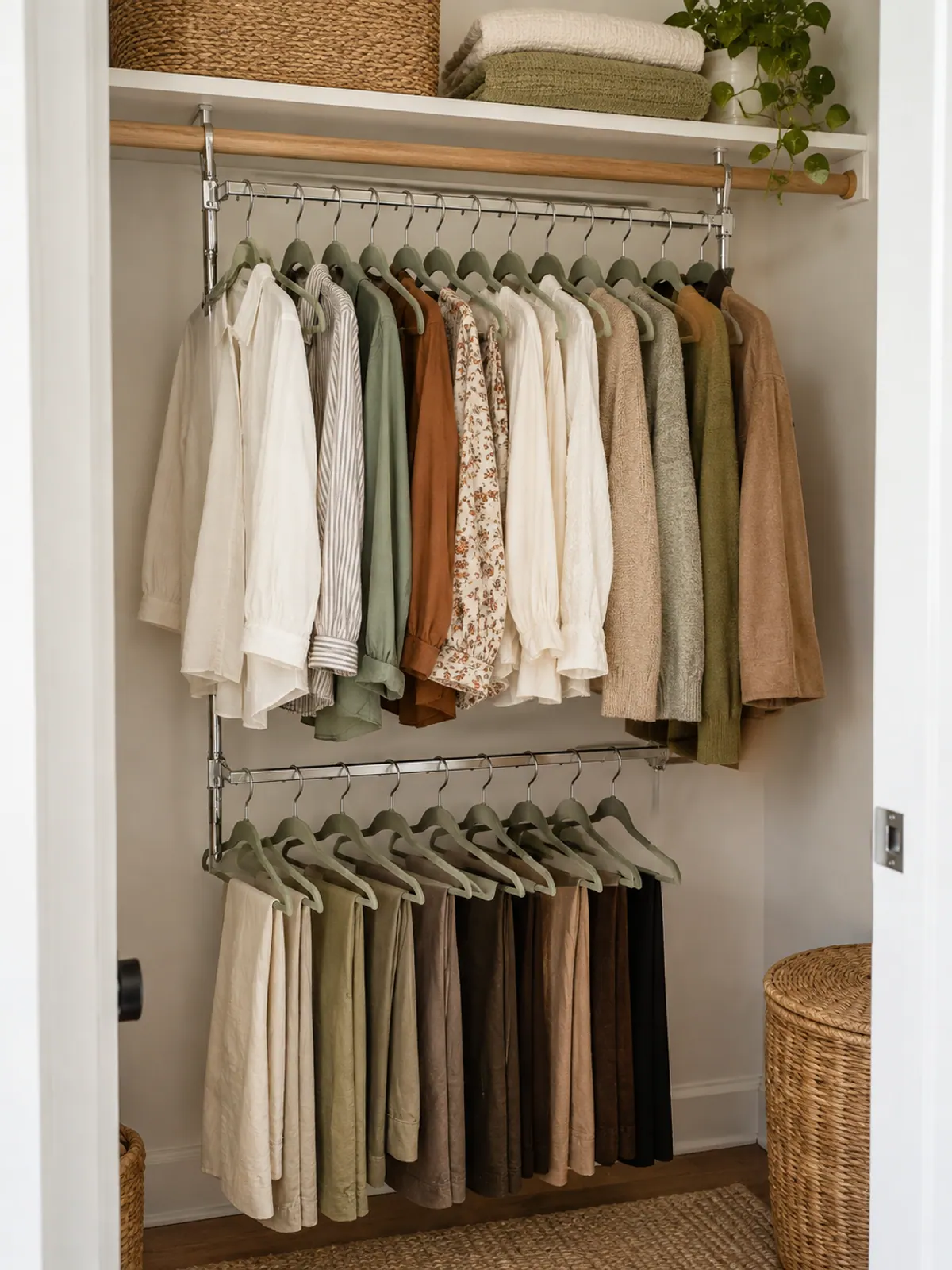
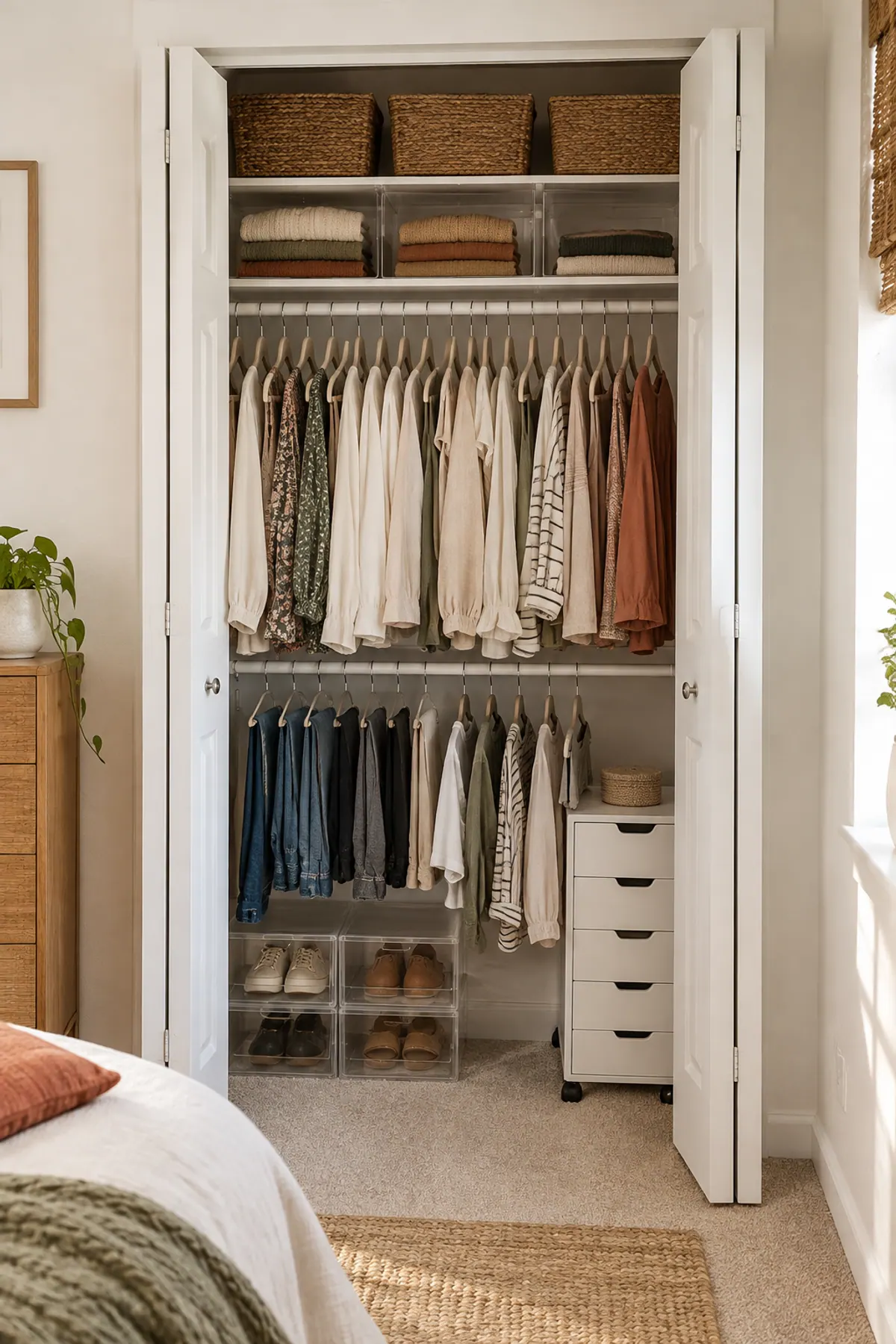
A rod doubler hangs from your existing rod on two hooks and adds a second rod about 3 feet lower. If the doubler is as wide as your rod, you get the same length of rod again: a 48-inch rod plus a 48-inch doubler is 96 inches of rod for shirts, blouses and folded pants.
That is the concrete version of "double your space". It only doubles space for short pieces, so keep dresses and coats on a section of the top rod that has no doubler under it. Adjustable doublers are sold in a range of widths, so check the listing against your rod.
- Check the rated load on the pack. A doubler hangs from the top rod, so both rods' clothes sit on the original bracket.
A second rod with no tools.
2Swap to matching slim velvet hangers
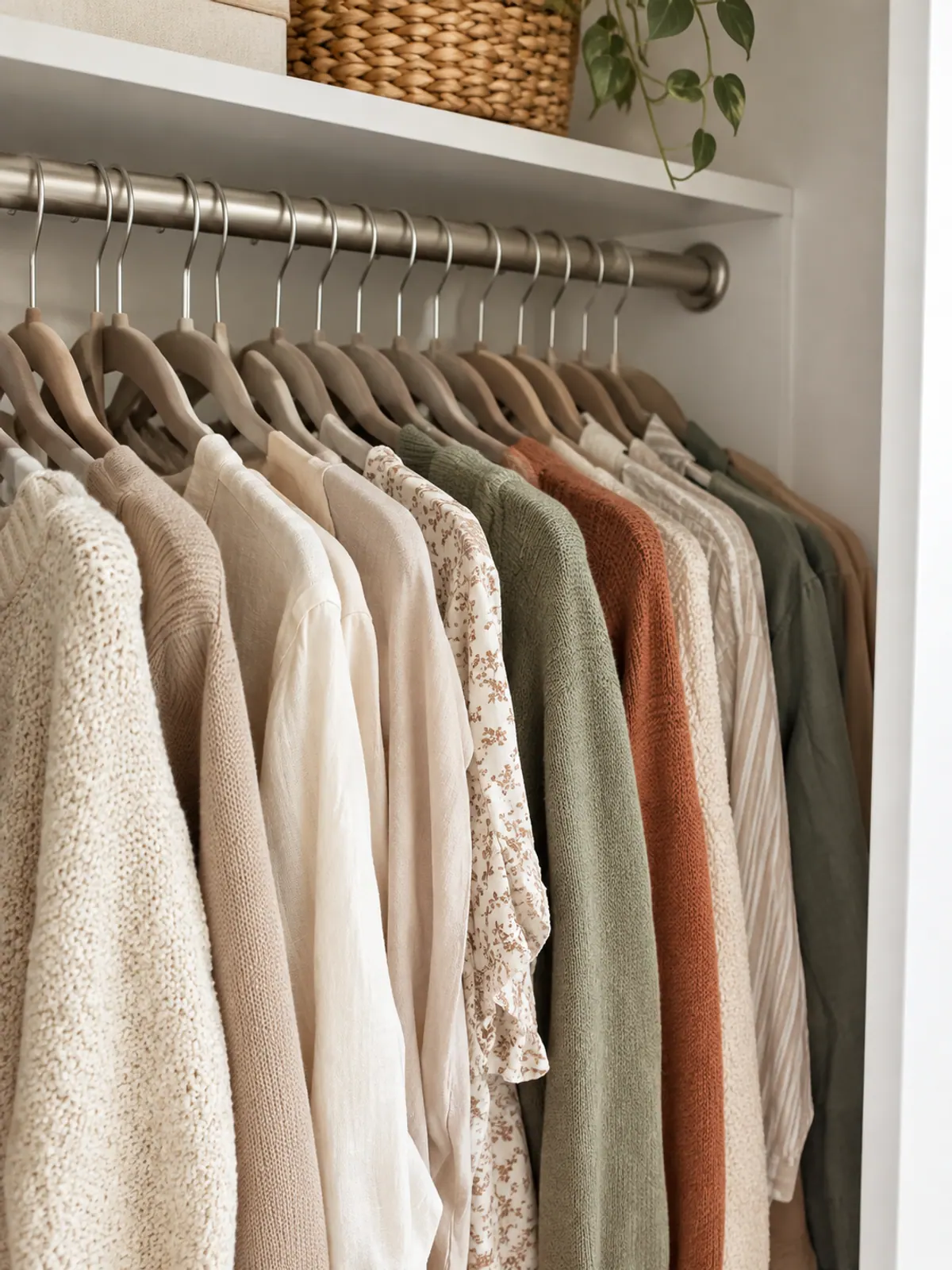
Chunky plastic and wood hangers take up much more rod width than slim velvet ones, and mismatched hangers sit at different heights, which wastes space under every piece. A full set of slim, flocked hangers lines everything up at one height and stops tops from sliding off.
Buy them in one color. A row of the same hanger is also the cheapest way to make a small closet look calm when the door is open.
- Move the old hangers out as you swap. A bag of spare hangers in the closet is clutter.
Thinner than plastic, and nothing slides off.
3Stack pants on tiered hangers
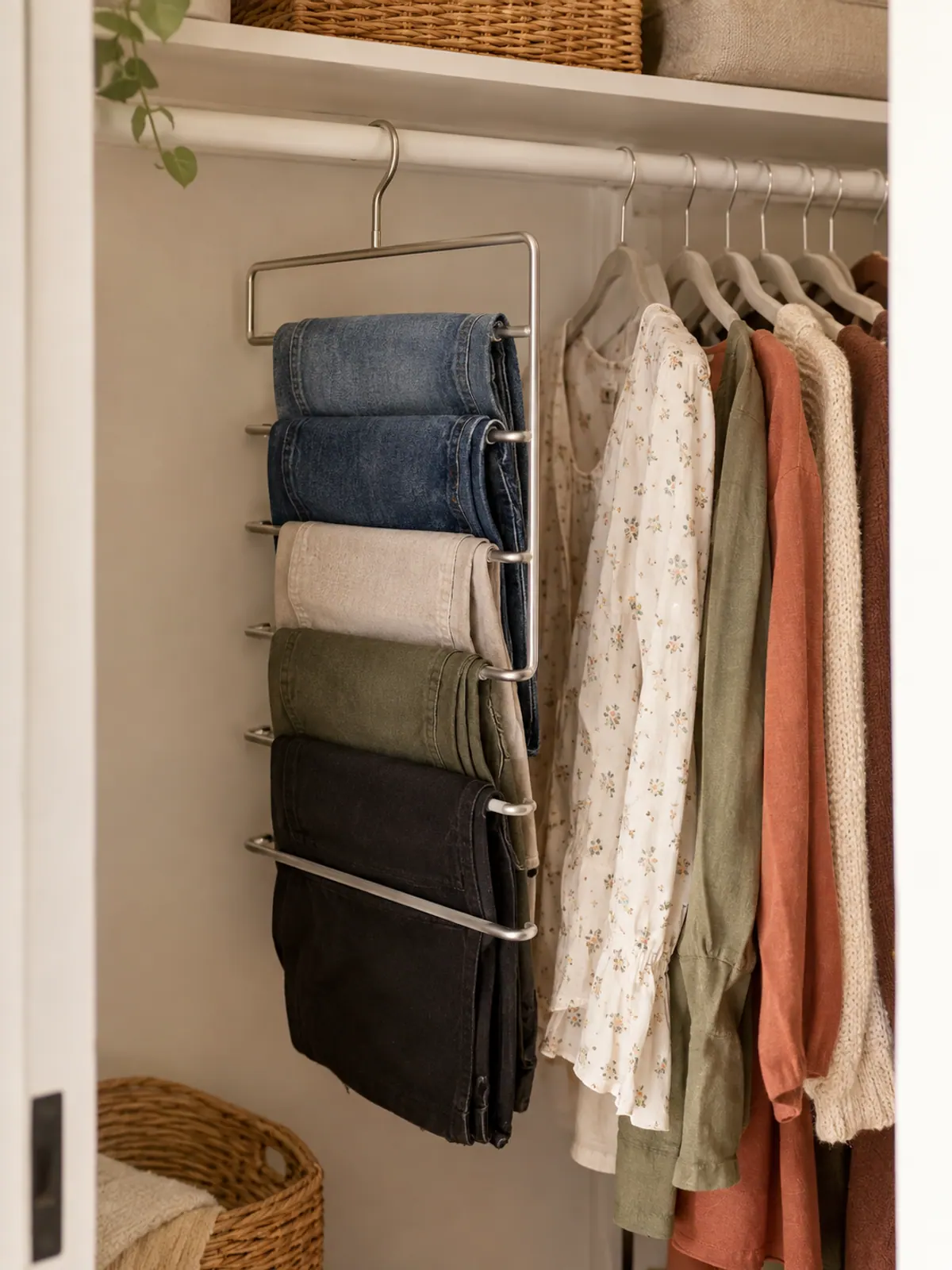
A five-tier pant hanger holds five pairs of jeans or trousers in the rod width of one hanger, stacked down instead of across. The bars swing out on some styles, so you can pull the middle pair without unloading the others.
Hang it in the short-hang zone, since five folded pairs drop about the same length as one shirt.
- Put the pairs you wear most on the top bar, where they are easiest to grab.
Five pairs in the space of one hanger.
4Hang outfits down with cascading hooks
Cascading hanger hooks clip over one hanger and let the next hang below it, so a top, a cardigan and a scarf for one outfit take one slot on the rod. They work best for light pieces like blouses, camisoles and tanks.
They are also the cheapest fix of the lot, often sold in packs of a dozen or more.
- Cascade only light tops. Heavy knits pull the chain long and crease the shoulders.
Stacks light tops in one slot.
5Add a lower rod with a heavy-duty tension rod
If your closet has solid side walls, a tension rod pressed between them about 40 inches off the floor works as a lower rod for skirts, camisoles and folded pants. Unlike a doubler, it takes no weight off the top rod.
It is only as strong as its grip, so keep it for light clothes and check the rated load on the pack.
- Put the rubber end caps on painted wall, not on trim, and twist it tight before you load it.
Bedroom clothing storage shelves: fold, file and divide
The shelf over the rod is often 12 to 16 inches deep and wasted on one tall, tipping pile. Dividers and baskets turn it into three or four neat stacks you can reach.
6Clip shelf dividers between sweater stacks
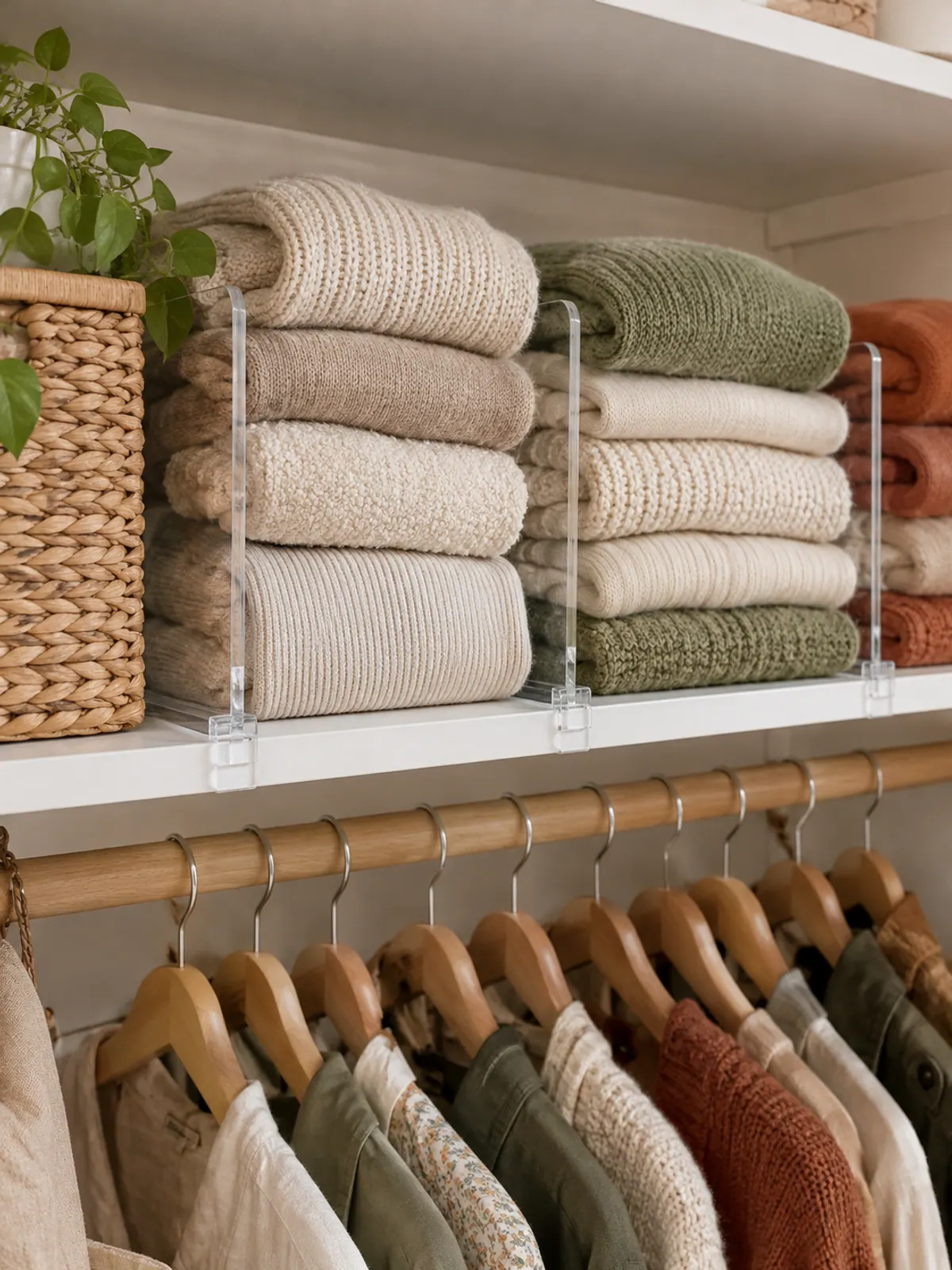
Clear acrylic or wire shelf dividers slide onto the shelf edge and hold folded sweaters upright, so the stacks stay tall without falling into each other. On a 48-inch shelf, four dividers make five stacks.
Check the shelf thickness before you order. Most clip-on dividers list the thickest shelf they fit, and many rental shelves are about three quarters of an inch.
- Fold sweaters to the same width, roughly the width of a magazine, so every stack lines up.
Keeps folded stacks from toppling.
7Slide a wire basket under the shelf
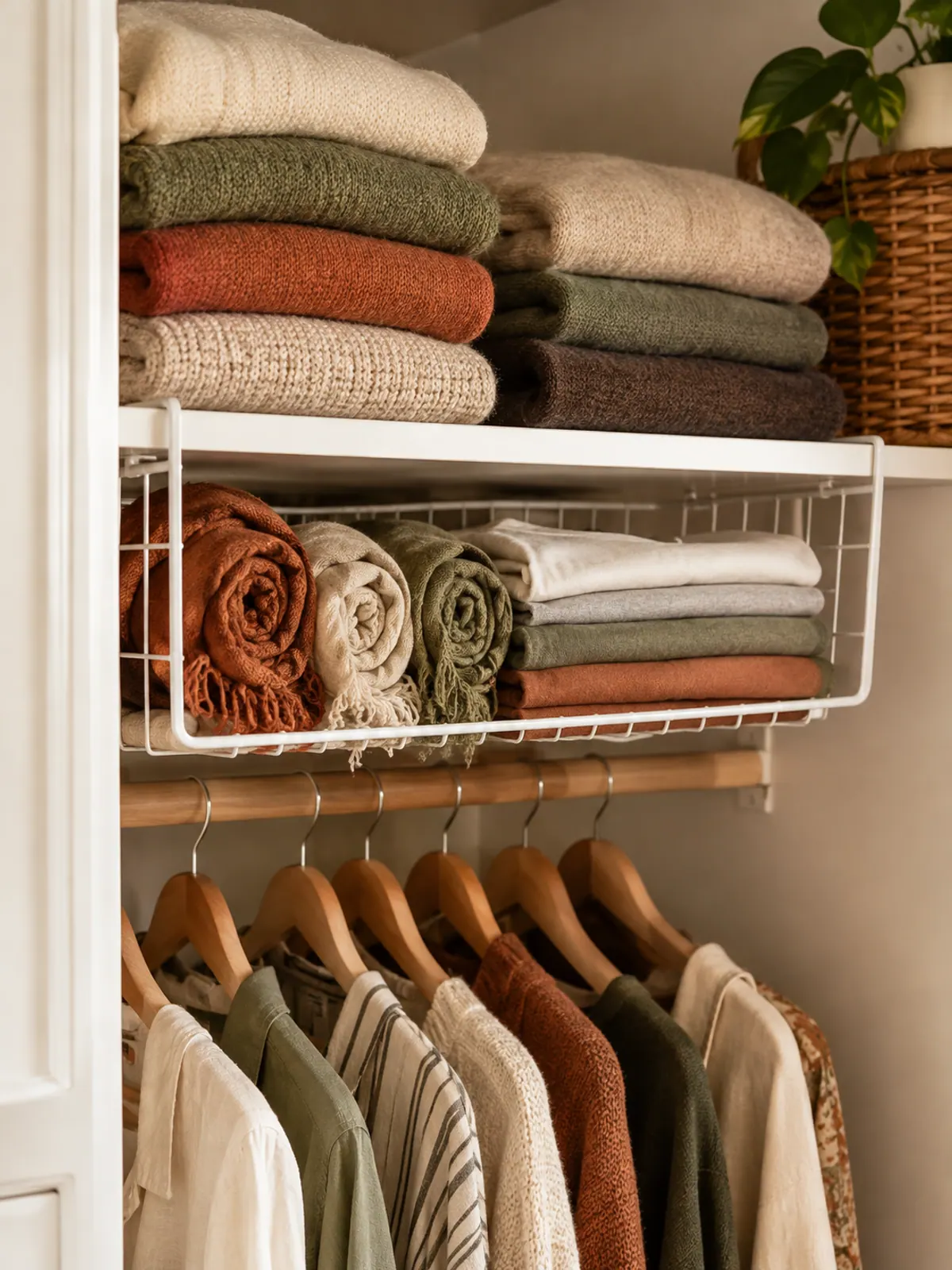
An under-shelf basket slides onto the shelf from the front and hangs below it, in the gap above the hangers. It holds rolled tees, scarves or gym clothes in space that was empty air.
Measure the gap between the shelf and the hanger hooks first. You need the basket depth plus room to lift a hanger off the rod.
- Use it for small, light things. A basket full of jeans can pull the shelf edge down.
Uses the empty gap under the shelf.
8Hang a fabric shelf organizer from the rod
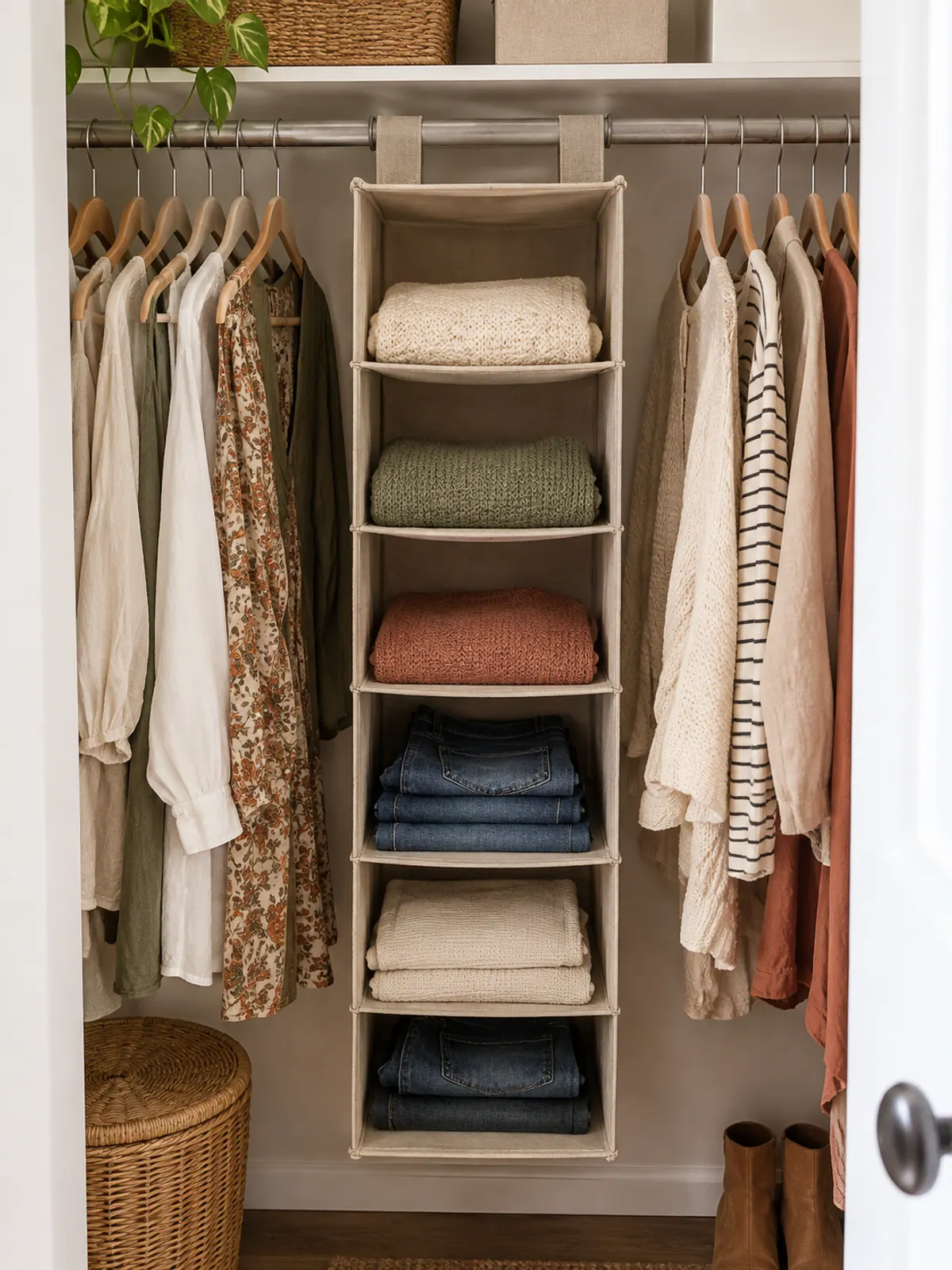
A hanging fabric organizer with six cubbies turns about 12 inches of rod into stacked shelves for sweaters, jeans and bags. It is the closest thing to a built-in shelf unit a renter can add, and it comes down with the hangers when you move.
It does take rod space from hanging clothes, so use it for pieces that are better folded anyway, like knits that stretch on hangers.
- Pick one with a stiff board in each shelf so the cubbies do not sag in the middle.
Folded storage with no install.
Bedroom clothing storage drawers
9Roll a slim drawer unit under the short clothes
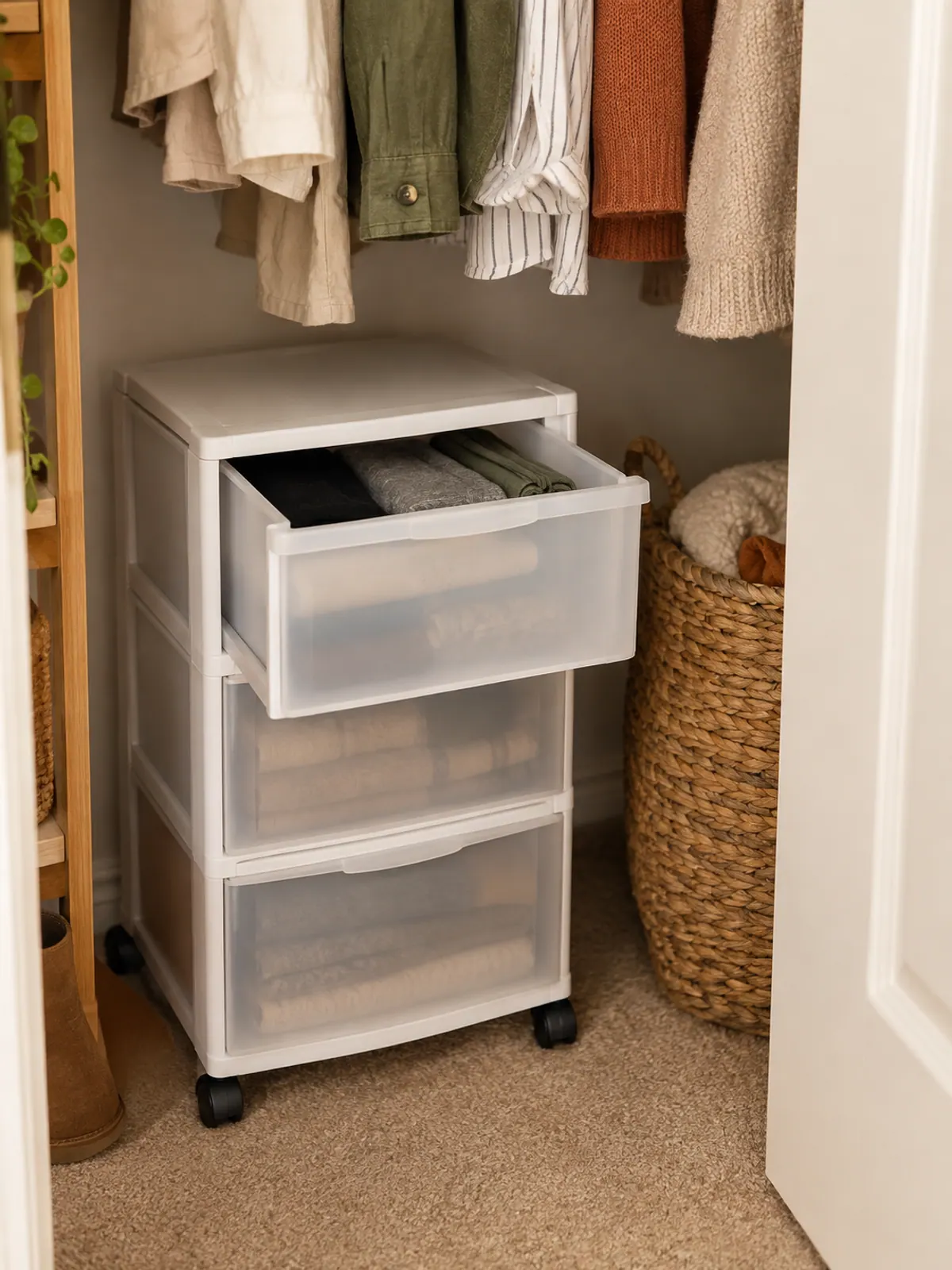
Under a doubler or short-hang section, there is often 30 to 40 inches of floor height doing nothing. A narrow three-drawer rolling unit fills it with leggings, socks and pajamas, and it can replace a dresser in a bedroom too small for one.
Measure the closet depth and the clearance under the hems. The drawers need to pull out past the door frame.
- Clear or white drawers keep a small closet light. Dark ones read as a hole.
Turns floor space into a dresser.
10File-fold tees in drawers with dividers
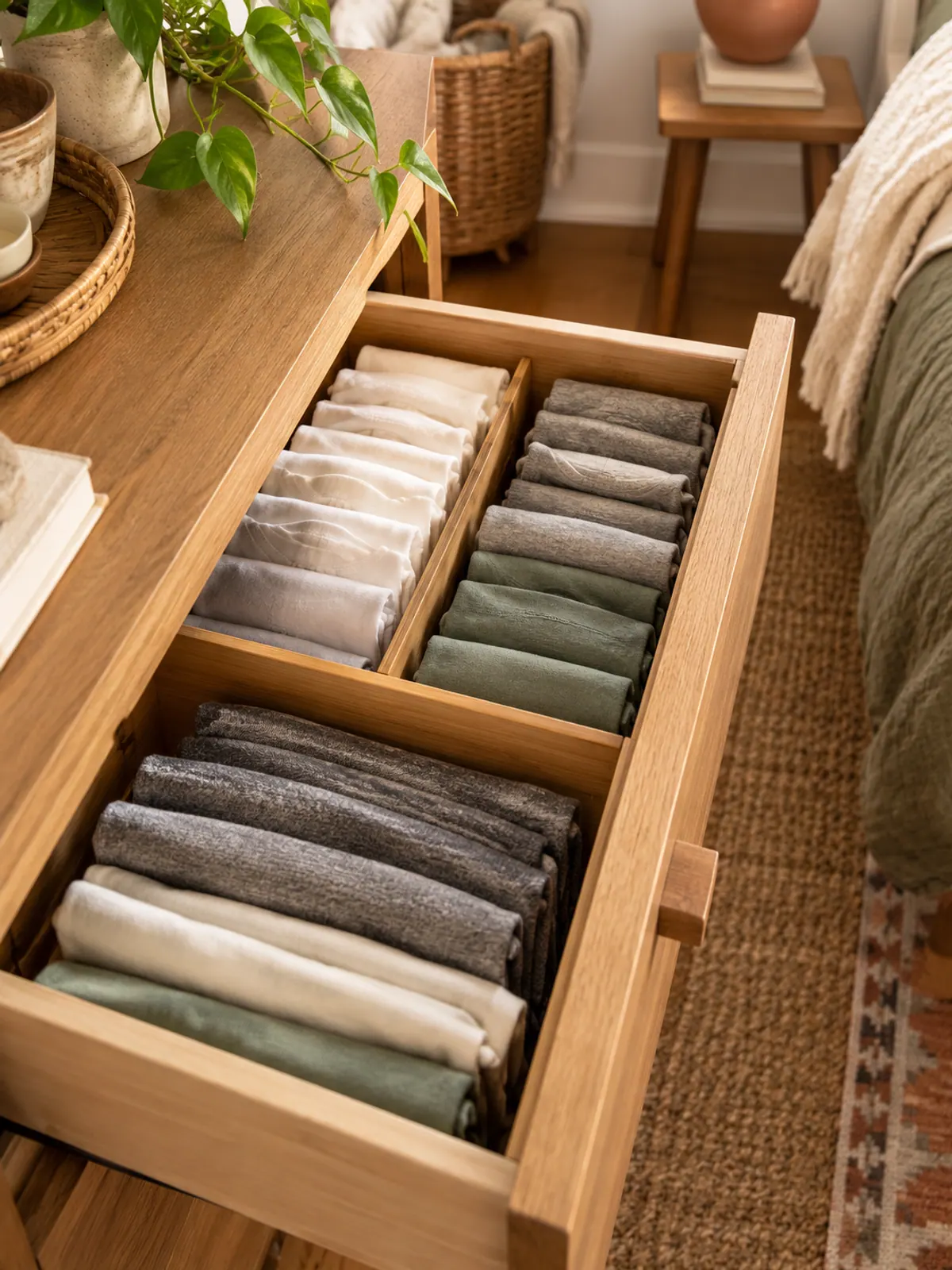
Folding t-shirts into small upright rectangles and standing them in rows, like files, lets you see every one when the drawer opens. Expandable bamboo dividers keep the rows from flopping over as the drawer empties.
It works in the closet drawer unit and in any dresser in the room, and the dividers come out in seconds.
- Fold each tee to the drawer's depth so the rows stand on their own.
Keeps file-folded rows standing.
Bedroom clothing storage baskets
11Line the top shelf with matching labeled baskets
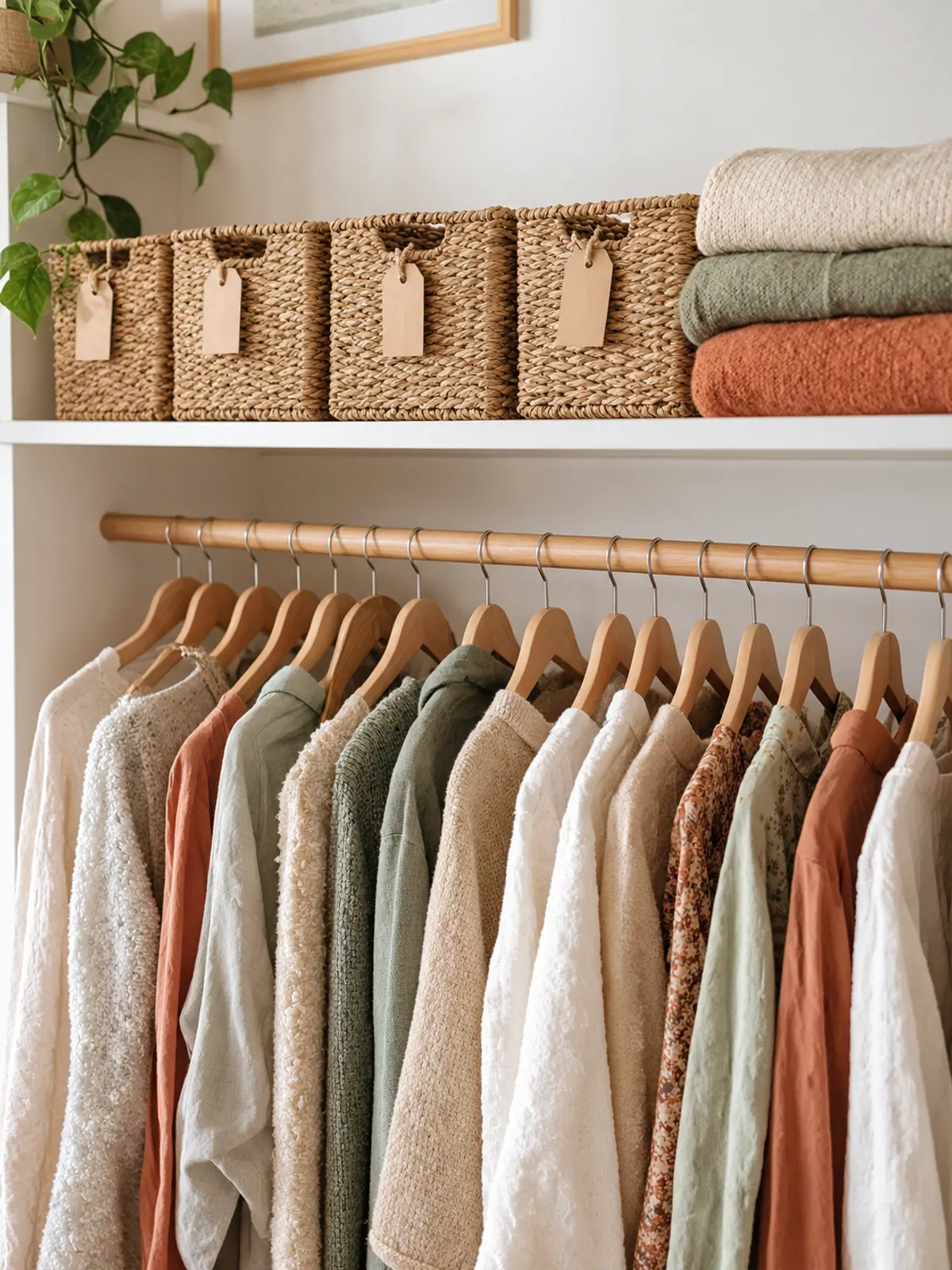
Three or four matching baskets on the high shelf hold the things that do not fold well: belts, swimwear, off-season hats, the bag of spare buttons. A tag on each one means you can find things without pulling every basket down.
Measure shelf depth and the height to the ceiling before you buy, and pick baskets with handles you can reach from below.
- Keep off-season clothes up here and swap them in spring and fall.
Hides small things and looks calm.
12Keep one donate bin in the closet
A single basket on the floor or shelf for clothes you have stopped wearing does more for a small closet than any organizer. When it is full, it goes to donation, and the space it frees stays free.
One in, one out works the same way: every new piece means one goes in the bin.
- Turn every hanger backward at the start of a season. Anything still backward at the end is a donate candidate.
Over-the-door ideas that need no drilling
13Hang a clear-pocket organizer on the closet door
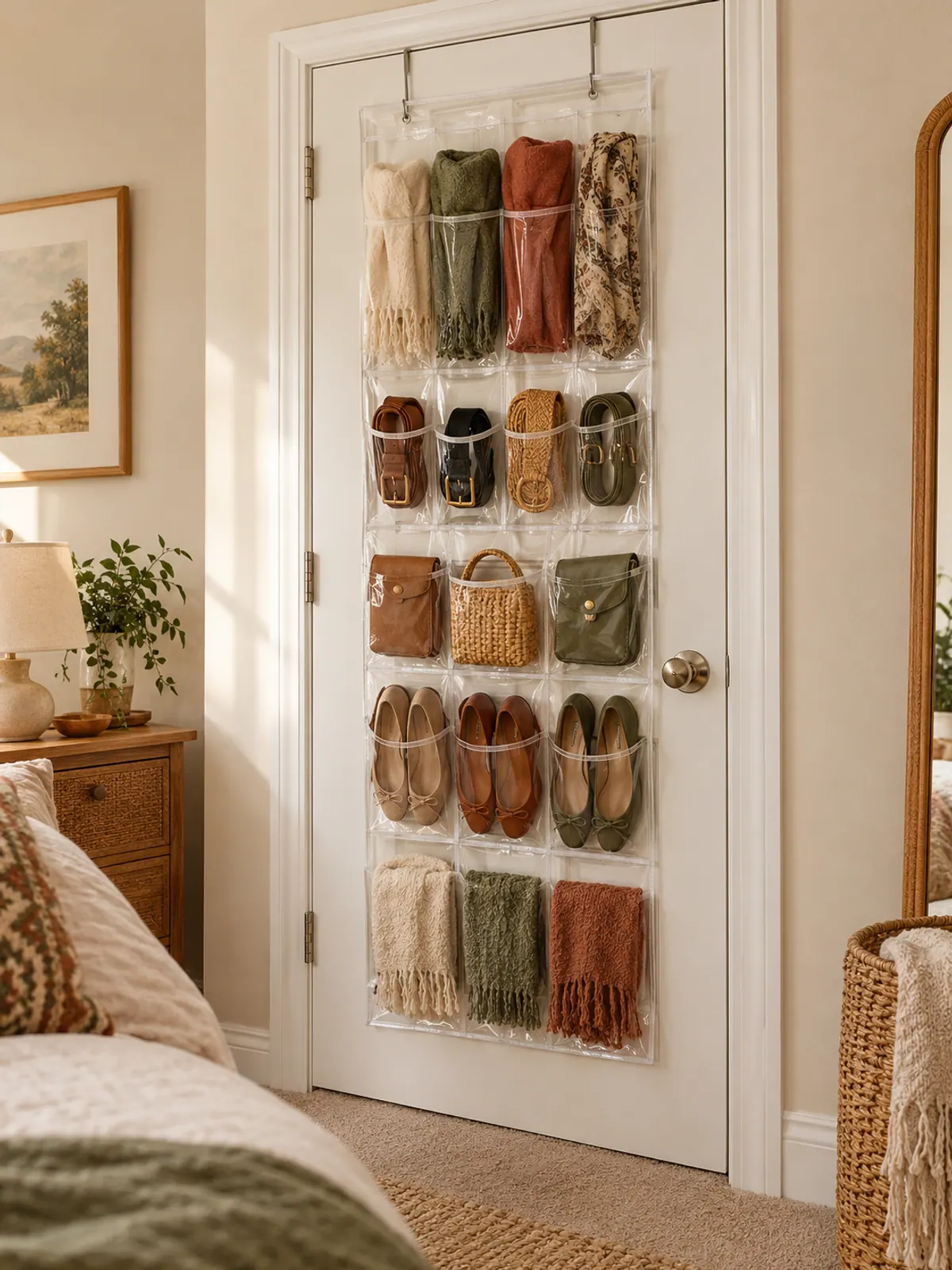
An over-the-door organizer with clear pockets holds flats, belts, scarves and small bags on the back of a hinged closet door. It hooks over the top, so there is nothing to screw in.
Close the door with the hooks on before you load it. Some tight frames need thin, flat hooks, and the pockets add a few inches of depth that can catch on hanging clothes.
- Sliding and bifold doors cannot take these. Use the bedroom door instead.
Door storage with no screws.
14Add adhesive hooks inside the door for belts and bags
Two or three adhesive hooks on the inside of a hinged closet door hold belts, a robe or tomorrow's bag. Hooks rated for a few pounds are fine for belts; a loaded tote needs a hook rated for more.
On a hollow-core door, adhesive is safer than screws anyway, and it pulls off clean when you follow the removal tab.
- Press each hook for 30 seconds and wait an hour before hanging anything.
Hooks without a hole.
Closet floor ideas: shoe boxes and bins
15Stack clear drop-front shoe boxes
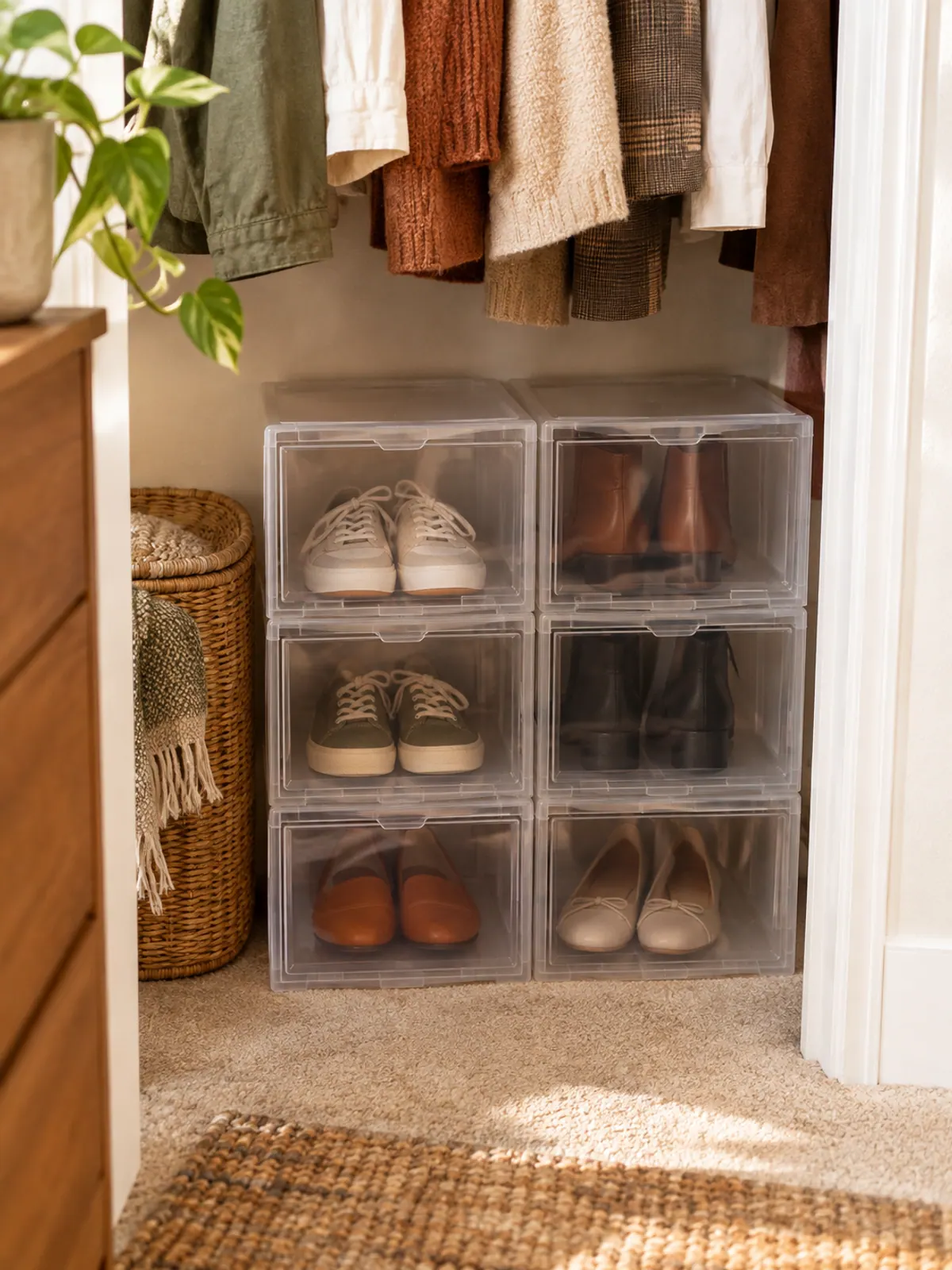
Clear shoe boxes with a front that drops open let you stack shoes four or five high and still pull out the bottom pair. They turn a heap on the closet floor into a short, tidy tower.
Measure the floor depth and the height under the hems before you choose how many. Boot-height boxes are taller, so count those separately.
- Keep only the shoes you wear this season in the closet. The rest go in a bin on the top shelf.
See every pair, stack them high.
Clothing storage open wardrobe: no doors, sliding doors and deep closets
16Swap the closet doors for a curtain on a tension rod
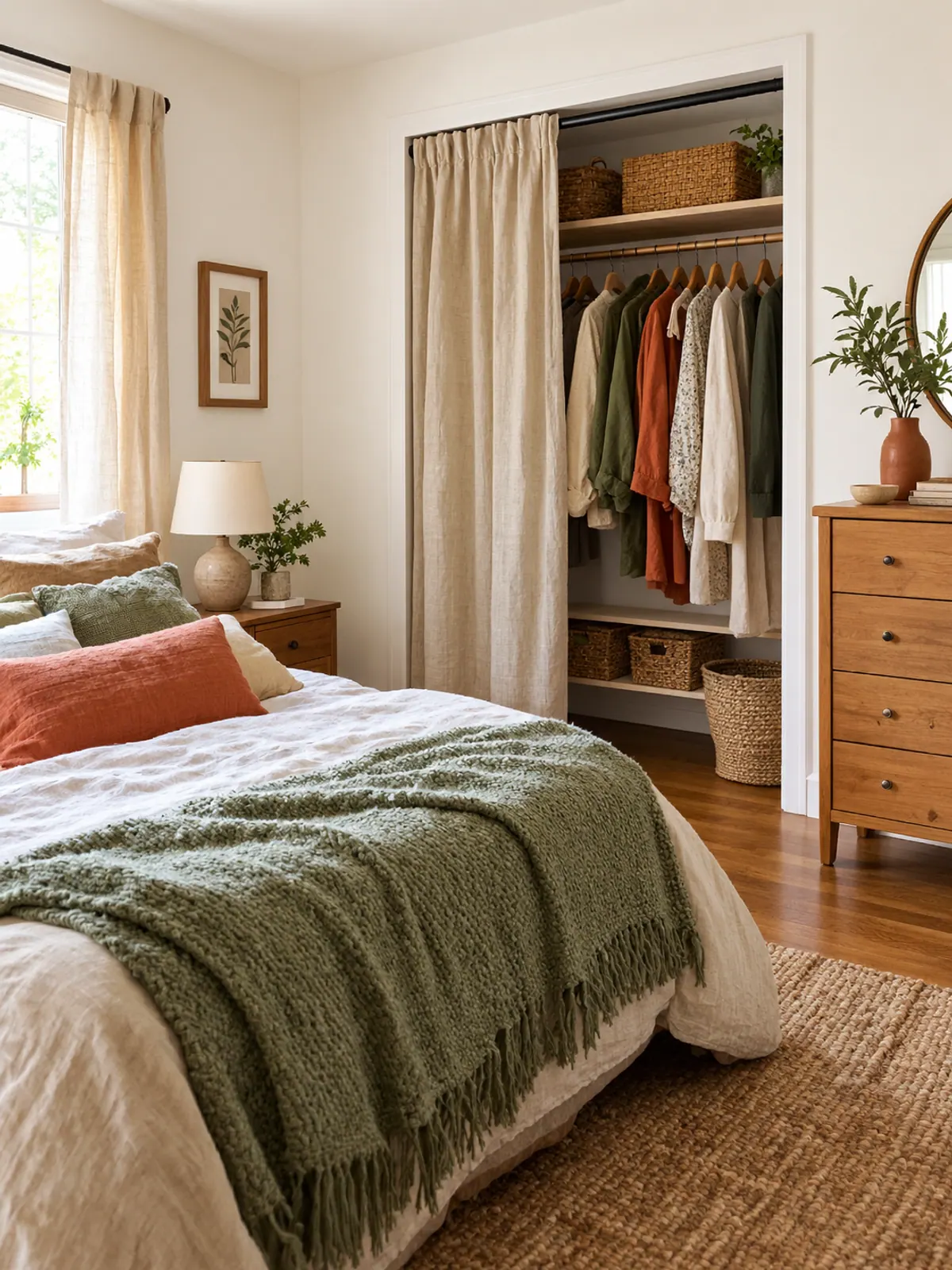
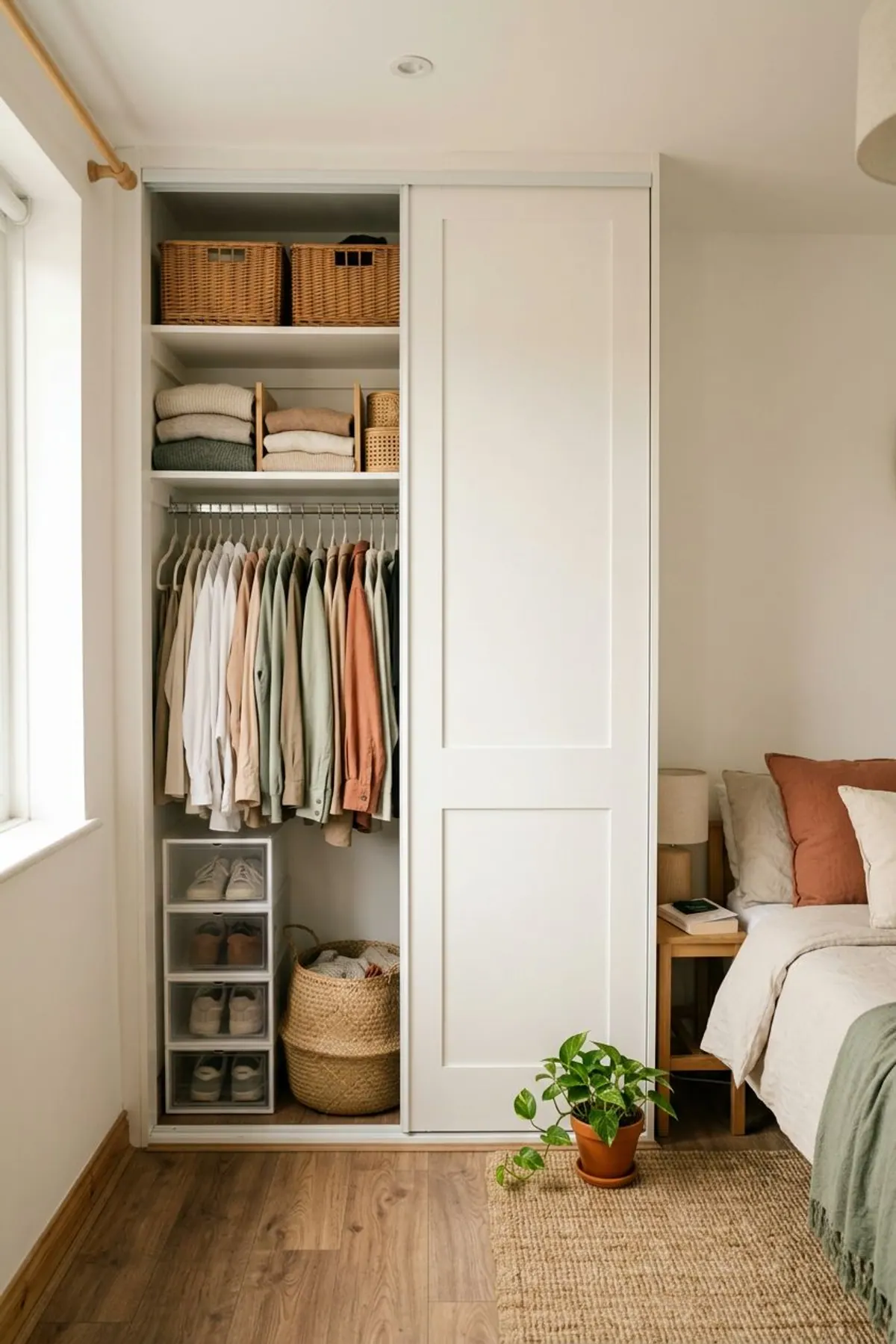
Bifold and sliding doors cut the opening in half, so you only ever see one side of the closet. A linen curtain on a tension rod inside the opening opens the full width and softens the room, which is the open-wardrobe look from the chips.
Taking doors off is a landlord question, so ask in writing, store the doors and hardware in a labeled bag, and put them back before move-out.
- On a sliding-door closet you cannot remove, keep the most-worn clothes on the side that opens first.
Opens the full closet width.
17Light the closet with a battery motion-sensor bar
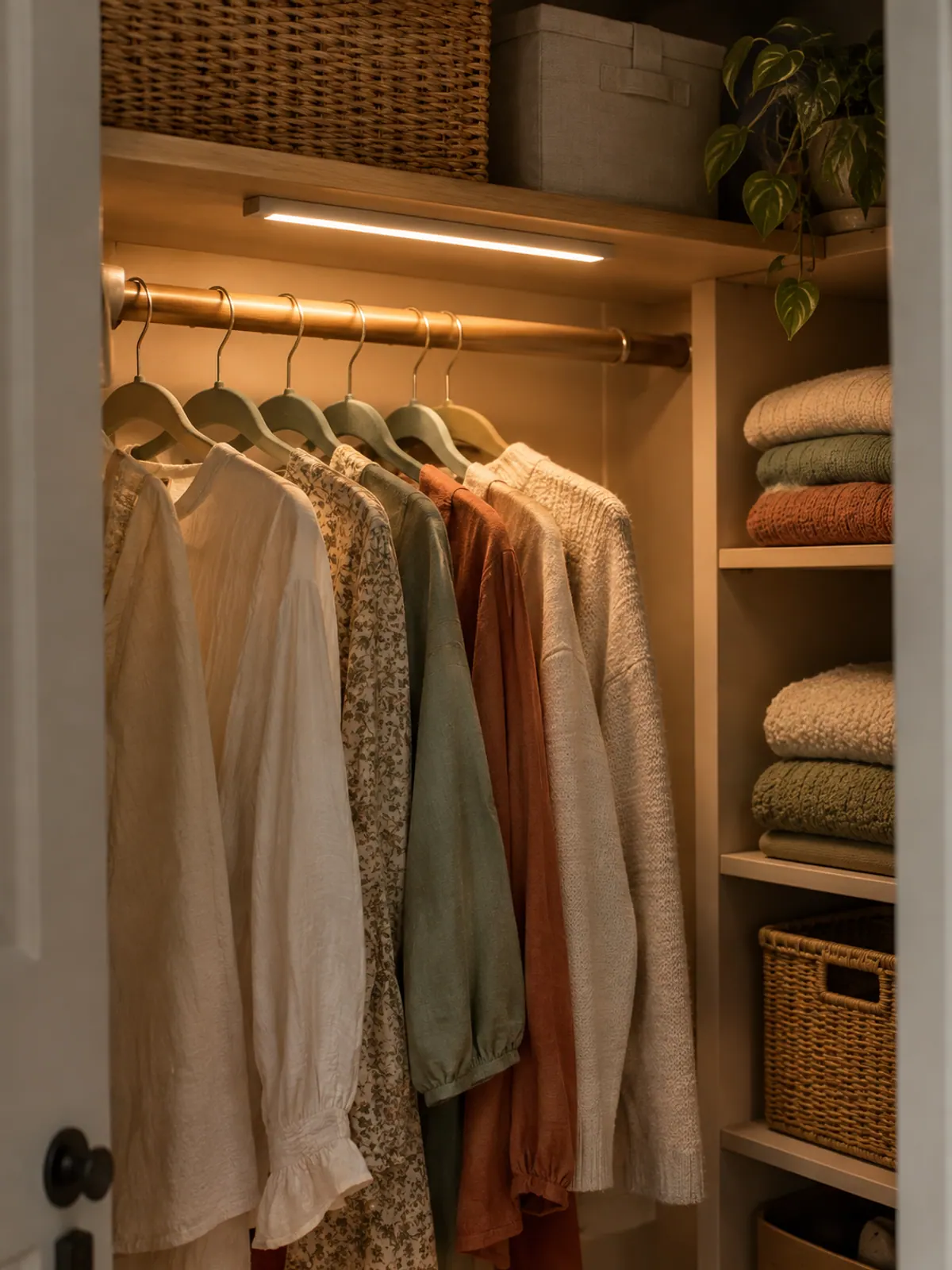
Most reach-in closets have no light, so dark clothes disappear at the back. A rechargeable motion-sensor light bar sticks under the shelf with its magnetic or adhesive mount and turns on when the door opens.
It makes the whole closet feel bigger, because you can finally use the corners.
- Pick warm white light so cream and navy look like themselves.
Light with no wiring.
Deep closets (more than about 30 inches) waste the back half. Hang the most-worn pieces on the front of a doubler, and put the drawer unit or a basket of off-season clothes in the back corners, where you reach only twice a year.
How to organize a small closet for two people
18Split the rod by length, not by person
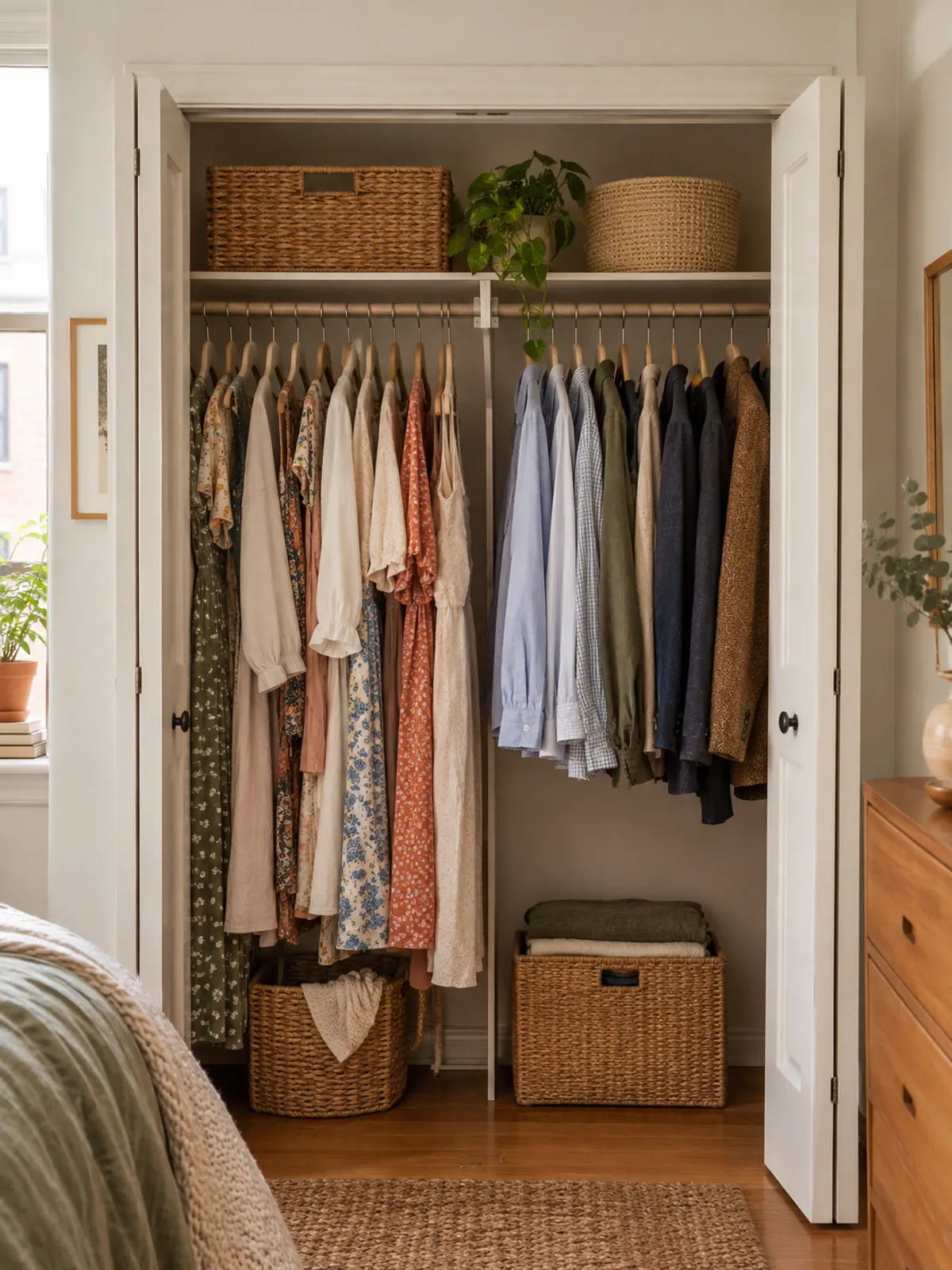
Two people in one 60-inch reach-in run out of room fast if the rod is just split down the middle. Put both people's long pieces on one end of the top rod, add a doubler under the other end, and split the short-hang rods and the shelf by person.
A small rod divider tag marks the line so things do not creep across.
- Give each person one basket on the shelf and one drawer on the floor. Equal is easier than fair.
| Zone | Person A | Person B |
|---|---|---|
| Top rod, long hang (24 in) | Dresses, coats | Coats, long jackets |
| Top rod over doubler (36 in) | Blouses | Button-downs |
| Doubler rod (36 in) | Pants, skirts | Pants |
| Shelf | Two baskets, one stack | Two baskets, one stack |
| Floor | Drawer unit | Shoe boxes |
If the closet still will not hold two wardrobes, a clothing rack in the bedroom takes the overflow. Our small bedroom ideas show how to style a rack so it looks like decor, plus the under-bed space this list leaves alone.
DIY small closet organization under $20
Not every fix needs a cart. These cost little or nothing:
Under-$20 small closet fixes
The same over-the-door trick works on a pantry: the small kitchen ideas for renters guide uses one for jars and wraps.
Make it look aesthetic: matching hangers, bins and light
An organized closet looks good when three things match: the hangers, the bins and the light. Pick one hanger color, one basket material and warm white light, and the closet reads as a single calm block even when it is full.
19Hang by type, then by color from light to dark
Group the rod by type first: shirts, then blouses, then trousers, then dresses. Inside each group, run the colors from light to dark. It takes about ten minutes, costs nothing, and makes even a full reach-in look calmer, because the eye reads one gradient instead of a jumble.
It also shows you what you own too much of. Five near-identical navy tops in a row is easier to spot, and to edit, than five tops spread across the rod.
- Do this after the edit in the first step, so you only sort what you are keeping.
Small closet organization mistakes that waste space
What we like
- Edit before you buy a single organizer
- Measure rod, depth and door before ordering
- Keep long clothes on one end so a doubler fits
- Use the shelf gap and the door
Keep in mind
- Buying bins first and sorting later
- Mixed hangers at mixed heights
- Heavy coats on tension rods or adhesive hooks
- Over-door racks on a door that then will not close
For hanging anything heavier on rental walls, the weight notes in our renter-friendly decorations guide apply all year.
Keep it organized: the 30-day reset closet days
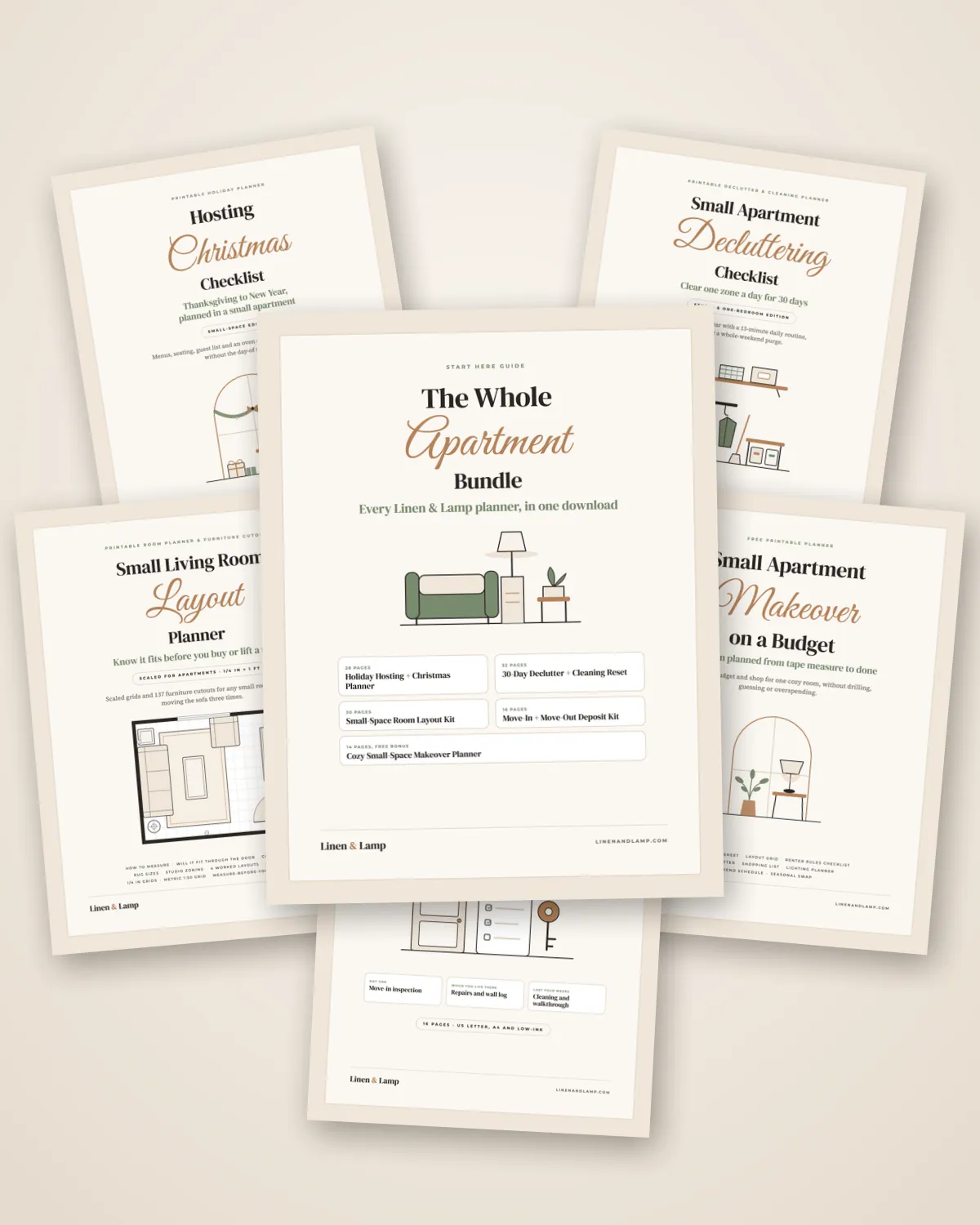
A closet stays organized when it gets a short visit on a schedule. The 30-Day Small-Apartment Declutter + Cleaning Reset gives the closet floor and the hanging clothes their own timed days, each with a Keep, Relocate, Donate and Toss tally, and a 15-minute routine to keep the rest of the apartment clear after.
Shop the small closet organization list
Small closet organization picks
-
Hanging closet rod doubler
Typically $12 to $25
A second rod, no tools.
Check price on Amazon for Hanging closet rod doubler -
Slim velvet hangers, 50 pack
Typically $18 to $35
Thinner than plastic.
Check price on Amazon for Slim velvet hangers, 50 pack -
Five-tier pant hangers, 2 pack
Typically $15 to $25
Five pairs per hanger.
Check price on Amazon for Five-tier pant hangers, 2 pack -
Cascading hanger hooks
Typically $8 to $15
Outfits in one slot.
Check price on Amazon for Cascading hanger hooks -
Clear acrylic shelf dividers
Typically $15 to $30
Stacks that stay up.
Check price on Amazon for Clear acrylic shelf dividers -
Under-shelf wire basket
Typically $12 to $25
Uses the shelf gap.
Check price on Amazon for Under-shelf wire basket -
Hanging closet shelf organizer
Typically $12 to $30
Folded storage, no install.
Check price on Amazon for Hanging closet shelf organizer -
Narrow rolling drawer unit
Typically $25 to $60
A dresser on the closet floor.
Check price on Amazon for Narrow rolling drawer unit -
Expandable bamboo drawer dividers
Typically $15 to $35
File-folding that stays put.
Check price on Amazon for Expandable bamboo drawer dividers -
Woven storage baskets with handles
Typically $25 to $50
Top-shelf storage.
Check price on Amazon for Woven storage baskets with handles -
Over-the-door clear pocket organizer
Typically $15 to $35
Door storage, no screws.
Check price on Amazon for Over-the-door clear pocket organizer -
Adhesive wall hooks
Typically $8 to $15
Belts and bags.
Check price on Amazon for Adhesive wall hooks -
Clear stackable shoe boxes, 12 pack
Typically $30 to $60
A tidy shoe tower.
Check price on Amazon for Clear stackable shoe boxes, 12 pack -
Linen curtain panel with a tension rod
Typically $20 to $45
The open-wardrobe look.
Check price on Amazon for Linen curtain panel with a tension rod -
Rechargeable motion-sensor closet light
Typically $12 to $30
Light with no wiring.
Check price on Amazon for Rechargeable motion-sensor closet light
Prices change often, so treat these as typical ranges, and check the measurements on each listing against the numbers you wrote down at the start.
Frequently asked questions
How do I organize a small closet with lots of clothes?
Edit first, then add a rod doubler under the short-hang section, switch to slim matching hangers, and fold knits onto the shelf between dividers. Use the floor under short clothes for a drawer unit and the back of a hinged door for shoes and accessories.
Can a closet rod doubler really double your space?
For short pieces, yes. A doubler hangs a second rod below the first, so a doubler as wide as your rod adds the same length of rod again. Long dresses and coats still need a section of the top rod with nothing under it.
How do I organize a small closet without drilling?
Use pieces that hook over, press in, stick on or stand alone: a rod doubler, tension rods, slide-on shelf baskets, over-the-door organizers, adhesive hooks, drawer units and shoe boxes. Check the rated load on each pack.
How do you organize a small closet for two people?
Split by length first, then by person. Put both people's long pieces on one end of the top rod, add a doubler under the other end and divide the short rods, shelf baskets and floor storage between you.
What do you do with a small deep closet?
Keep the most-worn clothes on the front rod and use the back corners for a drawer unit or bins of off-season clothes. A battery light under the shelf makes the back usable.
Save it for later
Pin this to your Organization board so it's there when you need it.
Save to Pinterest