This post contains affiliate links. As an Amazon Associate we earn from qualifying purchases, at no extra cost to you. Read our disclosure.
Key takeaways
- Only part of a bypass closet is open at once, so zone it by how often you open each half.
- Use clip-on fixes: a rod doubler, sweater organizer and shelf dividers need no screws.
- Keep everything below the door track height and clear of the sliding path.
- A battery motion light strip fixes the dark half.
- Ask your landlord before removing the doors for a curtain.
In this post10 sections
- Why a sliding door closet is harder to organize
- What you need before you start
- How to organize a small closet with sliding doors, in 7 steps
- What works in a sliding door closet and what does not
- A worked zone plan for a 60 inch bypass closet
- Sweaters, top shelf bins and shoes
- Mistakes that make a sliding door closet harder to use
- Variations: motion lights, a curtain swap and a mirror
- Shop the sliding door closet list
- FAQ
Why a sliding door closet is harder to organize
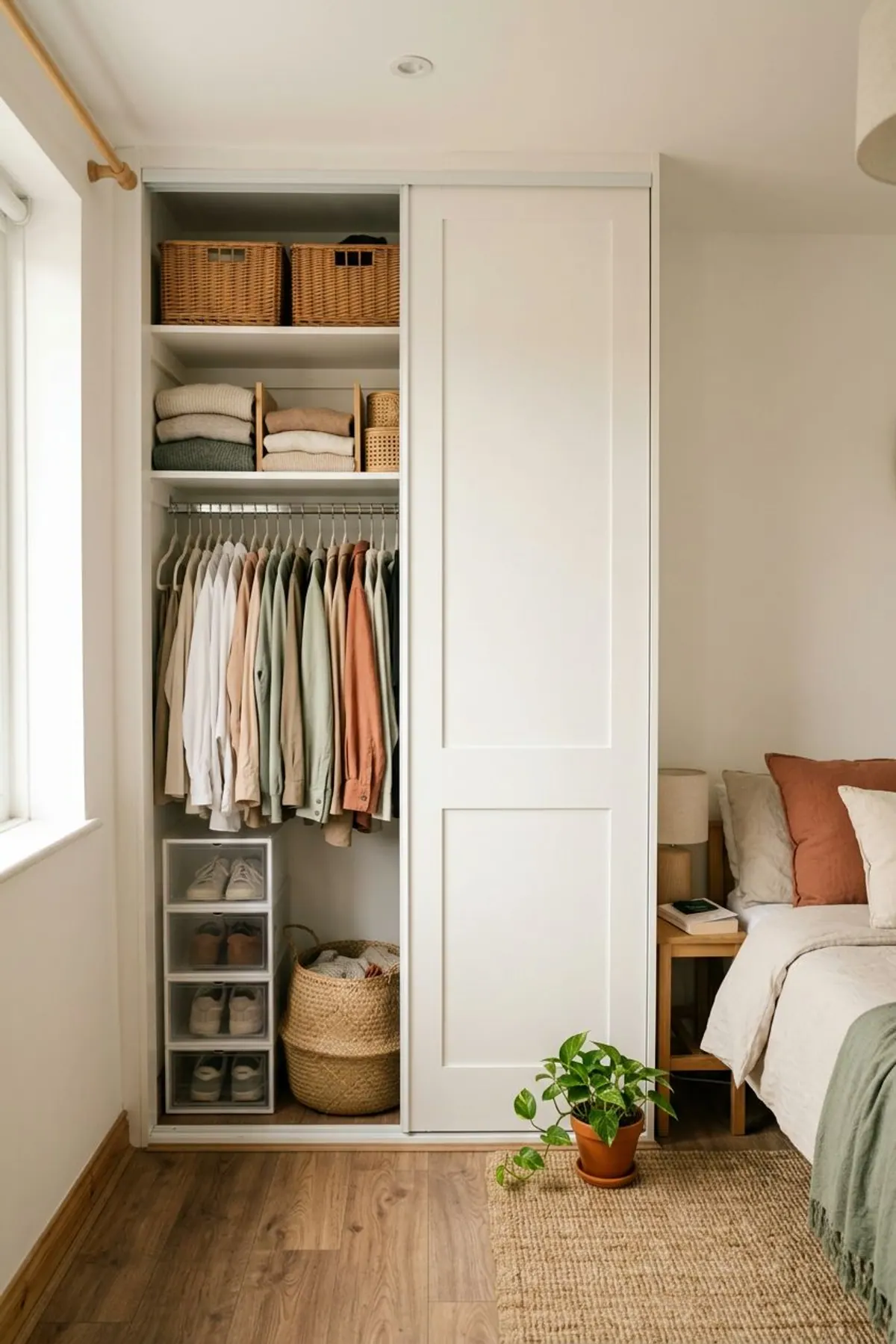
A sliding or bypass door closet hides only half of the opening at a time. The doors overlap in the middle, so you can reach one side while the other stays blocked. That changes how you organize it: the things you use daily go in the half you open most, and the rest goes behind or above.
This guide walks through a 7 step method for a small closet with sliding doors, with a worked zone plan, a table of what works and what does not, and fixes for the common mistakes. For a closet with swing doors or a walk-in, our small closet organization guide covers more layouts.
What you need before you start
Supplies (about $30 to $80 in total, typical ranges)
How to organize a small closet with sliding doors, in 7 steps
-
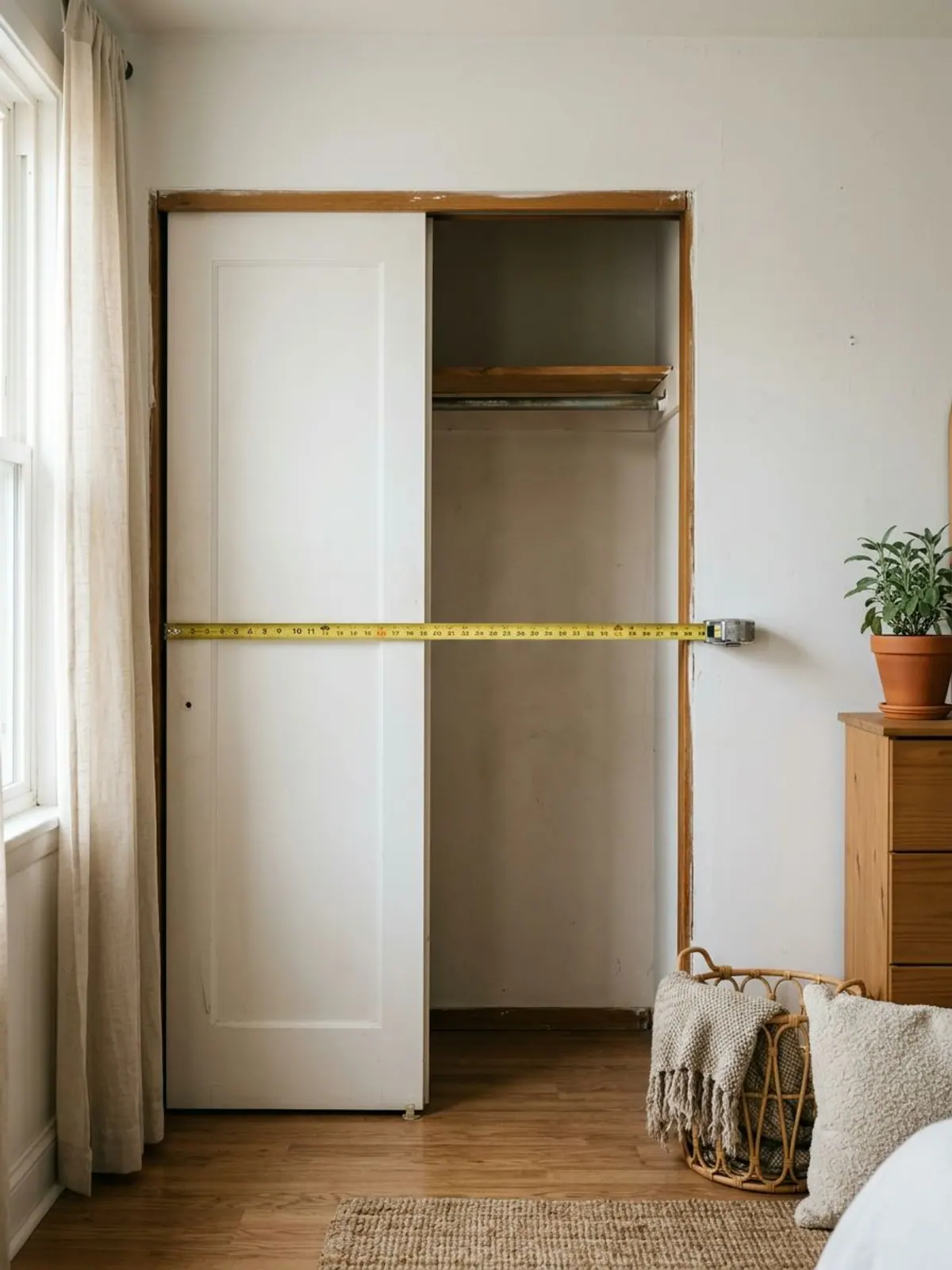
Step 1: Measure the opening, the depth and the doors
Measure the width of the whole closet inside, the depth from front to back, and how much of the opening each door covers. A typical bypass closet is about 48 to 72 inches wide, and each door covers a bit more than half. Write down the width of the open half; that is the part you will use most.
-
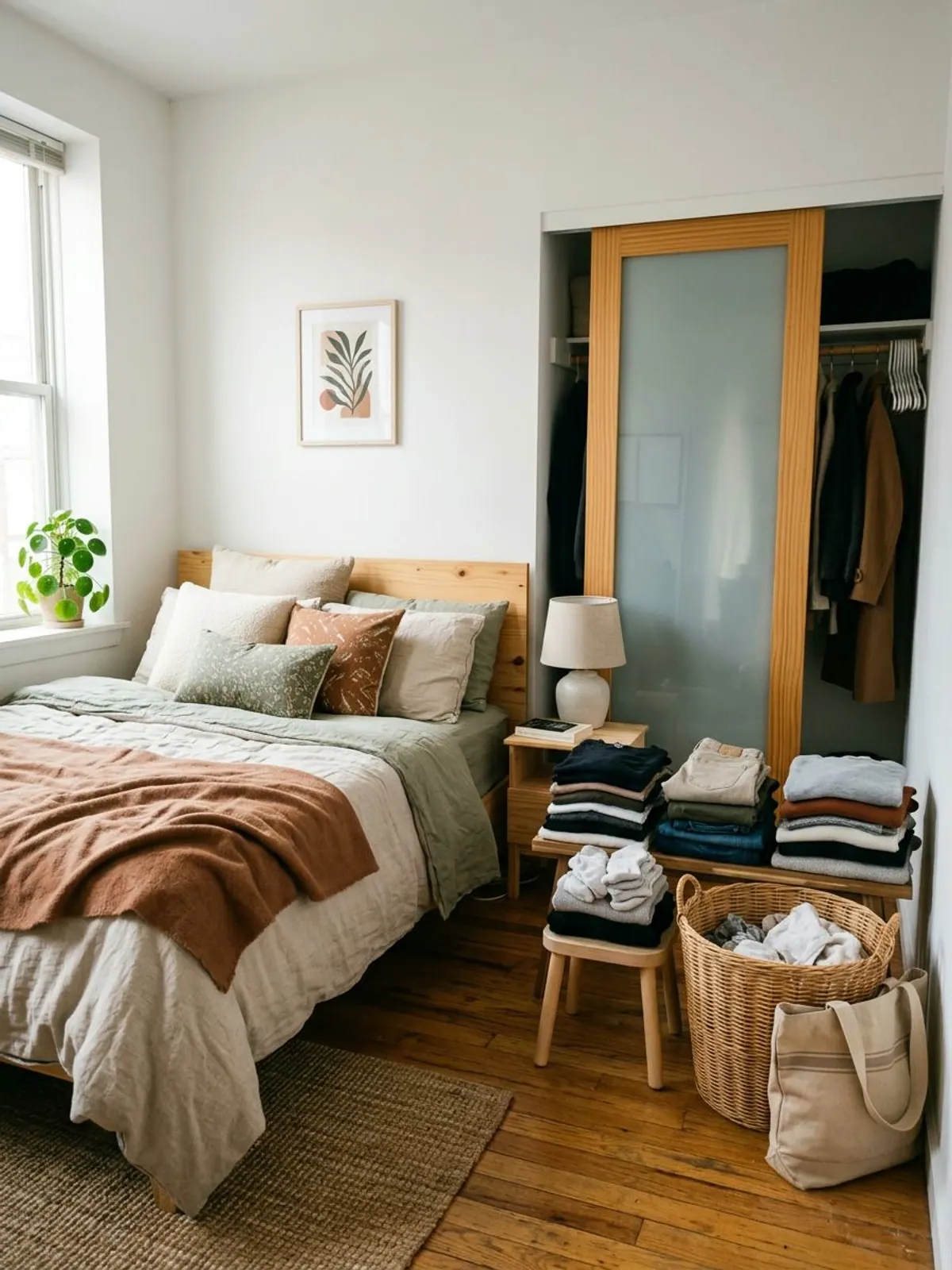
Step 2: Take everything out and sort it
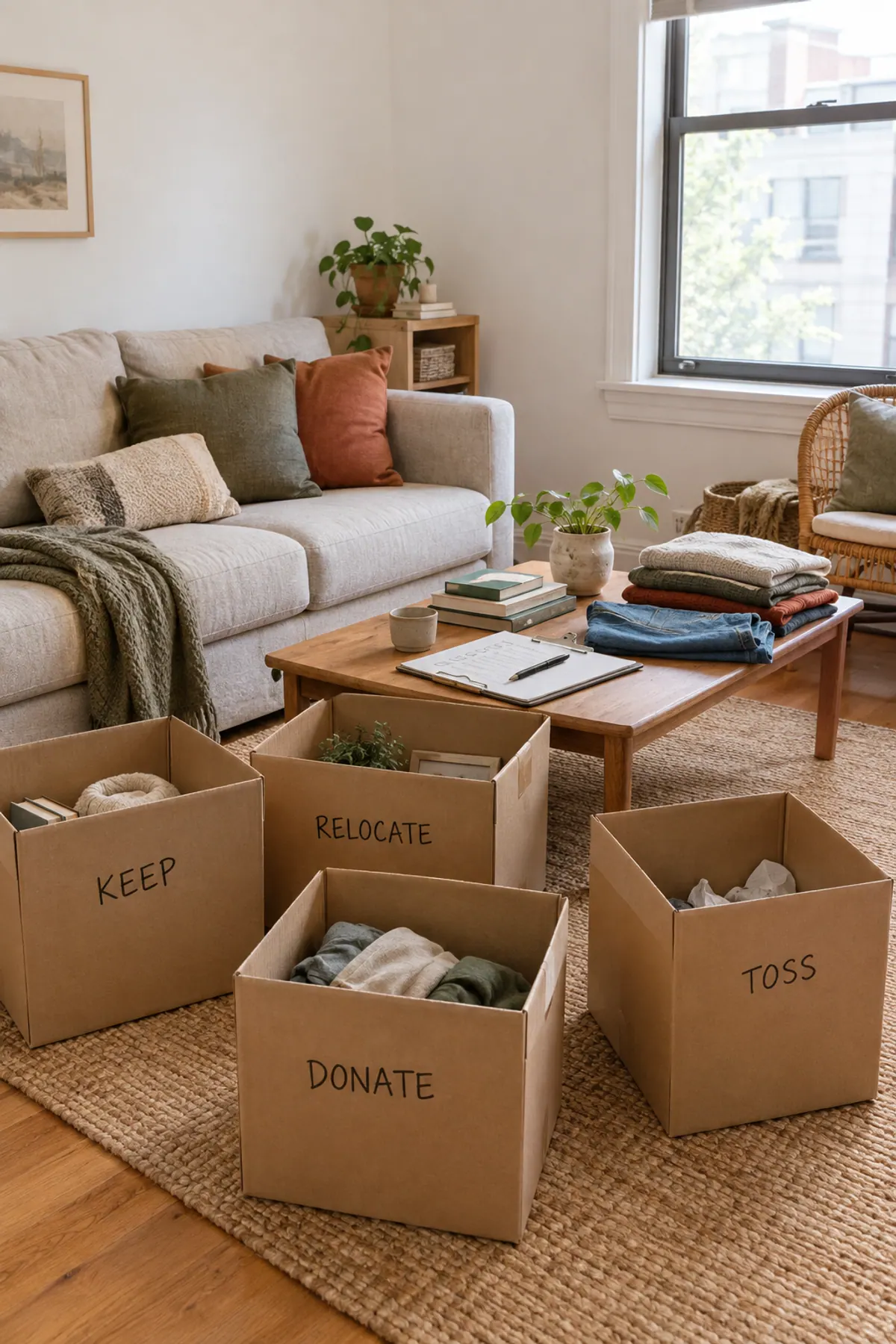
Put all clothes on the bed in piles: wear weekly, wear sometimes, out of season, and donate. Be honest about the pile you have not worn this year. Moving clothes you do not wear into the back is the cheapest extra space you can make.
-
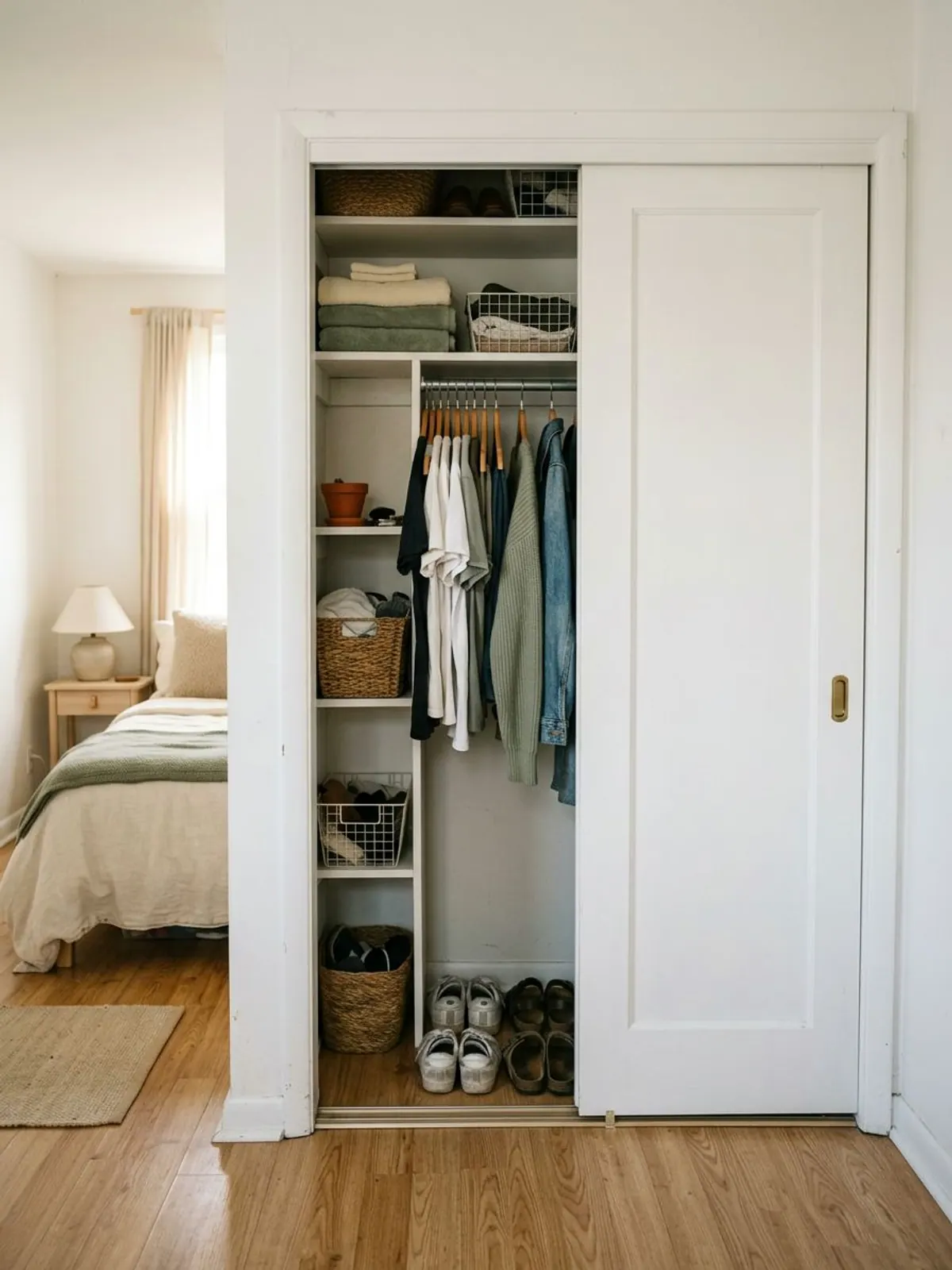
Step 3: Plan zones by door position
Split the closet into the half you reach with the door open and the half behind the other door. Daily items go in the open half at reach height. Out of season items go behind the closed door or on the top shelf. Use the worked plan below.
-
Step 4: Double the hanging space
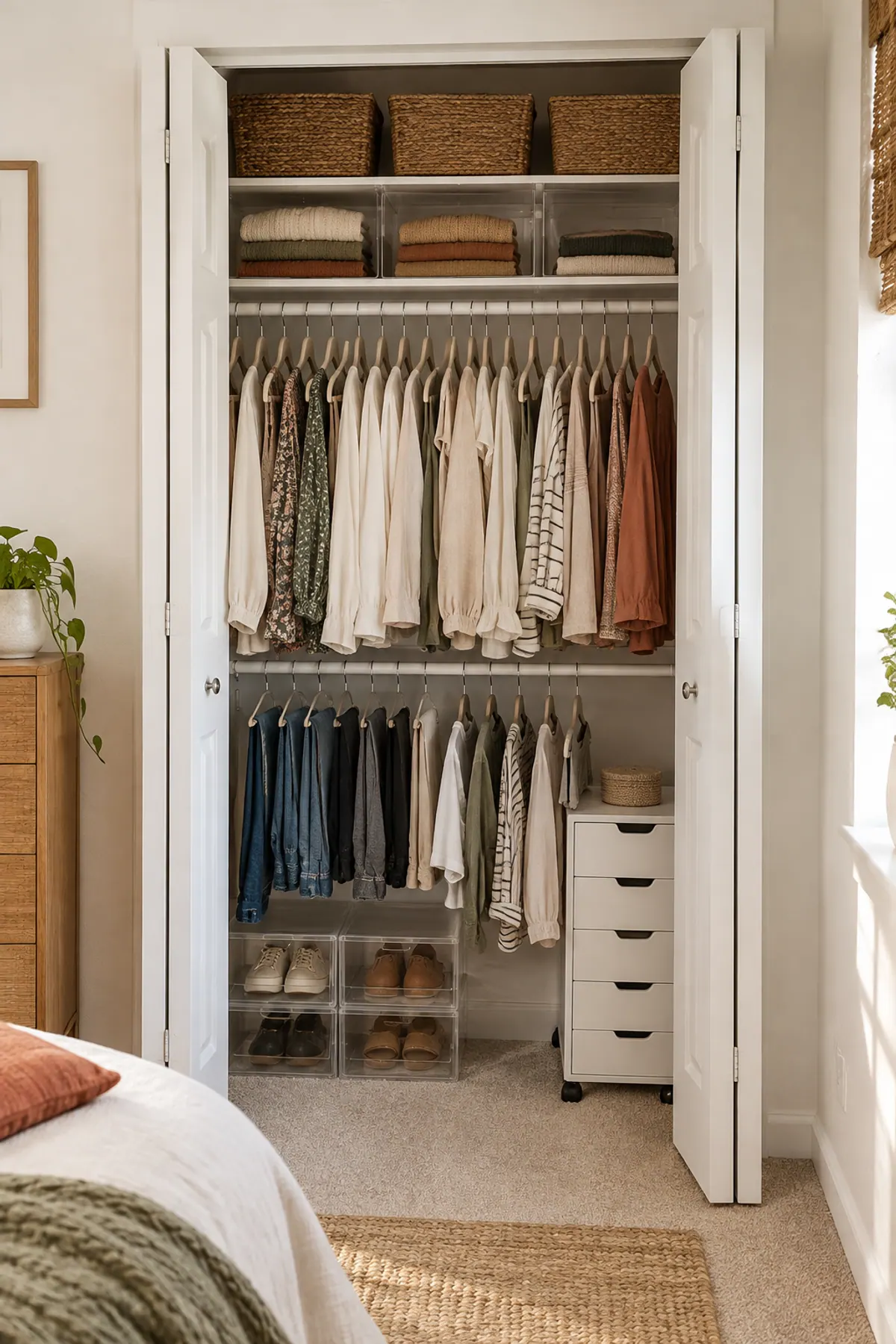
Add a rod doubler under the main rod for short items such as shirts and skirts. Pick one that clips on. Hang long items on the end where the door overlaps least.
-
Step 5: Use the shelf for bins and dividers
Put labeled bins with lids on the top shelf for seasonal items. Use shelf dividers or a hanging organizer for sweaters so the stack does not slump when you pull one out.
-
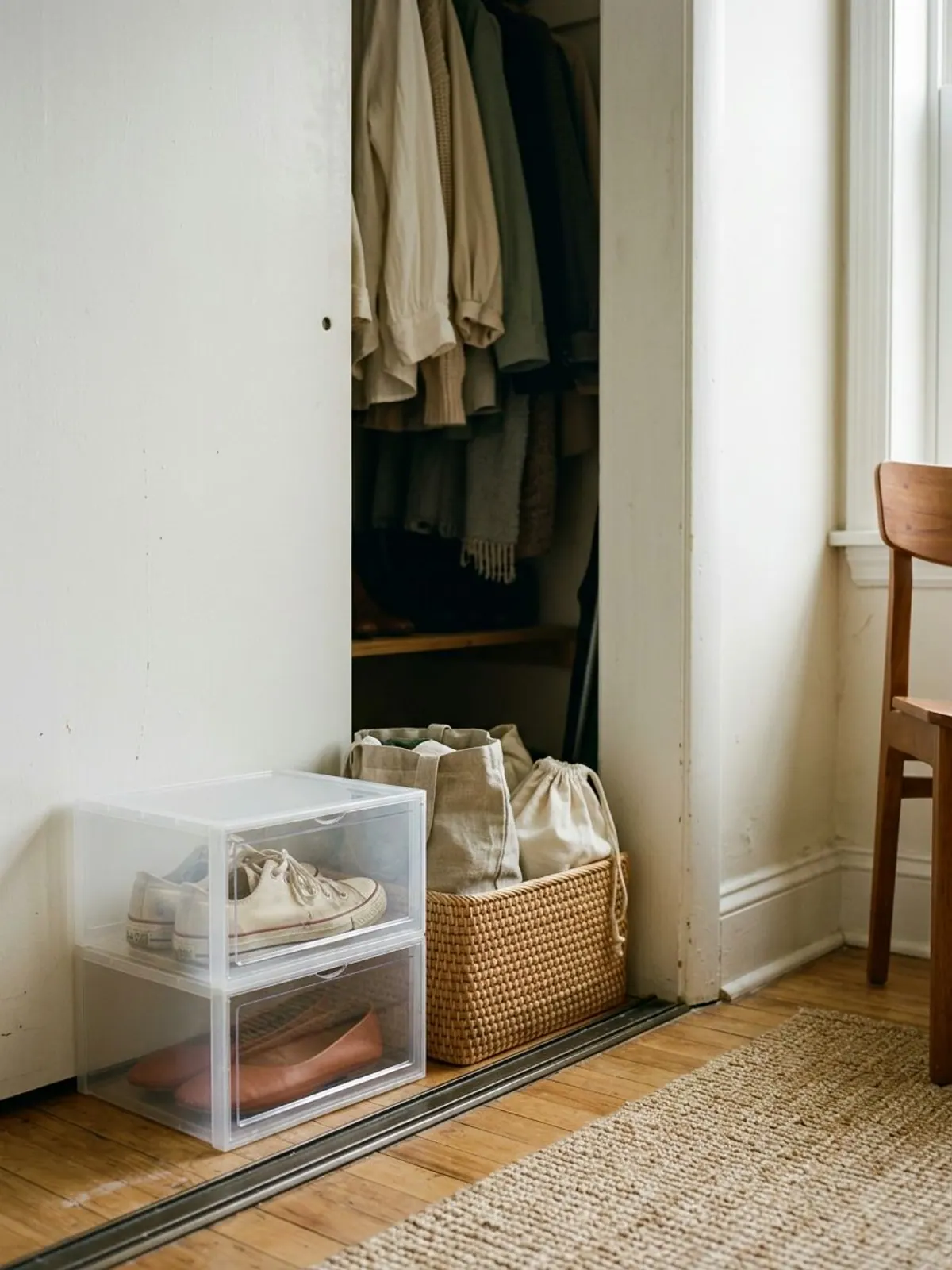
Step 6: Organize the floor with drop-front boxes
Use shoe boxes or a low rack for the front half, and keep the back for seasonal bins. Choose items that are under the door track height so the doors still slide.
-
Step 7: Add light and label
A battery motion light strip lights the dark half, and small labels on bins stop you pulling everything out to find one scarf.
What works in a sliding door closet and what does not
| Item | Works? | Why |
|---|---|---|
| Clip-on rod doubler | Yes | No screws, adds a hanging level |
| Hanging sweater organizer | Yes | Uses vertical space, no shelf needed |
| Stackable bins with lids on the top shelf | Yes | Hide seasonal items |
| Over-the-door hooks | No | The door slides and the hook can scratch the track |
| Wide floor bins on rails | Maybe | Only if below the door track height |
| Door-mounted mirror on the front | Check | Can add weight to the track; see variations |
| Heavy shelves that need screws | Skip | Most leases do not allow holes |
A worked zone plan for a 60 inch bypass closet
This is an example, not a rule, so change the numbers to your closet. In a 60 inch wide bypass closet with two doors, each door usually covers a little over half, so only about 30 to 36 inches is open at once. Here is how that space could be used.
| Zone | Where | What goes there |
|---|---|---|
| Open half, hanging | Left 30 to 36 in, main rod | Daily shirts, pants, a jacket |
| Open half, under rod | Rod doubler under the main rod | Short tops and skirts |
| Open half, shelf | Top shelf above the rod | Labeled bins of accessories |
| Back half, hanging | Right side behind the other door | Out of season and formal |
| Floor, front | Drop-front boxes | Shoes you wear weekly |
| Floor, back | Bins on the floor behind | Seasonal swap |
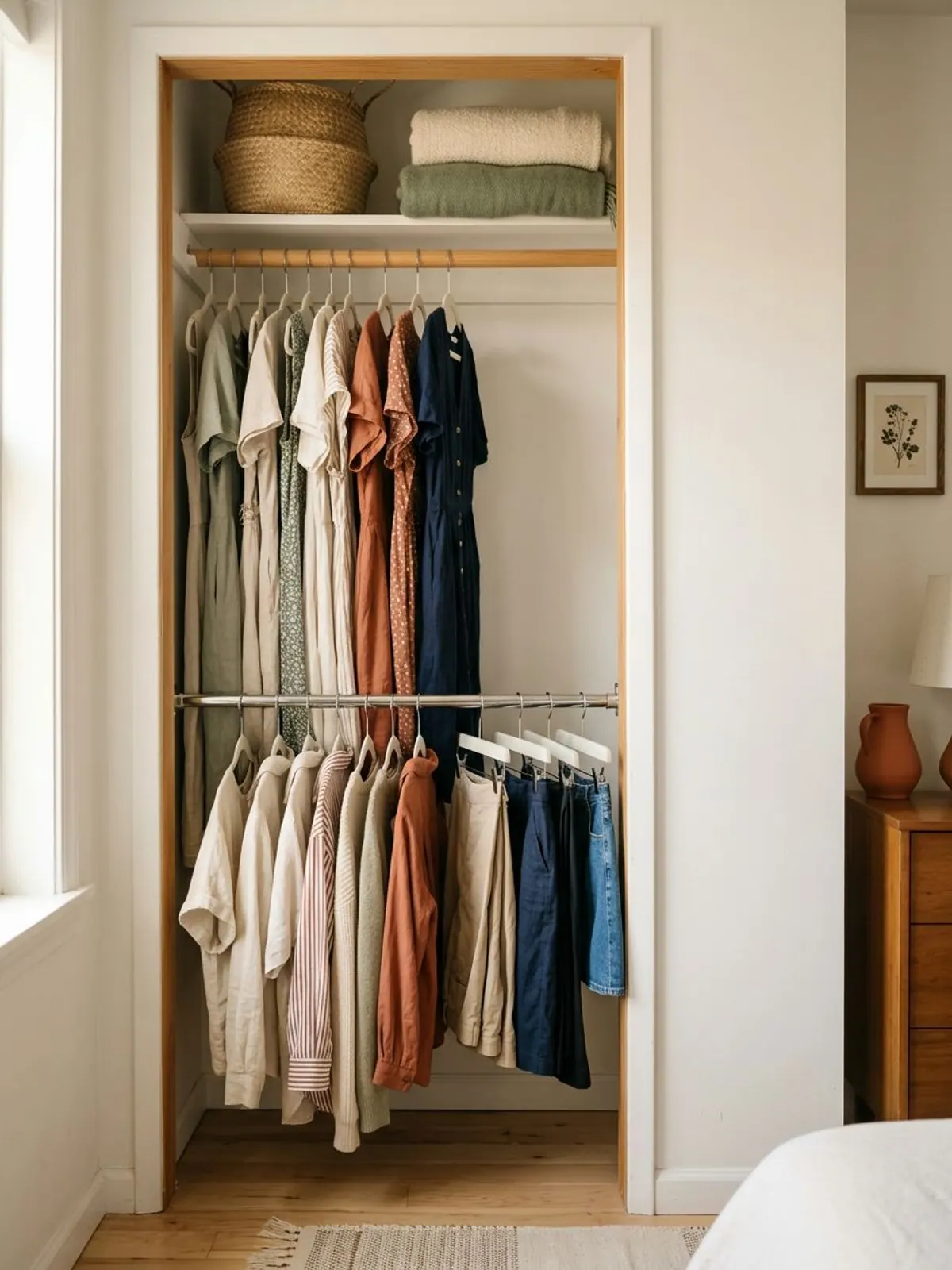
The idea is to match the zone to how often you open it. If you open the left door daily, make the left half your daily wear. If you only swap clothes by season, the right half stays behind the door.
Sweaters, top shelf bins and shoes
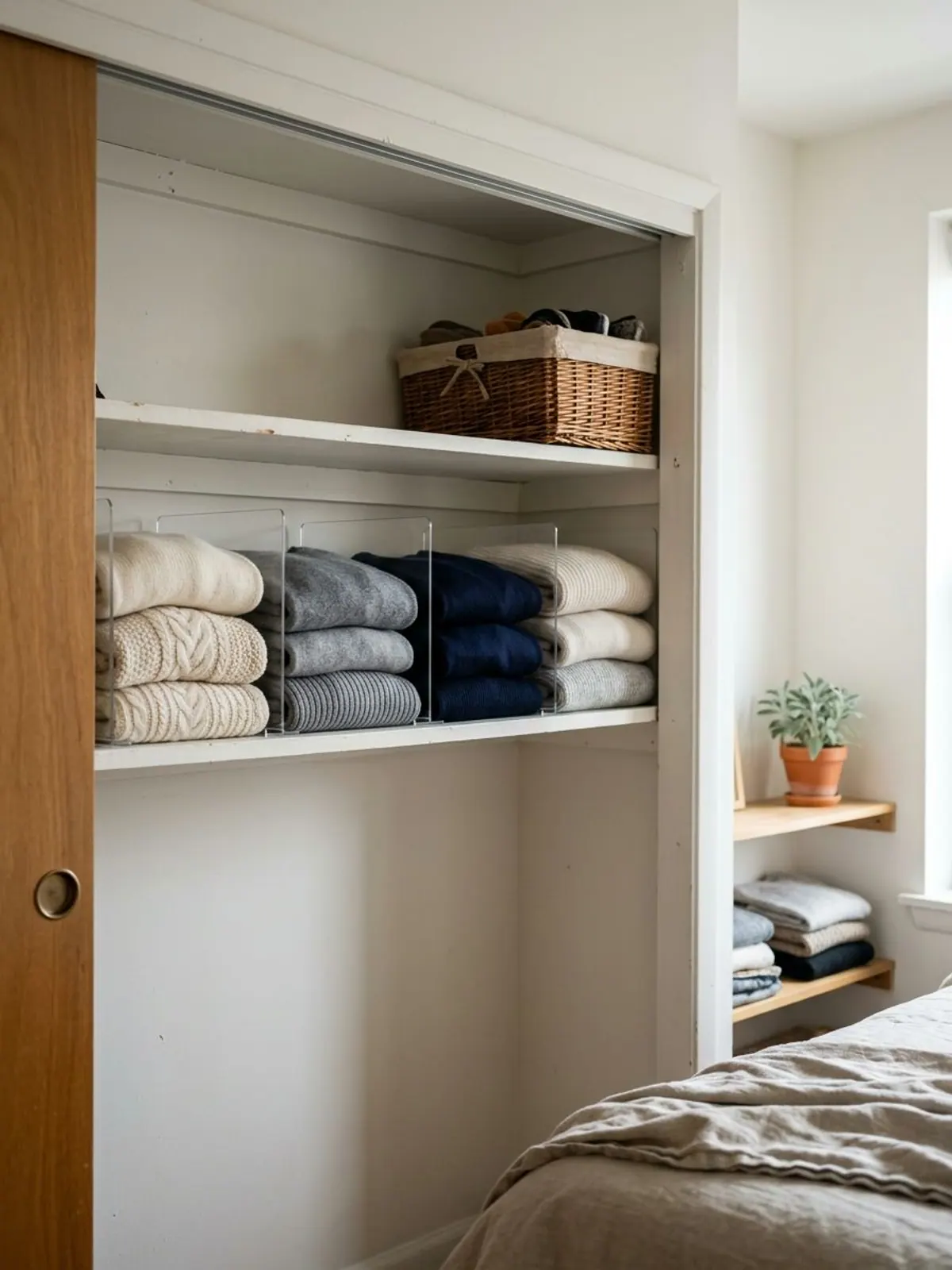
Fold sweaters and keep them on a shelf with a divider every 10 to 12 inches, so a stack of 4 to 5 does not fall when you pull one. Hanging a sweater stretches the shoulders.
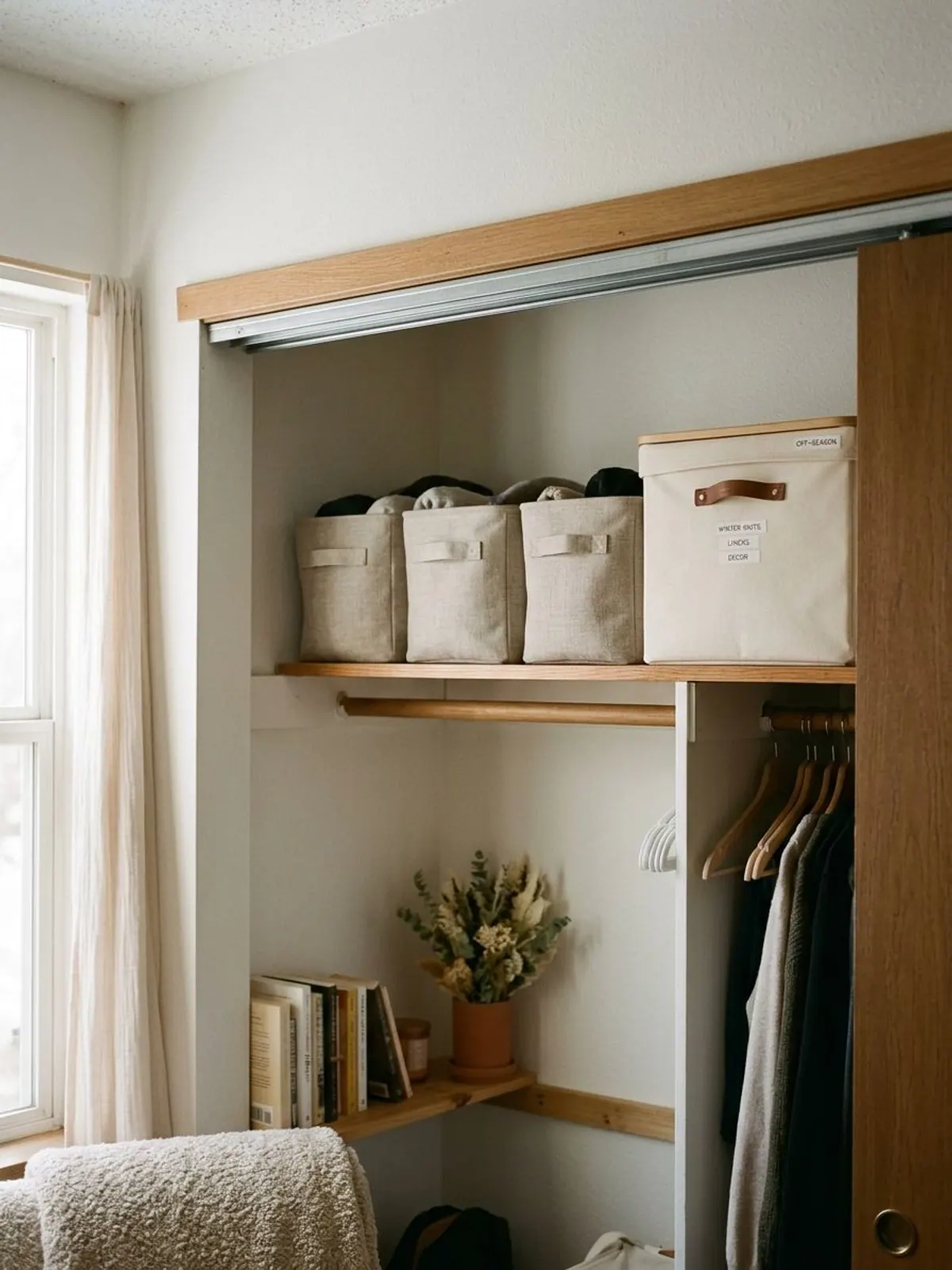
Put the lightest bins on the top shelf and label the front. Heavy things such as boots go on the floor. For the shoes, use drop-front boxes in the front half so you can see the pair without pulling the box out.
Mistakes that make a sliding door closet harder to use
Do this
- Keep daily wear in the half you open most
- Use clip-on or tension fixes
- Label bins on the front
- Leave 1 to 2 inches of air above the rod bar so the door does not rub
Skip this
- Stacking boxes taller than the door track
- Hanging things on the door that scrape the track
- Overfilling the rod so hangers jam the doors
- Hiding the mess behind the closed door and never touching it
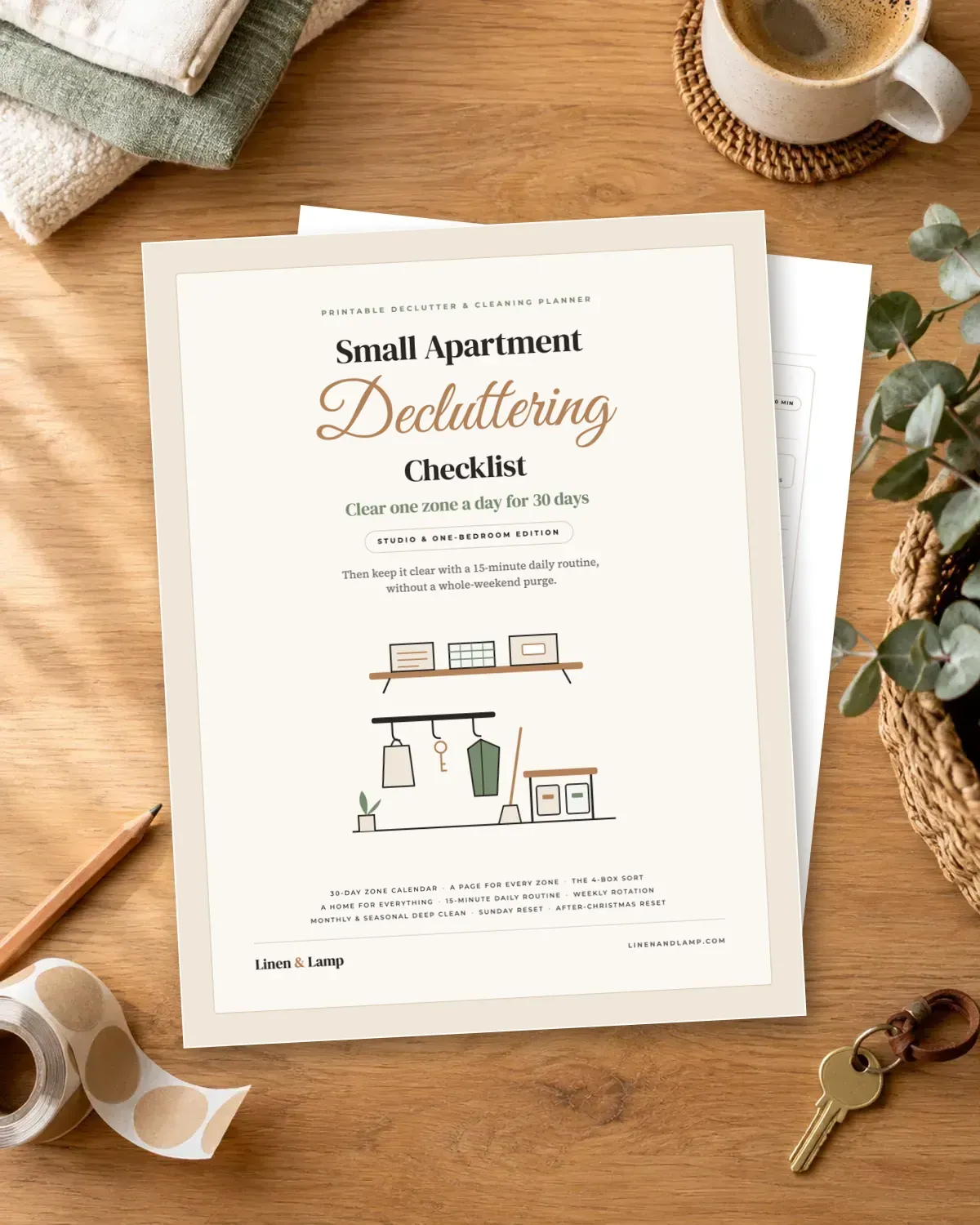
A quick check: slide the doors fully both ways with everything in place. If a hanger, a bin or a hook catches, move it. Our declutter checklist for small apartments helps with the sorting step if you have too much to fit.
Variations: motion lights, a curtain swap and a mirror
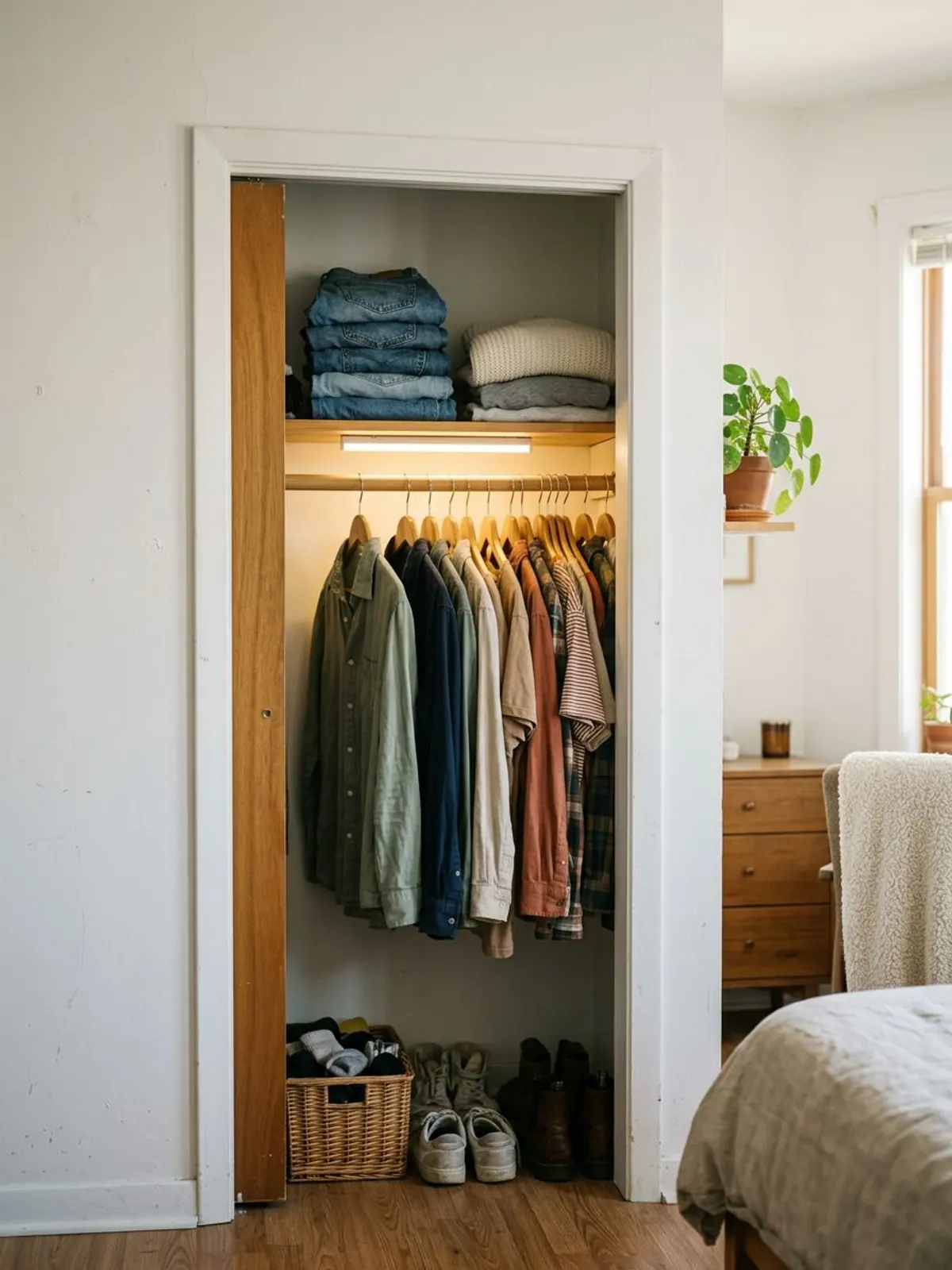
A battery motion light strip along the top of the dark half means you do not have to guess what is behind the door. Stick it with the adhesive that comes with it, and check the pack for removal.
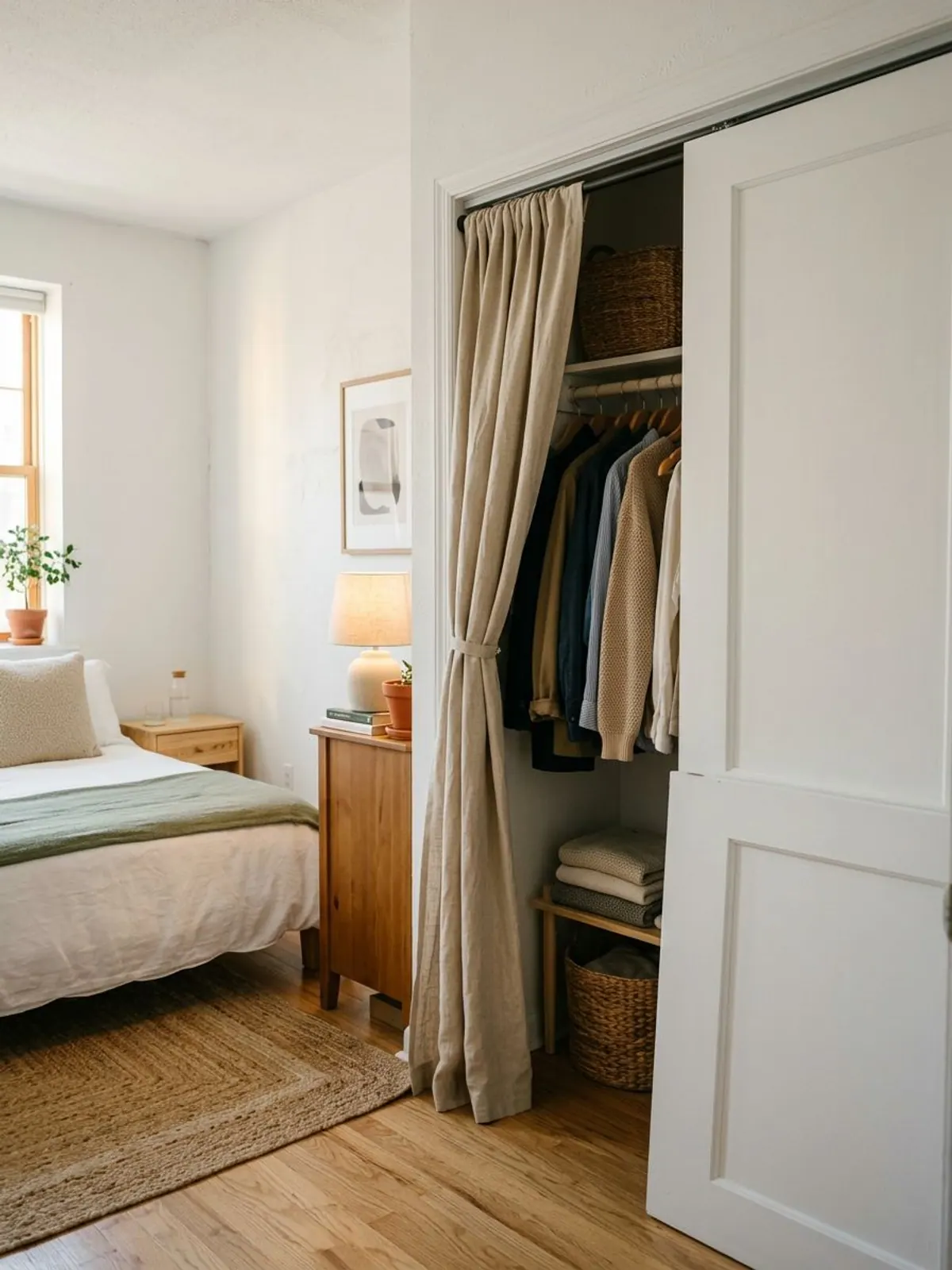
A curtain gives you full access to the whole closet instead of half. Only do this if your landlord allows removing the doors, and keep the doors stored so you can put them back. A tension rod holds the curtain without screws.
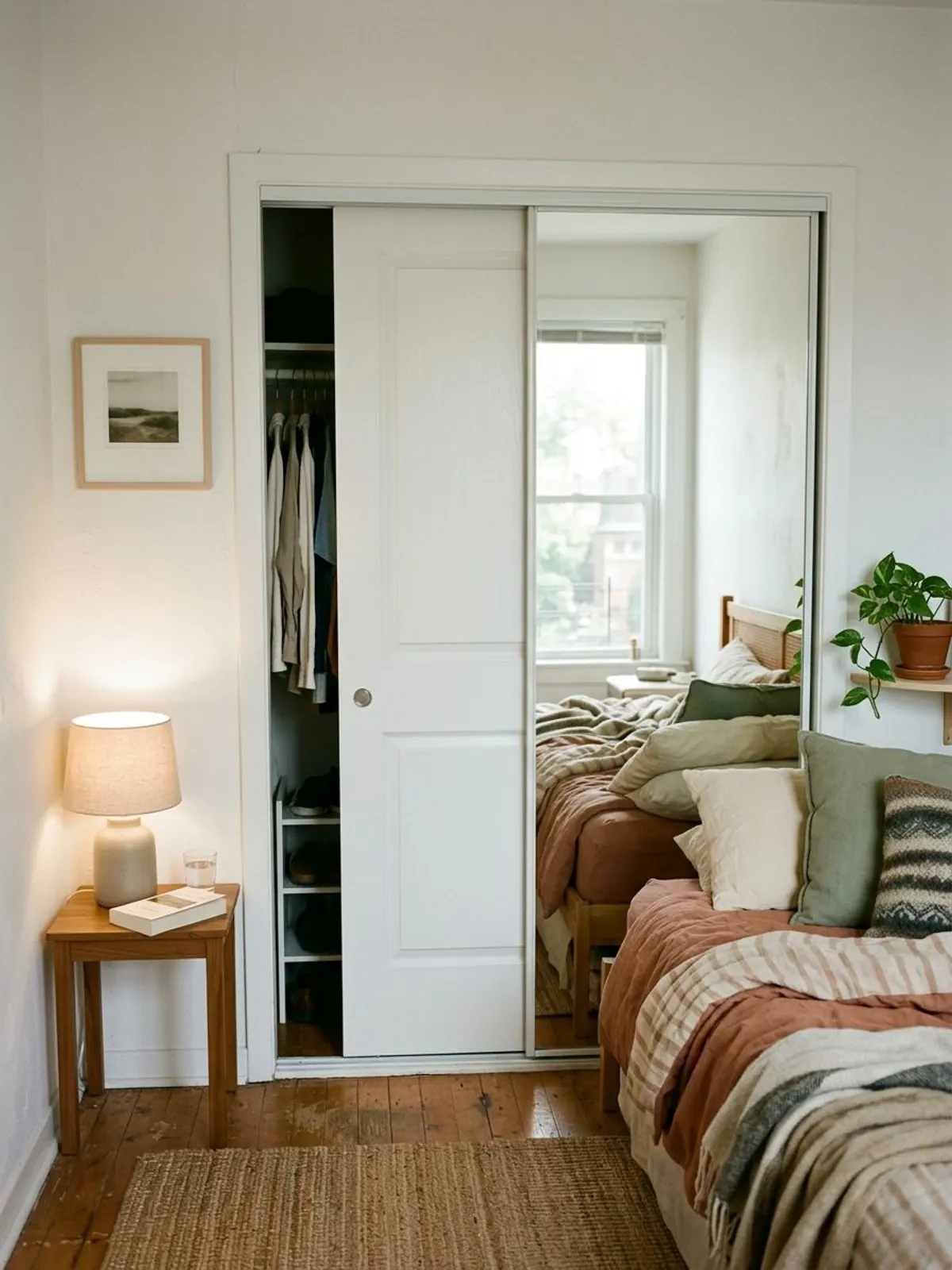
A mirrored door panel, or a mirror leaning beside the closet, makes a small room feel bigger. Do not stick a heavy mirror on a sliding door unless the door and track are rated for the weight. See our designer tricks for small rooms.
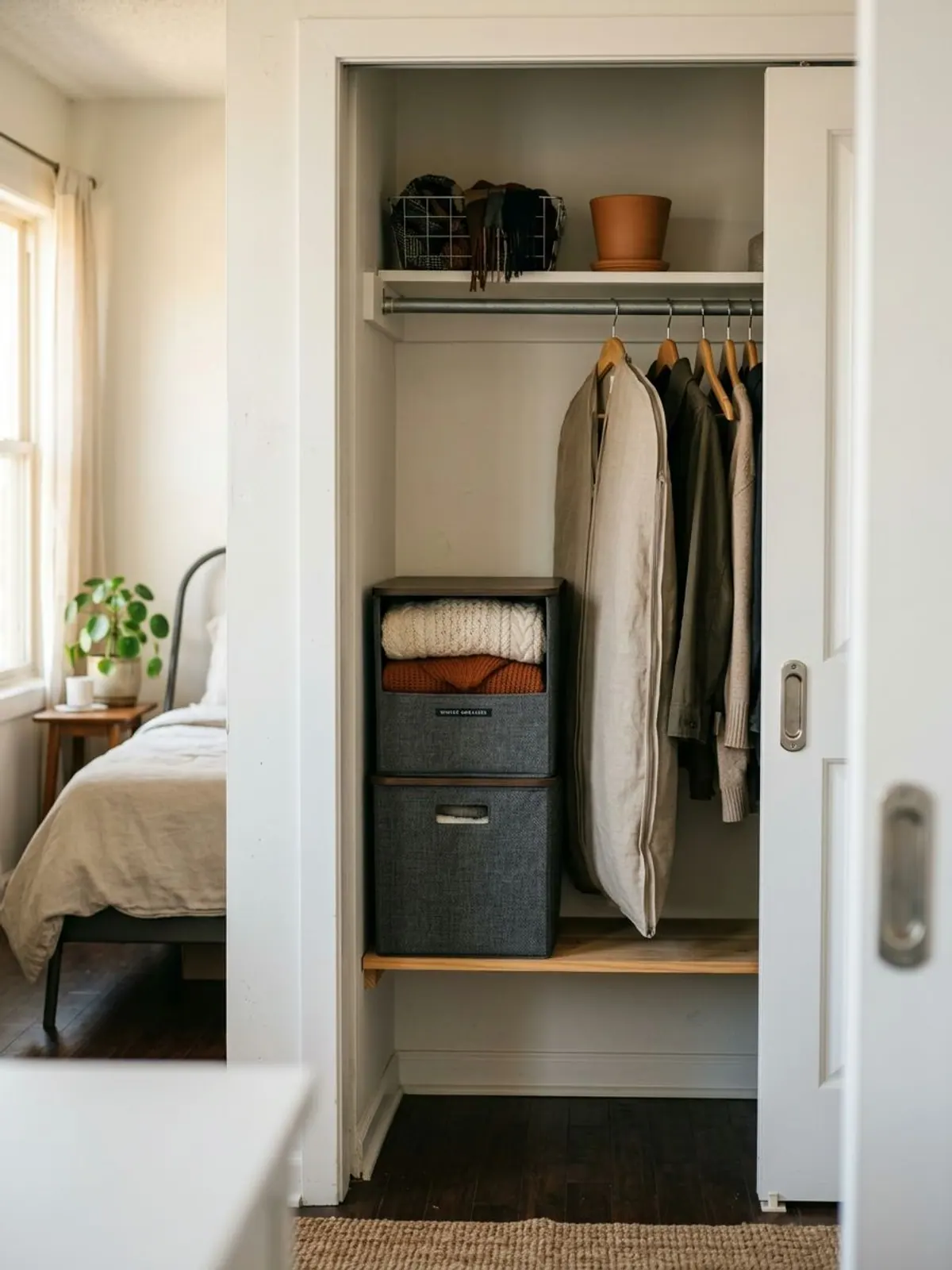
Twice a year, swap the front and back. Put summer in the bins and bring winter forward in October. Wash everything before you store it.
Shop the sliding door closet list
These are product types, written as search terms so you can pick sizes. We have not tested specific models. Check the closet width and the rod diameter before you order. See our disclosure.
For a small closet with sliding doors
- Start here
Clip-on closet rod doubler
Typically $12 to $25
Doubles hanging space.
Check price on Amazon for Clip-on closet rod doubler -
Slim velvet hangers, 50 pack
Typically $20 to $35
Saves rod space.
Check price on Amazon for Slim velvet hangers, 50 pack -
Hanging sweater organizer
Typically $12 to $25
Vertical storage.
Check price on Amazon for Hanging sweater organizer -
Shelf dividers for closet shelf
Typically $15 to $30
Keeps stacks upright.
Check price on Amazon for Shelf dividers for closet shelf -
Stackable bins with lids
Typically $20 to $45
Top shelf.
Check price on Amazon for Stackable bins with lids -
Drop-front shoe boxes
Typically $20 to $40
Shoes on the floor.
Check price on Amazon for Drop-front shoe boxes -
Battery motion light strip
Typically $10 to $22
Lights the dark half.
Check price on Amazon for Battery motion light strip -
Tension rod for a closet curtain
Typically $12 to $28
Door-free option.
Check price on Amazon for Tension rod for a closet curtain -
Label stickers for bins
Typically $6 to $14
Find things fast.
Check price on Amazon for Label stickers for bins
Want the sort done in 30 days instead of one weekend? The 30 Day Declutter + Cleaning Reset ($9, 32 printable pages) has a closet floor and hanging clothes zone plan plus an entry drop zone page.
Frequently asked questions
How do you organize a closet with sliding doors?
Zone it by reach. Put daily clothes in the half you open most, use a rod doubler for short items, bins on the top shelf for seasonal items and drop-front boxes for shoes. Keep everything clear of the door track.
How do you make the most of a closet with sliding doors?
Use vertical space with a clip-on rod doubler, a hanging sweater organizer and top shelf bins, and swap seasons twice a year so the back half holds what you are not wearing.
Can you put hooks on a sliding closet door?
It is better not to. Hooks and over-the-door organizers can scrape the track and catch when the door slides. Use the inside walls or the shelf instead.
Can I replace sliding closet doors with a curtain?
Only if your lease and landlord allow it. Keep the original doors so you can reinstall them. A tension rod holds a curtain without screws.
How do you light a dark sliding door closet?
Use a battery motion light strip along the top of the dark half. Check the pack for how to remove it later.
Save it for later
Pin this to your Organization board so it's there when you need it.
Save to Pinterest