This post contains affiliate links. As an Amazon Associate we earn from qualifying purchases, at no extra cost to you. Read our disclosure.
Key takeaways
- Keep a 30 to 36 inch walkway through the room before you place anything else.
- Hang curtain rods 4 to 6 inches above the frame or higher, and extend them past the window.
- Size the rug so at least the front legs of the sofa and chairs sit on it.
- Light the room at three heights, with about 800 lumens per lamp as a starting point.
- Lighten walls with removable wallpaper or ask the landlord before you paint.
In this post8 sections
A small room looks bigger when the eye can travel: up the walls, across the floor and out the window. Every trick below does one of those three things. None of them needs new walls, and most cost less than a single piece of furniture.
Before you start: measure the room
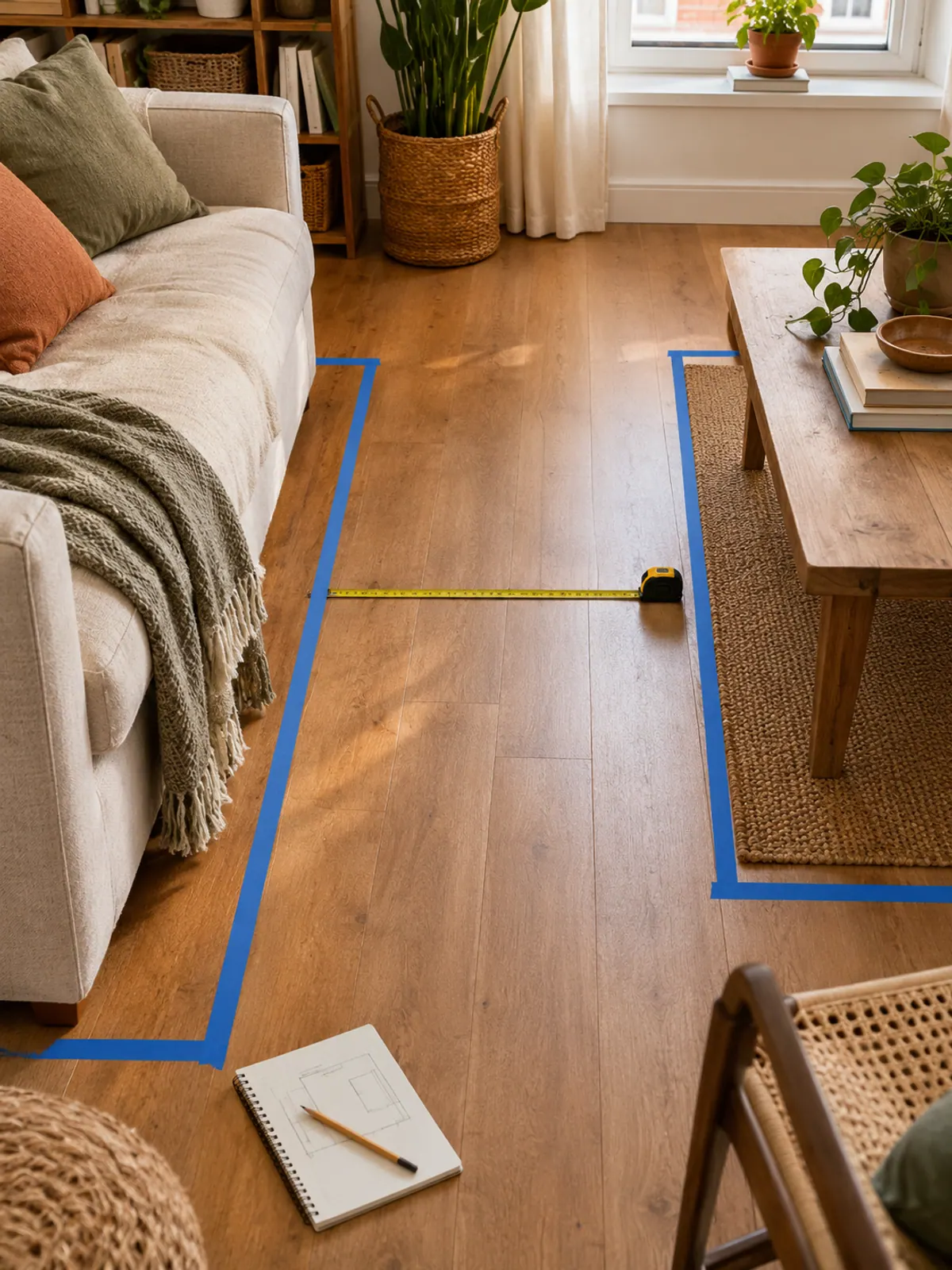
Write down the room's length and width, the window width and height, and the ceiling height. Then mark your main walkway on the floor with painter's tape.
What you need
How to make a small room look bigger in 15 steps
-
Step 1: Tape a 30 to 36 inch walkway first
Mark the path from the door to the window and to each seat with painter's tape, 30 to 36 inches wide. Nothing goes inside the tape. A room with a clear path reads as open, even when it is full.
-
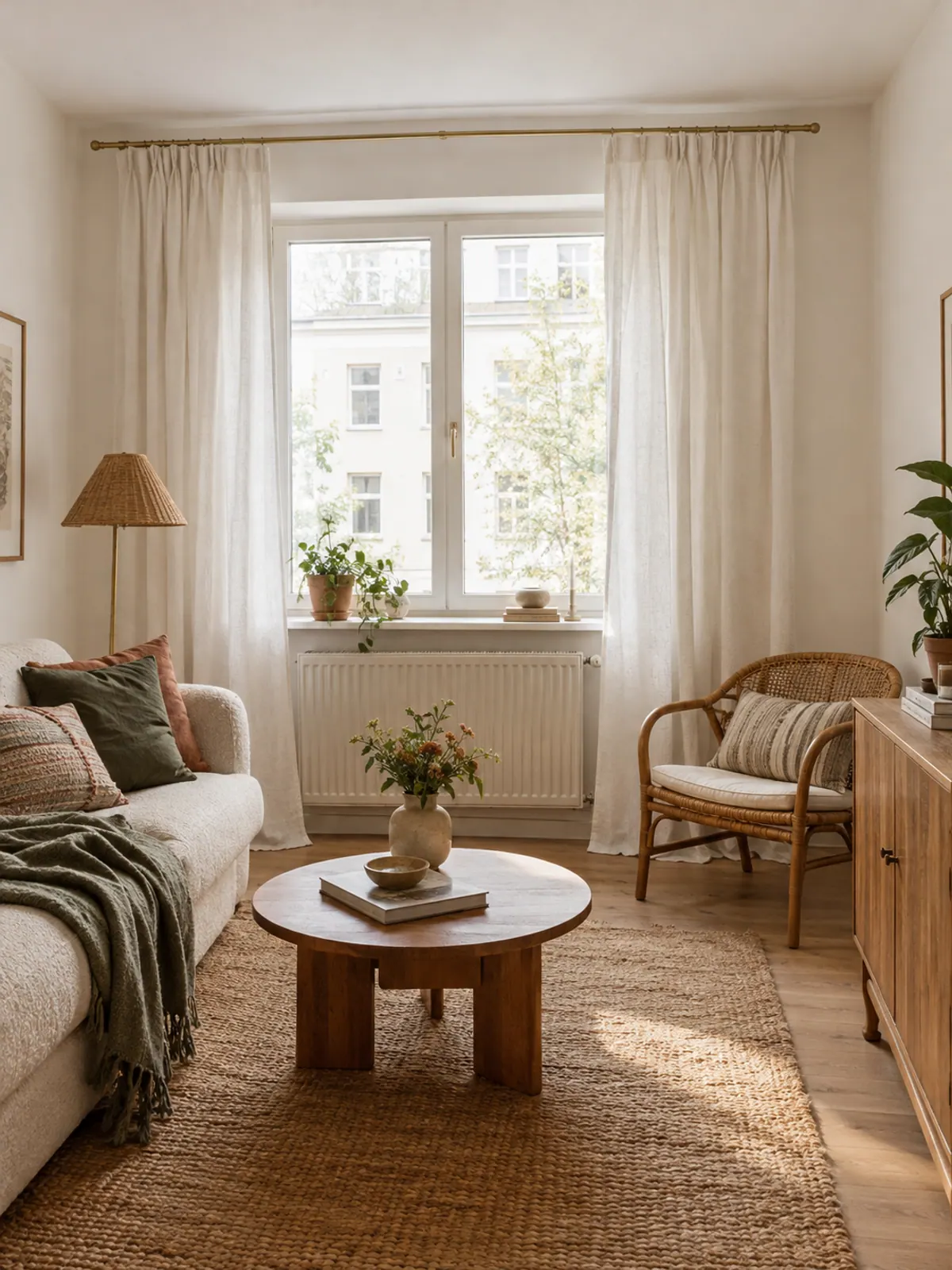
Step 2: Hang curtains high: 4 to 6 inches above the frame, or higher
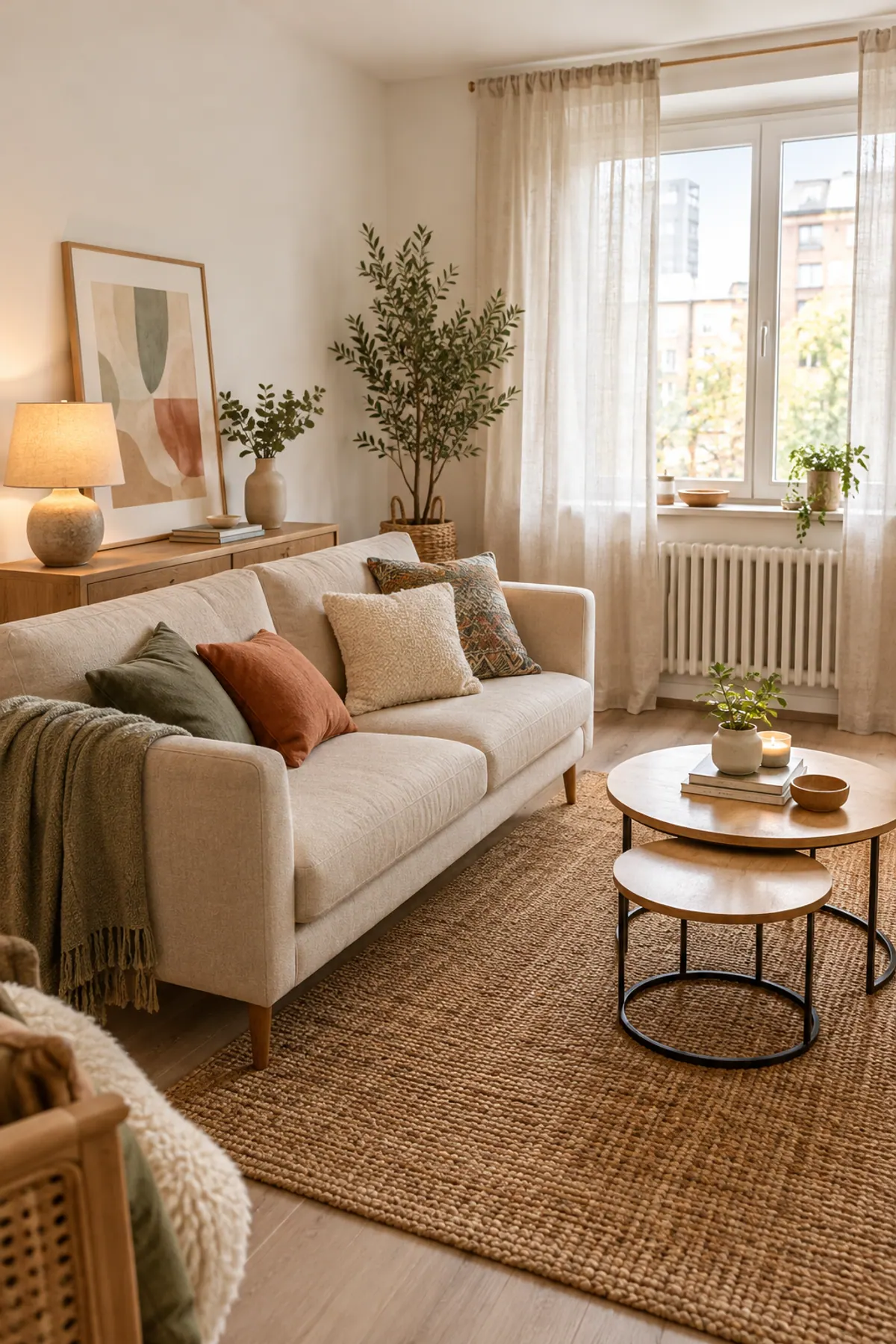
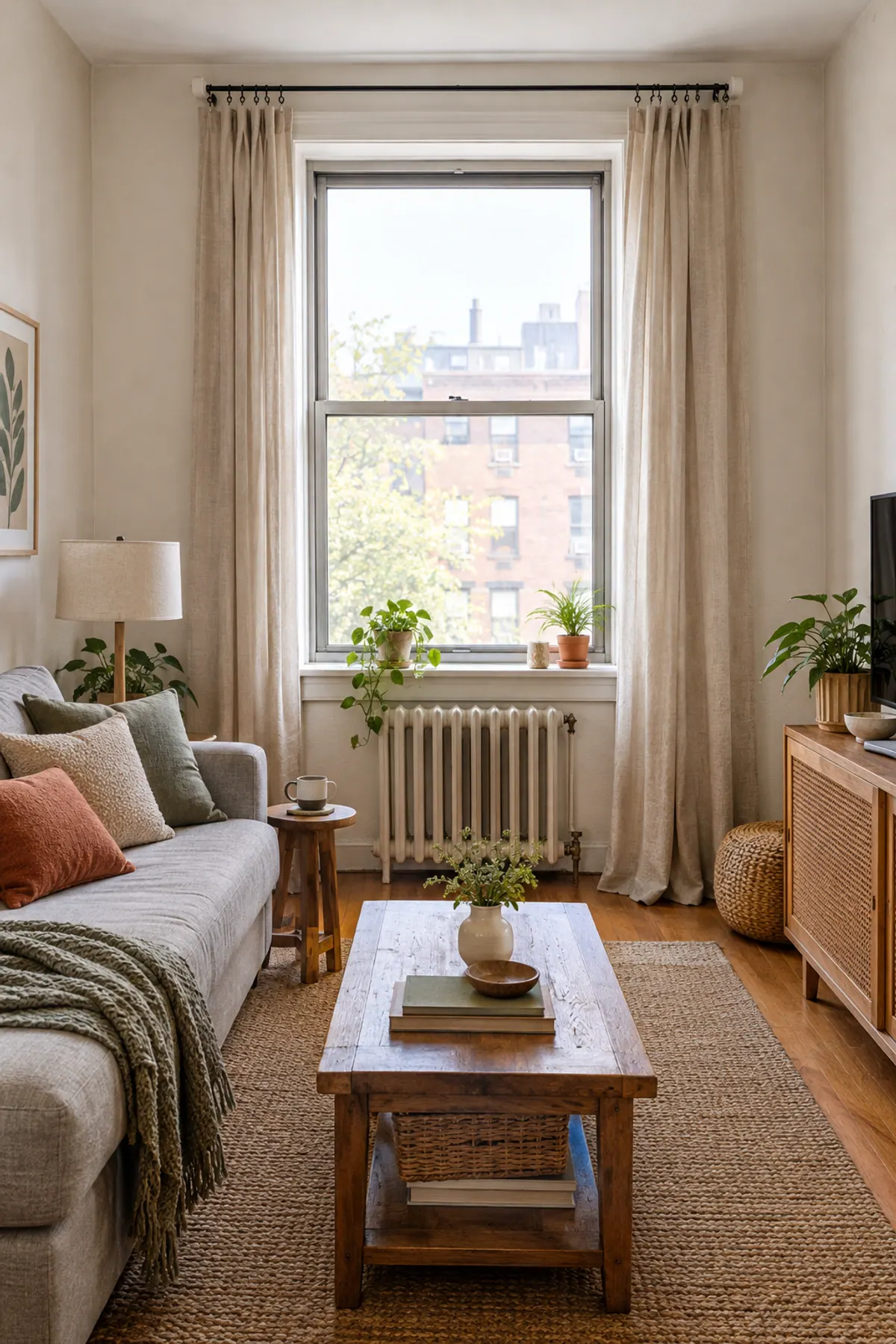
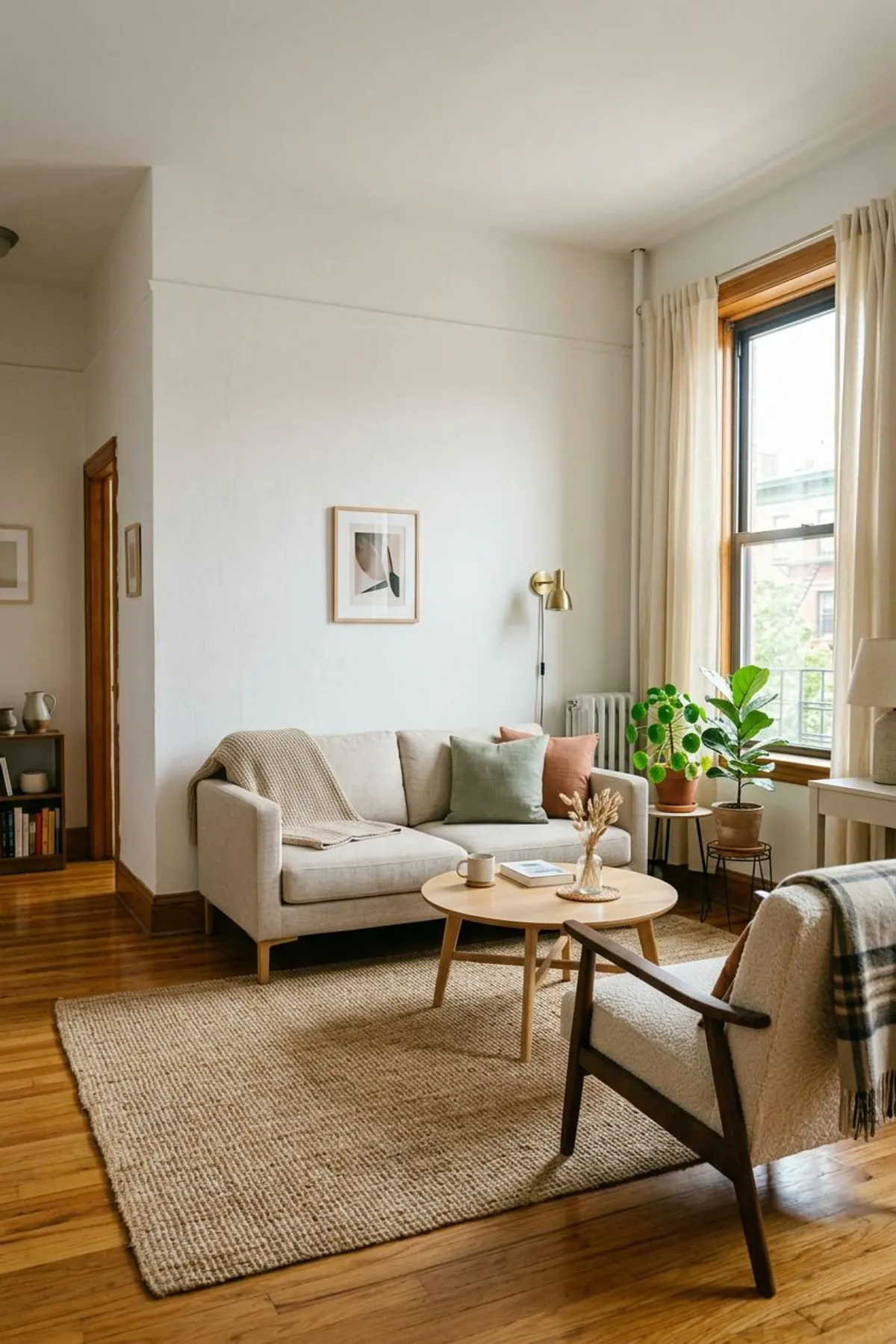
Mount the rod at least 4 to 6 inches above the window frame, or about halfway between the frame and the ceiling. It draws the eye up and makes the window look taller. In a rental, ask before you drill, reuse existing holes, or use a no-drill curtain method.
-
Step 3: Extend the rod 8 to 12 inches past each side
When the rod reaches past the frame, open curtains stack on the wall instead of over the glass. You get more daylight and a window that looks wider than it is.
-
Step 4: Let curtains just touch the floor, in a color close to the wall
Measure from the rod to the floor and buy that length, often 84 or 96 inches. Panels that stop short cut the wall in half. A color close to the wall keeps the room from looking chopped up.
-
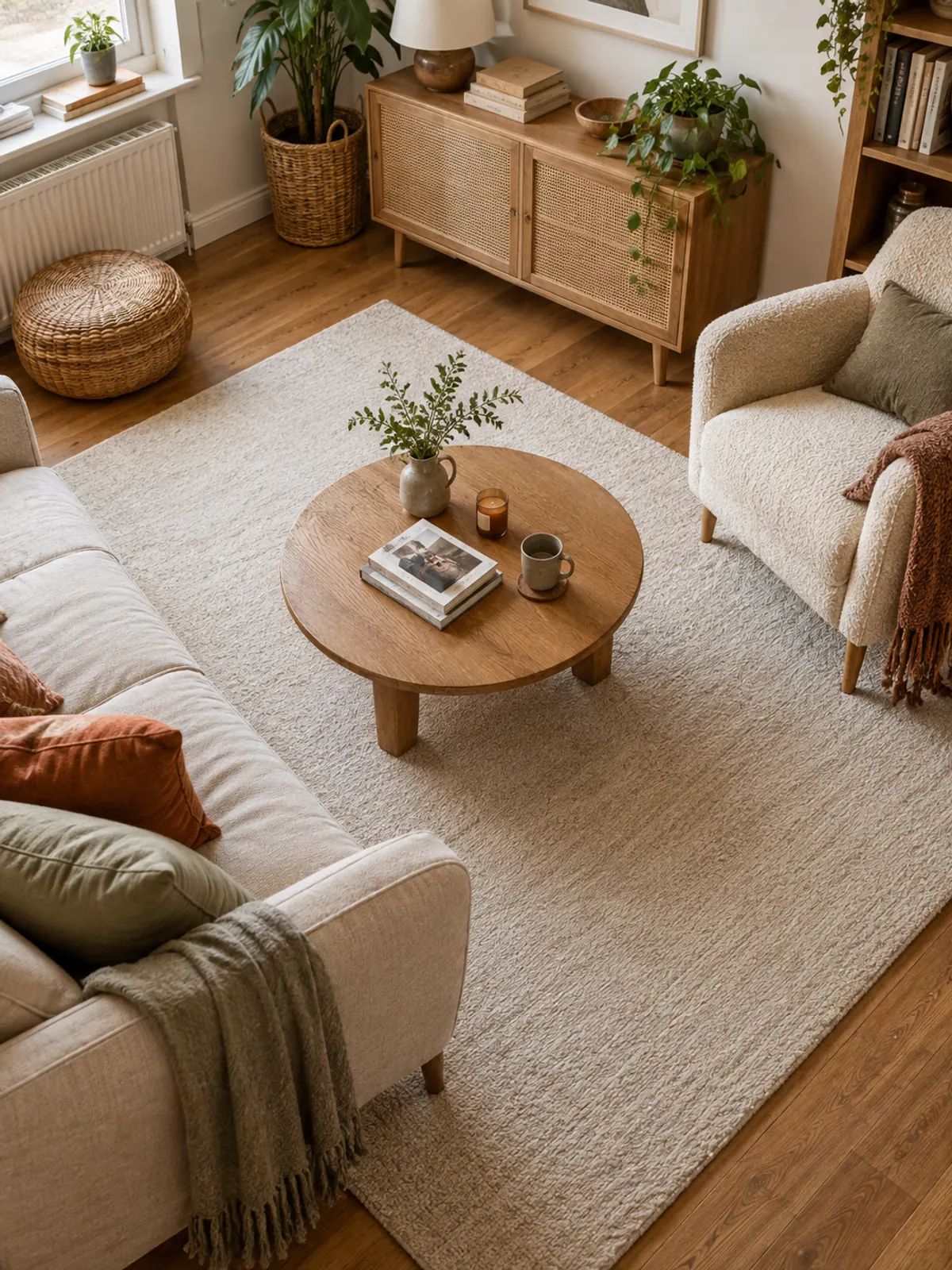
Step 5: Size the rug so the front legs sit on it
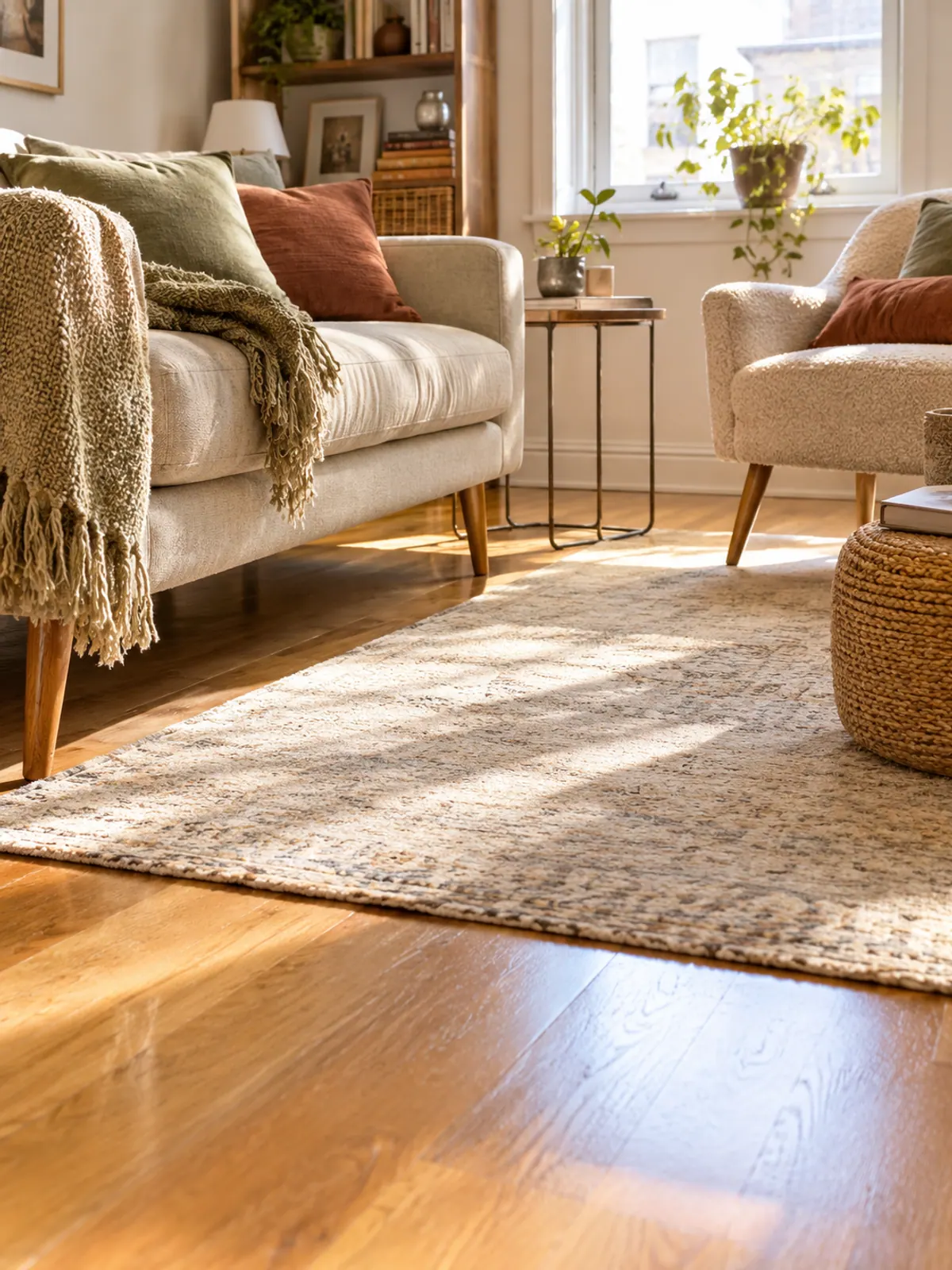
In most small living rooms that means a 5 by 8 rug, not a 3 by 5. The sofa and chairs should have at least their front legs on it. A small rug floating in the middle makes the furniture look bigger and the room look smaller.
-
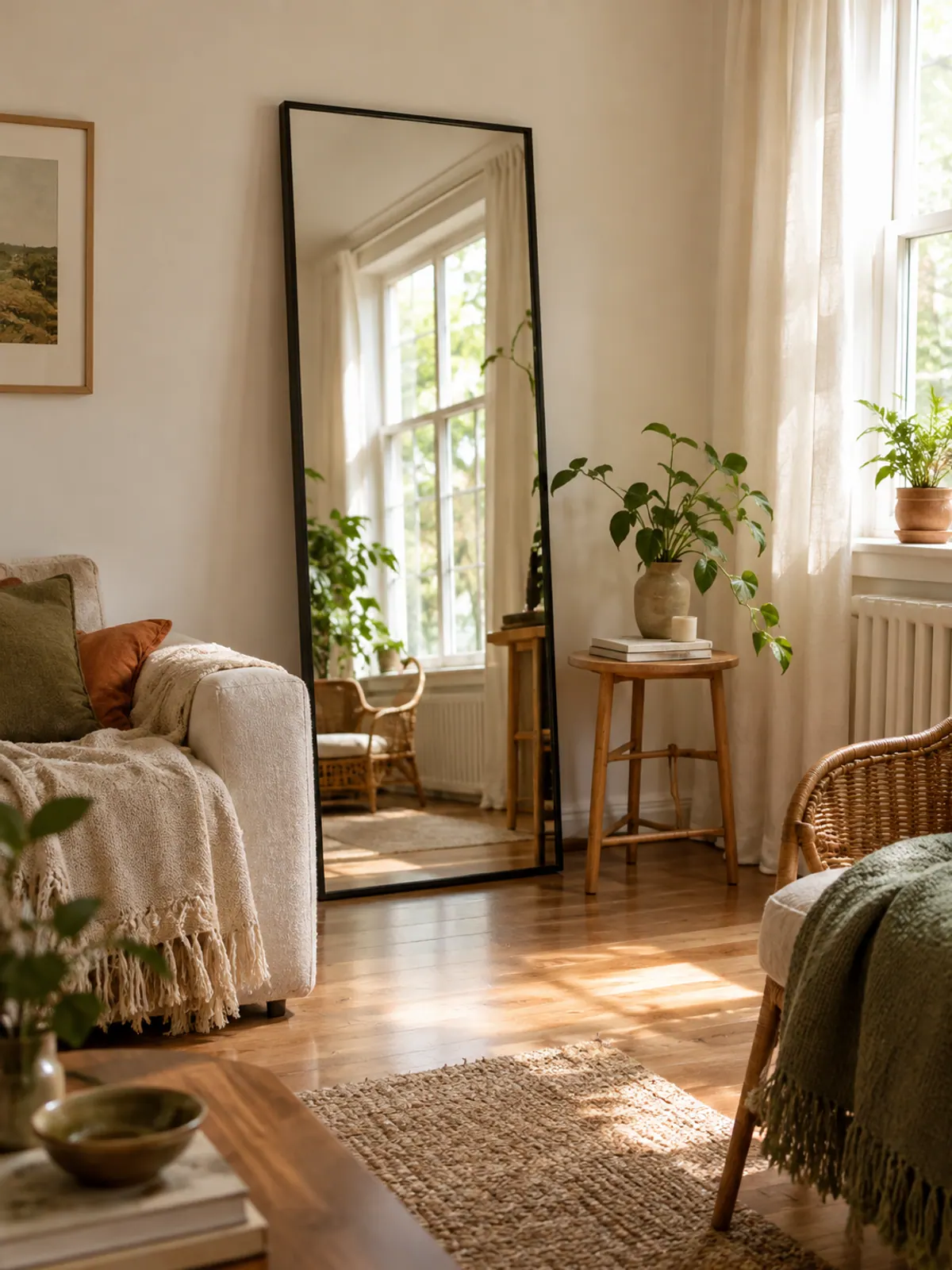
Step 6: Lean a large mirror where it reflects the window
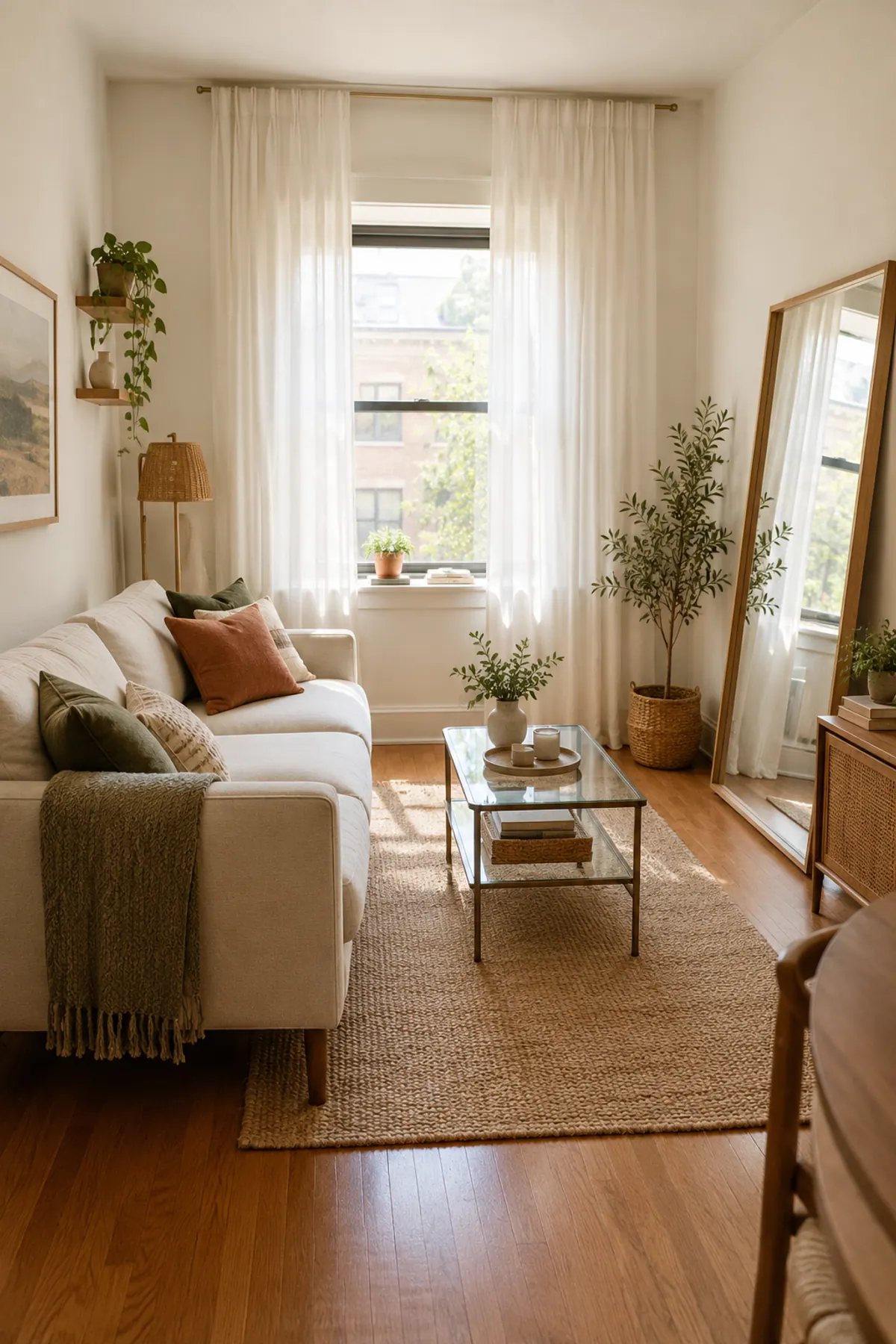
Place a full-length mirror on the wall facing or beside the window so it reflects daylight and greenery. Leaning it needs no holes. If you hang a smaller mirror instead, put its center at about 57 to 60 inches from the floor.
-
Step 7: Light three heights, about 800 lumens per lamp
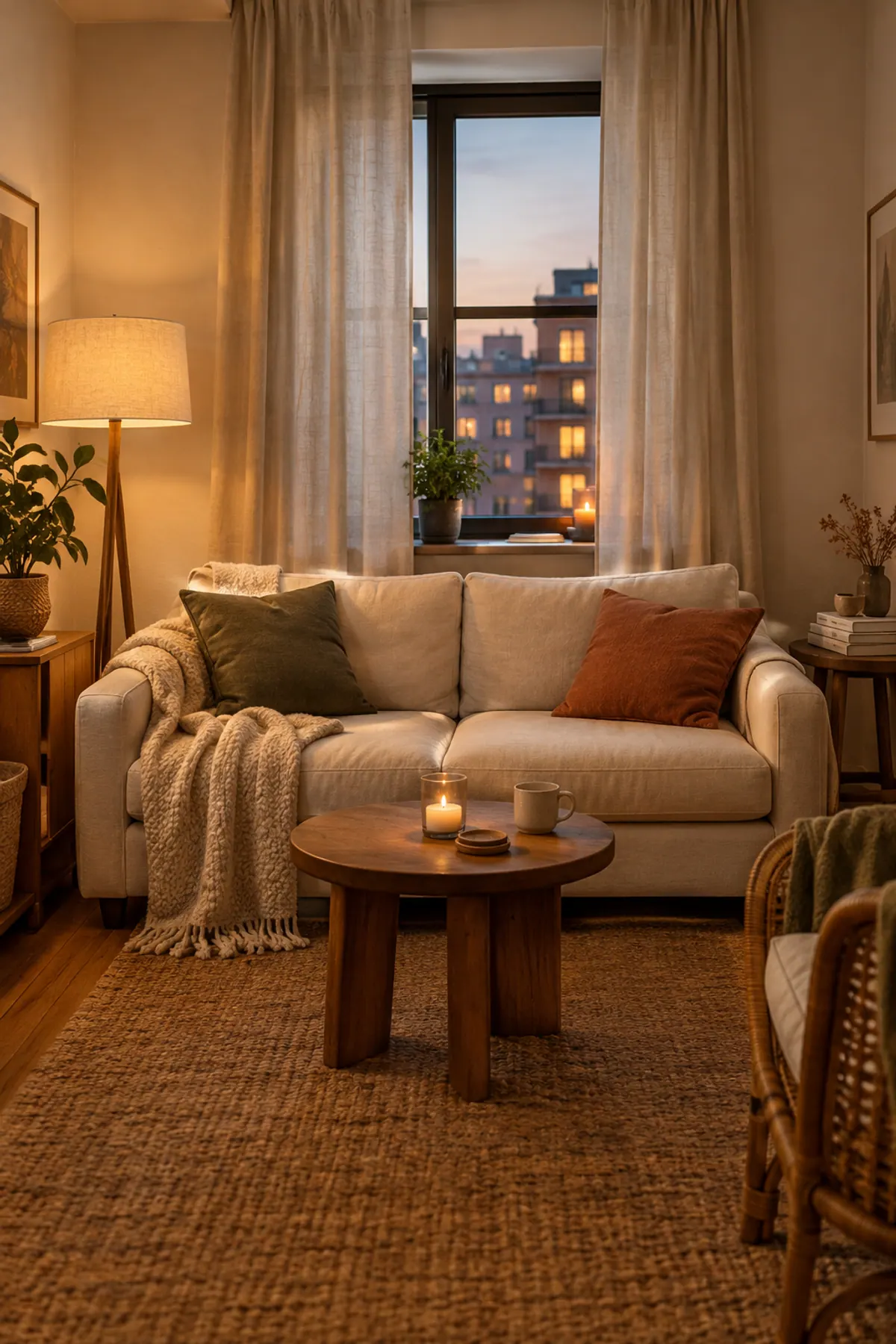
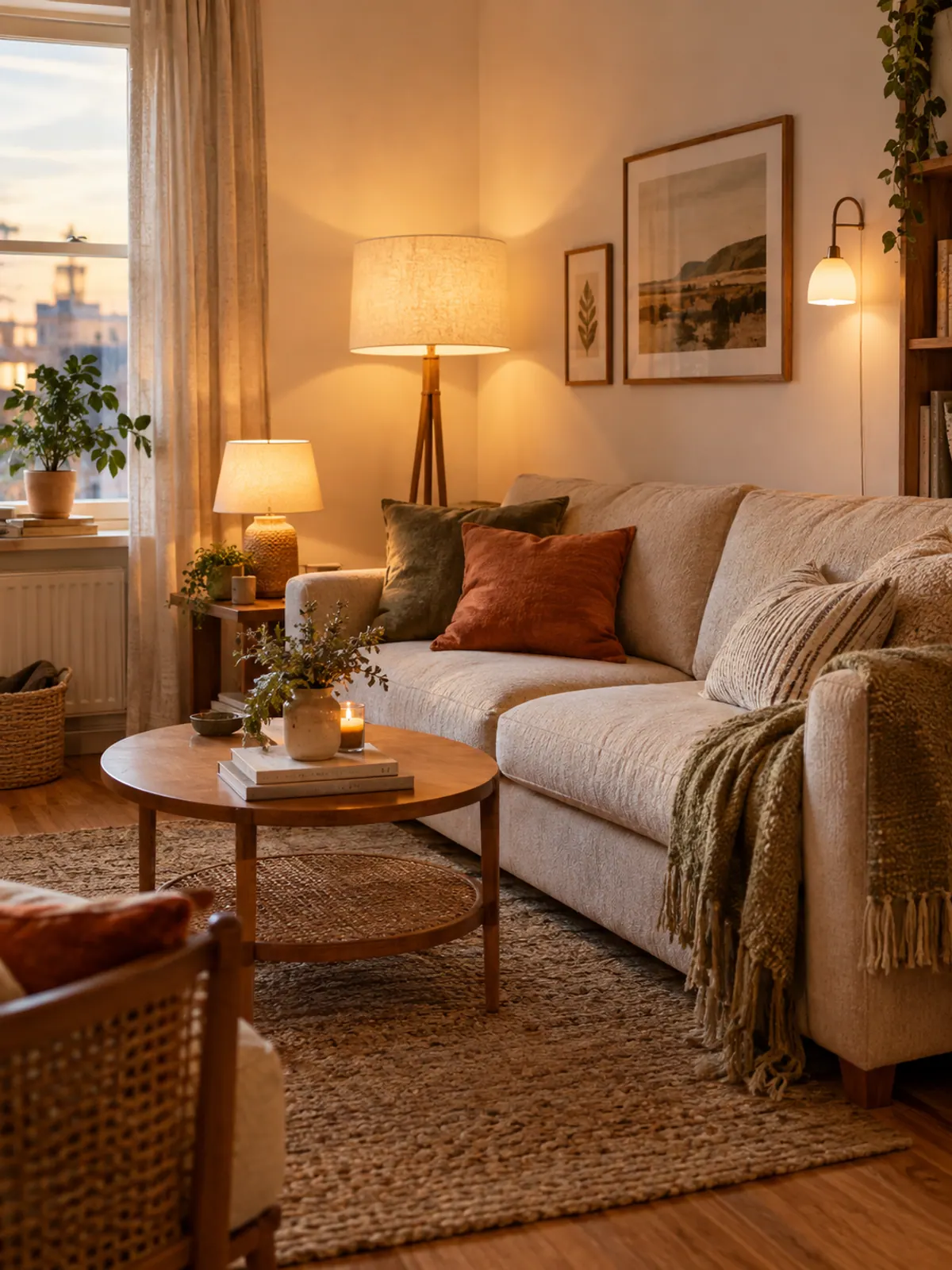
Use a floor lamp, a table lamp and one low or wall light so every corner gets light. An 800-lumen bulb is roughly a 60-watt equivalent, a good start for each lamp. Choose warm white around 2700K for evenings. Dark corners shrink a room; lit corners push the walls out.
-
Step 8: Pick furniture on legs
A sofa, chair and side table that show 4 to 6 inches of floor underneath make a room feel larger than pieces that sit flat on the floor. Open bases also let light pass under them.
-
Step 9: Pull the sofa about 12 inches off the wall if you have room
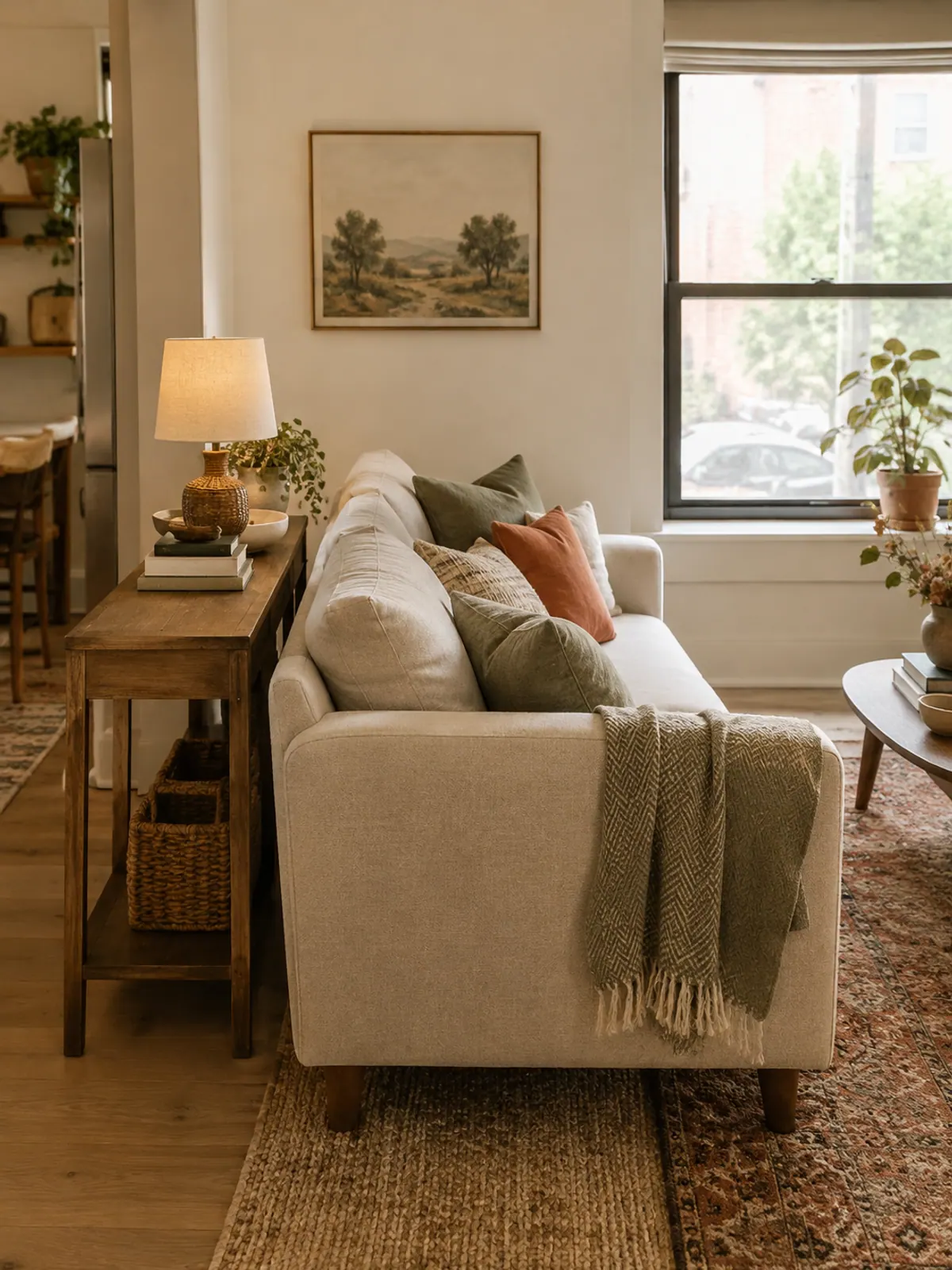
If the room is long enough, float the sofa about a foot from the wall and slide a narrow console behind it. The gap adds depth, and the console holds a lamp. If the room is tight, keep the sofa on the wall and skip this one.
-
Step 10: Lighten the walls without painting
In a rental, try removable peel-and-stick wallpaper in a soft light pattern on one wall, after testing a small patch. If you want paint, ask the landlord in writing; many say yes to a light neutral. Light walls bounce more light, which matters most in a small dark room.
-
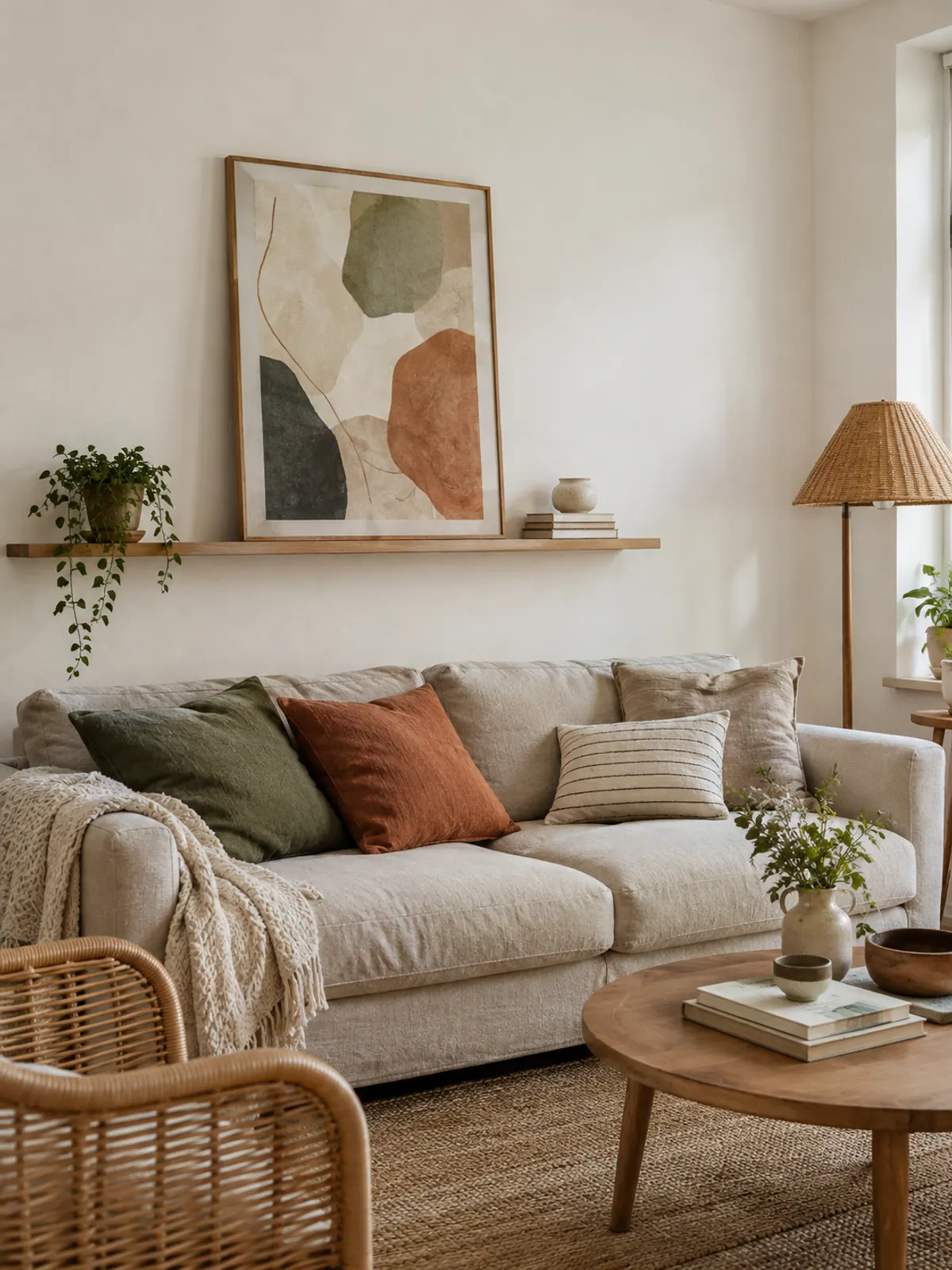
Step 11: Use one large art piece instead of many small ones
One print about two-thirds the width of the sofa looks calmer than a gallery wall of eight. Hang it with its center at about 57 to 60 inches, or lean it on a picture ledge to avoid extra holes.
-
Step 12: Choose a coffee table about two-thirds the sofa length
Keep it 14 to 18 inches from the sofa so you can reach it but still walk past. A glass or acrylic top, or a round shape, takes up less visual space than a heavy square block.
-
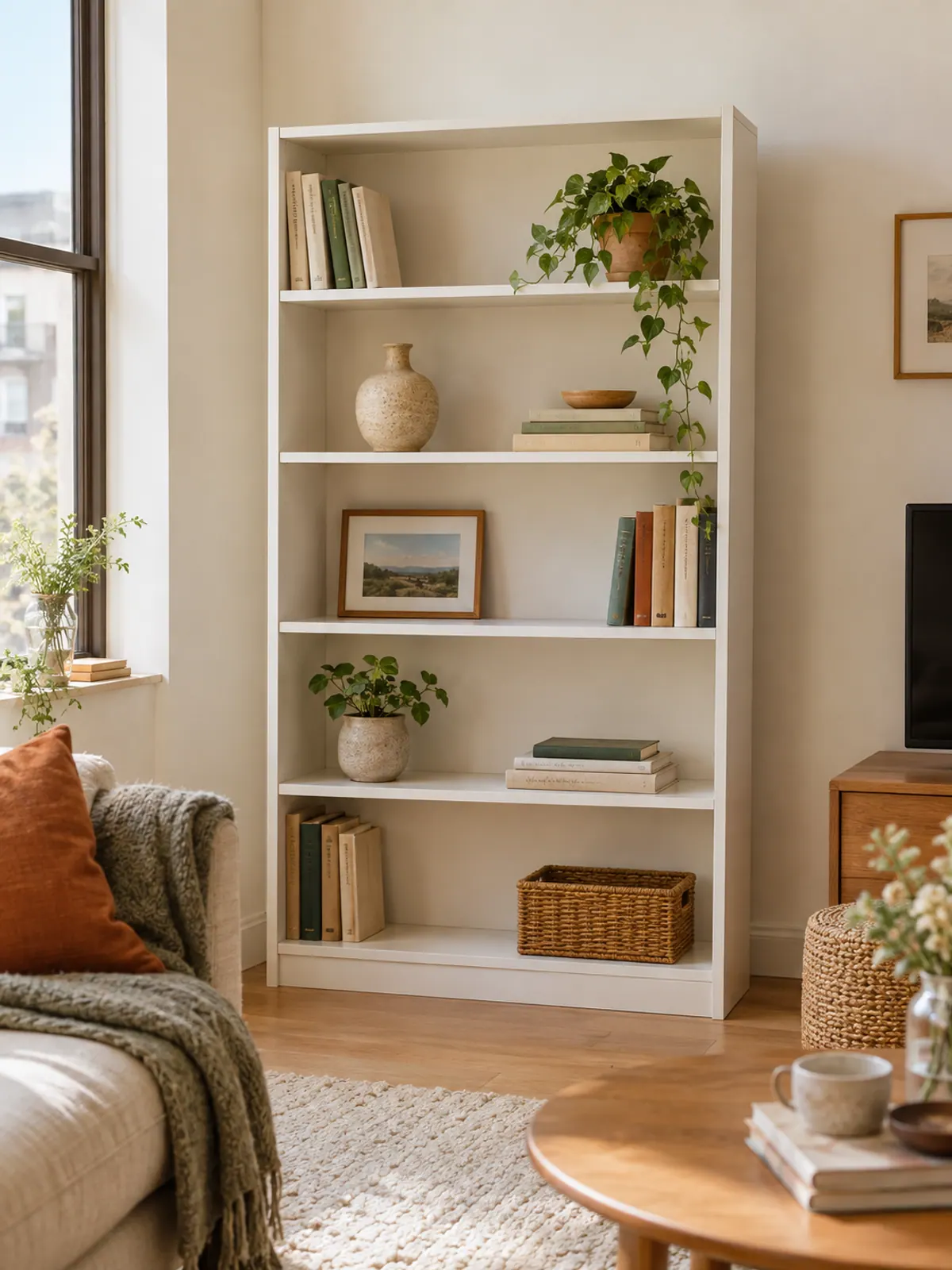
Step 13: Edit shelves to about 60 percent full
Leave space on every shelf. Group books in short runs, add one object and one plant, and stop. Full shelves read as clutter, and clutter is what makes a small room feel small.
-
Step 14: Draw the eye up with one tall piece, about 5 to 6 feet
A tall plant, floor lamp or narrow bookcase in one corner leads the eye up the wall. Keep it to one or two tall pieces. Anchor any tall bookcase against tip-over, or ask the landlord about a strap.
-
Step 15: Keep the room to three colors, about 60/30/10
Use one main color for about 60 percent of the room (walls and big pieces), a second for about 30 percent (rug and curtains) and an accent for about 10 percent (pillows and art). Fewer colors mean fewer edges for the eye to stop on.
A big bed in a small bedroom
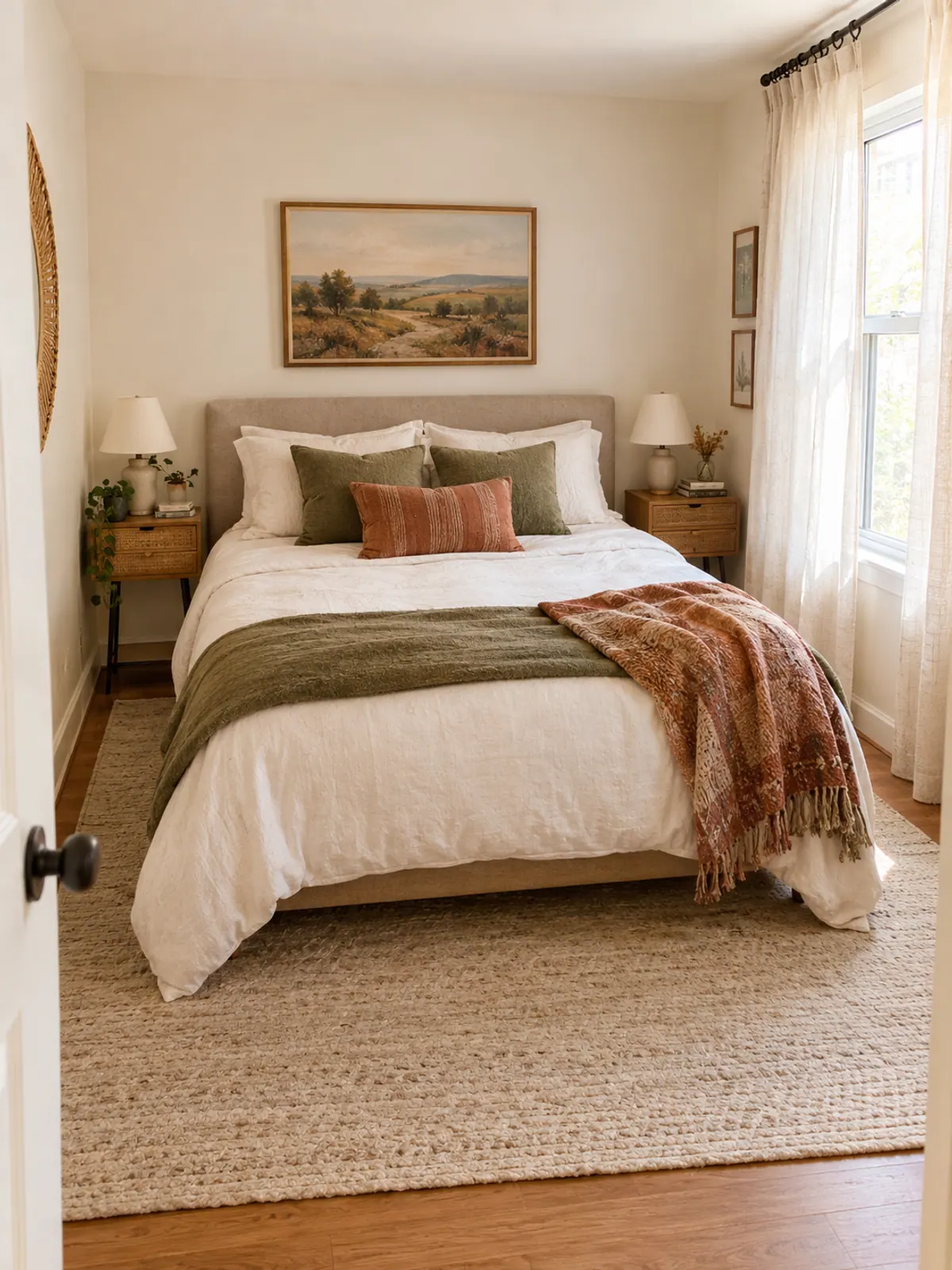
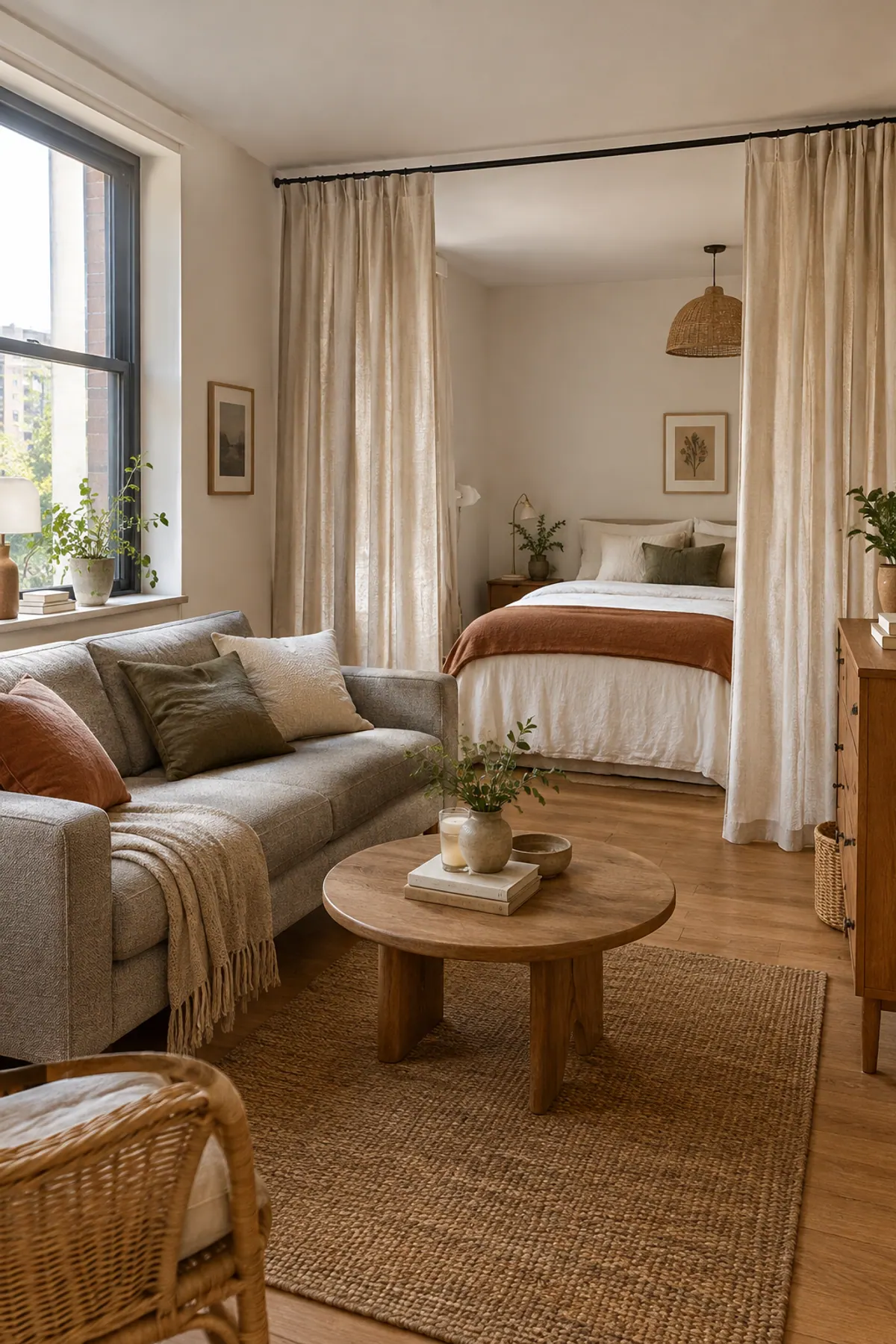
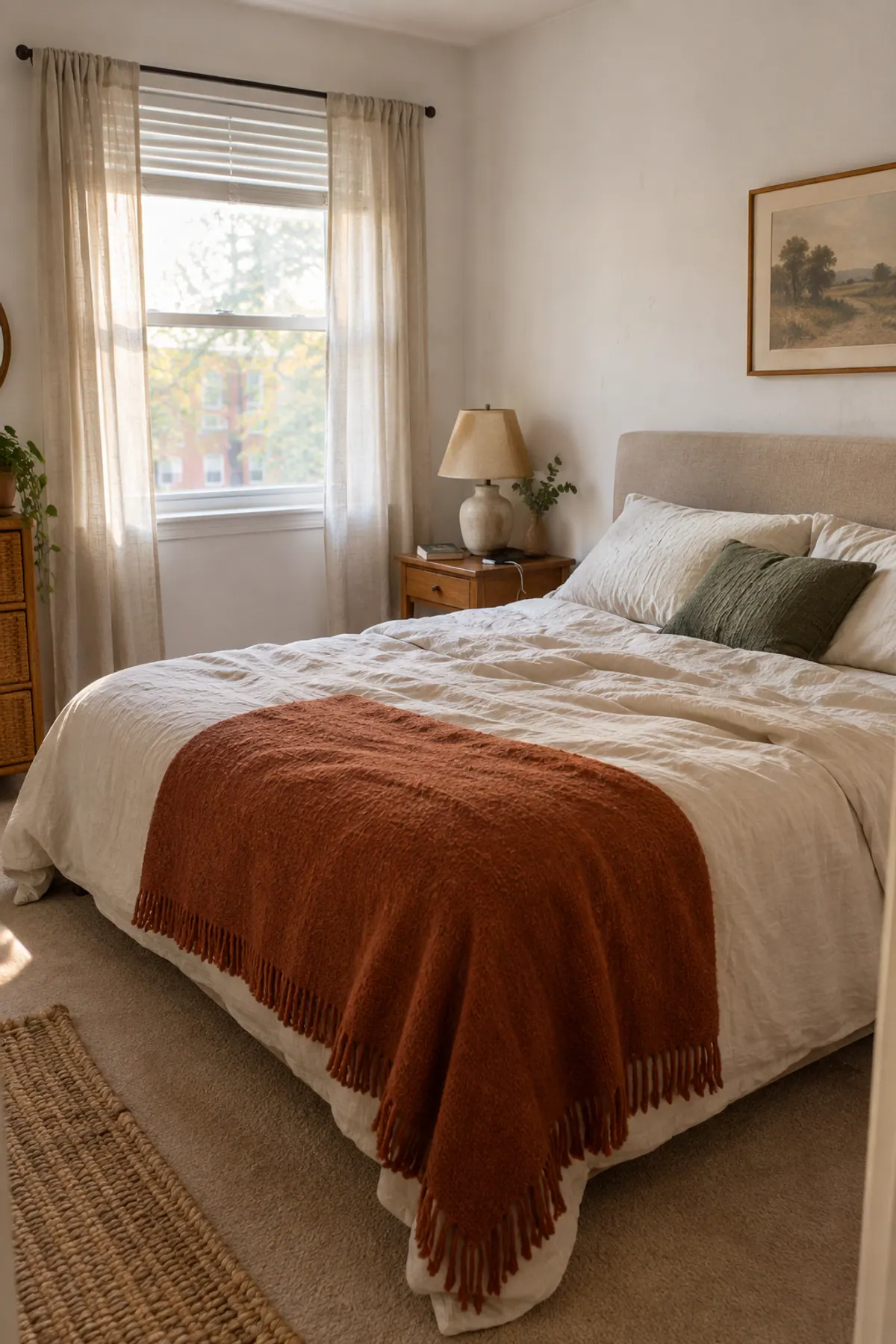
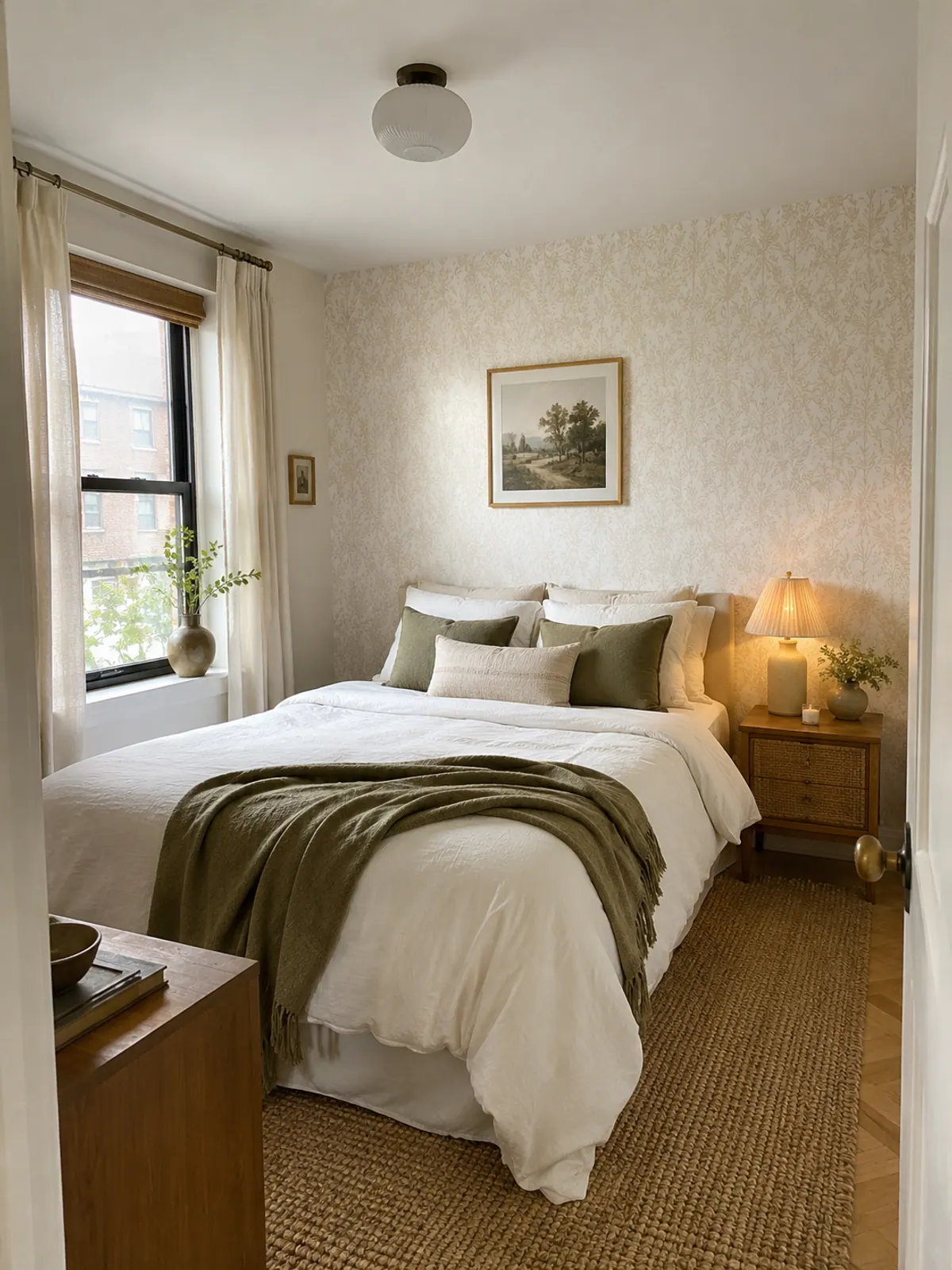
A queen bed is about 60 by 80 inches, so in a 10 by 10 room the layout matters. Center it on the wall opposite the door so the first view is the made bed, not the side of it. Aim for about 30 inches on the side you use most; if that does not fit, push one side to the wall.
Use a low headboard, nightstands on legs and a rug that reaches past both sides of the bed. For more, see these small bedroom ideas.
A big couch in a small living room
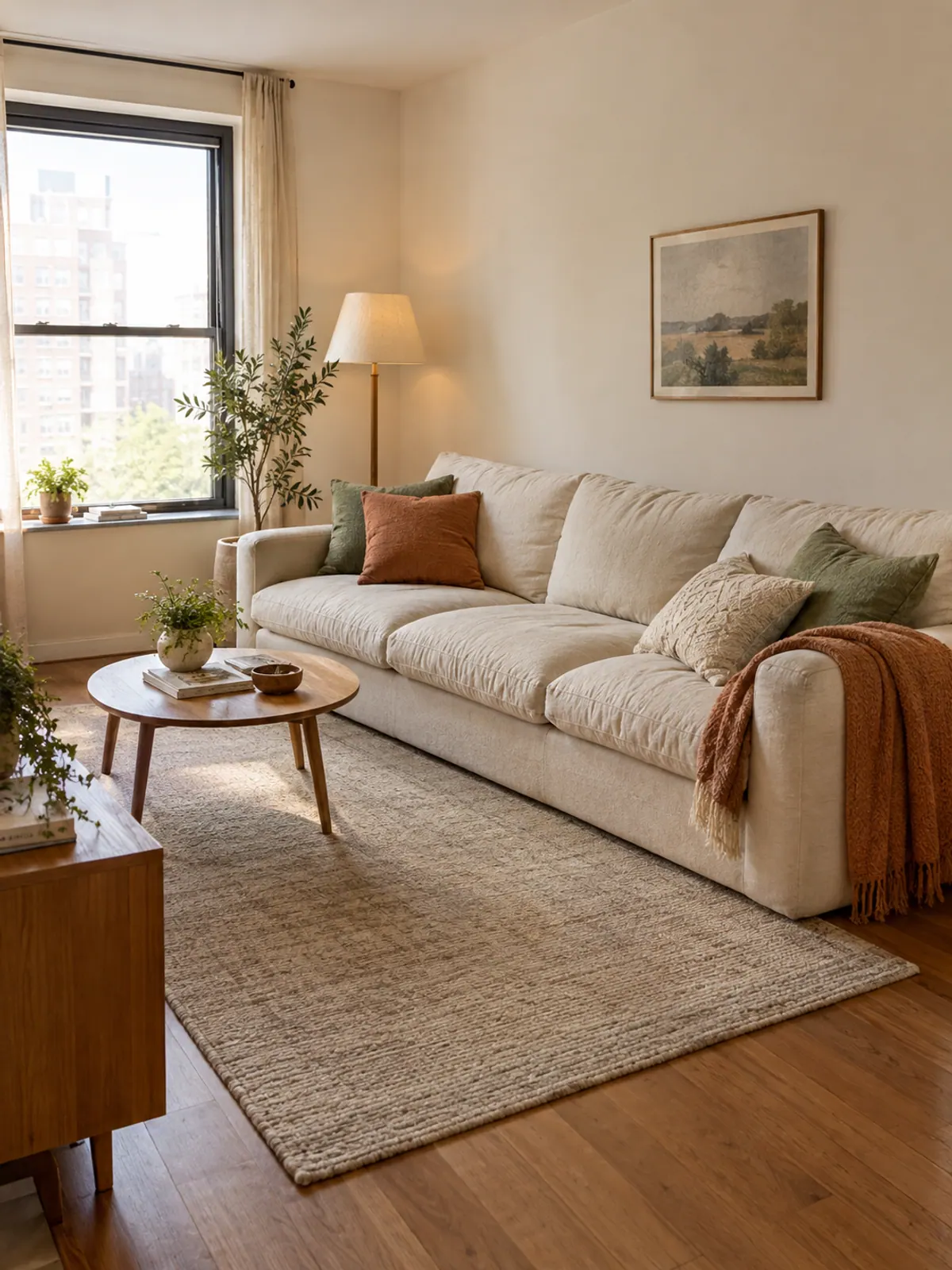
Put a big sofa on the longest wall and let it be the only large piece. Skip the armchair, use a slim round coffee table and keep the 30 to 36 inch walkway in front. A sofa close to the wall color looks smaller than one in a contrasting color.
How to make a small dark room look bigger without paint
Start with light: three lamps at three heights and bright warm bulbs. Then add the mirror opposite or beside the window, sheer or light curtains hung high and a light rug. If you can, lighten one wall with removable wallpaper. Paint is the last step, and only with the landlord's okay.
Mistakes that make a small room look smaller
What we like
- Curtains hung high and wide
- A rug big enough for the front legs
- Three light sources at three heights
- One large art piece
- Furniture on legs
Keep in mind
- Rods mounted right on the window frame
- A small rug floating in the middle
- One overhead light only
- Many small frames and objects
- Furniture pushed into the walkway
What to buy at $50, $150 and $300
| Budget | Buy | Trick it covers |
|---|---|---|
| About $50 | Warm 800-lumen bulbs, painter's tape, one plug-in lamp | Lighting and walkway |
| About $150 | Above plus a long curtain rod and floor-length panels | Curtains high and wide |
| About $300 | Above plus a 5 by 8 rug and a leaning floor mirror | Rug size and mirror |
Small room look-bigger picks
-
Full-length leaning floor mirror
Typically $60 to $150
Bounces window light.
Check price on Amazon for Full-length leaning floor mirror -
Extra-long curtain rod, 72 to 144 inch
Typically $20 to $50
Reaches past the frame.
Check price on Amazon for Extra-long curtain rod, 72 to 144 inch -
Floor-length linen curtains, 96 inch
Typically $25 to $60
Lets the rod go high.
Check price on Amazon for Floor-length linen curtains, 96 inch -
Neutral area rug, 5 by 8
Typically $60 to $180
Big enough for front legs.
Check price on Amazon for Neutral area rug, 5 by 8 -
Warm white LED bulbs, 800 lumen
Typically $8 to $20
Brighter lamps, warm tone.
Check price on Amazon for Warm white LED bulbs, 800 lumen -
Peel-and-stick removable wallpaper, light neutral
Typically $20 to $50
Lighter walls without paint.
Check price on Amazon for Peel-and-stick removable wallpaper, light neutral
Want decor ideas rather than layout rules? The apartment decor ideas that make a small space feel bigger cover styling and color. If you live in one room, the studio apartment divider ideas show how to zone it without losing light.
Frequently asked questions
What color makes a small room look bigger?
Light, soft colors that bounce light, such as warm white, cream or pale greige, used on walls and big pieces. In a rental, use removable wallpaper or ask the landlord in writing before you paint.
How high should curtains be hung in a small room?
At least 4 to 6 inches above the window frame, or about halfway between the frame and the ceiling, with the rod extending 8 to 12 inches past each side and panels that just touch the floor.
Do mirrors really make a room look bigger?
A large mirror placed to reflect a window adds light and depth. Lean a full-length mirror against the wall, or hang a smaller one with its center at about 57 to 60 inches.
What size rug makes a small living room look bigger?
One big enough for at least the front legs of the sofa and chairs, often 5 by 8 in a small living room. A rug that is too small makes the room look chopped up.
How do you make a small dark room look bigger?
Add three light sources at three heights with bright warm bulbs, place a mirror to reflect the window, hang light curtains high and wide and lighten one wall with removable wallpaper.
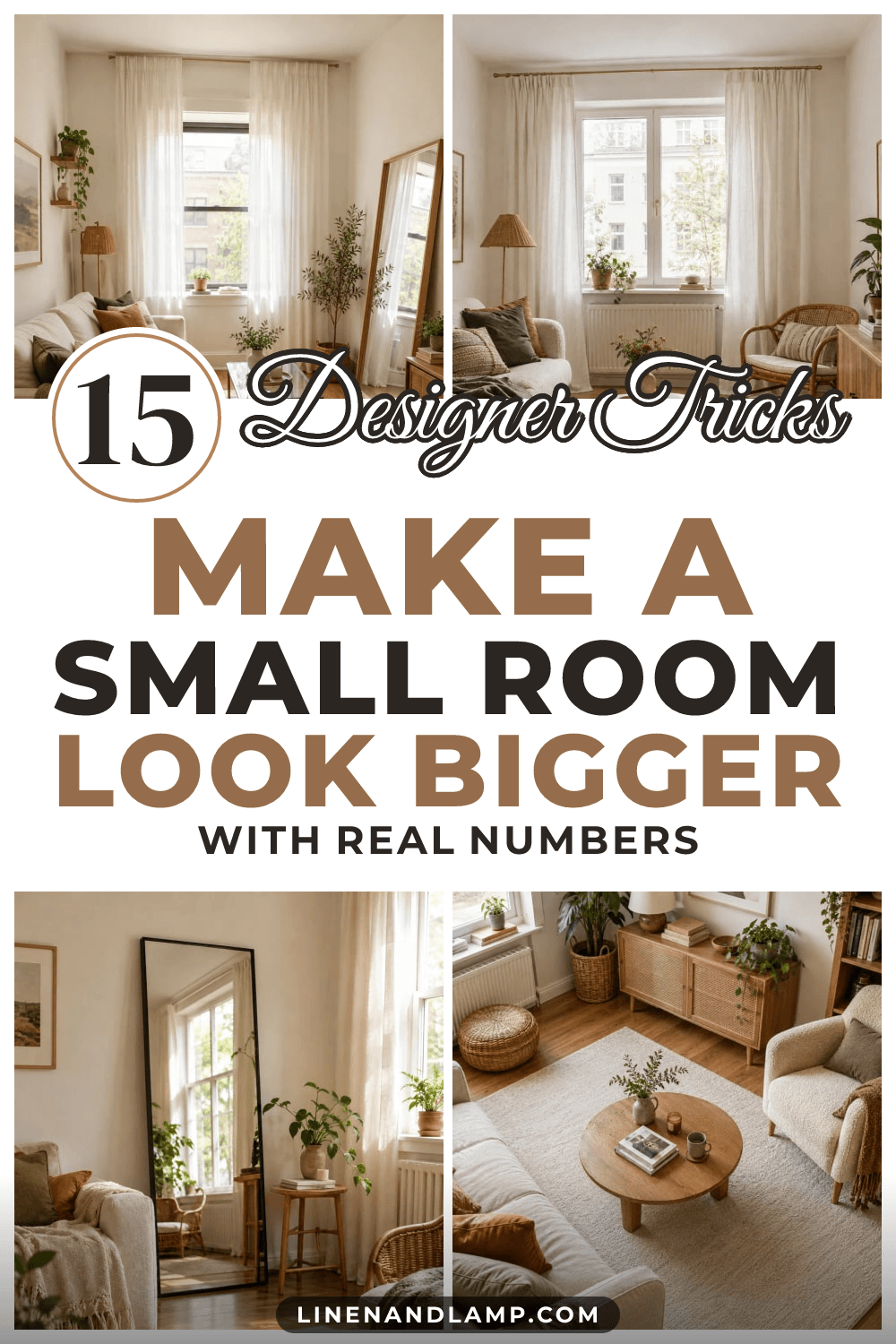
Save it for later
Pin this to your Small-Space Living board so it's there when you need it.
Save to Pinterest