This post contains affiliate links. As an Amazon Associate we earn from qualifying purchases, at no extra cost to you. Read our disclosure.
Key takeaways
- Pack one night-one box yourself: sheets, towel, toilet paper, charger, soap and breakfast.
- Week one is a working kitchen, a usable bathroom and a small cleaning kit.
- Test the smoke and CO alarms on day one and keep a small extinguisher near the stove.
- Wait a few weeks before buying a sofa, rug or decor, then measure and buy once.
- The free PDF has all four tiers, a budget tracker and a low-ink copy.
In this post8 sections
- Night one: the box you pack yourself
- Week one: the first apartment essentials list for kitchen, bathroom and cleaning
- Safety essentials for day one
- Month one: bedroom, living room and a toolkit
- Wait on these: the first apartment mistakes
- First apartment checklist on a budget
- Get the free first apartment checklist printable
- FAQ
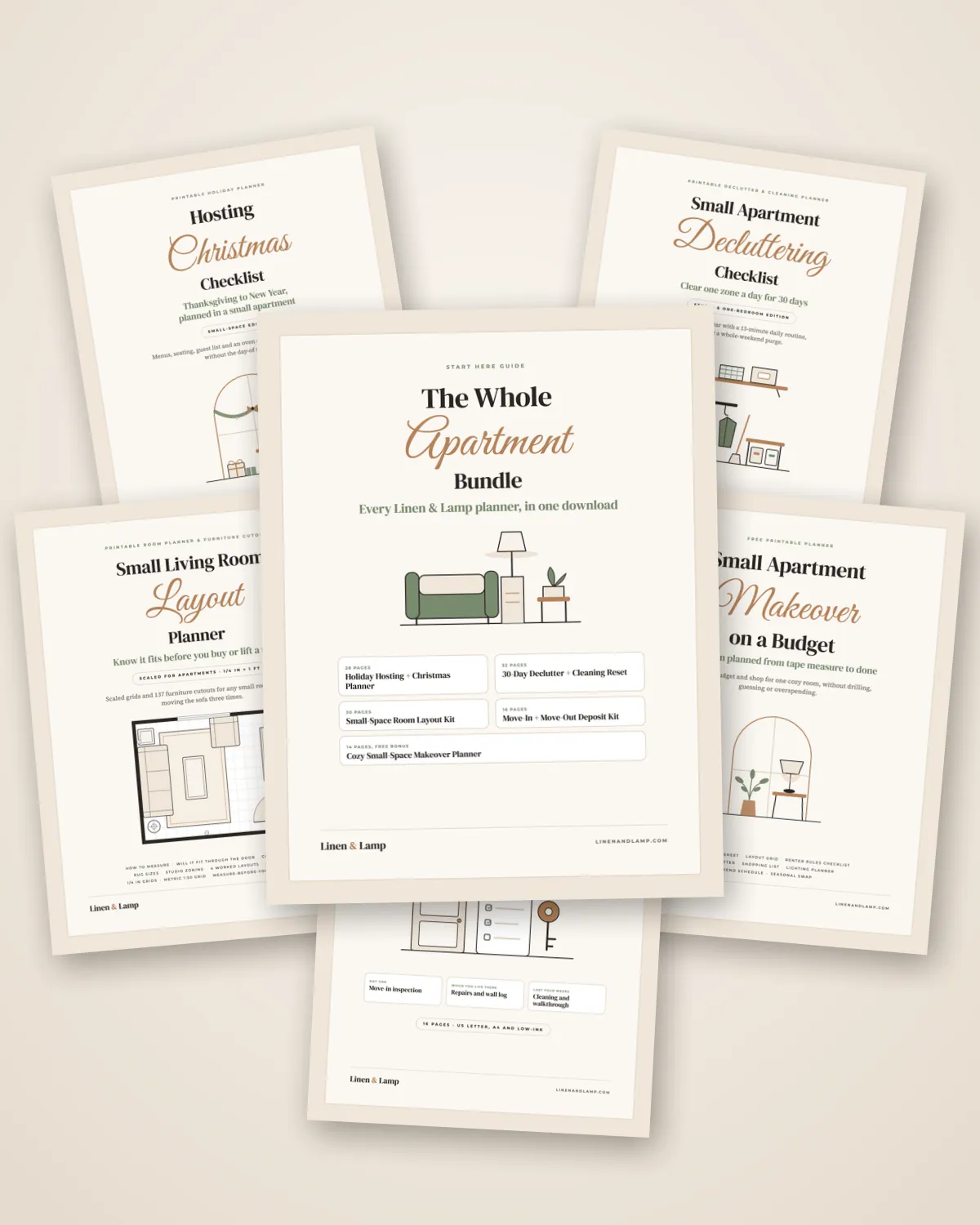
Moving this month? Download the free first apartment checklist (PDF, 4 pages) now. It prints on regular paper, needs no sign-up, and the guide below explains each tier and what you can skip.
Night one: the box you pack yourself
The first night in a new apartment goes wrong in small ways: no toilet paper, a dead phone, a bare mattress and no way to make coffee. One box solves all of it. Pack it last, carry it in your own car, and open it first.
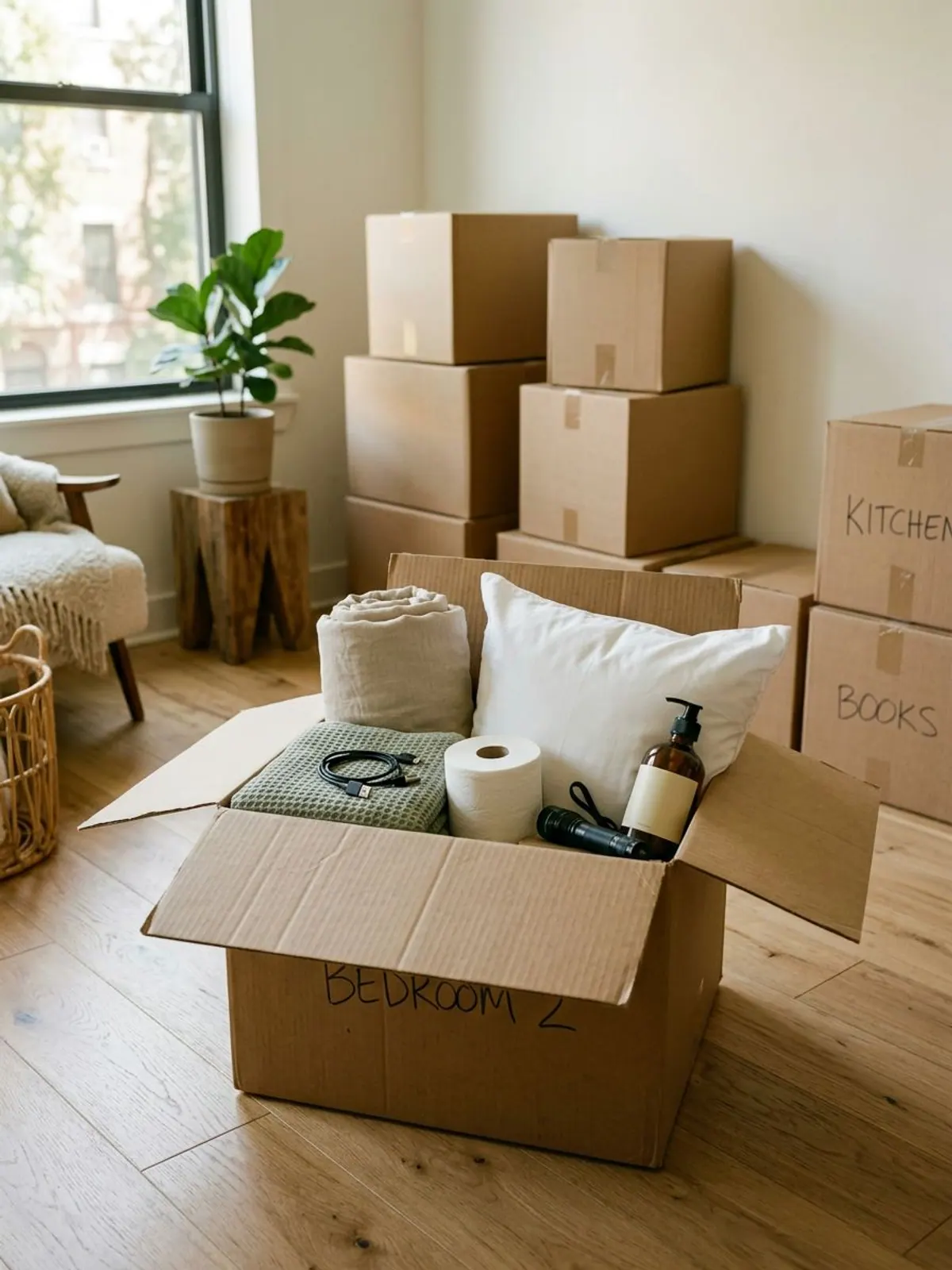
Night one box
Notice what is not on the list: nothing for the living room, no decor, no full kitchen. Night one is about sleeping, showering and eating breakfast without a store run. Everything else can wait a few days.
Week one: the first apartment essentials list for kitchen, bathroom and cleaning
Week one is what you will reach for every day. Buy these in the first seven days, and cross out anything a parent, friend or roommate can lend or hand down. Pots, towels and cleaning supplies are the things people most often have spare.
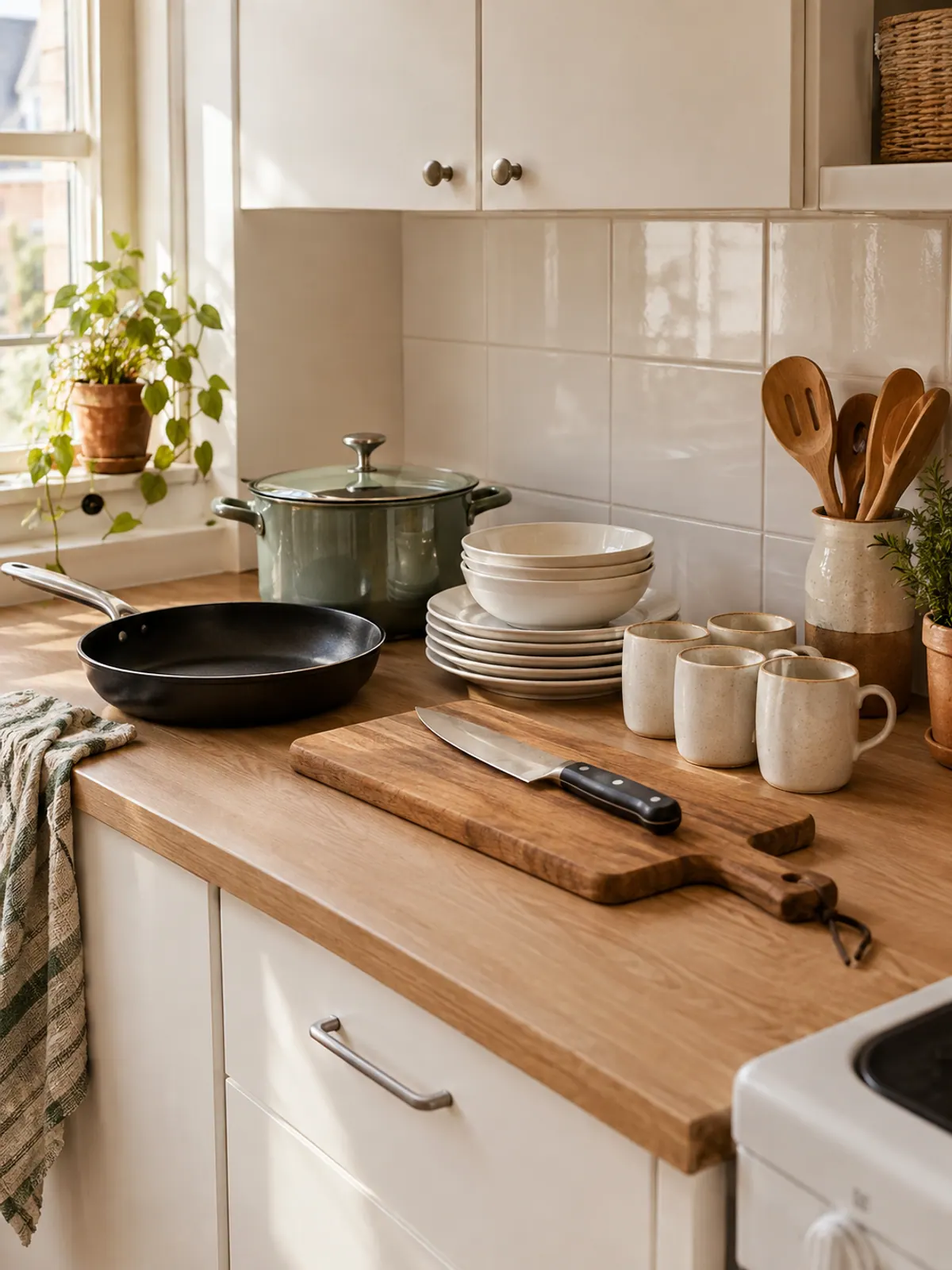
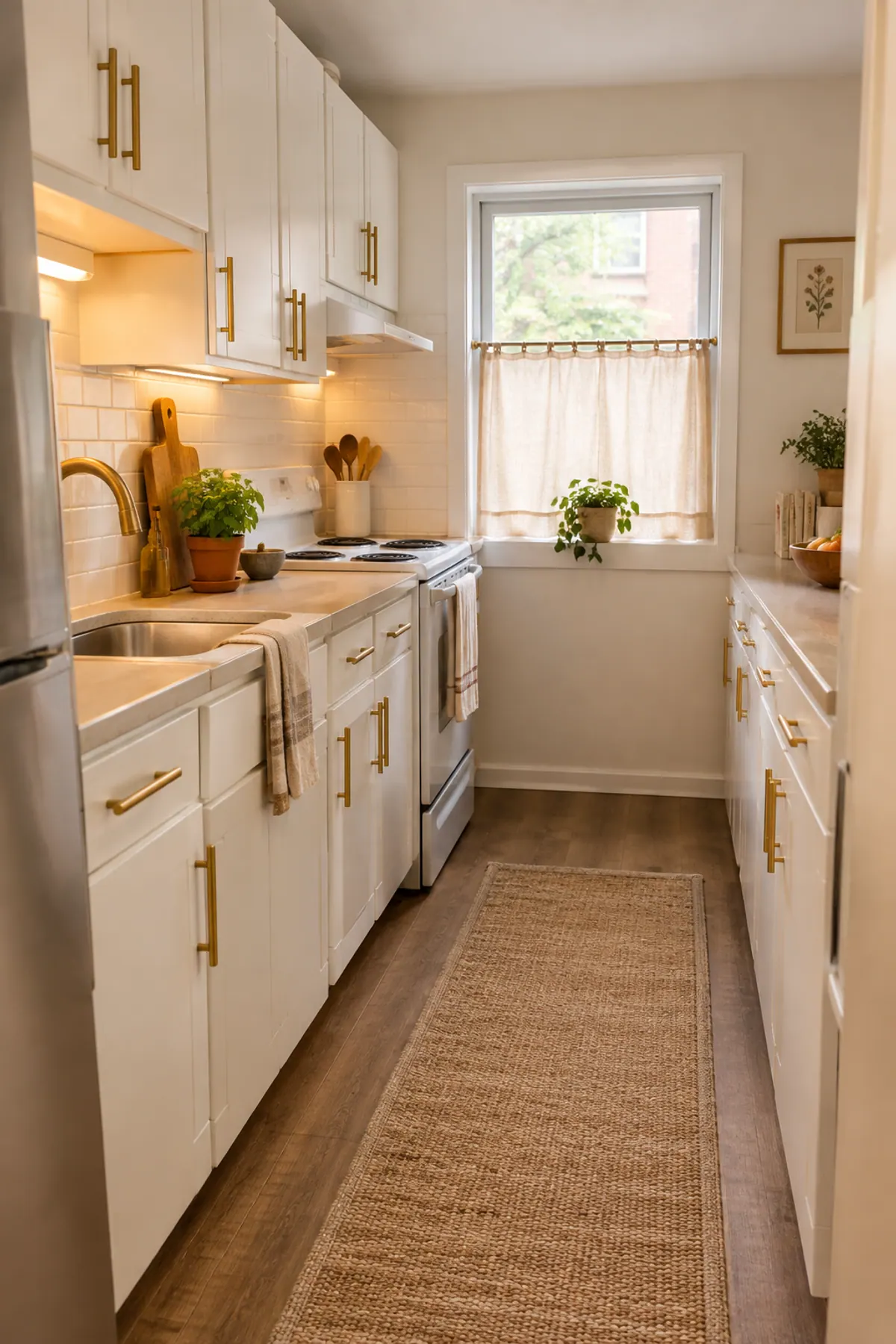
The kitchen needs to cook one simple meal and wash up after it. That means a chef knife and a cutting board, one frying pan, one medium pot with a lid, a spatula, a wooden spoon and tongs. Add four each of plates, bowls, mugs, glasses and forks, knives and spoons. A starter cookware set often costs less than buying pans one by one.
Then the small things everyone forgets: dish soap, a sponge, a drying rack or mat, two to four dish towels, an oven mitt, a can opener, a measuring cup and a few food storage containers with lids. A trash can that fits your kitchen corner is a week one buy, not a month one buy.
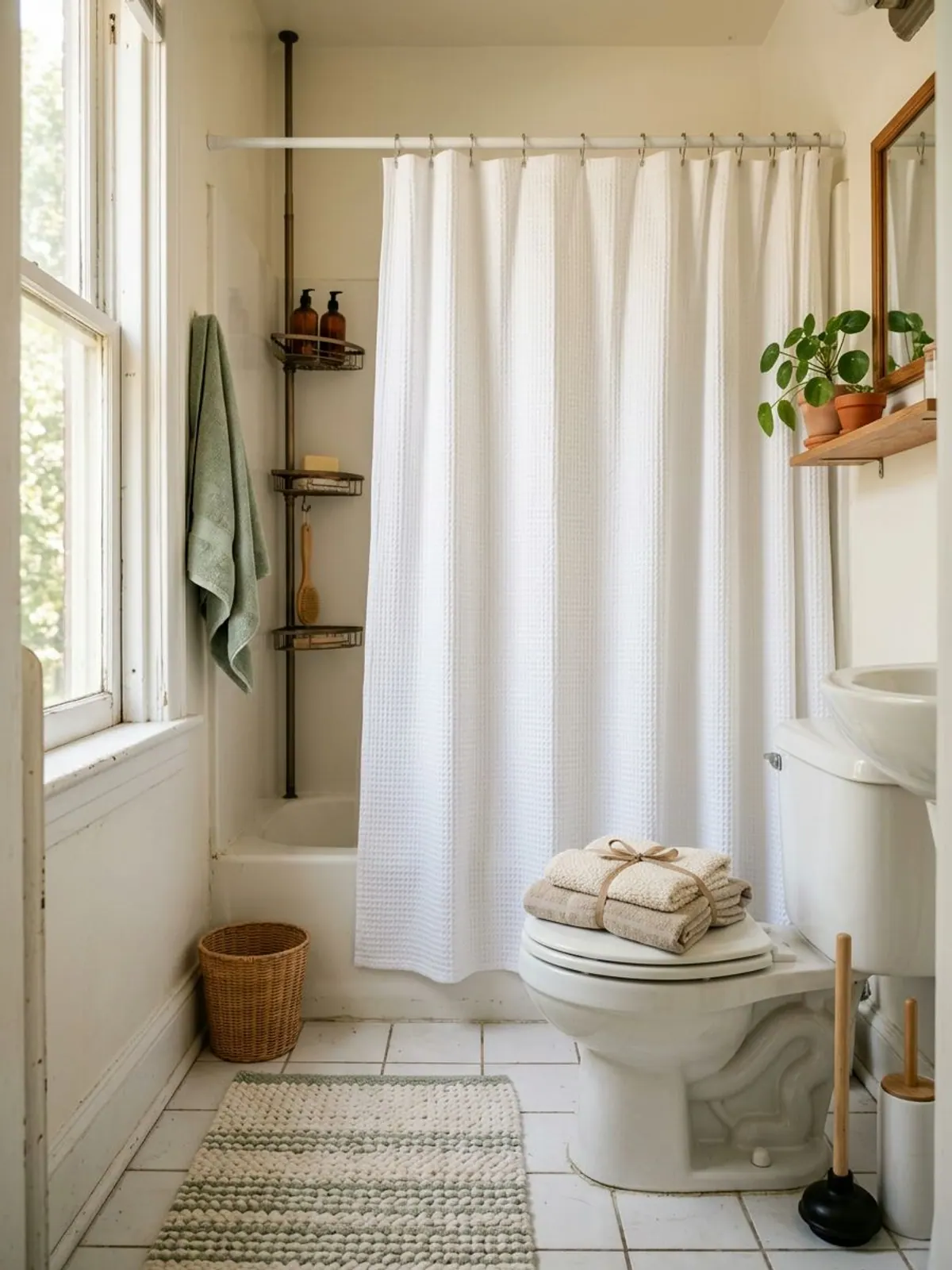
The bathroom needs a second towel set (one is always in the wash), a bath mat, a plunger and a toilet brush, a small trash can with a lid and a shower caddy or tension shelf. Buy the plunger before you need it. Add a small first aid kit and a pain reliever, because you will not want to shop for them when you need them.
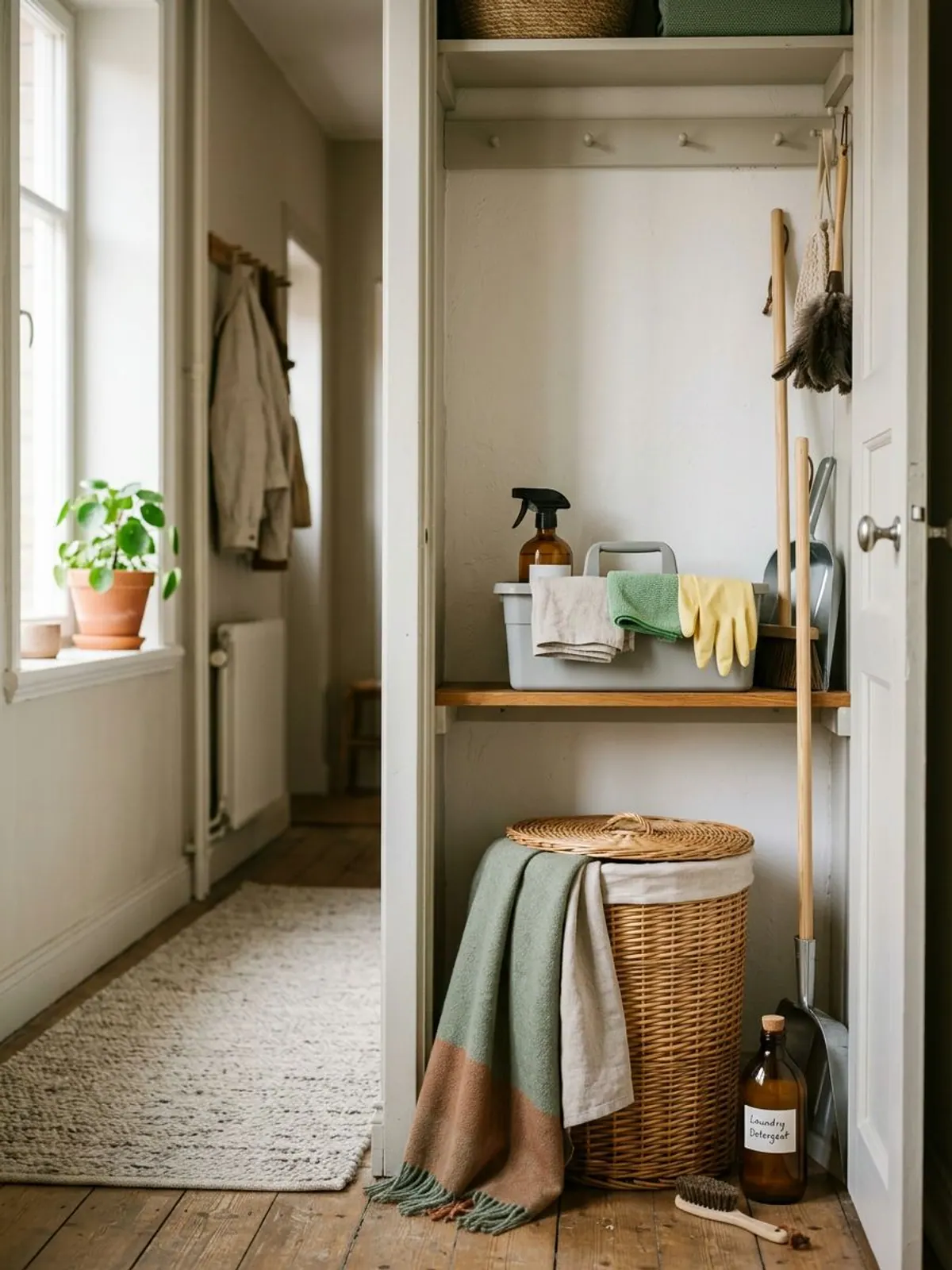
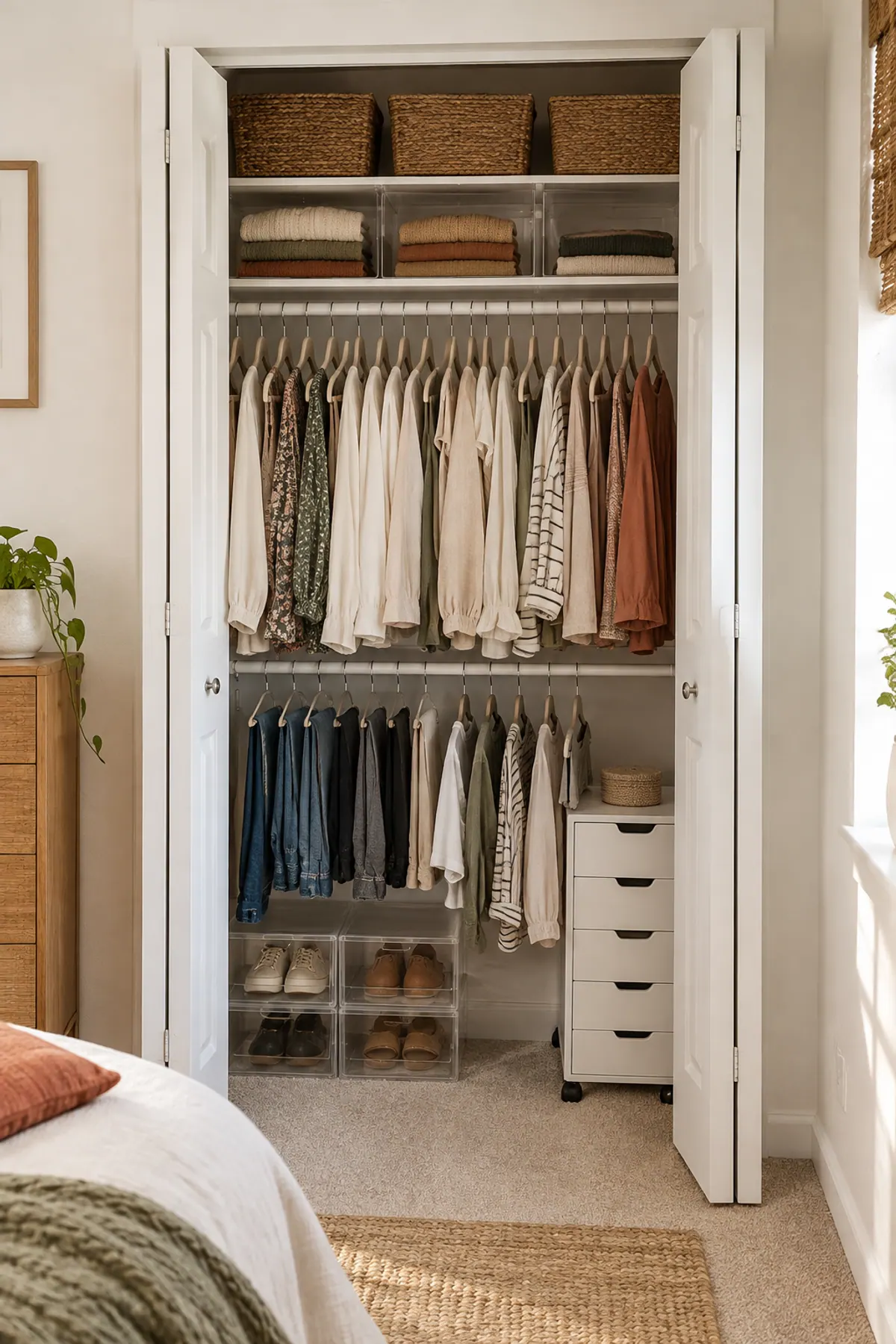
The cleaning kit is small: an all-purpose spray, microfiber cloths, a bathroom cleaner and gloves, a broom and dustpan or a stick vacuum, a bucket or mop for hard floors, laundry detergent and a hamper. Keep it all in one caddy so it lives in one closet. For where to put it in a small place, see our small closet organization ideas.
Safety essentials for day one
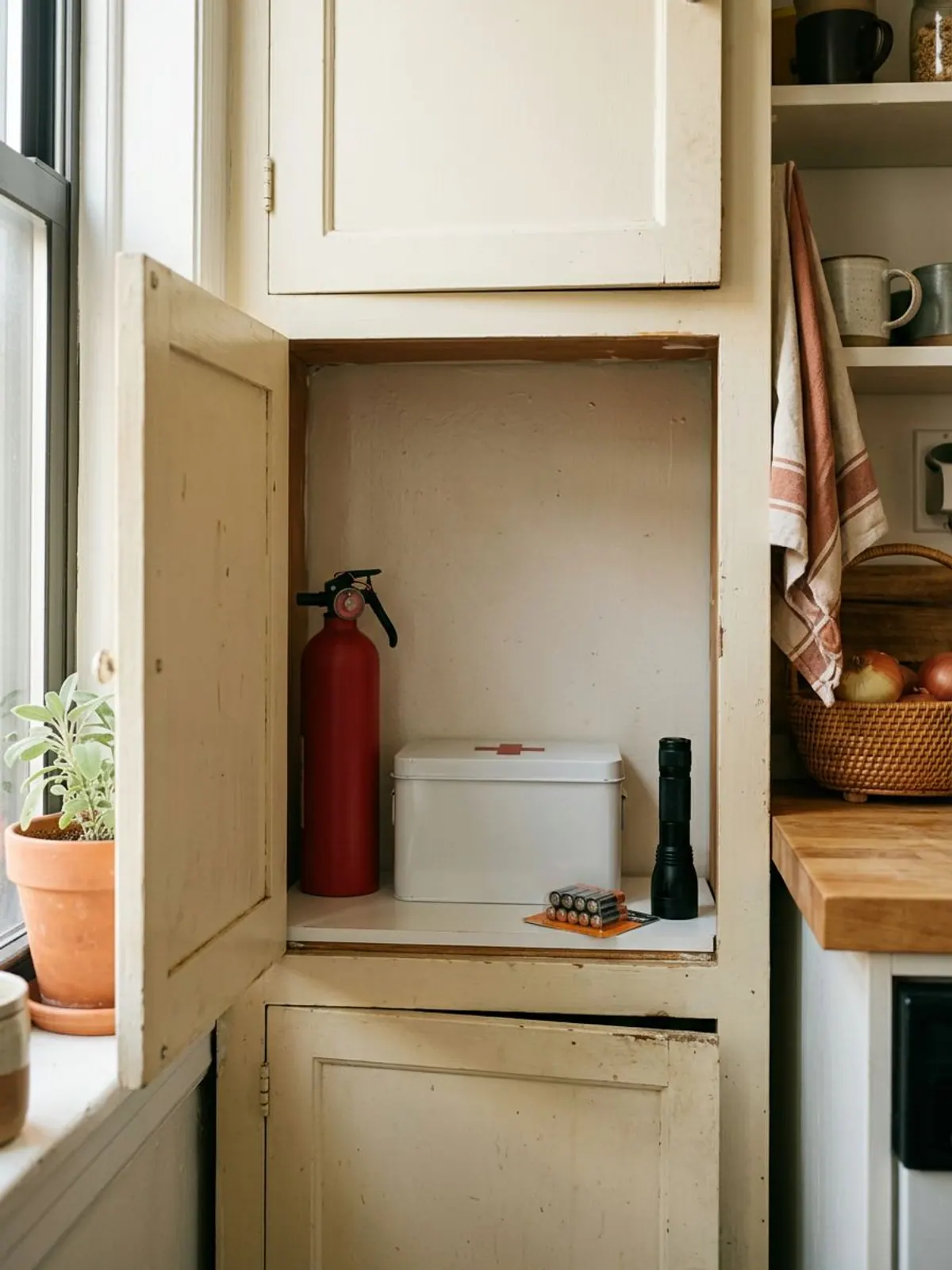
Test the smoke alarm and carbon monoxide alarm on the first day by pressing the test button. If either one does not sound, tell the landlord in writing that day. In most places working alarms are the landlord's job, but you are the one sleeping there.
Keep a small kitchen fire extinguisher in a cabinet near the stove (not above it), a pack of AA and 9V batteries and a surge-protector power strip for the desk or TV. Read the extinguisher label once when you unpack it, so you know how it works before you ever need it.
Before the boxes come in, walk the place and photograph every room, so you have a dated record of how it looked on day one. Our 16-page Move-In Inspection Kit gives you the order to walk it in.
Month one: bedroom, living room and a toolkit
Month one is what makes the place feel like yours. These are worth buying in the first few weeks, as the budget allows, and they are things you will use every day.

In the bedroom: a mattress protector (it protects the mattress and often the warranty), a second sheet set, 30 to 40 matching hangers, a bedside lamp and blackout curtains or a liner. A full-length mirror can lean against a wall or hang over a door, with no holes.

In the living room: a place for two people to sit, one floor or table lamp for warm light, curtains on a rod and a side table or a sturdy stool. Overhead lights in most rentals are harsh, so a lamp changes the room more than any decor. If you cannot drill for curtains, here are 5 ways to hang curtains without drilling.
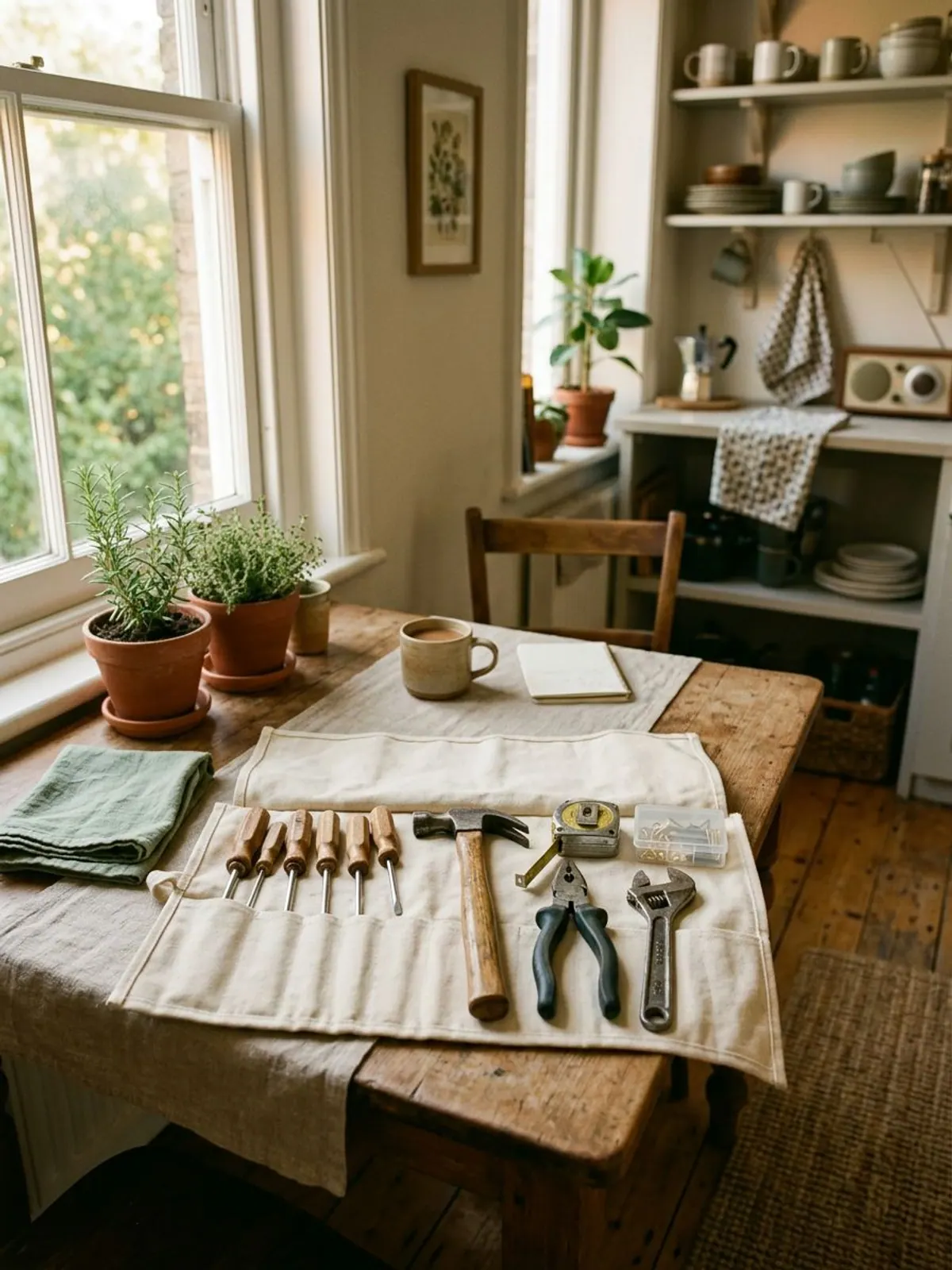
The toolkit covers almost every small job: a screwdriver set, a hammer, a tape measure, pliers, an adjustable wrench, a picture-hanging kit or removable putty and an indoor extension cord. Ask before using any wall anchors, and keep the tape measure in a kitchen drawer, because you will use it constantly in the first month.
Wait on these: the first apartment mistakes
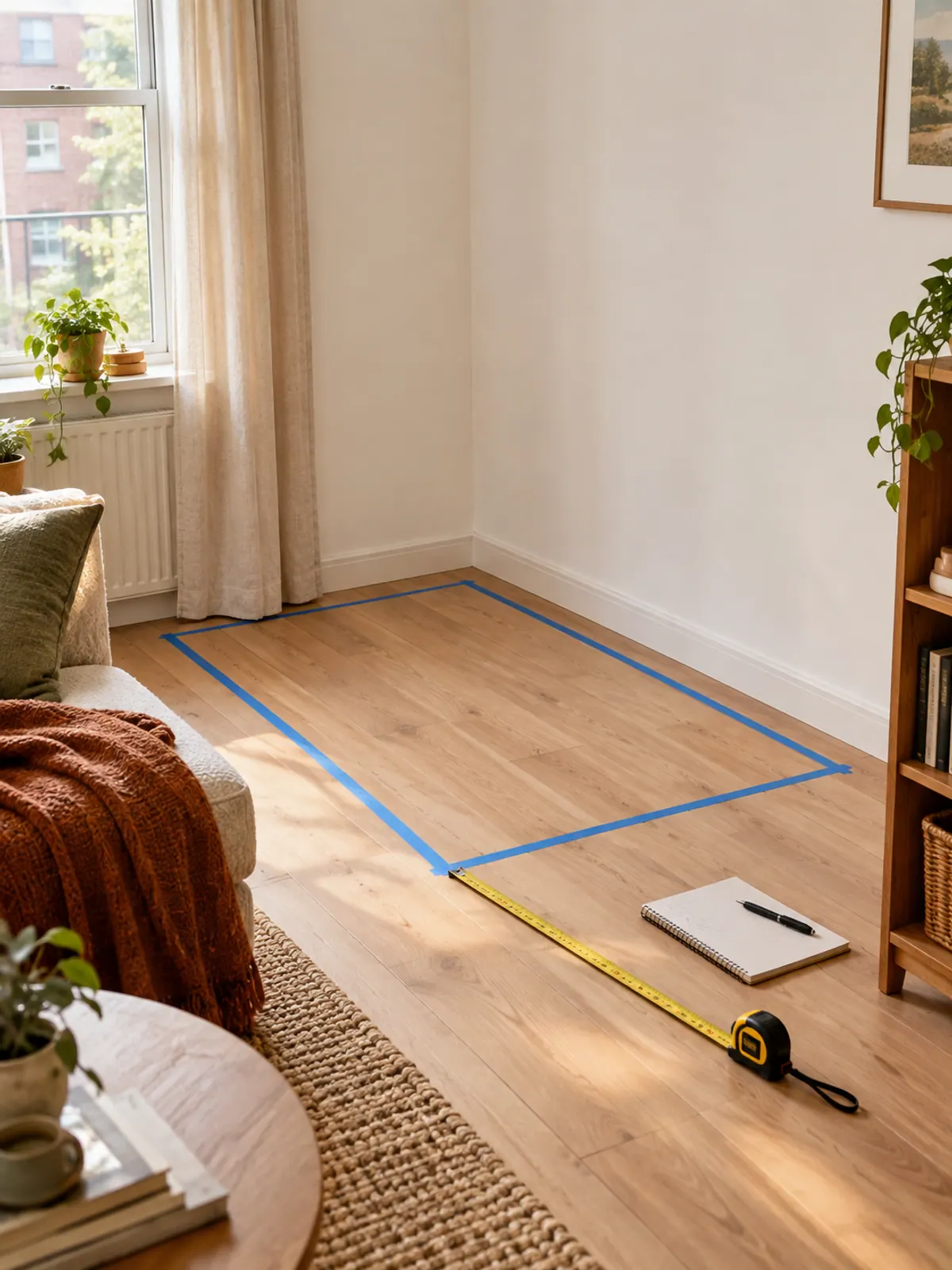
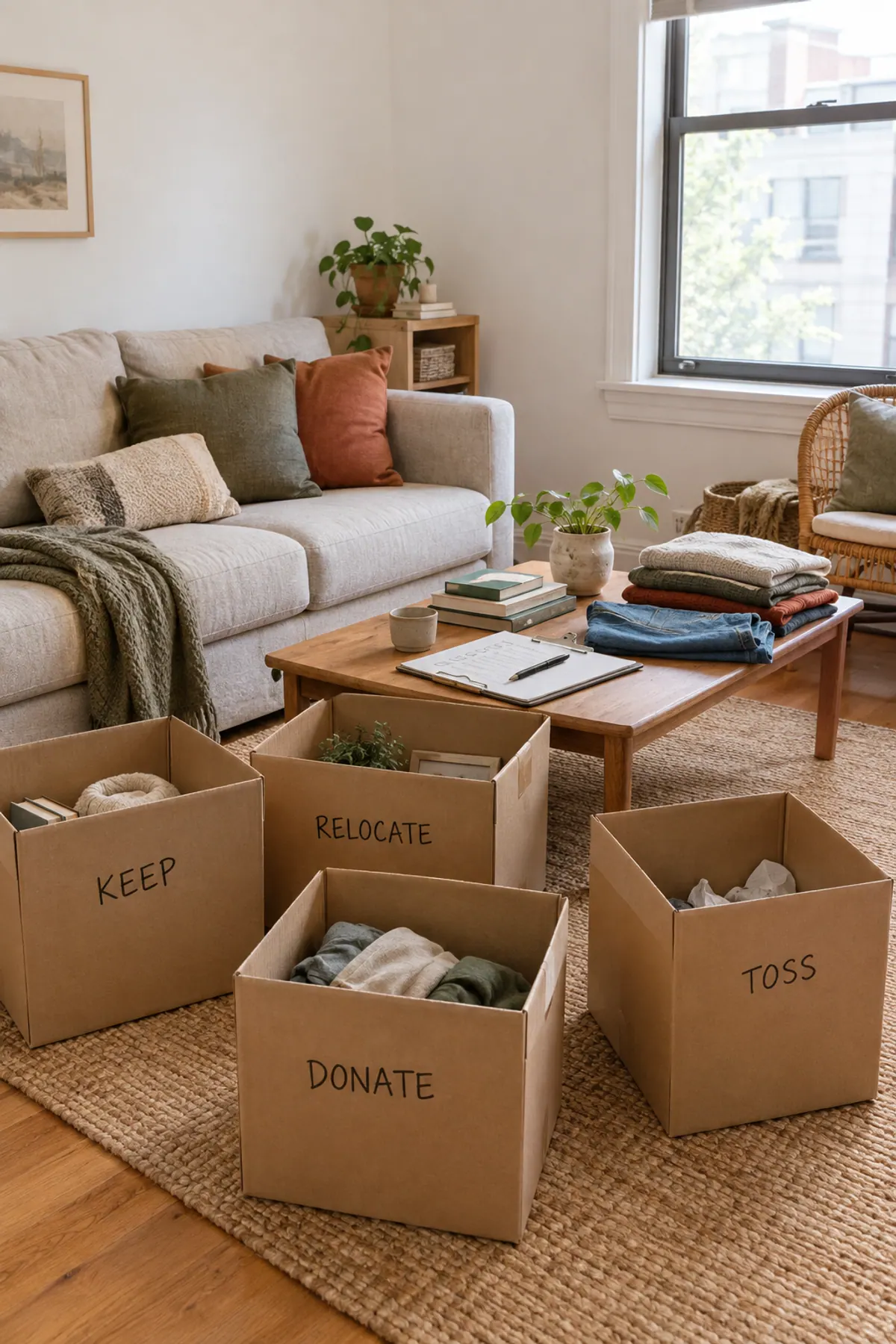
The wait list is where most first-apartment money goes wrong. Buying a sofa, a rug and matching decor in the first week means buying for a room you have not lived in yet. Live in the space for a few weeks, notice where you actually sit and eat, then measure and buy once.
What we like
- Sofa: measure the door, the hallway and any stairs first
- Rug: buy after the furniture is placed, so you know the size
- Wall art: hang it once you know where the furniture lives
- Dining table: you may find a counter stool or a folding table is enough
Keep in mind
- Matching decor sets bought before you know the light
- Small appliances you used once at home (air fryer, stand mixer)
- Furniture bought online without checking the elevator or stairs
- Anything that needs drilling before you have read the lease
Once the rooms are set, our apartment decor ideas that make a small space feel bigger help with the next layer, and the minimalist apartment declutter checklist keeps it from filling up.
First apartment checklist on a budget
Costs vary a lot by city and by how much you can borrow or thrift, so use these as rough ranges, not quotes. Ask family first, check local buy-nothing groups for kitchen basics, and buy new where hygiene or safety matters: the mattress protector, the extinguisher and the shower liner.
| Tier | What it covers | Typical range |
|---|---|---|
| Night one | Box of basics, much of it from home | $20 to $60 |
| Week one: kitchen | Cookware set, dishes, utensils, small tools | $80 to $200 |
| Week one: bath and cleaning | Towels, mat, curtain, cleaning kit | $60 to $150 |
| Safety | Extinguisher, first aid kit, batteries, power strip | $45 to $100 |
| Month one | Bedroom, living room lamp and curtains, toolkit | $150 to $400 |
| Wait list | Sofa, rug, table, art | Plan later |
Page 3 of the printable has a budget tracker with a budget and a spent column for each tier, so you can see where the money went before the wait list starts.
Get the free first apartment checklist printable
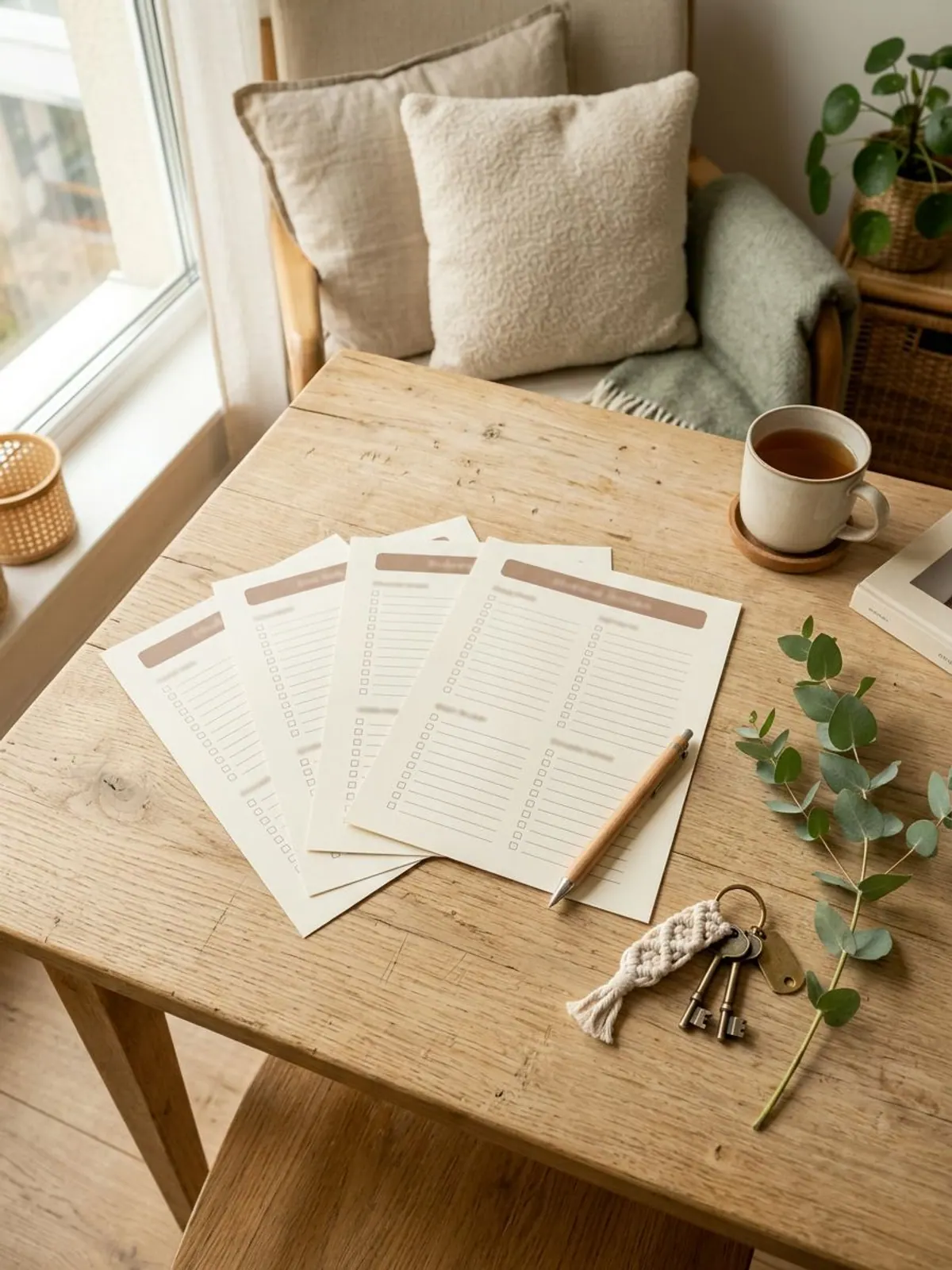
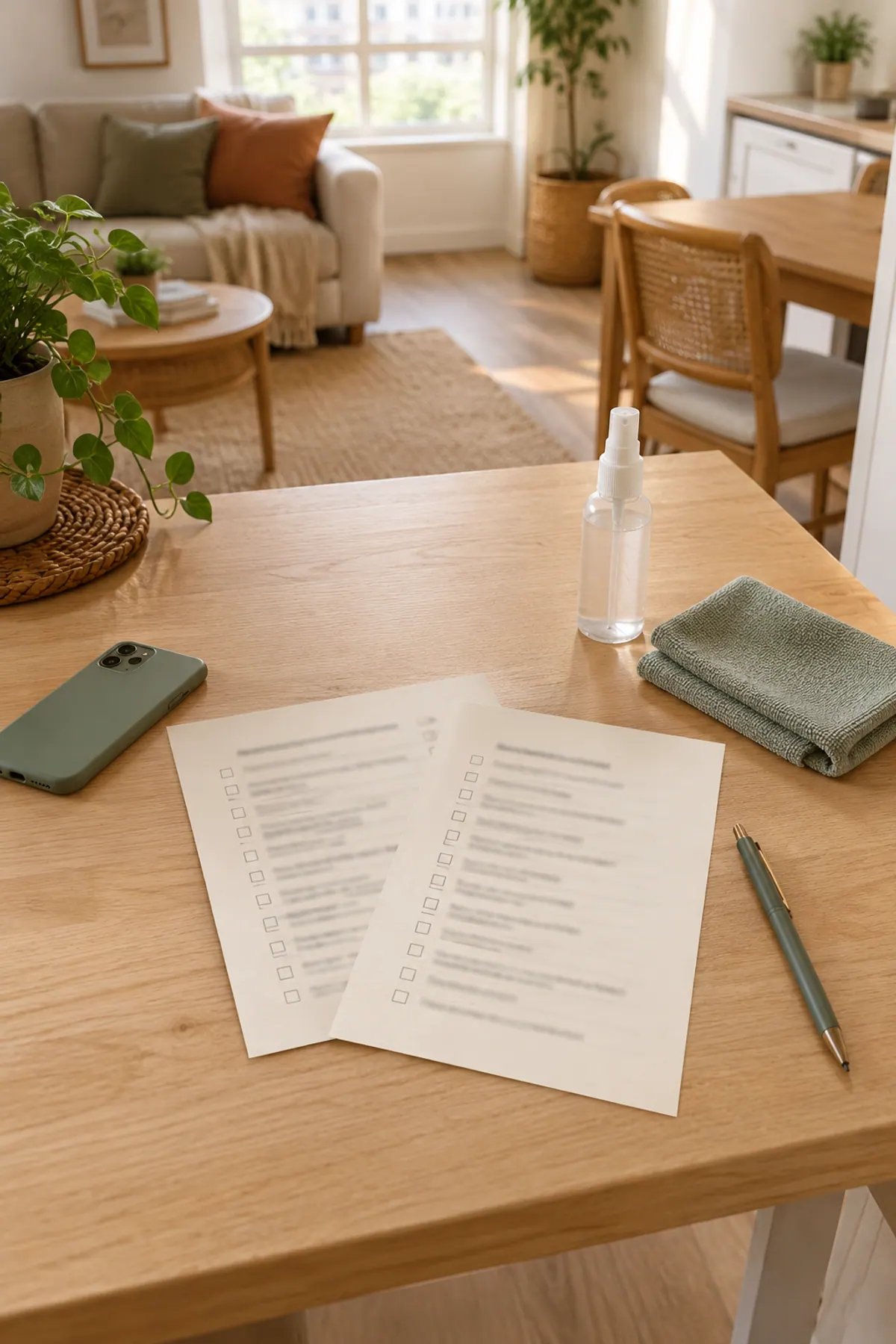
The free first apartment checklist is four pages on US Letter. Page 1 explains the four tiers. Page 2 is night one and week one, page 3 is month one, the wait list, a budget tracker and space for measurements, and page 4 is a low-ink copy of the whole list.
Download the free first apartment checklist (PDF, 4 pages). No sign-up needed. On A4 paper, choose "fit to page" in the print dialog. Keep page 2 on the fridge for the first week and tick items as they arrive.
Want a planner for the next step, the room-by-room setup with layouts and a budget? The free Cozy Small-Space Makeover Planner is below. When the kitchen is ready for upgrades, the renter friendly kitchen makeover ideas list shows 19 removable changes.
First apartment essentials worth buying new
-
Starter cookware set
Typically $50 to $120
Often cheaper than buying a pan and a pot separately.
Check price on Amazon for Starter cookware set -
Waterproof mattress protector
Typically $15 to $35
Protects the mattress from day one.
Check price on Amazon for Waterproof mattress protector -
Shower curtain, liner and hooks set
Typically $15 to $35
A night one item if there is no glass door.
Check price on Amazon for Shower curtain, liner and hooks set -
Basic home toolkit
Typically $20 to $40
Covers furniture assembly and small fixes.
Check price on Amazon for Basic home toolkit -
Small kitchen fire extinguisher
Typically $20 to $45
Keep it near the stove, not above it.
Check price on Amazon for Small kitchen fire extinguisher -
First aid kit
Typically $15 to $30
Buy it before you need it.
Check price on Amazon for First aid kit -
Surge protector power strip
Typically $12 to $25
For the desk or TV corner.
Check price on Amazon for Surge protector power strip
Frequently asked questions
What do I need for my first apartment?
Start with a night-one box (sheets, towel, toilet paper, charger, soap, a few dishes and breakfast), then a basic kitchen, bathroom and cleaning kit in the first week. Bedroom, living room and toolkit items come in month one. Big furniture and decor can wait until you have lived in the space.
What should I buy first for a first apartment?
Buy what you need to sleep, shower and eat on the first night: bedding, a towel, toilet paper, a shower curtain if needed, hand soap and simple food. Then a frying pan, a pot, dishes, cleaning basics and a plunger in the first week.
How much does it cost to furnish a first apartment?
It depends heavily on your city and how much you borrow, thrift or bring from home. As a rough example, the essentials in this checklist (before the sofa and big furniture) often land somewhere between a few hundred dollars and about $900 when bought new. Use the budget tracker in the printable to set your own numbers.
What do people forget to buy for their first apartment?
The most common gaps are a plunger, a shower curtain liner and rings, a can opener, a trash can, light bulbs, a first aid kit, a fire extinguisher and a basic toolkit. They are cheap, but you only notice them when you need them.
What cleaning supplies do I need for a new apartment?
An all-purpose spray, microfiber cloths, a bathroom cleaner, rubber gloves, a broom and dustpan or a stick vacuum, a mop or bucket for hard floors, dish soap and sponges, and laundry detergent. Keep them in one caddy in one closet.
Save it for later
Pin this to your Small-Space Living board so it's there when you need it.
Save to Pinterest