
This post contains affiliate links. As an Amazon Associate we earn from qualifying purchases, at no extra cost to you. Read our disclosure.
Key takeaways
- Weigh curtains, rod and rings together, then pick hardware rated well above the total.
- Tension rods inside the frame are the cheapest no-drill curtain rod and touch no wall.
- Command curtain rod hooks hold 10 lb per pair including the rod, on smooth paint only.
- Tap-in brackets on wood trim (about 20 lb each, brand claim) suit blackout panels.
- Remove adhesive by pulling tabs straight down along the wall, or warm foam pads first.
In this post13 sections
- Step one: weigh your curtains before you pick a method
- Method 1: tension rod inside the window frame
- Method 2: Command hooks for a curtain rod
- Method 3: adhesive no-drill curtain rod brackets
- Method 4: tap-in brackets on wood window trim
- Method 5: magnetic rods for doors, and ceiling tracks for dividers
- How to hang curtains over vertical blinds without drilling
- How to hang curtains without a rod
- Small rooms: hang curtains high and wide
- How to take it all down without peeling paint
- Mistakes that make no-drill curtains fall
- Shop no-drill curtain hardware
- FAQ
How to hang curtains without drilling comes down to one question: how heavy are your curtains, and what is the wall or frame made of? Answer that and the right method picks itself.
Below are five renter methods, each with a weight limit and a typical cost, plus fixes for blinds, doors, studio dividers and rooms with no rod at all. Weight limits are the maker's ratings or typical listing ranges, so check the package you buy and plan to load it below the number.
Step one: weigh your curtains before you pick a method
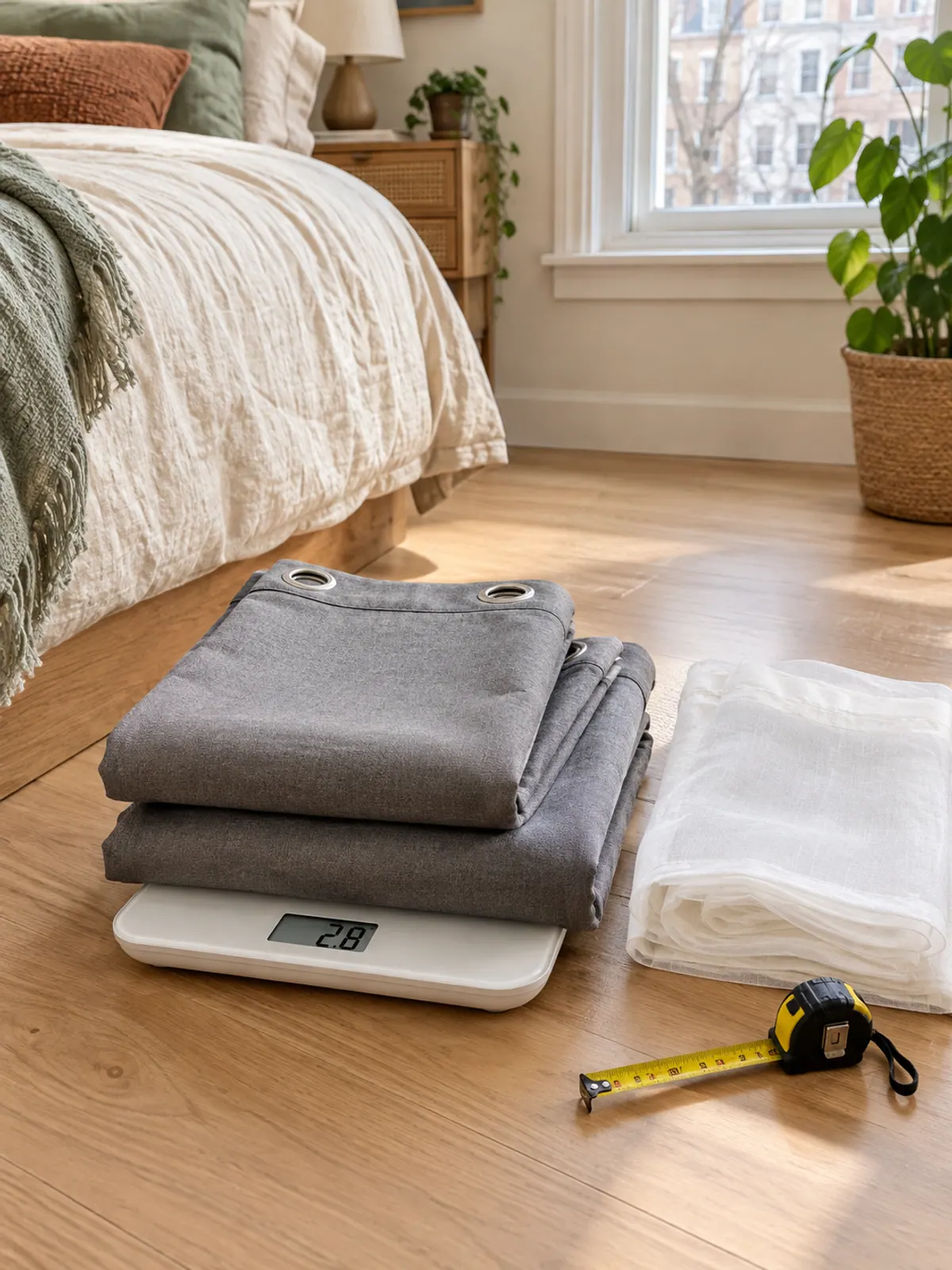
Every no-drill method fails the same way: too much weight on too little hold. A pair of sheer panels can weigh under 2 pounds, while a pair of lined blackout panels often runs 4 to 6 pounds before you add the rod.
-
Step 1: Weigh yourself, then weigh yourself holding the curtains
Subtract the two numbers. A bathroom scale is close enough for this. Add the weight of the rod and rings if you already own them.
-
Step 2: Measure the window and check the surface
Measure the inside of the frame for a tension rod, or the trim and wall above it for brackets. Note what the spot is: smooth painted wall, textured wall, wood trim, steel door or ceiling.
-
Step 3: Pick the method from the table below
Choose a method rated well above your total. If you're close to the limit, pick the next stronger option, not the same one with crossed fingers.
| Method | Weight limit | Works on | Typical cost | Removal |
|---|---|---|---|---|
| Tension rod | 5 to 10 lb light duty; 20 lb or more heavy duty, less when fully extended | Inside a window frame or alcove | Typically $4 to $15 | Twist and lift out |
| Command curtain rod hooks | 5 lb (decorative) or 10 lb per pair, rod plus curtain | Smooth painted walls and trim | Typically $10 to $16 a pair | Pull the tab straight down |
| Adhesive rod brackets | Often listed about 13 lb, plan for less | Smooth, flat walls only | Typically $5 to $14 | Heat, then peel slowly |
| Tap-in brackets (Kwik-Hang) | About 20 lb per bracket (brand claim) | Wood window trim at least 1/2 in deep | From about $25 a set | Tap out with a hammer |
| Magnetic rods | 3 to 5 lb typical, more on thick steel | Steel doors and steel frames only | Typically $15 to $20 for 2 | Lift off |
Sheers, cafe curtains and light cotton: any method works. Lined or blackout panels: a heavy-duty tension rod inside the frame, or tap-in brackets on wood trim. Anything heavier than about 10 pounds in total should not hang on adhesive alone.
Method 1: tension rod inside the window frame

A spring tension rod presses against both sides of the window frame, so nothing touches the wall. It is the cheapest no-drill curtain rod and the easiest to remove.
Light-duty rods usually hold 5 to 10 pounds. Heavy-duty rods with a thicker tube (about 1 inch or more) are often rated around 20 pounds or higher, but every rod holds less when it is stretched to its full length. For blackout panels, buy a rod whose range puts your window in the middle, not at the end.
Tension rods are the same trick we use for shower caddies in small bathrooms, closet shelf dividers and window garland at Christmas, so one size often has a second job later.
Method 2: Command hooks for a curtain rod

Command makes adhesive curtain rod hooks in two strengths. The 10 pound version takes a rod 1/2 to 3/4 inch thick and up to 48 inches long, and the 10 pounds includes the rod and the fabric. The decorative 5 pound version takes a thinner rod, up to 5/8 inch.
Use them for sheers, light linen and short panels on smooth painted walls or trim. Skip them on textured walls, wallpaper, fresh paint (most adhesive makers say wait at least 7 days after painting) and in steamy bathrooms.
Clean the spot with rubbing alcohol, not a household cleaner, press each strip for 30 seconds and wait an hour before hanging the rod. A pair typically costs $10 to $16.
Method 3: adhesive no-drill curtain rod brackets
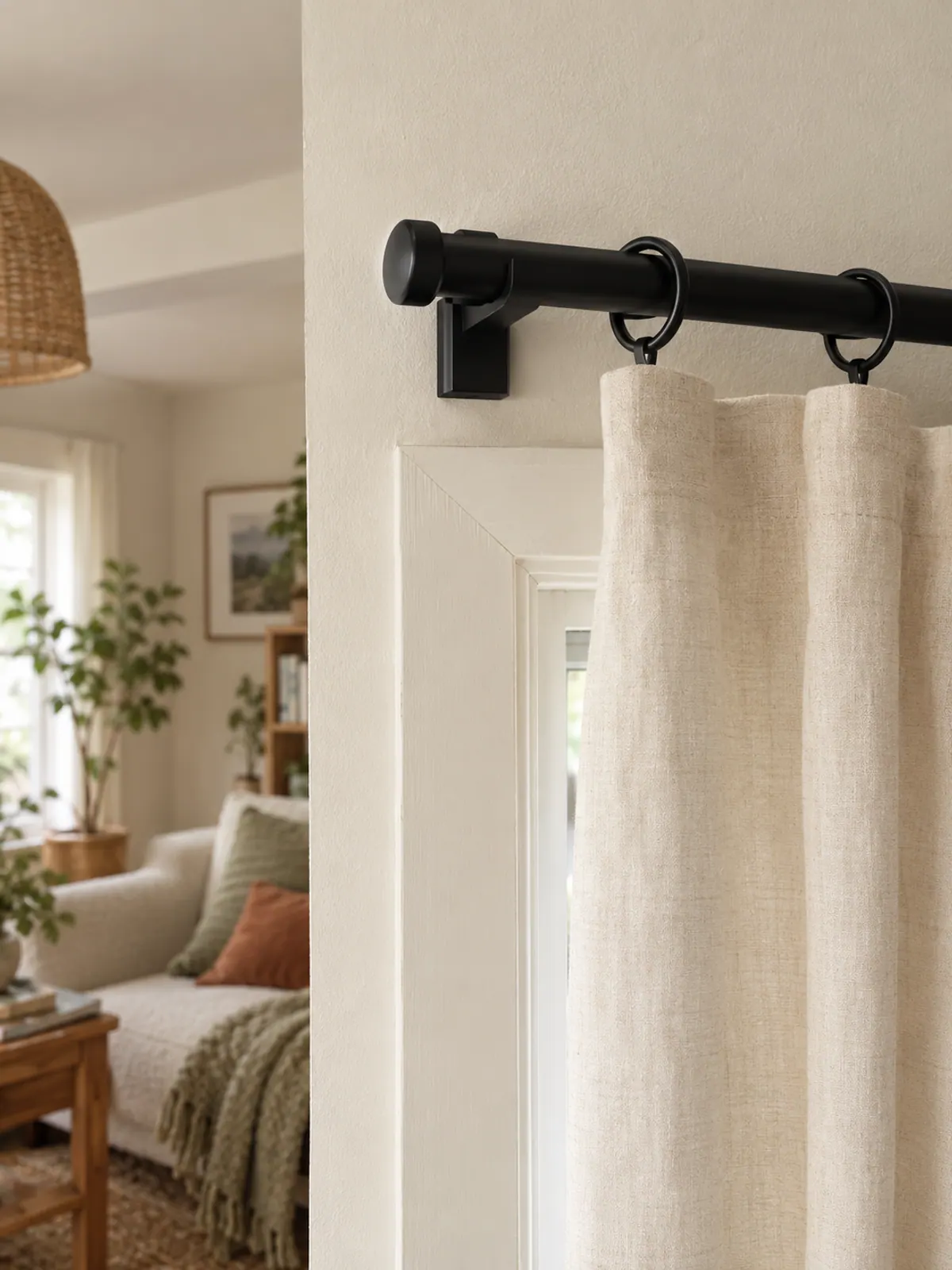
Adhesive brackets are stick-on versions of normal rod brackets with a wide foam pad. Many listings rate them around 13 pounds under good conditions, and real walls are rarely good conditions, so plan for well under that.
They need a smooth, flat, clean wall. Press each bracket hard for a full minute, then wait as long as the package says before you load it, often 24 hours. A pair typically costs $5 to $14.
Add a center bracket on any rod over 48 inches. Most rods sag in the middle long before the end brackets let go.
Method 4: tap-in brackets on wood window trim
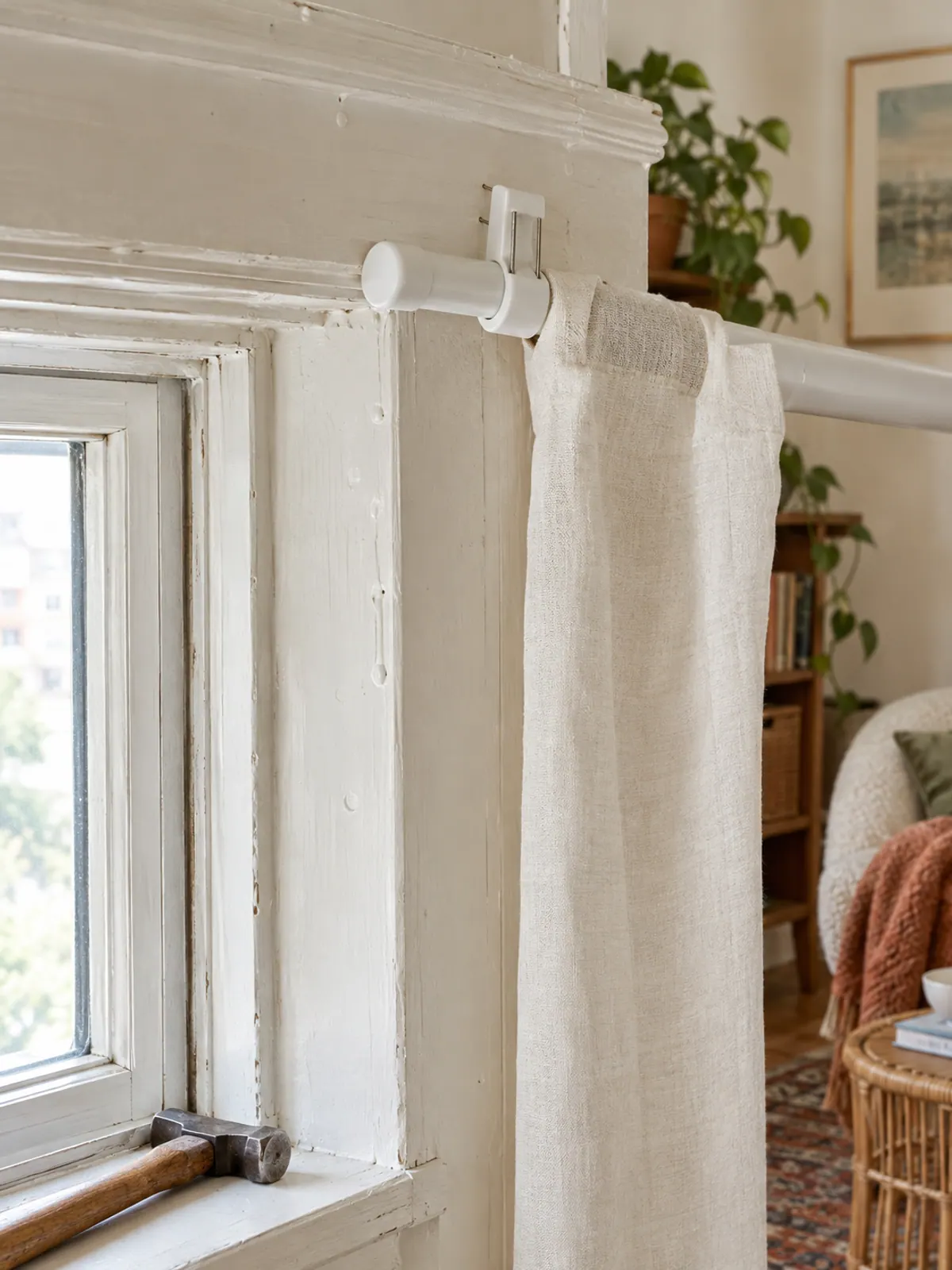
Kwik-Hang brackets tap into the top of wood window trim with a hammer. Small pins go into the trim's top edge, not the wall, and the brand rates each bracket at about 20 pounds. That makes it the strongest no-drill choice for blackout or lined curtains.
The trim must be wood at least 1/2 inch deep. The brand says the brackets don't suit oak, PVC, MDF or metal trim, and they only work on framed windows. Sets start at about $25.
To remove them, tap them out sideways with the hammer. The pins leave tiny marks in the top edge of the trim, which usually sit above eye level; if your lease is strict, ask before you use them.
Method 5: magnetic rods for doors, and ceiling tracks for dividers
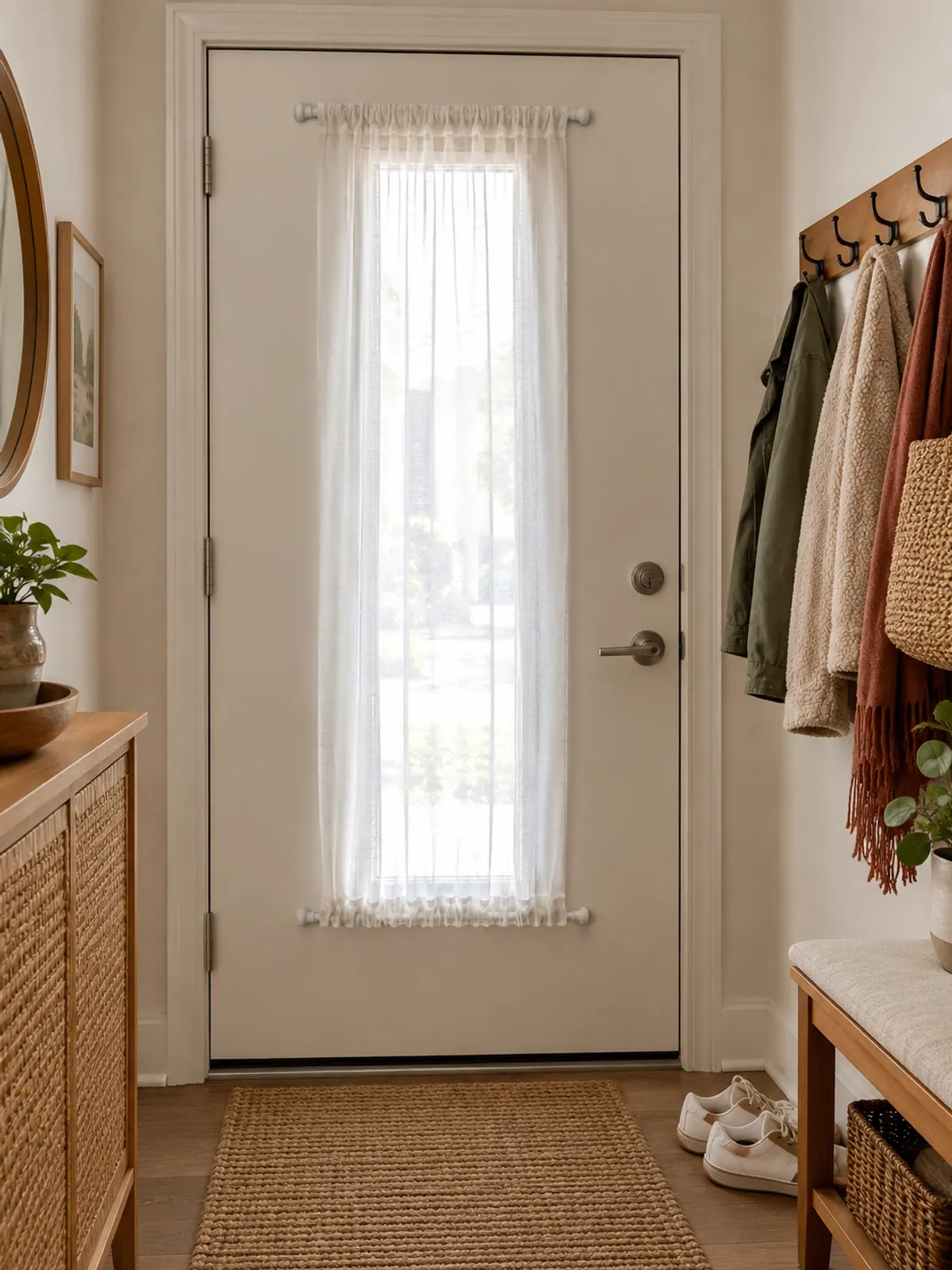
Steel entry doors and steel window frames hold magnetic curtain rods with no hardware at all. Most hold 3 to 5 pounds, some listings claim up to 15 on thick steel, and they don't stick to aluminum, vinyl or wood. Test with a fridge magnet first. A 2-pack typically costs $15 to $20.

In a studio, an adhesive ceiling track can hang a light curtain as a room divider. Sellers claim roughly 10 to 18 pounds, and a 3 to 5 foot track costs about $16 to $18. Some reviewers find the adhesive hard to remove from ceiling paint, so test a short piece in a closet first and use the lightest fabric you can.
For a floor-to-ceiling divider without any adhesive, a spring-loaded floor-to-ceiling tension pole is the safer route.
How to hang curtains over vertical blinds without drilling

Lots of rentals come with vertical blinds you can't remove. Brackets made to clip onto the blind's headrail, such as Kwik-Hang's over-blind style (from about $25), hold a rod in front of them. On wood trim, tap-in brackets with a long projection clear most blinds too.
Measure how far the blinds stick out from the wall, then buy brackets that clear that depth by at least an inch so the panels hang straight.
How to hang curtains without a rod

For very light curtains, a curtain wire kit or a thin tension wire inside the frame with clip rings works without a rod. A pack of 30 to 40 clip rings typically costs $7 to $12. Keep this one to sheers and cafe curtains; wires sag under anything heavy.
Clip rings also let you use a flat sheet, a tablecloth or a length of linen as a curtain. No sewing, no hem.
Small rooms: hang curtains high and wide

Raising the rod closer to the ceiling and extending it 6 to 10 inches past each side of the frame makes a small window look larger. That only works with brackets on the wall, so pick adhesive or Command hooks rated for your curtain weight.
We cover this as one of the main layout fixes in our small bedroom ideas that make a tiny room feel cozy, along with where to put the bed and lamps.
How to take it all down without peeling paint
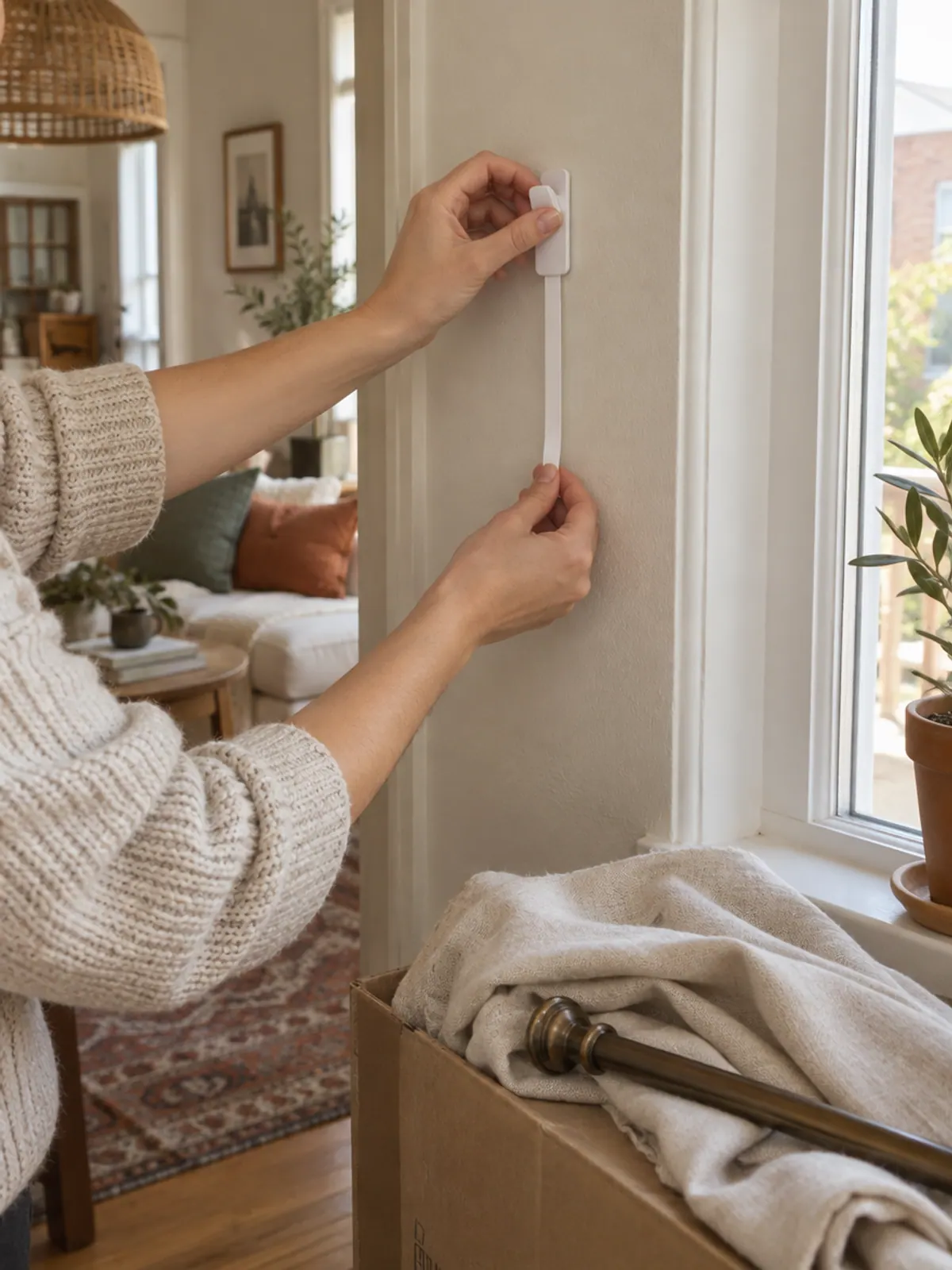
Take the curtains and rod off first. For stretch-release strips, hold the hook and pull the tab straight down along the wall, slowly, for 10 inches or more. For foam-pad brackets, warm them for a minute with a hair dryer on low, then work dental floss behind the pad.
The same routine works for every adhesive hook in the apartment; our guide to hanging decor without damage walks through it with photos.
If you patch small holes before moving out, write down where each hook or nail went. The Deposit Kit has a wall hook log and patching steps for exactly that.
No-drill curtain checklist
Mistakes that make no-drill curtains fall
Hanging blackout panels on light-duty hardware. It holds for a week, then drops at 2 a.m. Weigh first.
Using adhesive on textured or fresh paint. The strip holds the paint, the paint lets go of the wall.
Opening and closing heavy curtains by tugging. Every pull is a sideways load on the hooks. Use a curtain wand or pull from the edge.
Stretching a tension rod to its max. A rod at full length holds the least. Size it so your window sits mid-range.
Shop no-drill curtain hardware
These are the product types covered above. We haven't tested them hands-on, and ratings vary by brand, so read the weight limit on the listing before you buy. See our disclosure.
No-drill curtain rods and hardware for renters
-
Heavy-duty tension curtain rod
Typically $8 to $15
Holds lined panels inside a window frame.
Check price on Amazon for Heavy-duty tension curtain rod -
Command curtain rod hooks, 10 lb
Typically $10 to $16 a pair
Rod up to 3/4 inch and 48 inches long.
Check price on Amazon for Command curtain rod hooks, 10 lb -
Adhesive no-drill curtain rod brackets
Typically $5 to $14
Stick-on brackets for smooth walls.
Check price on Amazon for Adhesive no-drill curtain rod brackets -
Kwik-Hang no-drill curtain brackets
From about $25 a set
Taps into wood trim, about 20 lb per bracket.
Check price on Amazon for Kwik-Hang no-drill curtain brackets -
Magnetic curtain rods, 2 pack
Typically $15 to $20
Steel doors and frames only.
Check price on Amazon for Magnetic curtain rods, 2 pack -
Curtain clip rings, 40 pack
Typically $7 to $12
Hang sheets, sheers or linen with no sewing.
Check price on Amazon for Curtain clip rings, 40 pack -
Adhesive ceiling curtain track
Typically $16 to $18
Light studio dividers; test removal first.
Check price on Amazon for Adhesive ceiling curtain track
Planning the window for the holidays too? The Cozy Holiday Hosting + Christmas Planner includes a decor plan for six surfaces, the window among them, with a renter-safe no-nails checklist on the same page.
Measuring a whole room, not just one window? The free makeover planner has a measuring grid, a renter rules checklist and a shopping list with spaces for dimensions and return windows.
Frequently asked questions
How do you hang curtains without drilling holes?
Use a tension rod inside the window frame, adhesive curtain rod hooks or brackets on a smooth painted wall, tap-in brackets on wood trim, or magnetic rods on steel doors. Weigh the curtains first and pick hardware rated above the total.
Do Command hooks hold curtain rods?
Yes. Command's curtain rod hooks hold up to 10 pounds per pair, counting both the rod and the curtains, with a rod 1/2 to 3/4 inch thick and up to 48 inches long. They need smooth painted walls, not texture or wallpaper.
How much weight can a tension rod hold?
Light-duty tension rods usually hold 5 to 10 pounds. Heavy-duty rods with a thicker tube are often rated around 20 pounds or more. Every tension rod holds less when stretched to its full length.
How do you hang curtains on a door without drilling?
On a steel door, use magnetic curtain rods, which hold about 3 to 5 pounds of light fabric. On wood or fiberglass doors, use small adhesive rod hooks above and below the glass.
Can you hang curtains from the ceiling without drilling?
Adhesive ceiling curtain tracks can hold a light curtain as a studio divider, with seller ratings around 10 to 18 pounds. Test removal on a hidden spot first, or use a floor-to-ceiling tension pole instead.
How do you hang curtains over blinds without drilling?
Use brackets made to clip onto the blind headrail, or tap-in brackets on wood trim with enough projection to clear the blinds by at least an inch.

Save it for later
Pin this to your Renter-Friendly Decor board so it's there when you need it.
Save to Pinterest