This post contains affiliate links. As an Amazon Associate we earn from qualifying purchases, at no extra cost to you. Read our disclosure.
Key takeaways
- Curtains on a tension rod or freestanding frame are the cheapest, slimmest divider and the easiest to undo.
- Open shelves add storage and let light through, but tall ones need anchoring, which may mean asking the landlord.
- Folding screens move anywhere and leave no marks, but they take more floor depth than you expect.
- None of the three blocks sound well. Plan on visual privacy only.
- Use a ceiling track only if the lease allows it.
In this post9 sections
The verdict: which studio apartment divider ideas win
| If you need | Pick | Why |
|---|---|---|
| To hide the bed | Curtains | Full height, full width, closes in one pull |
| Storage plus separation | Open shelves | Divides and stores in the same footprint |
| Privacy only some of the time | Folding screen | Fold it away when guests leave |
| To keep a one-window studio bright | Sheer curtains | Light passes through the fabric |
| Zero deposit risk | Folding screen or freestanding curtain frame | Nothing touches walls or ceiling |
Most studios end up with a mix: a curtain around the bed and a shelf or screen to mark a work corner. The scores below show why each one does that job best.
Curtains vs shelves vs screens, side by side
| Factor | Curtains | Open shelves | Folding screen |
|---|---|---|---|
| Cost | Low: about $30 to $120 for rod and panels | Medium: about $60 to $200 | Low to medium: about $50 to $200 |
| Light | Sheer lets light through; blackout blocks it | Good through open cubes | Blocks light where it stands; rattan and paper let some through |
| Privacy | High when closed | Partial; depends on what fills the cubes | Good below about 6 feet |
| Sound | Very little; lined panels soften echo slightly | Very little; full shelves help slightly | Very little |
| Floor space | A few inches | About 12 to 16 inches deep | About 12 to 18 inches in a zigzag |
| Deposit risk | Low with a tension rod or frame; ceiling track needs holes | Low if freestanding; anchoring a tall unit needs a small hole | None |
Option 1: Curtains
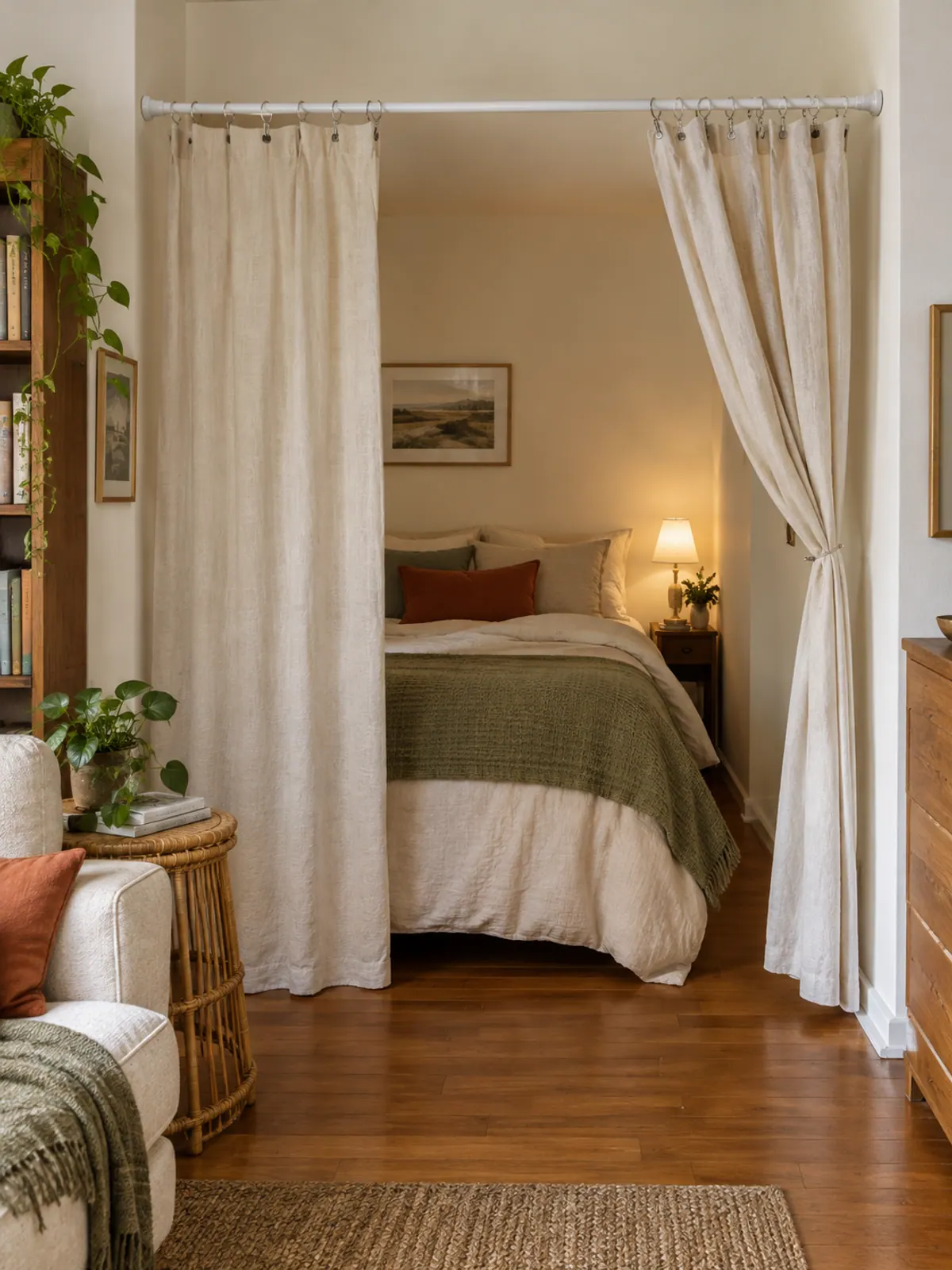
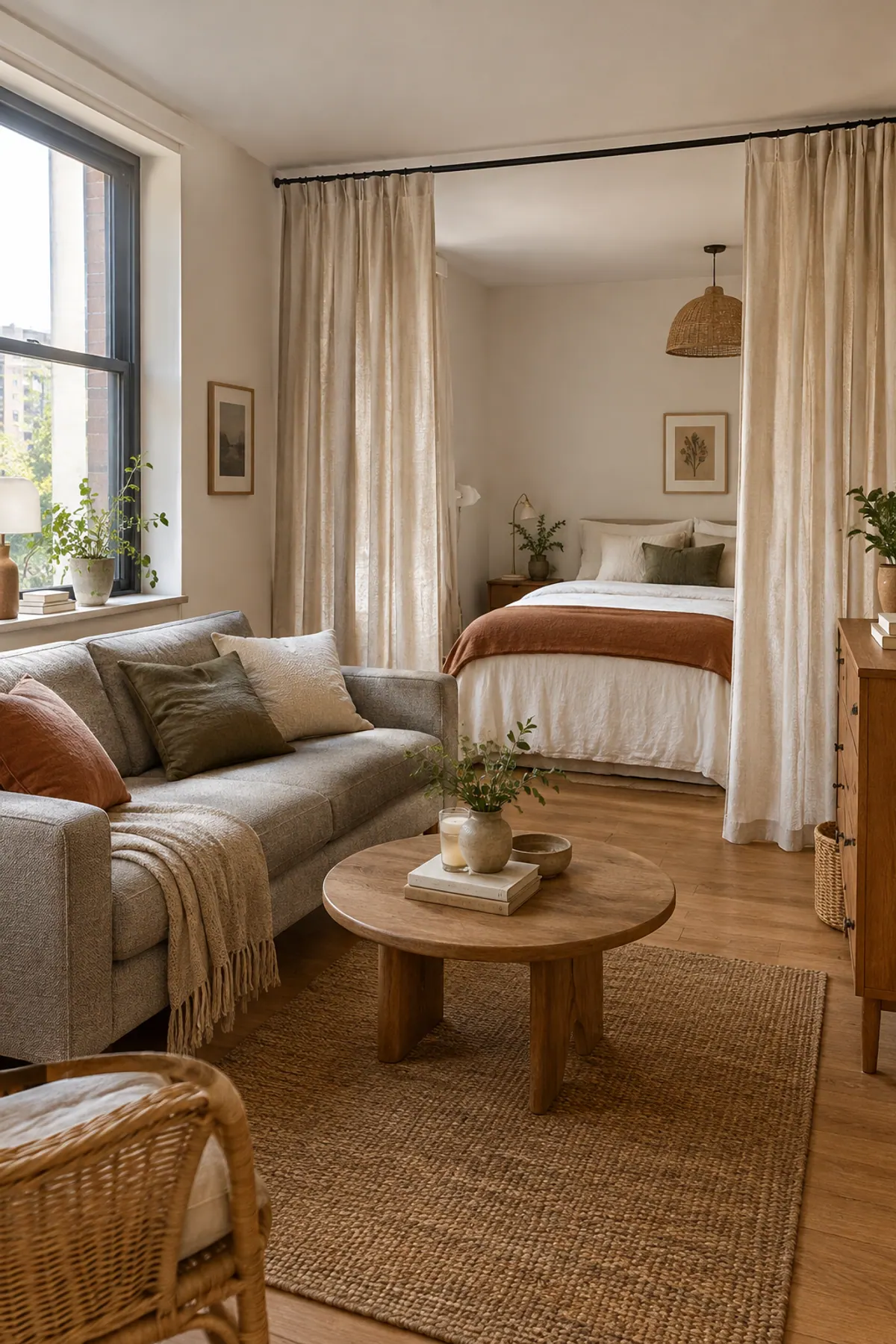
Curtains give the most coverage for the least money and floor space. They run floor to ceiling, close completely at night and open completely in the day, so the studio still feels like one room.
Start with the no-hole options. A heavy-duty tension rod works when the bed sits in an alcove or between two facing walls. If it does not, a freestanding curtain frame on weighted bases stands anywhere. A ceiling track looks cleanest, but it screws into the ceiling, so use one only if the lease allows it and the landlord agrees.
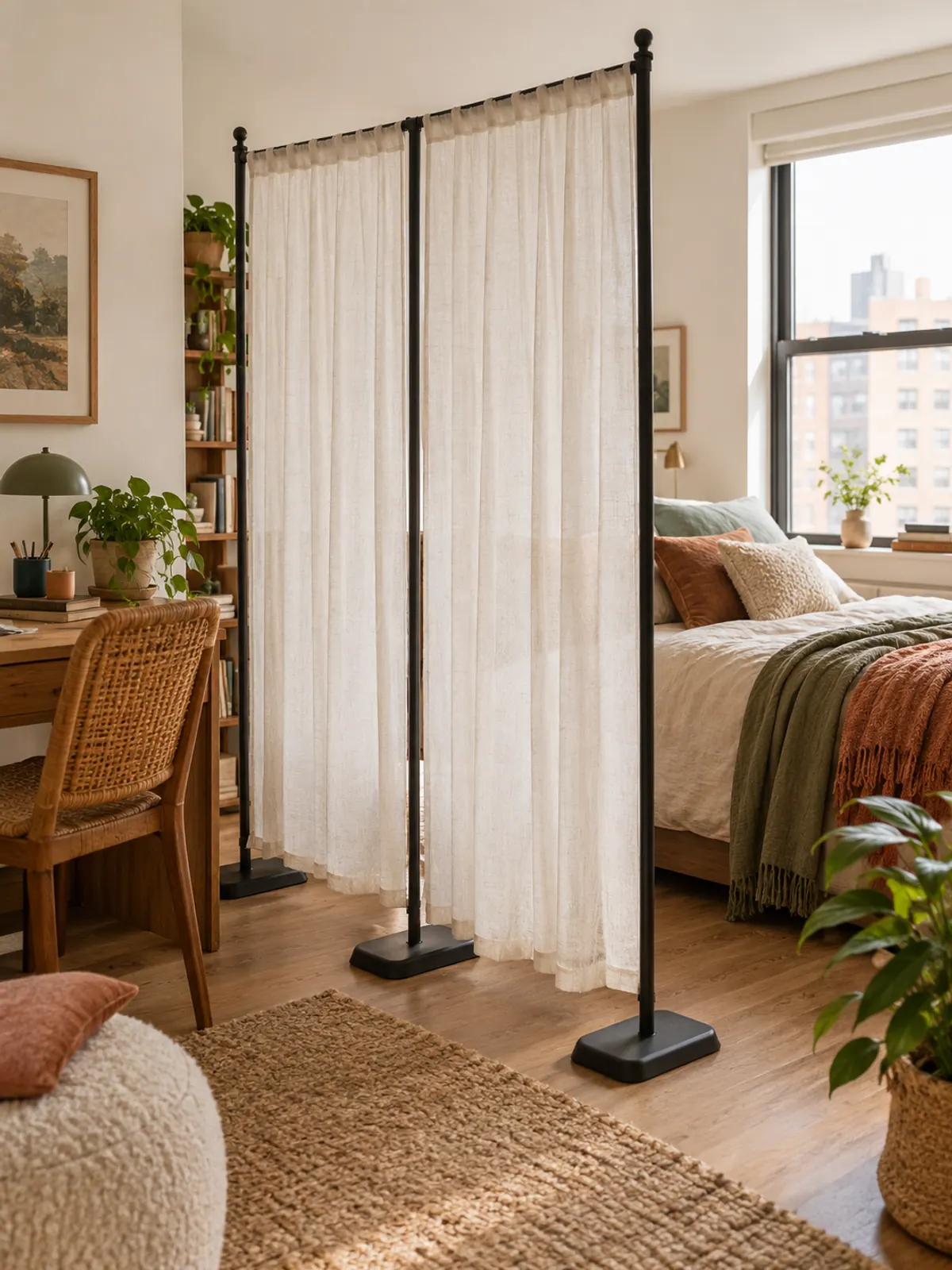
Check the weight limit on any tension rod and keep the panels light. The five ways to hang curtains without drilling cover rod ratings, weights and which method suits which wall.
What we like
- Cheapest full-height divider
- Takes only a few inches of floor
- Opens fully during the day
- Tension rod and frame leave no holes
Keep in mind
- No storage
- Tension rods need two facing walls
- Heavy blackout panels can overload a rod
- Ceiling tracks need landlord approval
Curtain divider picks
-
Heavy-duty tension curtain rod
Typically $20 to $45
No-hole rod for alcoves.
Check price on Amazon for Heavy-duty tension curtain rod -
Freestanding room divider curtain frame
Typically $60 to $150
Stands anywhere, no walls.
Check price on Amazon for Freestanding room divider curtain frame -
Linen curtain panels, floor length
Typically $25 to $60
Light enough for a tension rod.
Check price on Amazon for Linen curtain panels, floor length
Option 2: Open shelves
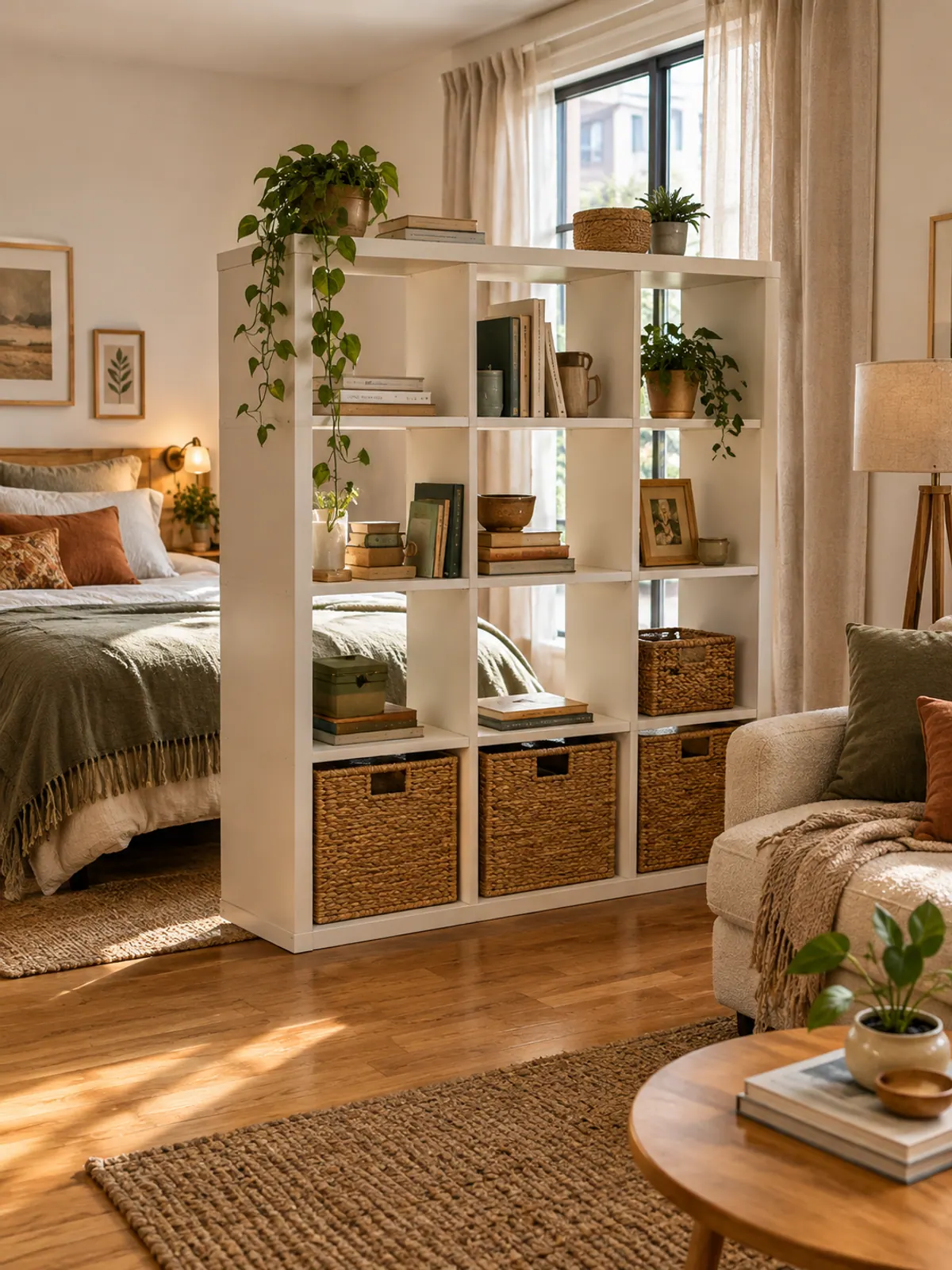
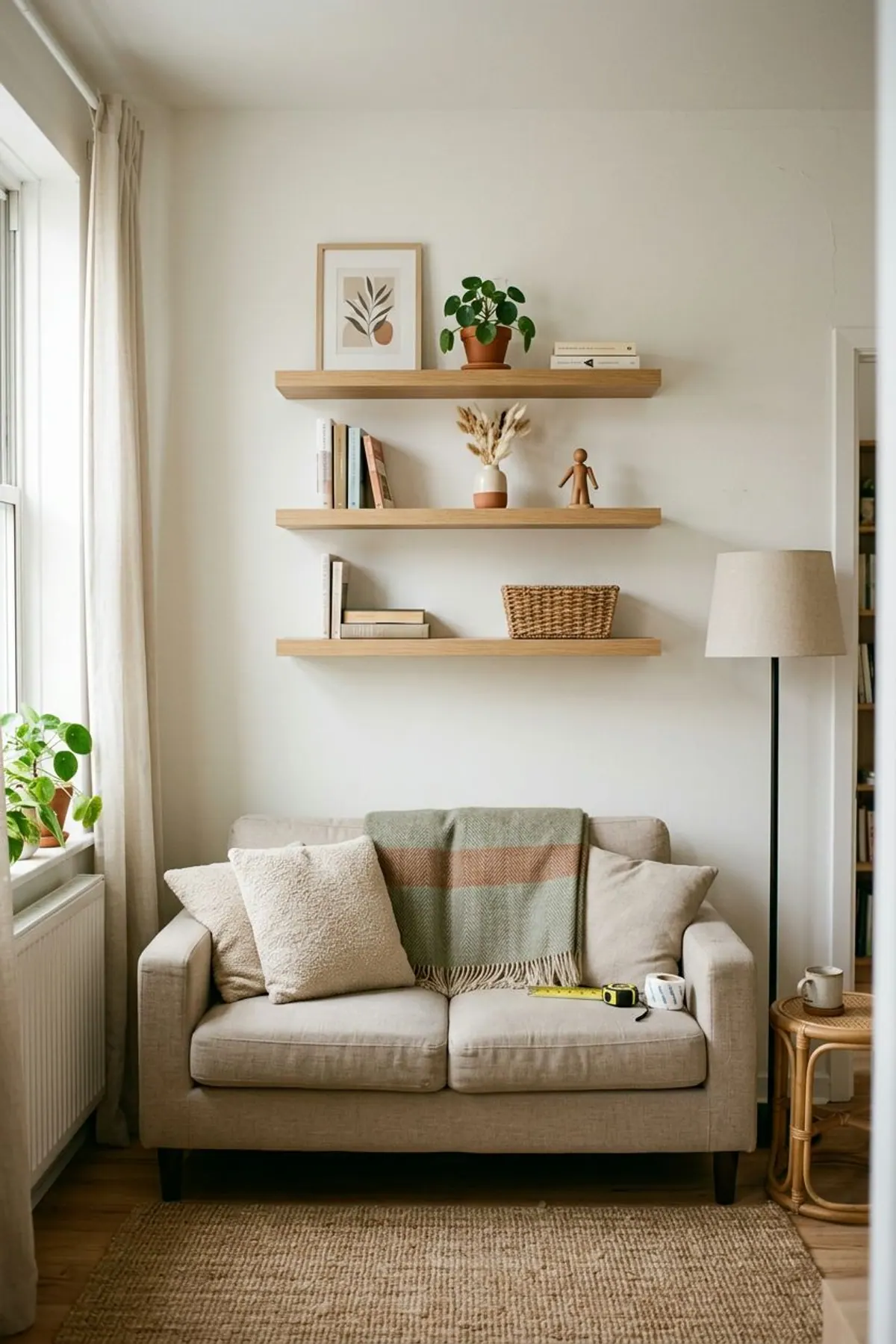
An open-back cube bookcase divides the room and stores books, bins and plants in the same footprint. Light passes through the open cubes, so the far side of the studio does not go dark.
Plan for the depth. A typical cube unit is about 15 inches deep, which matters in a narrow studio. Leave a clear walkway of about 30 to 36 inches past the end of the shelf.
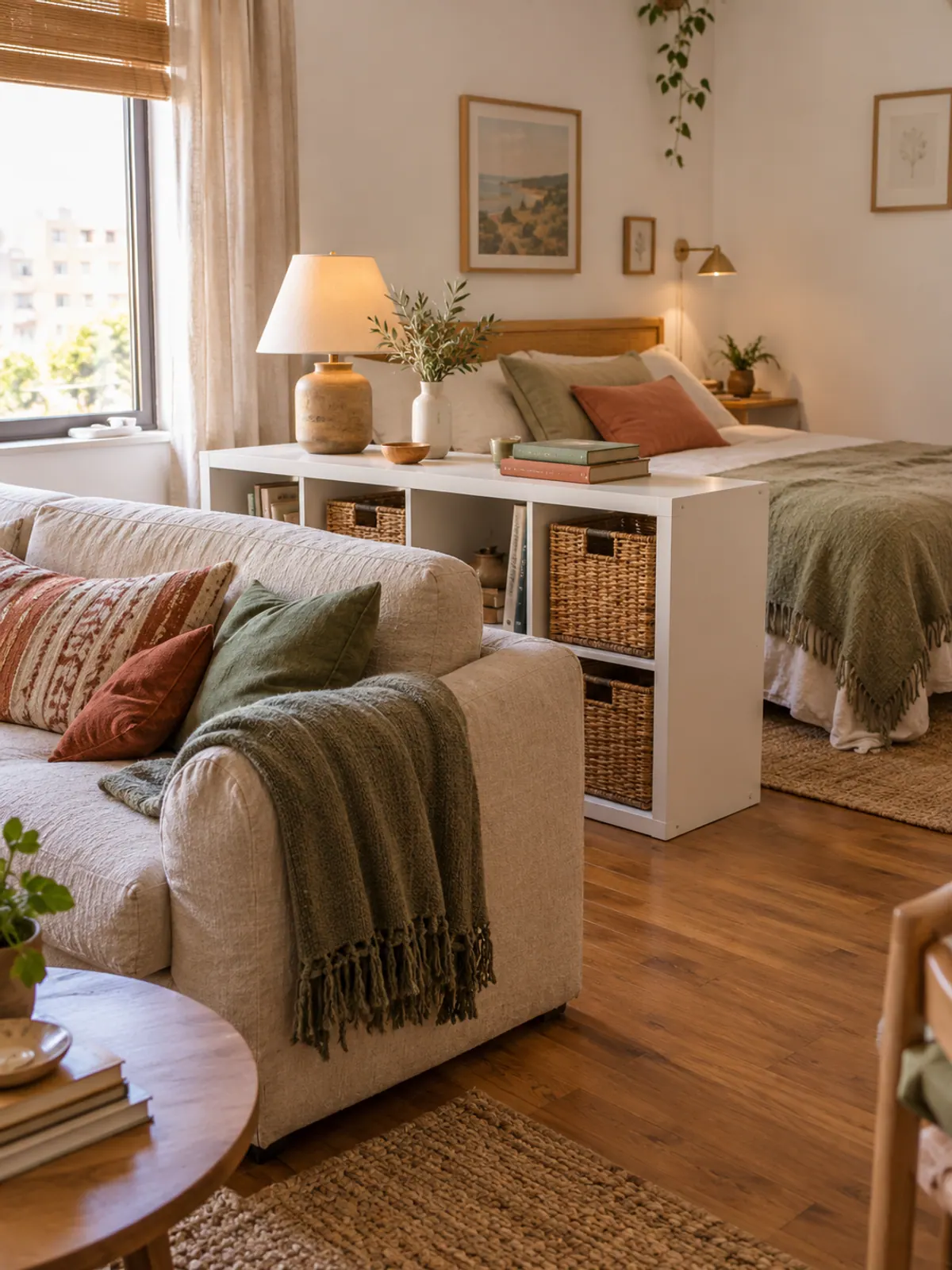
A low unit laid on its long side behind the sofa is the renter-safe version. It marks the living area, gives you a console surface for a lamp and does not need a strap the way a tall unit does.
What we like
- Storage and division in one piece
- Lets light through open cubes
- Low versions need no anchoring
- Looks like furniture, not a fix
Keep in mind
- Takes about 15 inches of floor depth
- Partial privacy only
- Tall units should be anchored
- Heavier to move than a curtain or screen
Shelf divider picks
-
Open-back cube bookcase, 4 by 4
Typically $80 to $200
Divides and stores.
Check price on Amazon for Open-back cube bookcase, 4 by 4 -
Low 2 by 4 cube shelf
Typically $50 to $100
Waist-high divider, no strap.
Check price on Amazon for Low 2 by 4 cube shelf -
Furniture anti-tip straps
Typically $8 to $20
For tall units, with landlord okay.
Check price on Amazon for Furniture anti-tip straps
Option 3: Folding screens
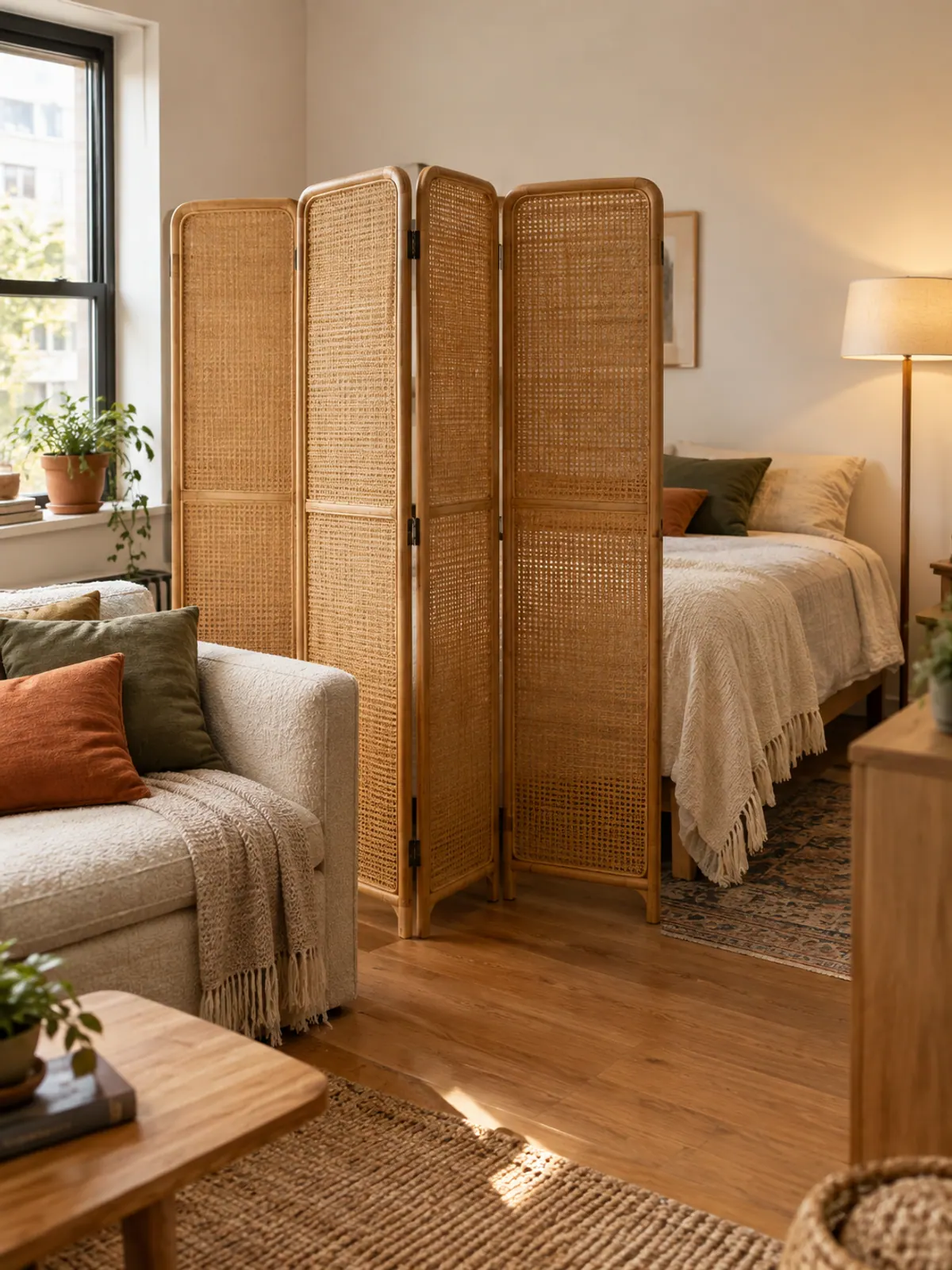
A folding screen is the zero-commitment divider. It stands on its own, folds flat against a wall when you want the full room back and leaves nothing behind at move-out.
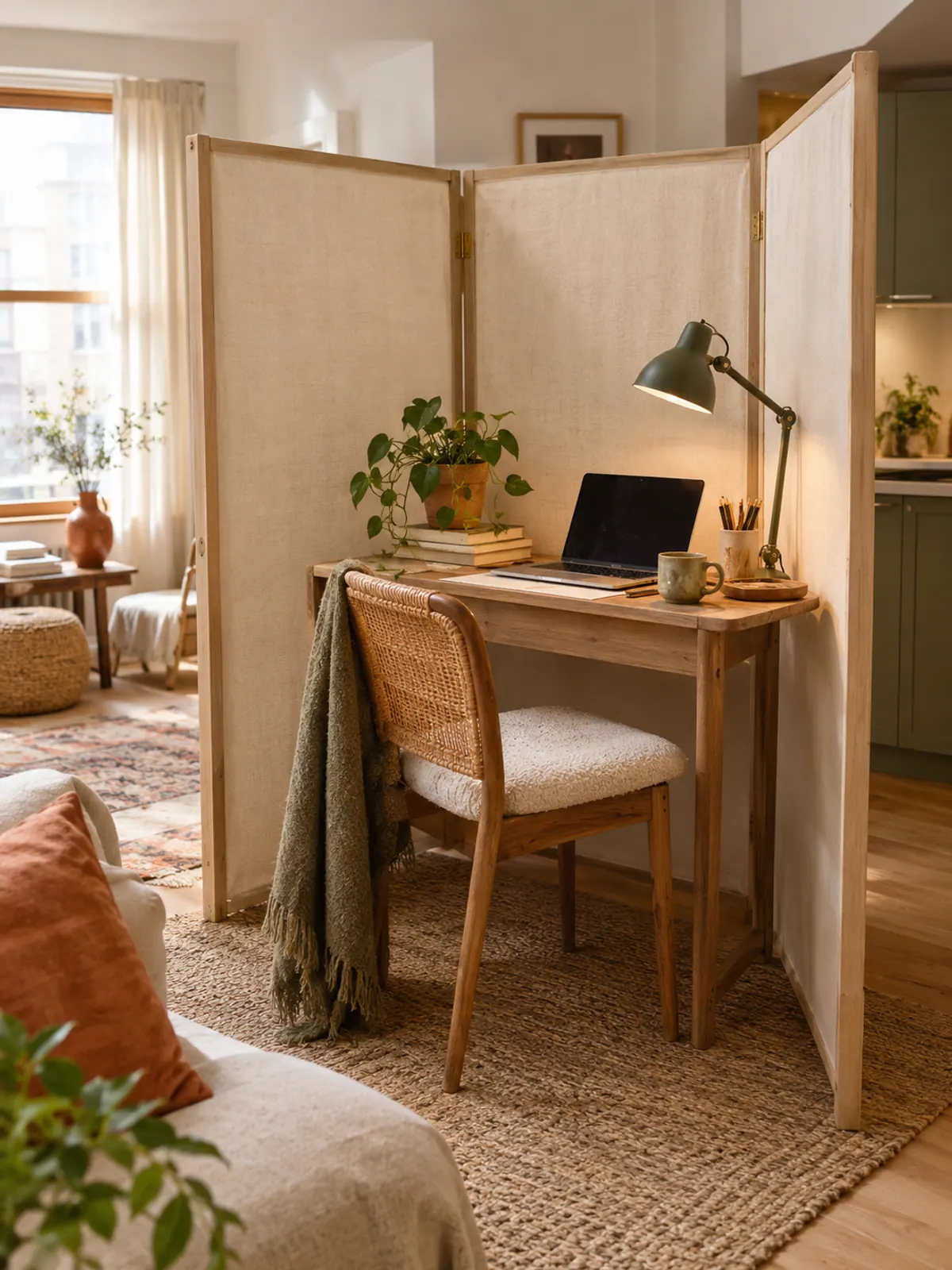
The tradeoff is floor depth. A screen only stands in a zigzag, which takes about 12 to 18 inches. Most are around 5.5 to 6 feet tall, so they hide a bed or desk but not the full height of the room.
What we like
- No installation at all
- Moves to wherever you need privacy
- Folds away for guests or daylight
- Rattan and paper styles let some light through
Keep in mind
- Needs zigzag floor depth
- Usually under 6 feet tall
- Can tip if bumped; keep it out of walkways
- No storage
Folding screen picks
-
Rattan folding room divider, 4 panel
Typically $90 to $200
Warm texture, some light.
Check price on Amazon for Rattan folding room divider, 4 panel -
Fabric folding screen, 3 panel
Typically $50 to $120
Light and easy to move.
Check price on Amazon for Fabric folding screen, 3 panel
The best divider for each part of a studio
Sleeping nook:
Curtains. They are the only option that closes the whole opening, and they open fully in the morning. Use lined or heavier linen if streetlight bothers you.
Work corner:
A folding screen. It hides the desk after work hours, which helps the room feel off duty, and it moves when you rearrange.
Kitchen edge:
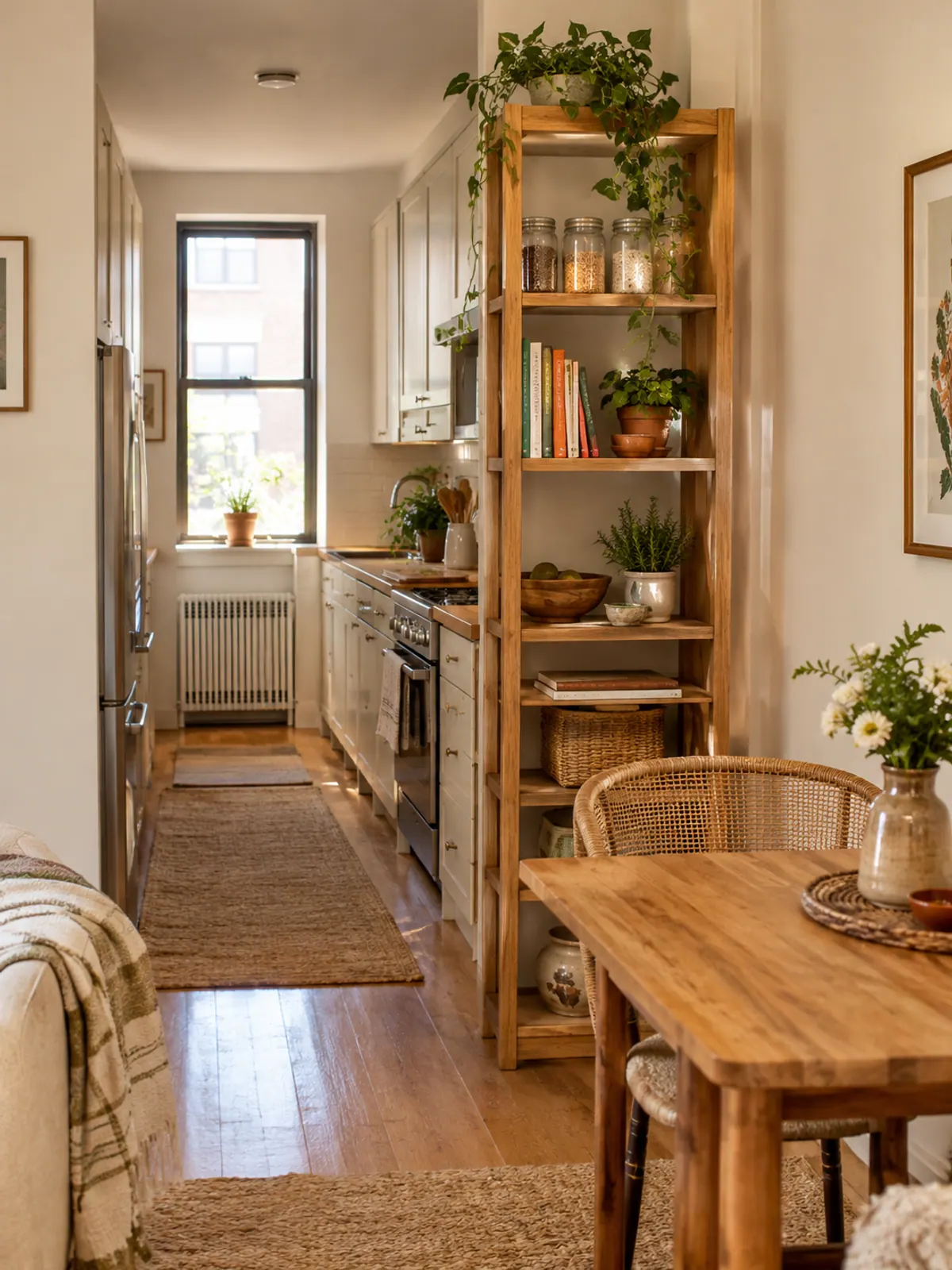
A narrow open shelf. It separates the kitchenette from the dining spot and holds cookbooks and jars that do not fit in the cabinets. Keep fabric away from the stove.
Dark studio with one window:
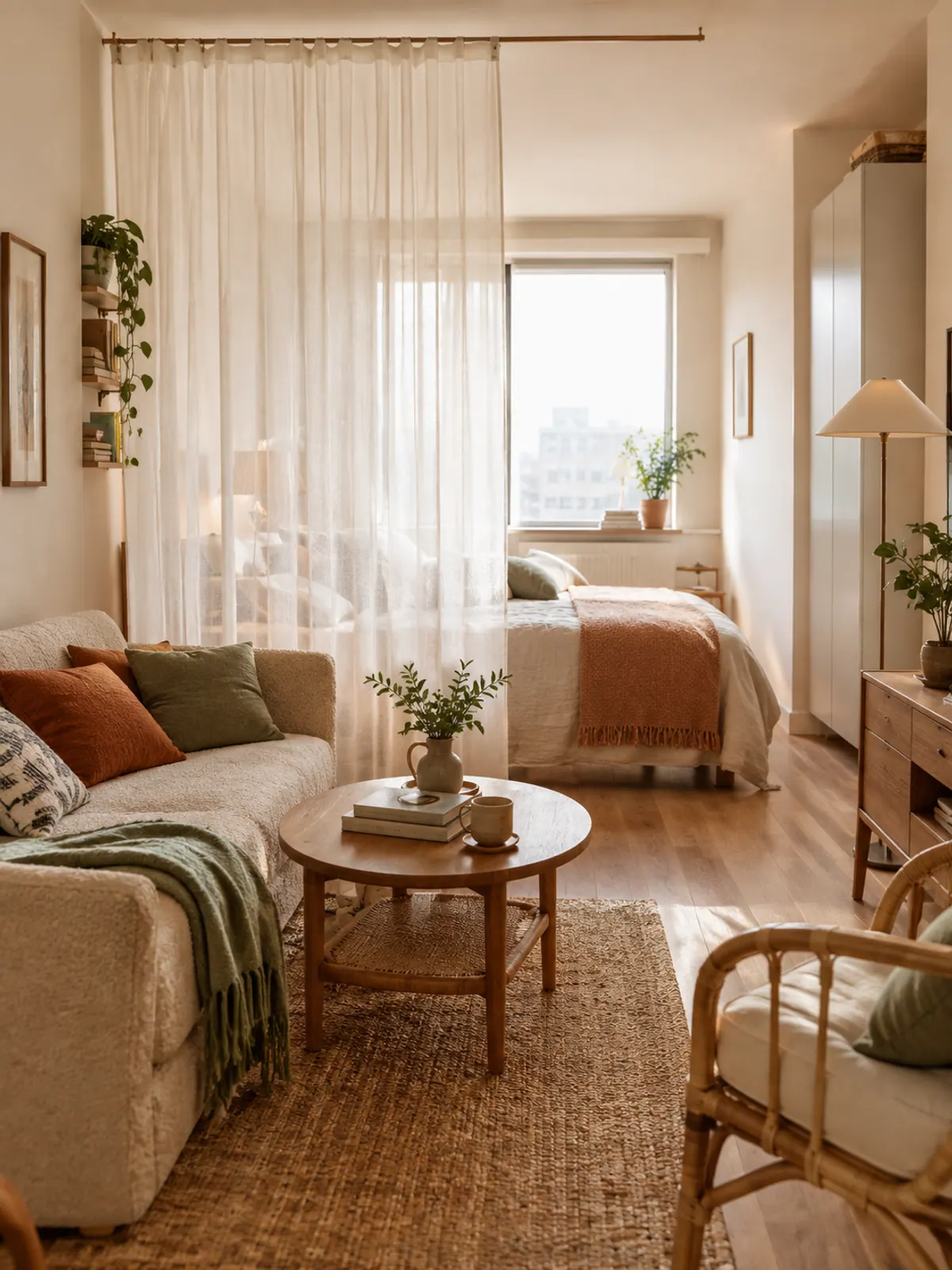
Sheer curtains. They mark the zones and let daylight reach the far side of the room. For more ways to brighten a small space, see how to make a small room look bigger.
Combine a shelf and a curtain
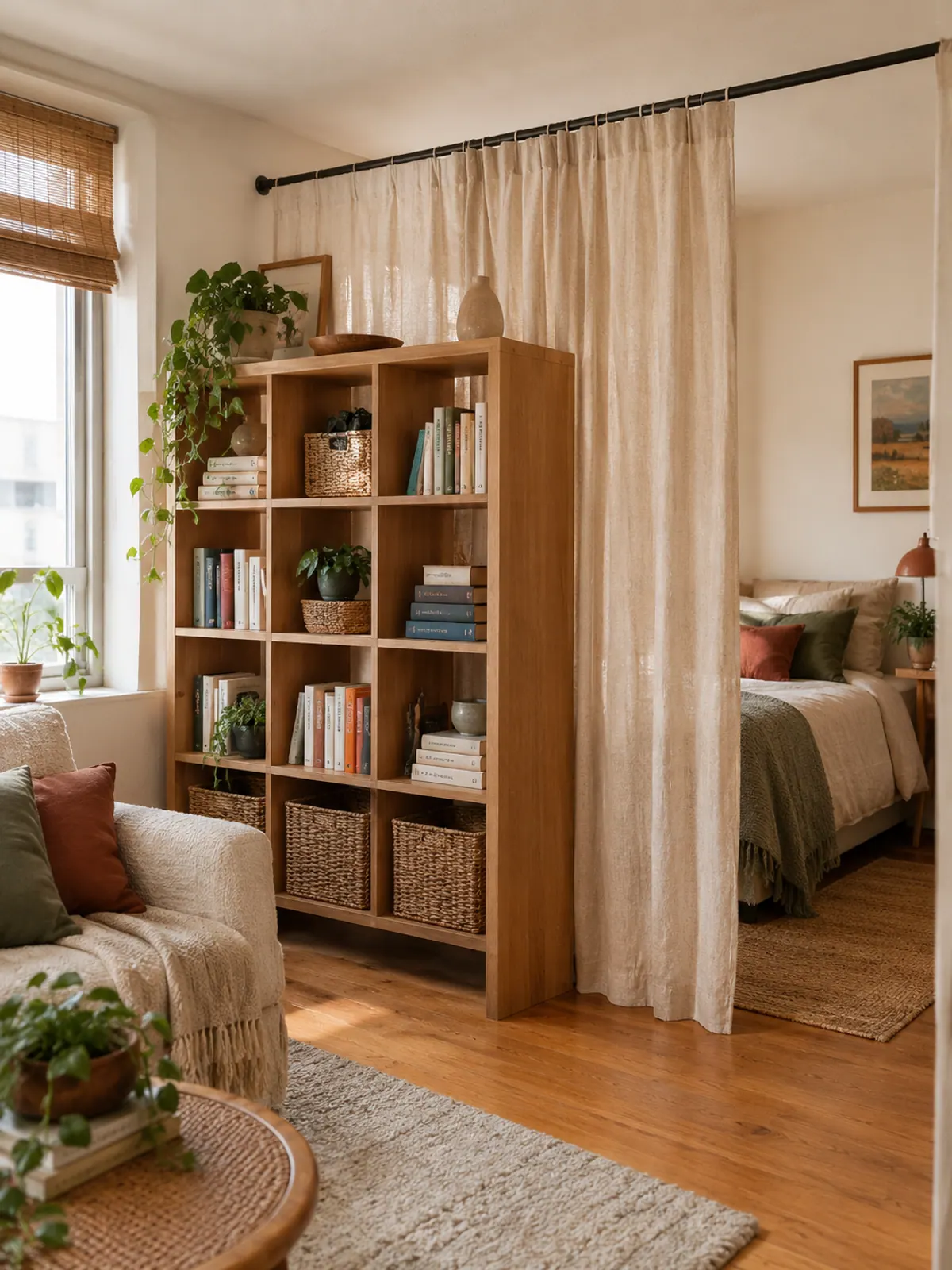
The strongest studio setup often uses two. A medium-height shelf covers half the opening and adds storage, and a curtain on a tension rod or frame closes the rest. You get light through the shelf in the day and full privacy at night.
Match the divider to your style
Scandinavian:
White or light oak cube shelves, oatmeal linen curtains and a pale fabric screen.
Bohemian:
A rattan screen, gauzy curtains and plants trailing from the shelf.
Industrial:
A black metal frame with canvas or linen panels, or a metal and wood open shelf.
Before you buy a studio divider
Once the zones are set, the apartment decor ideas that make a small space feel bigger and these small bedroom ideas help each zone look finished.
Frequently asked questions
How can I divide a studio apartment without drilling?
Use a heavy-duty tension rod with curtains between two facing walls, a freestanding curtain frame, a folding screen or a low open shelf. Tall bookcases should be anchored, which usually means a small hole, so ask the landlord first.
What is the cheapest studio apartment divider?
Curtains on a tension rod. A rod and two light panels often cost about $30 to $120 together and take only a few inches of floor.
Do room dividers block sound?
Not much. Curtains, shelves and screens give visual privacy. Lined curtains and full bookshelves soften echo slightly, but they will not stop noise between zones.
How do I hide my bed in a studio apartment?
Curtains on a tension rod or freestanding frame hide it fully. A folding screen or an open shelf with baskets hides it partly. Combining a shelf with a curtain gives storage and full privacy.
Can I use a bookcase as a room divider?
Yes. Open-back cube units let light through and store things on both sides. Anchor tall units against tip-over, or choose a low unit with heavy items on the bottom.
Save it for later
Pin this to your Renter-Friendly Decor board so it's there when you need it.
Save to Pinterest