This post contains affiliate links. As an Amazon Associate we earn from qualifying purchases, at no extra cost to you. Read our disclosure.
Key takeaways
- Build three layers: ambient, task and accent, all with plug-in or battery lights.
- Buy by lumens: about 450 for a bedside lamp, 800 for a floor lamp (ENERGY STAR watt equivalents).
- Warm 2700K to 3000K bulbs make a rental feel cozy; 5000K looks clinical at home.
- A rule of thumb of 10 to 20 lumens per square foot covers living rooms and bedrooms.
- Never swap a hardwired fixture yourself; soften it with a shade and warm bulb instead.
In this post11 sections
- Quick picks: what to buy first, by room
- Start here: your problem, your fix
- The 3-layer lighting plan
- Lumens and kelvin: the two numbers on the box
- Renter friendly lighting ideas, step by step
- Room-by-room renter lighting upgrades
- How do you light a room with no ceiling light?
- Mistakes that make rental lighting look cheap
- Before you move out
- Shop the renter lighting kit
- FAQ
Quick picks: what to buy first, by room
| Room | Buy this first | Bulb to use | Typical cost |
|---|---|---|---|
| Living room | Arc floor lamp in the darkest corner, then two plug-in sconces by the sofa | 800 lumens, 2700K to 3000K | Typically $60 to $150 for the lamp, $25 to $70 per sconce |
| Bedroom | A plug-in swing arm sconce on each side of the bed | About 450 lumens, 2700K | Typically $25 to $70 each |
| Kitchen | Plug-in LED bar under the upper cabinets | 3000K to 3500K | Typically $20 to $50 |
| Dining nook | Plug-in pendant on a swag hook (small hole, check your lease) | Warm 2700K | Typically $30 to $90 |
| Closet or entry | Rechargeable motion sensor bar | Built in | Typically $15 to $30 |
| Any room with no outlet nearby | Battery puck light inside a sconce shade | Built in | Typically $20 to $40 for a set |
Start here: your problem, your fix
| Your problem | Do this first | Typical cost |
|---|---|---|
| Harsh ceiling light | Clip a linen drum shade over it and use a 2700K bulb | Typically $25 to $60 |
| Dark living room corner | Arc floor lamp with an 800 lumen warm bulb | Typically $60 to $150 |
| Small nightstand, no room for a lamp | Plug-in swing arm sconces with a cord cover | Typically $25 to $70 each |
| No outlet nearby | Battery puck light inside a sconce shade | Typically $20 to $40 for a set |
| Dark kitchen counter | Plug-in LED bar under the upper cabinets | Typically $20 to $50 |
| Bare closet or entry | Rechargeable motion sensor bar | Typically $15 to $30 |
| Room feels flat at night | Warm LED strip behind the headboard or TV | Typically $12 to $30 |
Prices are typical ranges for example, not quotes. Below is the 3-layer plan behind these picks.
The 3-layer lighting plan
Rental rooms usually have one flat ceiling fixture, which is why so many apartments feel cold at night.
Designers light a room in three layers, and renters can build all three without touching the wiring:
| Layer | What it does | No-electrician options |
|---|---|---|
| Ambient | Fills the room | Floor lamps, plug-in pendants, a shade over the ceiling light |
| Task | Lights what you do | Plug-in sconces, desk lamps, under-cabinet bars |
| Accent | Adds glow and depth | LED strips, picture lights, puck lights |
Lumens and kelvin: the two numbers on the box
Brightness is measured in lumens, not watts. ENERGY STAR's brightness guide lists the minimum lumens for each old bulb: 450 lumens replaces a 40 watt bulb, 800 replaces a 60 watt, 1,100 a 75 watt and 1,600 a 100 watt.
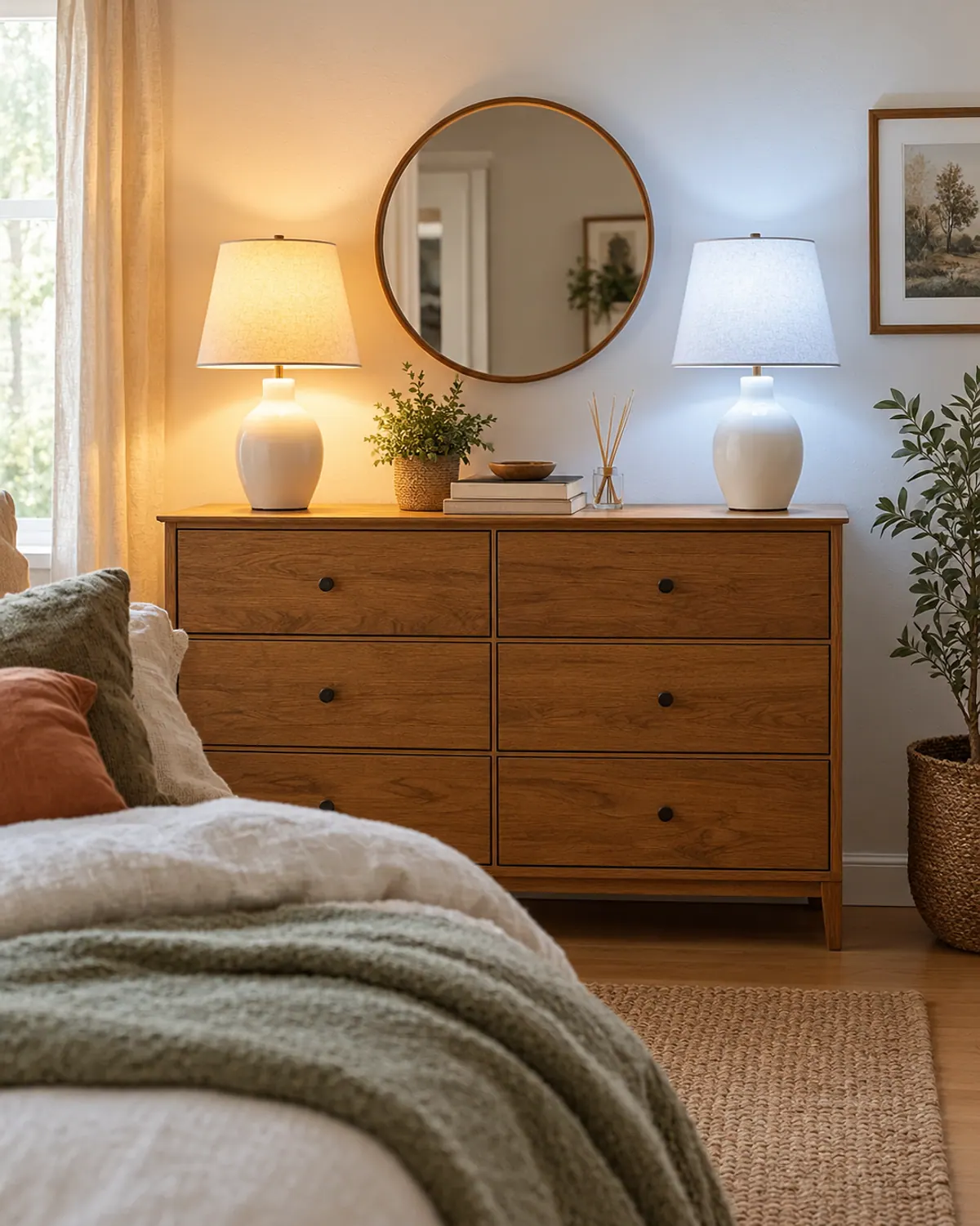
Color is measured in kelvin (K). Around 2700K to 3000K gives the warm, cozy glow most people want at home. Around 5000K looks bluish and works better in a garage than a bedroom.
How many lumens a room needs:
A widely used rule of thumb is about 10 to 20 lumens per square foot for living rooms and bedrooms, and more for kitchen counters. Here is how that plays out in one room.
| Light | Lumens |
|---|---|
| Two plug-in bedside sconces, 450 lumens each | 900 |
| One floor lamp with an 800 lumen bulb | 800 |
| LED strip behind the headboard | About 200 to 400 |
| Total, ceiling light off | About 1,900 to 2,100 |
| Target at 10 to 20 lumens per sq ft | 1,200 to 2,400 |
Spread the lumens over several lamps rather than one bright bulb. Three soft sources around the room feel warmer than one strong one overhead.
Renter friendly lighting ideas, step by step
Work through the room in this order. Each step fixes one common rental lighting problem, and every fix plugs in or runs on batteries.
-
Step 1: Map your outlets and dark corners
Sketch the room and mark every outlet, window and dark corner. The outlets decide where plug-in lights can go, so this map saves you buying a sconce that cannot reach power.
-
Step 2: Soften the ceiling light
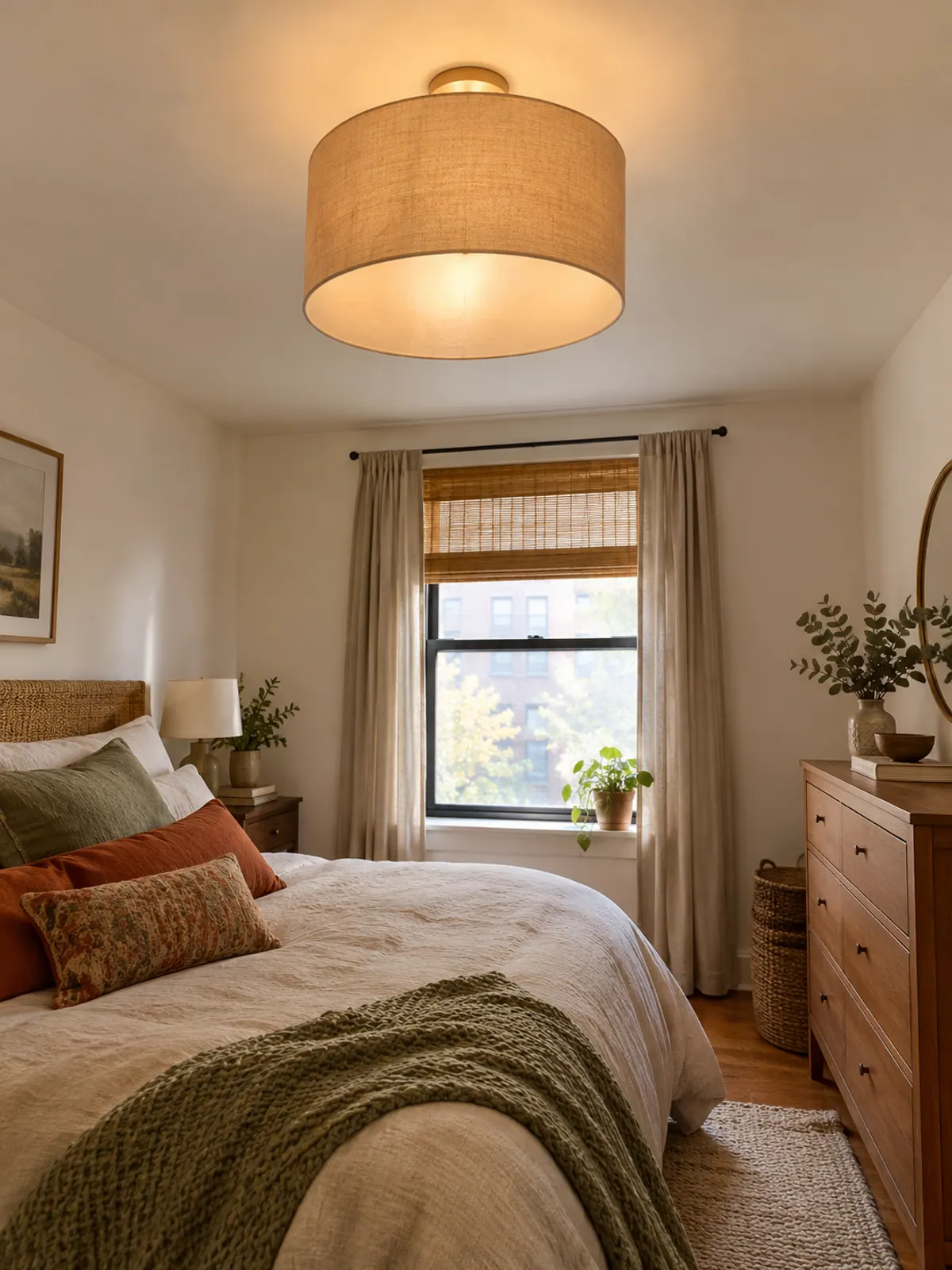
Do not swap the fixture yourself; changing a hardwired fixture is electrical work most leases reserve for the landlord. Instead, fit a fabric drum shade that clips over a flush mount light, and put a warm 2700K bulb in it.
-
Step 3: Add plug-in sconces where you sit and sleep
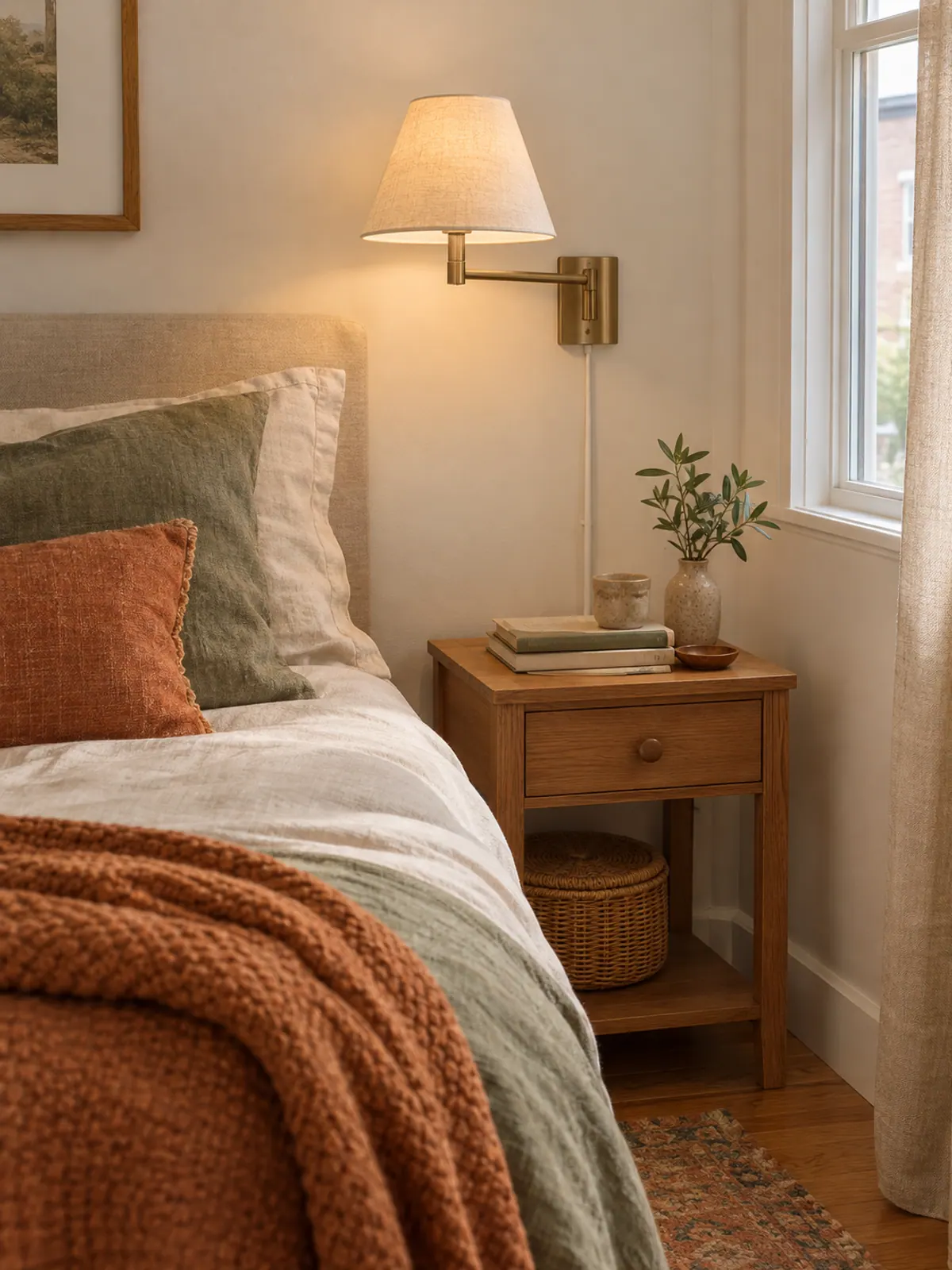
Plug-in wall sconces give you hardwired-looking light beside the bed or sofa. Most hang on one or two small screws, which a lease usually treats like picture nails. Hide the cord in a paintable cord cover.
-
Step 4: Use a battery puck light where there is no outlet
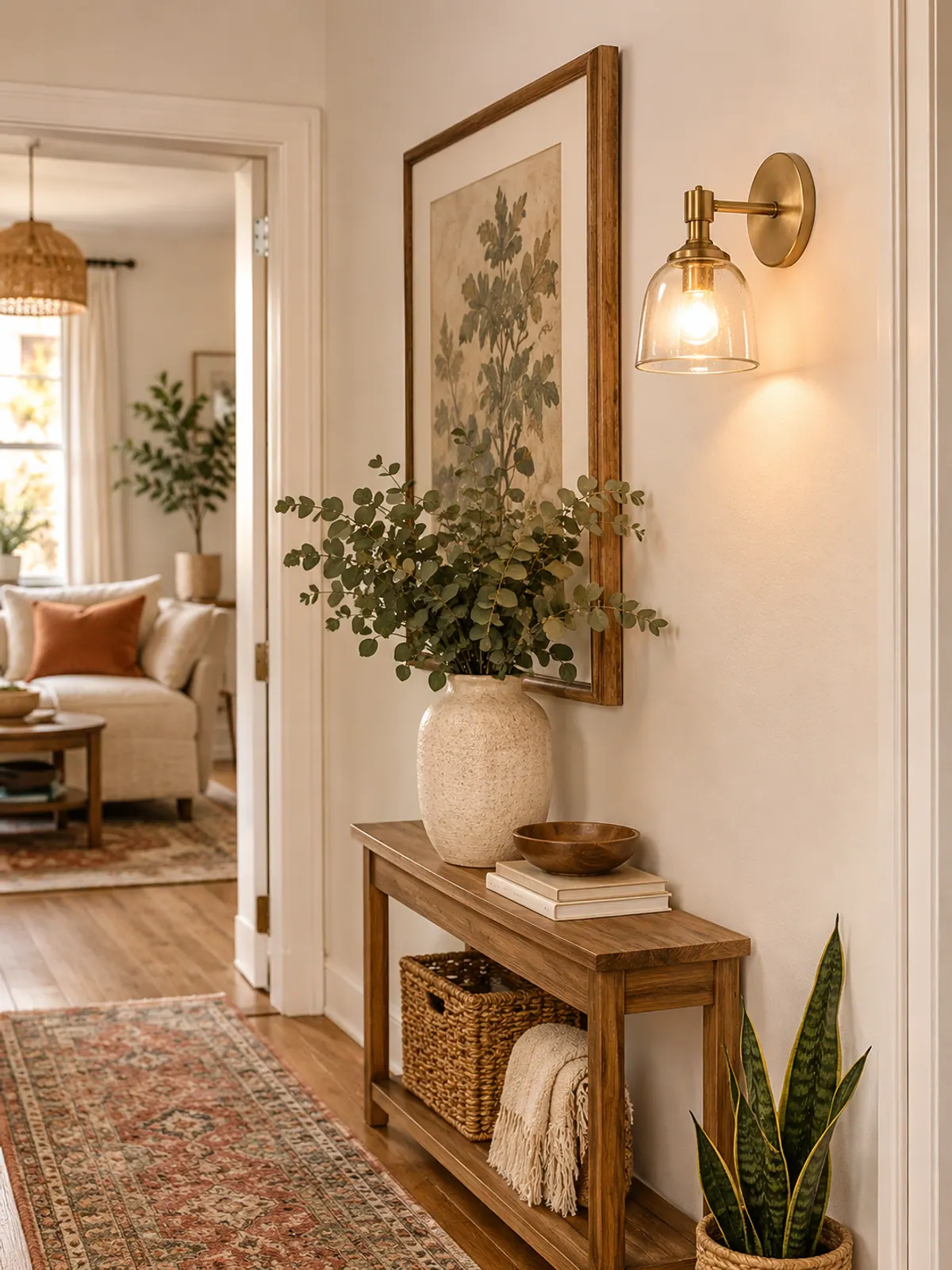
Mount a simple sconce on the wall and put a rechargeable puck light inside the shade. It gives a soft glow rather than reading light, so use it for hallways and entries.
-
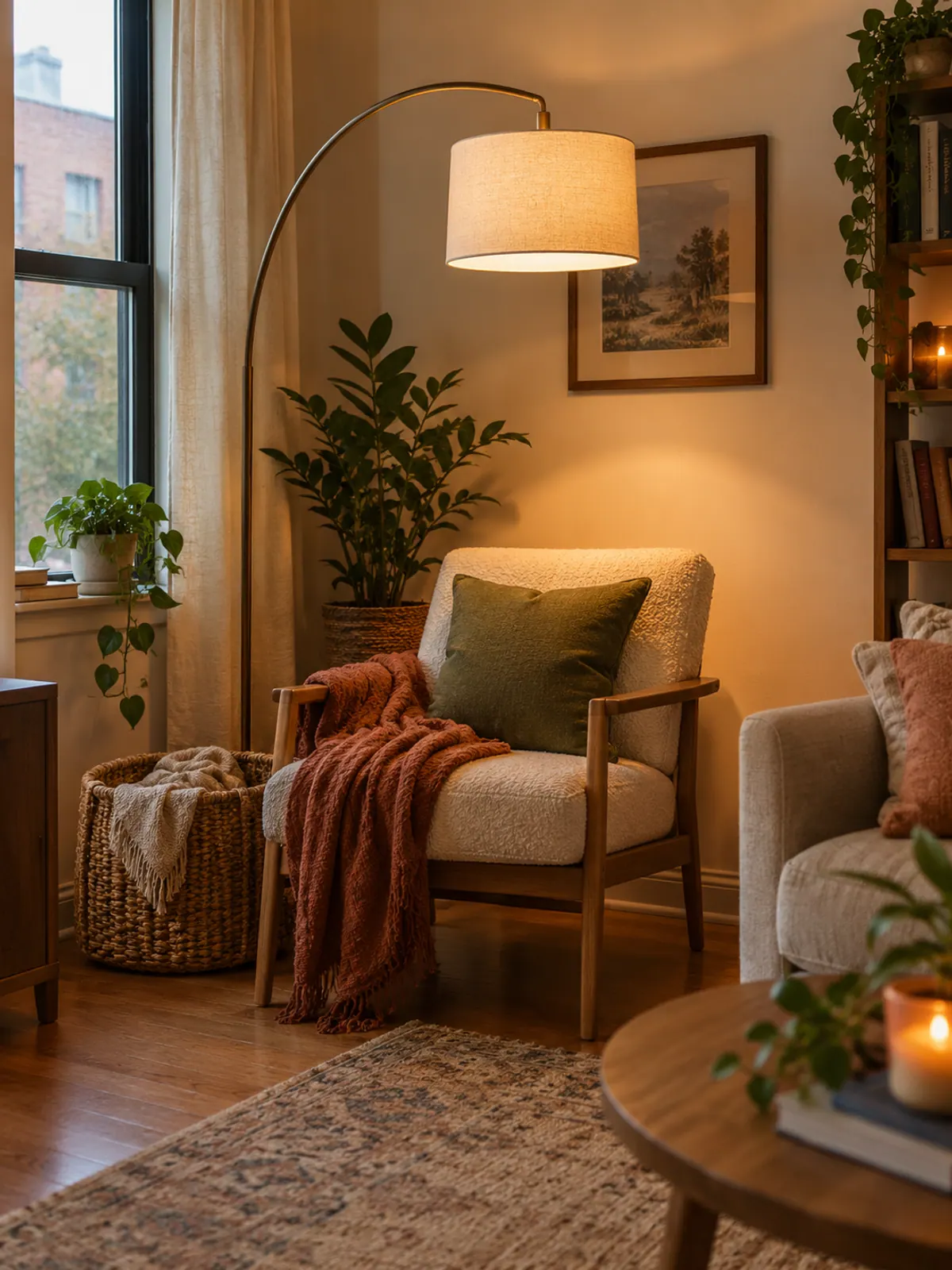
Step 5: Fill the dark corner with a floor lamp
An arc floor lamp reaches over a chair or sofa like a ceiling light, with no ceiling box. Put an 800 lumen warm bulb in it.
-
Step 6: Make the lamps smart
Smart bulbs let you dim every lamp and shift them warmer at night from your phone. They screw into lamps you already own and come out when you move.
-
Step 7: Add one accent light
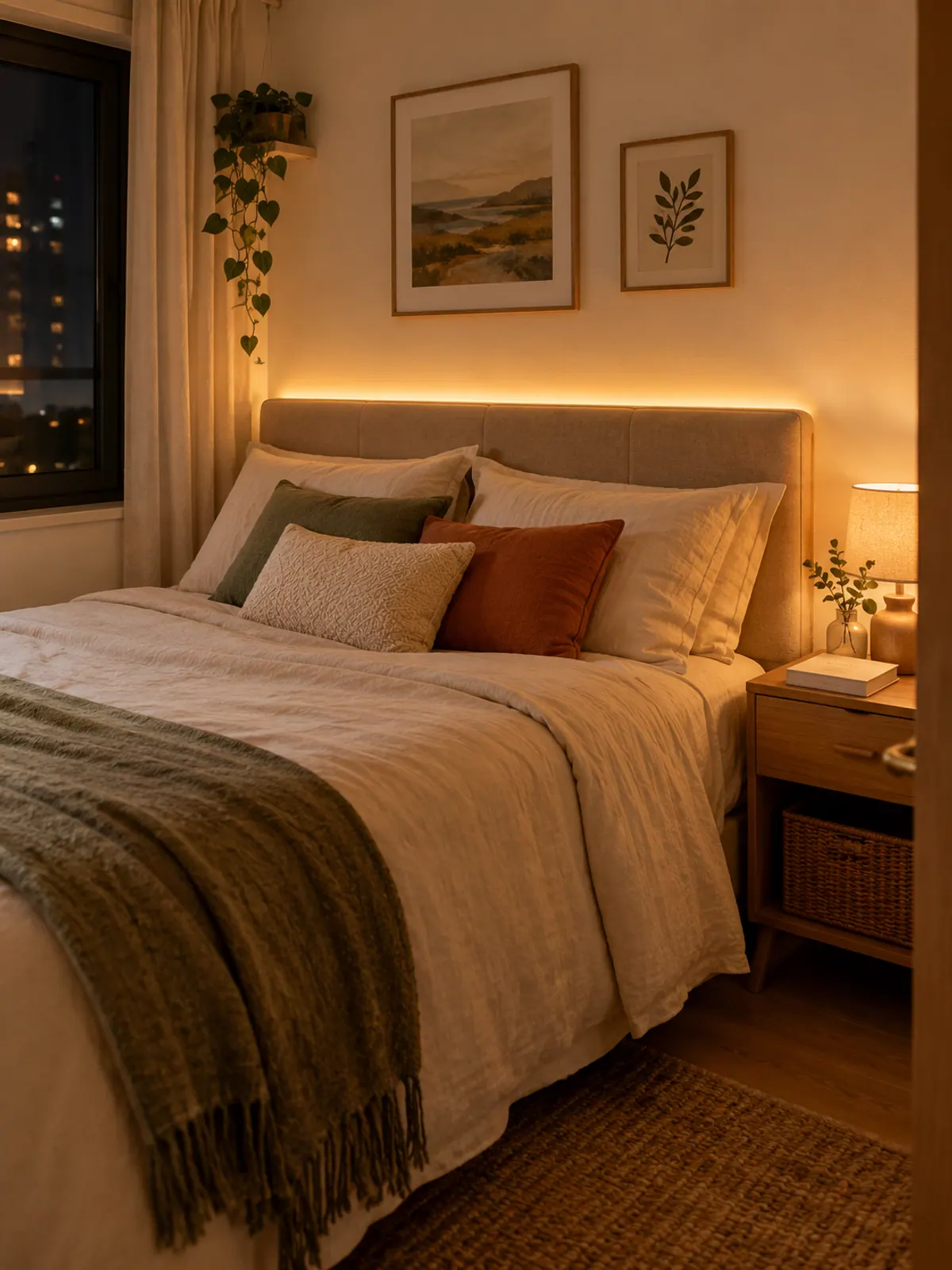
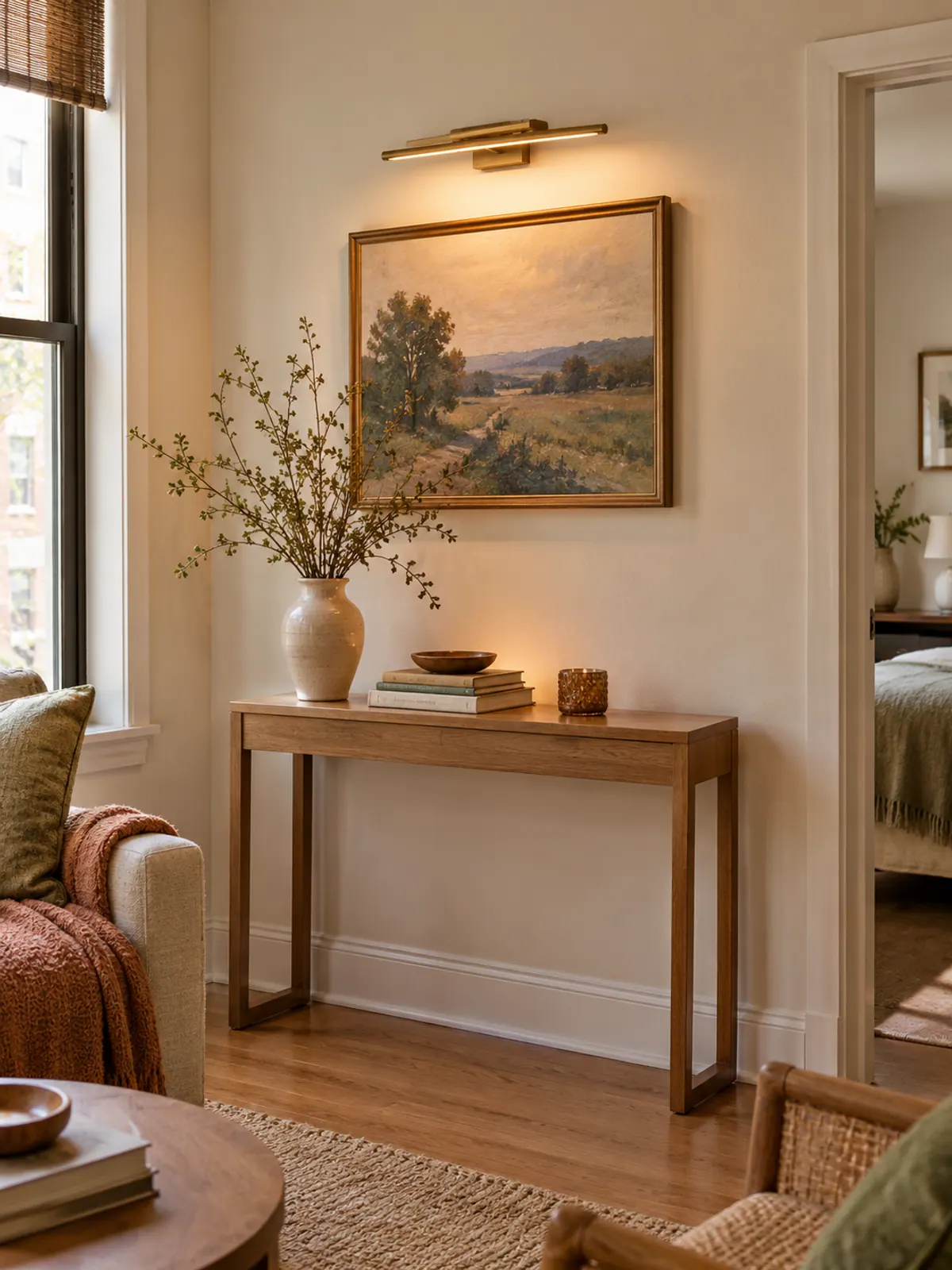
Finish with glow: an LED strip behind the headboard or TV, or a battery picture light over art. This layer makes the room feel finished in the evening.
Room-by-room renter lighting upgrades
Living room:
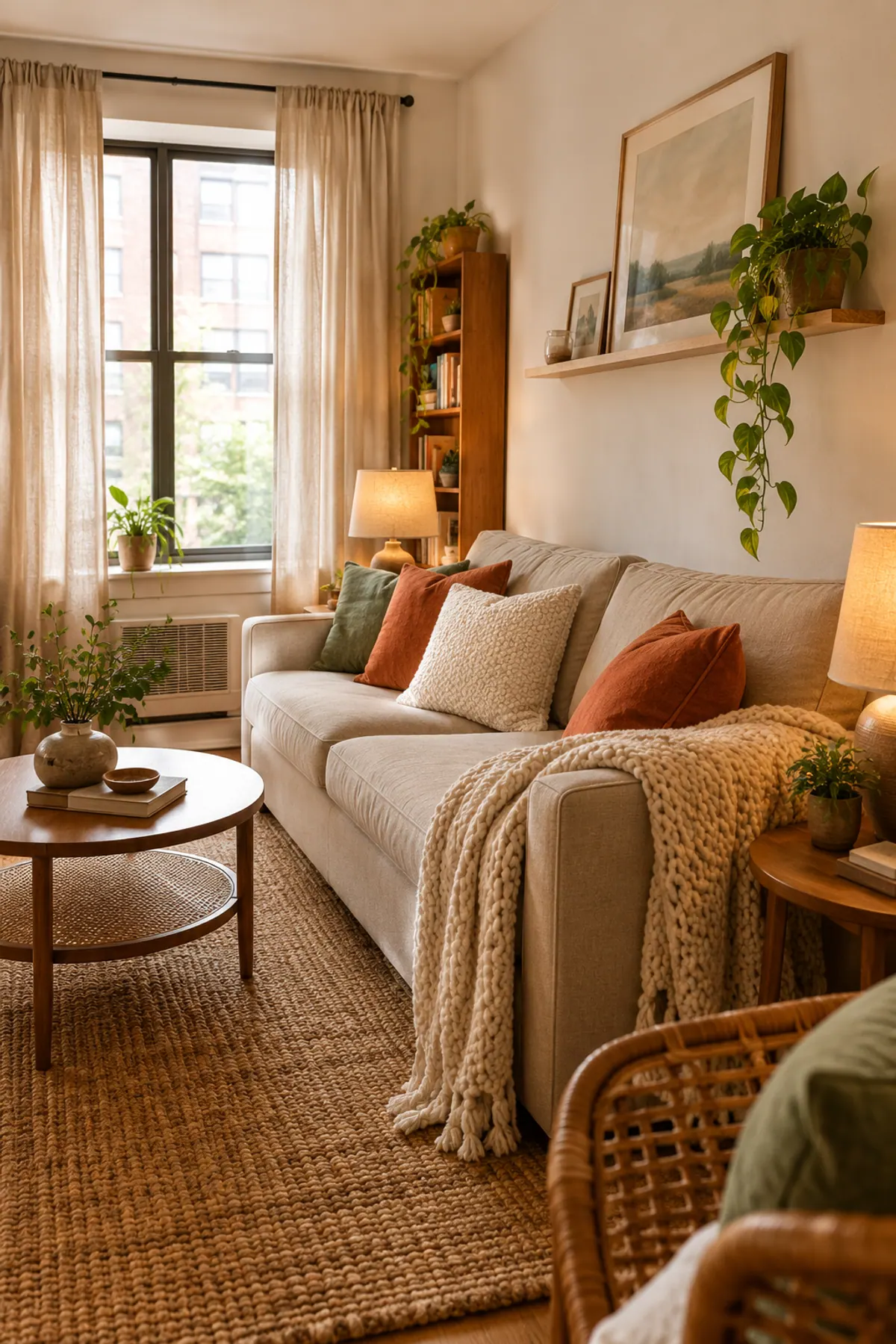
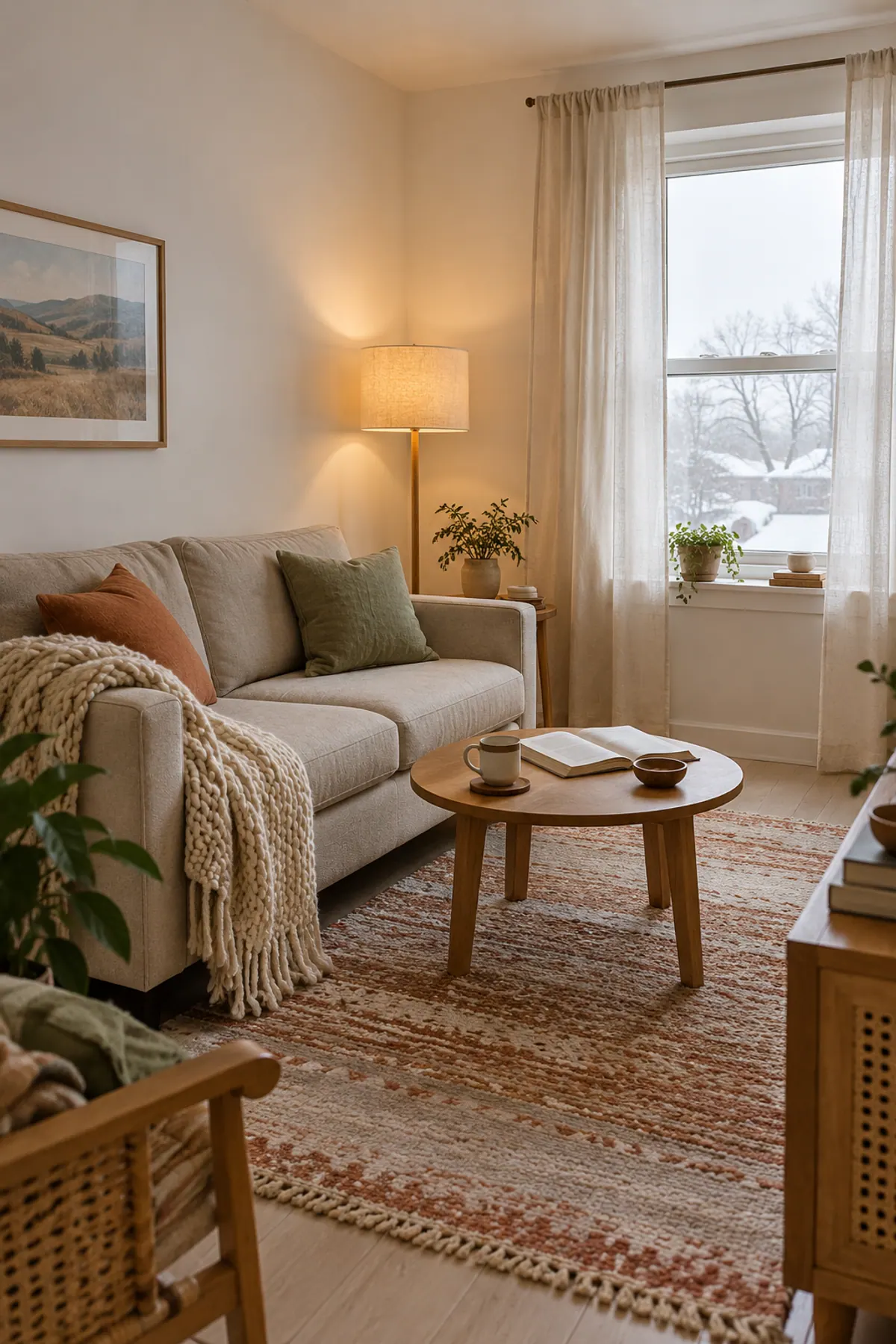
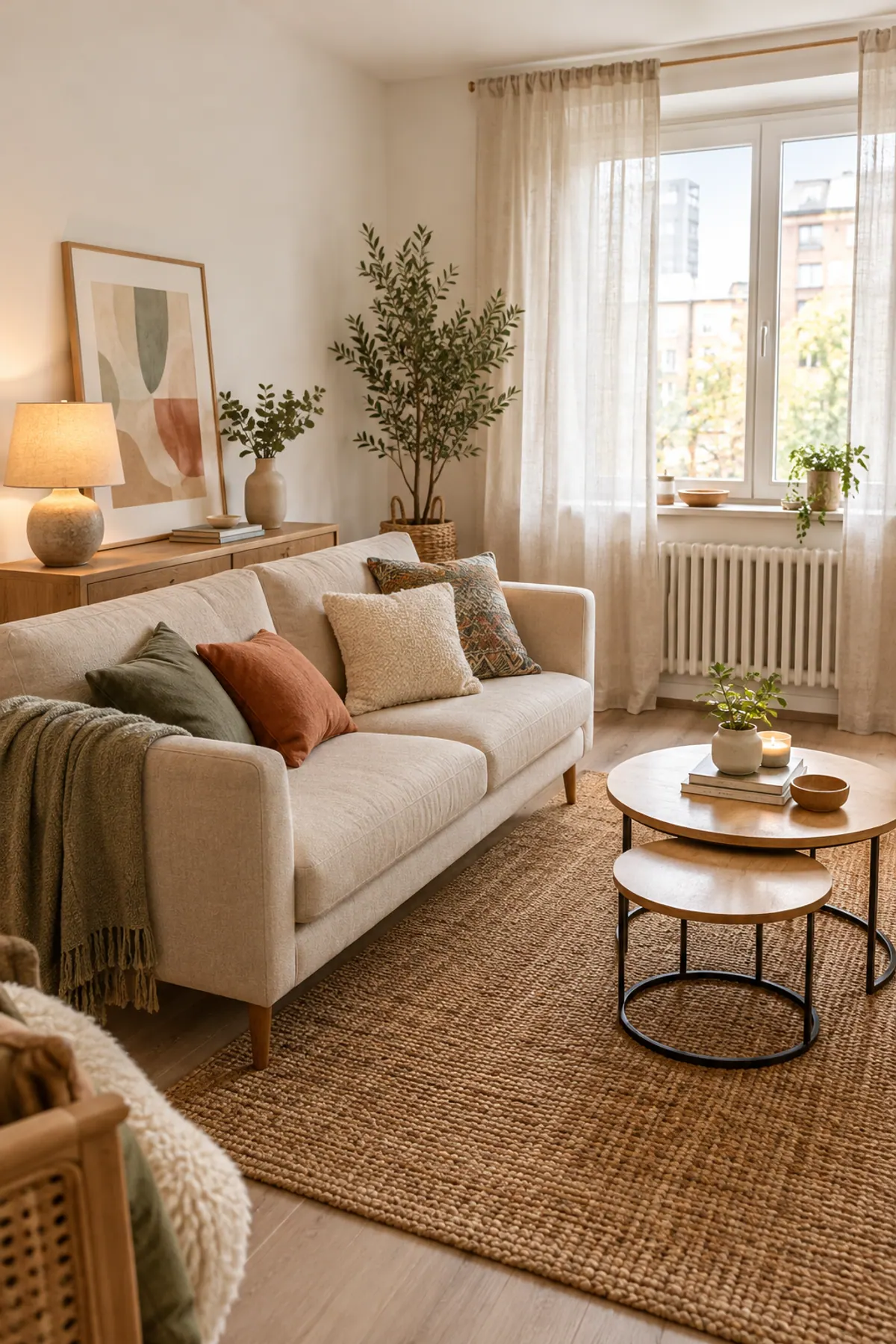
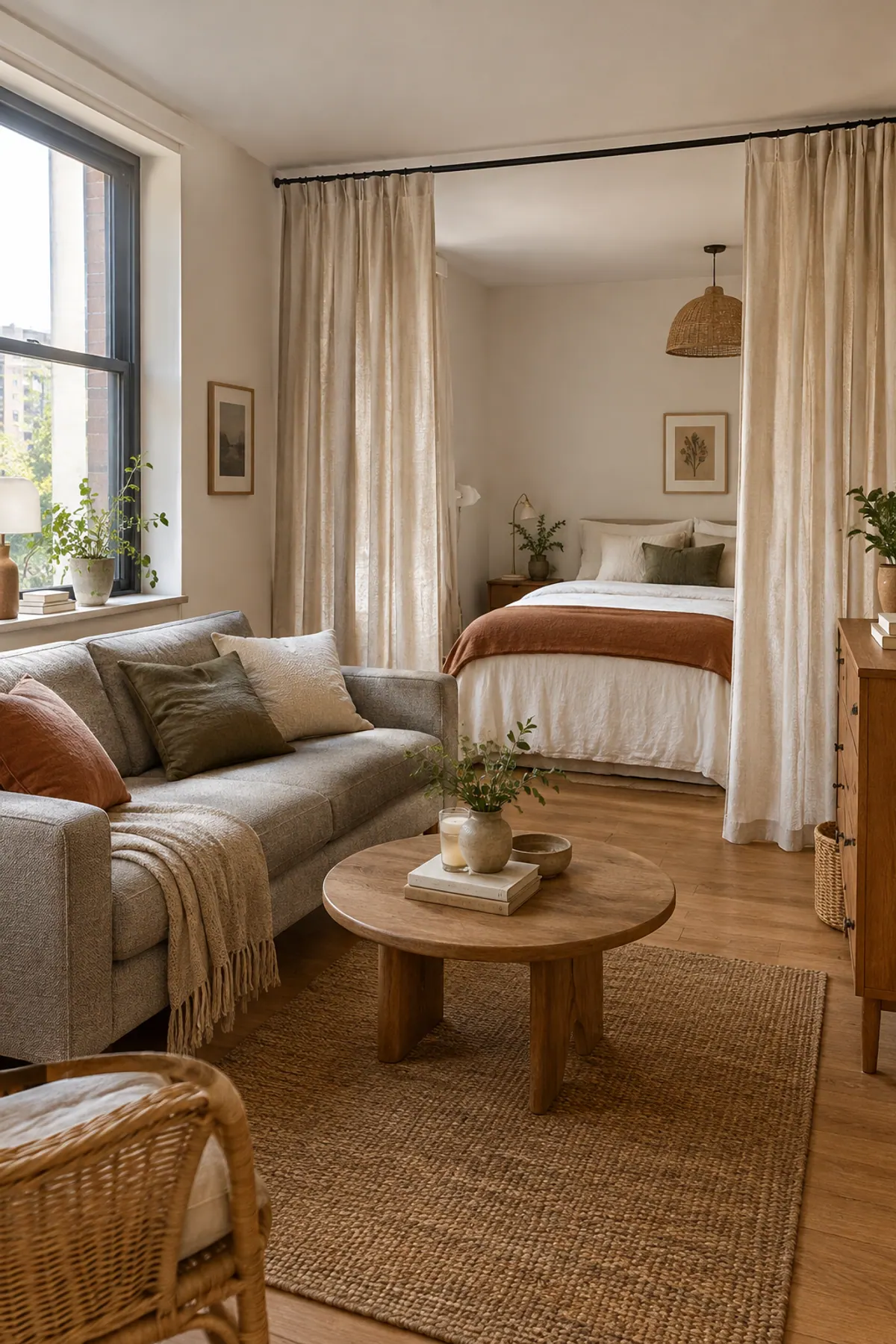
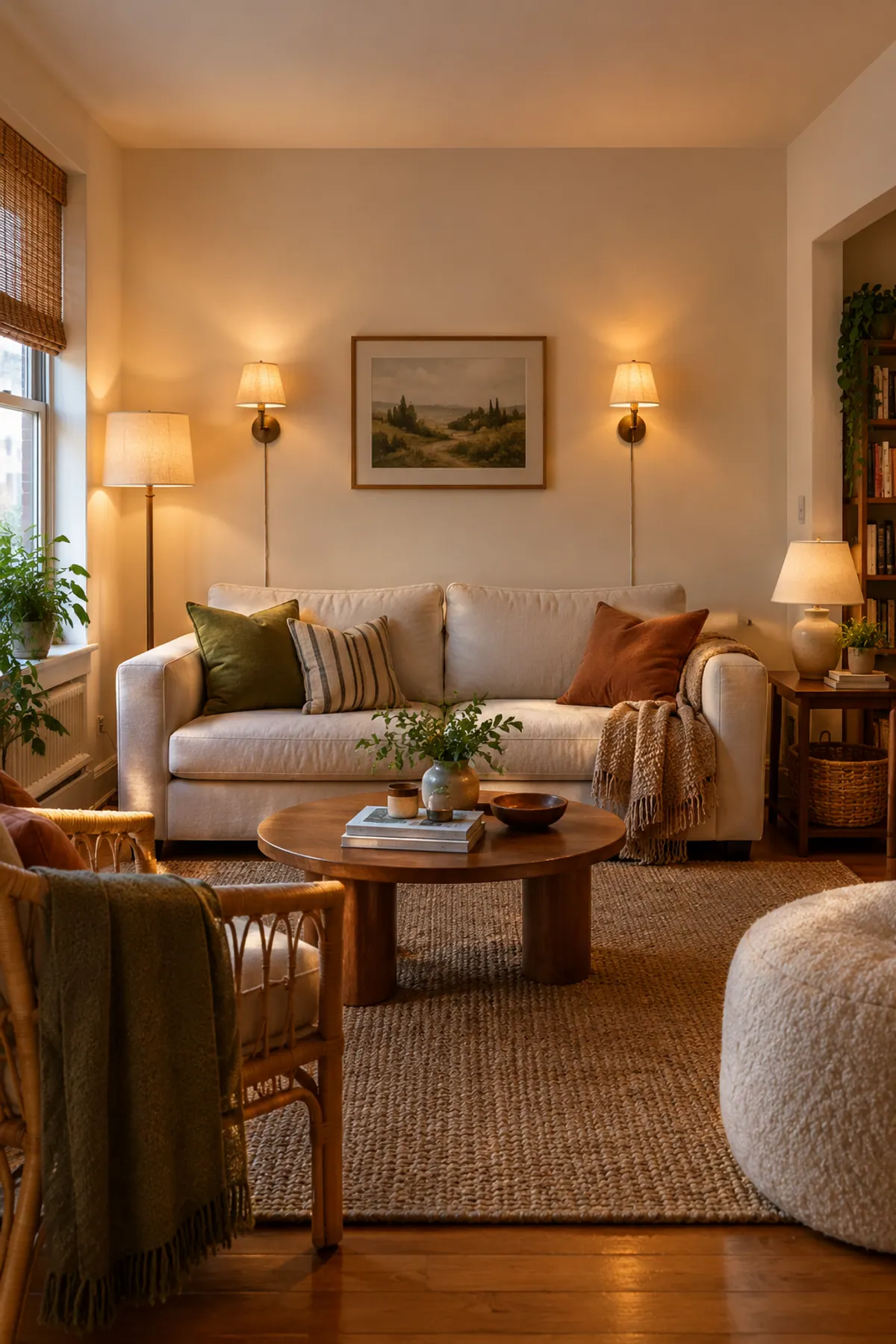
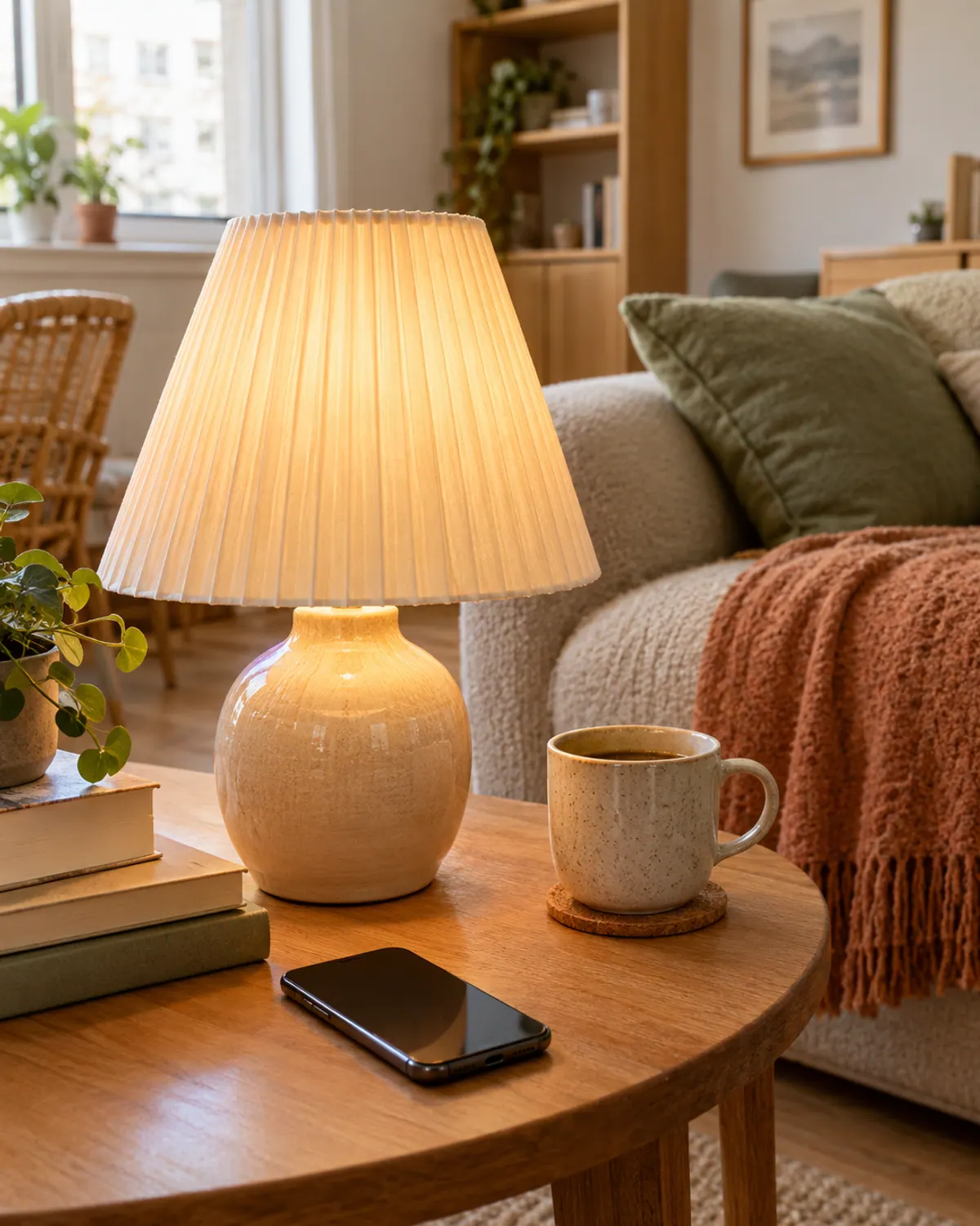
A pair of plug-in sconces over the sofa, a floor lamp in the darkest corner and a lamp on a side table. Leave the ceiling light off in the evening.
Bedroom:
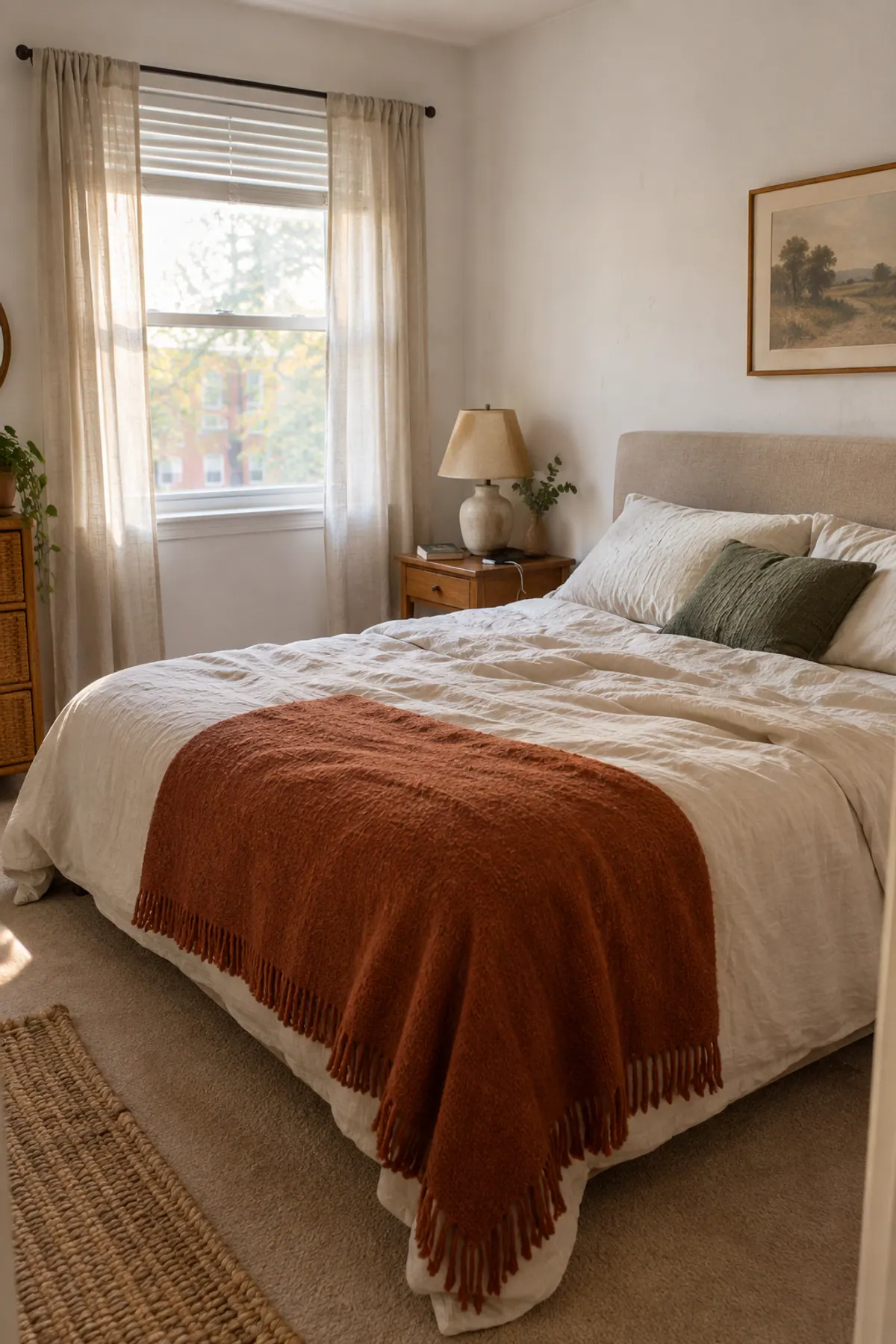
Sconces or small lamps on each side of the bed, plus a strip behind the headboard. A bedside lamp at about 450 lumens is enough for reading.
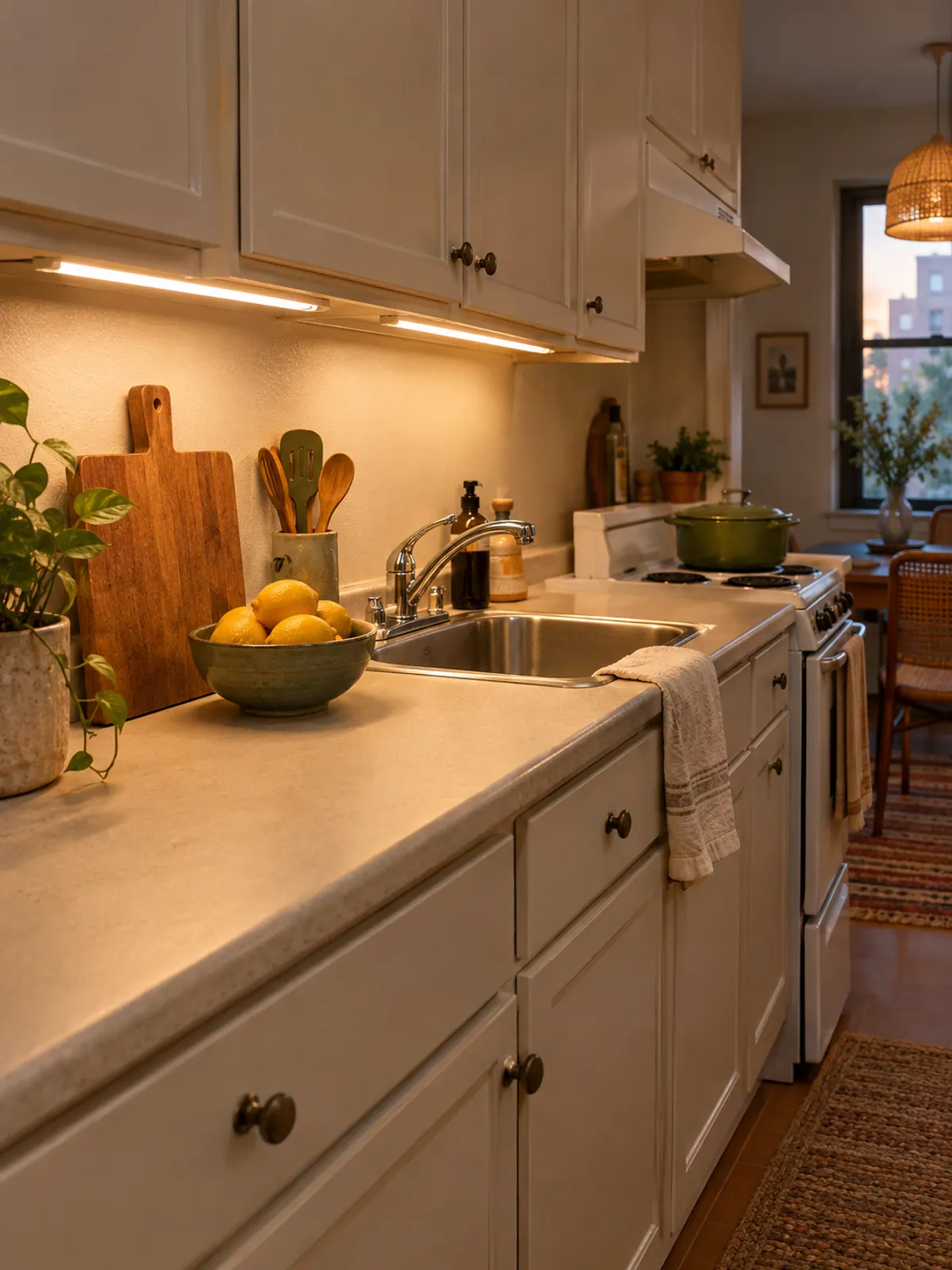
Kitchen:
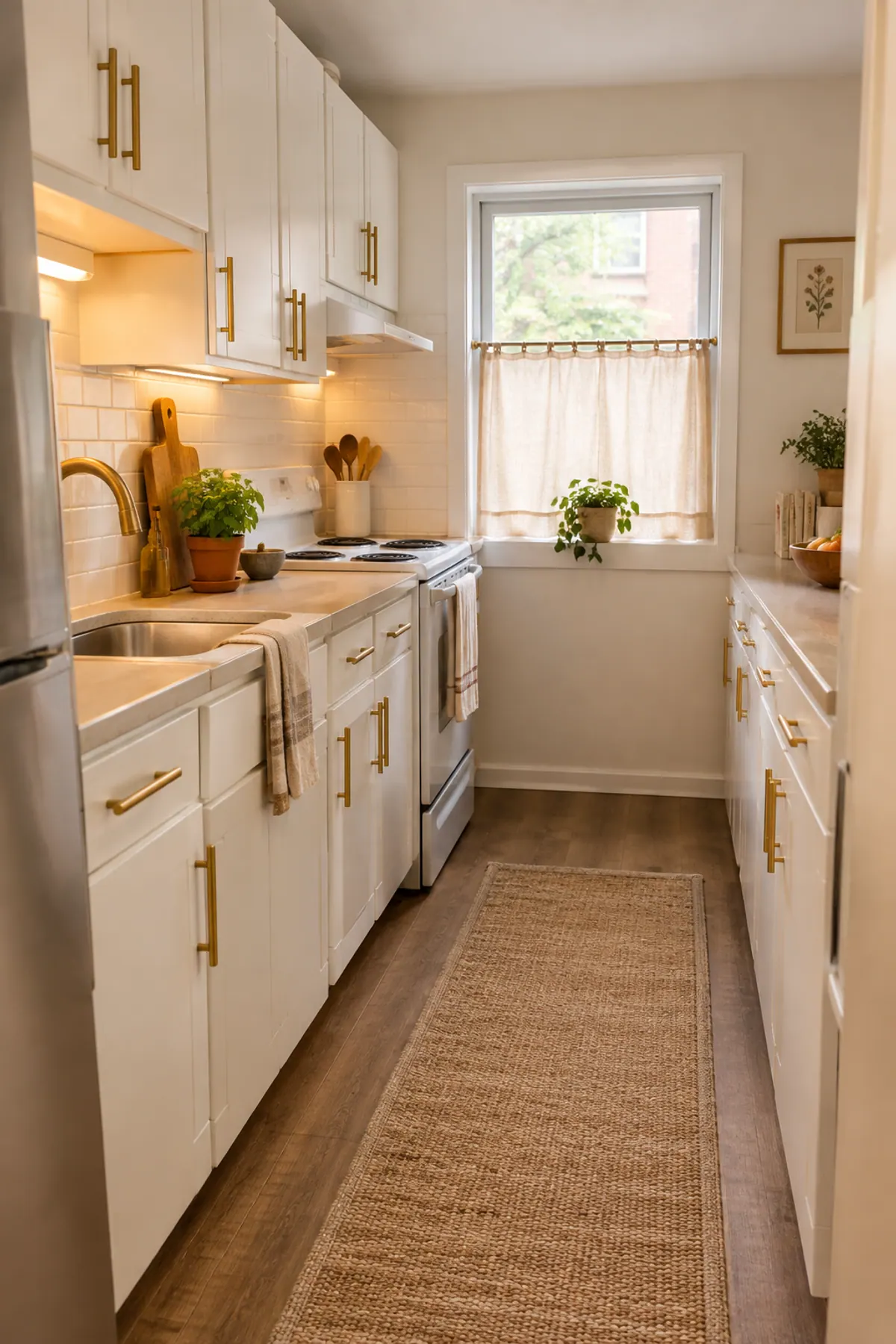
Plug-in LED bars under the upper cabinets light the counter where you chop. Pick warm or neutral white, around 3000K to 3500K, so the kitchen does not look clinical at night.
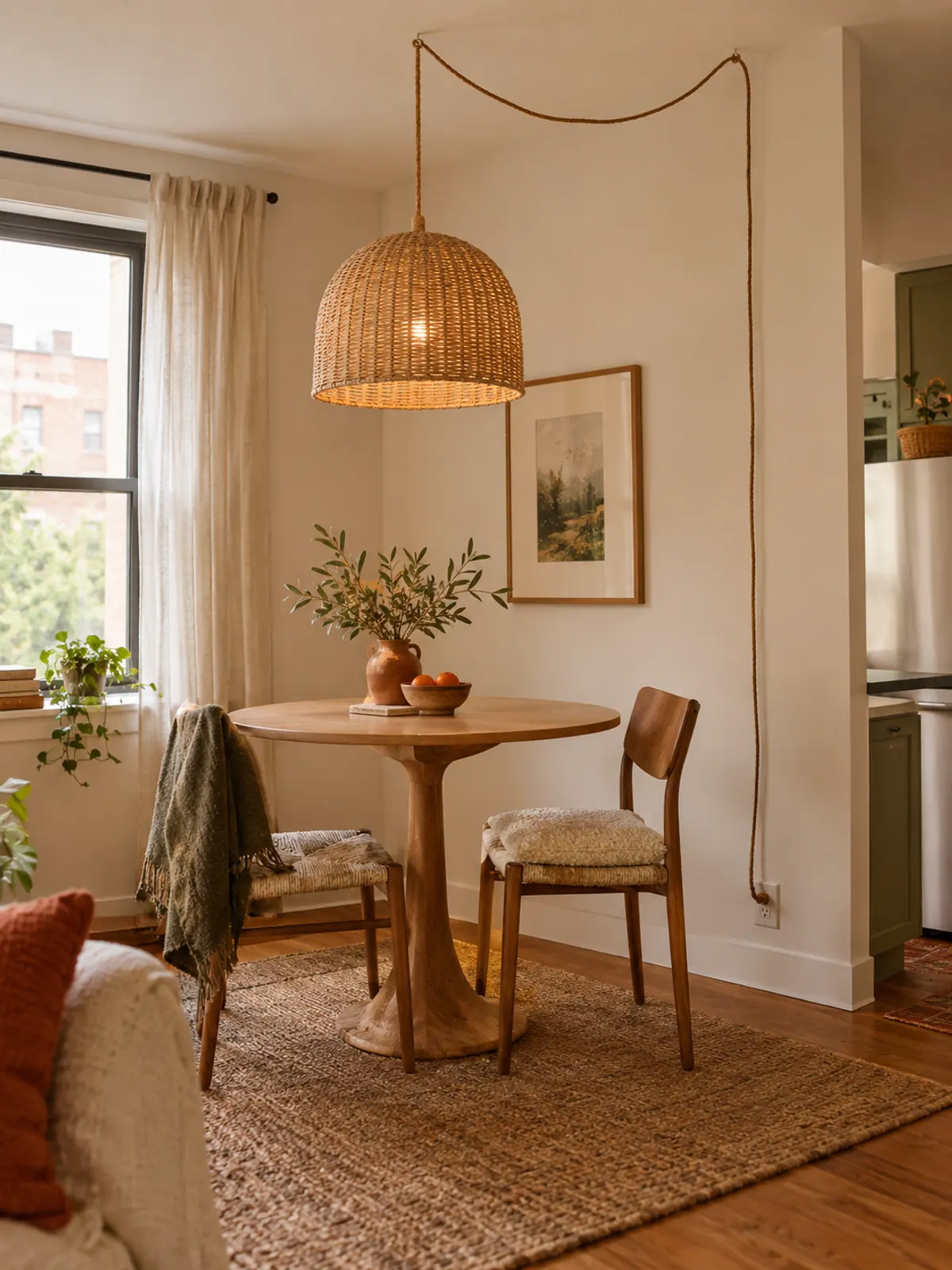
Dining nook:
A plug-in pendant on a swag hook hangs over the table without a ceiling box. A ceiling hook does need a small hole, so check your lease or ask first.
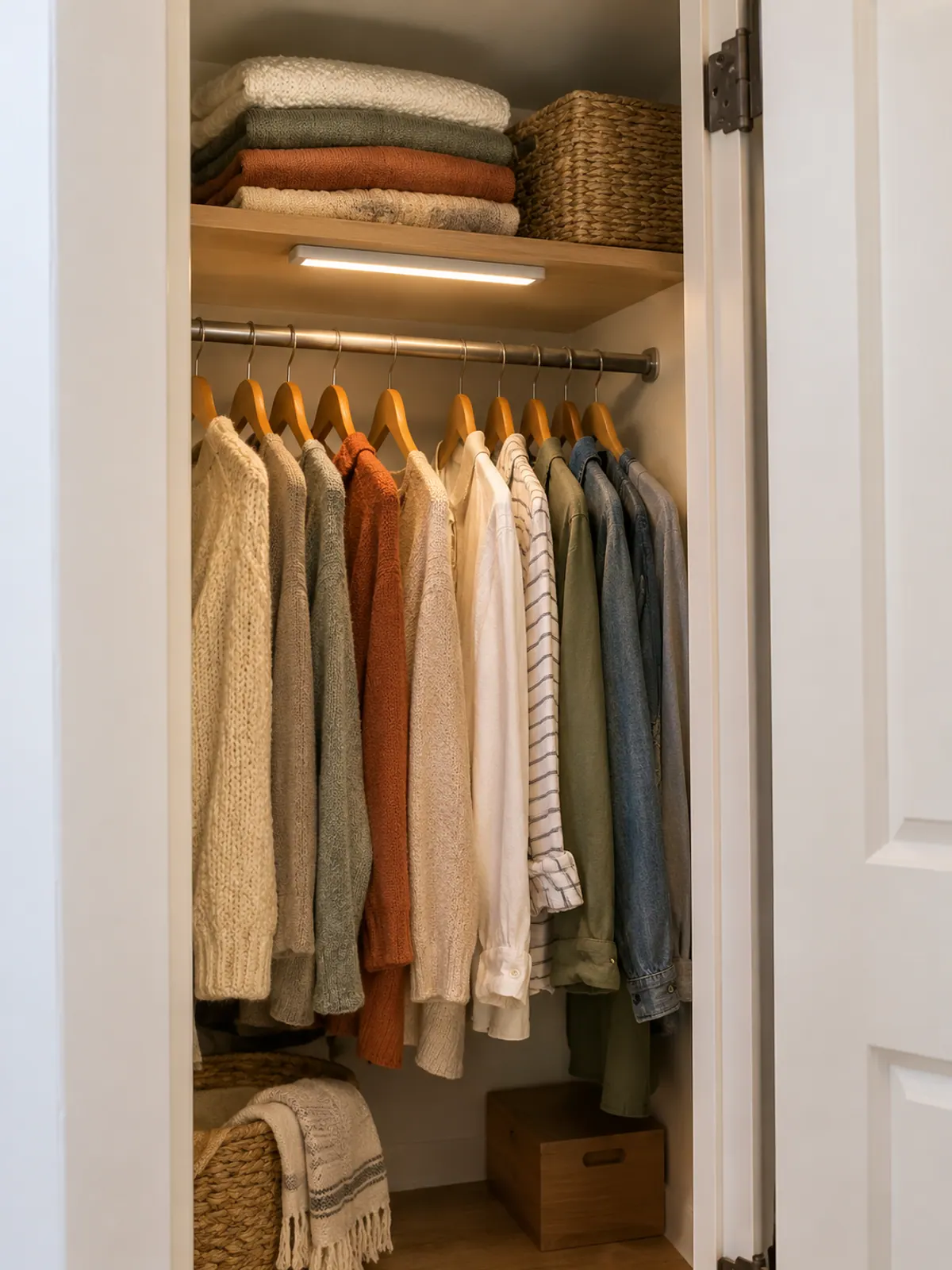
Closet and entry:
Rechargeable motion sensor bars stick under a shelf and turn on when you open the door. For more ways to warm up a room, see these cozy living room ideas for small apartments.
How do you light a room with no ceiling light?
Use three plug-in lamps at three heights instead of one overhead fixture. A floor lamp covers the high, ambient layer, a table lamp or sconce covers the middle, and a low accent such as an LED strip fills in the shadows.
-
Step 1: Start with an arc or torchiere floor lamp
An arc lamp reaches over a sofa or table like a ceiling light, and a torchiere (uplight) bounces light off the ceiling. Use an 800 lumen warm bulb in either.
-
Step 2: Add a lamp or sconce where you read or work
A table lamp, a desk lamp or a plug-in sconce gives the task layer. About 450 lumens is enough for reading in bed or in a chair.
-
Step 3: Light the dark corners last
Corners and the spots behind furniture are what make a room feel gloomy. A small lamp or an LED strip in each one balances the room without making it brighter overall.
Plug every lamp into a wall outlet or a surge-protected strip you do not overload, and keep cords out of walkways. If your lease bans ceiling changes, none of this touches the ceiling.
Mistakes that make rental lighting look cheap
What we like
- Several warm lamps at 2700K to 3000K
- Cords tucked into cord covers or behind furniture
- Lamps at different heights: floor, table, wall
- Smart bulbs or dimmers for evening
Keep in mind
- One bright ceiling light doing everything
- Mixing cool and warm bulbs in one room
- Cords running across floors or under rugs
- Overloading one power strip with every lamp
Before you move out
Lighting move-out check
Good light also changes how a room looks on camera and in person, which helps with every other upgrade. Pair this with these apartment decor ideas that make a small space feel bigger and a bedroom accent wall that your new lamps can show off.
Shop the renter lighting kit
No-electrician lighting picks
-
Plug-in wall sconce with linen shade
Typically $25 to $70 each
Bedside or sofa light with no wiring.
Check price on Amazon for Plug-in wall sconce with linen shade -
Paintable cord cover kit
Typically $12 to $25
Hides the sconce cord down the wall.
Check price on Amazon for Paintable cord cover kit -
Rechargeable puck lights with remote
Typically $20 to $40 for a set
Battery light inside a sconce or cabinet.
Check price on Amazon for Rechargeable puck lights with remote -
Arc floor lamp with drum shade
Typically $60 to $150
Overhead-style light with no ceiling box.
Check price on Amazon for Arc floor lamp with drum shade -
Smart bulbs, tunable 2700K
Typically $10 to $20 each
Dim and warm any lamp from your phone.
Check price on Amazon for Smart bulbs, tunable 2700K -
Plug-in under-cabinet LED light bar
Typically $20 to $50
Counter light without hardwiring.
Check price on Amazon for Plug-in under-cabinet LED light bar -
Rechargeable motion sensor closet light
Typically $15 to $30
Turns on when the door opens.
Check price on Amazon for Rechargeable motion sensor closet light -
Plug-in pendant light with swag kit
Typically $30 to $90
A hanging light over the table, plugged in.
Check price on Amazon for Plug-in pendant light with swag kit -
Ceiling light cover drum shade
Typically $25 to $60
Softens a harsh builder ceiling light.
Check price on Amazon for Ceiling light cover drum shade -
Warm white LED strip light, plug-in
Typically $12 to $30
Soft glow behind a headboard or TV.
Check price on Amazon for Warm white LED strip light, plug-in -
Battery picture light
Typically $25 to $60
Gallery light over art, no outlet.
Check price on Amazon for Battery picture light
Frequently asked questions
How can I add lighting to a room without wiring?
Use plug-in wall sconces, floor lamps, plug-in pendants on a swag hook, plug-in under-cabinet bars and battery or rechargeable lights such as puck lights, picture lights and motion sensor bars.
Can renters change light fixtures?
Usually not without permission. Swapping a hardwired fixture is electrical work most leases leave to the landlord. Ask in writing, or soften the existing fixture with a clip-on shade and a warm bulb.
How many lumens do I need for a living room?
A common rule of thumb is about 10 to 20 lumens per square foot. A 12 by 14 foot living room (168 sq ft) works out to roughly 1,700 to 3,400 lumens, spread across several lamps.
What color temperature is best for a cozy apartment?
About 2700K to 3000K for living rooms and bedrooms. Kitchens can go a little cooler, around 3000K to 3500K, for clearer counter light.
Do plug-in wall sconces look cheap?
Not when the cord is hidden. Run it through a paintable cord cover in the wall color, or pick a fabric cord you are happy to show, and use warm bulbs.
How do you light a room with no overhead light?
Use three plug-in lamps at different heights: an arc or torchiere floor lamp for ambient light, a table lamp or plug-in sconce for reading, and a small accent light such as an LED strip for dark corners. Use warm 2700K to 3000K bulbs, and put the lamps where the room feels darkest.
Save it for later
Pin this to your Renter-Friendly Decor board so it's there when you need it.
Save to Pinterest