This post contains affiliate links. As an Amazon Associate we earn from qualifying purchases, at no extra cost to you. Read our disclosure.
Key takeaways
- Clear and rearrange before you buy anything; both are free.
- Measure and sketch so every purchase is the right size.
- Spend on lighting first, then the rug, curtains and covers.
- Hang art and curtains without nails or drilling to protect your deposit.
- Keep about 10 percent of the budget back for surprises.
In this post8 sections
Why a budget makeover should not start with shopping
Most living room makeovers on a budget go wrong in the cart. It is easy to buy pillows, a rug and a print in one weekend and end up with a room that looks busier, not better.
The order matters more than the amount. Free fixes come first, then measuring, then spending in the order that changes the room most. Done that way, $100 can do more than $500 spent at random.
What you need before you start
Supplies (most are free)
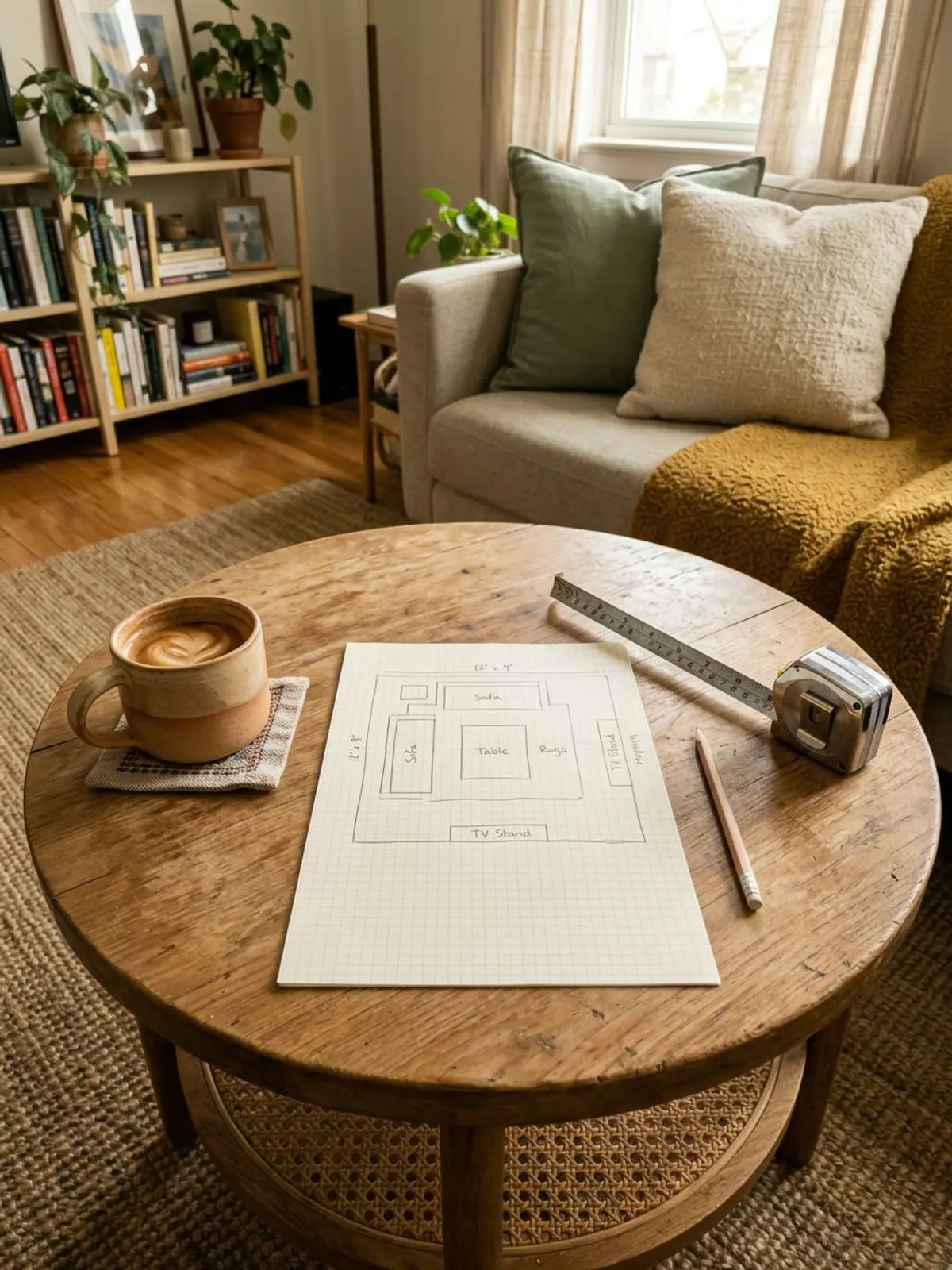
Take before photos from the doorway and from each corner. Photos show clutter and awkward spacing your eyes stopped noticing months ago.
How to do a living room makeover on a budget in 7 steps
-
Step 1: Clear the room down to the furniture
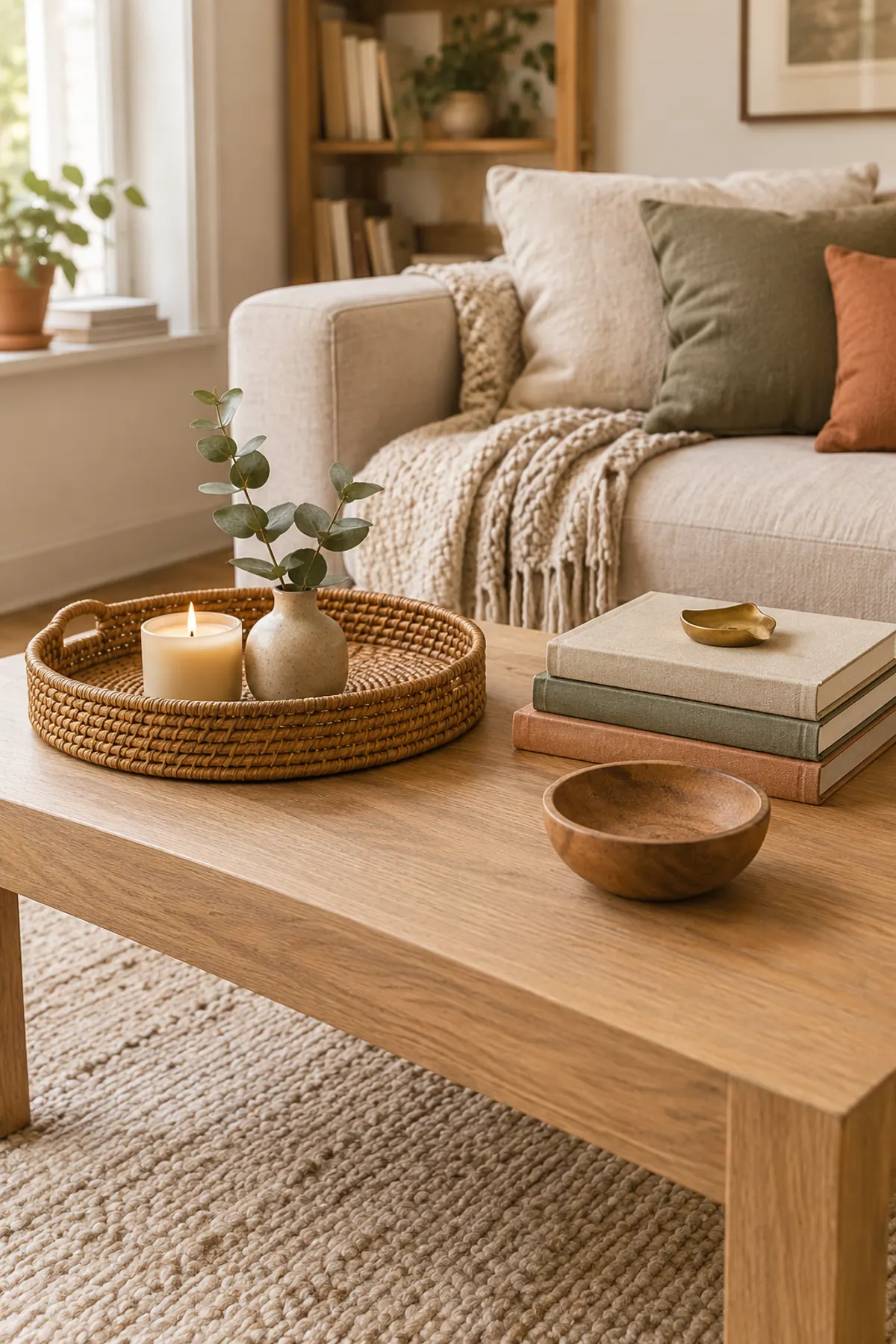
Take everything off the coffee table, shelves and side tables and put it in a basket. Only bring back what you love or use. This step is free and often makes the biggest single change.
-
Step 2: Measure and sketch what you have
Measure the room, the windows and every large piece. Sketch it on graph paper at 1 square = 6 inches. Note outlets, radiators and the paths people walk. This tells you what a new rug or lamp needs to be before you shop.
-
Step 3: Rearrange before you buy
Try pulling the sofa a few inches off the wall, facing seats toward each other and putting the rug under the front legs of every seat. Keep main walkways about 30 to 36 inches wide. Live with the new layout for a few days.
-
Step 4: Set your number and pick one look
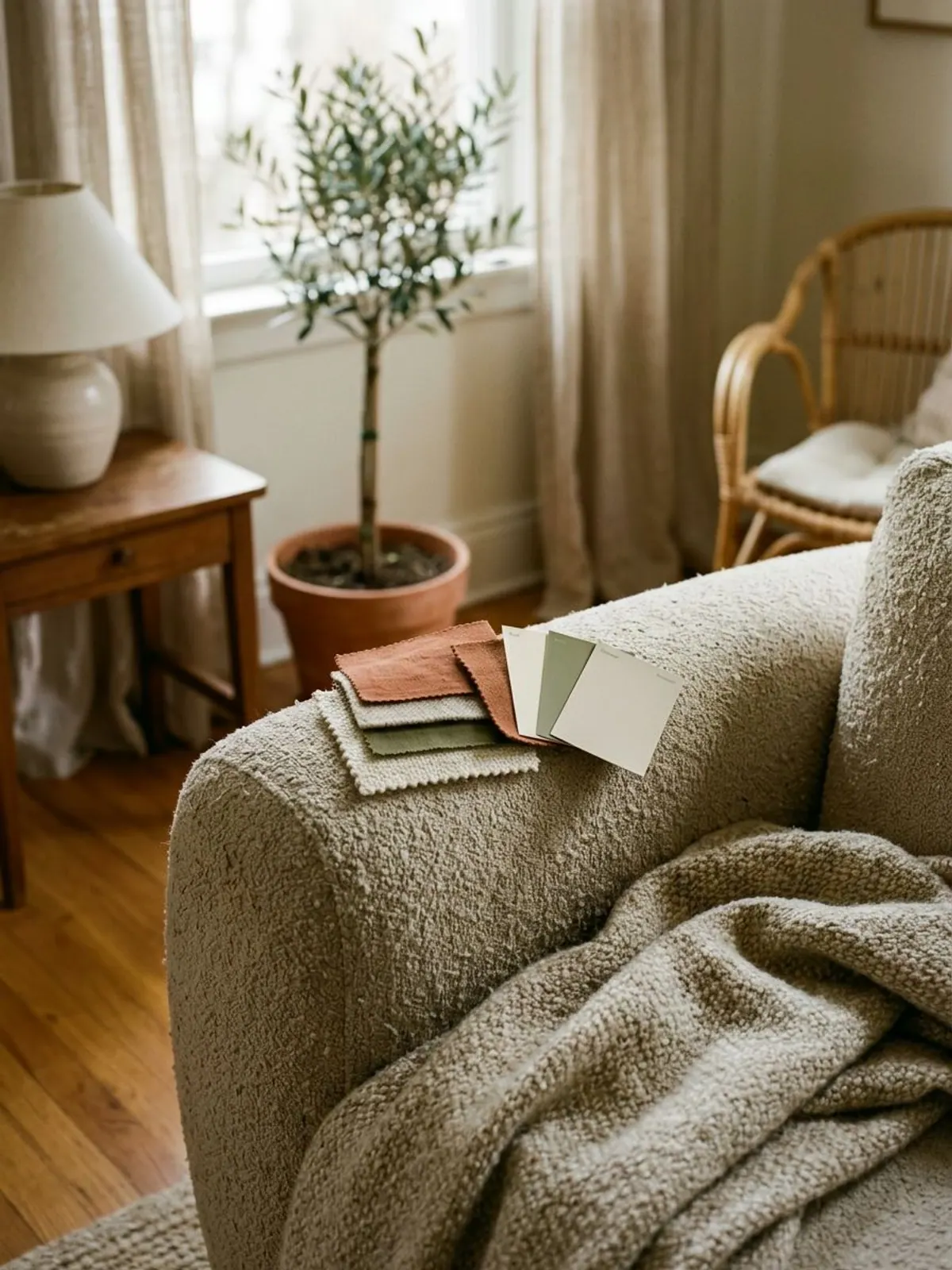
Write down a total and keep about 10 percent back for surprises like a lamp that arrives too short. Pick three or four colors from things you already own, such as the sofa, the rug or a print, so new pieces match without guesswork.
-
Step 5: Spend on light first
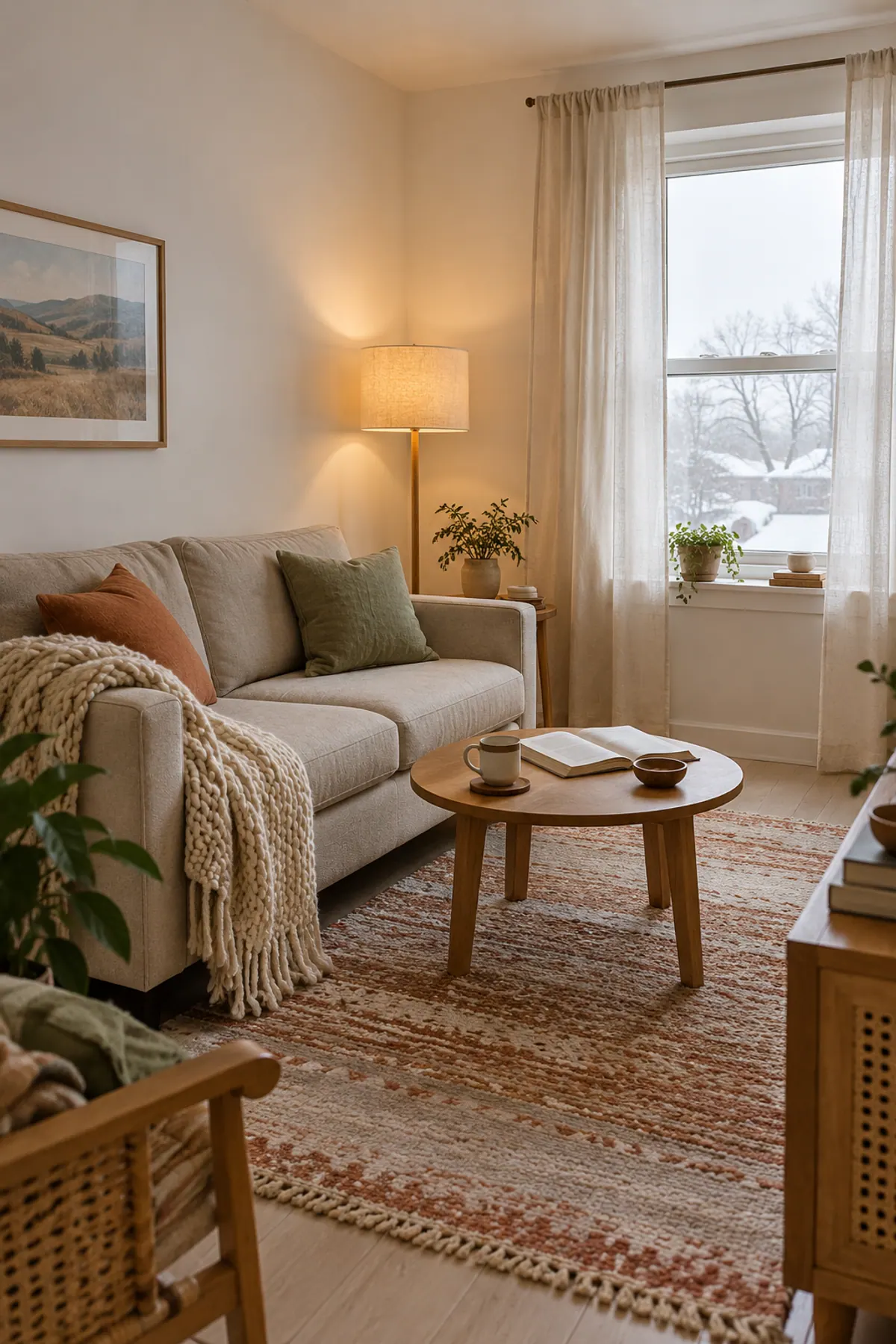
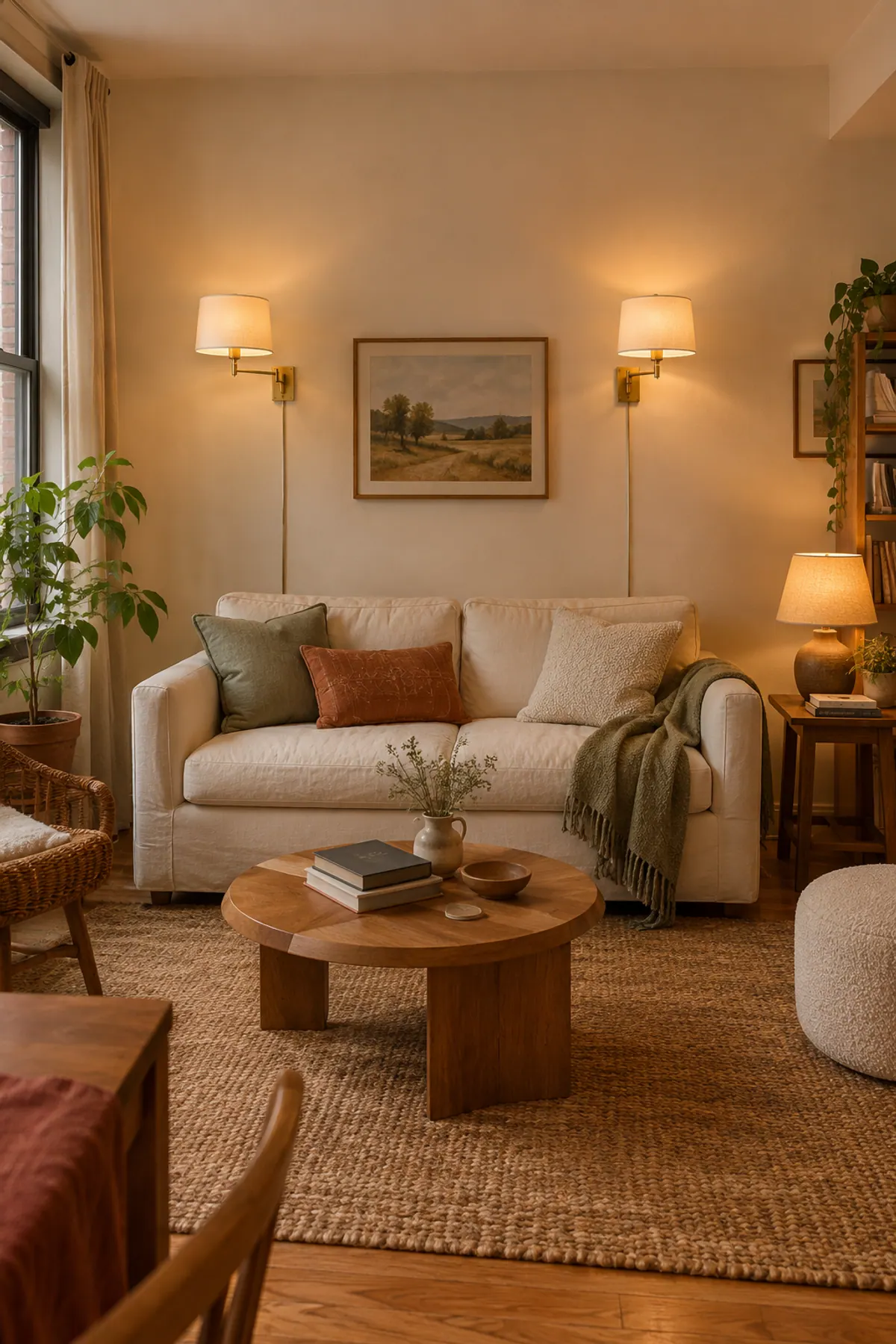
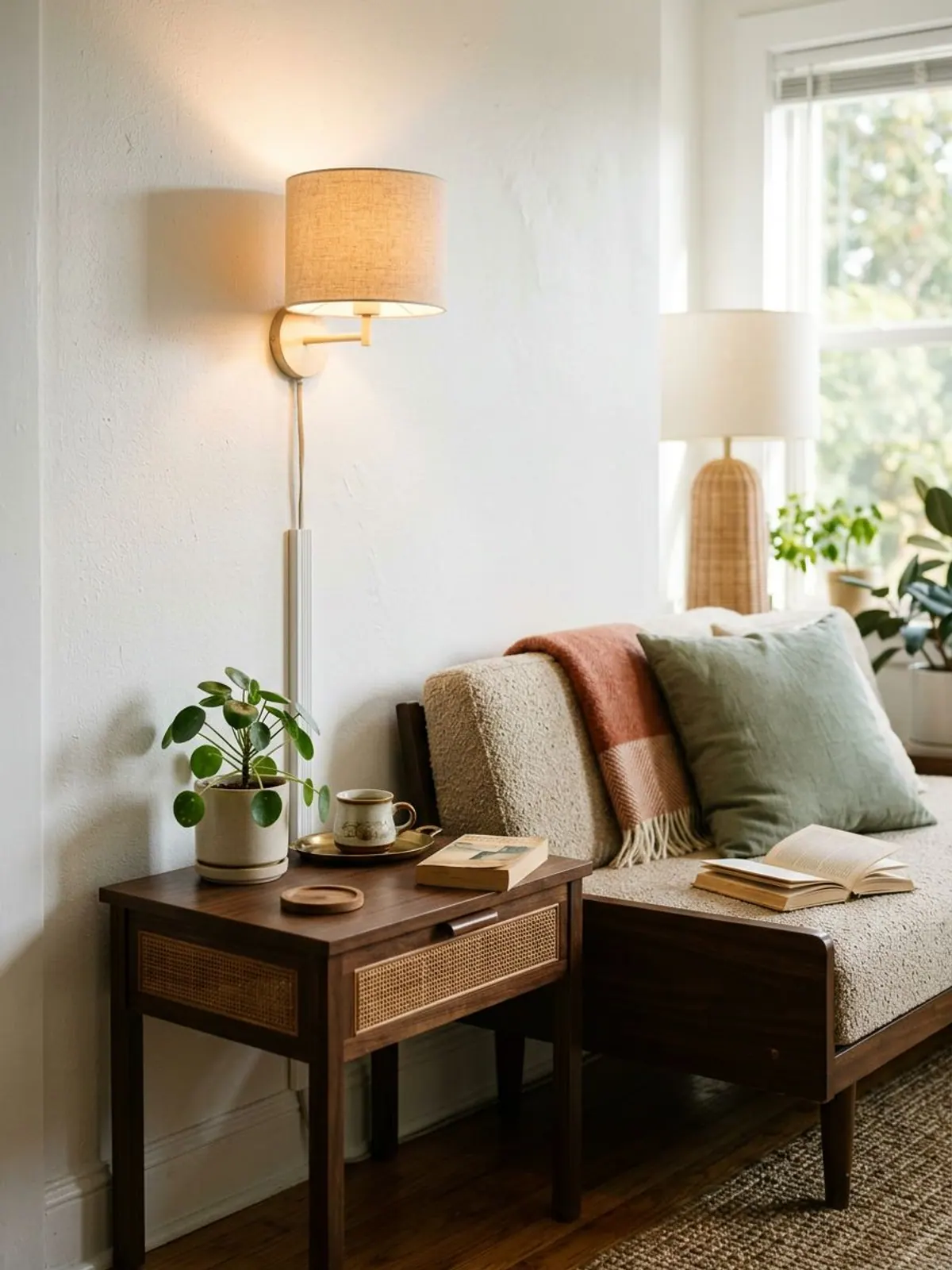
Most small living rooms rely on one overhead light. Add two or three lamps at different heights and switch to warm bulbs, around 2700K. Plug-in wall sconces add light without wiring, which suits renters.
-
Step 6: Then textiles: rug, curtains, covers
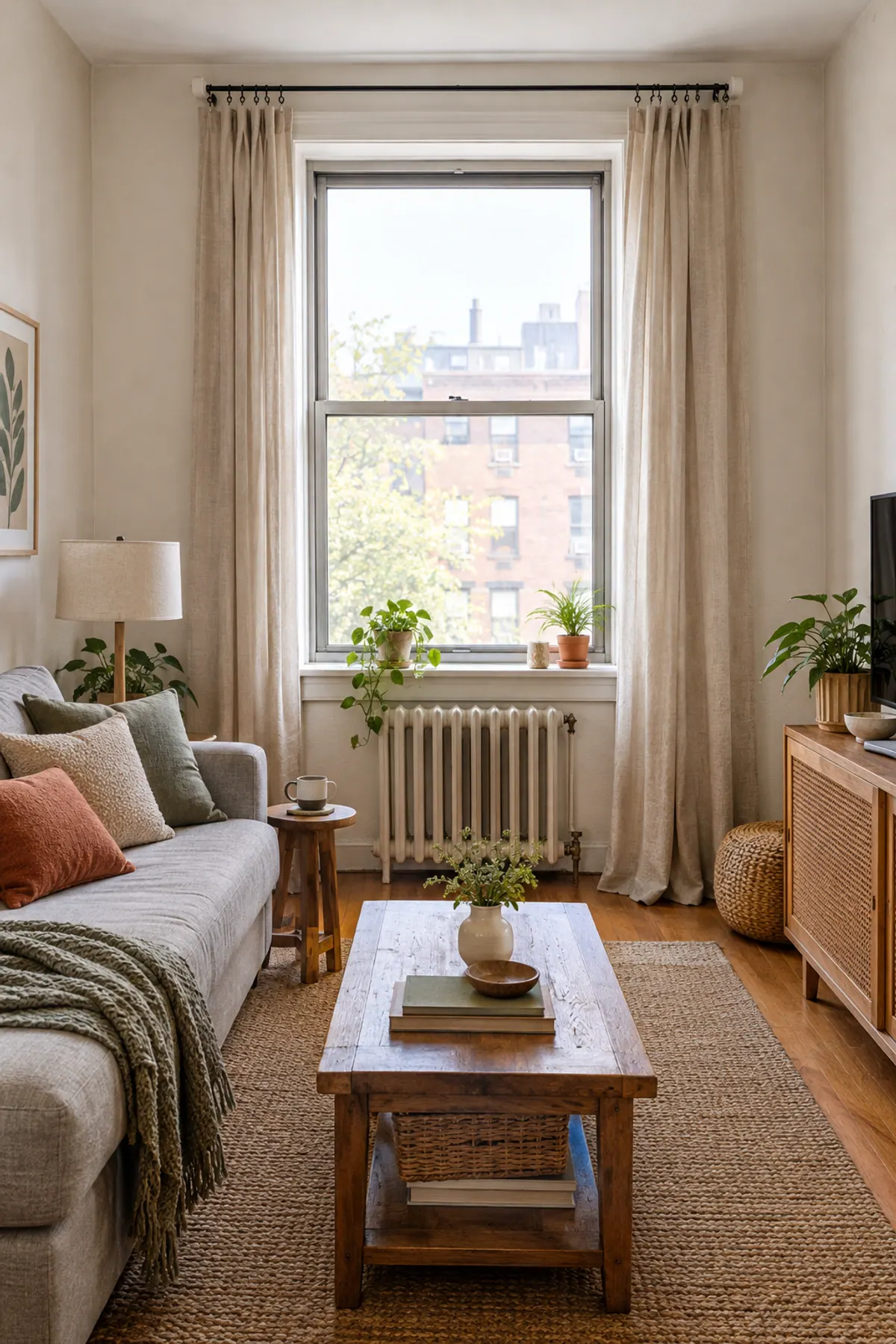
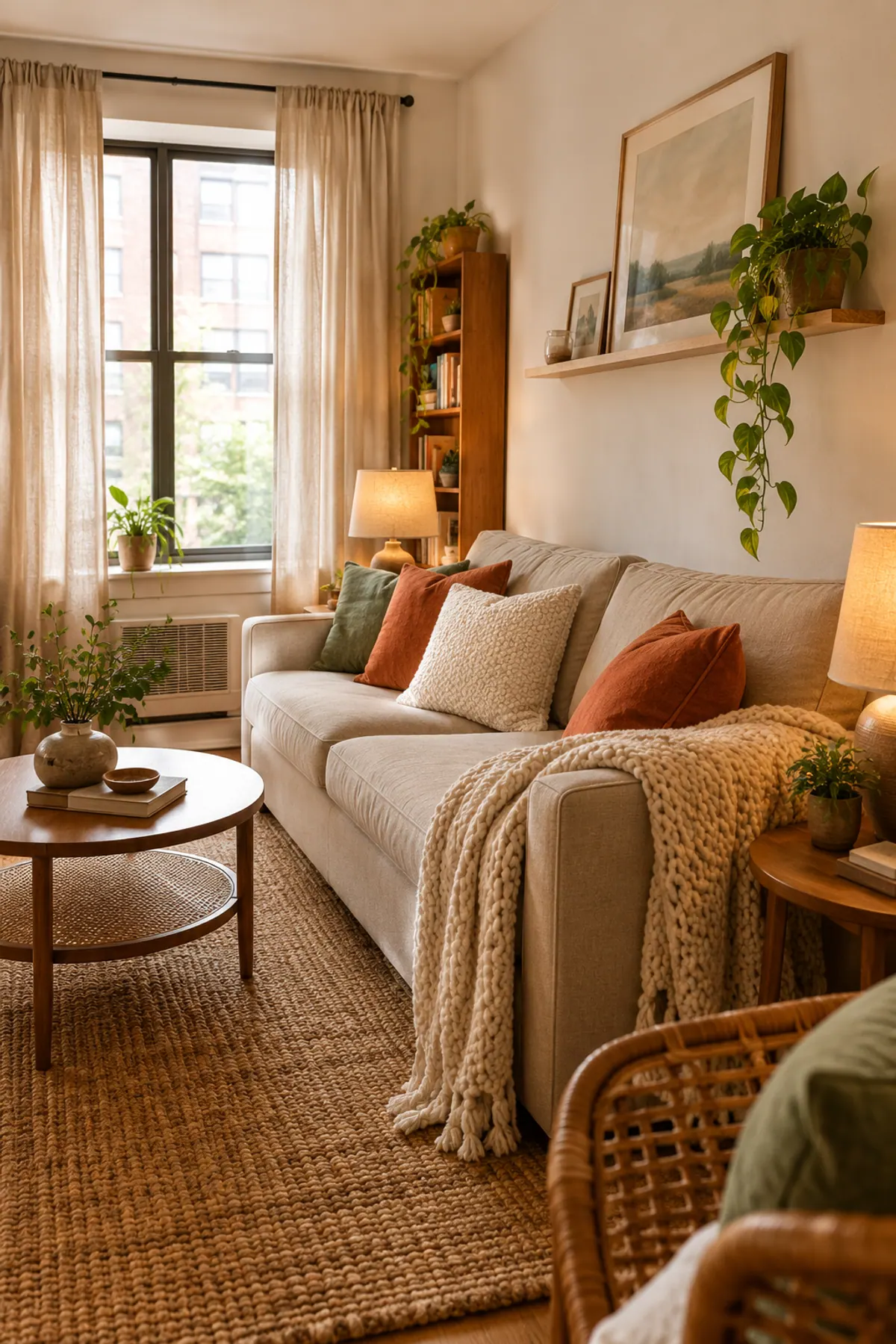
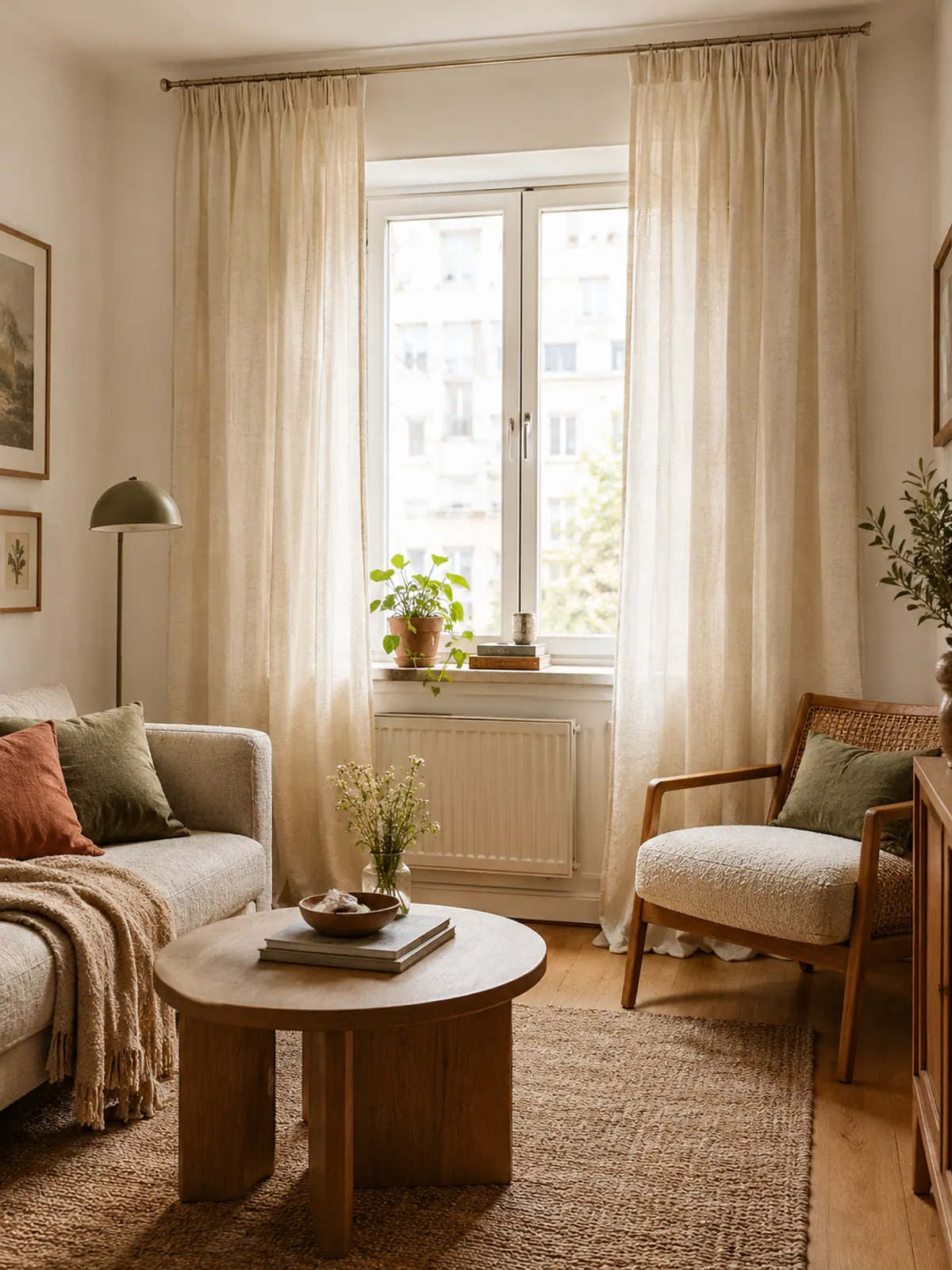
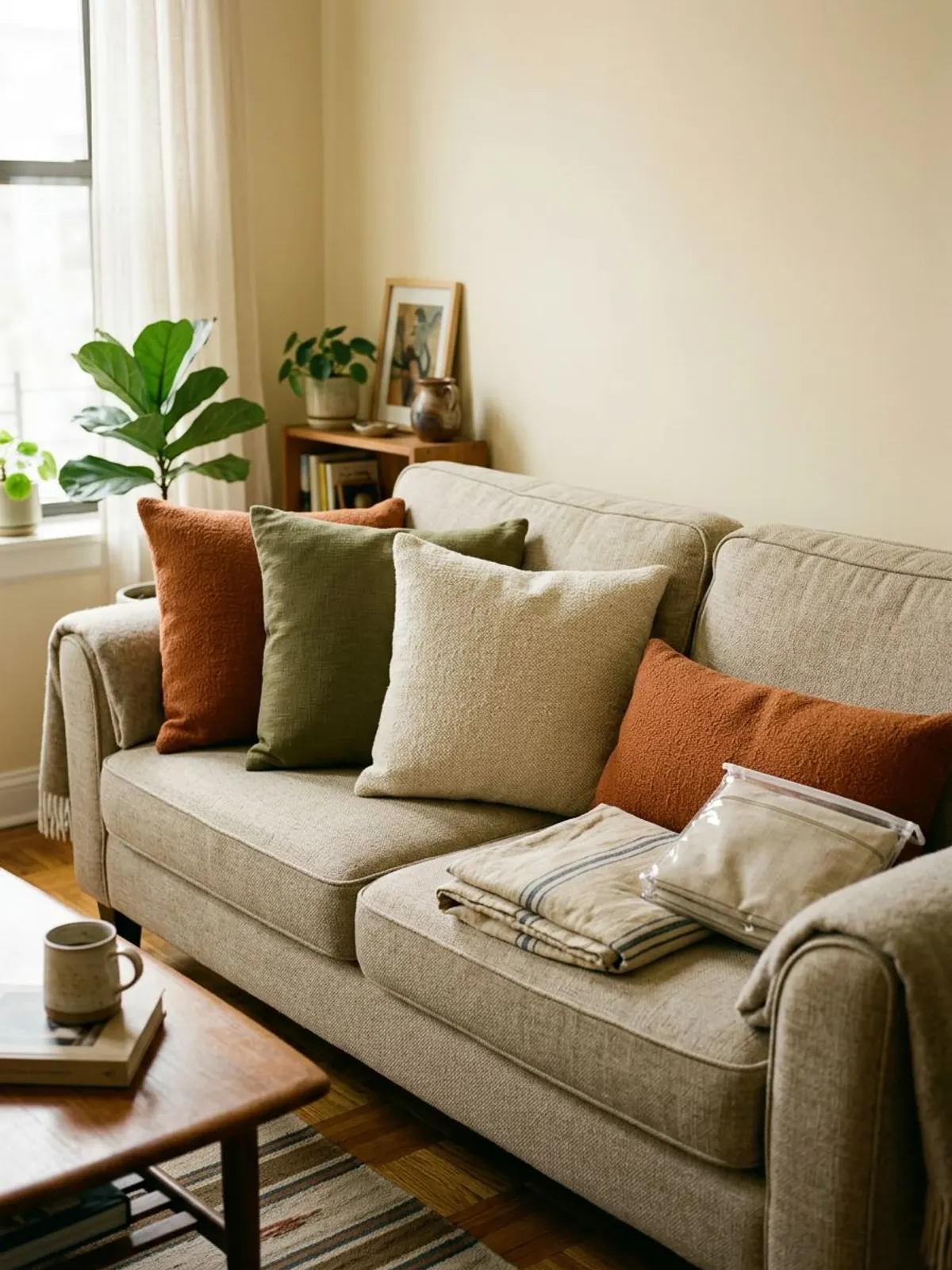
A rug sized so the front legs of the seats sit on it pulls the room together. Hang curtains high and wide on a tension rod or existing hardware. Swap pillow covers instead of buying new pillows, and use a stretch slipcover on a tired sofa.
-
Step 7: Finish the walls without nails
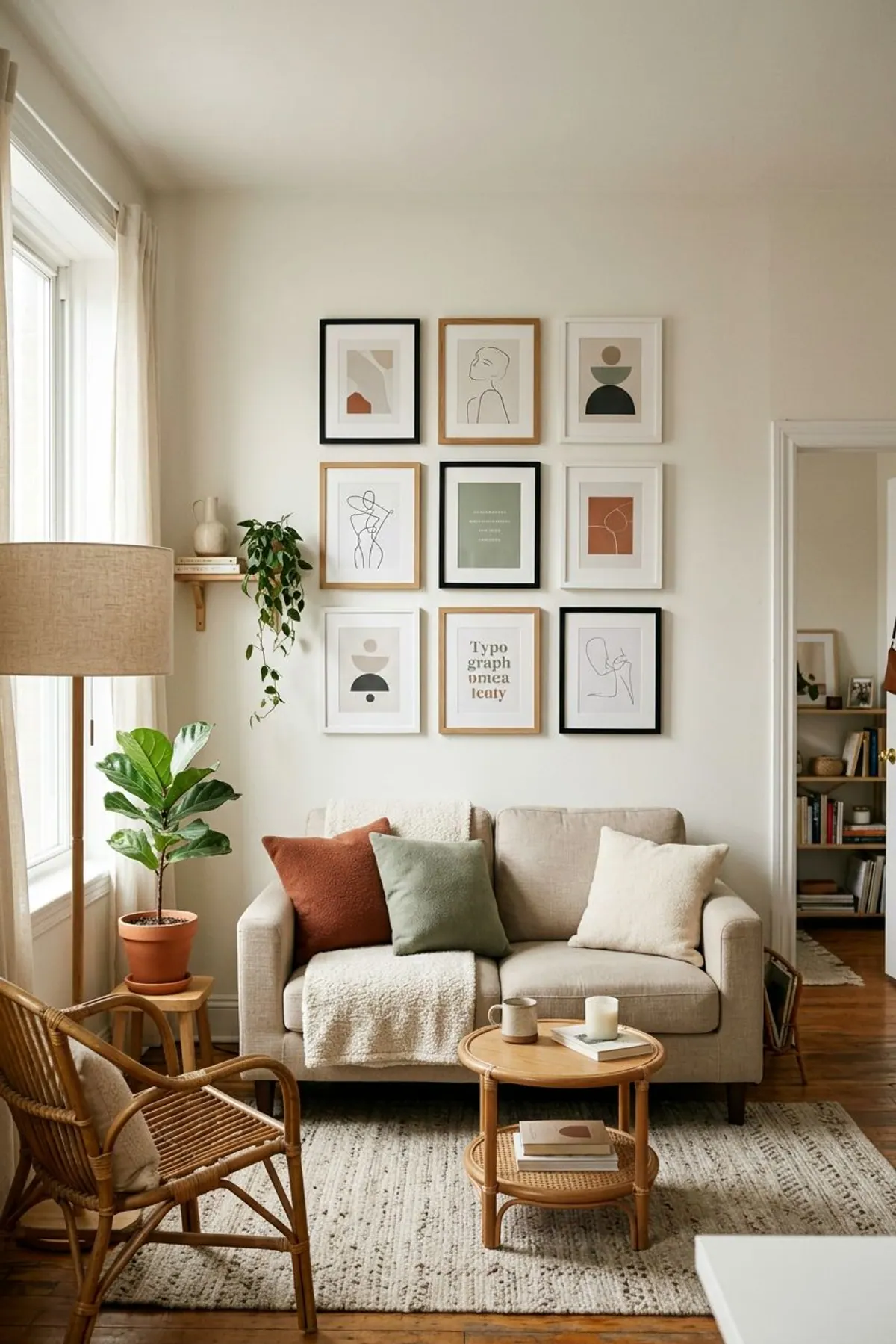
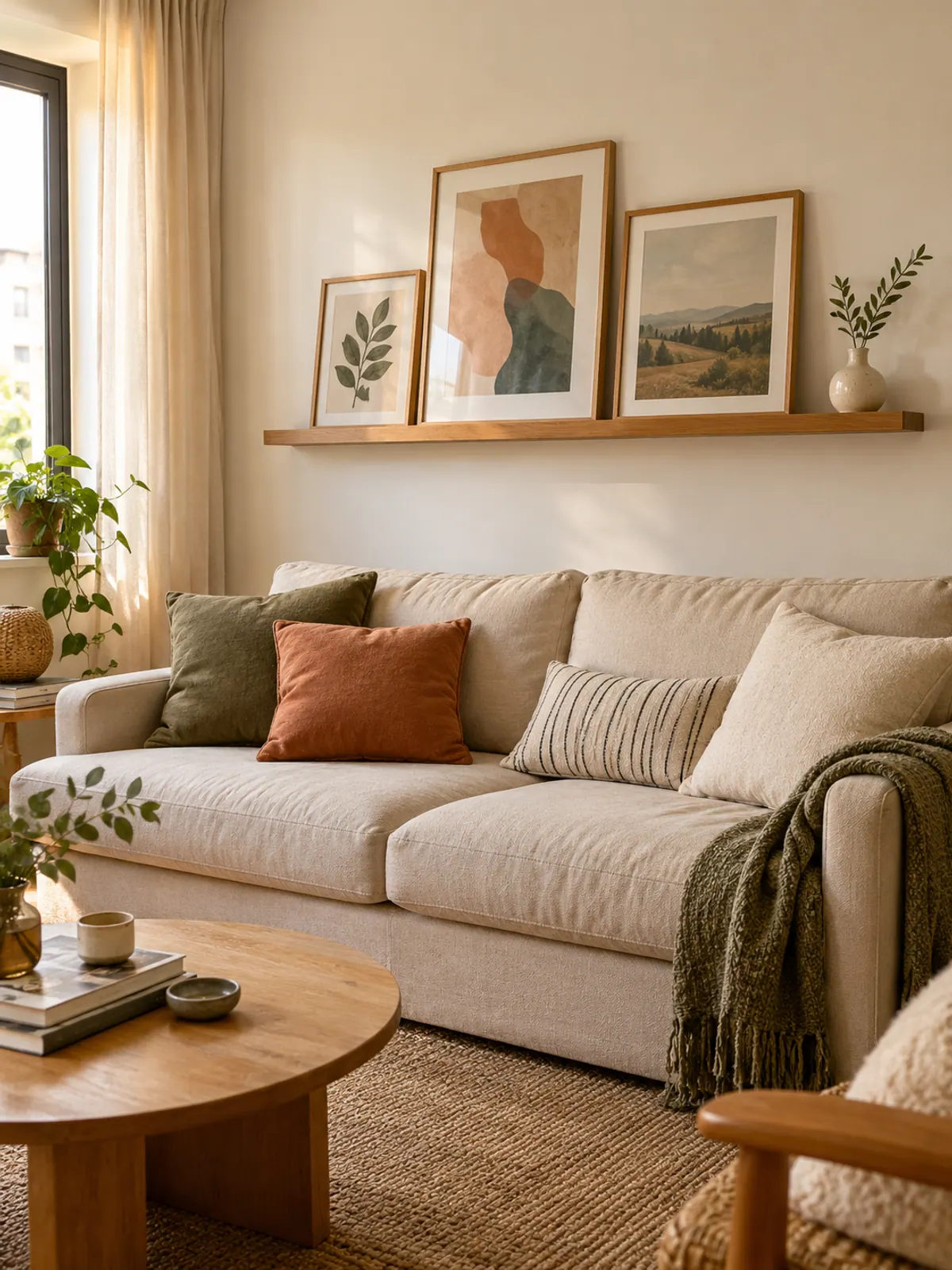
Lean art on a picture ledge or a console, or hang light frames with removable strips. Add one or two plants. Stop here for a week before you buy anything else, because many rooms already feel finished at this point.
Where the money makes the biggest difference
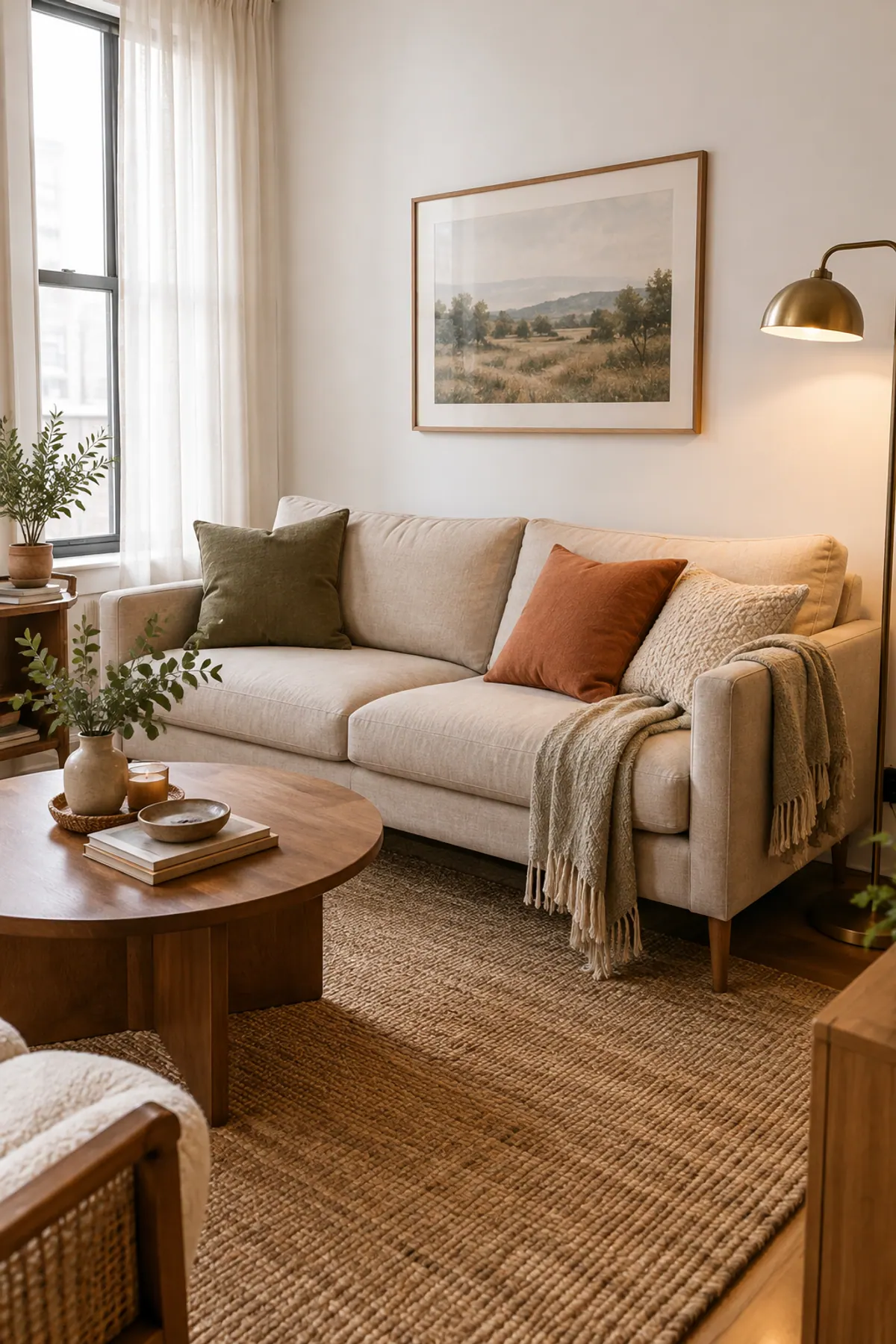
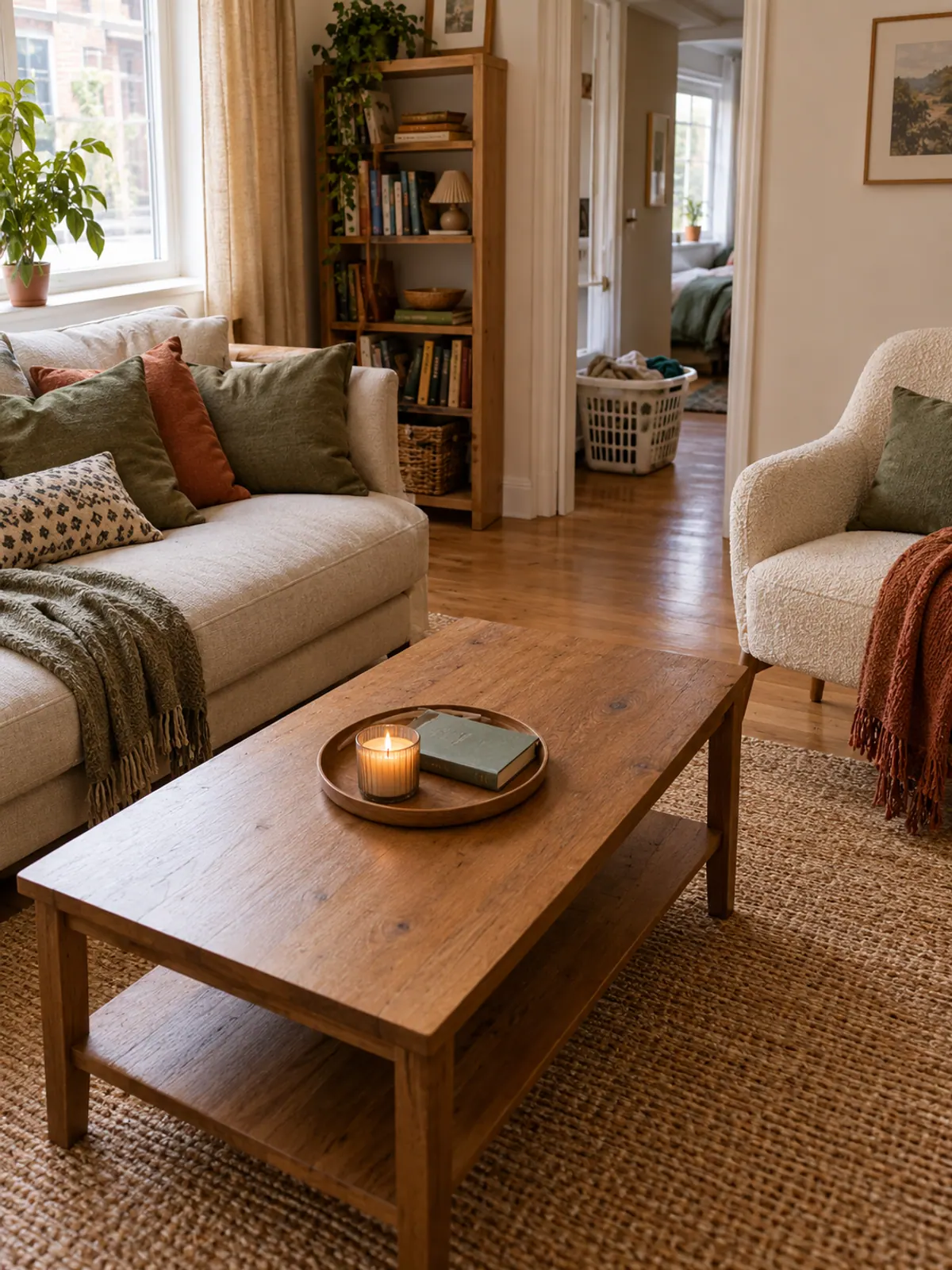
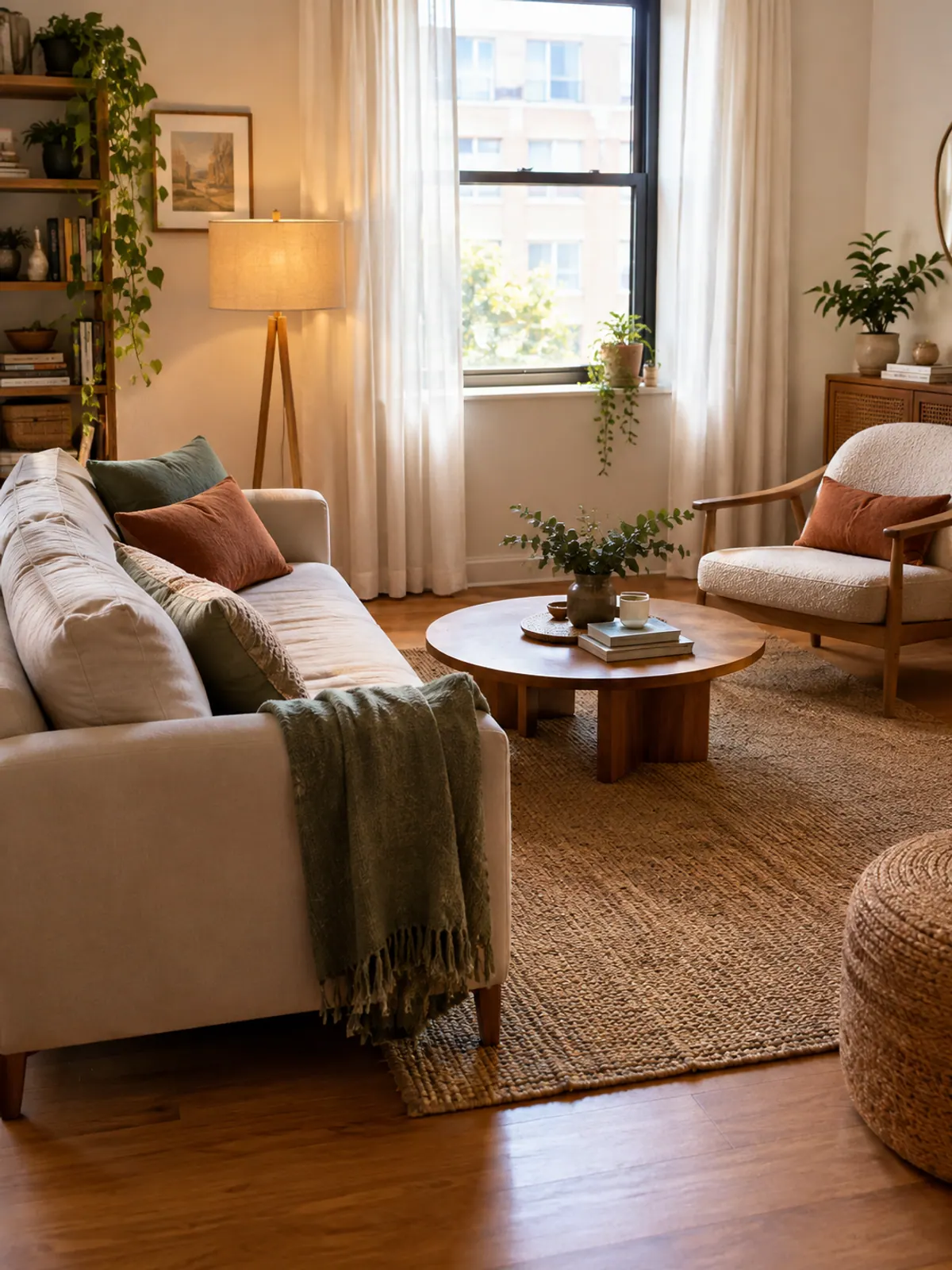
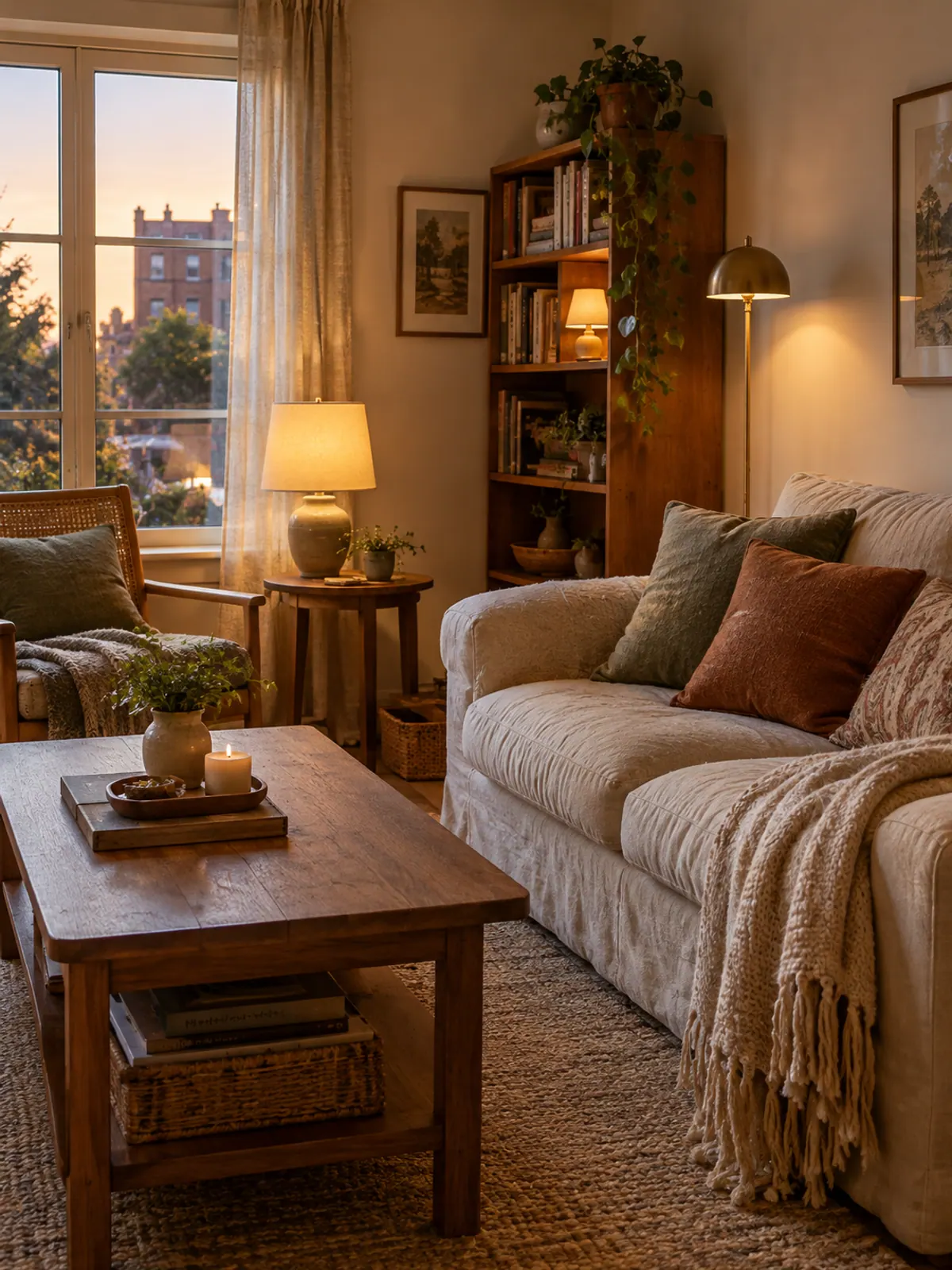
Lighting, the rug and textiles change the most for the least. Layered lamps change how the room feels every evening, and a rug that is the right size makes furniture look planned.
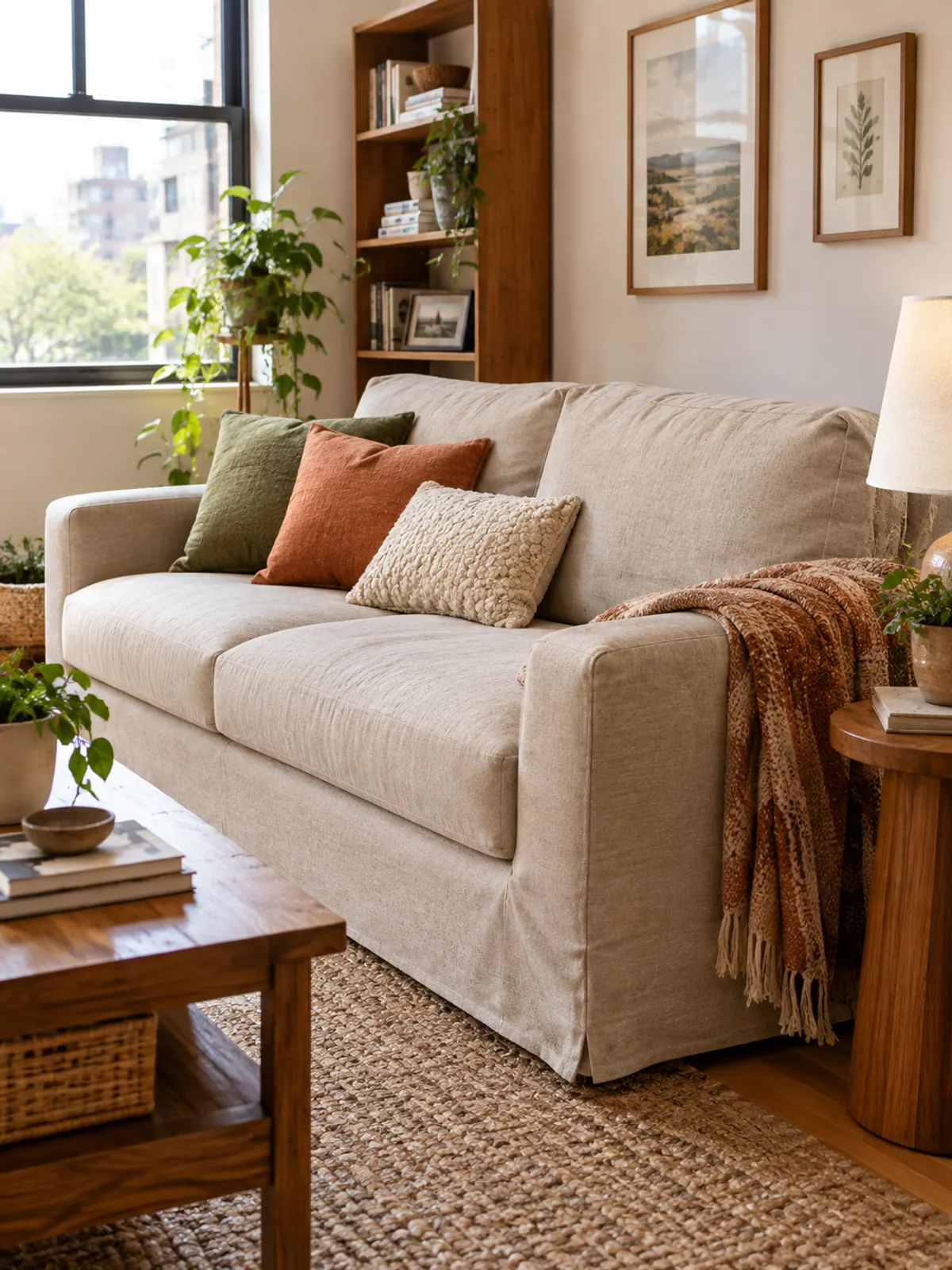
A slipcover can make an old sofa look new for a fraction of the cost of replacing it. Look for stretch covers sized to your sofa's arm style and width.
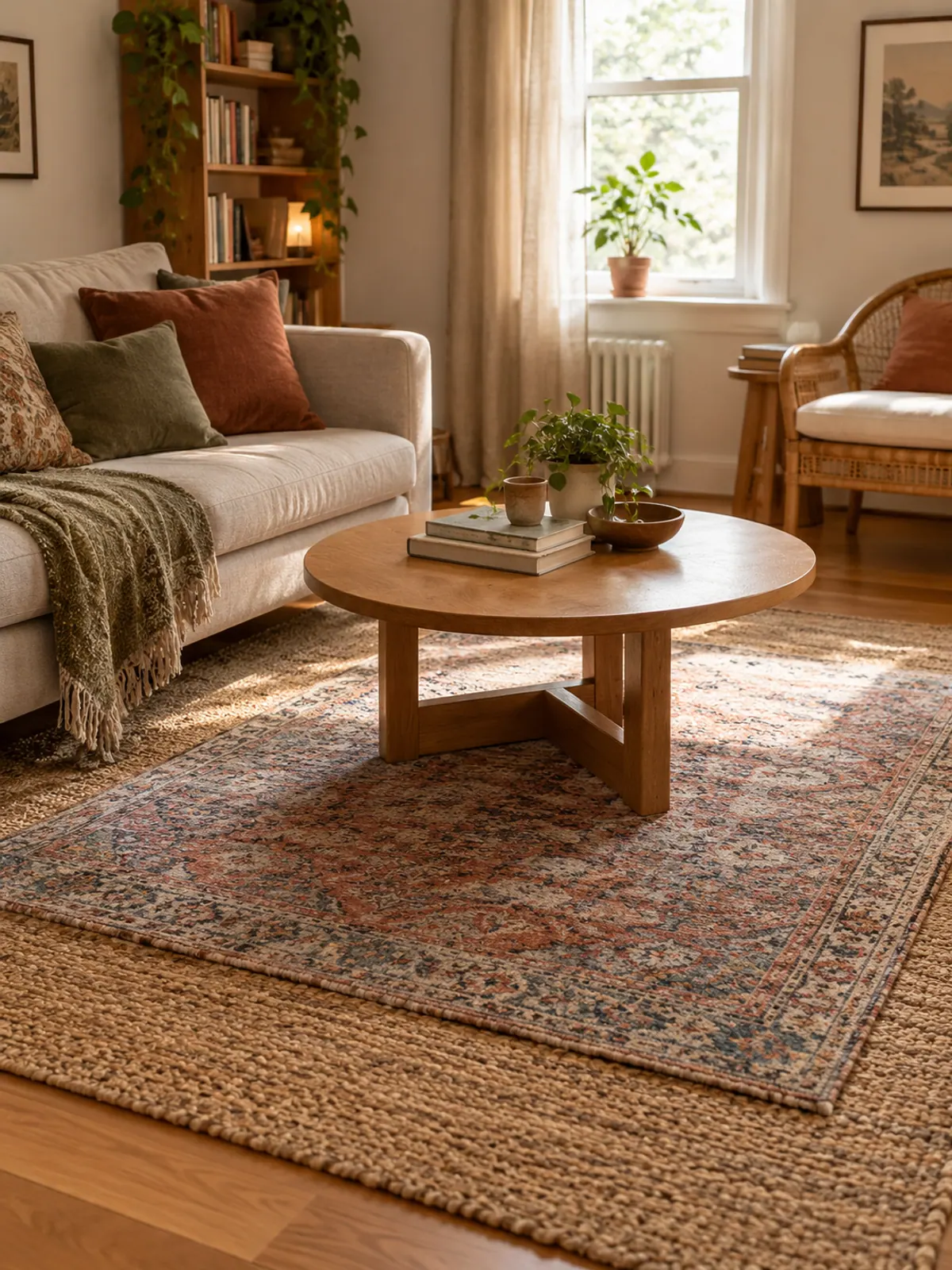
Layering a smaller patterned rug over a big, cheap jute rug gets you the right size and the pattern you want without buying one large patterned rug.
Budget makeover picks
- Start here
Warm white LED bulbs, 2700K
Typically $10 to $20 for a multi pack
The cheapest way to make a room feel warmer at night.
Check price on Amazon for Warm white LED bulbs, 2700K -
Plug in wall sconce
Typically $25 to $60
Wall light with no wiring, a good fit for renters with no ceiling fixture near seating.
Check price on Amazon for Plug in wall sconce -
Large jute area rug
Typically $90 to $250
The right size for less, and a base for layering.
Check price on Amazon for Large jute area rug -
Linen look curtains, long panels
Typically $25 to $60 per pair
Long panels hung high make the ceiling look taller.
Check price on Amazon for Linen look curtains, long panels -
Tension curtain rod
Typically $15 to $35
Hangs curtains without drilling in a window recess.
Check price on Amazon for Tension curtain rod -
Pillow covers
Typically $15 to $35 for a set
A color change for less than new pillows.
Check price on Amazon for Pillow covers -
Stretch sofa slipcover
Typically $30 to $80
Refreshes a tired sofa without replacing it.
Check price on Amazon for Stretch sofa slipcover -
Picture ledge shelf
Typically $20 to $45
Lean and swap art without a gallery of holes.
Check price on Amazon for Picture ledge shelf -
Removable picture hanging strips
Typically $8 to $15
Hangs light frames and mirrors with no nails.
Check price on Amazon for Removable picture hanging strips
Example budgets: $100, $300 and $500
These are examples to show the order of spending, not price promises. Adjust them to what you already own.
| Budget | What to buy | What stays free |
|---|---|---|
| $100 | Warm bulbs, one table lamp, pillow covers | Clearing, rearranging, moving art from other rooms |
| $300 | Above plus a jute rug, curtains on a tension rod | Clearing, rearranging, thrifted side table hunt |
| $500 | Above plus a plug in sconce, slipcover, picture ledge and a plant | Clearing, rearranging, a week of living with it first |
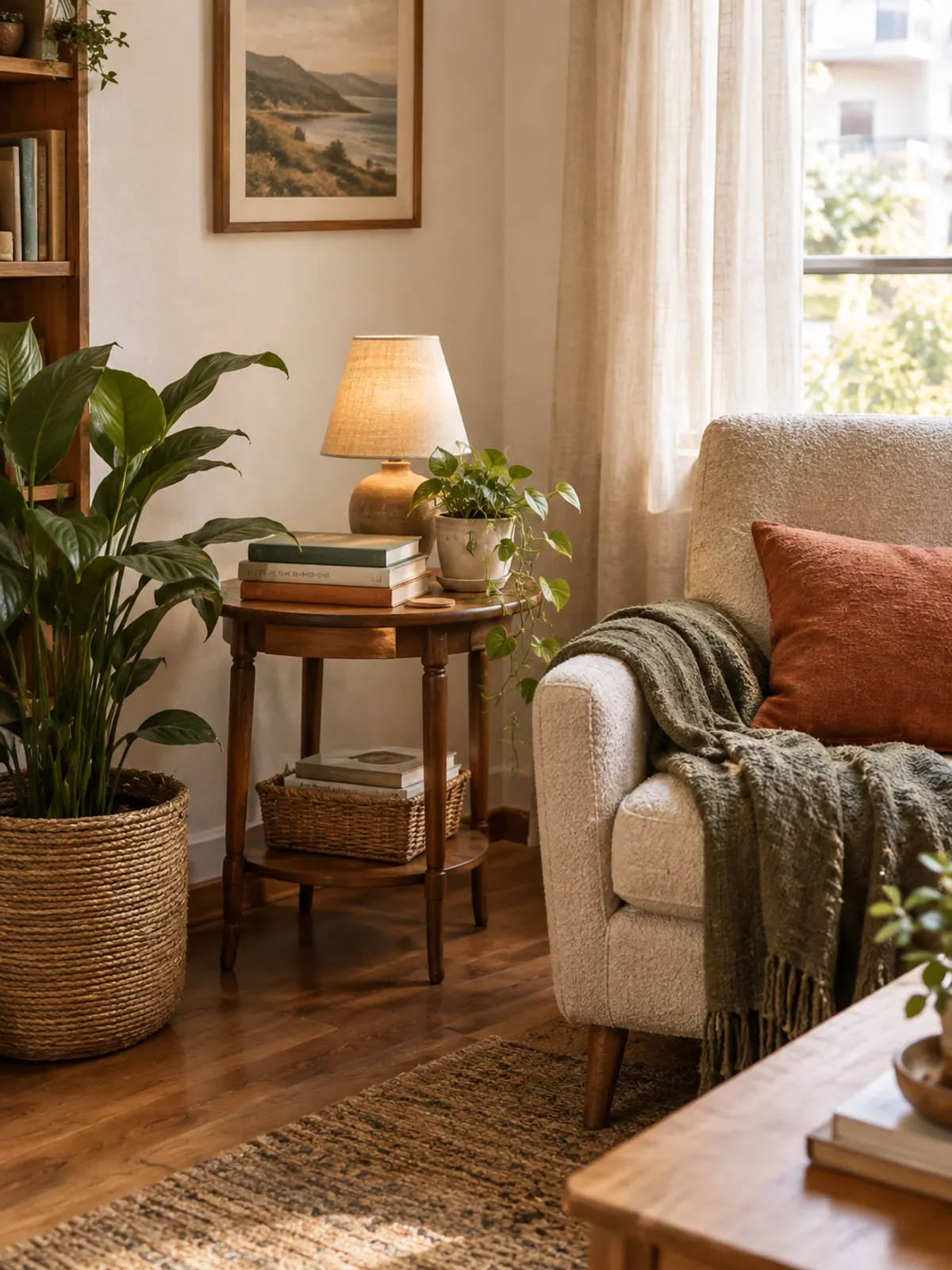
Thrift and resale apps are worth checking for side tables, lamps and frames. Solid wood pieces clean up well; skip upholstered items unless you can see them in person.
Mistakes that waste a budget
Skip these
Variations for different rooms
Very small living room. Skip the second rug and a bulky armchair. Spend on lighting and one larger print instead.
Shared or roommate living room. Agree on the color list first, then split the cost of the rug and lamps. Keep personal items in your own room.
Living room plus office. Put the desk lamp on a smart plug and add a basket to hide work things at night. For full layouts with a desk, see our studio apartment layout ideas with 7 floor plans.
Need a new sofa? Our sofa for small living room guide with 12 picks sorts options by wall width. For cozy styling ideas, see cozy living rooms for small apartments, and our renter guide to hanging curtains without drilling covers five no-damage methods.
Frequently asked questions
How do I give my living room a makeover on a budget?
Clear the room, rearrange the furniture and measure before you buy. Then spend in this order: warm lighting, a rug that fits, curtains hung high, new pillow covers or a slipcover, and art you can lean or hang without nails.
What should I spend money on first in a living room?
Lighting. Two or three lamps at different heights with warm bulbs change how the room feels every evening. A rug sized so the front legs of the seats sit on it comes next.
How can renters update a living room without painting?
Use textiles, lighting and removable fixes: a slipcover, new pillow covers, a large rug, curtains on a tension rod, plug-in sconces and art on a picture ledge or removable strips. Keep the original hardware to put back at move-out.
How much does a living room makeover cost?
It depends on what you already own. As an example, about $100 can cover warm bulbs, a lamp and pillow covers, about $300 adds a rug and curtains, and about $500 adds a sconce, a slipcover and a picture ledge.
How do I make a cheap living room look expensive?
Use fewer, larger pieces, hang curtains high and wide, choose a rug big enough for the furniture and light the room with lamps instead of one overhead light. A short, consistent color list ties it all together.
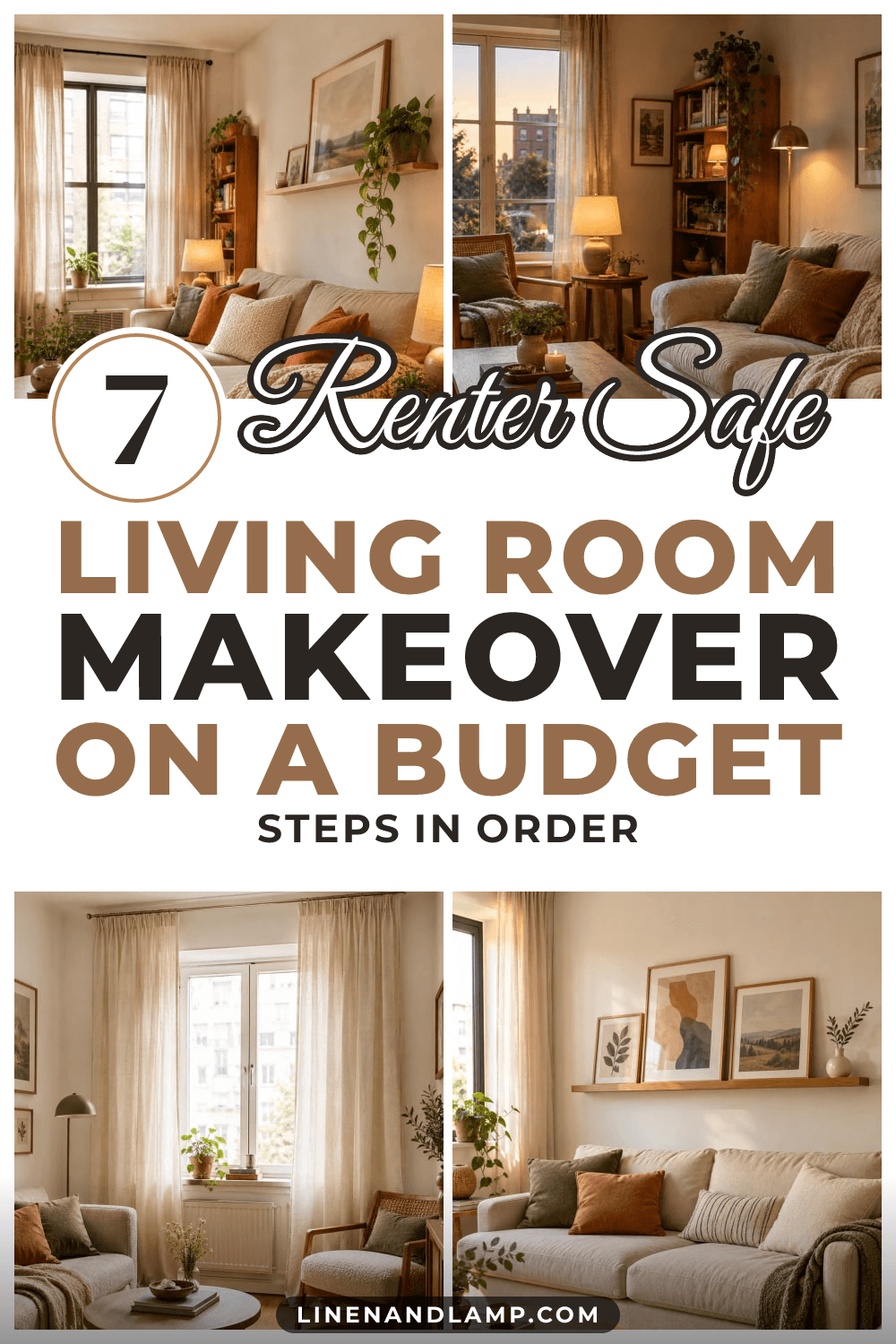
Save it for later
Pin this to your Living Room board so it's there when you need it.
Save to Pinterest