This post contains affiliate links. As an Amazon Associate we earn from qualifying purchases, at no extra cost to you. Read our disclosure.
Key takeaways
- Rod height: 4 to 6 inches above the frame, or two-thirds of the way from the frame to the ceiling.
- Rod width: 8 to 12 inches past the frame on each side, 3 to 6 inches in a tight corner.
- Length: hems should kiss the floor or float no more than 1/2 inch above it.
- Fullness: total panel width about 2x the rod span, so two panels per window.
- Clip rings add 1 1/2 to 2 inches of drop; grommet headers take about 1 1/2 inches off the top.
In this post12 sections
- The short answer: how high and how wide to hang curtains
- Quick facts: curtain rules by ceiling height (8, 9 and 10 ft)
- How high to hang curtains above the window
- How far the rod should extend past the frame
- How long curtains should be, and how to measure for them
- How many panels you need: width and fullness
- Rods, rings, clips and grommets: what changes the numbers
- How to hang curtains properly in a rental (the no-drill version)
- Curtain hanging mistakes that make a room look shorter
- Related questions: 9 ft ceilings, sliding doors, over blinds
- Shop the curtain hardware list
- FAQ
The short answer: how high and how wide to hang curtains
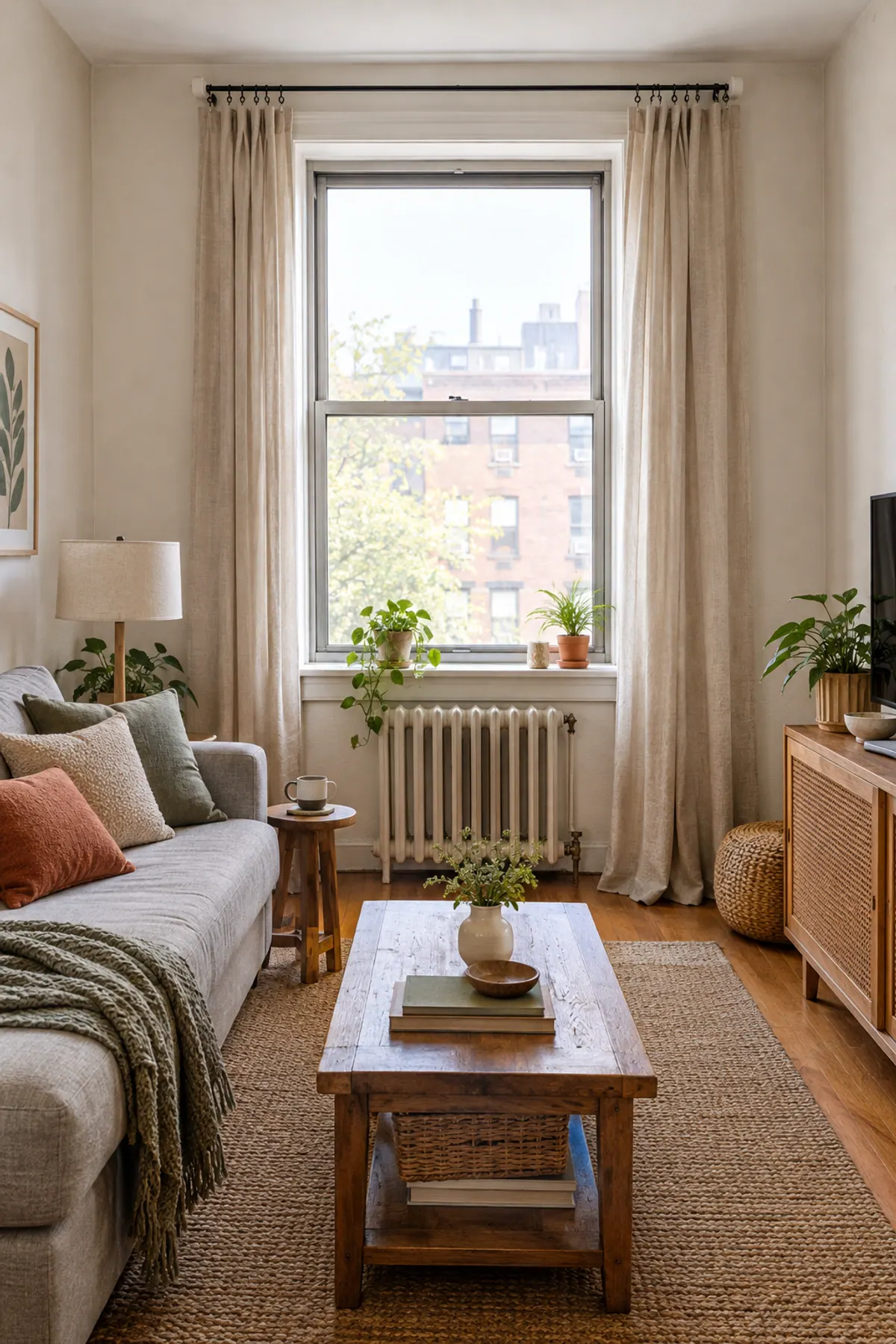
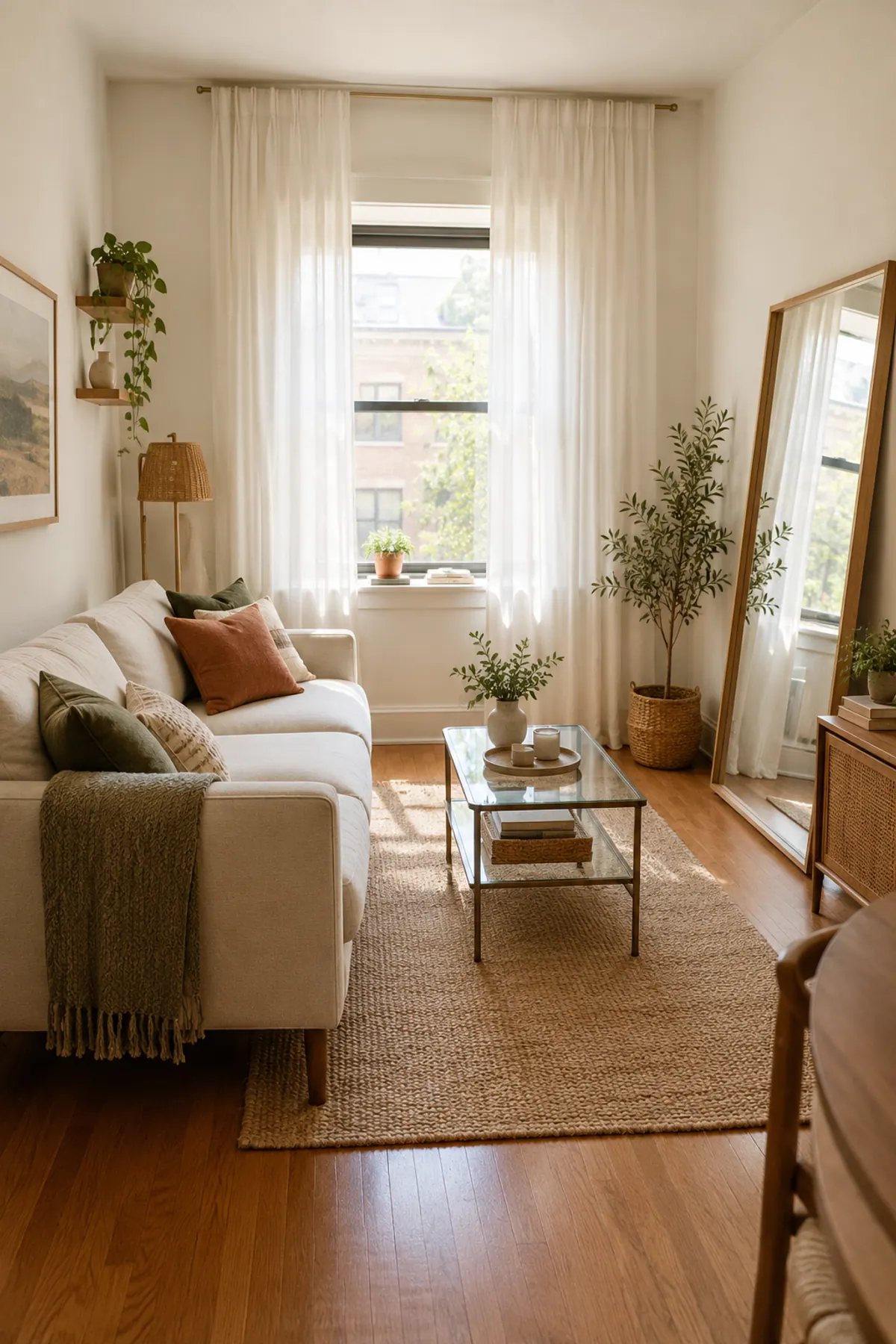
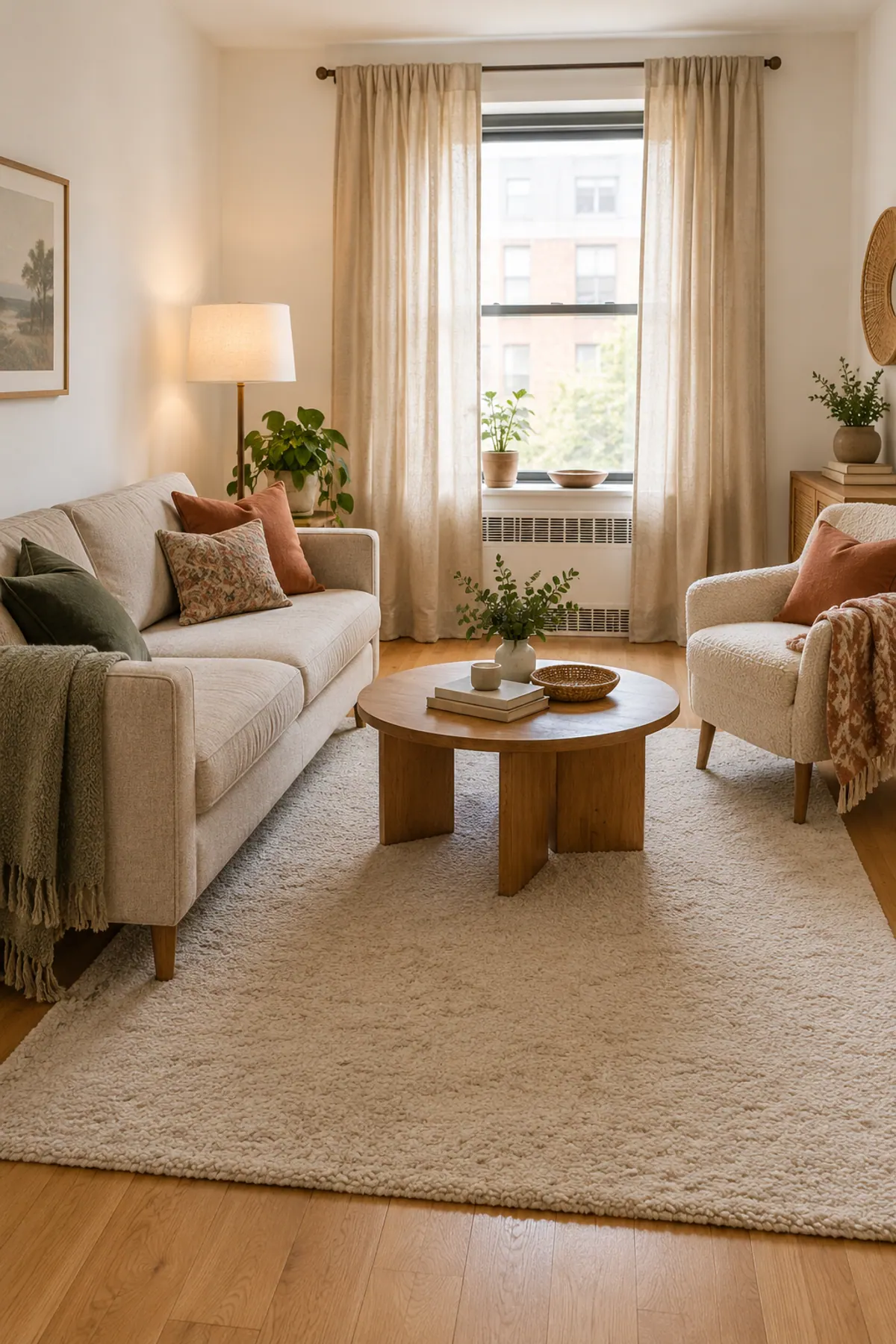
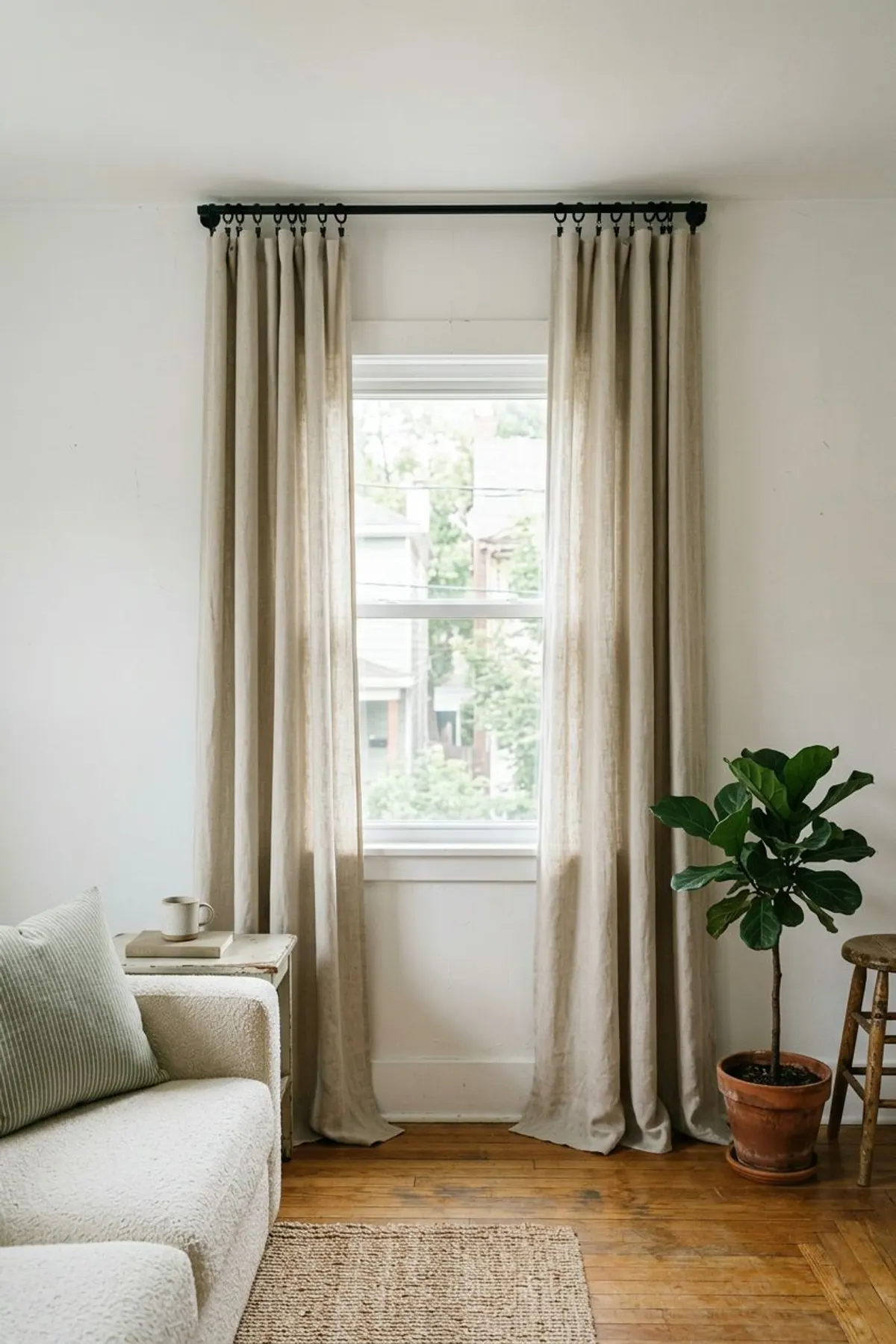
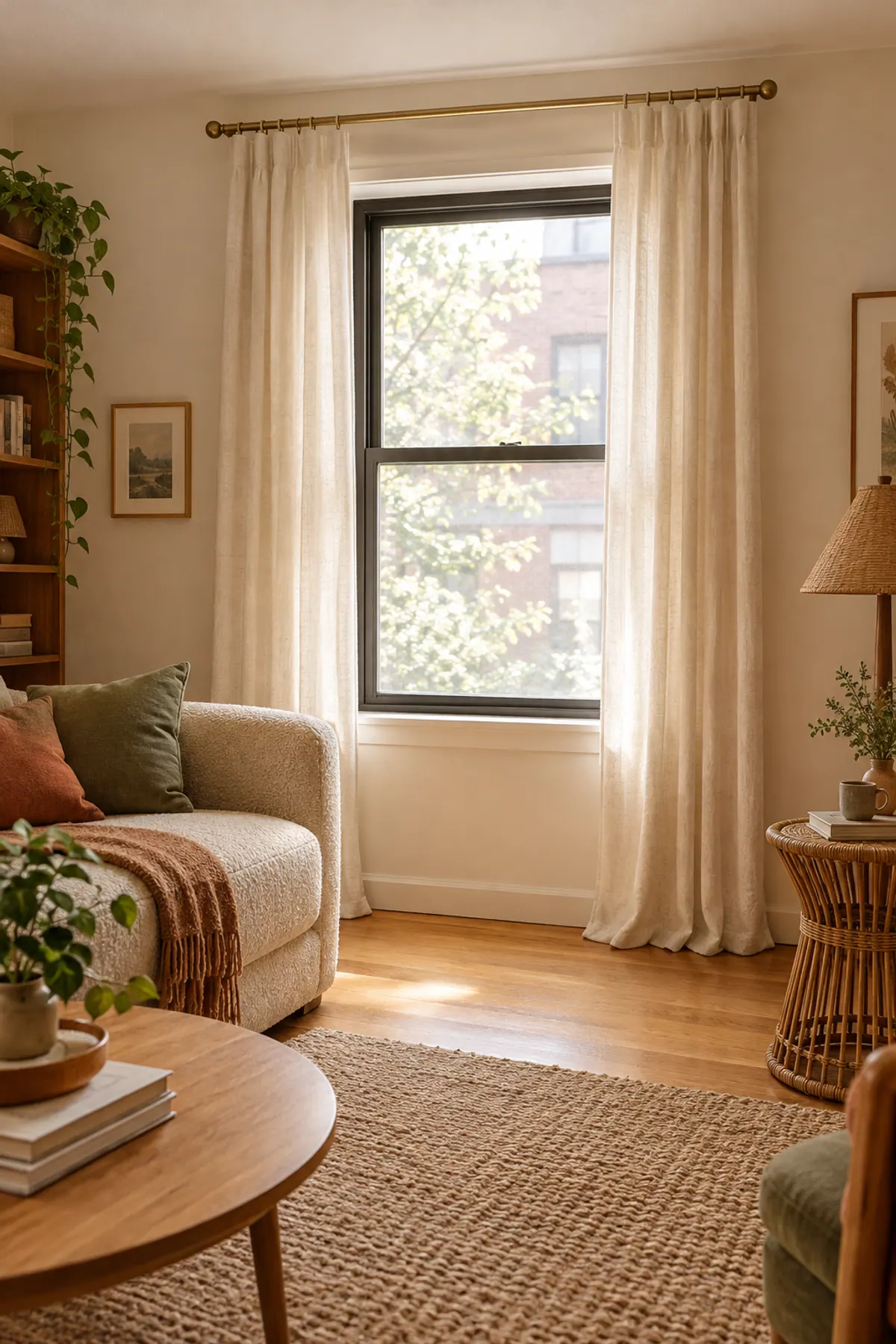
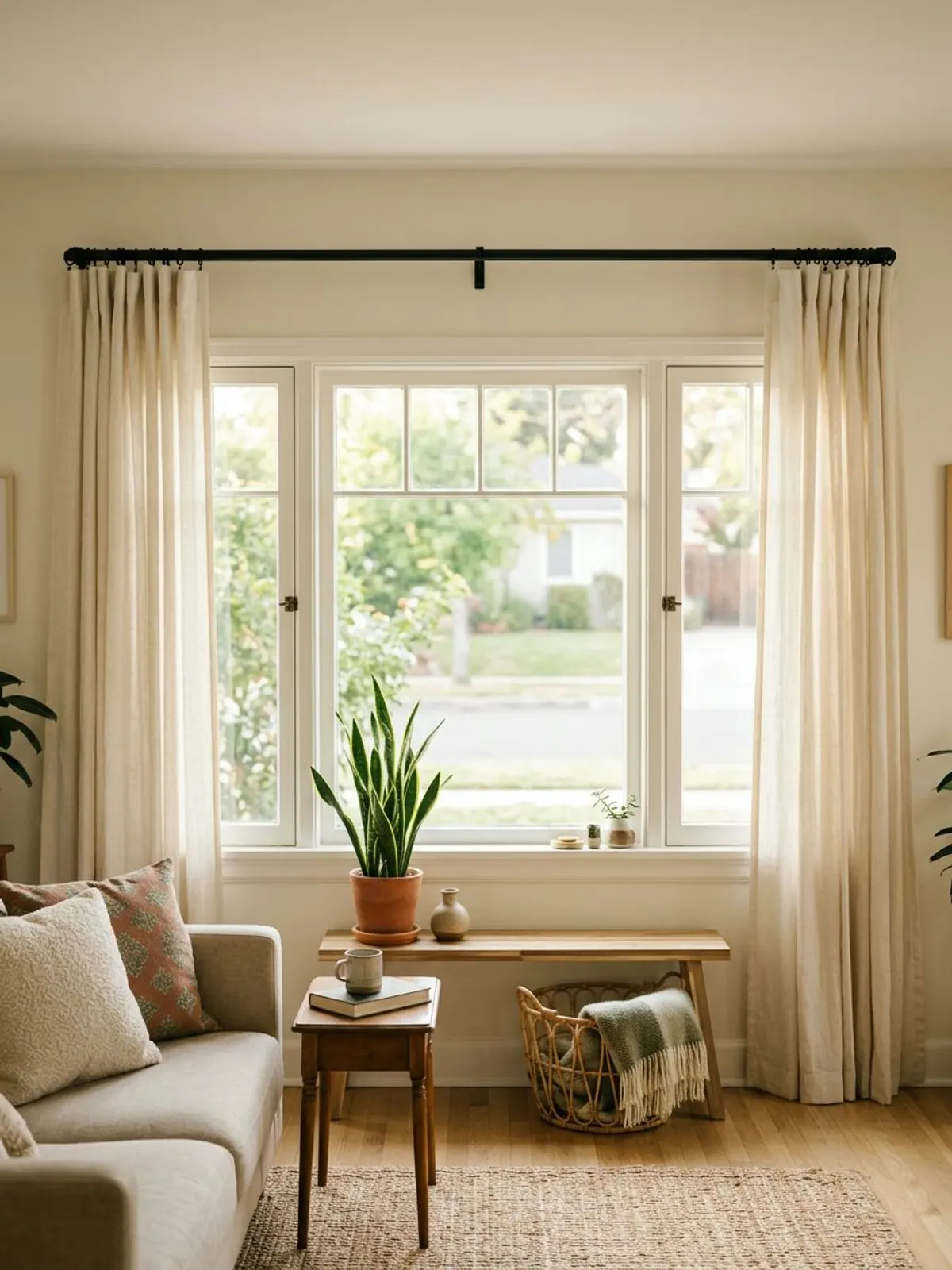
Hang the rod 4 to 6 inches above the top of the window frame, or about two-thirds of the way between the frame and the ceiling, whichever is higher. Extend it 8 to 12 inches past the frame on each side, and buy panels long enough to touch the floor.
Those three moves make the window look taller and wider, and they let the panels stack beside the glass instead of over it. The fourth rule is fullness: about twice the rod span in fabric, which usually means two panels, one per side.
Quick facts: curtain rules by ceiling height (8, 9 and 10 ft)
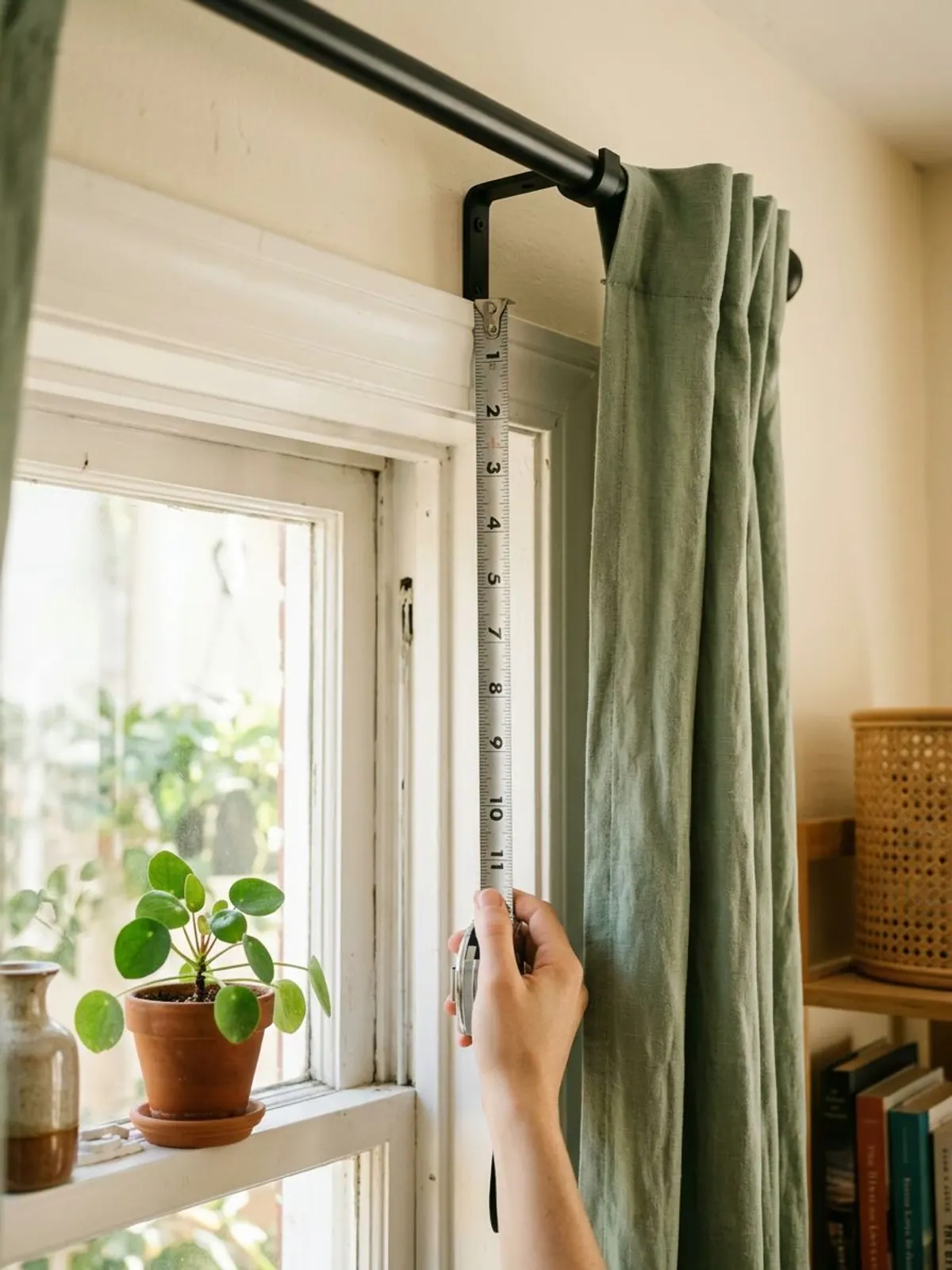
The numbers below assume a standard window whose frame tops out around 80 to 84 inches, which is the common height in US apartments. Panel lengths are the sizes stores actually sell (84, 96, 108 and 120 inches), and the rod heights are where each one kisses the floor. Labeled length and true length can differ by an inch, so measure the panel before you drill.
| Ceiling | Rod height from floor | Rod past frame, each side | Grommet or rod-pocket panel | Panel on clip rings |
|---|---|---|---|---|
| 8 ft (96 in) | 91 to 93 in (3 to 5 in below the ceiling) | 8 to 12 in | 96 in; breaks 1 to 3 in on the floor, or hem to kiss | 96 in hemmed about 4 in; rings add drop |
| 9 ft (108 in) | 98 to 102 in (6 to 10 in below the ceiling) | 8 to 12 in | 108 in hemmed 3 to 6 in, or 96 in with the rod at about 95 in | 96 in with the rod at about 98 in kisses with no hem |
| 10 ft (120 in) | 108 to 114 in (6 to 12 in below the ceiling) | 10 to 12 in | 120 in hemmed 4 to 8 in, or 108 in with the rod at about 107 in | 108 in with the rod at about 110 in kisses with no hem |
| Any height, tight corner | Same rules | 3 to 6 in minimum | Same as above | Same as above |
Why the two panel columns differ: a grommet or rod-pocket header sits about 1 1/2 inches above the rod, so the fabric only drops the panel length minus that. Clip rings hang the fabric 1 1/2 to 2 inches below the rod, so the same panel reaches farther. Pick the hanging style first, then the rod height.
Measuring a whole room, not one window? The Small-Space Room Layout Kit has a measuring sheet that records windows, doors and outlets on one page, plus a 1/4 in = 1 ft grid so the rod, the sofa and the rug get planned together.
How high to hang curtains above the window
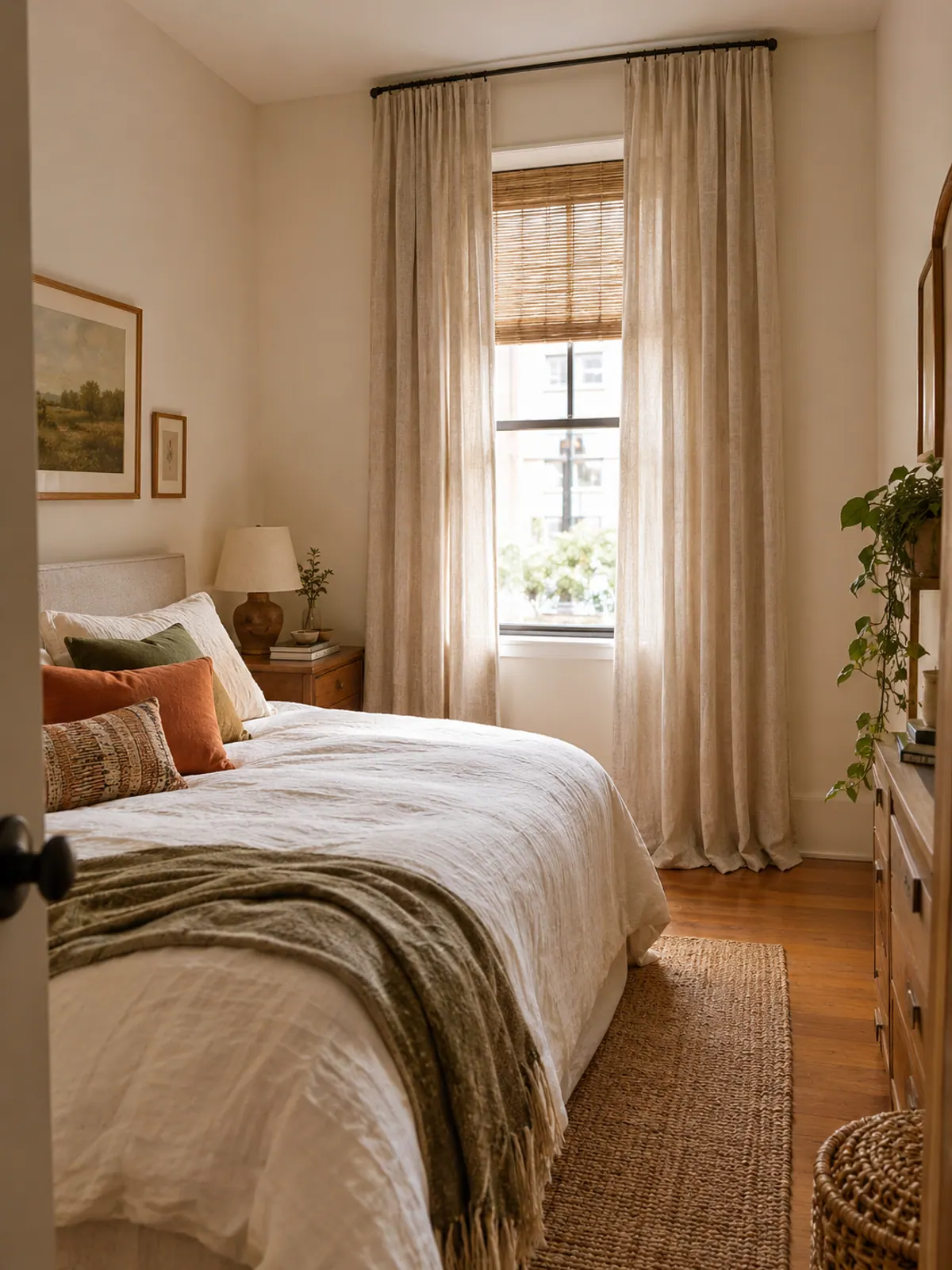
The minimum is 4 to 6 inches above the frame. The better target in most rooms is two-thirds of the way from the frame to the ceiling, because a rod that floats halfway up the gap can look undecided.
With an 8-foot ceiling and an 84-inch frame, two-thirds of the 12-inch gap puts the rod at about 92 inches, 4 inches below the ceiling. That lines up with the table above and leaves room for the bracket and finials. With crown molding, mount the rod just below the molding, never on it.
How far the rod should extend past the frame

Run the rod 8 to 12 inches past the frame on each side. When the curtains are open, a panel stacks about 8 to 12 inches wide, so this is the space it needs to clear the glass. More daylight, and the window reads wider.
In a tight corner or beside a door, 3 to 6 inches is the floor. Under that, the panel covers part of the glass all day. Finials add 2 to 4 inches per end on top of the rod length, so check the wall space before you buy a rod with big ones.
How long curtains should be, and how to measure for them
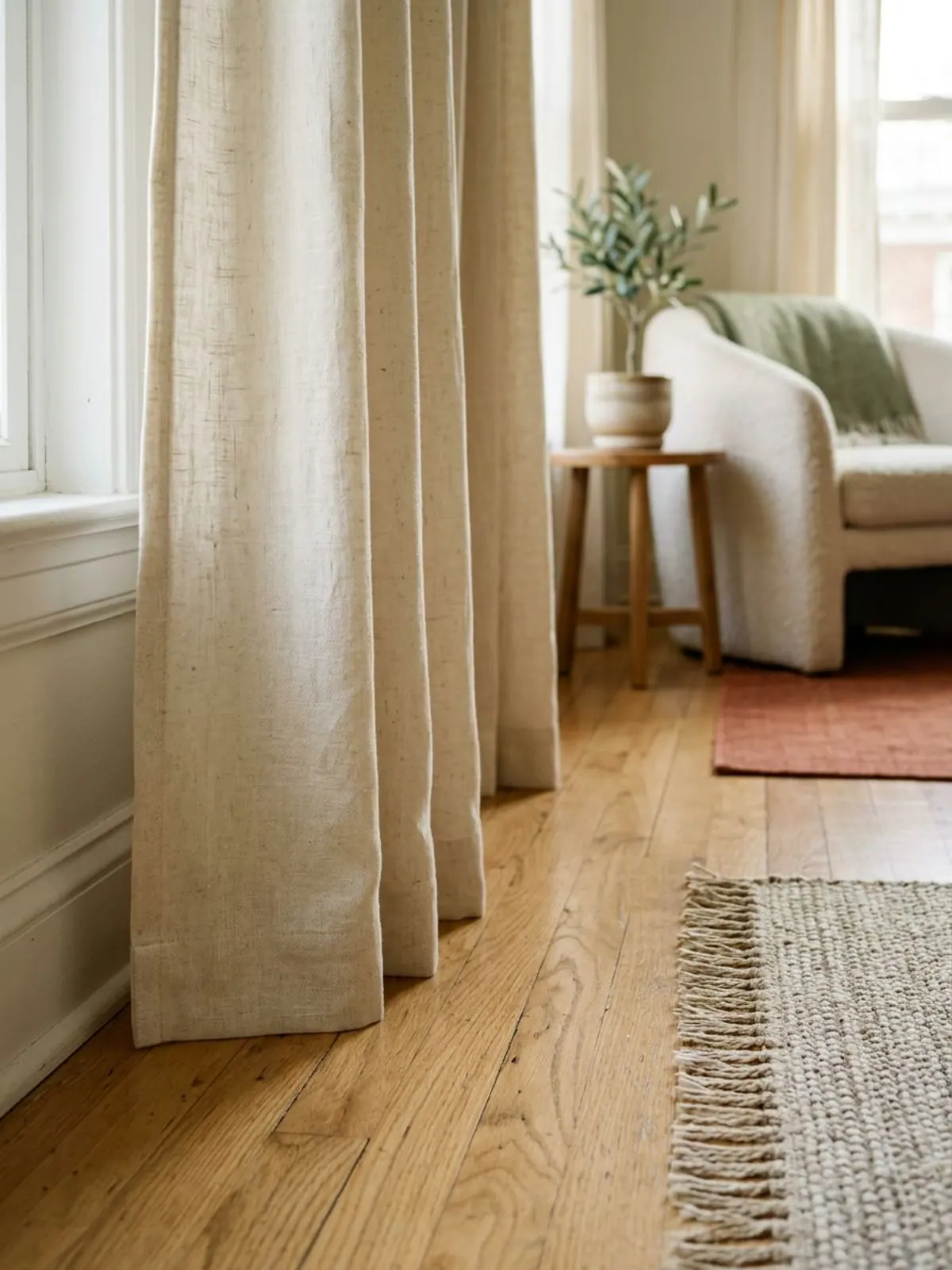
Measure from where the fabric top will hang to the floor, not from the bracket. For grommet and rod-pocket panels that point is about 1 1/2 inches above the rod; for clip rings it is 1 1/2 to 2 inches below the rod. Then choose a finish:
| Finish | Where the hem lands | Best for |
|---|---|---|
| Float | 1/4 to 1/2 in above the floor | Curtains you open daily, pets, robot vacuums |
| Kiss | Just touches the floor | The classic look; most living rooms and bedrooms |
| Break | 1/2 to 1 in of extra fabric | Hides an uneven floor; forgiving if the length is off |
| Puddle | 2 to 6 in of extra fabric | Formal rooms, panels that rarely move; collects dust |
| Sill or apron | 1/2 in above the sill, or 4 in below it | Kitchens, baths and windows over a baseboard heater |
Panels over a baseboard heater are the one case where short is right. Check the heater's manual for the clearance it lists, and if a floor-length panel would hang in front of or over it, use a sill-length panel or a shade instead.
How many panels you need: width and fullness

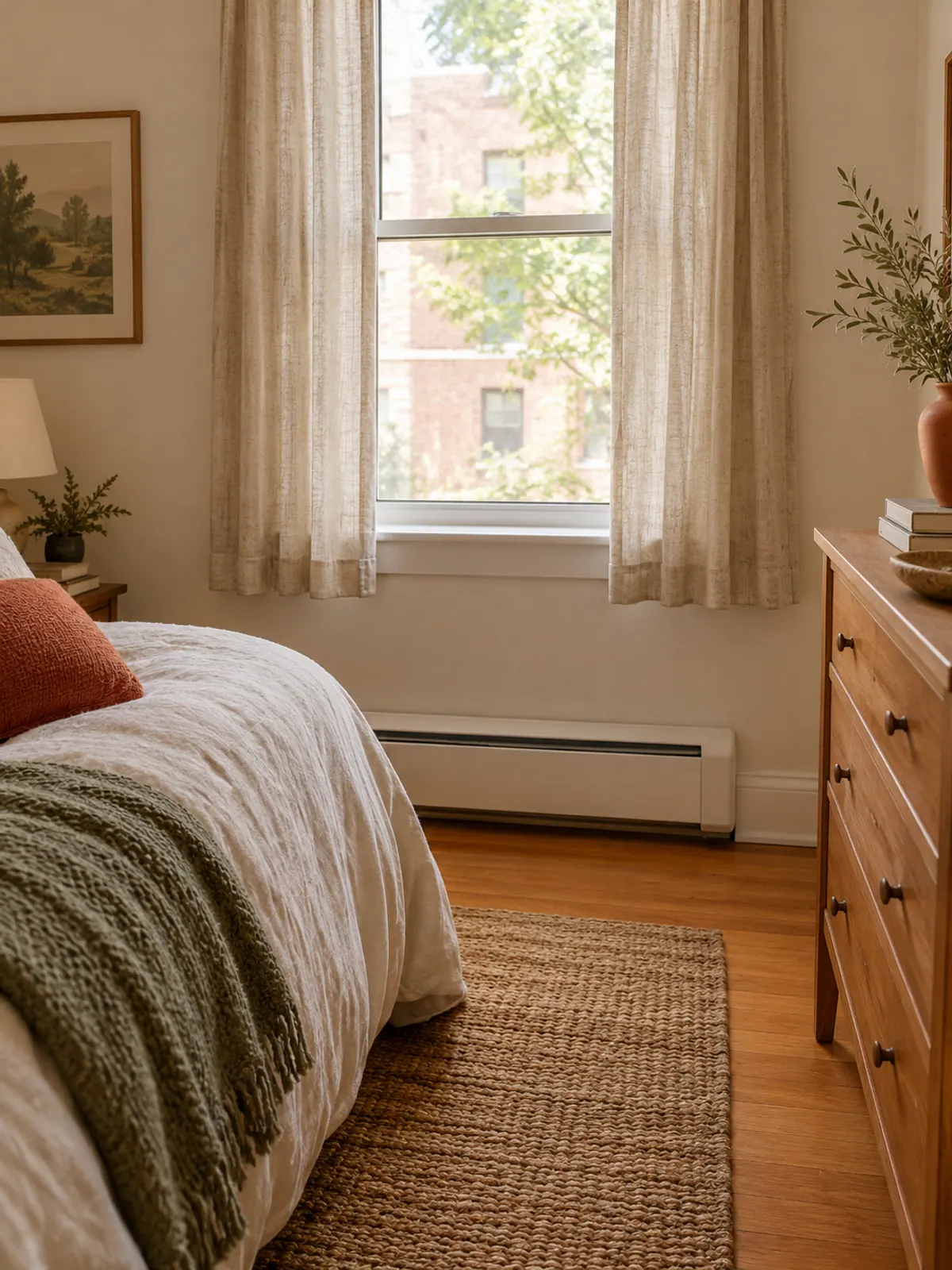
Fullness is the total fabric width divided by the rod span. 1.5x looks tailored and a little flat, 2x is the usual target, and 2.5x to 3x is for sheers that need to hide a lot. One panel pulled flat across a window is the most common reason curtains look cheap.
Worked example: a 36-inch window with a 10-inch extension each side gives a 56-inch rod span. Two 54-inch panels total 108 inches, which is about 1.9x, right in the 2x zone. For a 72-inch window (92-inch span), you need about 184 inches of fabric, so two 100-inch wide panels or four 50-inch ones.
Rods, rings, clips and grommets: what changes the numbers
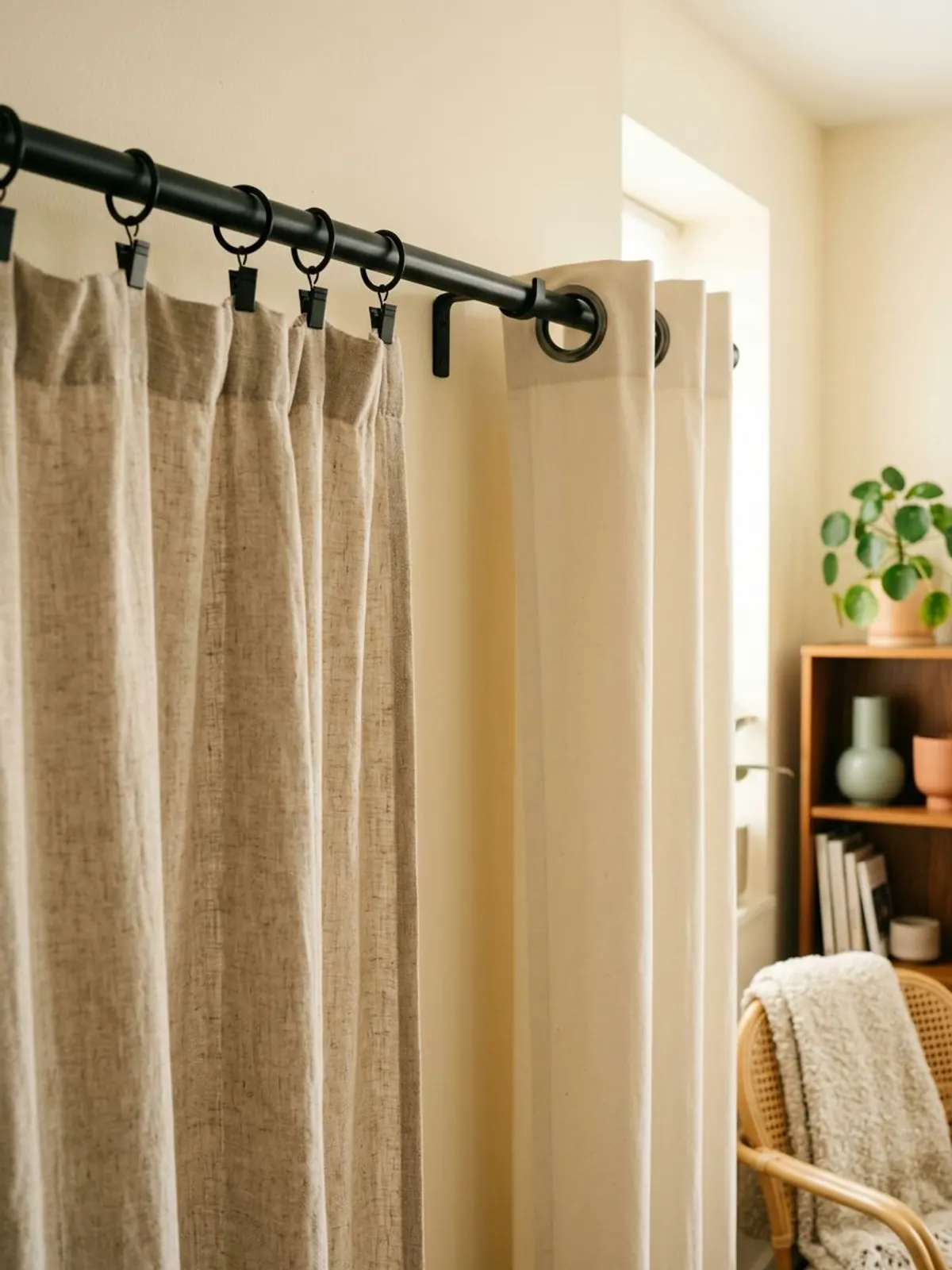
Use a rod of 1 to 1 1/4 inches in diameter for lined or blackout panels; thin 5/8-inch rods bow under them. Sheers and cafe curtains are fine on 1/2 to 3/4 inch. Every adjustable rod sags at its joint, so add a center bracket on any span over about 48 inches.
Rings with clips let you hang any flat panel and move 1 to 2 inches up or down just by clipping higher or lower, which is the easiest fix for a panel that is slightly short. Grommets slide fastest and stack tightest. Rod pockets are the hardest to open and close, so save them for stationary side panels. Back-tab panels pleat nicely but shorten the usable drop by about an inch.
How to hang curtains properly in a rental (the no-drill version)
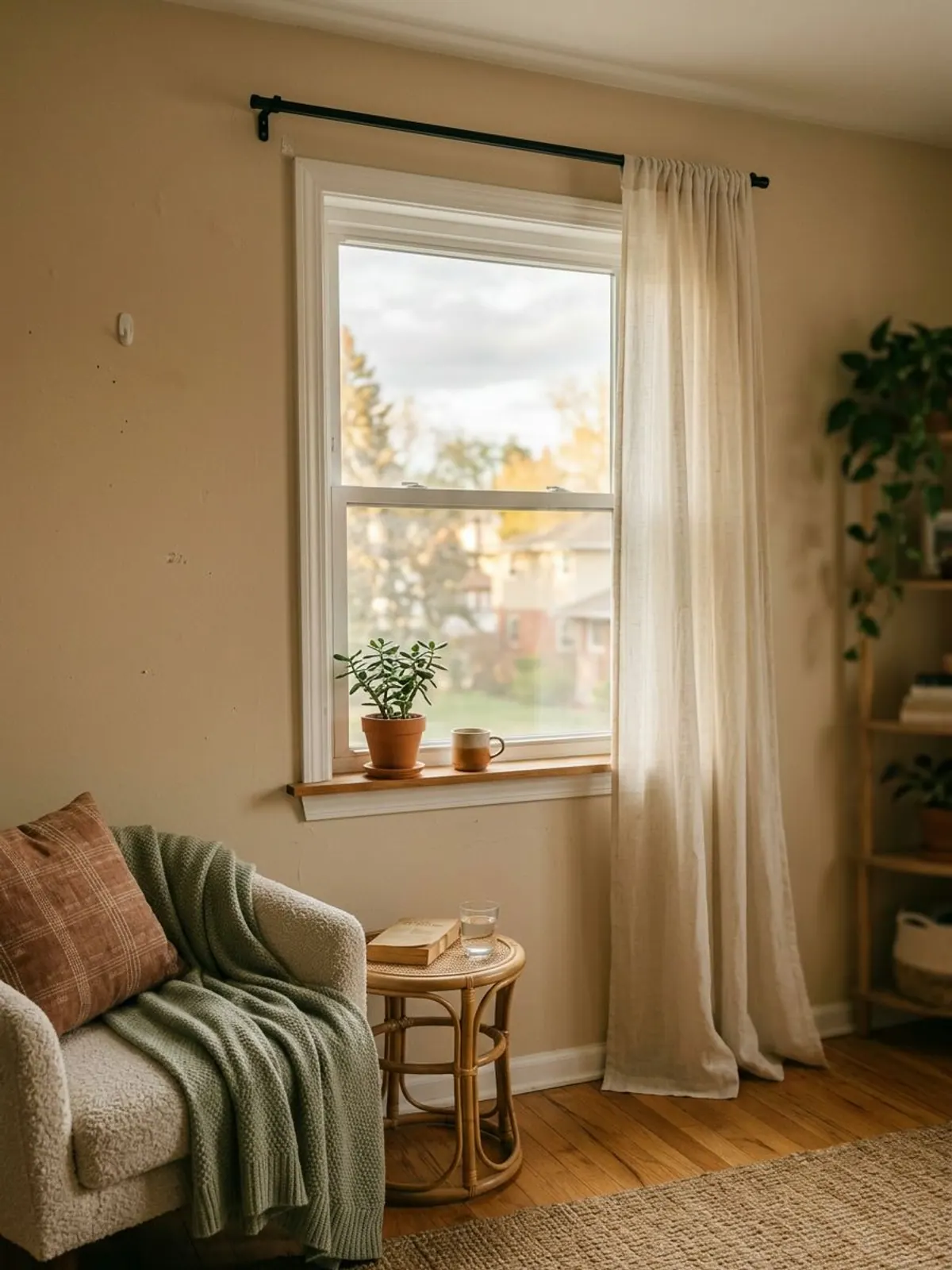
The height and width rules do not change for renters. What changes is the hardware, and most no-drill options fight the high-and-wide rule, so pick by weight. Light sheers and unlined linen (under 10 pounds with the rod) can go on adhesive rod hooks placed high and wide on a smooth painted wall.
Heavier lined panels need tap-in brackets on the trim or a tension rod inside the frame, and both put the rod low. The honest trade: hang heavy panels low with the full width they need, or go light and hang them high. Weight limits, costs and removal for each method are in how to hang curtains without drilling.
Curtain hanging mistakes that make a room look shorter

What we like
- Rod 4 to 6 in above the frame, or two-thirds of the way to the ceiling
- Rod 8 to 12 in past the frame so open panels clear the glass
- Hems that kiss or float within 1/2 in of the floor
- Two panels and about 2x fullness
- A 1 in rod with a center bracket over 48 in
- Panels measured from where the fabric hangs, not the bracket
Keep in mind
- Rod screwed to the frame itself, which caps the window visually
- Panels that stop 3 to 6 in above the floor (the high-water look)
- One panel stretched flat, or a rod so short the panels cover the glass
- Sagging middle on a long rod with no center support
- Puddling in a room with pets, kids or a robot vacuum
- Forgetting finials when checking the wall space beside the window
Most of these are the same tricks that make a small room look bigger: draw the eye up and out, and keep the floor line clean. Painter's tape on the wall at the planned rod height for a day is the cheapest way to check the look, the same trick we use in the rug size guide.
Related questions: 9 ft ceilings, sliding doors, over blinds
9-foot ceilings: 96-inch panels on clip rings with the rod at about 98 inches kiss the floor with no hem, which is why rings are the renter's friend in these rooms.
Sliding glass doors: same height rule, but extend the rod far enough on the fixed side to stack both panels there, often 24 to 30 inches, so the slider stays clear.
Over blinds: mount the rod high enough that the bracket clears the blind headrail, usually 2 to 3 inches above it, and choose brackets with a 4 to 6 inch projection so the panels hang straight. Holiday swaps use the same rod: indoor Christmas window decorations for apartments hang garland from clip rings on the same hardware.

Shop the curtain hardware list
These are the product types covered above. We haven't tested them hands-on and lengths vary by brand, so measure your window and read the listed panel length before you buy. See our disclosure.
Rods, panels and hardware for hanging curtains properly
- Start here
1 in adjustable curtain rod, 66 to 120 in, with center bracket
Typically $25 to $50
The diameter and the center support that stop sagging on wide windows.
Check price on Amazon for 1 in adjustable curtain rod, 66 to 120 in, with center bracket -
96 in curtain panels, 2 pack
Typically $30 to $70 a pair
The length for 8 ft ceilings with grommets, or 9 ft on rings.
Check price on Amazon for 96 in curtain panels, 2 pack -
108 in curtain panels, 2 pack
Typically $35 to $80 a pair
For 9 and 10 ft ceilings; hem to kiss.
Check price on Amazon for 108 in curtain panels, 2 pack -
Curtain rings with clips, 1 1/2 in, 28 pack
Typically $10 to $18
Adds 1 1/2 to 2 in of drop and fixes a slightly short panel.
Check price on Amazon for Curtain rings with clips, 1 1/2 in, 28 pack -
Grommet curtain panels, linen look
Typically $30 to $60 a pair
Slides easiest and stacks tightest beside the glass.
Check price on Amazon for Grommet curtain panels, linen look -
Iron-on hem tape
Typically $6 to $12
Shortens a 96 or 108 in panel to kiss the floor with no sewing.
Check price on Amazon for Iron-on hem tape -
No-drill curtain rod brackets
Typically $10 to $25
The renter version for light panels; check the weight limit.
Check price on Amazon for No-drill curtain rod brackets -
Laser distance measure
Typically $25 to $45
Floor-to-ceiling and floor-to-rod in one press, no ladder.
Check price on Amazon for Laser distance measure -
Stud finder with AC wire warning
Typically $20 to $40
Find wood behind the drywall before the bracket screws go in.
Check price on Amazon for Stud finder with AC wire warning
Planning the whole room before you drill? The free makeover planner has a measuring grid, a renter rules checklist and a shopping list with spaces for dimensions, so the curtain rod, the sofa and the rug get decided together.
Frequently asked questions
How high should curtains be hung above a window?
At least 4 to 6 inches above the top of the frame, or about two-thirds of the way from the frame to the ceiling, whichever is higher. With crown molding, mount just below the molding. The rod should never sit on the frame itself.
How far should a curtain rod extend past the window?
8 to 12 inches past the frame on each side, which is the width an open panel needs to stack beside the glass. In a tight corner, 3 to 6 inches is the minimum. Add 2 to 4 inches per end for finials when you check the wall space.
Should curtains touch the floor?
Yes, for most rooms. Hems should kiss the floor or float no more than 1/2 inch above it. A 1/2 to 1 inch break hides uneven floors, and a 2 to 6 inch puddle suits formal panels that rarely move. Windows over a baseboard heater are the exception; use sill length there.
How wide should curtains be compared to the window?
Total panel width should be about 2 times the rod span (1.5x for a tailored look, 2.5x to 3x for sheers). For a 56-inch rod span, two 54-inch panels give about 1.9x fullness. One flat panel stretched across a window is the most common mistake.
How high do you hang curtains with 9 foot ceilings?
Put the rod 98 to 102 inches from the floor, about 6 to 10 inches below the ceiling. 96-inch panels on clip rings with the rod at about 98 inches kiss the floor with no hem; 108-inch panels on grommets need a 3 to 6 inch hem.
How high do you hang curtains with an 8 foot ceiling?
Mount the rod 91 to 93 inches from the floor, 3 to 5 inches below the ceiling. 96-inch grommet or rod-pocket panels break 1 to 3 inches on the floor from there, which looks fine, or hem them to kiss. On clip rings the same panels need about a 4-inch hem.
Save it for later
Pin this to your Renter-Friendly Decor board so it's there when you need it.
Save to Pinterest