This post contains affiliate links. As an Amazon Associate we earn from qualifying purchases, at no extra cost to you. Read our disclosure.
Key takeaways
- Plan for about 4 to 8 pairs of daily shoes at the door, per Homestyler, and store the rest elsewhere.
- Most ideas here are no-drill: racks, trays, baskets, cubes, benches and cabinets.
- Wall ledges and hanging pockets need screws or hooks, so check your lease first.
- Check the listing for depth and weight limits; many sellers do not state them clearly.
- Add a boot tray for winter and a guest basket for holiday hosting.
In this post25 sections
- Measure first: how many pairs and how deep
- Open shoe storage you can set up in minutes
- 1. Use a three-tier metal rack against one wall
- 2. Add a boot tray for winter
- 3. Stack shoe cubes into a wall
- 4. Corral casual pairs in a basket
- Benches and furniture that double as shoe storage
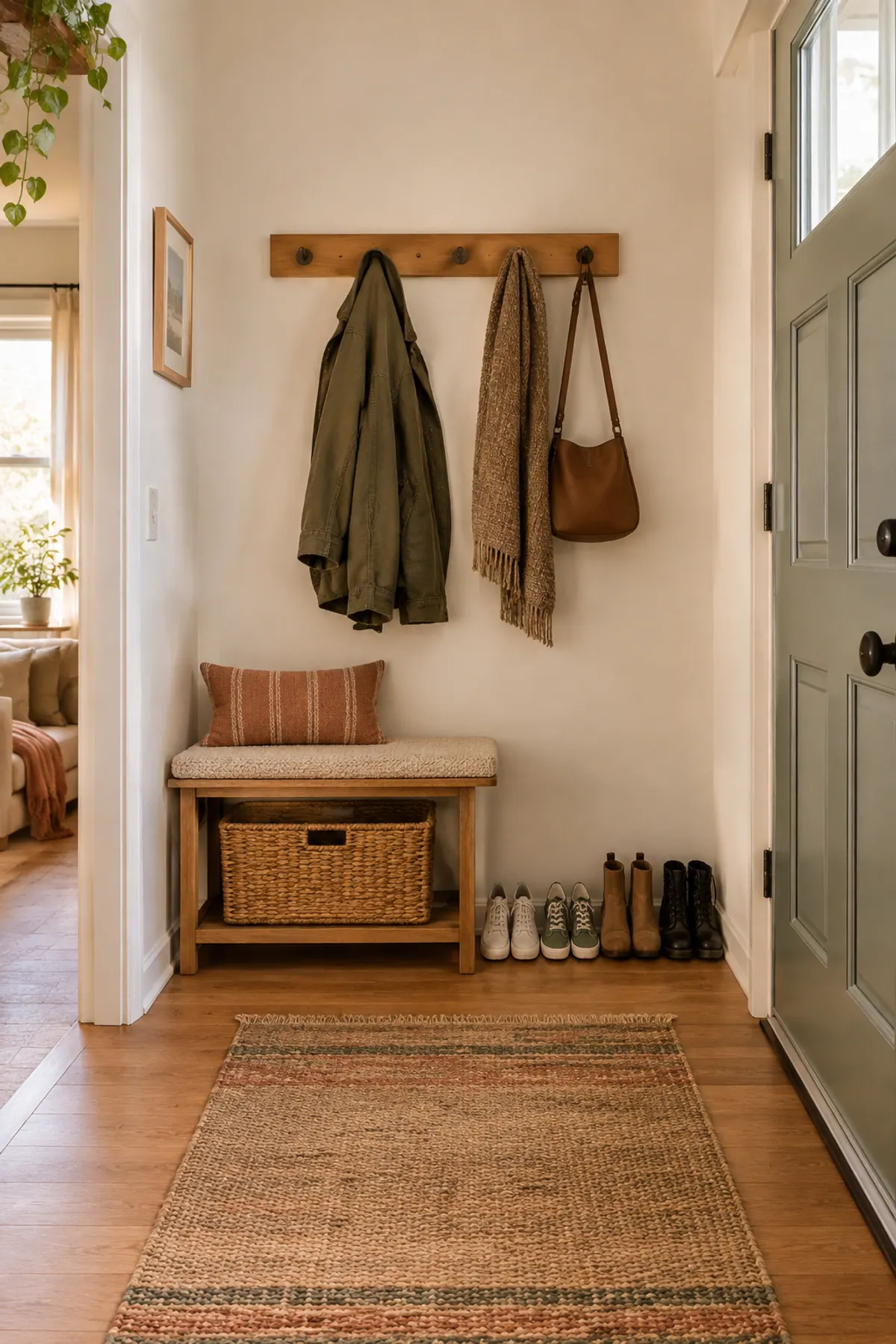
- 5. Choose a bench with cubbies
- 6. Slip a console table over baskets
- 7. Pick a storage ottoman with a lid
- Hidden shoe storage for a clean entry
- 8. Install a slim tilt-out shoe cabinet
- 9. Use a louvered shoe cabinet
- Over-the-door and wall shoe storage
- 10. Hang an over-the-door organizer
- 11. Mount narrow shoe ledges
- 12. Hang a fabric pocket organizer on the wall
- If you have a closet near the door
- 13. Double the floor with adjustable shoe slots
- 14. Hang a closet shoe shelf from the rod
- 15. Use a guest basket by the bench
- Which shoe storage is right for your entry
- Set up a shoe station that stays tidy
- Shop shoe storage for a small entryway
- FAQ
Measure first: how many pairs and how deep
The best shoe storage for a small entryway is whatever holds your daily pairs inside the depth you can spare. Count the shoes you wear every week, then measure the wall width and how far a door swings.
Homestyler suggests planning for about 4 to 8 pairs of daily-use shoes at the door, per its small entryway shoe storage guide. Everything else can live in a closet or under a bed.
| Household | Daily pairs at the door | What that suggests |
|---|---|---|
| One person | About 4 to 6 | A slim rack or a two-tier bench |
| Two people | About 8 to 12 (example, 4 to 6 each) | A bench plus a basket, or a slim cabinet |
| Two people plus guests | Add a basket for guests | Bench with cubbies and a floor basket |
The middle row is an example, not a rule. Divide it by what actually sits by your door on a normal day, and move the rest to a closet.
Every item below has a drilling label, so you can tell at a glance what is safe for a lease. Always check the listing for depth and for weight limits, because adhesive and tension products vary.
Open shoe storage you can set up in minutes
Open racks and trays are the quickest fix. They also work best when the same few pairs get used every day.
1Use a three-tier metal rack against one wall
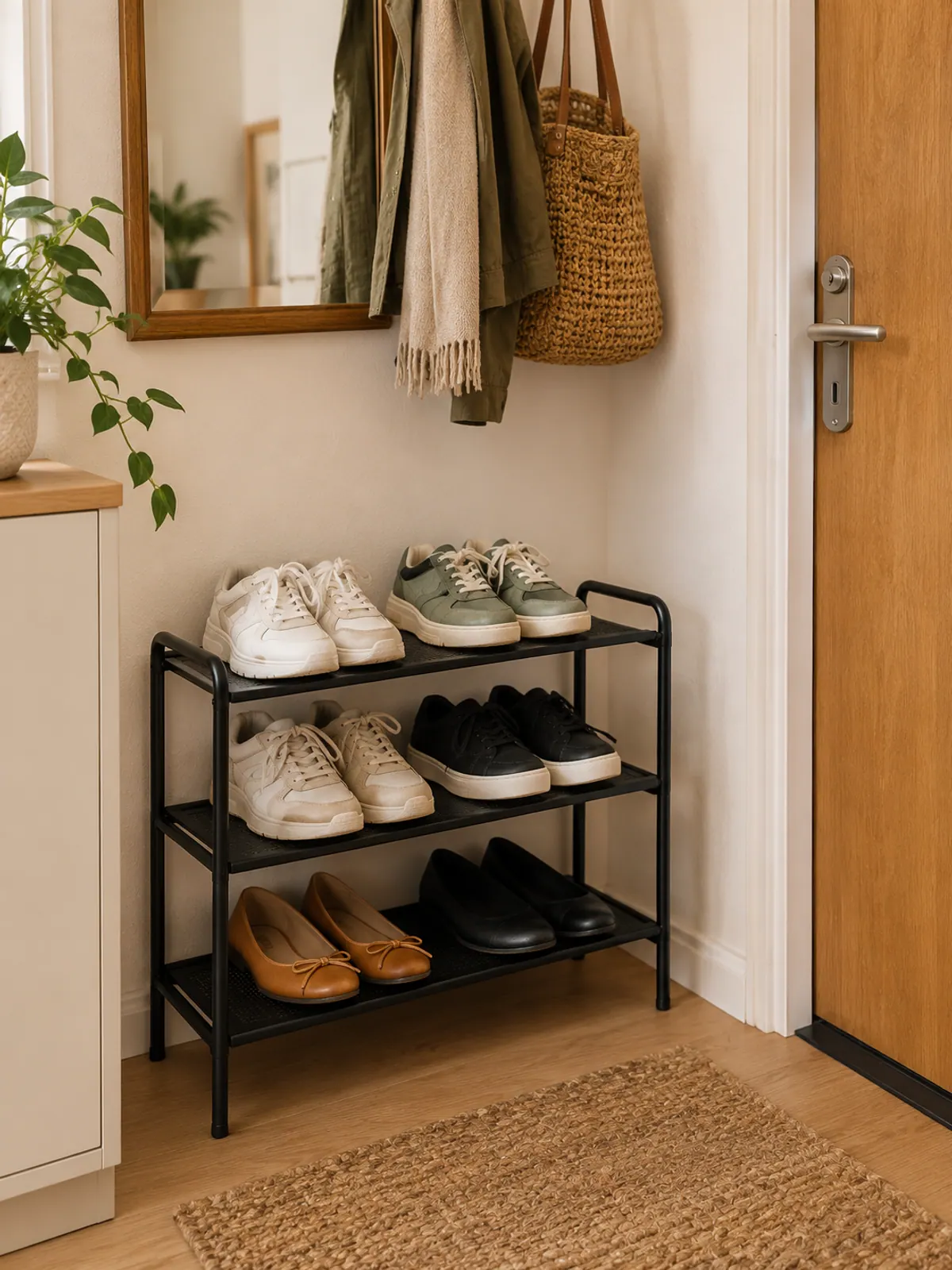
Drilling:
No-drill. It stands on the floor.
A stacked rack uses wall height and takes a footprint of about one shoe's length.
It shows every pair, which is useful for daily shoes and less so if the pile gets messy. Pick a rack with a shelf depth that fits your longest shoe.
- Put the pairs you wear most on the middle tier, where they are easiest to reach.
Cheap, freestanding and easy to move out.
2Add a boot tray for winter
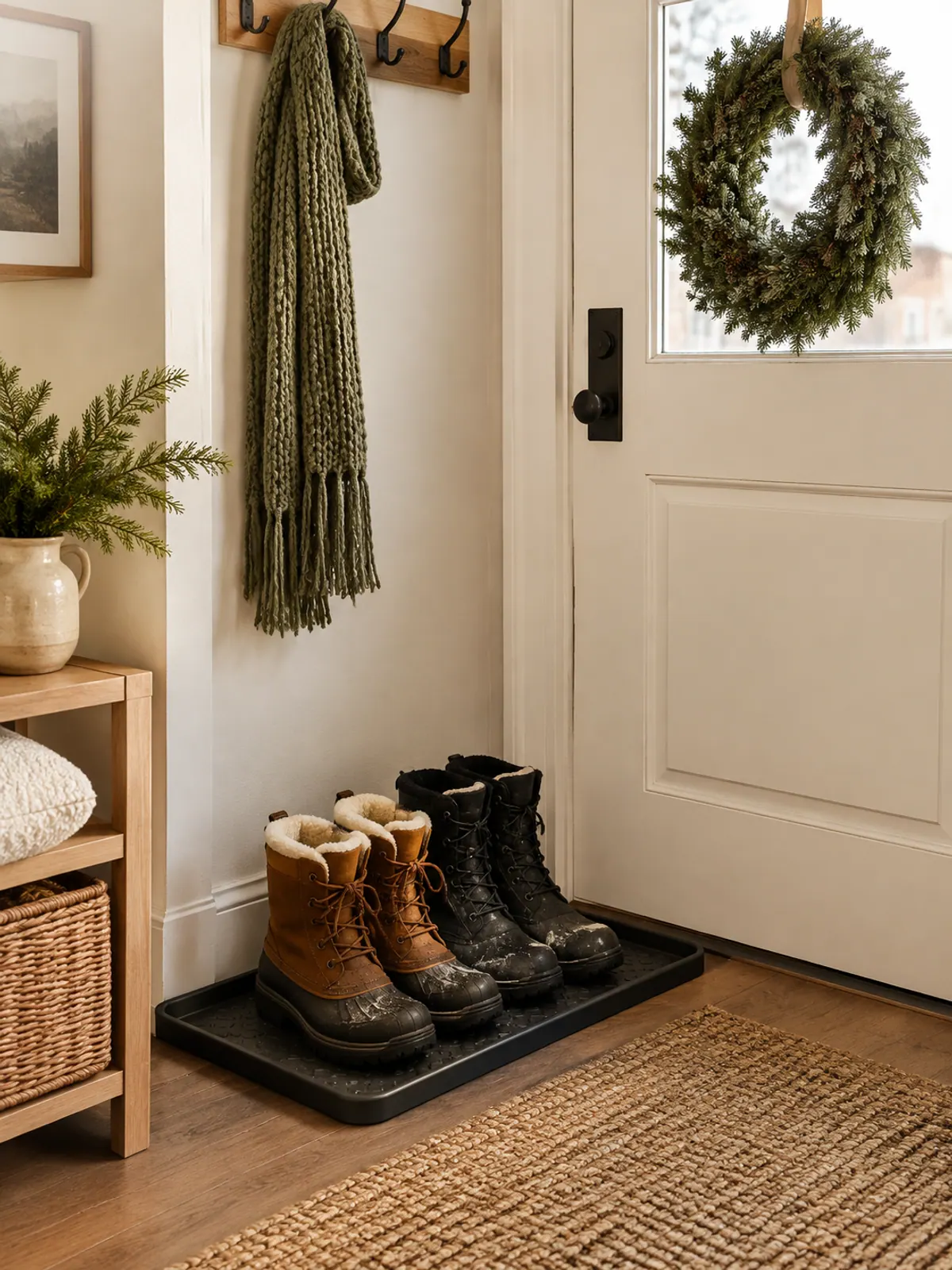
Drilling:
No-drill. It sits on the floor.
A tray catches the slush so the floor stays dry. Winter boots are the shoes that make a small entry look messy, so they earn their own spot.
- Tuck a small towel under the door for guests so they can wipe their feet.
Stops melted snow spreading to the floor.
3Stack shoe cubes into a wall
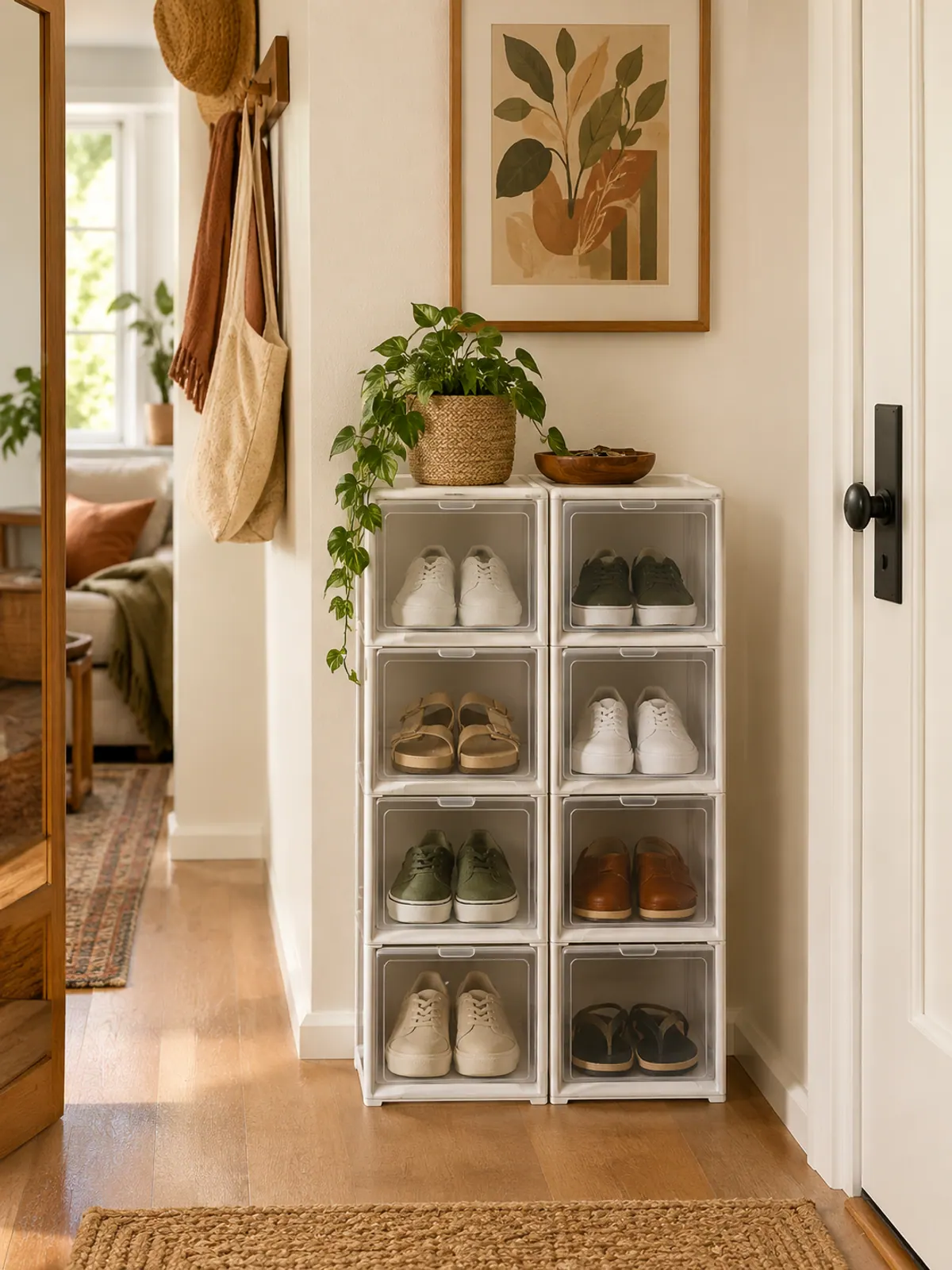
Drilling:
No-drill. If a set suggests wall anchors, skip them in a rental and keep the stack short.
Cubes let you build to the height you have and move them if you rearrange. Each cube holds about one pair.
- Keep stacks at three cubes tall unless the set can be anchored to the wall.
Modular and flexible for odd corners.
4Corral casual pairs in a basket
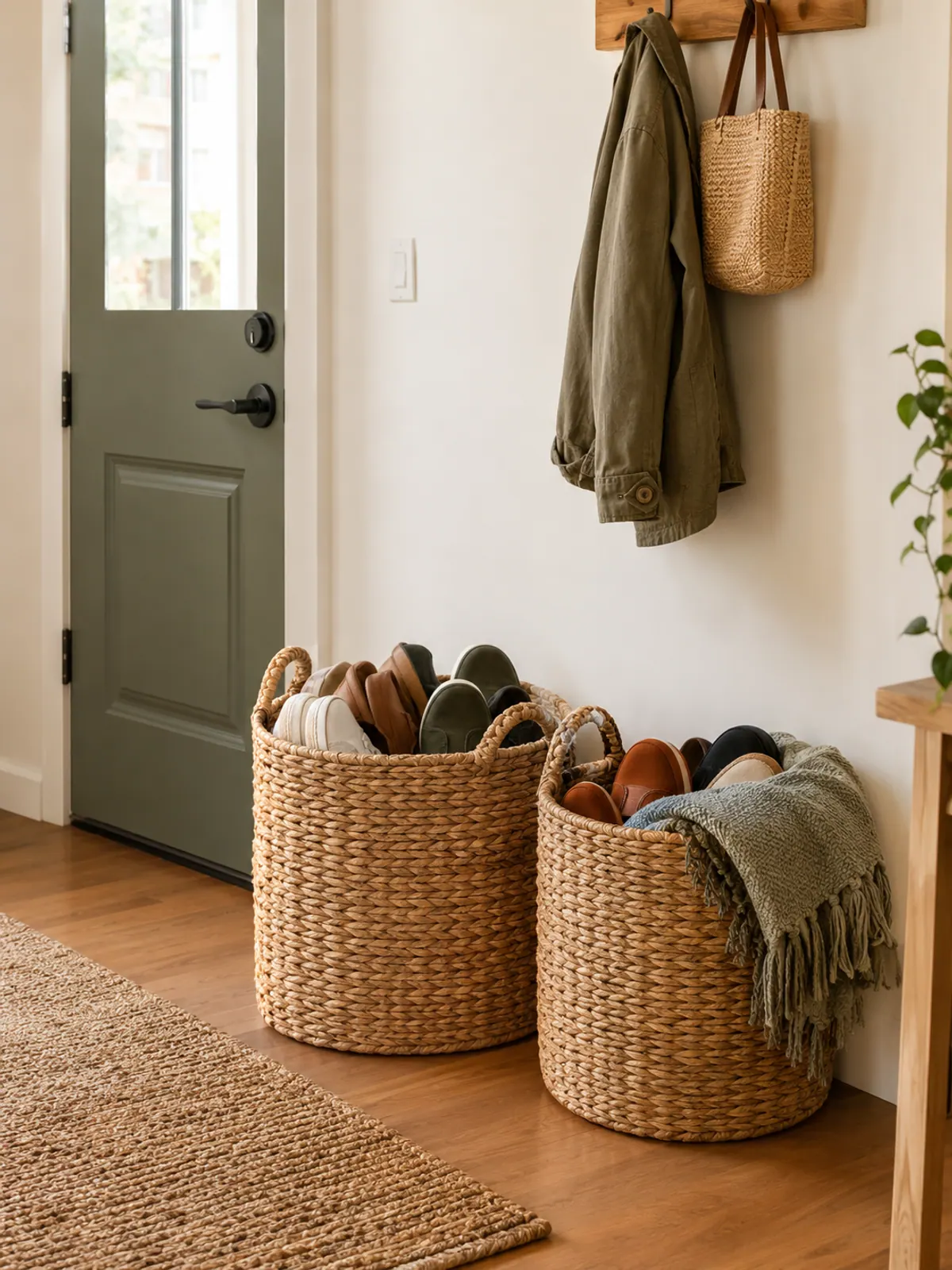
Drilling:
No-drill. It sits on the floor.
A basket is the forgiving option for flip-flops, slippers and kids' sneakers that never line up. It hides the jumble.
- Use one basket per person so no one has to search.
Hides the jumble and moves easily.
Benches and furniture that double as shoe storage
A bench gives you a place to sit and shoes underneath. For small spaces, pick the lowest and narrowest one that holds what you need.
5Choose a bench with cubbies
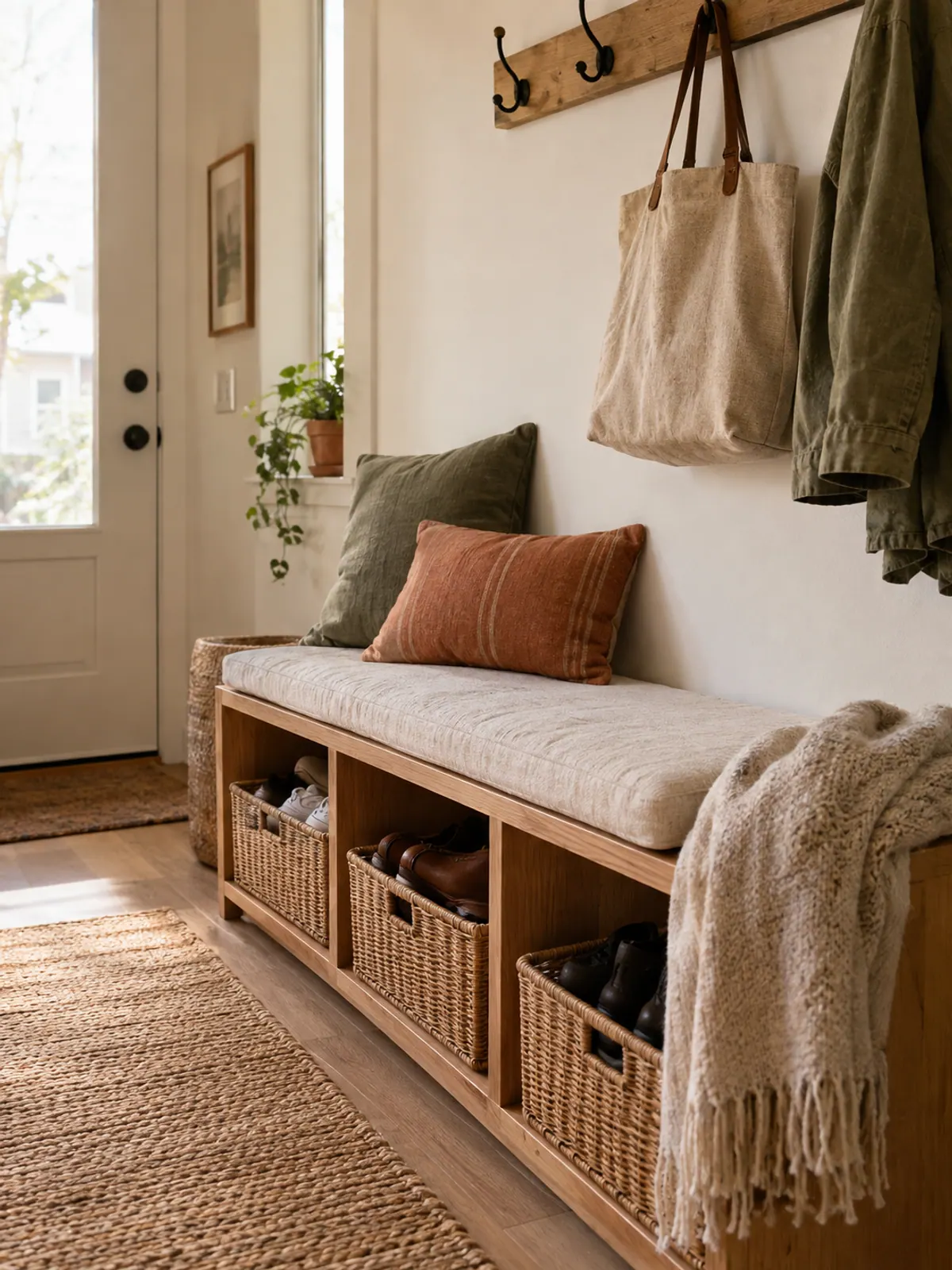
Drilling:
No-drill. Some benches suggest a wall anchor; leave it out if your lease says no.
Cubbies keep pairs lined up, and baskets in them hide the mess. It holds about a pair per cubby, so count cubbies against your daily pairs.
- Check the seat depth on the listing so it does not block the door swing.
A seat, shoe storage and a surface in one.
6Slip a console table over baskets
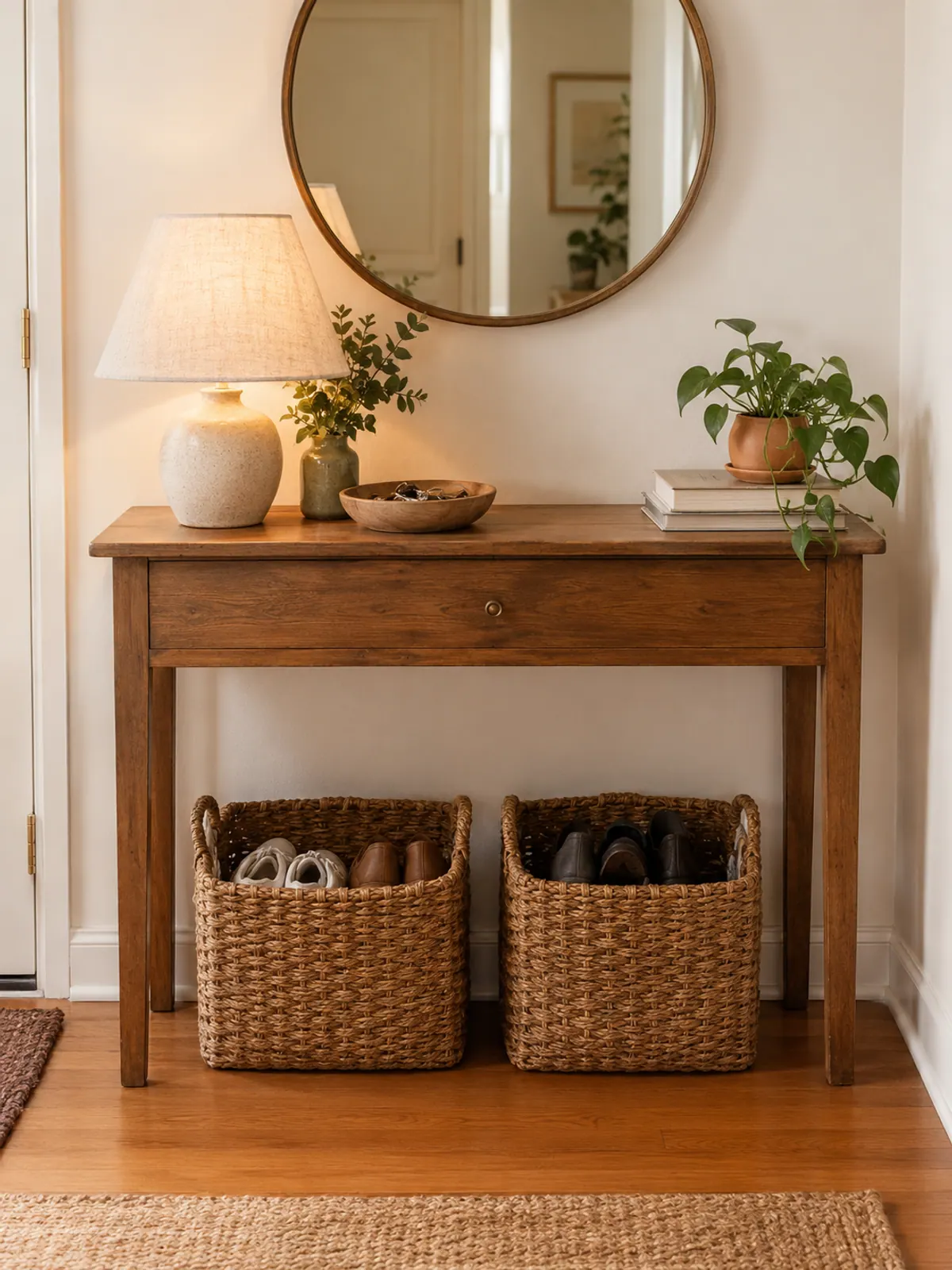
Drilling:
No-drill. It stands on the floor.
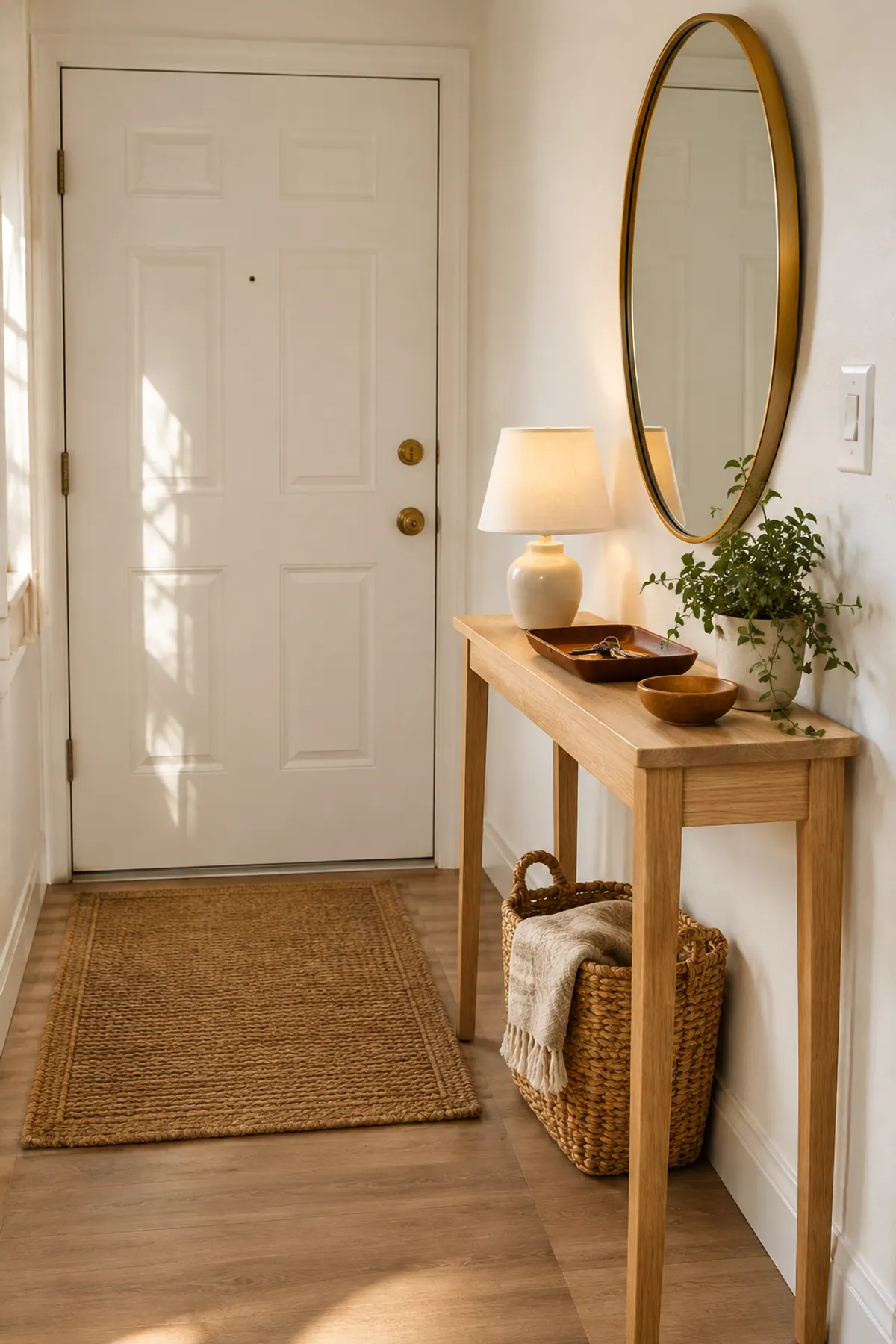
A narrow console gives you a landing spot for keys and a place for baskets underneath. This mix is pretty and works in a hall.
- Choose a table that is slim and has a clear space beneath for baskets.
A landing spot for keys with room for baskets.
7Pick a storage ottoman with a lid
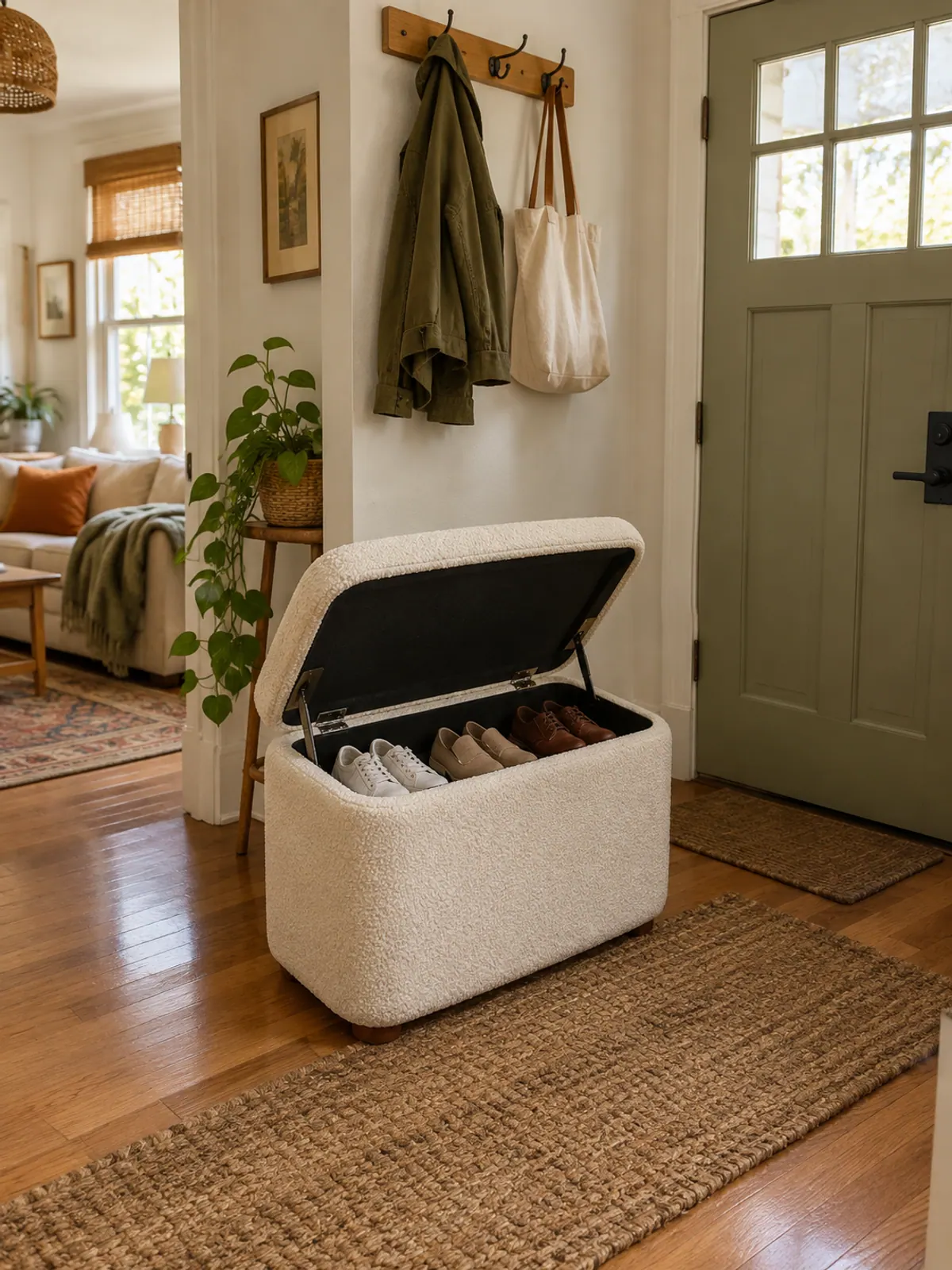
Drilling:
No-drill. It sits on the floor.
An ottoman gives you a closed spot for a few pairs and a seat to put shoes on. It works best for off-season or guest shoes.
- Line the inside with a washable liner for wet shoes.
Seat and hidden storage for a few pairs.
Hidden shoe storage for a clean entry
Pinterest users searching for this topic often add the word hidden. Closed storage keeps a tiny entry looking calm, but you need to check depth and door clearance.
8Install a slim tilt-out shoe cabinet
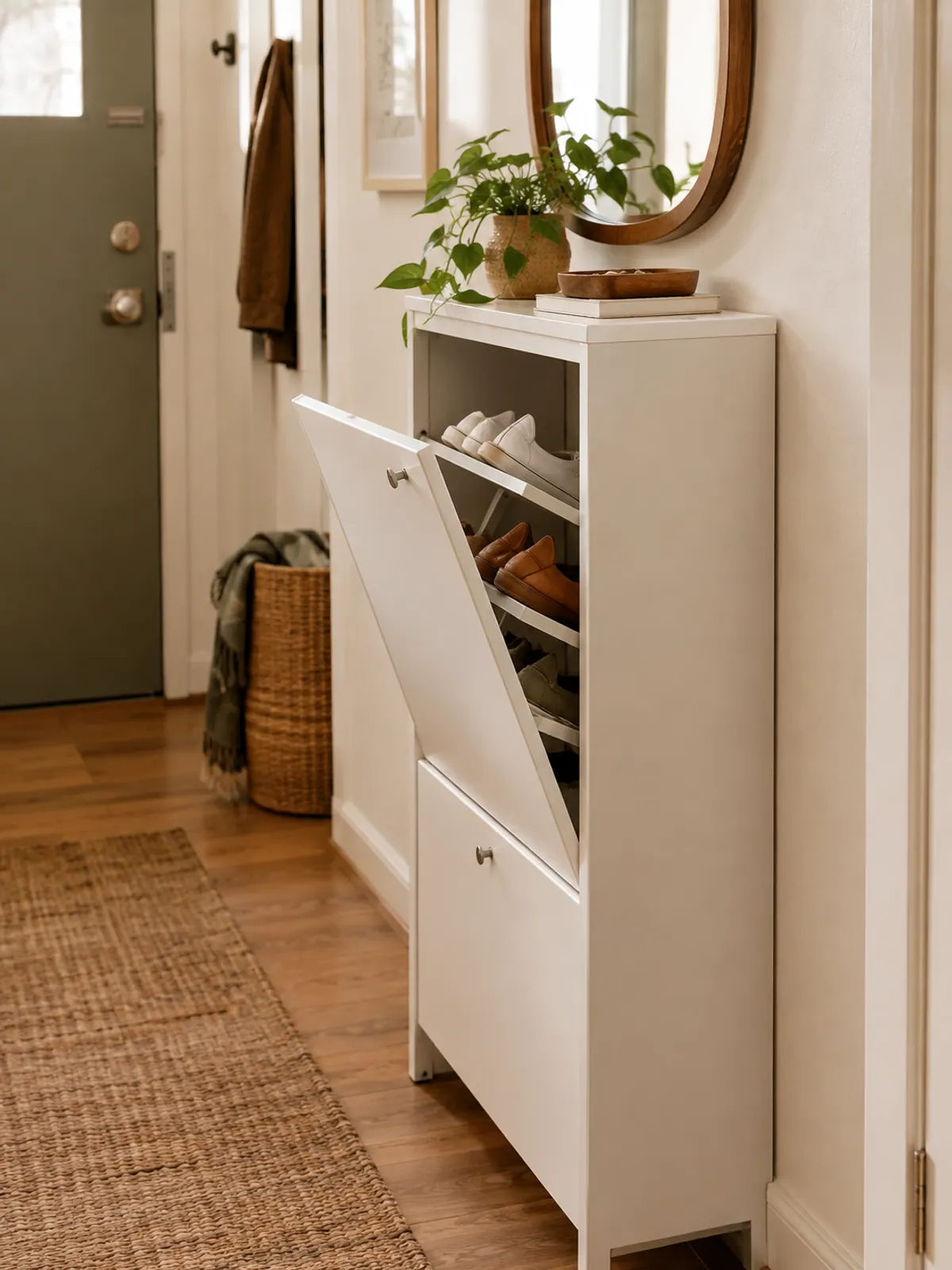
Drilling:
No-drill. Check if the cabinet comes with a wall strap; it is optional if the cabinet is stable on the floor.
Doors tilt open so shoes store on a slant, which means less depth than a normal cabinet. The top becomes a shelf.
- Measure the depth when the door is open, not just closed.
Shoes stored on a slant behind a closed door.
9Use a louvered shoe cabinet
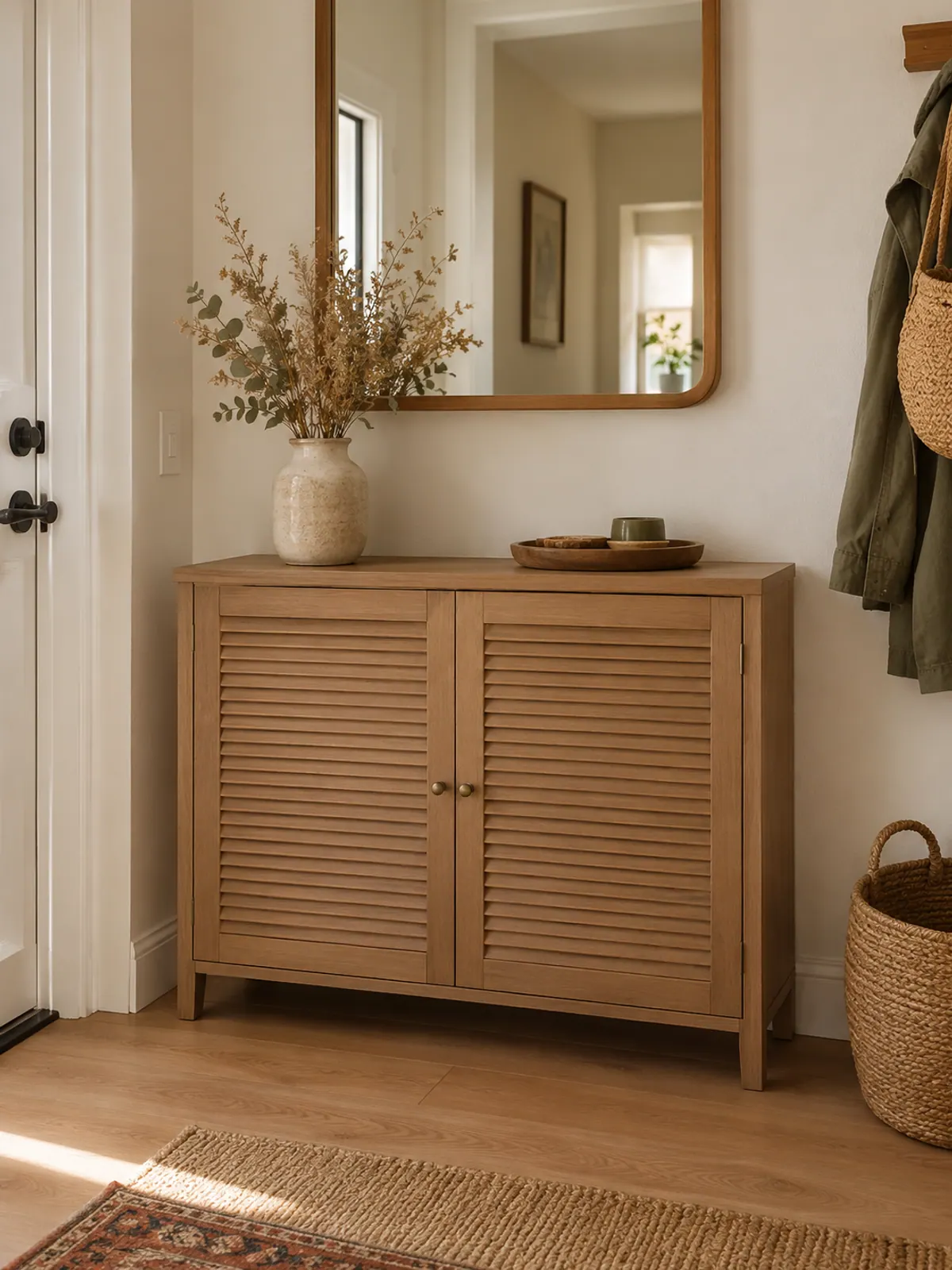
Drilling:
No-drill. It stands on the floor.
Louvered doors let shoes breathe while the cabinet looks like furniture. A low cabinet doubles as a surface for a mirror or a tray.
- Leave a little gap between pairs inside so air moves.
Closed storage that looks like furniture.
Over-the-door and wall shoe storage
Doors and walls are the unused space in a small entry. The catch is that wall options need fixings, so these are labeled.
10Hang an over-the-door organizer
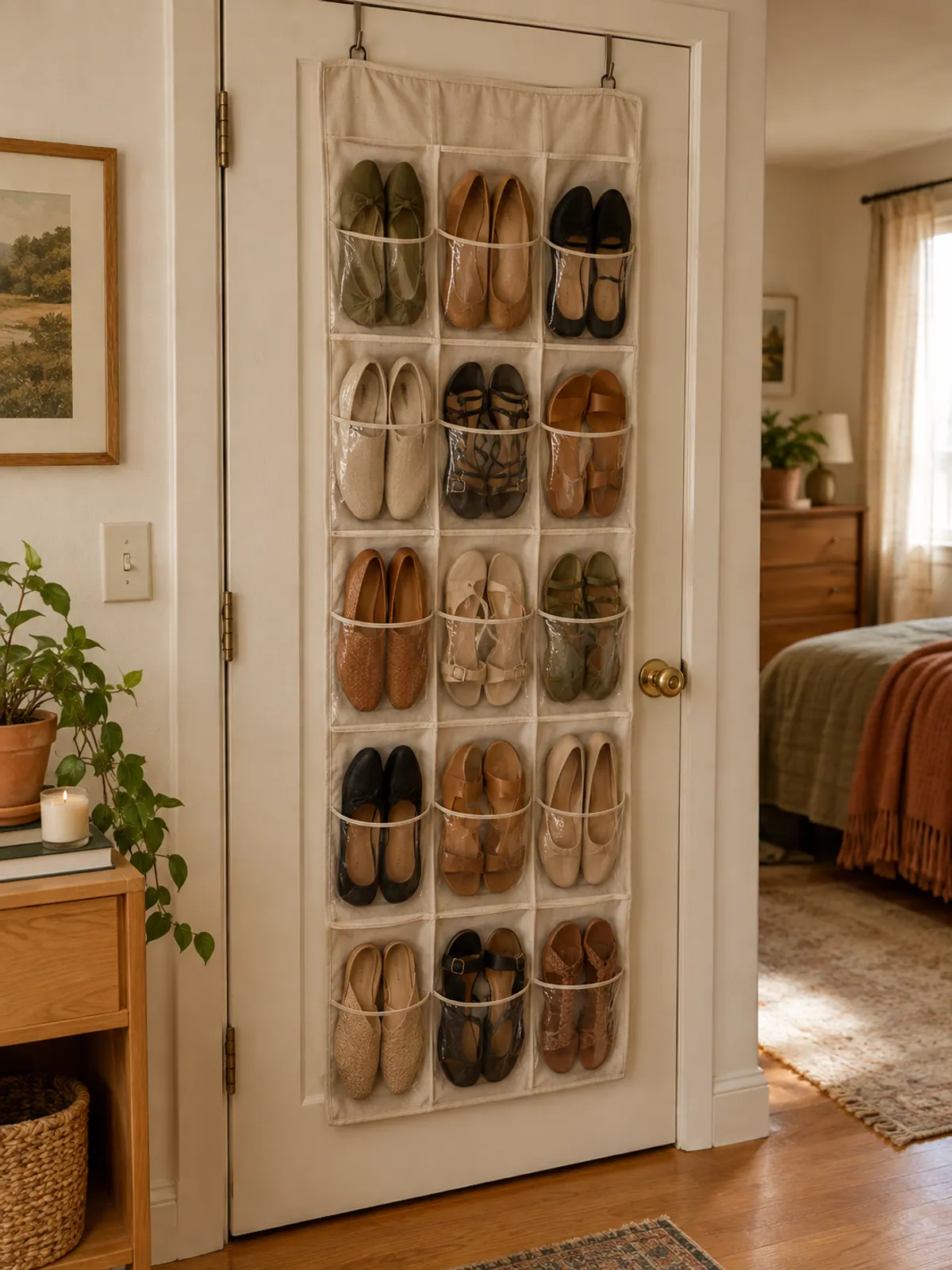
Drilling:
No-drill. It hangs over the door top.
Pockets store flats and slippers flat against the door. Use a closet door, not the front door, so the door still closes.
- Check that the door has a gap for the hook; thick doors may not fit.
Uses the back of a door for flat shoes.
11Mount narrow shoe ledges
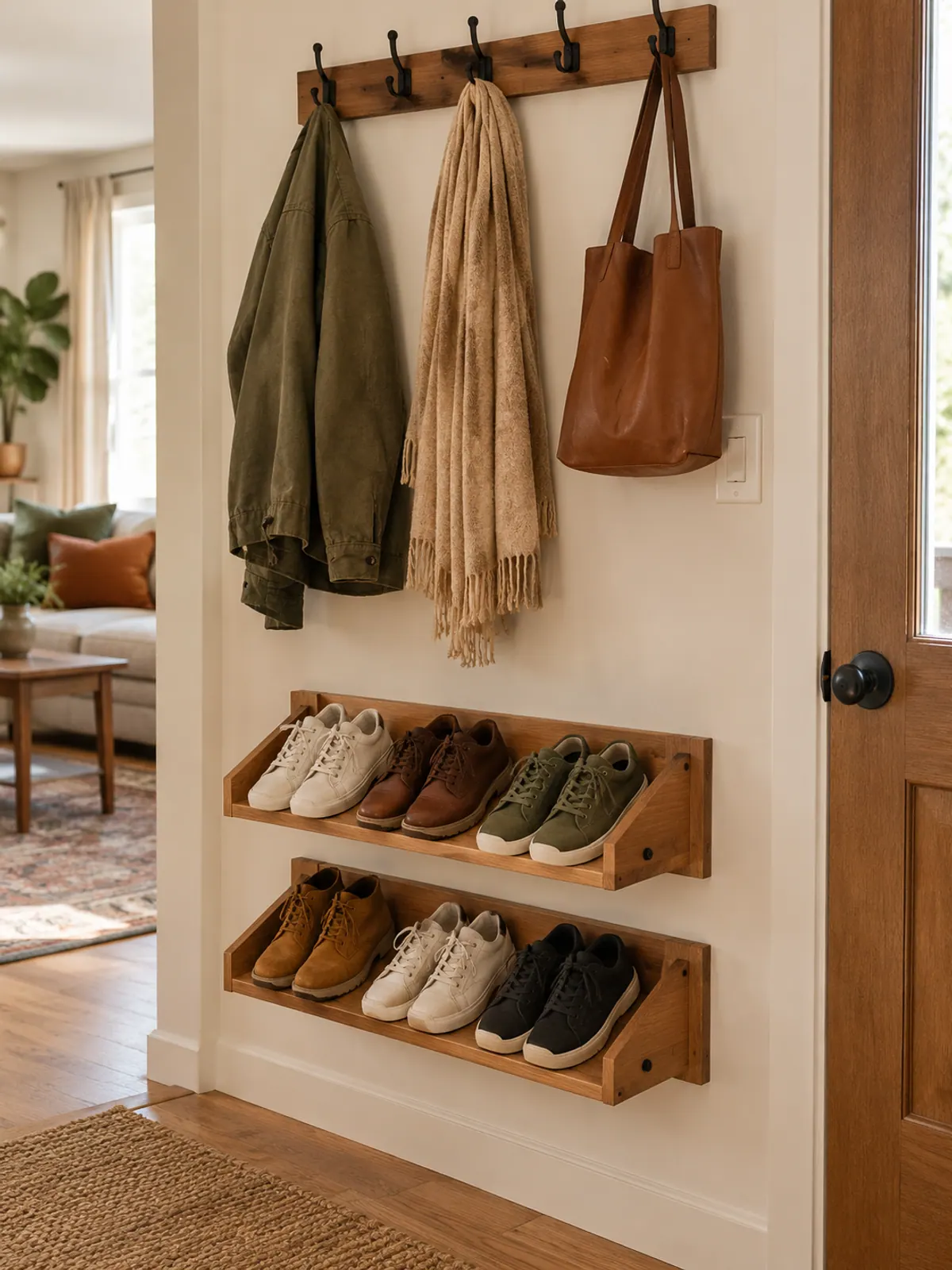
Drilling:
Needs screws. Wall studs or anchors, ask your landlord first.
Ledges hold shoes on the wall and keep the floor clear. They need real fixings because shoes are heavier than they look.
- Match the screws to the wall type and hold shoes lightly; Homestyler warns that wall storage must be fastened securely, especially in plaster or thin drywall.
Frees the floor but needs screws.
12Hang a fabric pocket organizer on the wall
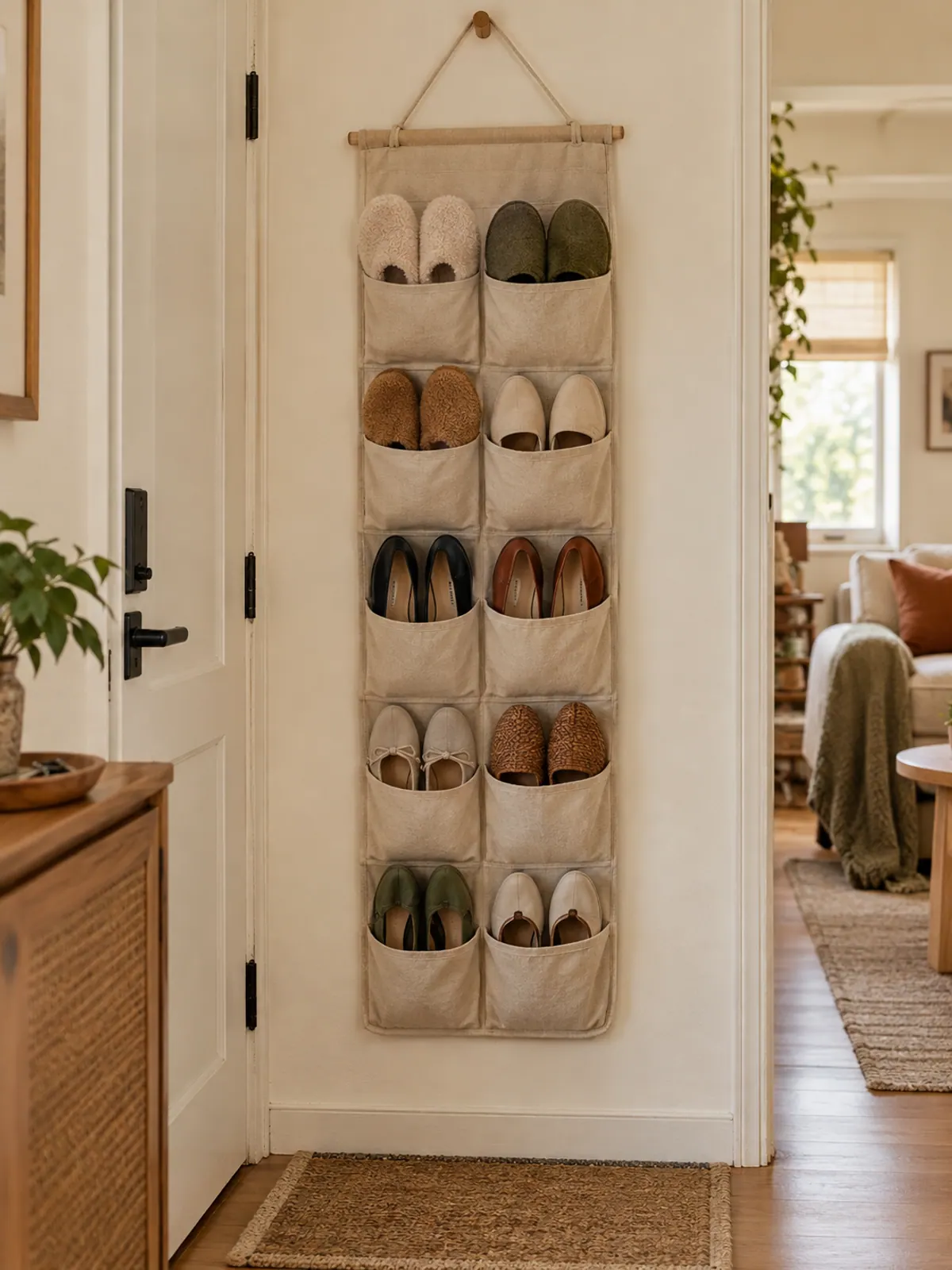
Drilling:
Needs hooks or screws. Many have grommets; check the weight rating on the listing.
Pockets keep slippers and flats flat to the wall. They are light, so they are better for lighter shoes.
- Skip adhesive hooks for loaded pockets unless the listing states a weight limit that covers the full load.
Light and flat for slippers and flats.
If you have a closet near the door
Even a shallow coat closet can hold shoes if you use the floor and the rod. These two fixes make a closet work harder.
13Double the floor with adjustable shoe slots
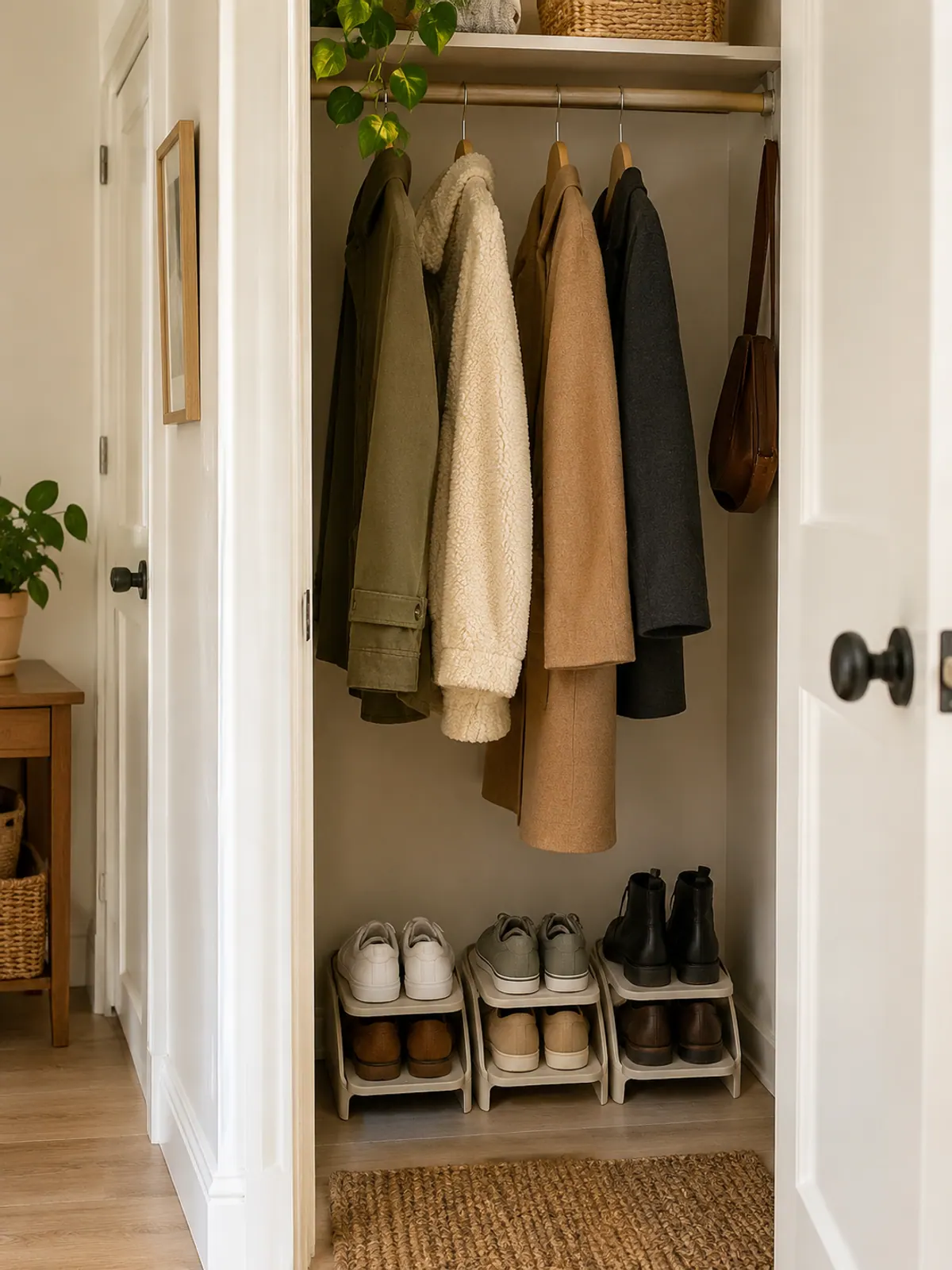
Drilling:
No-drill. It sits on the closet floor.
Slots hold one shoe over another, so the same floor space holds about twice as many pairs. They work well for flats and sneakers.
- Keep boots standing next to the slots, not inside them.
Doubles floor space in a closet.
14Hang a closet shoe shelf from the rod
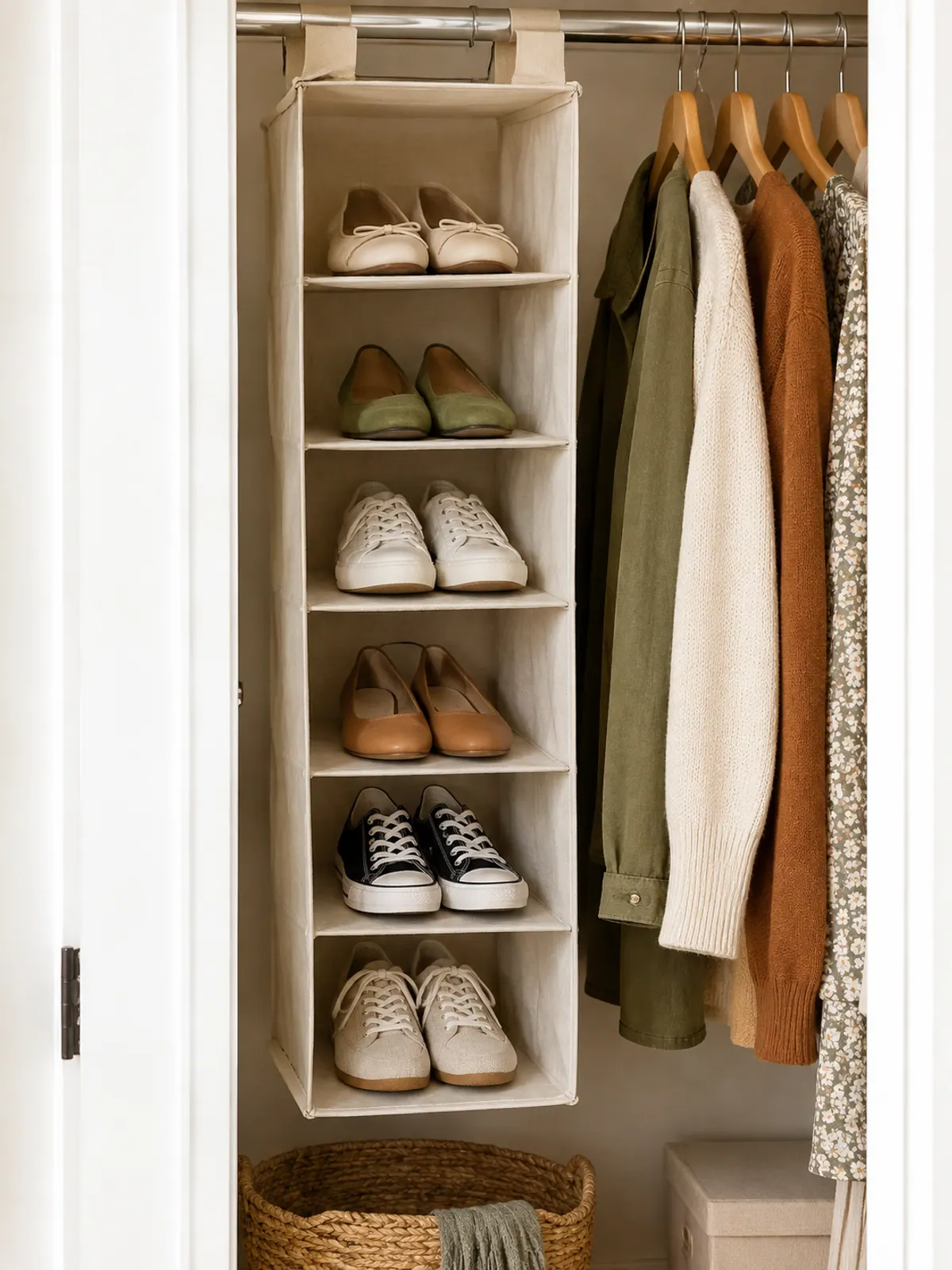
Drilling:
No-drill. It hangs from the rod.
A fabric shelf uses the rod space above the floor. It holds shoes without drilling and folds flat when you move.
- Check the rod width and how much weight the listing says the shelf holds.
Uses rod height instead of floor space.
15Use a guest basket by the bench
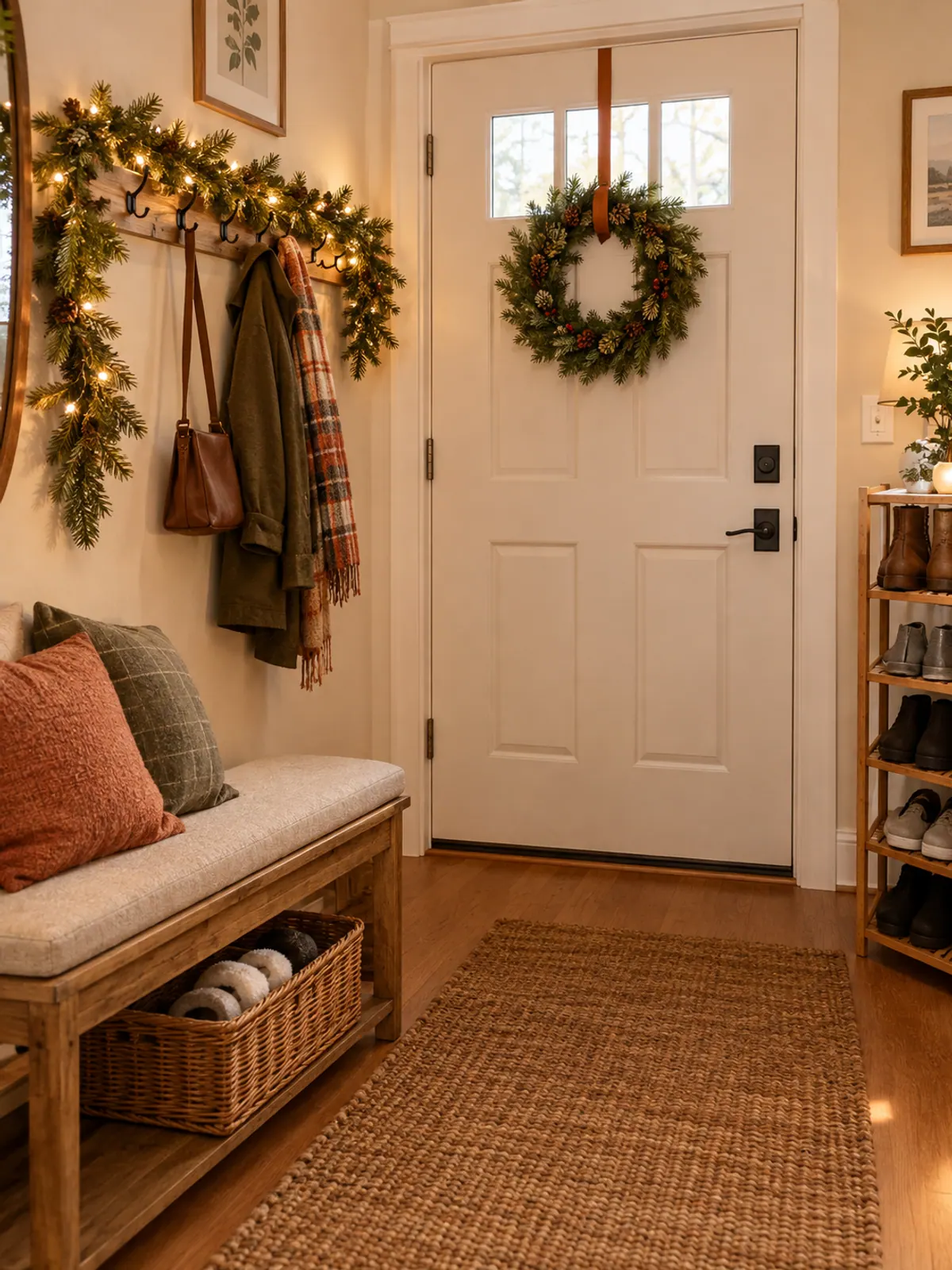
Drilling:
No-drill. It sits on the floor or the bench.
A basket of guest slippers keeps outdoor shoes by the door in winter and gives guests a warm option. It also helps keep a crowded holiday entry from filling with boots.
- Hold guest slippers in a washable basket and refresh them each season.
Keeps holiday guests' shoes by the door.
Which shoe storage is right for your entry
| Idea | Drilling | Typical price | Best for |
|---|---|---|---|
| Three-tier metal rack | No-drill | $20 to $50 | Daily sneakers |
| Boot tray | No-drill | $12 to $30 | Wet winter boots |
| Stackable cubes | No-drill (keep short) | $25 to $60 | Odd corners |
| Woven basket | No-drill | $20 to $45 | Casual pairs |
| Bench with cubbies | No-drill | $60 to $180 | Seat plus storage |
| Console plus baskets | No-drill | $60 to $170 | Halls |
| Storage ottoman | No-drill | $40 to $100 | Off-season pairs |
| Tilt-out cabinet | No-drill | $60 to $160 | Hidden, narrow |
| Louvered cabinet | No-drill | $70 to $180 | Hidden, low |
| Over-the-door organizer | No-drill | $12 to $35 | Flat shoes |
| Wall shoe ledges | Needs screws | $20 to $60 | Clearing the floor |
| Wall pocket organizer | Hooks or screws | $12 to $30 | Light shoes |
| Closet shoe slots | No-drill | $12 to $25 | Closet floors |
| Hanging closet shelf | No-drill | $15 to $35 | Closet rods |
| Guest basket | No-drill | $25 to $55 | Holiday guests |
What we like
- Most options need no drilling and suit a lease
- Many are freestanding, so they move with you
- Closed cabinets keep a tiny entry calm
- Over-the-door and closet options use space you already have
Keep in mind
- Wall options need screws and the right anchors
- Open racks show every shoe
- Heavier boots strain pockets and light shelves
- Some cabinets need the door swing checked
Set up a shoe station that stays tidy
A shoe storage idea only works if the habit is easy. Put the rack where you take your shoes off, with a hook for the bag above it.
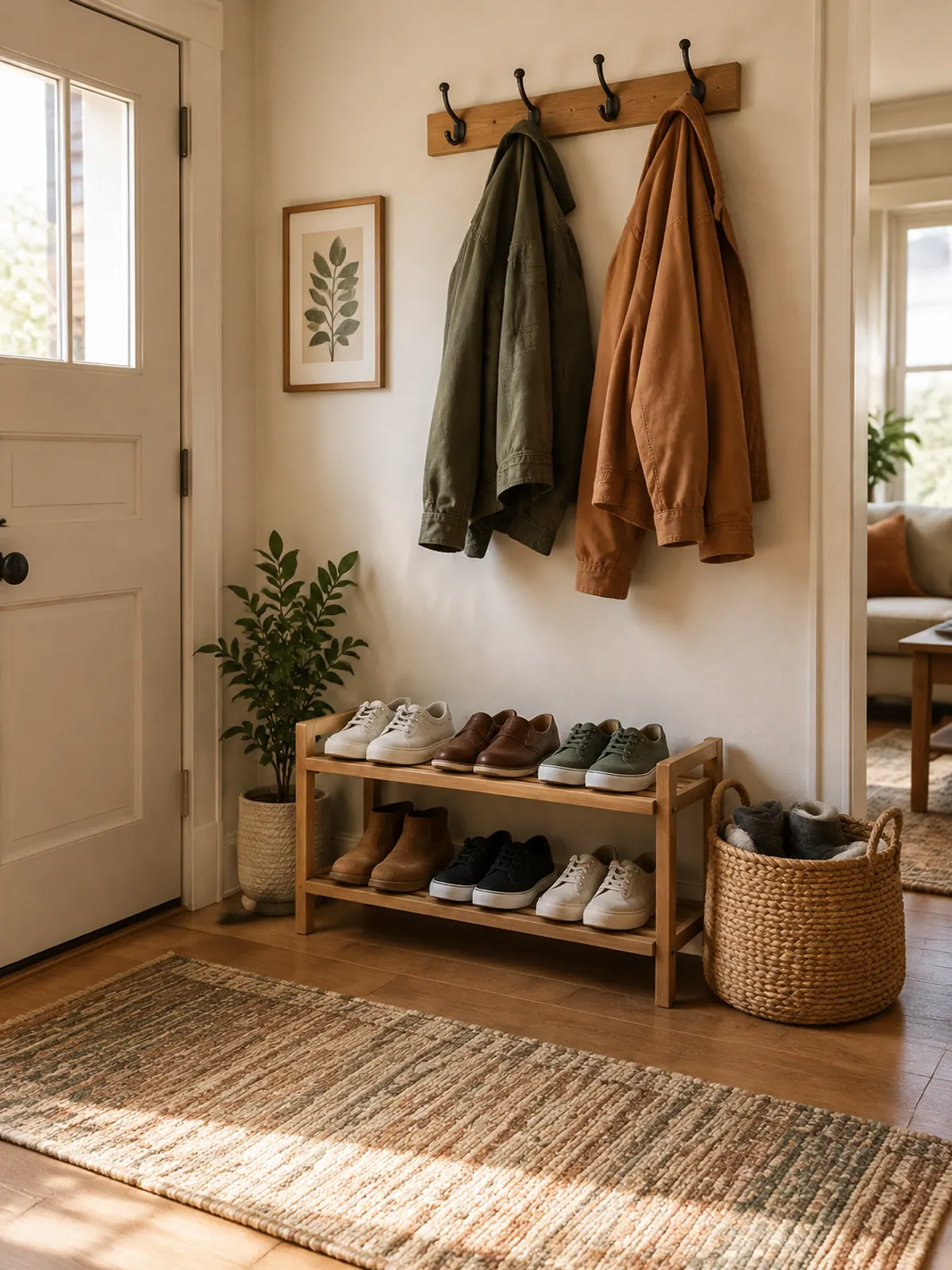
Daily pairs:
Keep four to eight pairs at the door, per the Homestyler range, and move everything else to a closet or under a bed.
Off-season pairs:
Store sandals in winter and boots in summer in a bin in the closet, so the door area holds only what you wear.
Reset:
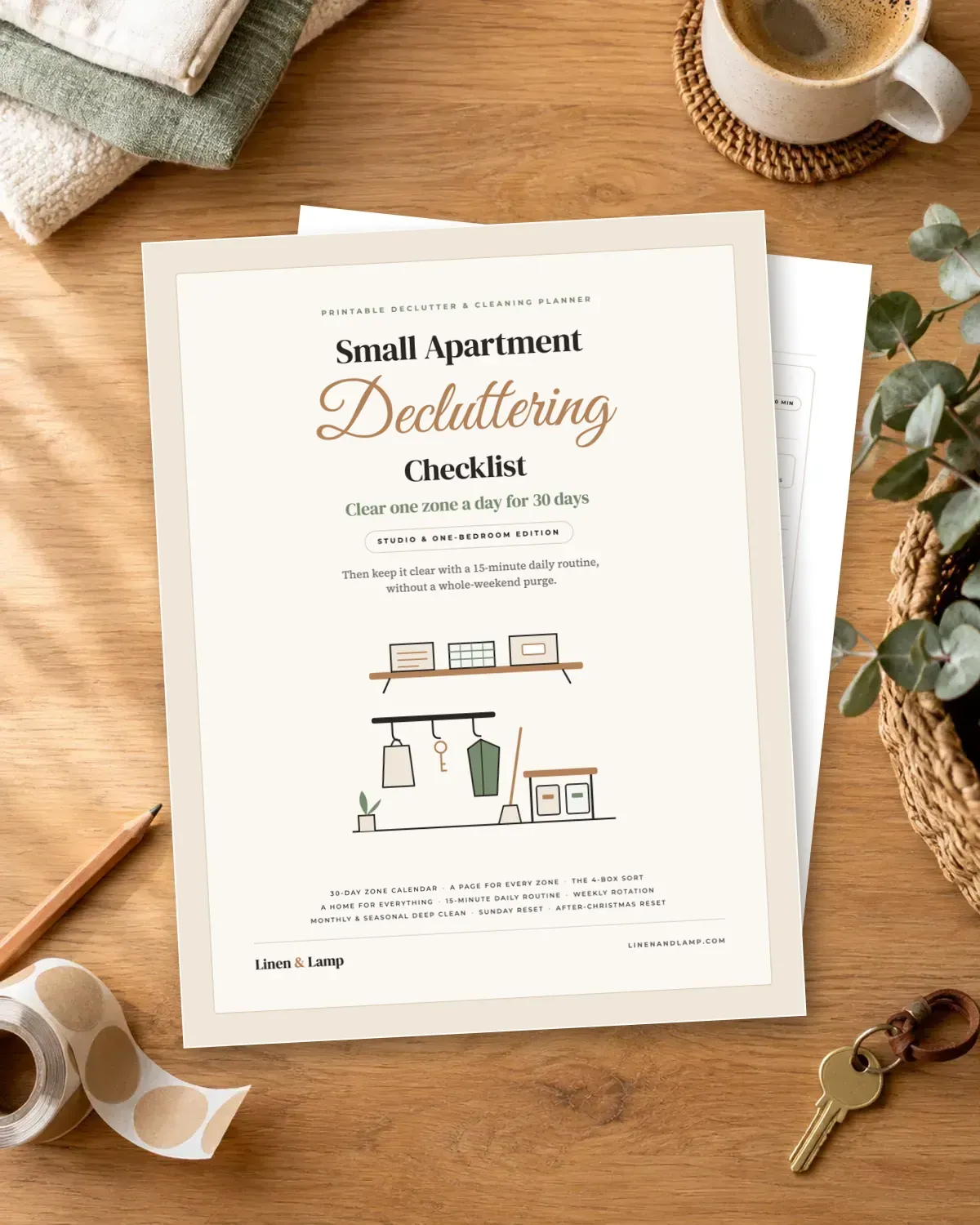
Take a minute at the end of the day to line the pairs up. A 30-day reset plan like the one below can help.
Before you buy shoe storage
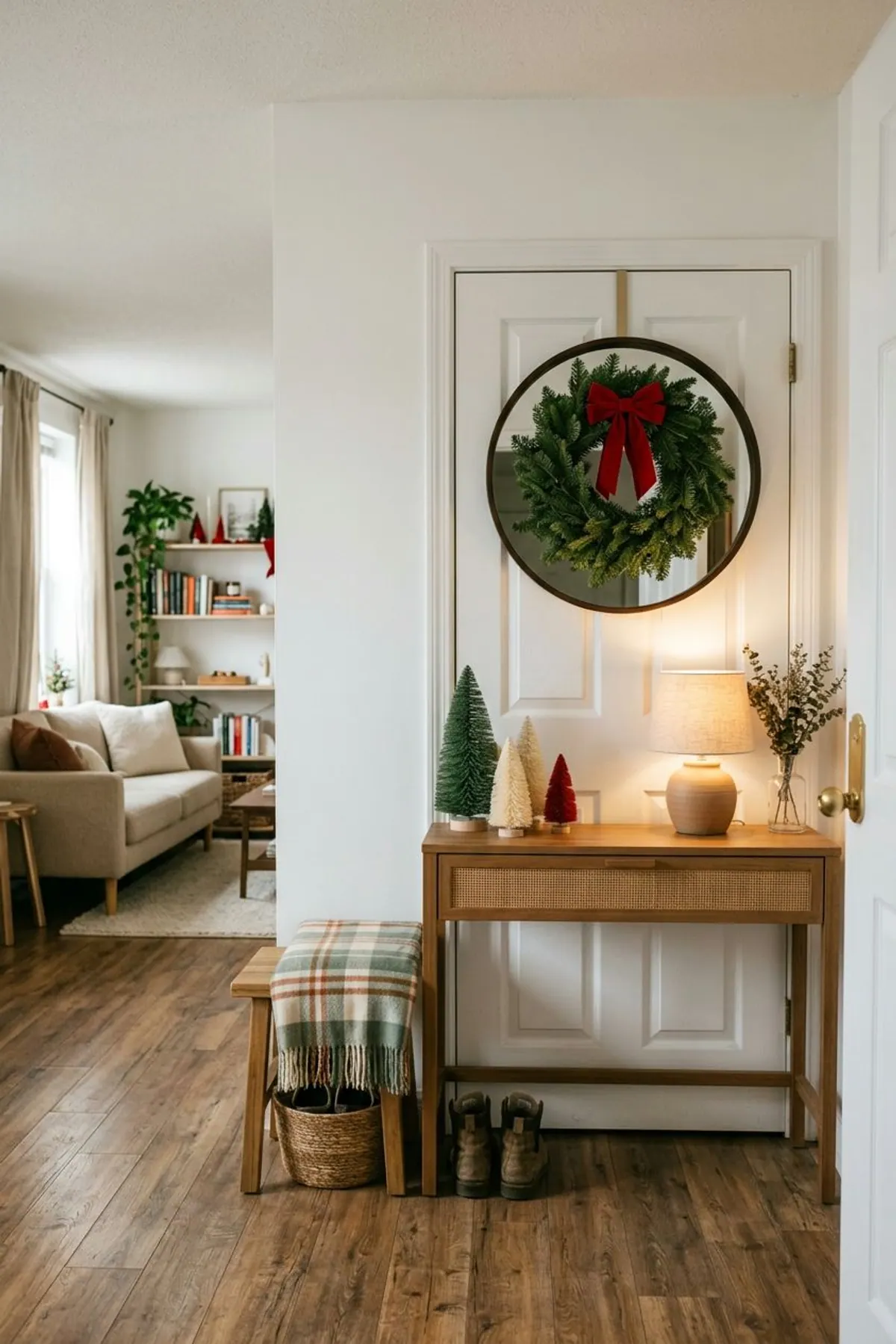
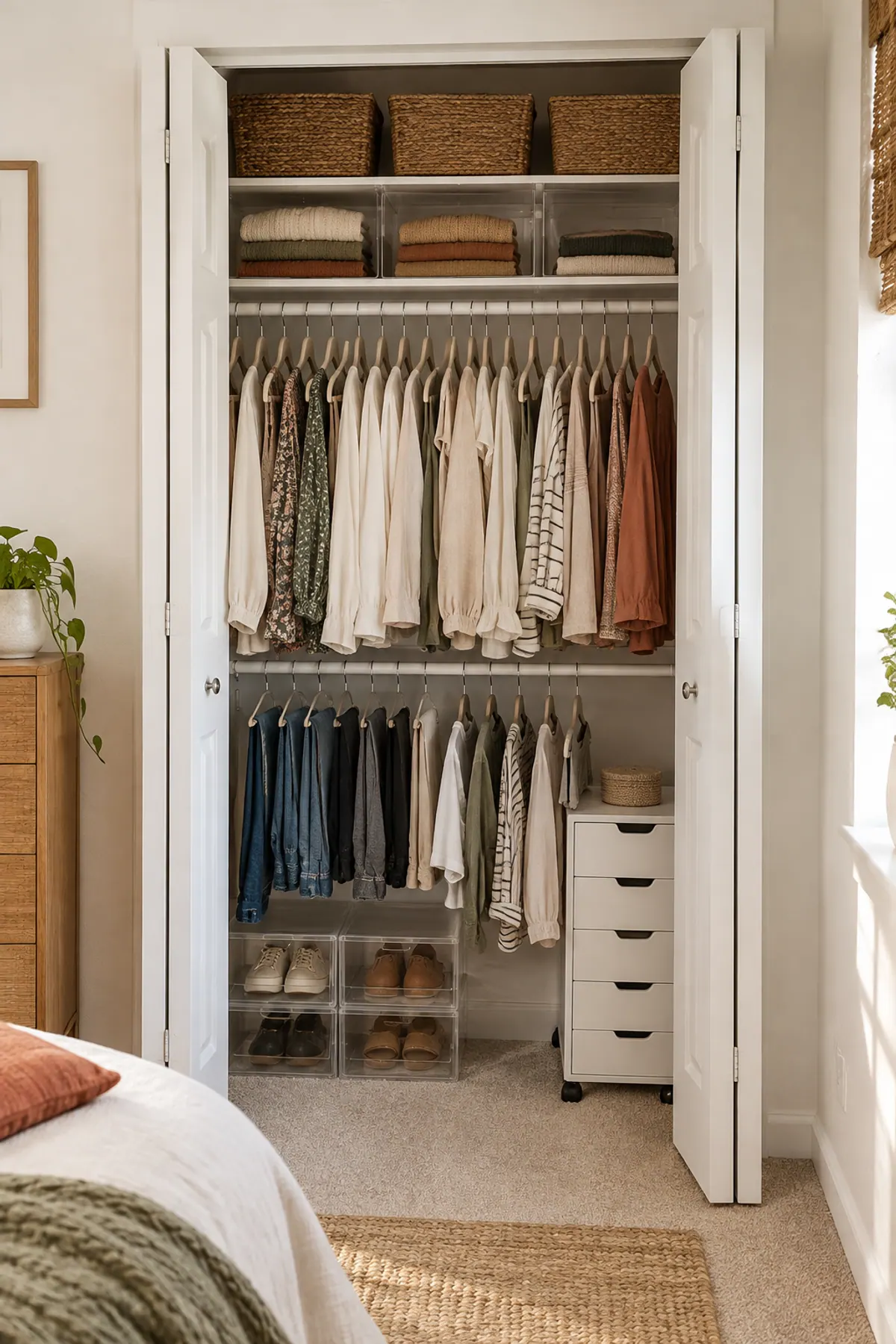
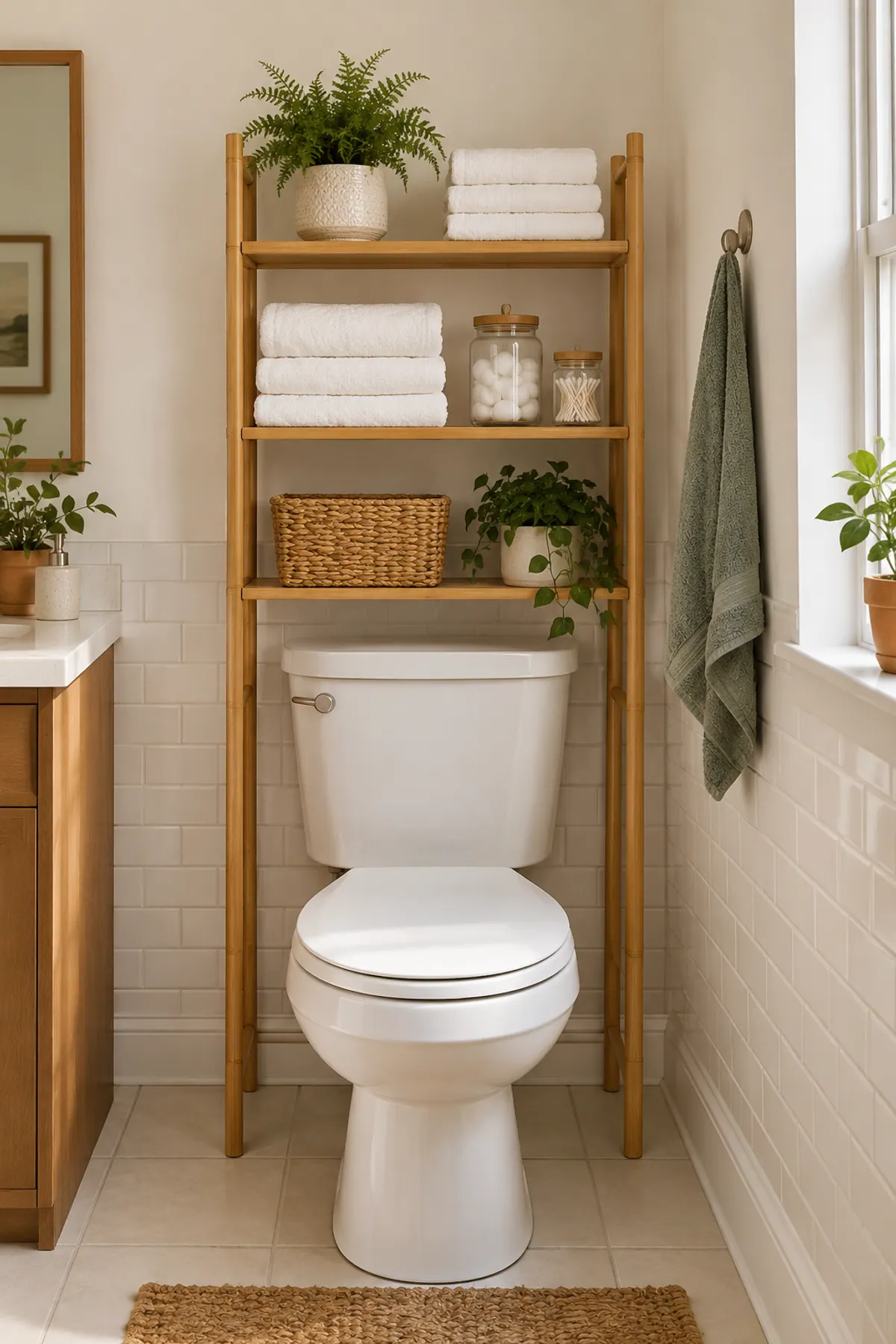
For the rest of the entry, see our entryway table decor ideas for small entryways and the Christmas entryway decor ideas. If the closet is the real problem, our small closet organization ideas and the no-drill over-the-toilet storage guide show more renter-safe fixes.
Shop shoe storage for a small entryway
Shoe storage picks
-
Three-tier metal shoe rack
Typically $20 to $50
Cheap, freestanding and easy to move out.
Check price on Amazon for Three-tier metal shoe rack -
Rubber boot tray
Typically $12 to $30
Stops melted snow spreading.
Check price on Amazon for Rubber boot tray -
Stackable shoe cubes
Typically $25 to $60
Modular for odd corners.
Check price on Amazon for Stackable shoe cubes -
Entryway storage bench with cubbies
Typically $60 to $180
A seat and shoe storage in one.
Check price on Amazon for Entryway storage bench with cubbies -
Narrow console table
Typically $60 to $170
Landing spot with room for baskets.
Check price on Amazon for Narrow console table -
Storage ottoman with lid
Typically $40 to $100
Hidden storage for a few pairs.
Check price on Amazon for Storage ottoman with lid -
Slim tilt-out shoe cabinet
Typically $60 to $160
Hidden shoes on a slant.
Check price on Amazon for Slim tilt-out shoe cabinet -
Louvered shoe cabinet
Typically $70 to $180
Closed storage that looks like furniture.
Check price on Amazon for Louvered shoe cabinet -
Over-the-door shoe organizer
Typically $12 to $35
Uses the back of a door.
Check price on Amazon for Over-the-door shoe organizer -
Adjustable shoe slot organizer
Typically $12 to $25
Doubles closet floor space.
Check price on Amazon for Adjustable shoe slot organizer -
Hanging closet shoe shelf
Typically $15 to $35
Uses rod height.
Check price on Amazon for Hanging closet shoe shelf -
Large woven floor basket
Typically $20 to $45
Hides the jumble.
Check price on Amazon for Large woven floor basket
Frequently asked questions
What is the best shoe storage for a small entryway?
The best option holds your daily pairs in the depth you can spare. A slim rack or a bench with cubbies suits most small entries, and a slim tilt-out cabinet is a good closed option.
How many pairs of shoes should be kept at the door?
Homestyler suggests planning for about 4 to 8 pairs of daily-use shoes. Keep the rest in a closet, under a bed or in a bin.
Which shoe storage ideas need no drilling?
Racks, trays, baskets, cubes, benches, cabinets, ottomans, over-the-door organizers and closet slots are all no-drill. Wall ledges and hanging pockets usually need screws or hooks.
How do I store shoes in an entryway without a closet?
Use a bench with cubbies, a slim cabinet or a rack with a basket beside it. Add wall hooks above for coats and bags so the floor stays clear.
Can I use adhesive hooks for shoe pockets?
Only if the listing gives a weight limit that covers the full load, and test it with the shoes in. Heavy shoes strain adhesive, so screws are safer when your lease allows them.
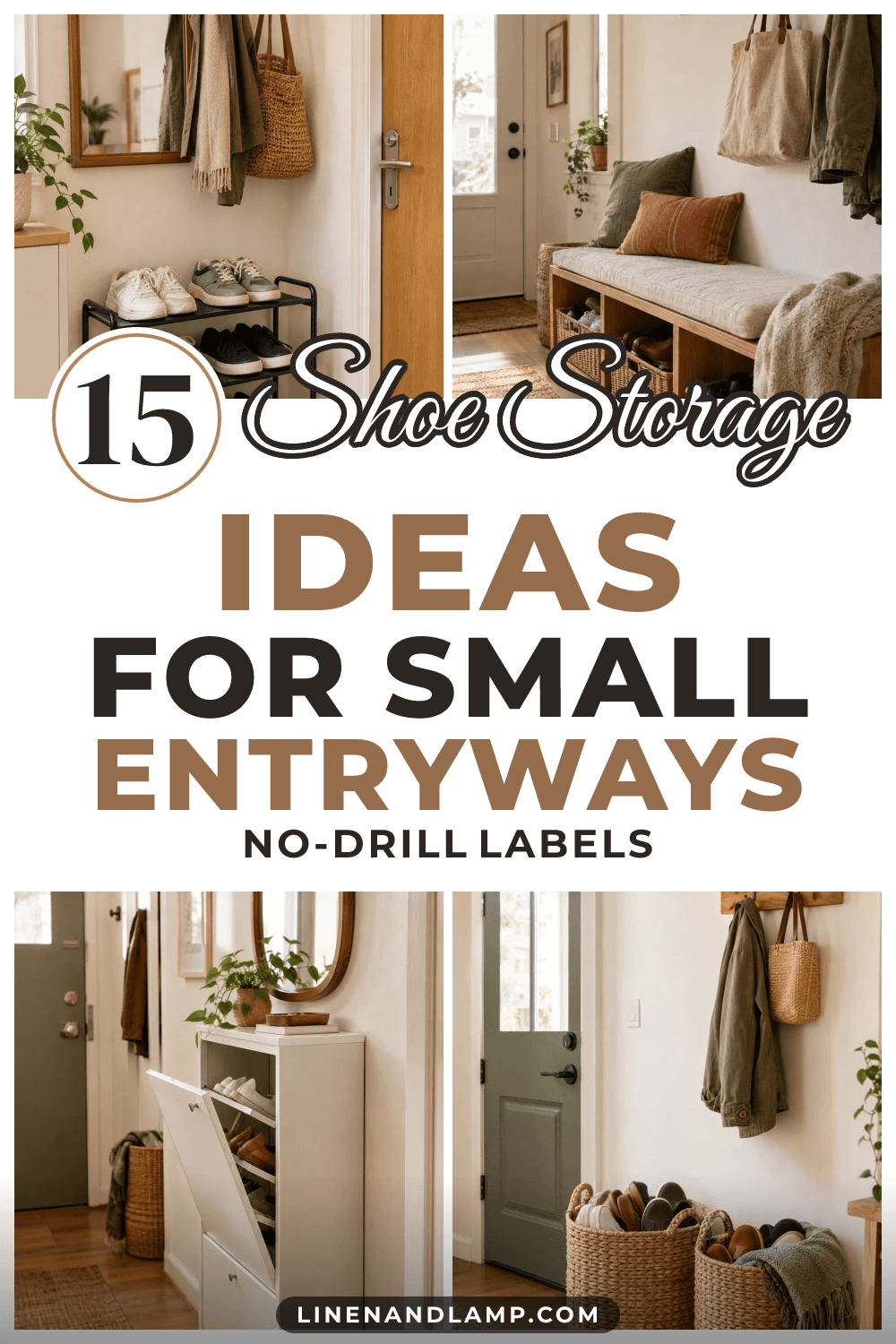
Save it for later
Pin this to your Organization board so it's there when you need it.
Save to Pinterest