This post contains affiliate links. As an Amazon Associate we earn from qualifying purchases, at no extra cost to you. Read our disclosure.
Key takeaways
- The corner next to seating is the first choice: it uses dead space and stays off the walkway.
- Keep the tree at least 3 feet from radiators, vents, candles and fireplaces (NFPA tips).
- Measure to the branch tips, not the trunk, and leave a clear path to the door.
- Plan the outlet first: no extension cords under rugs, and put the lights on a timer.
- No floor space? Put a 2 to 3 foot tree on a console.
In this post14 sections
- Where to put a Christmas tree in a small living room: the quick answer
- Quick facts: six spots, one rule for each
- First, the 3 foot rule and the walkway
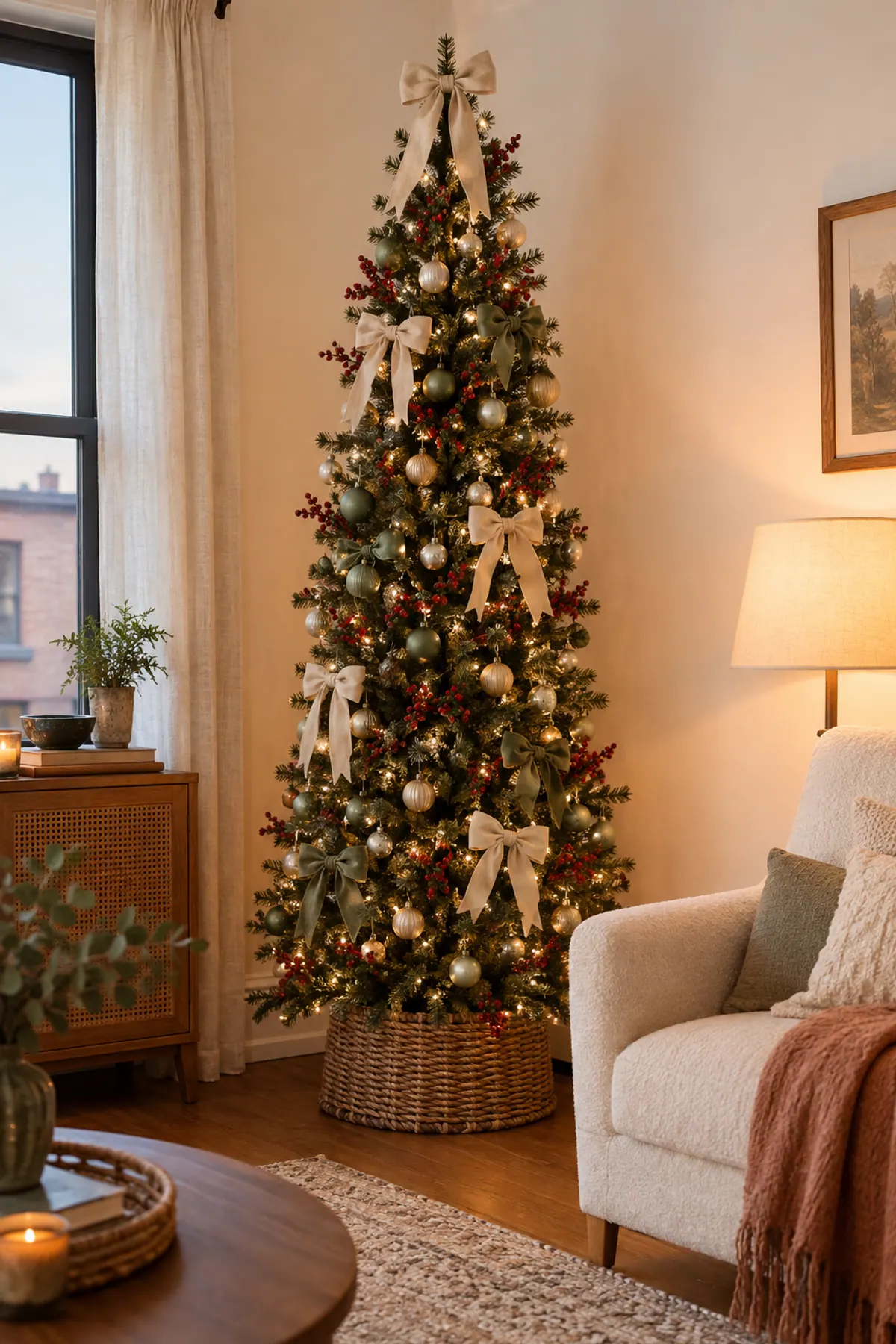
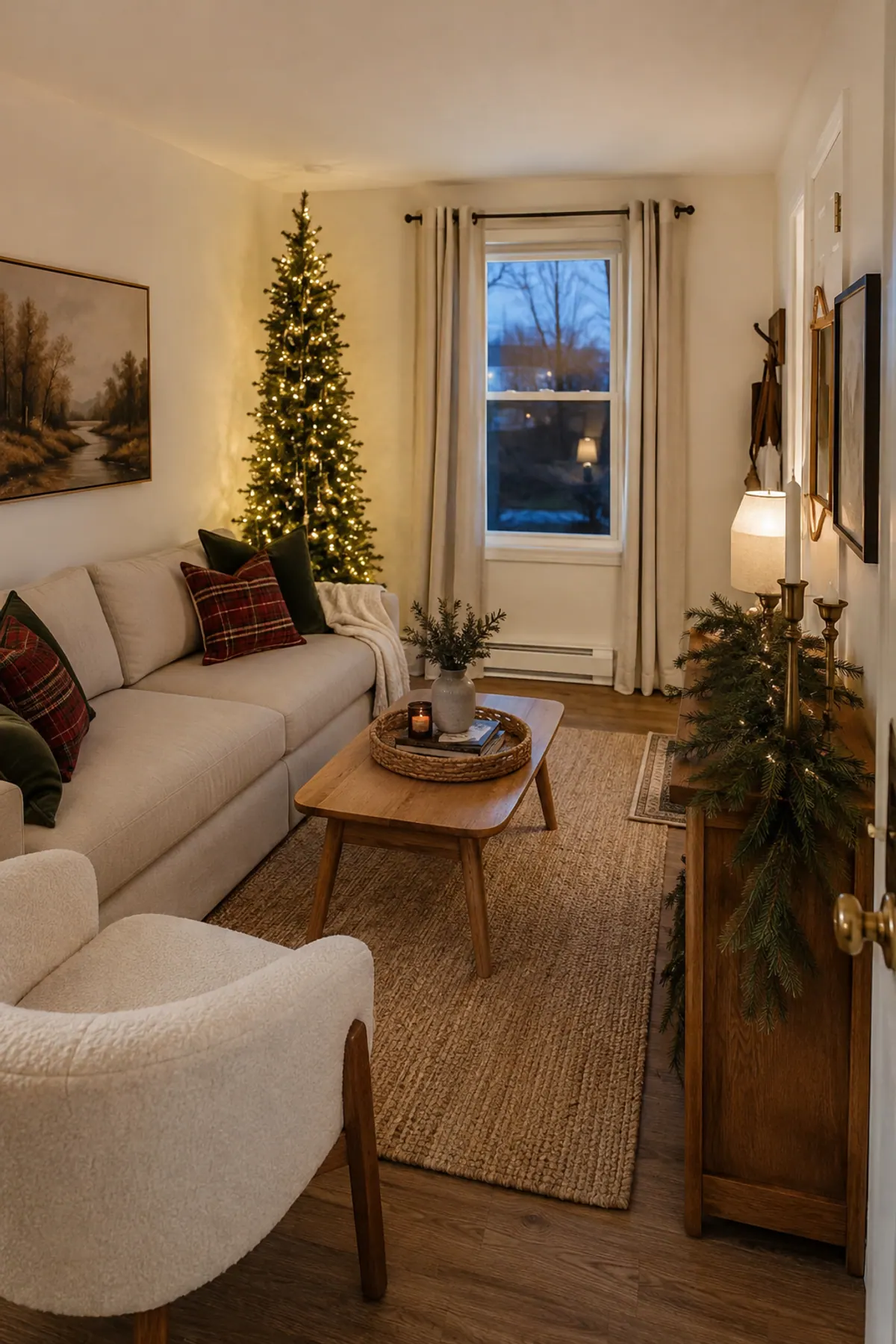
- 1. The corner beside the sofa
- 2. In front of the window
- 3. Beside the TV stand
- 4. On a console or table
- 5. Behind the sofa
- 6. At the end of a studio zone
- Outlets and cords: plan the plug before the tree
- Myth vs reality: spots people regret
- Related questions people ask
- Shop the tree spot list
- FAQ
Skip the guessing and measure three things before you pick a spot: the walkway, the nearest heat source and the nearest outlet. If a spot passes all three, the tree can go there. Here are the six placements that work in a small living room, with the rule that decides each one.
Looking for tree styles instead? See our Christmas tree ideas for 2026. Short on floor space? Our small Christmas trees for tables and tiny corners has 22 ideas. This page is only about where the tree goes.
Where to put a Christmas tree in a small living room: the quick answer
The corner next to your seating is the best first choice, because it uses space nobody walks through. The window is second best, the TV wall third, and a tabletop tree on a console is the answer when the floor is full. Whatever you pick, keep the tree at least 3 feet from any heat source and leave a clear path to the door.
Quick facts: six spots, one rule for each
| Spot | Best for | Tree size that fits | Check first |
|---|---|---|---|
| Corner beside the sofa | Most small living rooms | Slim 5 to 6 ft | Path to the door stays clear |
| In front of a window | A room with no free corner | Slim 5 to 7 ft | Radiator or heater under the sill |
| Beside the TV stand | Rooms where the TV wall is the only free wall | 3 to 5 ft | Cords from the TV and tree stay separate |
| On a console or table | Floor space is already full | 2 to 3.5 ft | Table depth and stability |
| Behind the sofa | Open-plan rooms with a floating sofa | Slim 4 to 6 ft | Sofa back stays clear of branches |
| End of the studio zone | Studios with one open wall | Slim 4 to 6 ft | Tree stays out of the bed zone |
Sizes are typical ranges, not rules. Measure your own corner, and check the width of the tree's bottom tier on the box, since a "slim" tree is often about 2 feet wide at the base.
First, the 3 foot rule and the walkway
The National Fire Protection Association (NFPA) advises keeping a tree at least 3 feet from heat sources such as fireplaces, radiators, candles, heat vents and lights (tips republished by the Connecticut State Fire Administrator). The same tips say not to block an exit and to add water to the stand every day if the tree is real.
NFPA reports that nearly 20 percent of home Christmas tree fires started because a heat source was too close to the tree (the same page gives no year for that figure). In a small room, that is why the radiator and the floor vent decide the tree's spot before your style does.
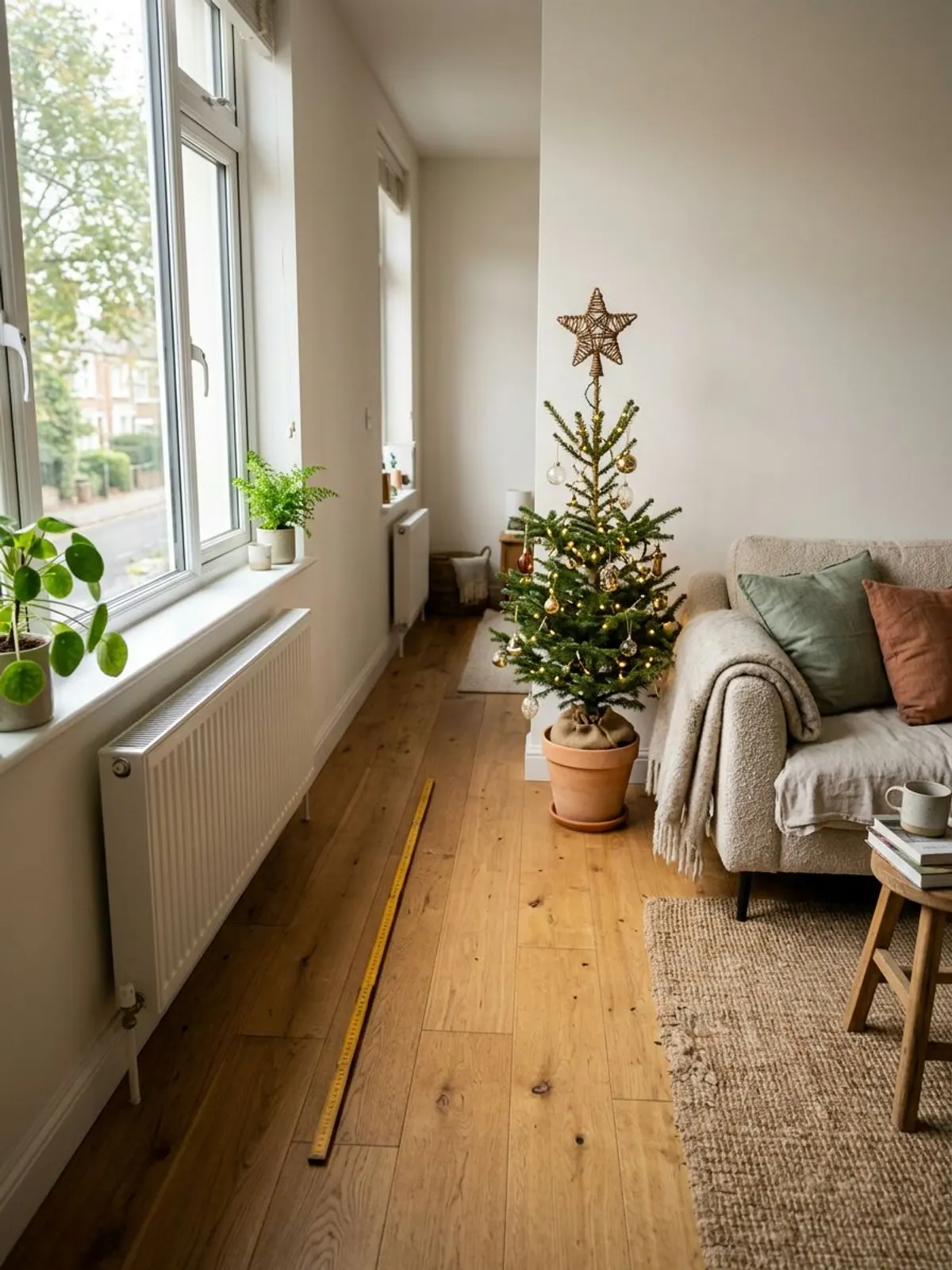
For the walkway, many layout guides suggest roughly 30 to 36 inches for a main path in a living room. That is a design guideline, not a code, but it is a good test: if two people carrying a laundry basket cannot pass, move the tree.
1. The corner beside the sofa
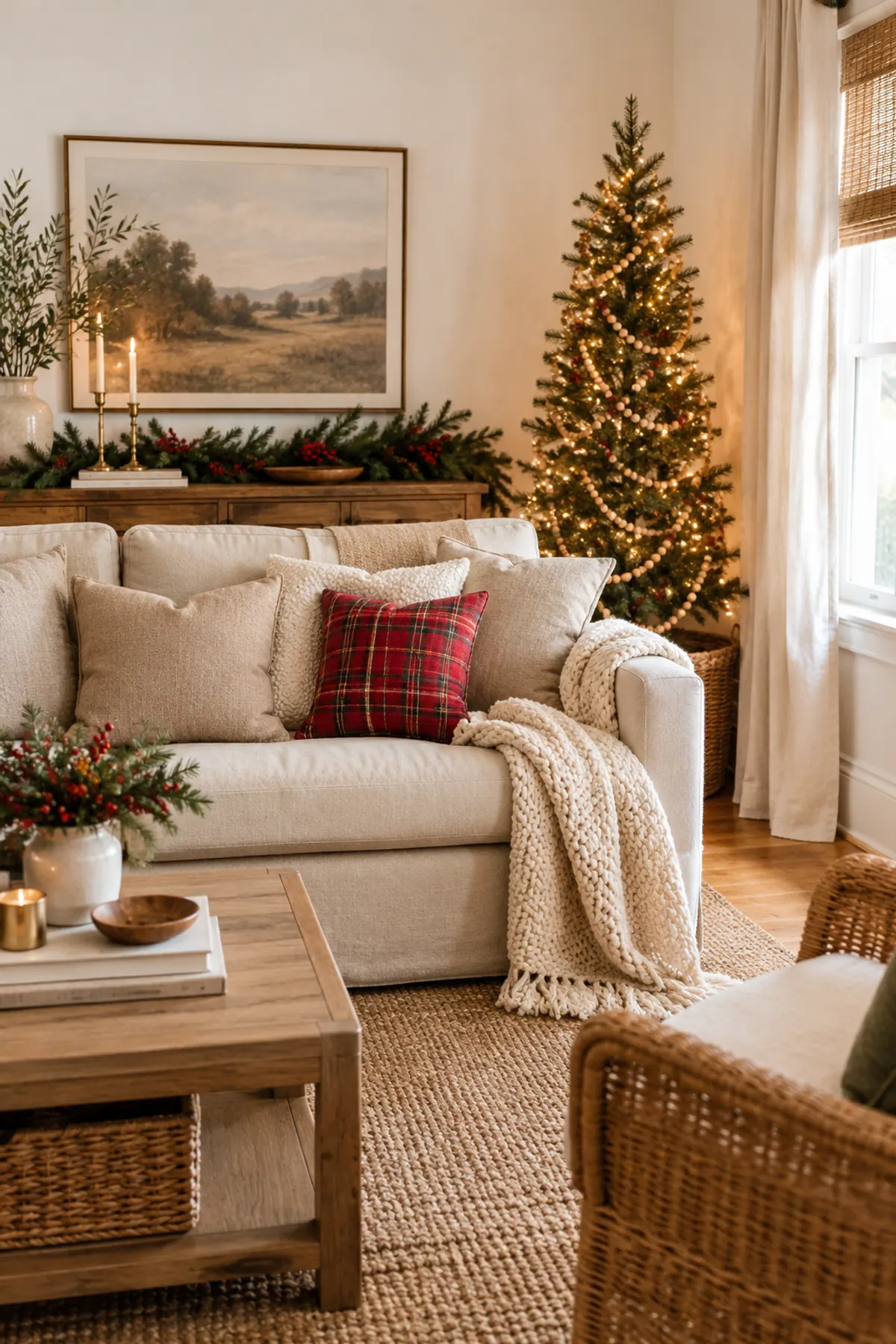
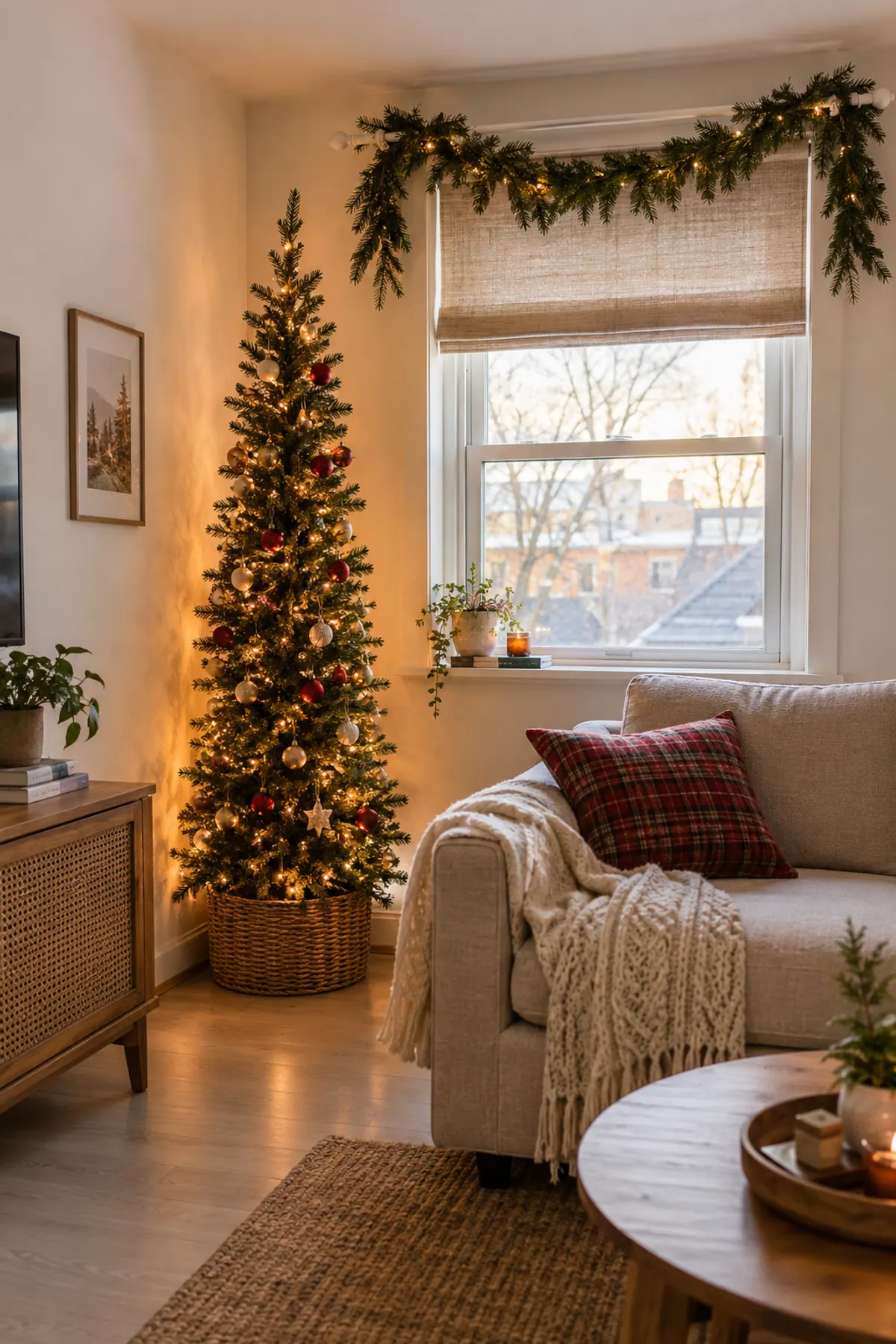
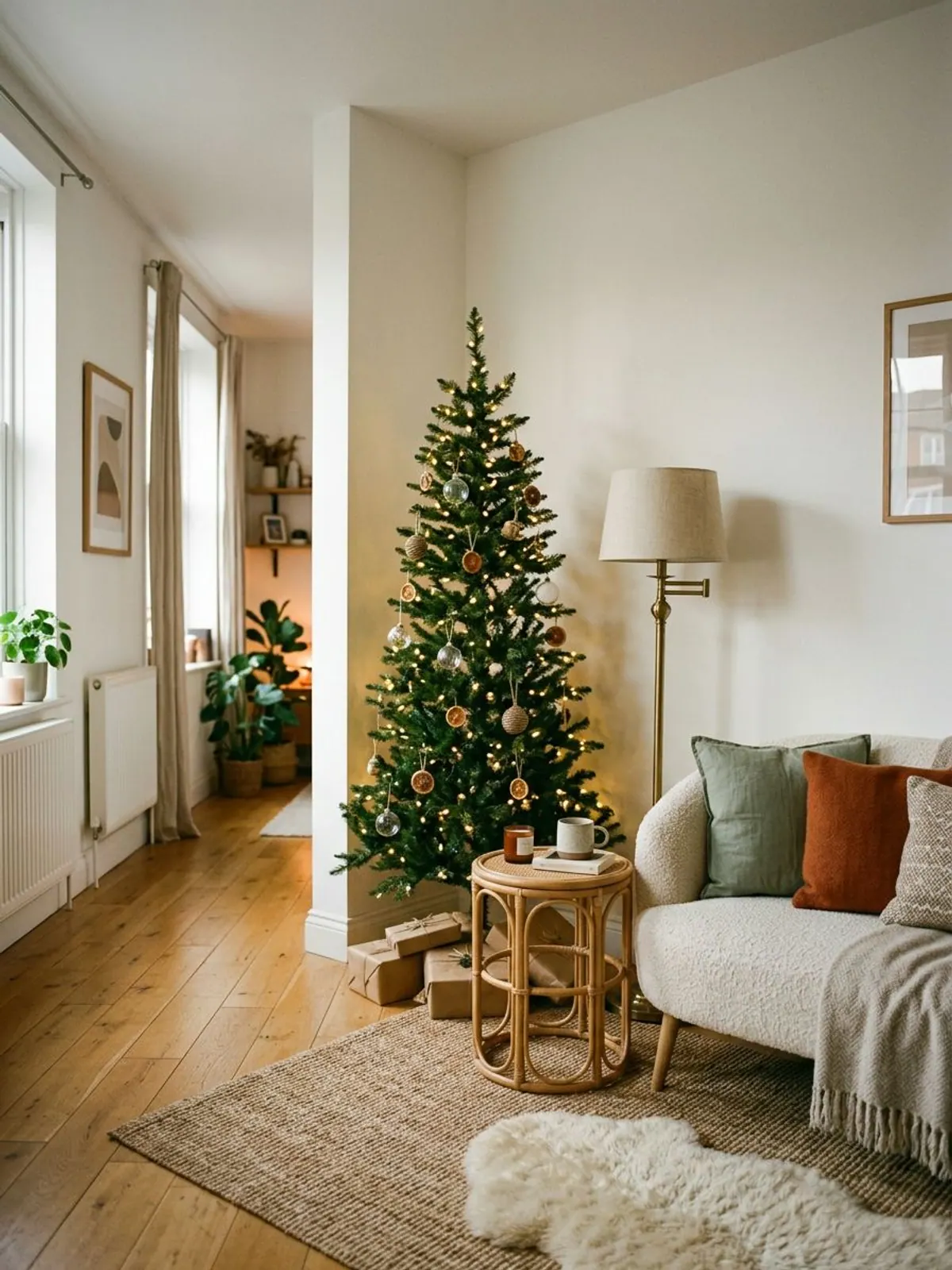
A corner uses dead space and keeps the tree out of the traffic line. Angle the stand a little so the tree does not look jammed into the walls, and pull it out a few inches so the branches can spread. Designers also warn that a corner tree can look forgotten if the walls around it are bare, so add a lamp or a small basket beside it.
2. In front of the window
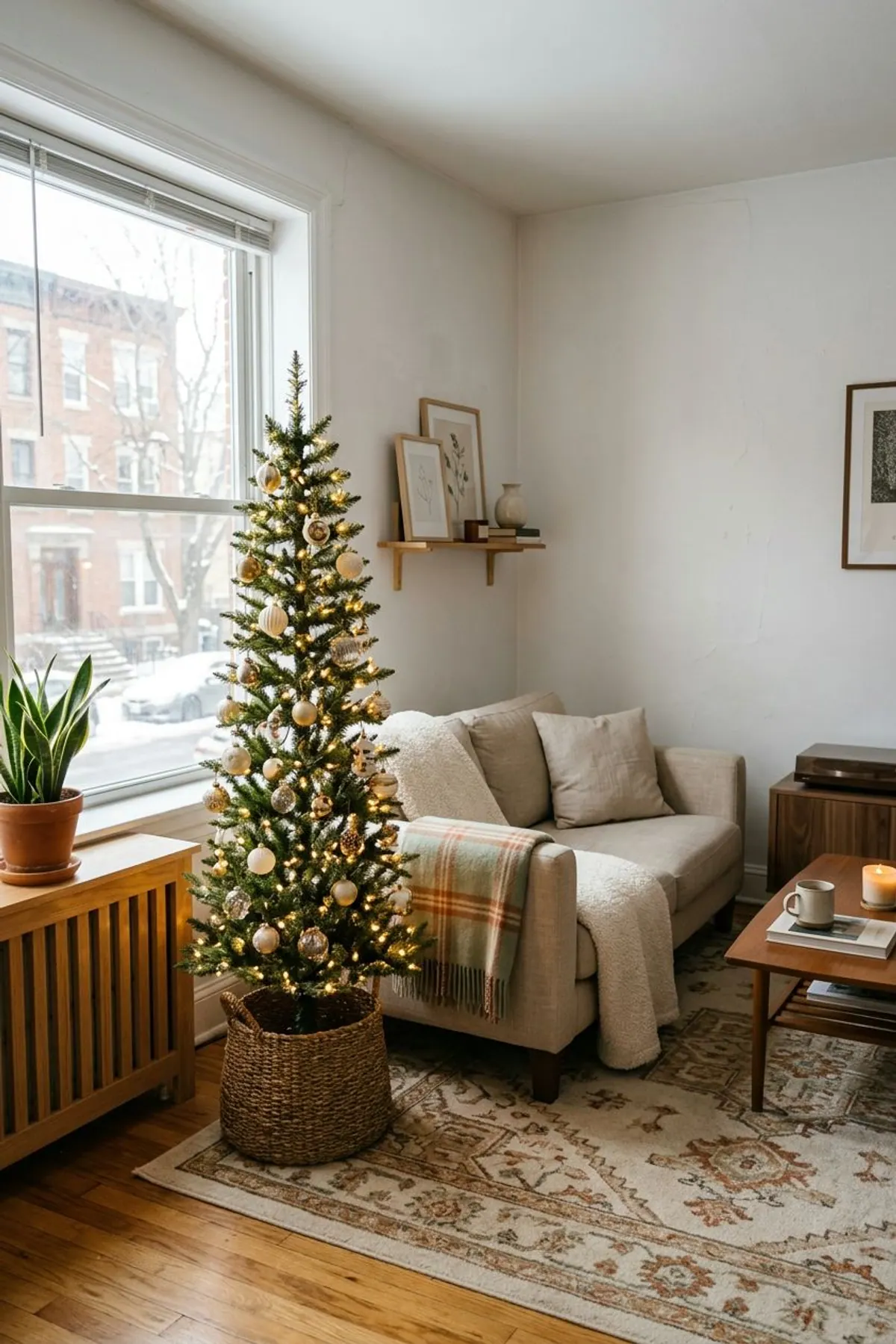
A tree in a window shows from the street and bounces its lights off the glass, which makes a small room feel brighter. The trade-offs are sun and heat. A real tree dries faster in direct sun, and many apartments have a radiator or baseboard heater under the window, so run the 3 foot check first.
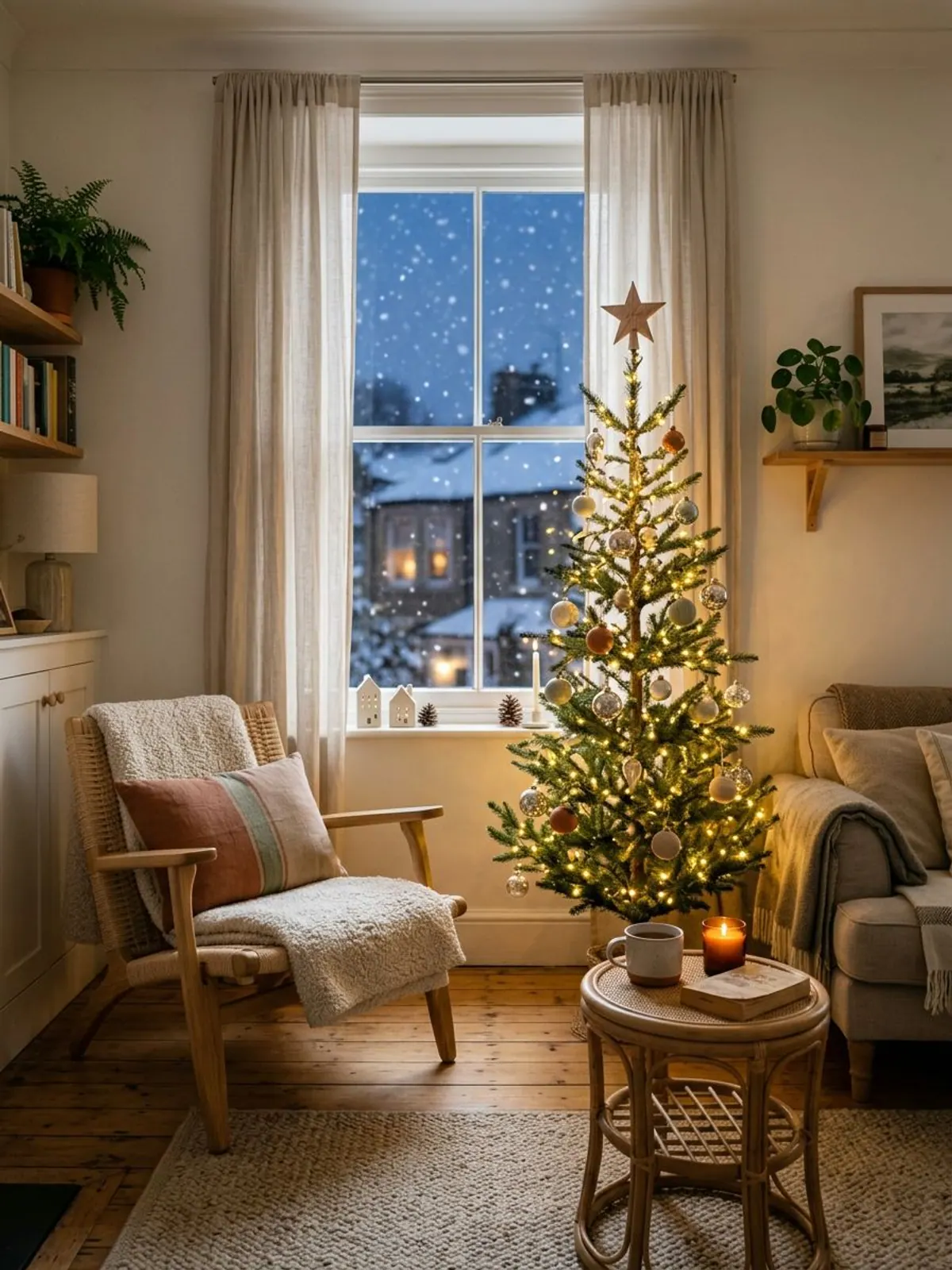
Pull the curtains to the sides and pin them back with a tieback, so the fabric is not touching the lights. Turn the tree lights off when you leave.
3. Beside the TV stand
If the TV wall is your only free wall, put a 3 to 5 foot tree on one side of the stand and a plant or lamp on the other. The tree balances the screen, and the sofa already faces that wall, so you see the tree every evening. Keep the tree's cord away from the TV and streaming cables so you can unplug one without tugging the other.
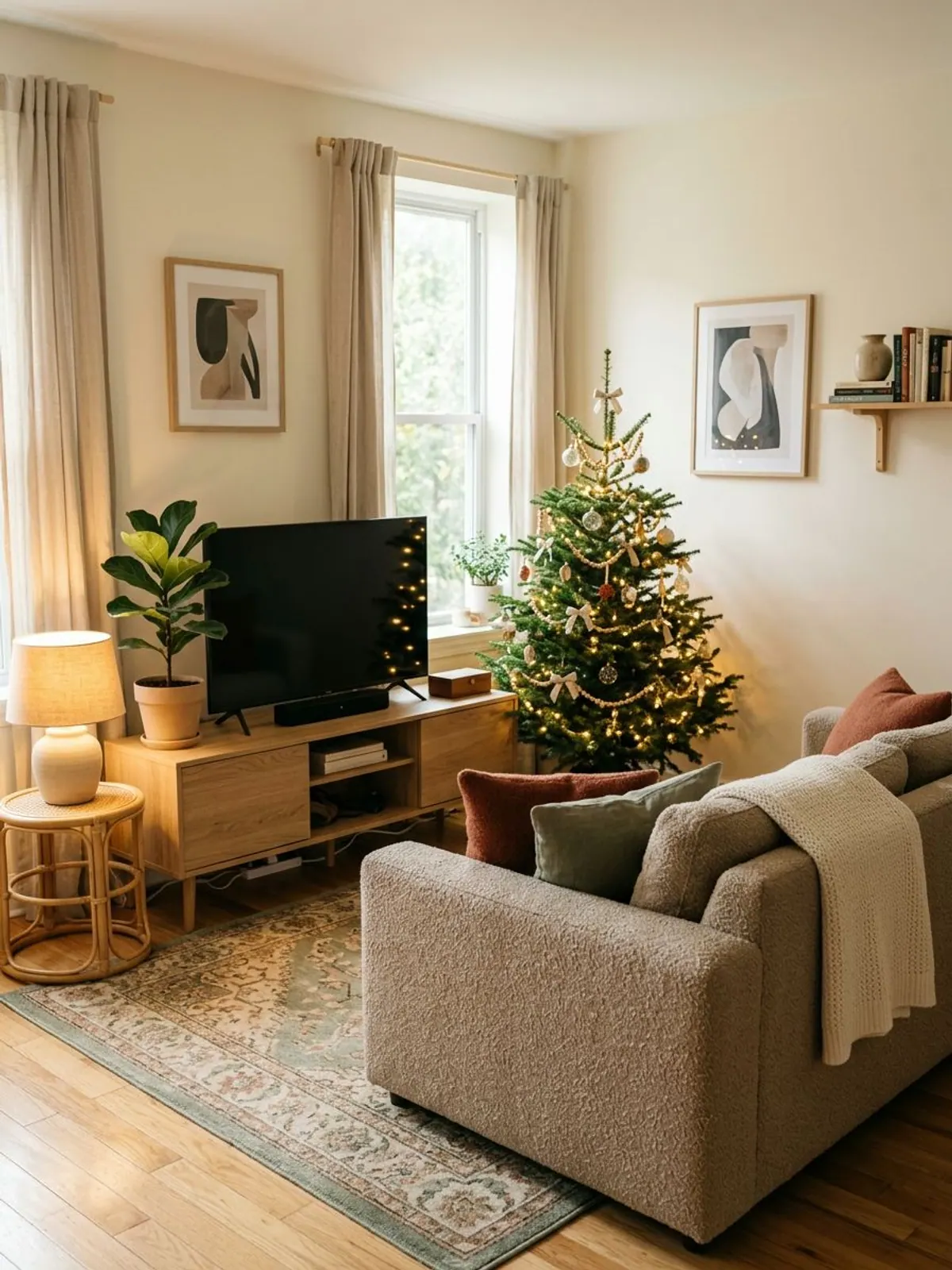
Want the tree area to look finished, not squeezed? Our small living room layout guide with a TV shows how far the sofa should sit from that wall.
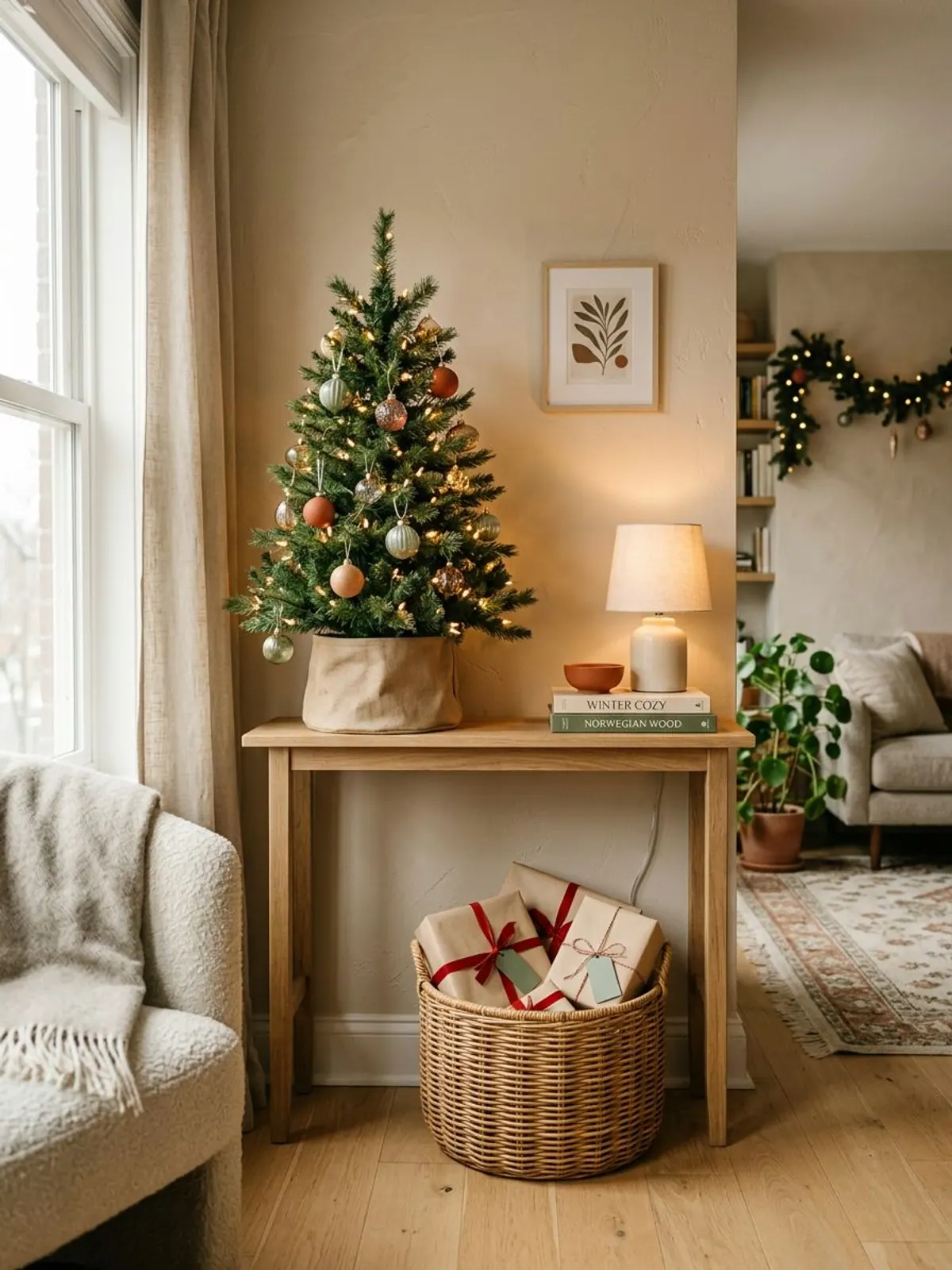
4. On a console or table
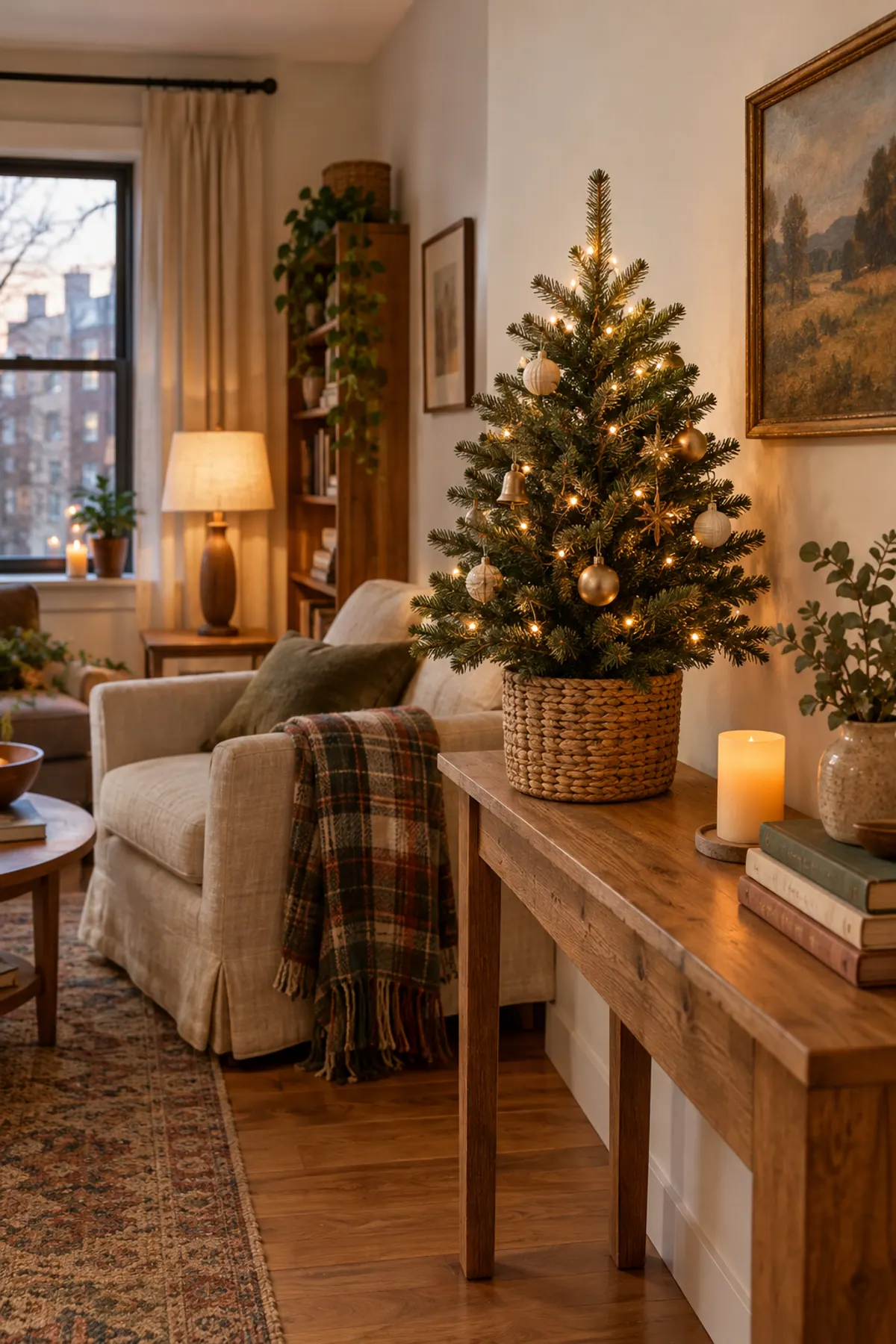
When the floor is full, go up. A 3 foot tree on a narrow console takes about 12 to 16 inches of depth and leaves the floor open for a basket of presents. Check that the tree's base is no wider than the table, and put a tray or board under the stand so one bump does not tip it.
5. Behind the sofa
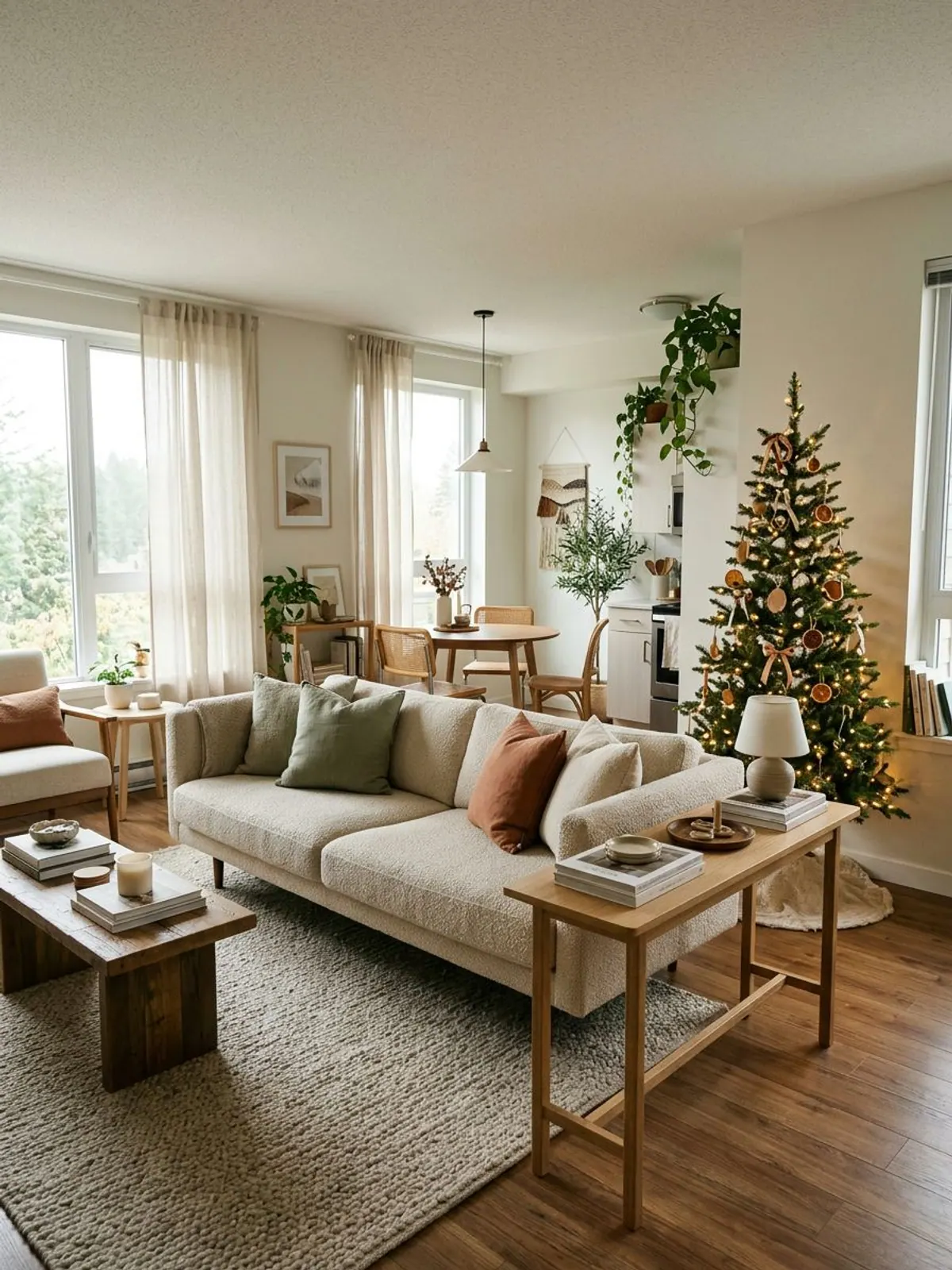
In an open-plan room where the sofa floats, the space behind it is often unused. A slim tree at one end of the sofa back, or on a console behind it, divides the living area from the dining area and shows from the kitchen too. Leave a few inches between the branches and the sofa so guests do not brush them when they sit.
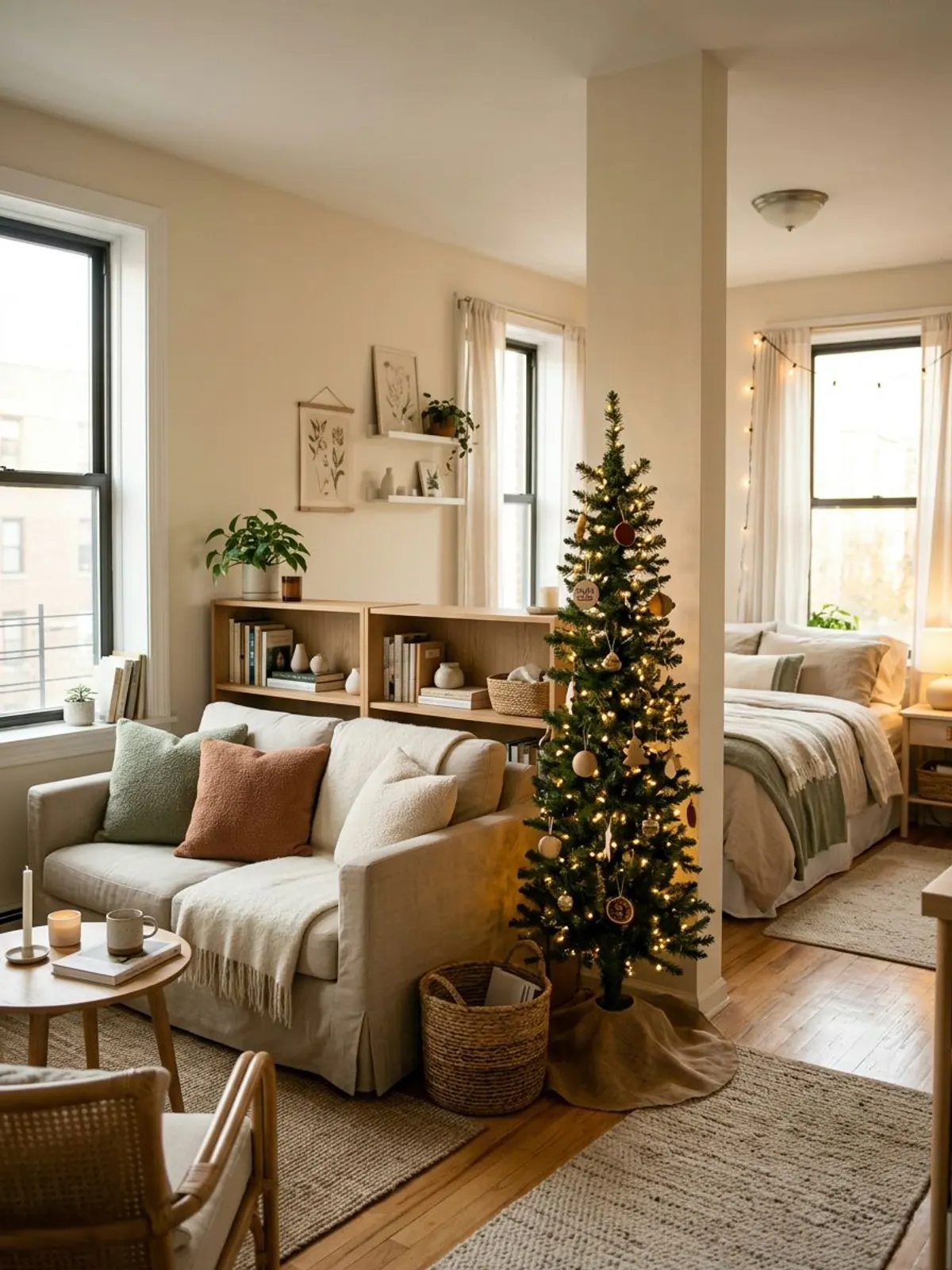
6. At the end of a studio zone
In a studio, the tree can mark the line between the sofa zone and the bed zone, so it works as a divider. Stand it at the end of a low bookshelf and keep it out of the bed zone, where a lit tree is the last thing you want next to your pillow. Our studio apartment layout guide shows how to zone a 400 square foot room.
Outlets and cords: plan the plug before the tree
Pick the spot, then find the outlet. The Electrical Safety Foundation International (ESFI) advises against overloading outlets and against running extension cords under rugs, through doorways or near furniture. Its 2025 tip sheet adds that you should usually connect no more than three light strings together; for LED sets, follow the manufacturer's limit on the packaging (ESFI tips as republished by a utility).
Outlet and cord checklist for the tree spot
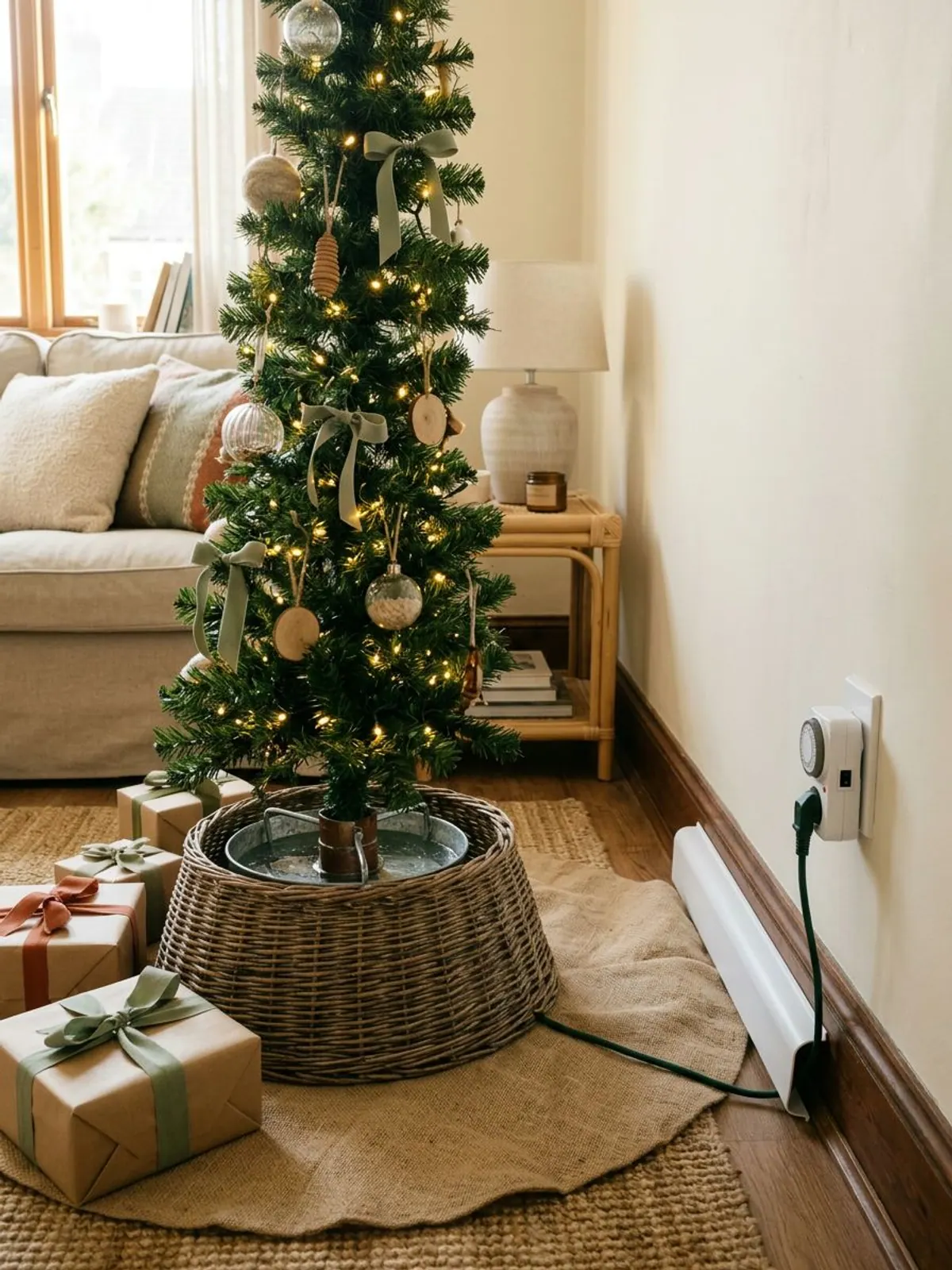
A plug-in outlet timer solves two problems: the tree switches off on its own, and you do not have to crawl behind it to unplug. If the only outlet is across the room, move the tree closer or choose a battery-lit tabletop tree instead.
Myth vs reality: spots people regret
What we like
- Corner next to seating, off the walkway
- Window spot with the radiator checked first
- Tree and plug within one short cord of each other
- Tree stand on a tray or skirt to protect the floor
Keep in mind
- Tree in front of the radiator or heat vent because it is the only gap
- Tree in the doorway or in the path to the kitchen
- Extension cord taped across the floor
- Real tree in direct sun with no water in the stand
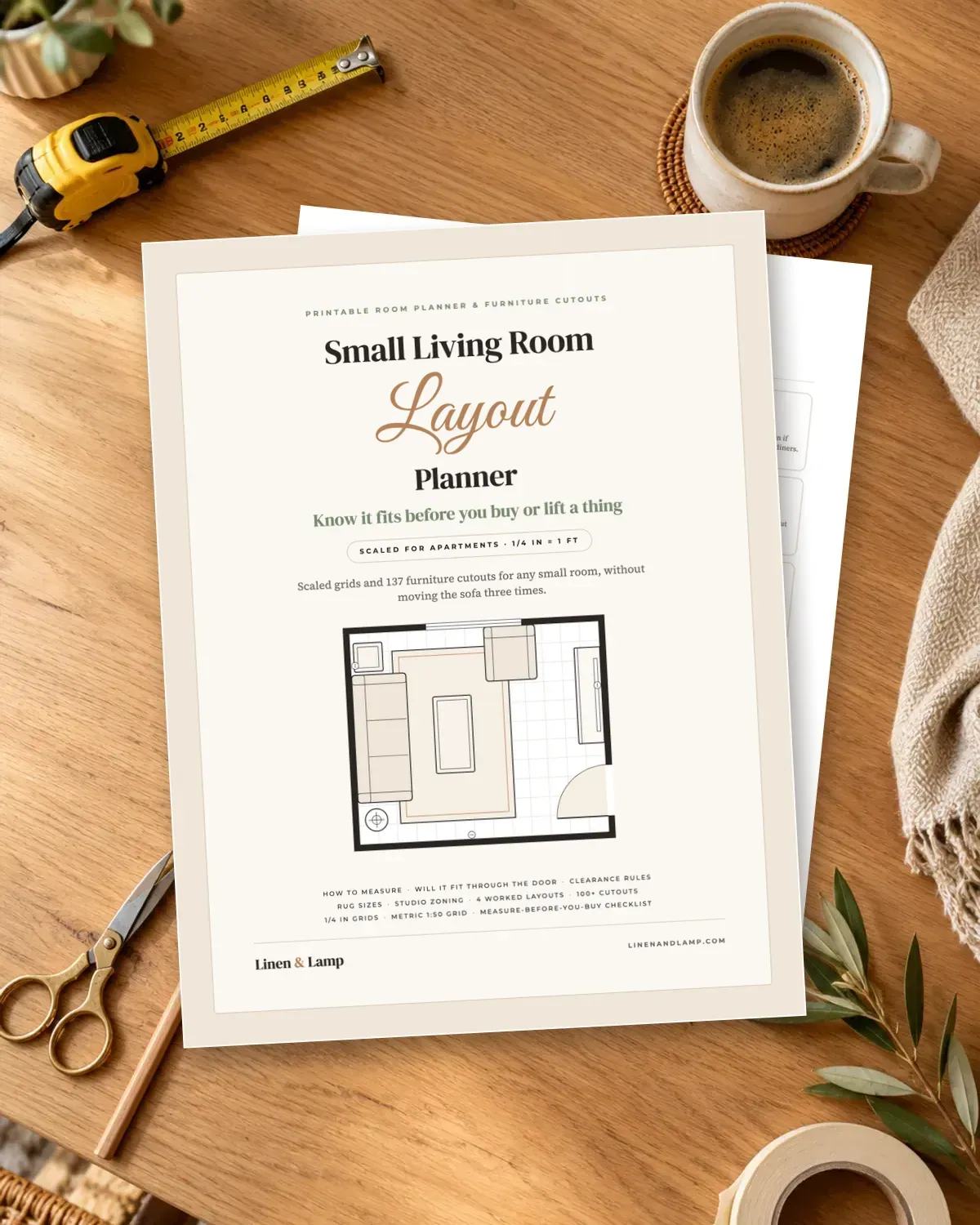
Once the spot is chosen, sketch it. The free makeover planner and the $9 Small Living Room Layout Planner let you test the tree, sofa and walkway on a scaled grid before you move anything. If a month of hosting is ahead too, the $15 Whole Apartment Bundle adds the hosting planner and the declutter reset.
Related questions people ask
Can you put a Christmas tree in front of a window?
Yes, if there is no radiator or heater under it and you keep curtains clear of the lights. Real trees dry faster in direct sun, so water them daily.
How far should a Christmas tree be from the wall?
A few inches is enough for air and branch spread. Fire guidance focuses on distance from heat sources, so the wall matters less than the radiator.
Is a tabletop tree better in a small living room?
It frees the floor, but only if the table is stable and deep enough. See our tabletop tree ideas.
Shop the tree spot list
Product types mentioned above. We have not tested these hands-on. See our disclosure.
For a small-living-room tree
- Start here
Slim pre-lit Christmas tree, 5 to 6 ft
Typically $60 to $150
A narrow base fits a corner or window.
Check price on Amazon for Slim pre-lit Christmas tree, 5 to 6 ft -
Plug-in outdoor and indoor outlet timer
Typically $8 to $15
Switches the tree off at night without crawling behind it.
Check price on Amazon for Plug-in outdoor and indoor outlet timer -
Cord cover for baseboard
Typically $8 to $15
Keeps the cord flat along the wall.
Check price on Amazon for Cord cover for baseboard -
Round tree skirt or woven collar
Typically $20 to $40
Hides the stand and protects a rental floor.
Check price on Amazon for Round tree skirt or woven collar -
Battery tabletop tree, 2 to 3 ft
Typically $15 to $35
For when the only outlet is out of reach.
Check price on Amazon for Battery tabletop tree, 2 to 3 ft
Frequently asked questions
Where is the best place to put a Christmas tree in a small living room?
The corner next to your seating, as long as it is at least 3 feet from any heat source and clear of the walkway. If no corner is free, use the window or a tabletop tree.
How far should a Christmas tree be from a radiator or heater?
At least 3 feet, according to NFPA tips for fire safety. Measure to the tips of the branches, not the trunk.
Can I put a Christmas tree behind the sofa?
Yes, in an open-plan room with a floating sofa. Leave a few inches between the sofa back and the branches, and keep the tree out of the walkway.
How many light strings can I plug together on a tree?
ESFI advises usually no more than three. For LED sets, follow the manufacturer's limit printed on the box.
What if my only outlet is across the room?
Move the tree closer, or use a battery-lit tabletop tree. Do not run an extension cord under a rug or across a doorway.

Save it for later
Pin this to your Seasonal Decor board so it's there when you need it.
Save to Pinterest