This post contains affiliate links. As an Amazon Associate we earn from qualifying purchases, at no extra cost to you. Read our disclosure.
Key takeaways
- Empty, sort and measure before you buy a single bin.
- Start with shelf risers, labels and a tension rod: typically $21 to $52 together.
- Use the back of the door and the floor, not only the shelves.
- Label zones, not items, so the system survives a change in what you buy.
- No pantry? One cabinet or a slim cart does the same job.
In this post21 sections
- Start here: empty, measure and sort the small pantry
- Small pantry organization ideas for the shelves
- 1. Shelf risers for canned goods
- 2. A tiered can organizer
- 3. A turntable for the awkward corner
- 4. Clear bins for pasta, rice and oats
- 5. Wire baskets for potatoes and onions
- Small pantry ideas for the door and the walls
- 6. An over-the-door rack
- 7. A hanging shoe organizer for snacks
- 8. A tension rod for spray bottles
- 9. Magazine holders for wraps and foil
- Jars, labels and pull-outs for small pantry organization
- 10. Mason jars for bulk dry goods
- 11. Labels by zone
- 12. Pull-out bins on the lowest shelf
- 13. Zone bins on a deep shelf
- Small pantry ideas when you do not have a pantry
- 14. One tall cabinet as the pantry
- 15. A slim rolling cart beside the fridge
- FAQ
Start here: empty, measure and sort the small pantry
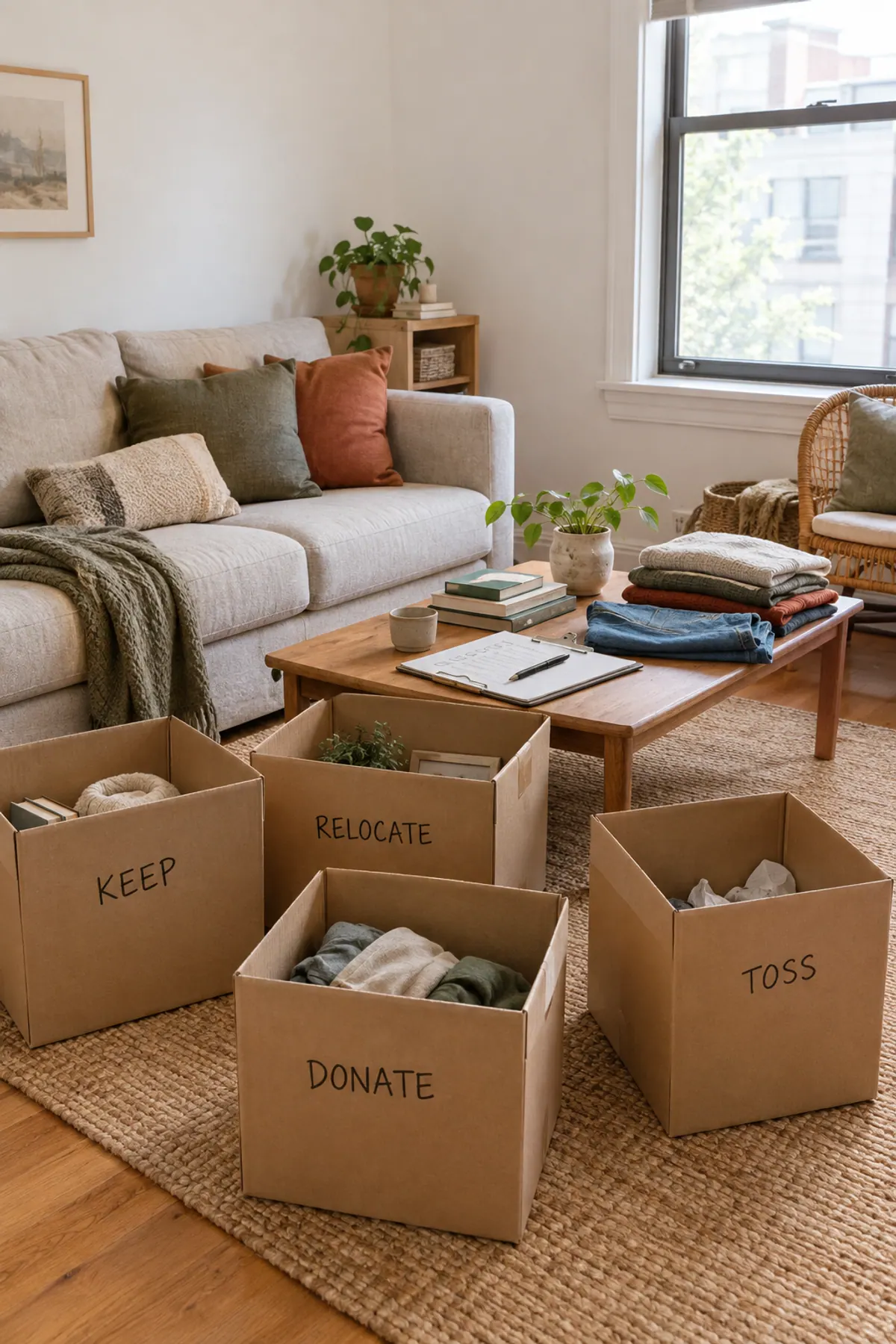
Small pantry organization on a budget starts with what you already own, because the cheapest storage is the space you free up by clearing out. Empty one shelf at a time onto the counter, toss anything expired and group the rest by how you cook: breakfast, baking, dinner basics, snacks.
Then measure each shelf's depth, the gap between shelves and the width of the door. Those three numbers decide which bins fit, and they keep you from buying a rack that sits in a drawer of returns.
| Idea | Typical cost | What it fixes |
|---|---|---|
| Shelf risers (idea 1) | $10 to $25 | Cans and jars stacked two deep |
| Labels and a marker (idea 11) | $6 to $15 | Everything looks the same in a plain bin |
| Tension rod (idea 8) | $5 to $12 | Spray bottles taking a whole shelf |
| Clear bins (idea 4) | $20 to $45 | Loose bags that tip and spill |
| Over-door rack (idea 6) | $15 to $35 | A shelf full of small packets |
| Rolling cart (idea 15) | $30 to $70 | A kitchen with no pantry at all |
Here is a simple buying order. The first round is shelf risers, labels and a tension rod, which are typically $21 to $52 together. Add clear bins and an over-door rack and the total is typically $56 to $132. These are example sums of the price ranges above, not quotes, so check current prices.
This is the pantry-only version of our kitchen organization ideas for small rental kitchens, which covers drawers, cabinets and under the sink.
Small pantry organization ideas for the shelves
1Shelf risers for canned goods
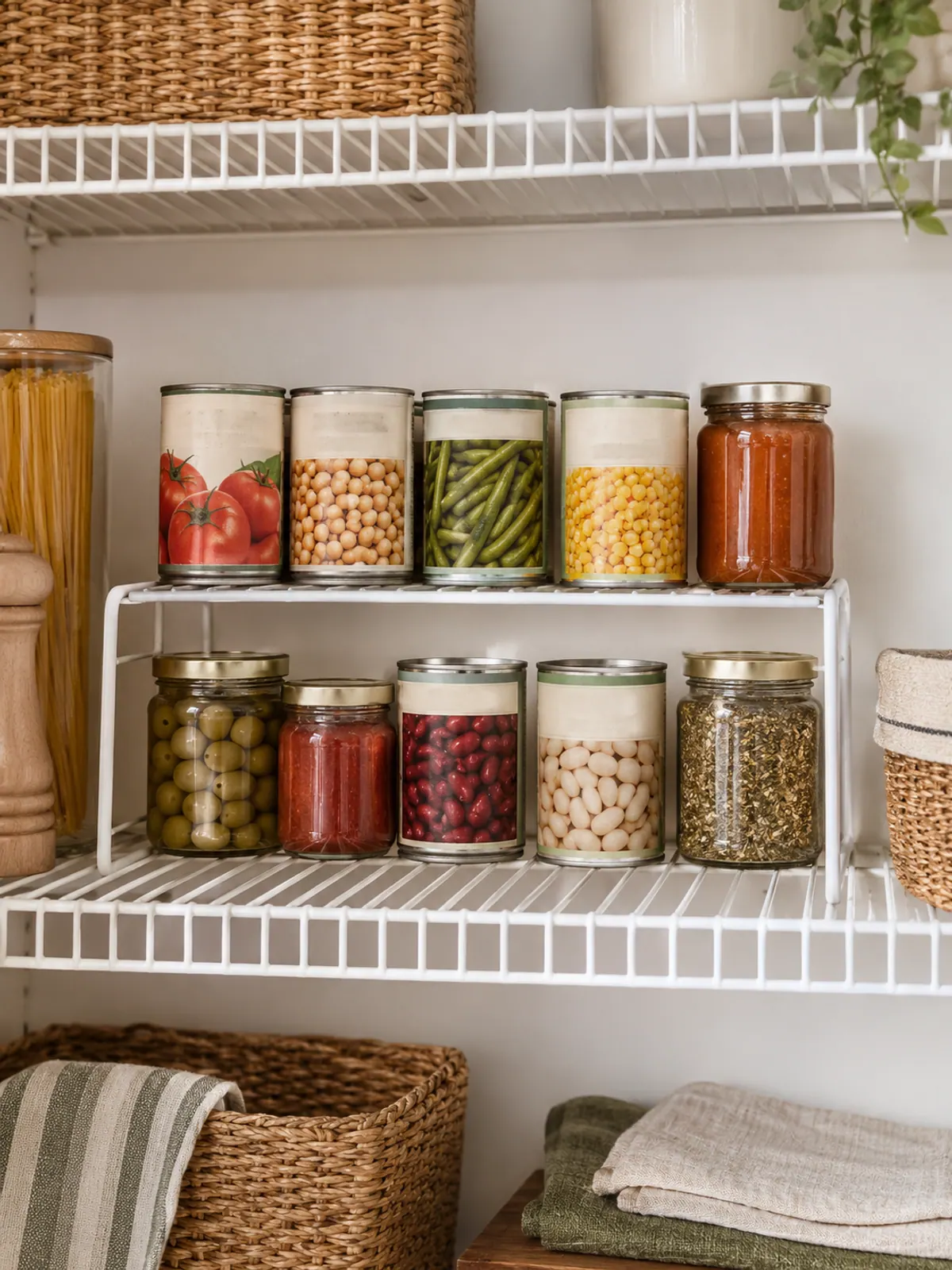
A riser makes a second level on a shelf you already have. Cans on the back step are visible over the front row, so nothing hides and nothing expires unseen. In a pantry with 12 inches between shelves, one riser typically doubles the usable surface for tall jars.
Measure the gap first. Leave at least 1 inch above the top row so you can slide a can out without scraping.
- Put the newest cans in the back and pull from the front. A pen mark on the lid with the month helps.
Doubles the use of a shelf you already own.
2A tiered can organizer
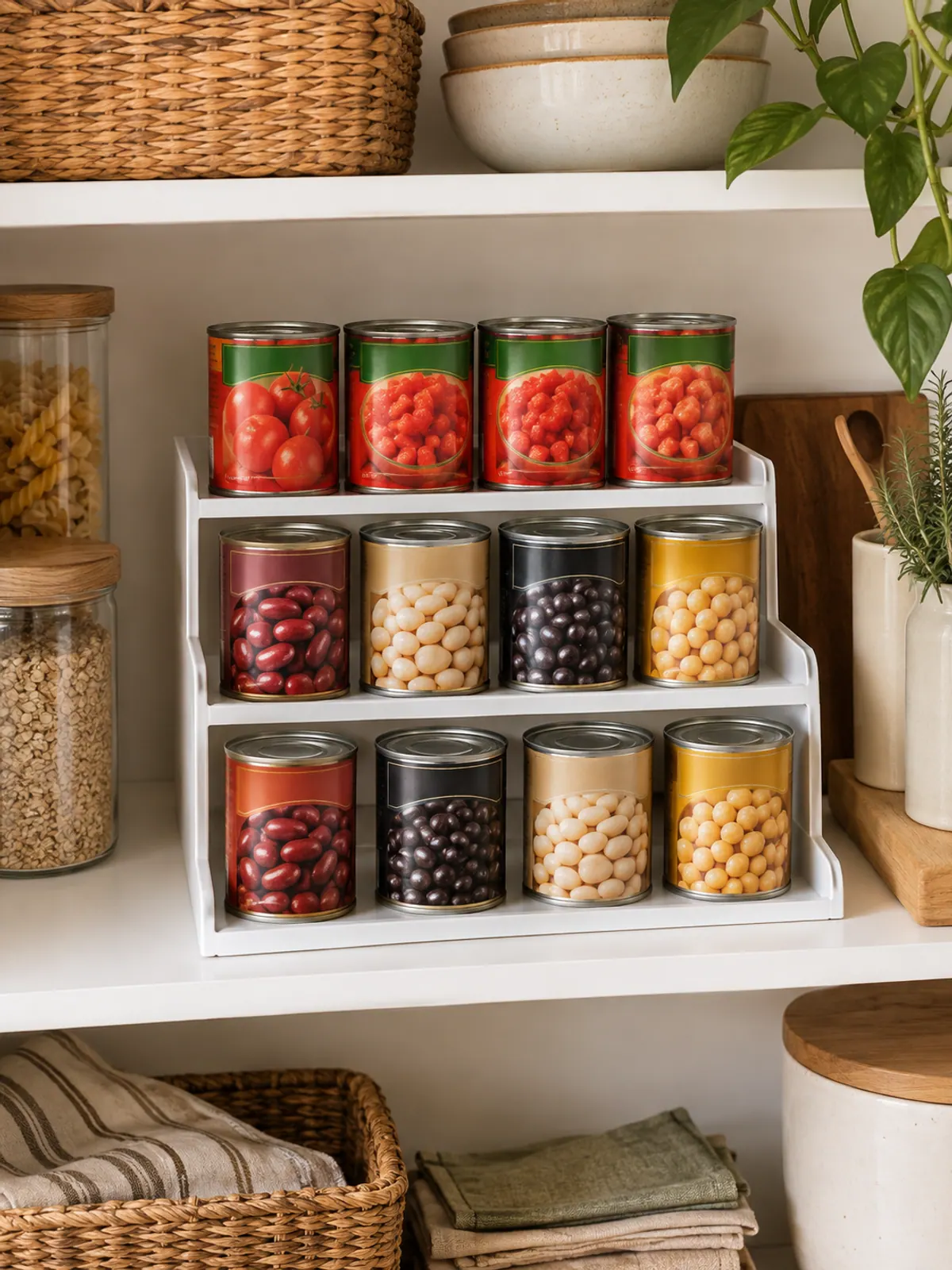
A stepped can rack shows every label at once, which stops the second can of chickpeas you did not need. Three rows of cans take about the shelf space that two used to.
Buy one that matches your can size, since a soup can and a tuna can need different steps. A shallow one is easier to reach on a high shelf.
- Keep tall cans on the bottom step and short cans on the top. It looks neater and stays stable.
Every label visible, nothing hiding at the back.
3A turntable for the awkward corner
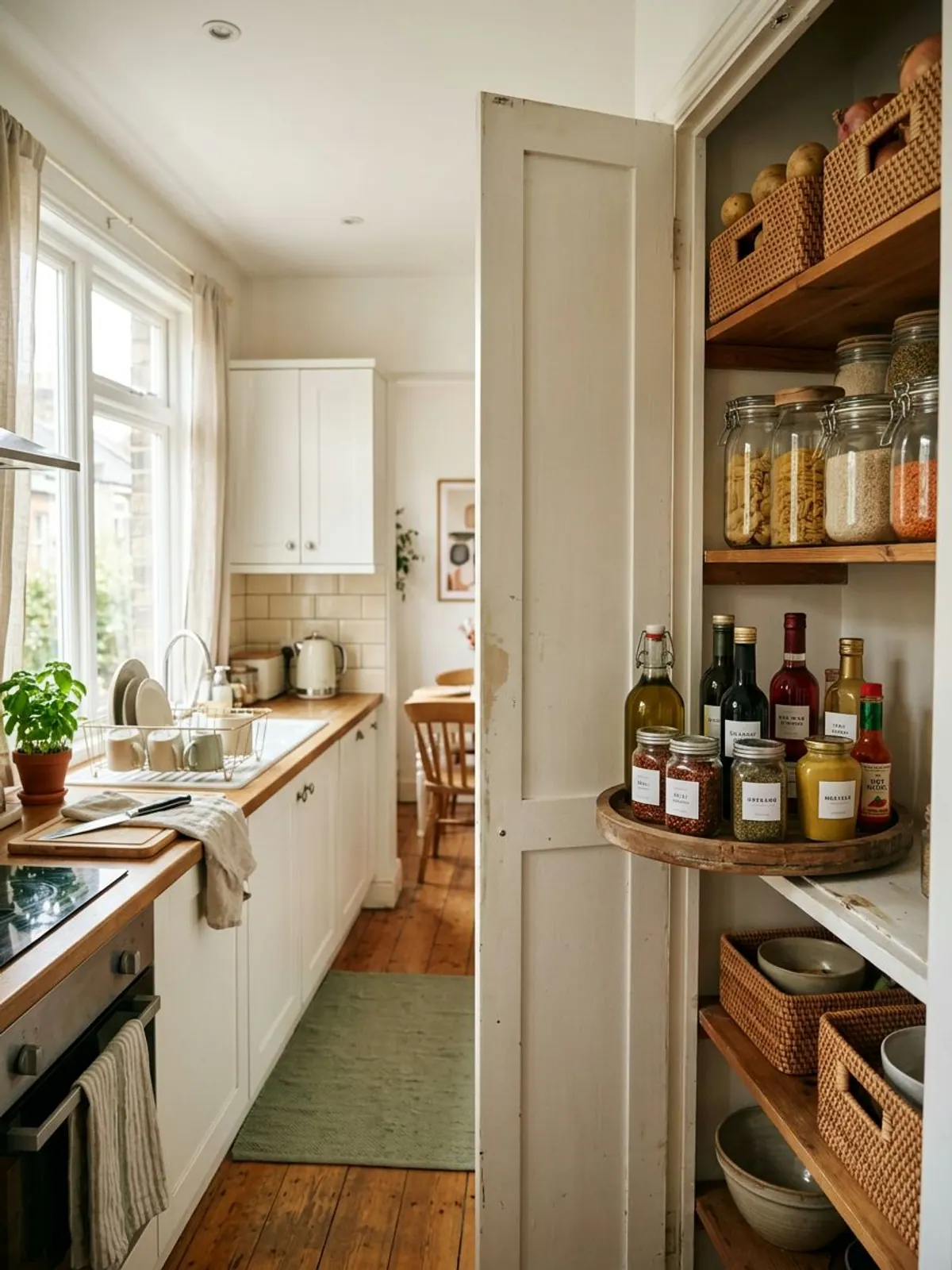
The back corner of a deep shelf is where bottles go to be forgotten. A 10 to 12 inch turntable puts oil, vinegar and sauce on one spinning plate, so a quarter turn brings the back row forward.
Pick a lipped one so a bottle does not slide off when you spin it.
- Use the turntable for sticky things only. Dry goods do better in bins.
Corner bottles come to you.
4Clear bins for pasta, rice and oats
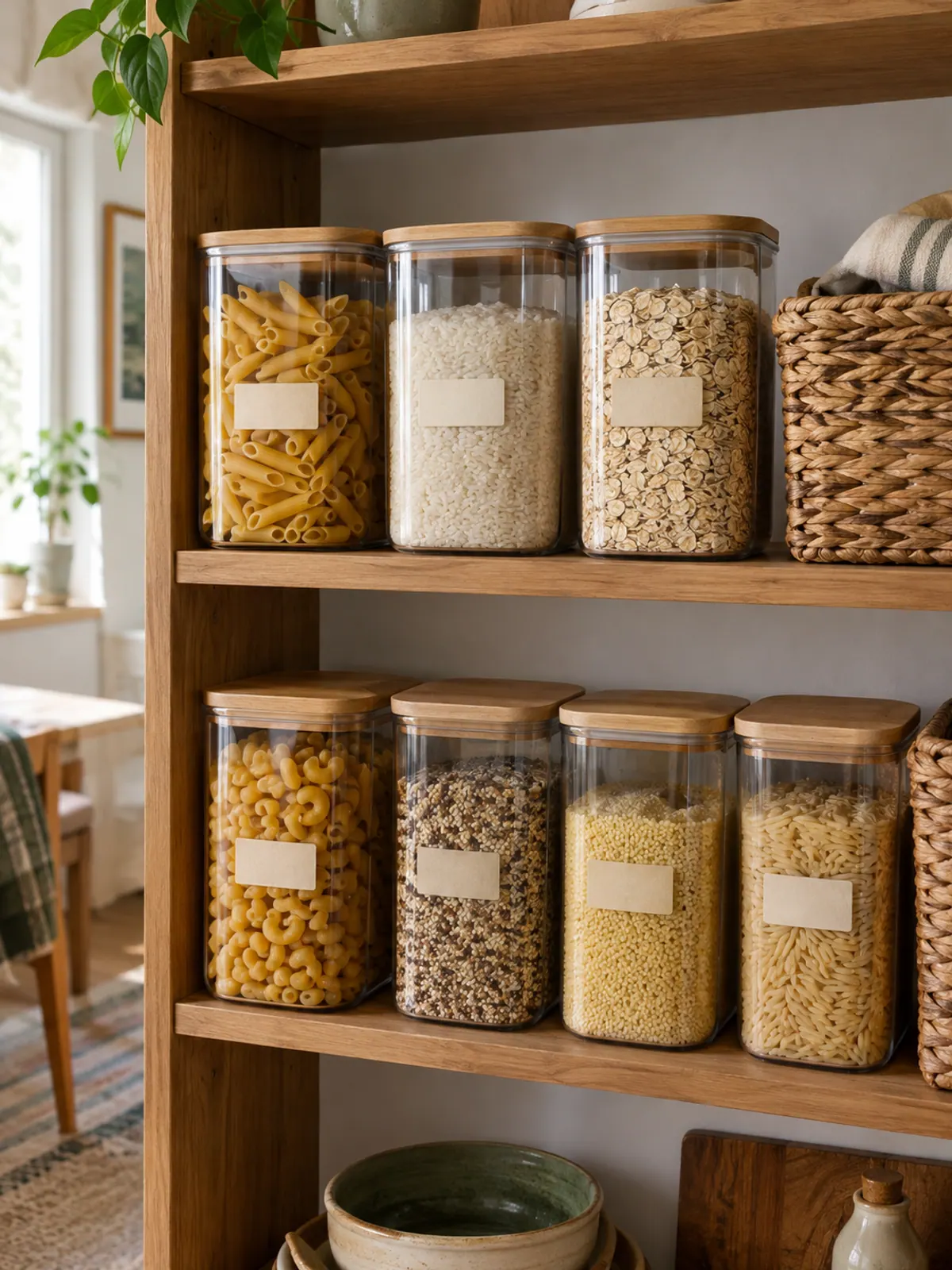
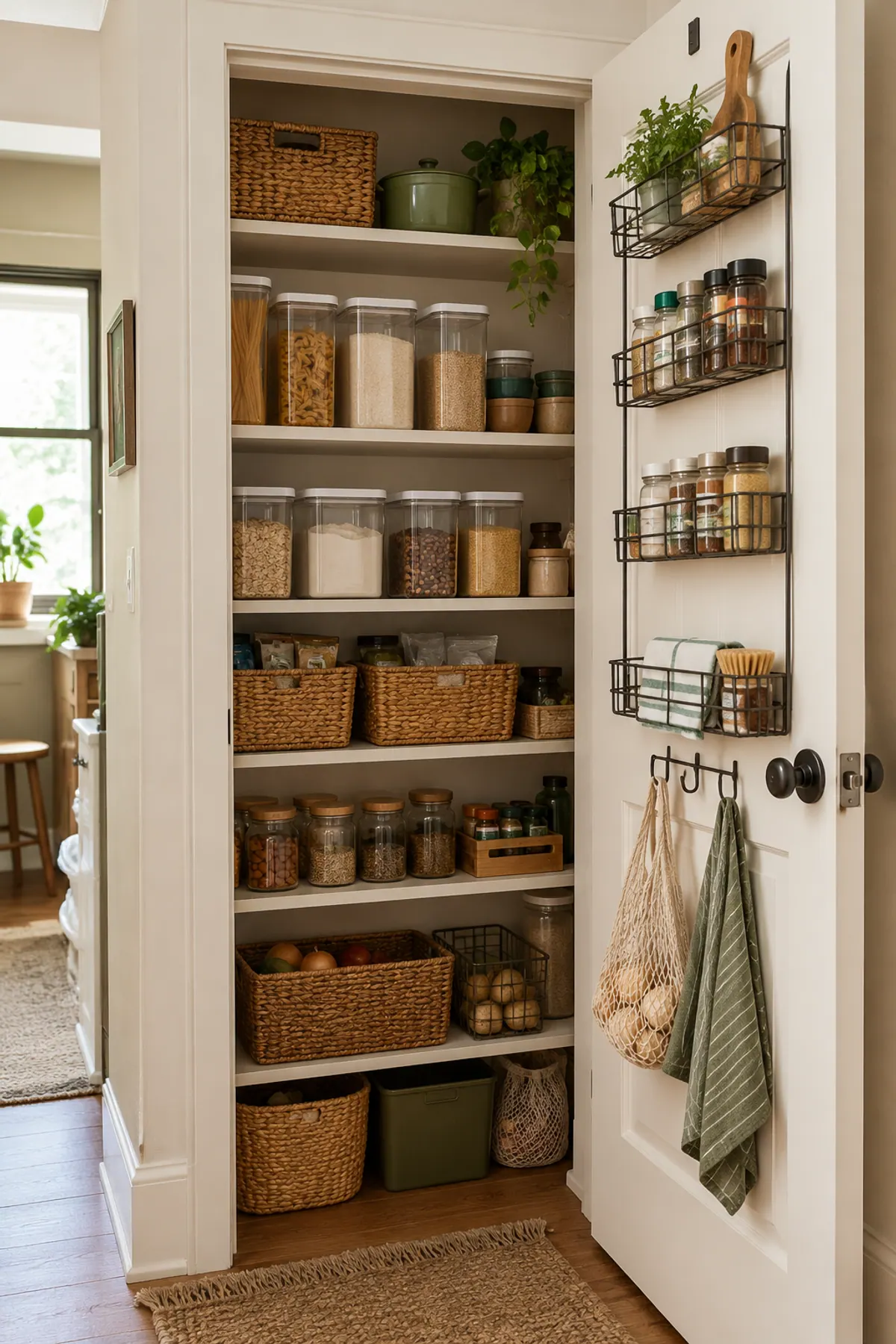
Clear bins give loose bags a shape. Pasta, rice and oats sit in matching containers, so a shelf reads as a block instead of a slump. You also see when you are running low.
Buy bins in two or three sizes only, so they stack. Decanting is optional: keep the original bag inside the bin if you need the cooking directions.
- Skip decanting small packets. A bin that holds three packets is faster than opening each one.
Turns loose bags into a stack that fits the shelf.
5Wire baskets for potatoes and onions
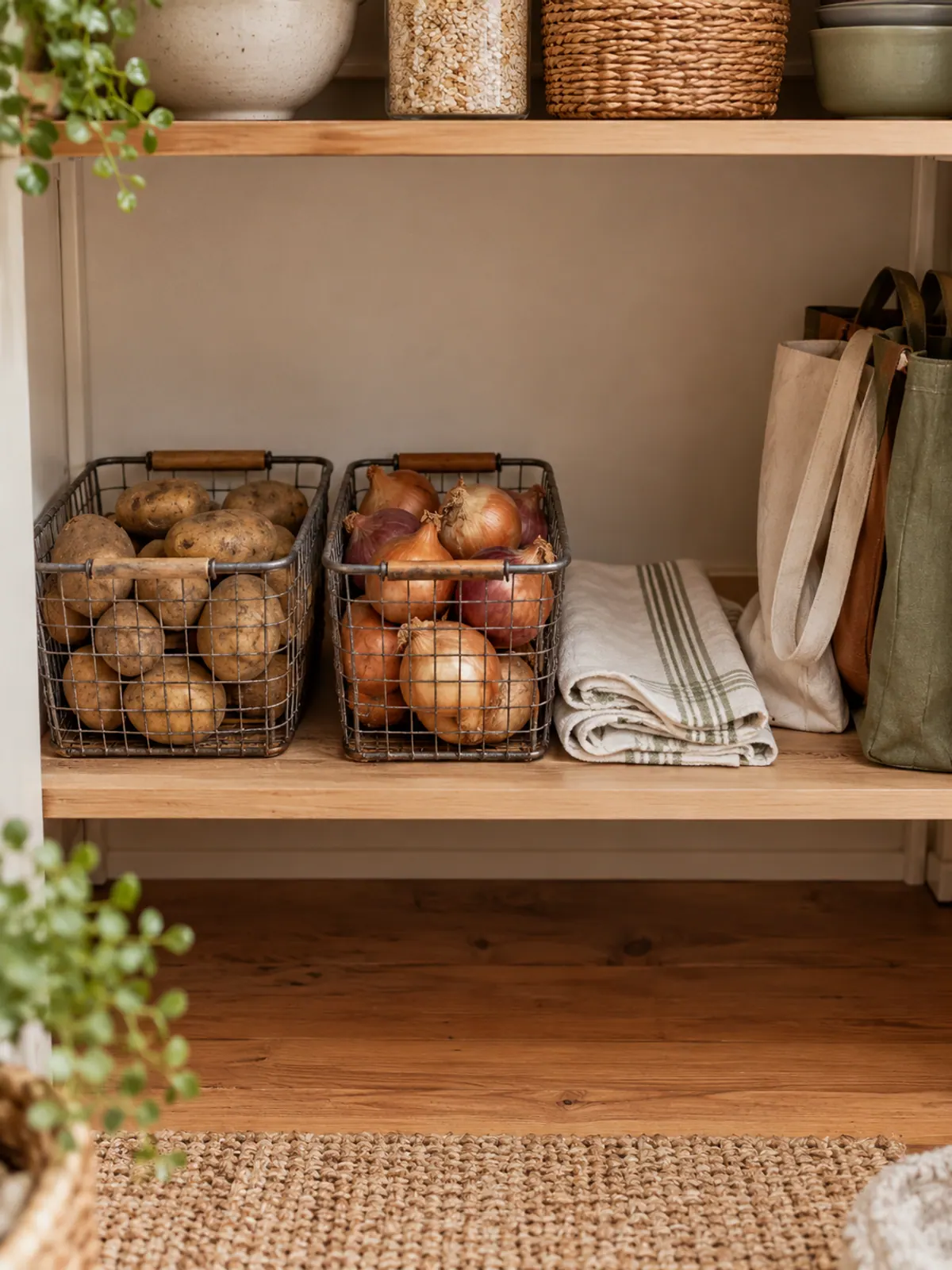
Produce that likes the dark belongs in a basket low in the pantry. Two wire baskets hold potatoes and onions with air flowing around them, and the lower shelf is already too low for much else.
Keep potatoes and onions in separate baskets. Check them weekly and remove anything soft.
- A folded kitchen towel in the bottom of each basket catches dirt and is easy to shake out.
A low shelf for produce that likes the dark.
Small pantry ideas for the door and the walls
6An over-the-door rack
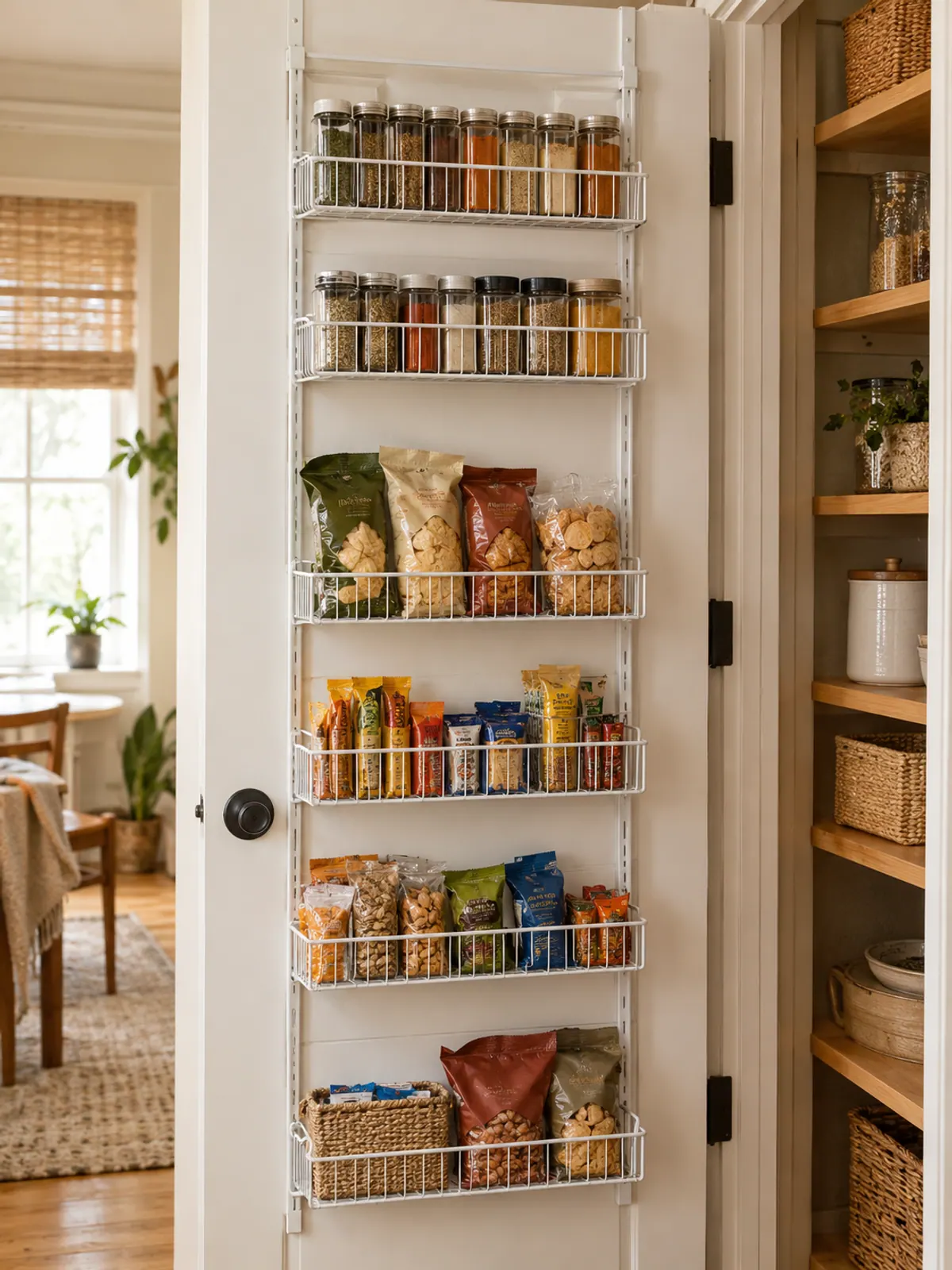
The back of the door is the biggest unused surface in a small pantry. A metal over-door rack holds spices, snacks and packets in a 5 inch deep strip, and it needs no tools.
Measure the door's thickness (most are about 1 and 3/4 inches) and check it clears the frame so the door still closes.
- Check the lowest rack does not hit the shelf edge when the door swings.
Adds a whole shelf without touching the wall.
7A hanging shoe organizer for snacks
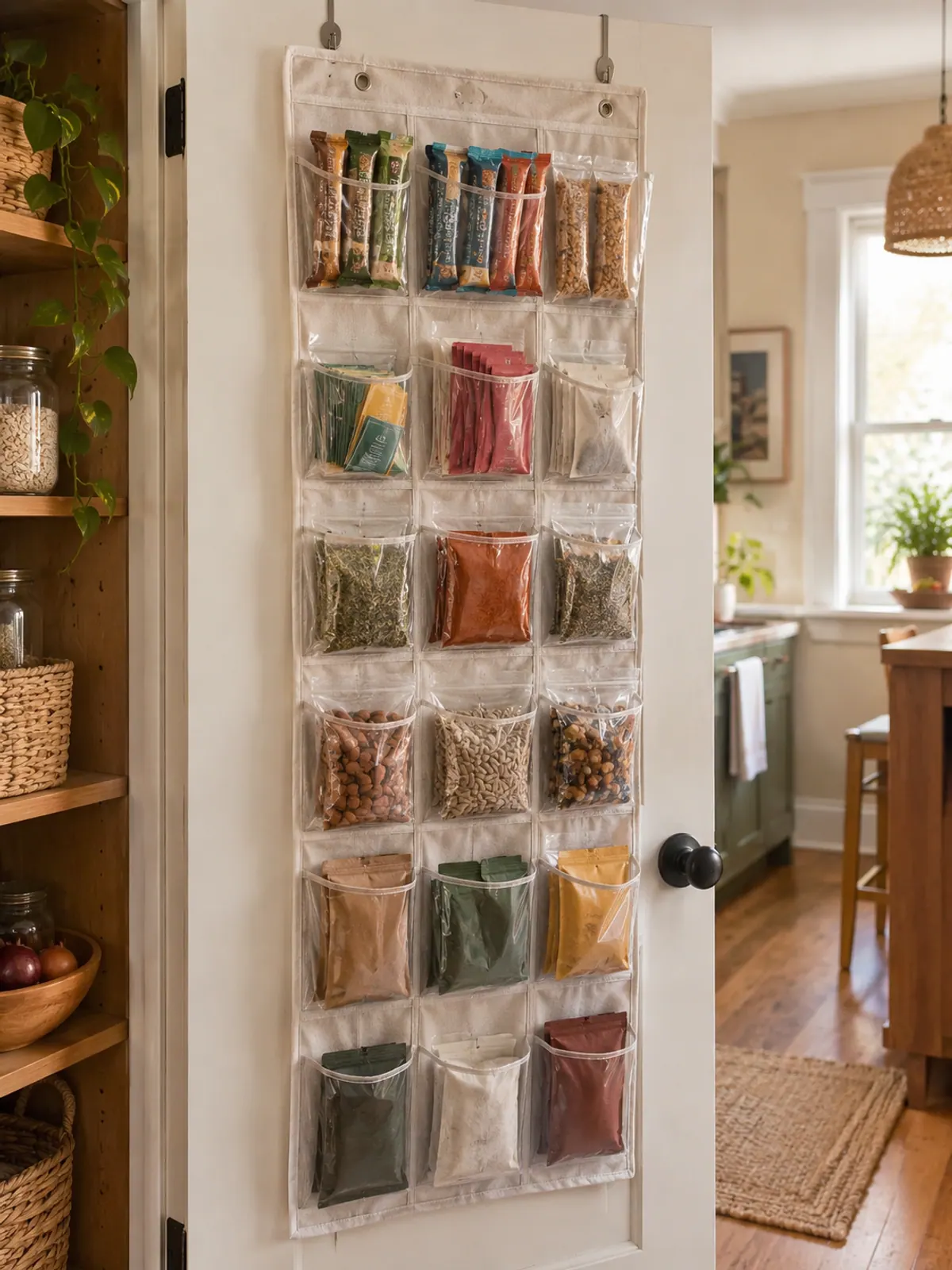
A clear pocket organizer made for shoes is a snack organizer in disguise. Each pocket holds a type of small item, so granola bars, tea, seasoning packets and fruit pouches stop sliding into the back of a shelf.
Choose clear pockets so you can see the contents, and use the top rows for things you reach for daily.
- Skip anything heavy. Cans and jars pull the whole organizer off the door.
Cheap, tool-free and surprisingly roomy.
8A tension rod for spray bottles
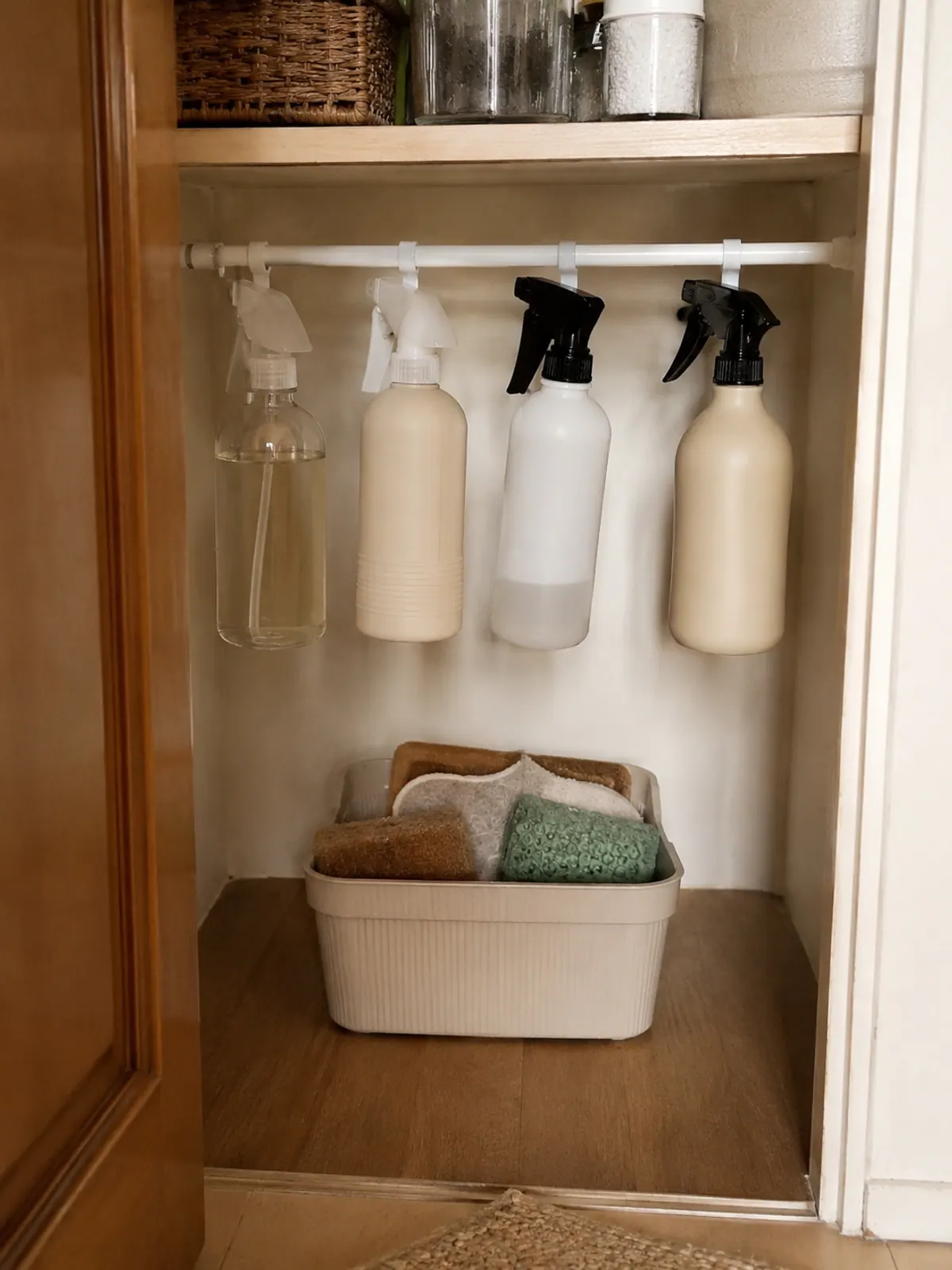
If cleaning supplies live in the pantry, a tension rod gives them their own rail. The bottles hang by their triggers and the floor space below is free for a bin of sponges.
Make sure the rod is rated for the weight of full bottles and sits tight against both sides. Keep cleaning supplies below food, always.
- Use a rod in a shallow plastic cap so it does not scratch painted shelf sides.
The cheapest shelf you can buy.
9Magazine holders for wraps and foil
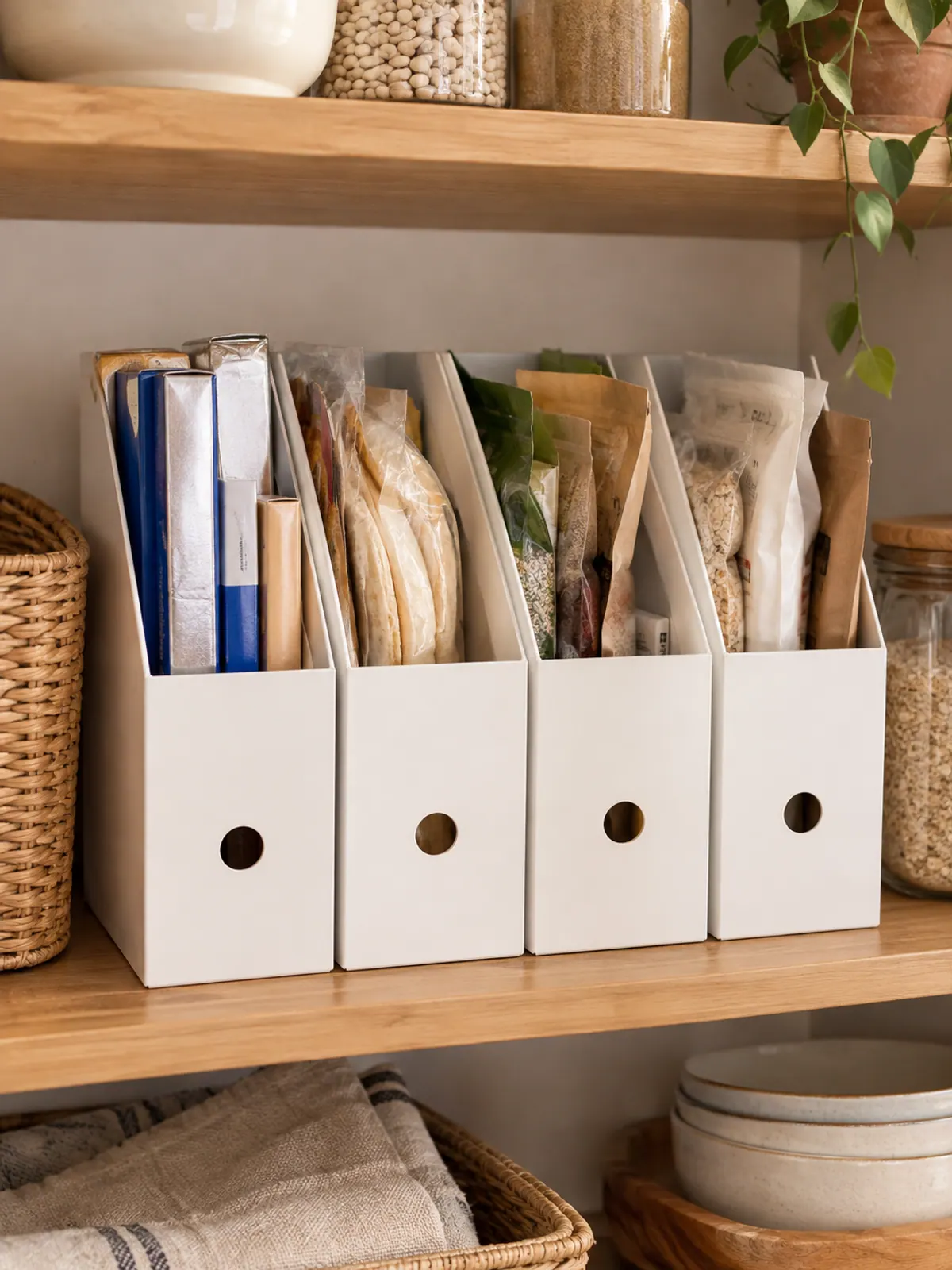
Foil, parchment and bread bags are awkward shapes that slide around. Plain magazine file holders turned on their sides hold them upright, like books on a shelf.
White or clear holders look neat, and a pack of four is typically cheaper than one organizer made for the job.
- Label the end of each holder with a marker. The label shows from the front of the shelf.
A cheap fix for odd shapes.
Jars, labels and pull-outs for small pantry organization
10Mason jars for bulk dry goods
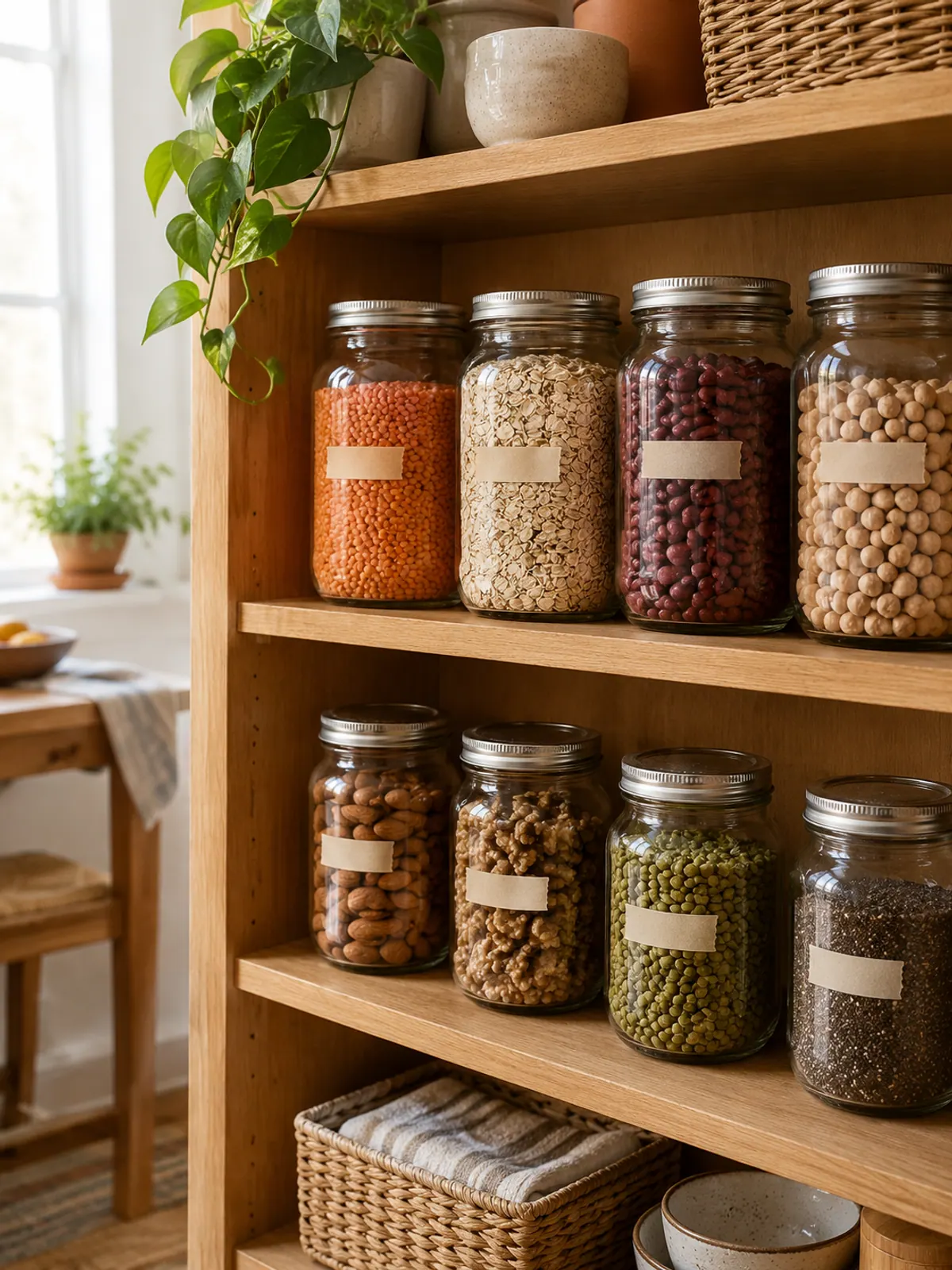
Jars suit the things you buy in bulk, such as lentils, oats and nuts. A row of identical jars looks tidy and costs less than a set of fancy canisters.
Use a wide-mouth size so a scoop fits, and keep the jars away from direct light. Glass is heavy, so put it on the lowest sturdy shelf.
- Write the use-by date on the label once you fill the jar.
Bulk food without a custom canister set.
11Labels by zone
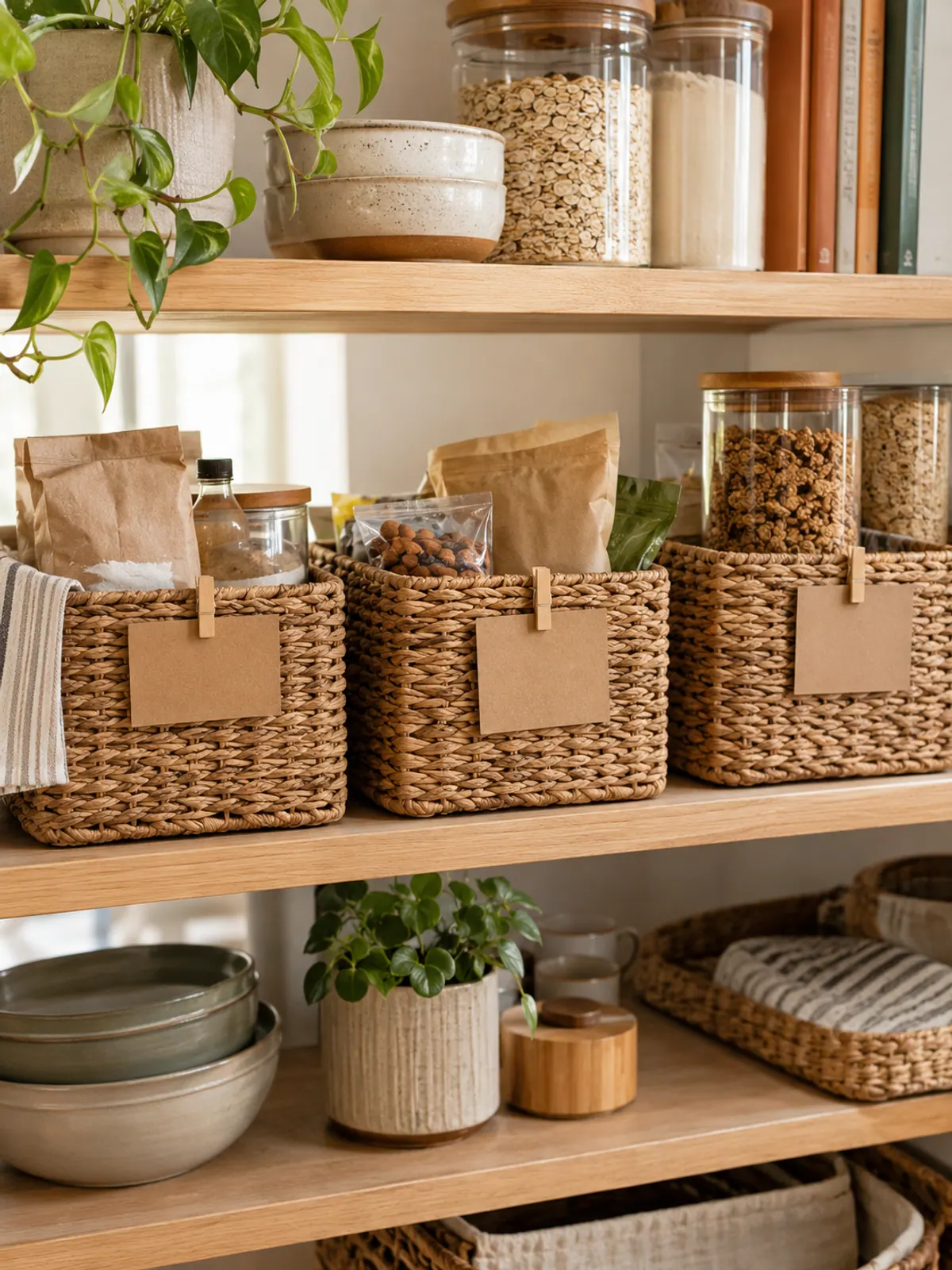
Labels turn a pile into a system. Clip a kraft label to each basket, name the zone (breakfast, baking, snacks) and the whole household knows where things go back.
Write zone names, not item names. A basket labeled snacks stays useful when the snacks change.
- Use a pencil on reusable tags. It lets you rearrange the zones as your habits change.
The cheapest upgrade with the biggest effect.
12Pull-out bins on the lowest shelf
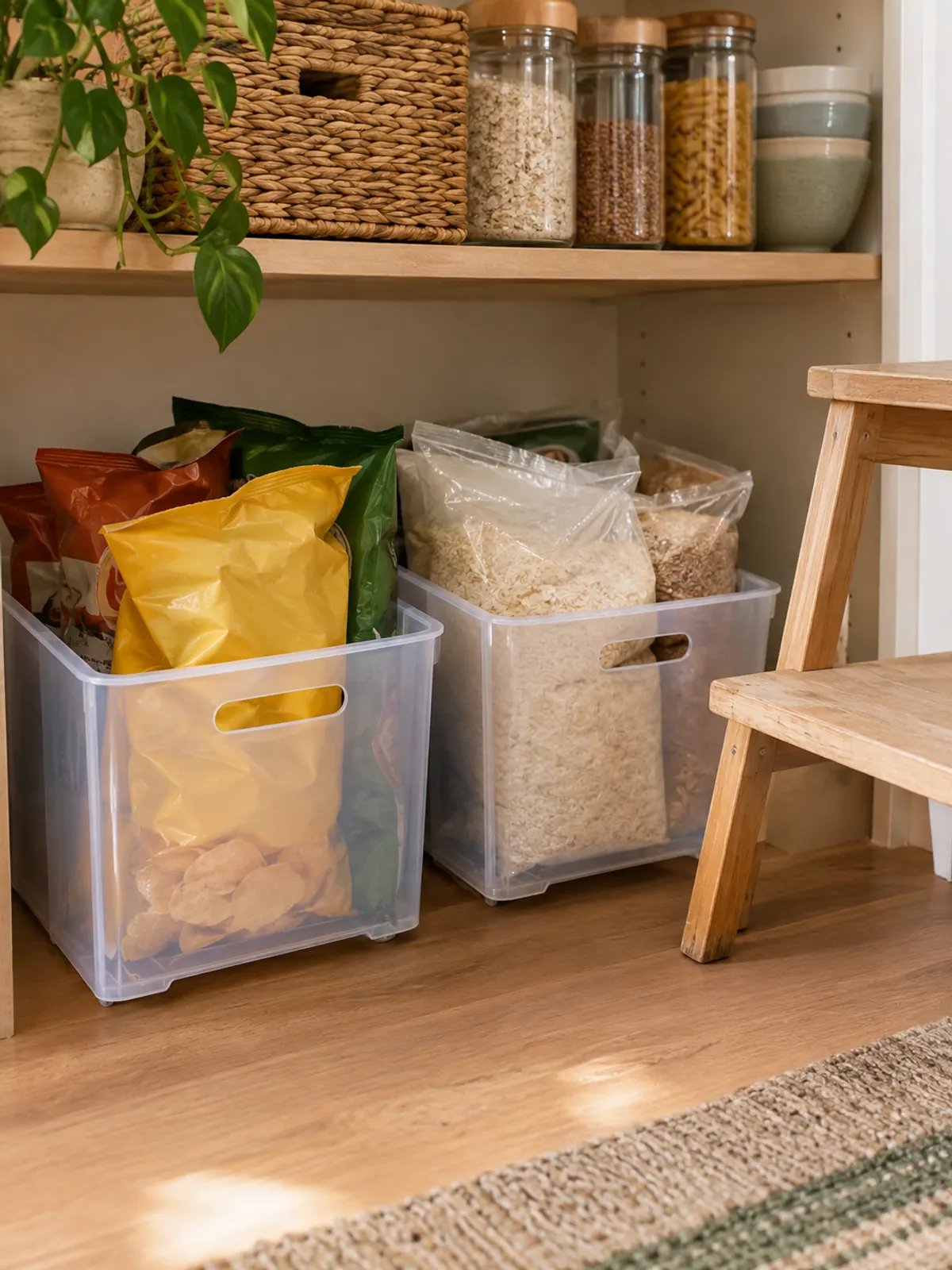
Low shelves are hard to reach, so give them bins you can pull out like drawers. A shallow bin holds the bags of chips or rice, and pulling it out shows everything at once.
Choose bins with handles and a smooth bottom so they slide on a wood or painted shelf.
- Keep the heaviest bags on the floor level so you are not lifting them from above.
No more kneeling to see the back.
13Zone bins on a deep shelf
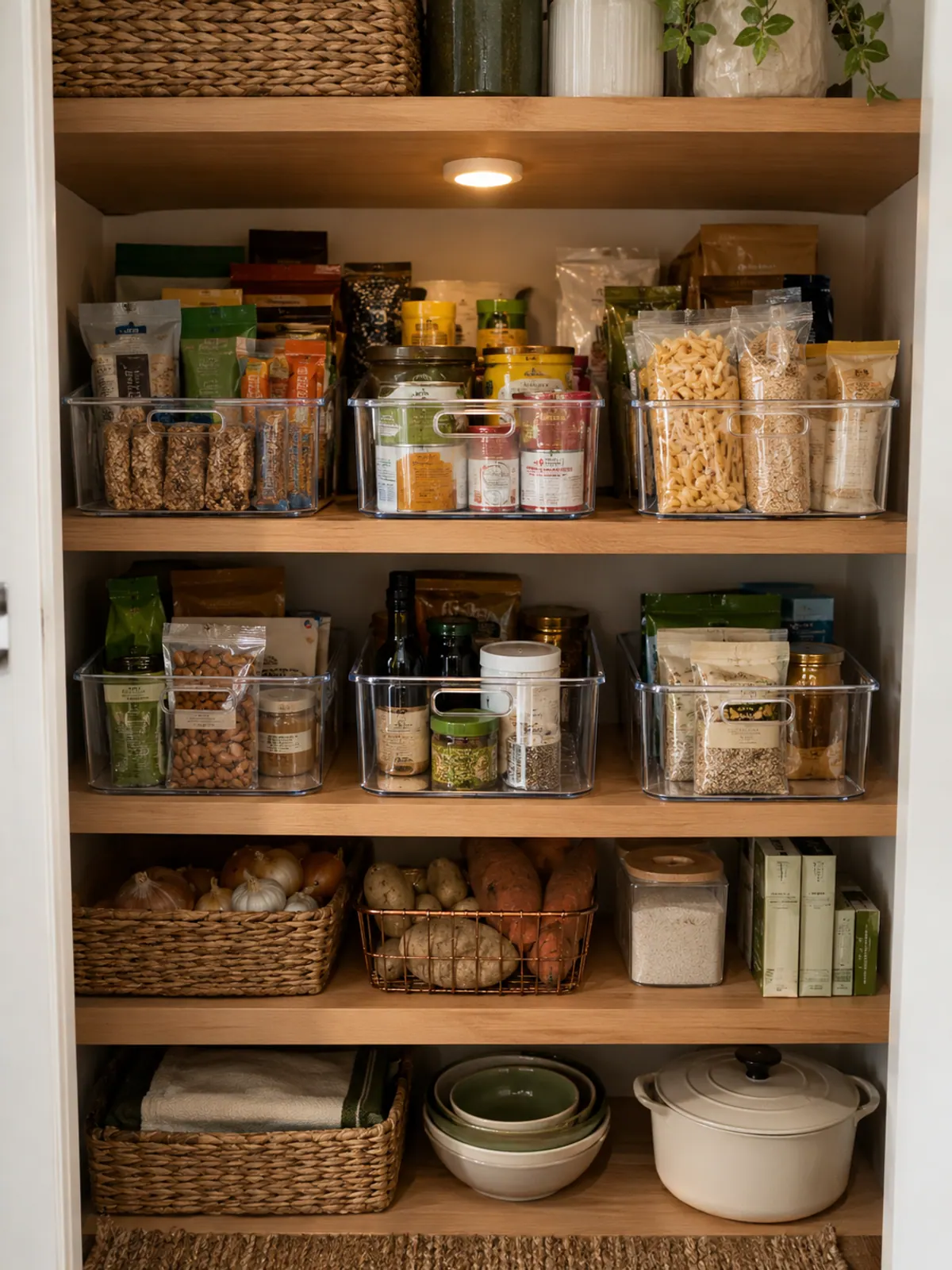
A deep shelf wastes space because the back is invisible. Put long bins on it, one per zone, and pull the whole bin forward when you need it.
A stick-on battery light inside the pantry makes the back easier to see, and it needs no wiring.
- Fill the bins from the back, and keep a spare of anything you finish in the bin behind.
Makes the back of a deep shelf usable.
Small pantry ideas when you do not have a pantry
14One tall cabinet as the pantry
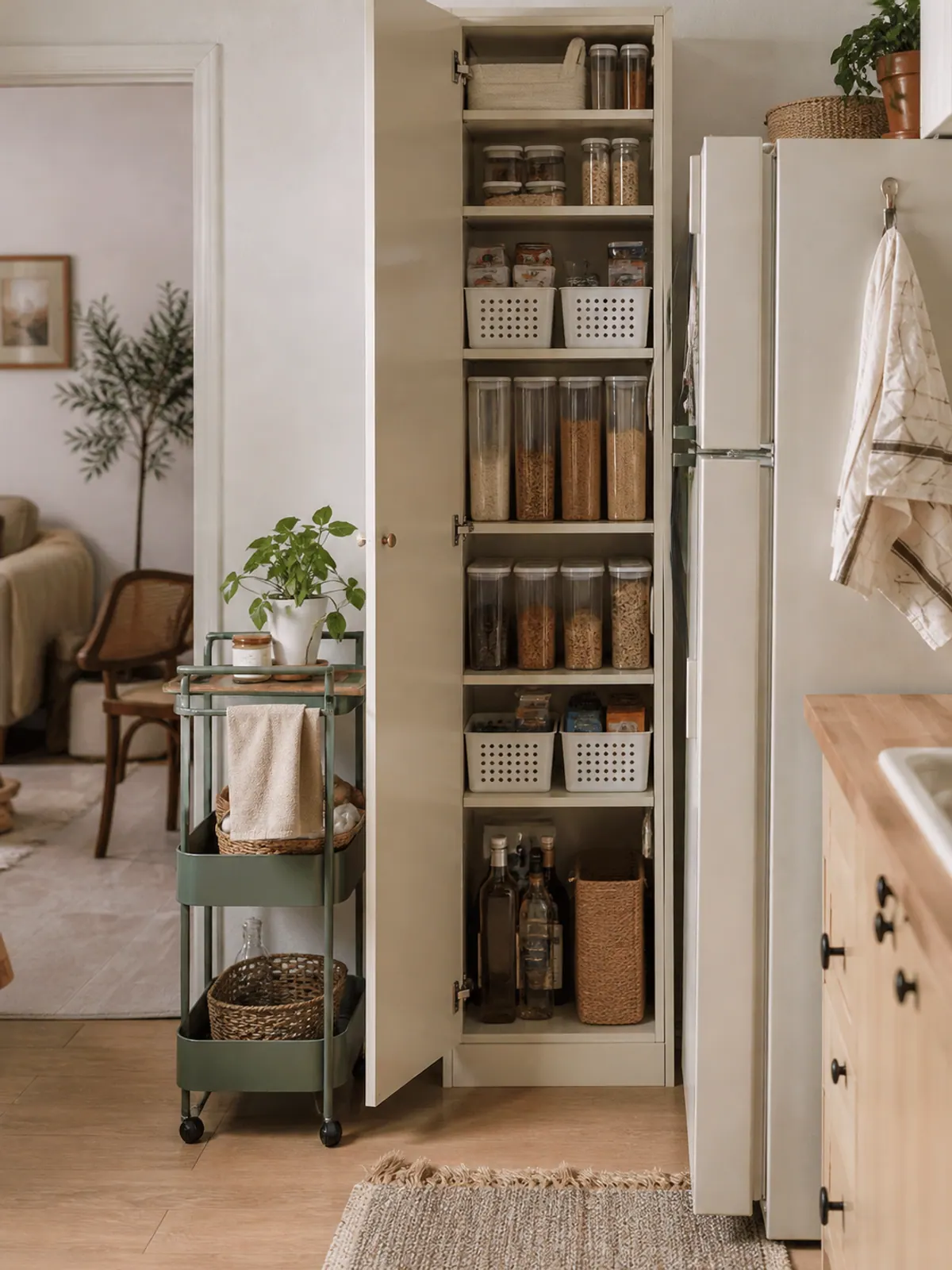
If the kitchen has no pantry, make one cabinet act like it. A tall cabinet by the fridge, filled with bins by zone, can hold what a small pantry would, and it looks tidy when closed.
Pick the cabinet closest to the stove, since that is where you reach for oil, rice and pasta.
- If shelves are fixed, put a riser inside to avoid dead space above short items.
Turns one cabinet into a working pantry.
15A slim rolling cart beside the fridge
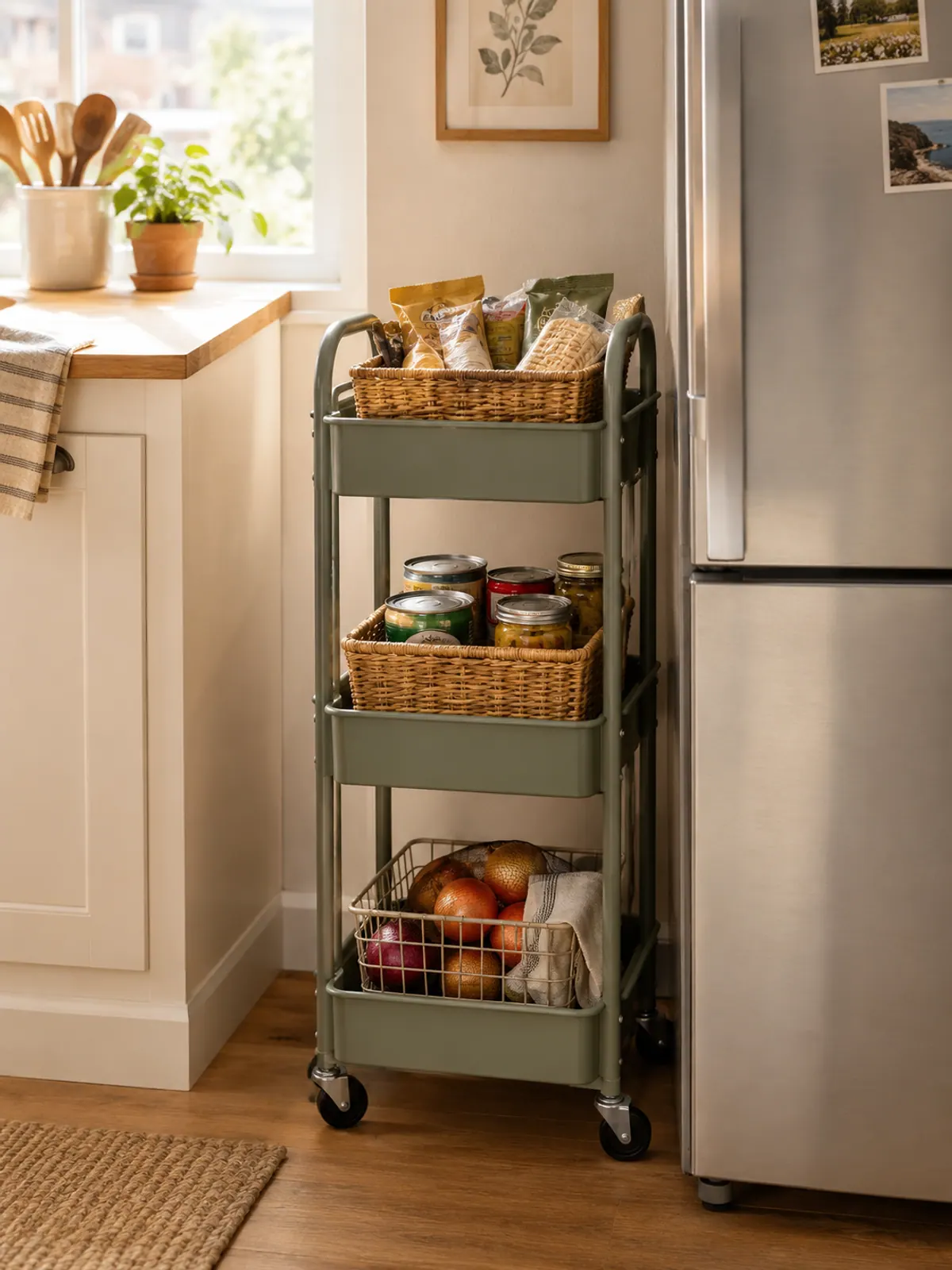
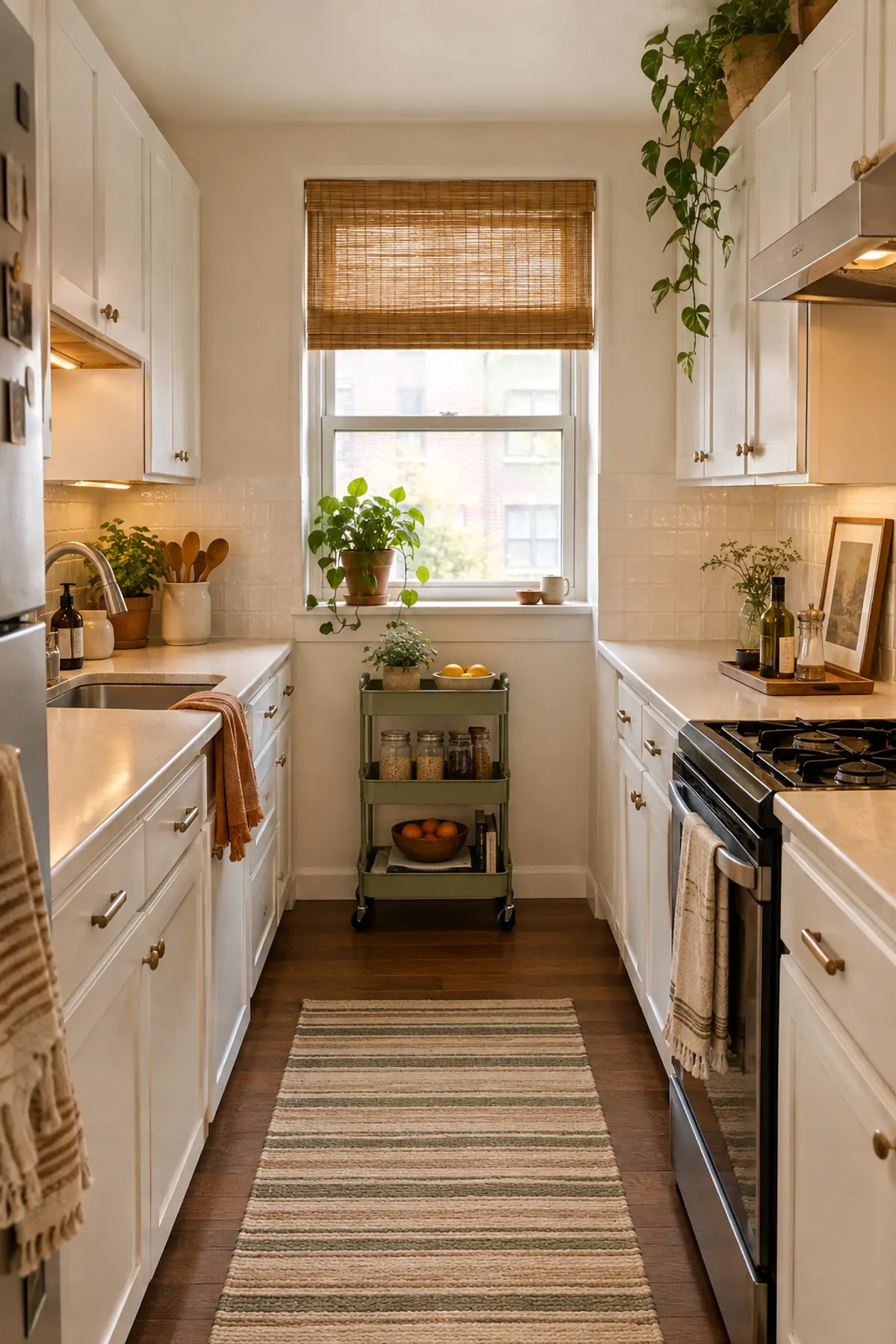
The gap beside the fridge is a pantry waiting to happen. A cart about 7 to 14 inches wide rolls in and out and holds baskets of cans, snacks and onions at easy height.
Measure the gap, then subtract an inch so the wheels clear the edge. Check the cart does not block the fridge door hinge.
- Put the heaviest items on the bottom tier so the cart does not tip when you pull it out.
A movable pantry in a 12 inch gap.
If you are setting up a first home, the first apartment essentials list covers what to buy for the kitchen in order, so you do not overspend on storage before you know what you cook.
What we like
- Empty and sort one shelf at a time before buying anything
- Measure shelf depth, gap and door thickness first
- Label zones, not items
- Put heavy things low and daily things at eye level
- Reset once a week for five minutes
Keep in mind
- Buying a matching set before you measure
- Decanting everything, including small packets
- Storing cleaning supplies above food
- Leaving the back of a deep shelf unused
- Overfilling so the door will not close
Before you buy for the small pantry
Shop the small pantry organization list
- Start here
Expandable shelf riser for pantry
Typically $10 to $25
Doubles a shelf for cans and jars.
Check price on Amazon for Expandable shelf riser for pantry -
Clear airtight food storage containers, set
Typically $20 to $45 for a set
Turns loose bags into a neat block.
Check price on Amazon for Clear airtight food storage containers, set -
Over-the-door pantry rack with baskets
Typically $15 to $35
Adds a shelf with no tools.
Check price on Amazon for Over-the-door pantry rack with baskets -
Kraft paper labels with clips
Typically $6 to $15
The cheapest change with the biggest effect.
Check price on Amazon for Kraft paper labels with clips -
Spring tension rod, 16 to 28 inch
Typically $5 to $12
A rail for spray bottles.
Check price on Amazon for Spring tension rod, 16 to 28 inch -
Slim rolling cart, 3 tier
Typically $30 to $70
A pantry for a kitchen with none.
Check price on Amazon for Slim rolling cart, 3 tier
Frequently asked questions
How do I organize a small pantry on a budget?
Empty it, toss what is expired and group what is left by how you cook. Then add the cheapest tools first: shelf risers, a tension rod, a few clear bins and labels. Together these are typically $21 to $52, and you can add bins and a door rack later.
What is the best way to organize a small pantry with no shelves?
Use the walls and the floor. A tall narrow cabinet or a slim rolling cart holds bins by zone, and an over-door rack adds storage on a door.
How do you organize a small pantry in an apartment?
Choose renter-safe tools: risers, bins, over-door racks and tension rods, none of which need drilling. Measure shelf depth and the door before you buy.
Should I decant everything into containers?
No. Decant what you use most, like pasta or oats, and leave small packets in their bags inside a bin. It saves time and money.
How often should I reorganize a small pantry?
A quick five minute reset each week keeps it working, and a full clear-out every three months catches expired items.
Save it for later
Pin this to your Kitchen & Dining board so it's there when you need it.
Save to Pinterest