This post contains affiliate links. As an Amazon Associate we earn from qualifying purchases, at no extra cost to you. Read our disclosure.
Key takeaways
- Seal air gaps first: a curtain or film does little for a draft that still blows past the sash.
- Bubble wrap, a draft stopper, a foam board and a tension rod curtain carry the lowest deposit risk.
- Tape and foam adhesive can lift old paint, so test a hidden spot for a day first.
- An example starter set of film ($12), rope caulk ($6) and a draft stopper ($10) comes to $28.
- Never block a radiator, vent or an exit window, and keep a hair dryer moving.
In this post12 sections
- Before you start: the renter rules for window insulation DIY
- Seven window insulation methods compared (cost, removal, deposit risk)
- The 7 renter-safe window insulation methods
- 1. Shrink film kit (the clear winter seal)
- 2. Bubble wrap on the glass
- 3. Rope caulk in the gaps
- 4. A draft stopper on the sill
- 5. Foam weatherstrip tape on the sash
- 6. Thermal curtains on a tension rod
- 7. A foam board insert for the coldest window
- An example under-$30 starter set
- FAQ
Disclosure: some links below are Amazon search links, and we may earn a small commission if you buy. It costs you nothing, and we have not tested these products hands-on.
Before you start: the renter rules for window insulation DIY
A window can leak in two ways: air slips through gaps, and heat passes straight through the glass. Fix the gaps first, because a curtain or film does little for a draft that is still blowing past the sash. The quickest check is to hold a lit stick of incense or a strip of tissue near the frame on a windy day and watch which way it moves.
Then think about how each method comes off. Tape on painted trim, adhesive on wood and anything that pulls at old paint are the usual ways a renter loses part of a deposit, so every method below gets a removal note. Read your lease first, and test any tape or adhesive on a hidden spot for a day before you use it on a whole frame.
If you also hang curtains for warmth, see how to hang curtains without drilling first, because several methods below pair with a tension rod.
Seven window insulation methods compared (cost, removal, deposit risk)
| Method | Typical cost | How it comes off | Deposit risk | Keeps the view? |
|---|---|---|---|---|
| Shrink film kit | $10 to $25 | Peel the tape slowly, warm it with a hair dryer if it resists | Medium: tape can lift paint | Yes, mostly clear |
| Bubble wrap | $8 to $15 | Peel the wrap off the glass; nothing is stuck on | Low | Blurred light, no clear view |
| Rope caulk | $5 to $10 | Pull the strip out and roll it into a ball | Low to medium: test for residue | Yes |
| Draft stopper | $10 to $20 | Pick it up | None | Yes |
| Foam weatherstrip tape | $6 to $12 | Peel the strip; remove adhesive left behind with a little rubbing alcohol on a cloth | Medium: adhesive on paint | Yes |
| Thermal curtains on a tension rod | $25 to $60 a pair | Lift the rod out of the frame | None to low | Yes when open |
| Foam board insert | $10 to $20 a sheet | Lift it out of the recess | None | No when in place |
Pick by how long you need it. For a window you open weekly, choose a draft stopper, curtains or a foam board you can lift out. For a window you never open between now and spring, film or bubble wrap gives the most for the least.
The 7 renter-safe window insulation methods
1Shrink film kit (the clear winter seal)
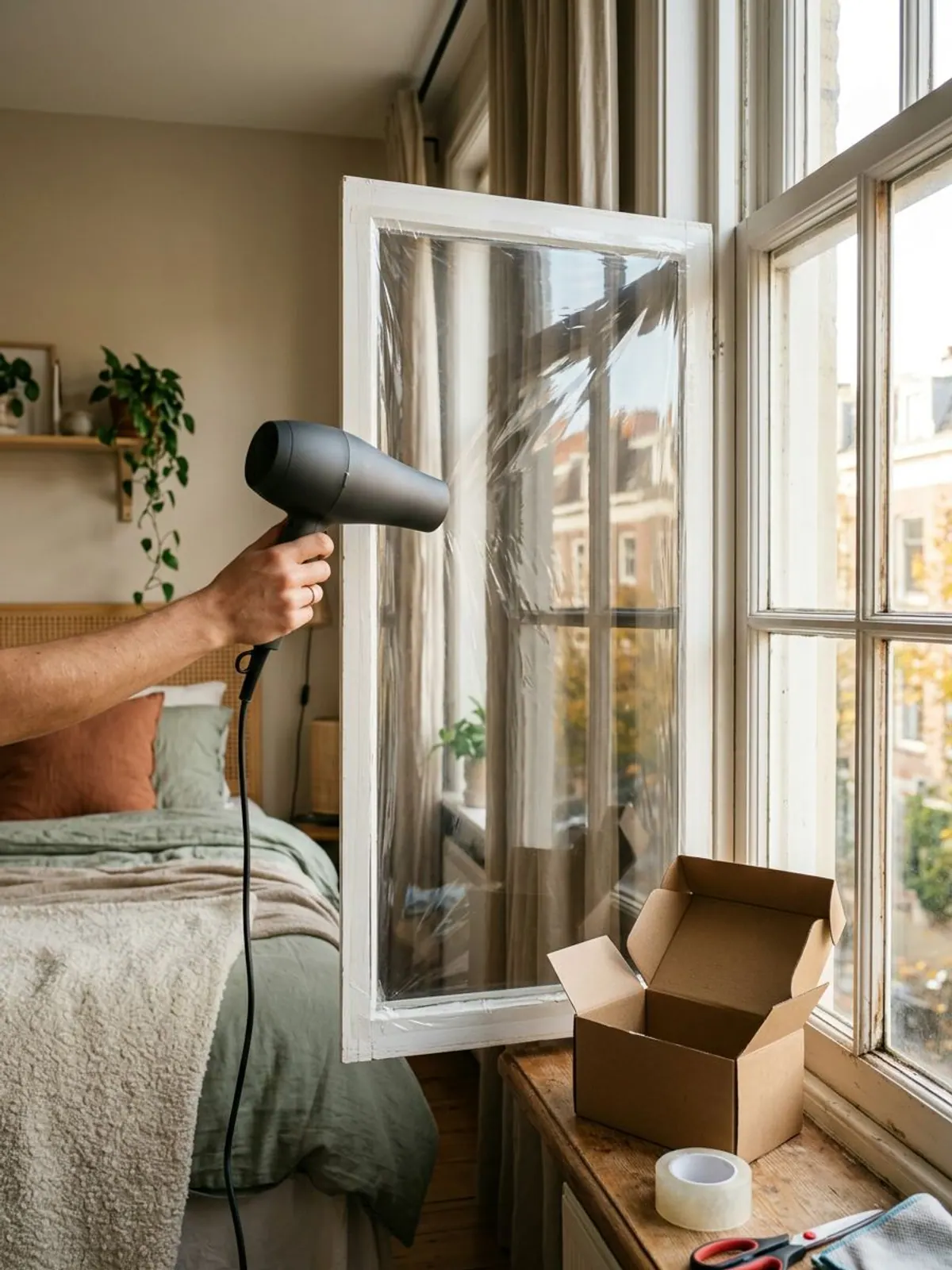
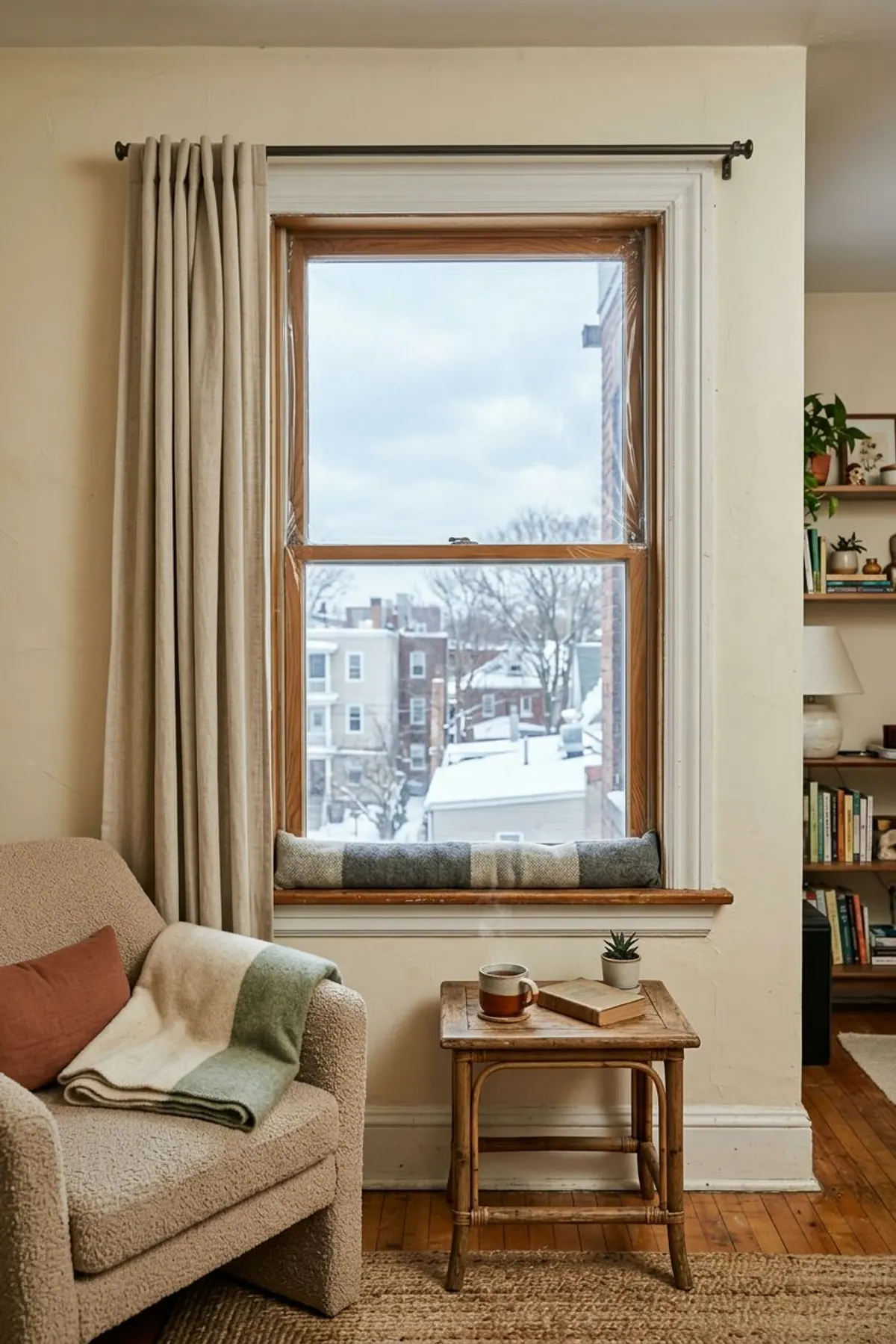
Window insulation film is a thin plastic sheet that you stick to the frame with double-sided tape and then tighten with a hair dryer. It leaves the view mostly clear and seals the whole window against air. It is the best fit for windows you will not open until spring.
- Removal: peel the tape slowly at a low angle, and warm stubborn tape with a hair dryer on low first. Test the tape on a hidden spot of trim for a day before you commit.
- Safety: keep the hair dryer moving and away from curtains and the plastic edges, and follow the kit's own instructions. Typically $10 to $25.
Seals the whole window and keeps the view.
2Bubble wrap on the glass
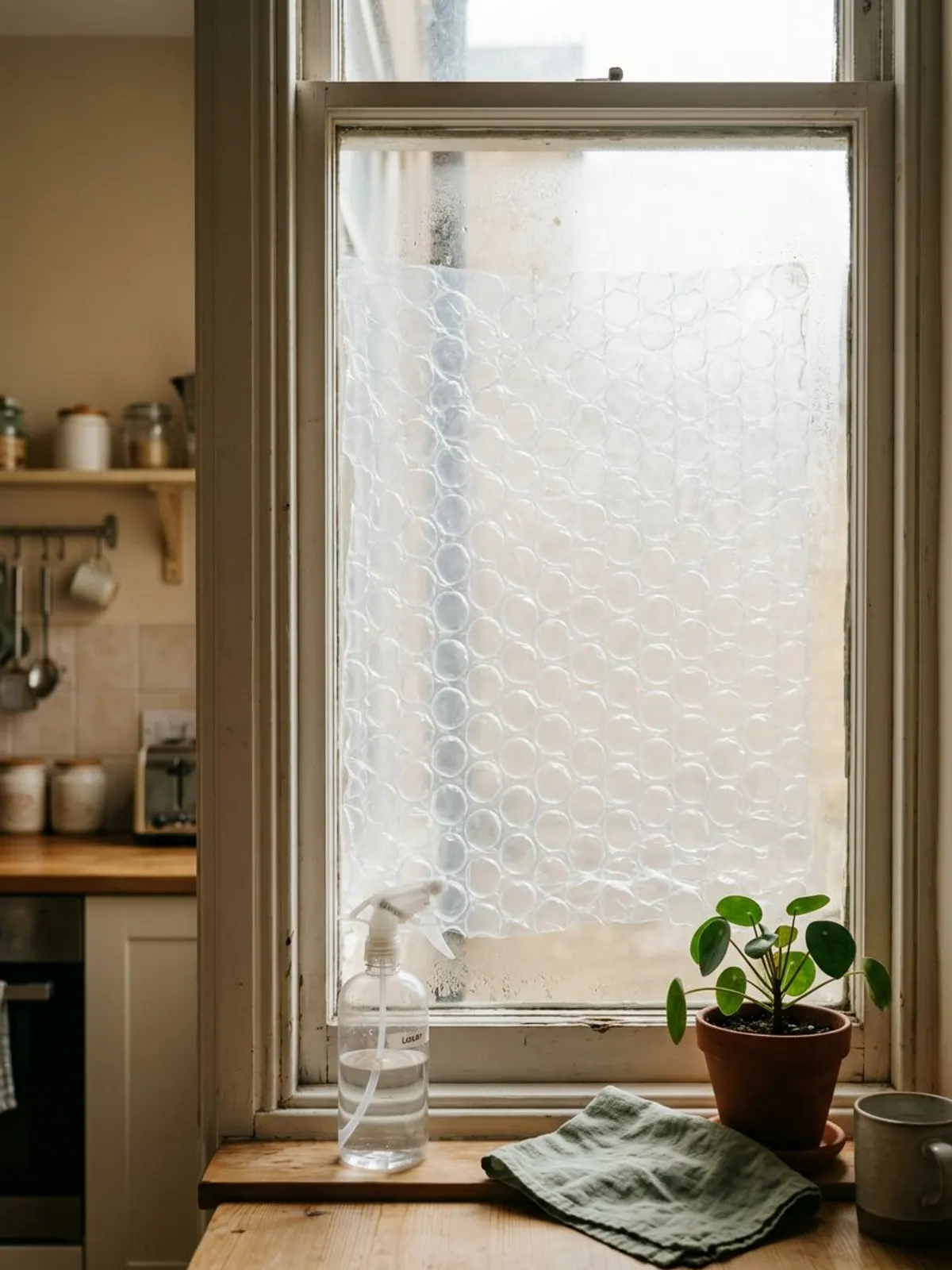
Bubble wrap is the cheapest method and the easiest on a deposit. Mist the glass with water, press large-bubble wrap on with the bubbles toward the glass and smooth it out. It holds by surface tension with no adhesive. The trade-off is that it blurs the light, so it suits a bathroom, a bedroom or a window you do not look out of.
- Removal: peel it off the glass and wipe the water marks. Nothing is left on the frame.
- Typically $8 to $15 for a roll or a pack of sheets.
No adhesive, so it peels off clean.
3Rope caulk in the gaps
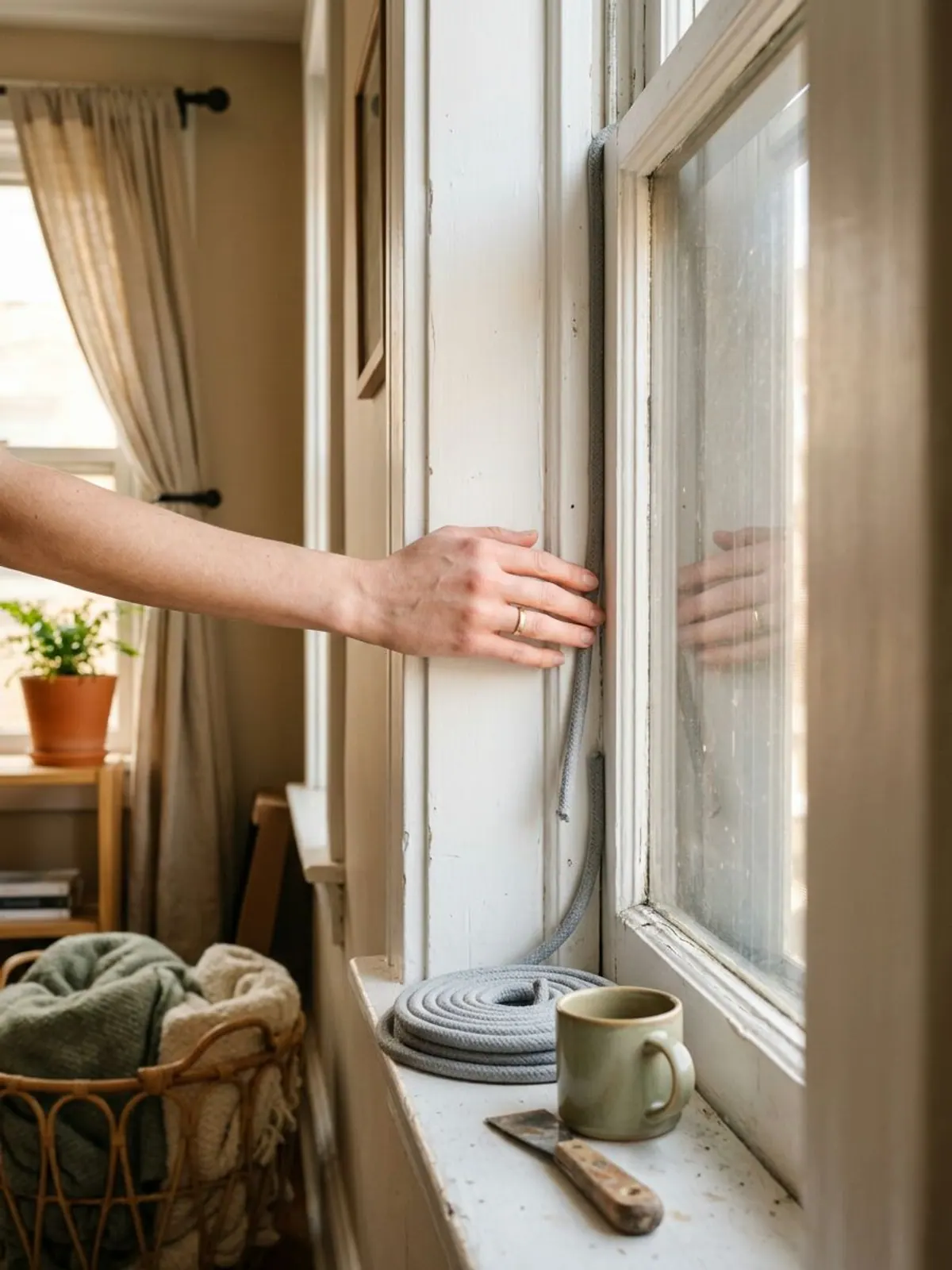
Rope caulk is a soft putty strip that you press into the gap where a sash meets the frame. It stops the air that film and curtains miss, and it is made to be removed in spring. Use it on windows you will not open and press it in with a thumb, not a tool, so you do not scratch paint.
- Removal: pull the strip out and roll the leftovers into a ball. Wipe any oily mark with a mild soap and water cloth, and test a hidden spot first as some finishes may stain.
- Typically $5 to $10 for one roll.
Closes the gaps and comes out in spring.
4A draft stopper on the sill

A fabric draft stopper is a long weighted tube that blocks cold air at the sill. It needs no tools or tape, so it carries zero deposit risk. It works best on a window with a flat sill and a gap at the bottom.
- Removal: pick it up. Nothing to remove.
- Typically $10 to $20, or sew your own from a sock filled with rice or dry beans.
No tools and no deposit risk.
5Foam weatherstrip tape on the sash

Self-adhesive foam tape fills the thin gap along a sash that you do open. Measure the gap first, since foam that is too thick stops the window closing. Clean the surface with a dry cloth so the tape holds.
- Removal: peel it slowly and remove any adhesive left with a little rubbing alcohol on a cloth. Test on an unseen spot first, as adhesive can pull at old paint.
- Typically $6 to $12.
Seals windows you still open.
6Thermal curtains on a tension rod
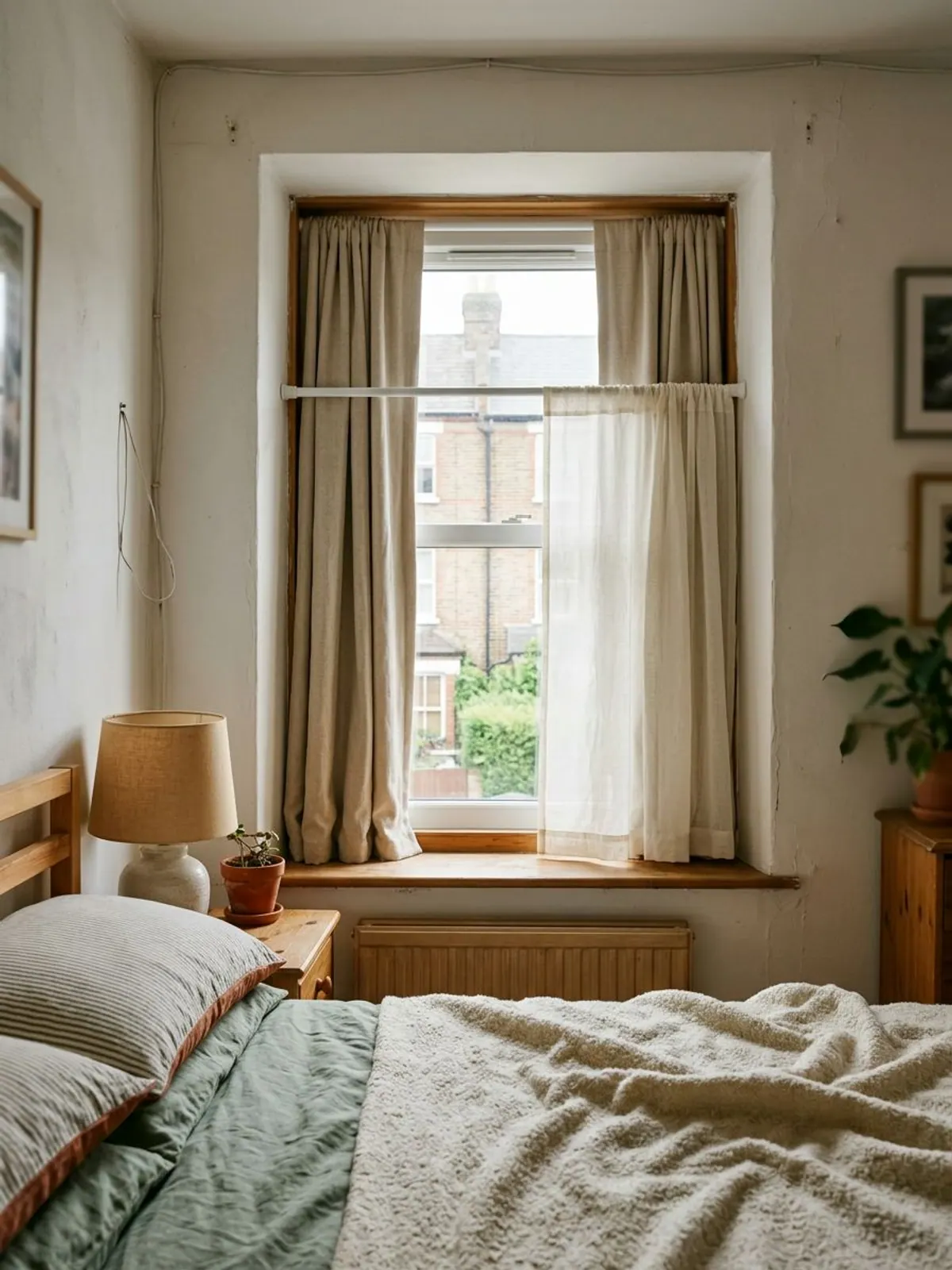
Lined or thermal curtains add a layer of still air between the room and the glass. Hang them on a tension rod inside the frame so there is no drilling, and let them reach the sill. Add a sheer on a second rod if you want daytime privacy. Curtains do not stop a draft by themselves, so pair them with rope caulk or a stopper.
- Removal: lift the rod out of the frame. Keep curtains clear of a radiator or heater.
- Typically $25 to $60 a pair.
A reusable layer that needs no adhesive.
7A foam board insert for the coldest window
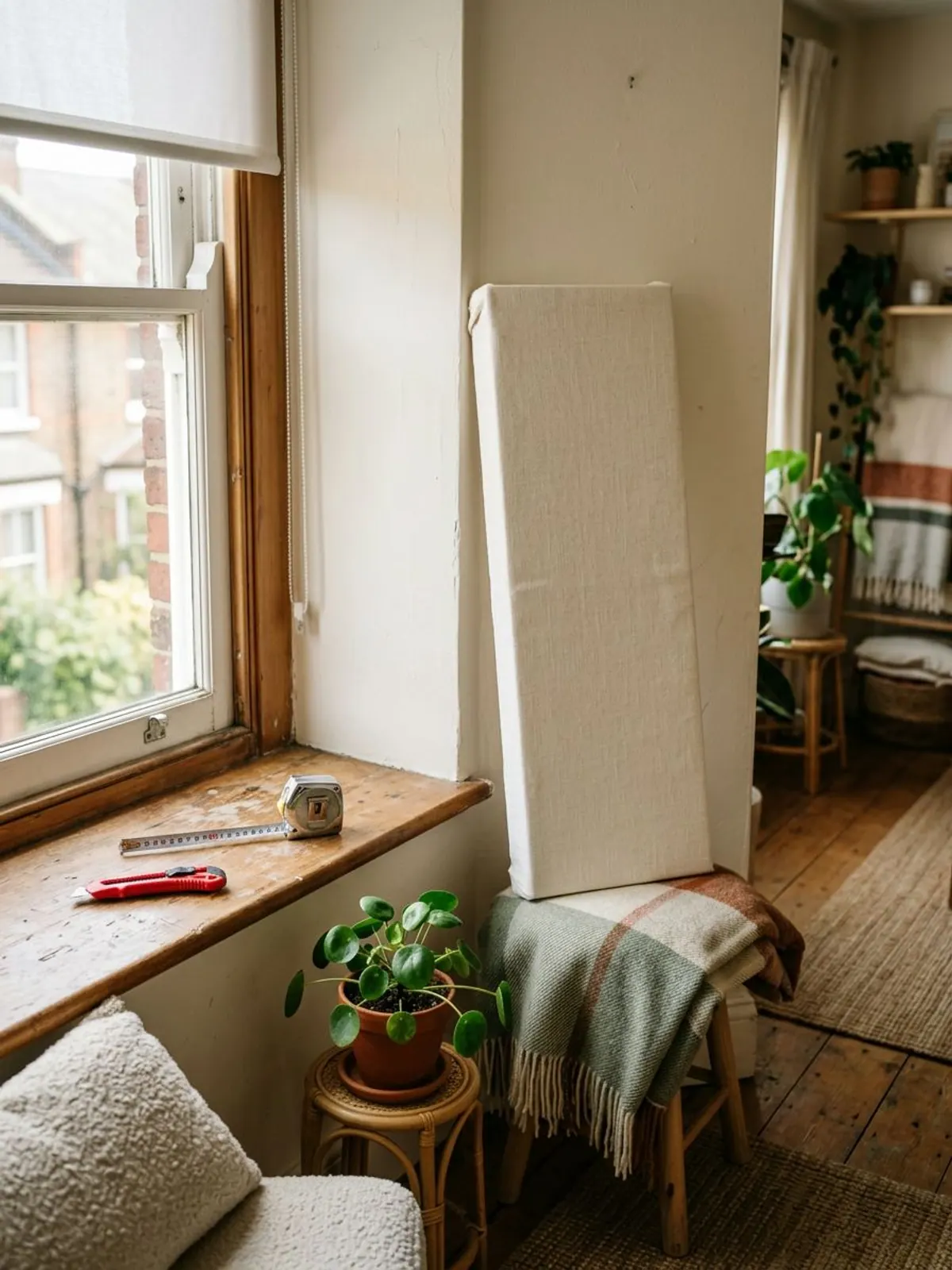
Cut a sheet of rigid foam board to fit the window recess, wrap it in fabric if you like, and press it in at night. It holds by friction, so nothing touches the paint. Measure the recess twice and cut it a quarter inch small. Use it on a bedroom window, then lift it out each morning.
- Safety: never block a radiator or heat vent, and do not leave it where it blocks an exit window you may need in an emergency.
- Typically $10 to $20 a sheet.
Friction fit, lifts out each morning.
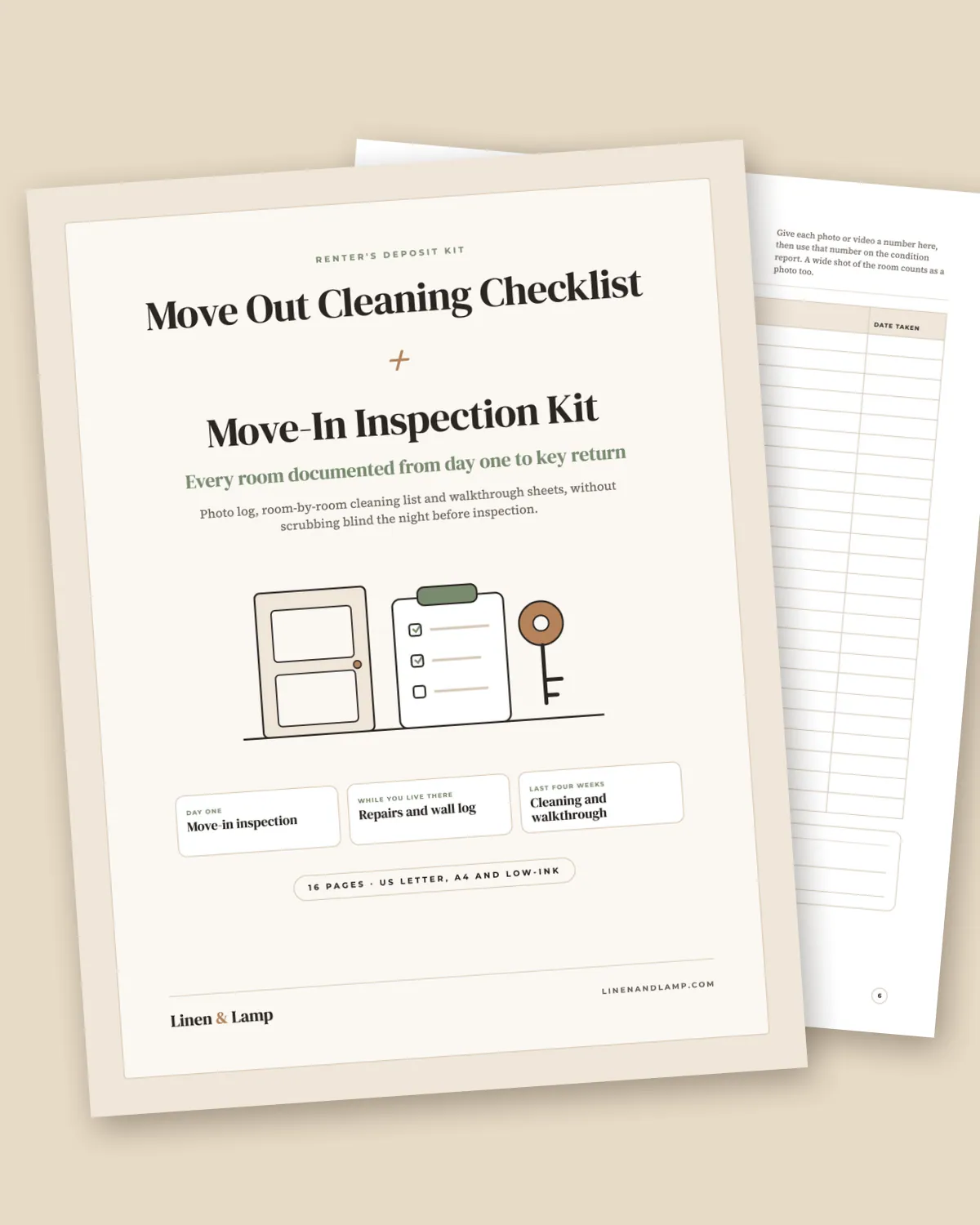
If you can only buy one thing first, start with the cheapest fix for the biggest gap, which is usually rope caulk plus a draft stopper, then add film to the window you never open. If you want your photos, dates and removal steps kept in one place for the spring check, the Move-In and Move-Out Deposit Kit ($6) is the printable for it.
An example under-$30 starter set
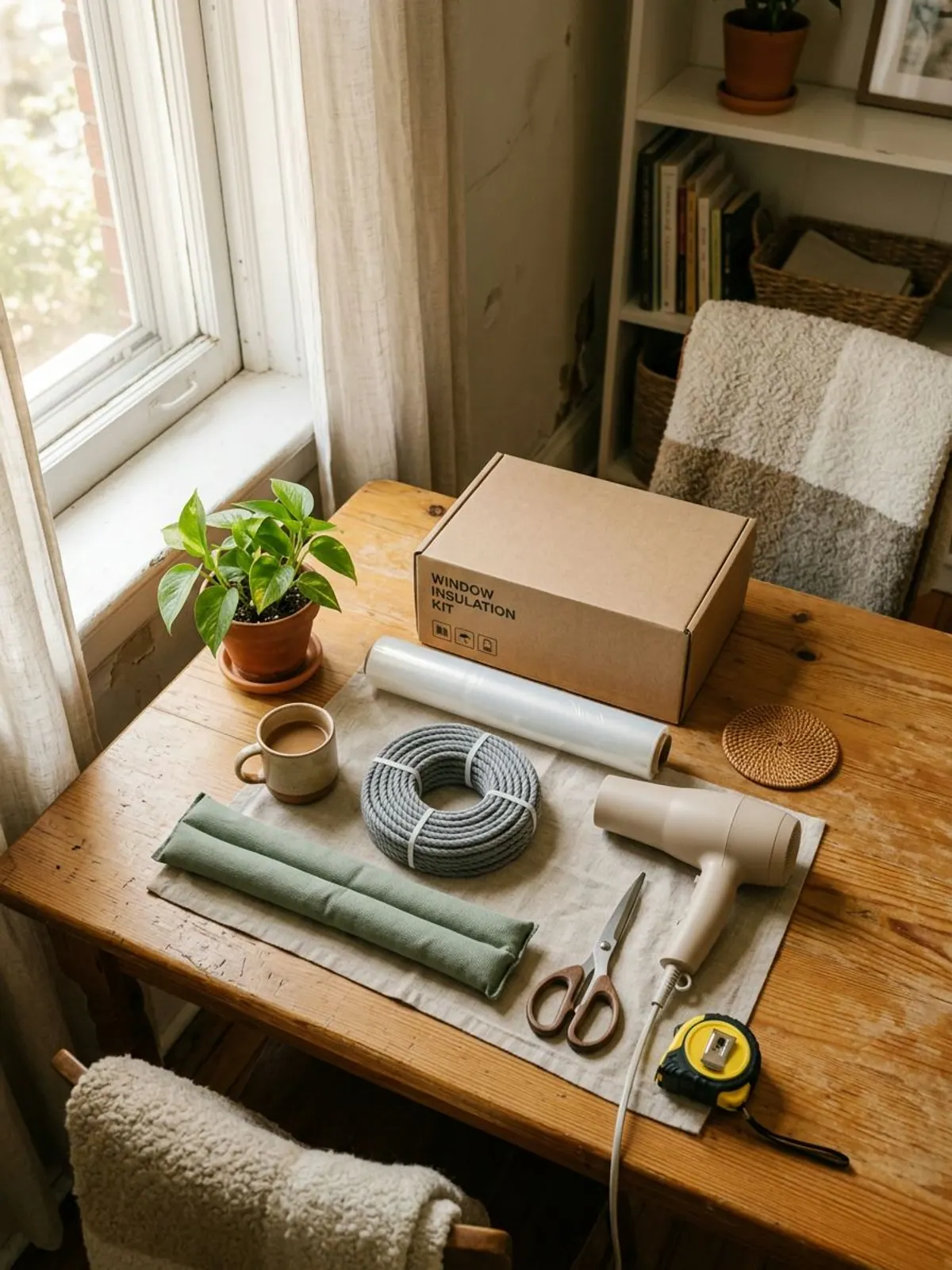
Here is one example set for a two-window apartment, at the low end of the ranges above: a shrink film kit ($12), a roll of rope caulk ($6) and a draft stopper ($10) come to $28. Prices change, so treat it as a budget guide, not a quote.
Window insulation order of work
What we like
- Test tape on a hidden spot first
- Seal gaps before you add a curtain
- Choose peel-off methods like bubble wrap and rope caulk
- Photograph frames before and after
- Keep heaters and exits clear
Keep in mind
- Pulling tape off quickly
- Using film on a window you open often
- Foam too thick to close the sash
- Blocking a radiator with curtains or foam board
- Leaving adhesive on all winter without checking it
Once the windows are done, the rest of the room is next. Our cozy bedroom ideas for winter and winter edition of cozy living rooms cover the layers, and renter-friendly lighting ideas cover the dark afternoons.
Moving out in spring? Keep the photos and the removal steps together. The Renter Apartment Planner Bundle ($17) holds the deposit kit, the 30-day declutter reset, the holiday planner and the room layout kit in one download.
For insulating apartment windows
- Start here
Window insulation film kit, indoor
Typically $10 to $25
Whole-window seal.
Check price on Amazon for Window insulation film kit, indoor -
Removable rope caulk
Typically $5 to $10
Seals gaps, removes in spring.
Check price on Amazon for Removable rope caulk -
Window draft stopper
Typically $10 to $20
No tools, no risk.
Check price on Amazon for Window draft stopper -
Large bubble wrap
Typically $8 to $15
Peels off clean.
Check price on Amazon for Large bubble wrap -
Tension rods, heavy duty
Typically $10 to $25
Hang curtains without drilling.
Check price on Amazon for Tension rods, heavy duty
Product types used above. We have not tested these hands-on. See our disclosure.
Frequently asked questions
How do you insulate windows in an apartment?
Seal the gaps first with rope caulk or foam tape, then add a layer over the glass such as shrink film or bubble wrap, and finish with a lined curtain on a tension rod. A draft stopper handles the sill. Choose methods that peel off clean, and test any tape on a hidden spot first.
Does bubble wrap on windows work?
It adds a layer of trapped air against the glass, so many renters use it on windows they do not look through. It blurs the view and does not close gaps, so seal those first. It is held on with water, so it leaves no adhesive.
Will window insulation film damage paint?
It can if the double-sided tape sticks hard to old paint. Test a small piece of tape on a hidden part of the trim for a day, and remove it slowly later, warming it with a hair dryer on low if it resists.
Is rope caulk okay for renters?
It is made to be removed, so it is a common renter choice. Press it in by hand and pull it out in spring. Test a hidden spot first, since some finishes may show an oily mark.
What is the cheapest way to insulate apartment windows?
Bubble wrap, rope caulk and a homemade draft stopper are the lowest-cost options, often under $10 each. Prices change, so check the listing.

Save it for later
Pin this to your Renter-Friendly Decor board so it's there when you need it.
Save to Pinterest