This post contains affiliate links. As an Amazon Associate we earn from qualifying purchases, at no extra cost to you. Read our disclosure.
Key takeaways
- Measure the gap before you buy. Most returns are off by 1 or 2 inches.
- Start with the cheap hacks: hooks, a door rack and drawer dividers.
- Check weight ratings, and test adhesive on a hidden spot.
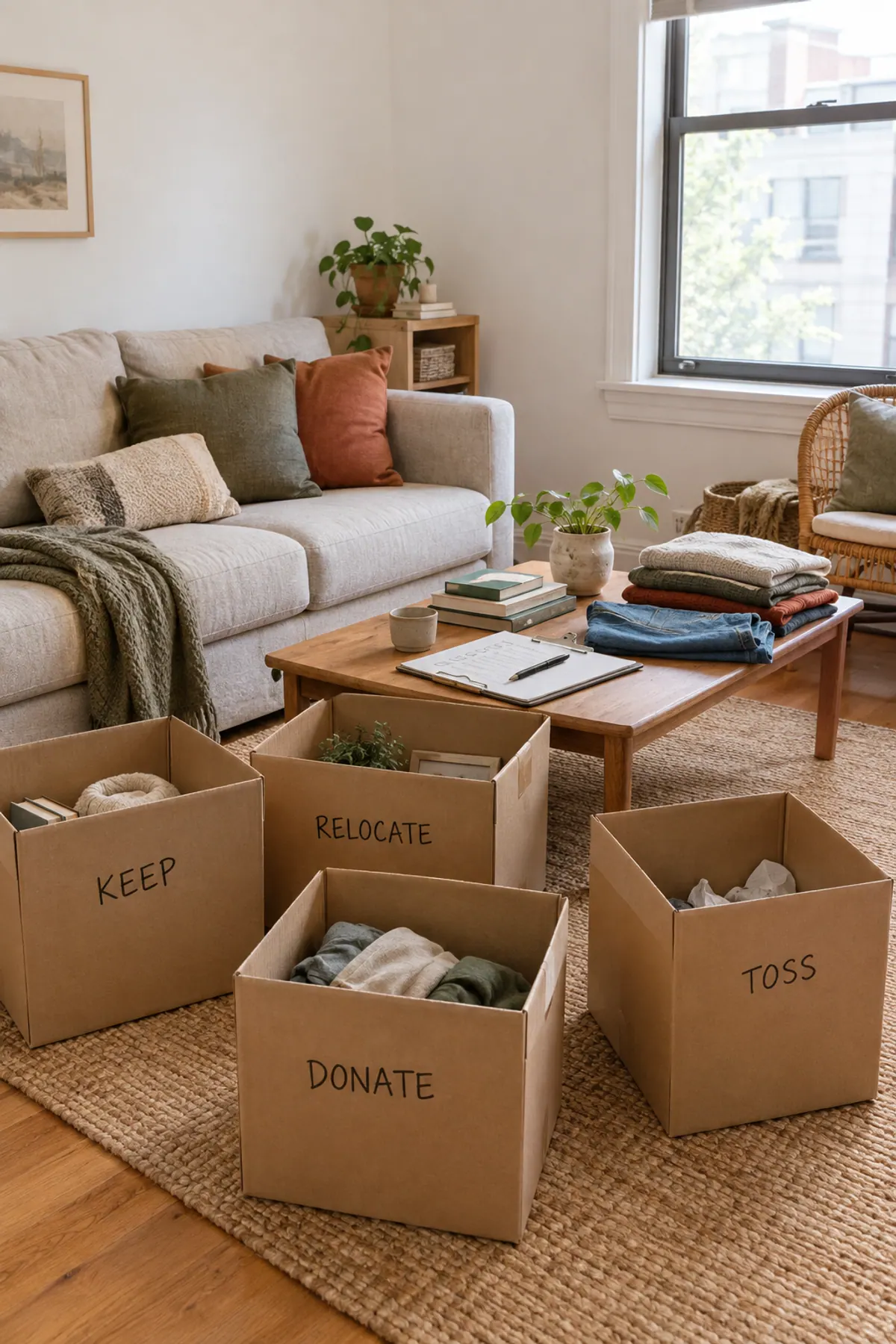
- Clear clutter first, so storage holds what you keep, not what you should donate.
- Prices are typical ranges and change, so check the current listing.
In this post23 sections
- How we picked these hacks
- Closet and bedroom hacks
- 1. Add a tension shelf in the closet
- 2. Roll storage under the bed
- 3. Raise the bed with sturdy risers
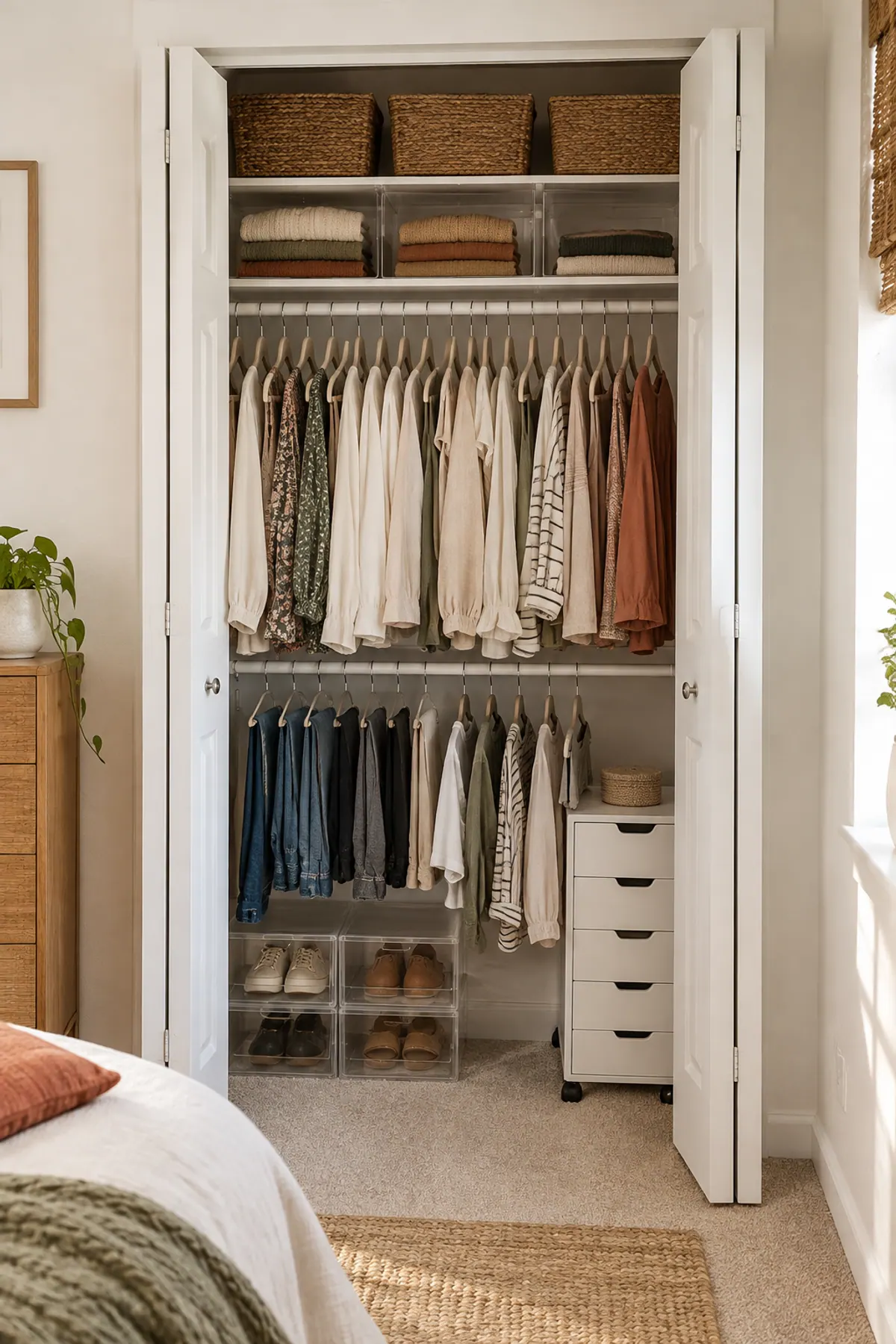
- 4. Hang a shelf organizer on the closet rod
- Kitchen hacks
- 5. Divide the kitchen drawer
- 6. Double a cabinet shelf with a riser
- 7. Use the gap beside the fridge
- 8. Put spices on the side of the fridge
- 9. Sort the fridge with clear bins
- Entry, living room and bathroom hacks
- 10. Hang everything on the back of a door
- 11. Stack the shoes
- 12. Stick on hooks where there are none
- 13. Fold the dining table away
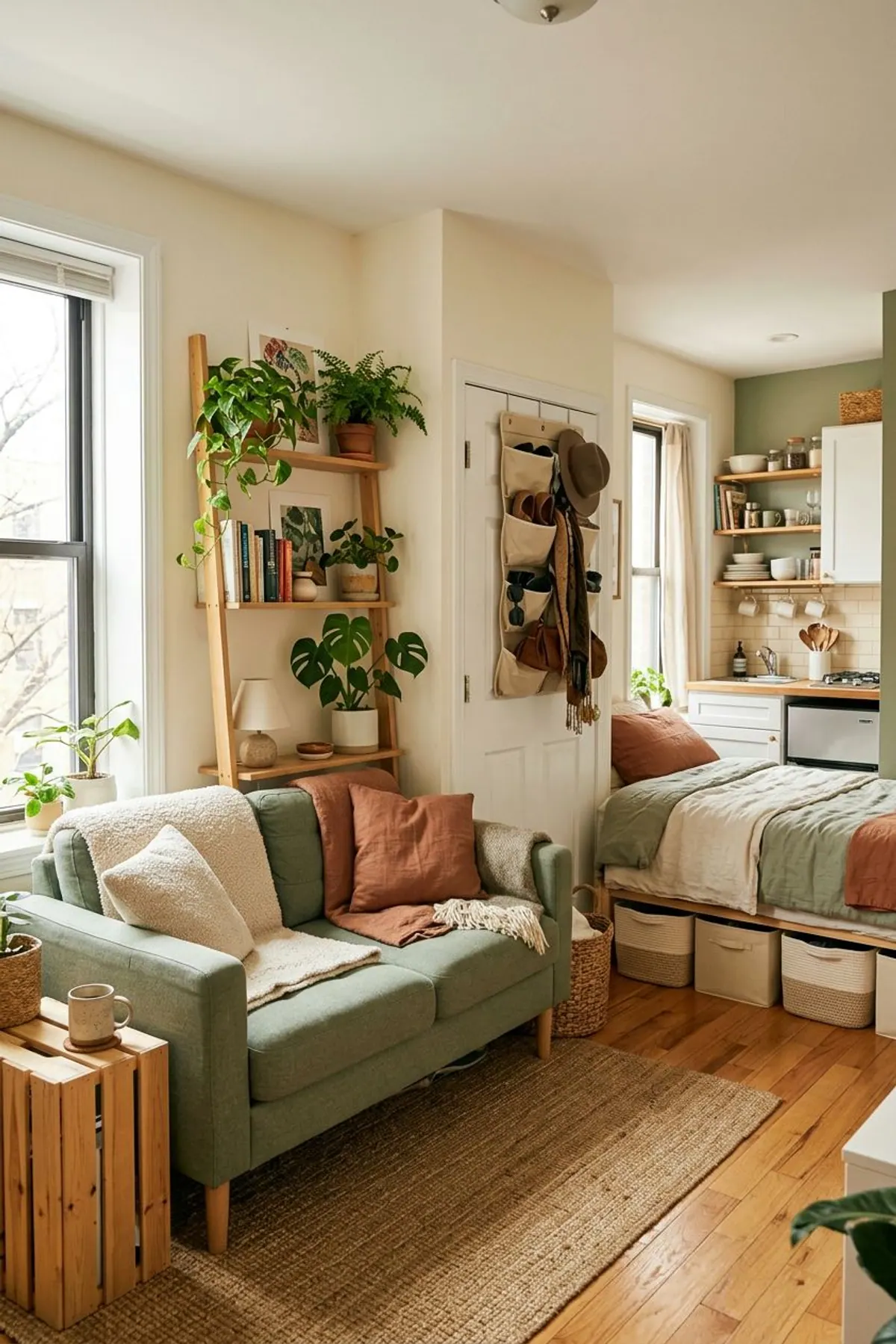
- 14. Lean a ladder shelf in a corner
- 15. Use the space over the toilet
- 16. Fold the laundry hamper flat
- Which hacks to buy first
- Shop the look
- FAQ
Disclosure: the product links below are Amazon search links, and we may earn a small commission if you buy. It costs you nothing. We have not tested these products hands-on, so we describe types and the measurements that matter, and you check the current listing before you buy.
The best small apartment hacks use space you already have: the back of a door, the dead air under the bed, the gap beside the fridge. Below are 16 of them, each with a measurement to take first, so you do not buy something that almost fits.
How we picked these hacks
Every hack here needs no drilling, fits a rental and does one of three jobs: uses vertical space, uses dead space or makes one item do two jobs. We left out anything that needs a landlord's okay to install. Prices are typical ranges and change often.
| Question | Why it matters | How to check |
|---|---|---|
| Does it fit the gap? | Most returns are by 1 or 2 inches | Measure width, depth and height, and tape the footprint |
| Will it hold the weight? | Hooks and rods fail first | Read the load rating, then add 20 percent margin |
| Does it damage the finish? | Deposits are on the line | Adhesive: test a hidden spot. Hooks: check the paint is cured |
Closet and bedroom hacks
1Add a tension shelf in the closet
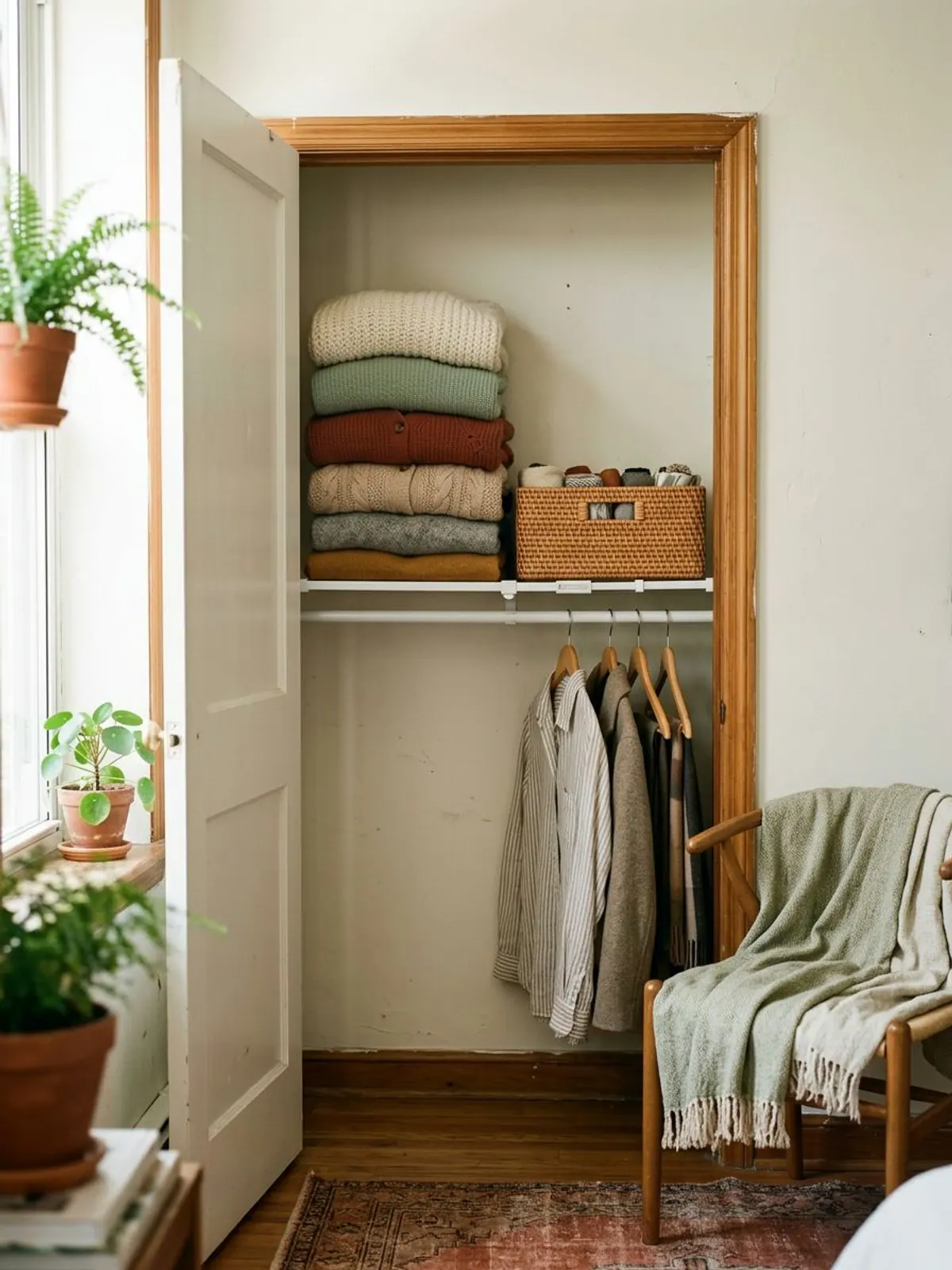
A tension shelf wedges between two walls and gives you a second level for sweaters. It needs solid walls, not thin paneling.
Measure first:
Closet width at shelf height. Expandable shelves often cover ranges such as about 16 to 24 inches.
Typical cost:
About $15 to $35
- Put the lighter items on top, because tension shelves are rated for modest loads.
Adds a shelf with no holes.
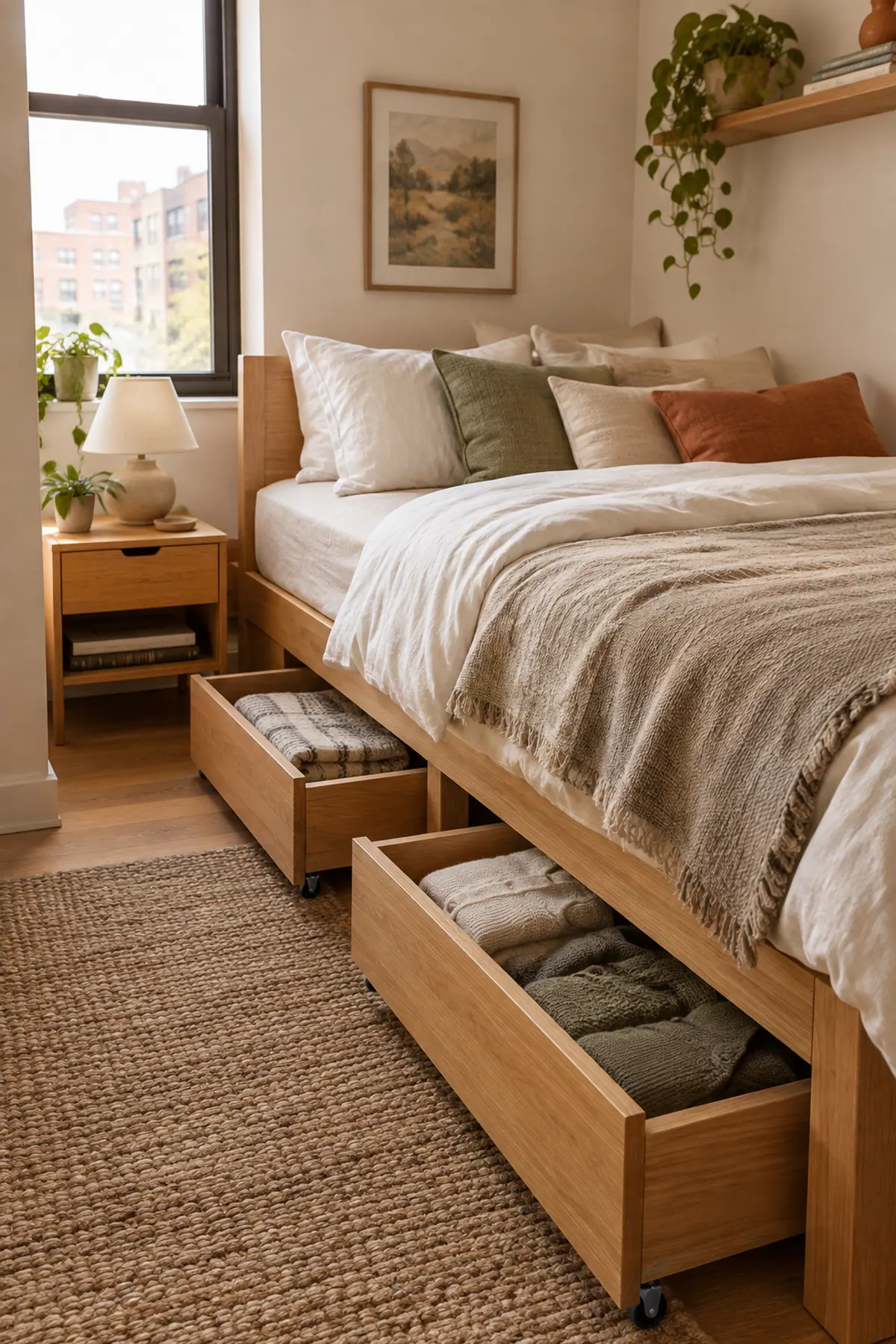
2Roll storage under the bed
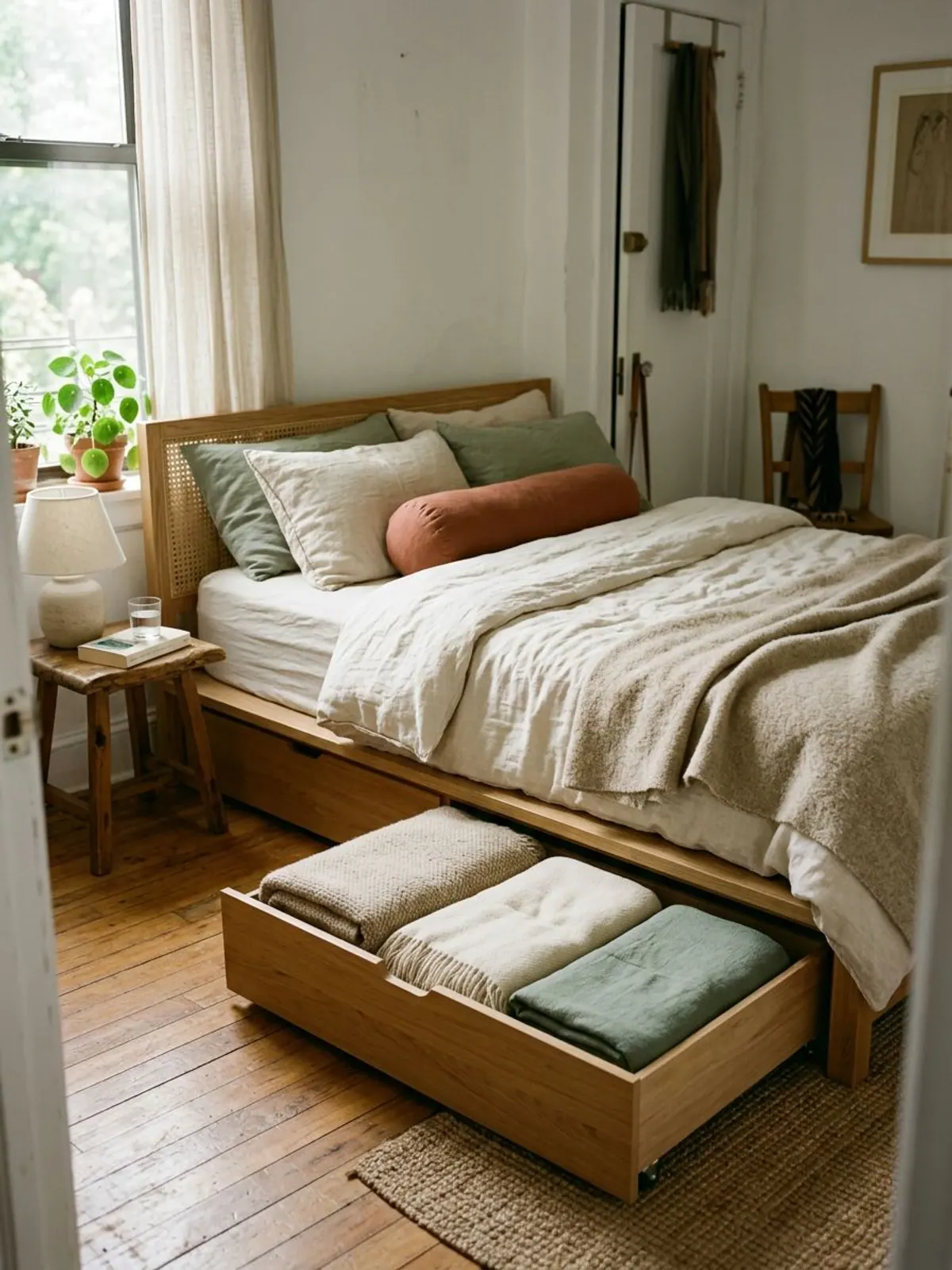
Dead space under the bed holds off-season bedding and shoes. Rolling bins slide out without moving the bed.
Measure first:
Clearance from the floor to the bed frame, and the floor type (rollers are better on hard floors). Our under-bed storage guide has more.
Typical cost:
About $20 to $45
- Keep bins shallow enough to leave a finger gap below the frame.
Uses dead space under the bed.
3Raise the bed with sturdy risers
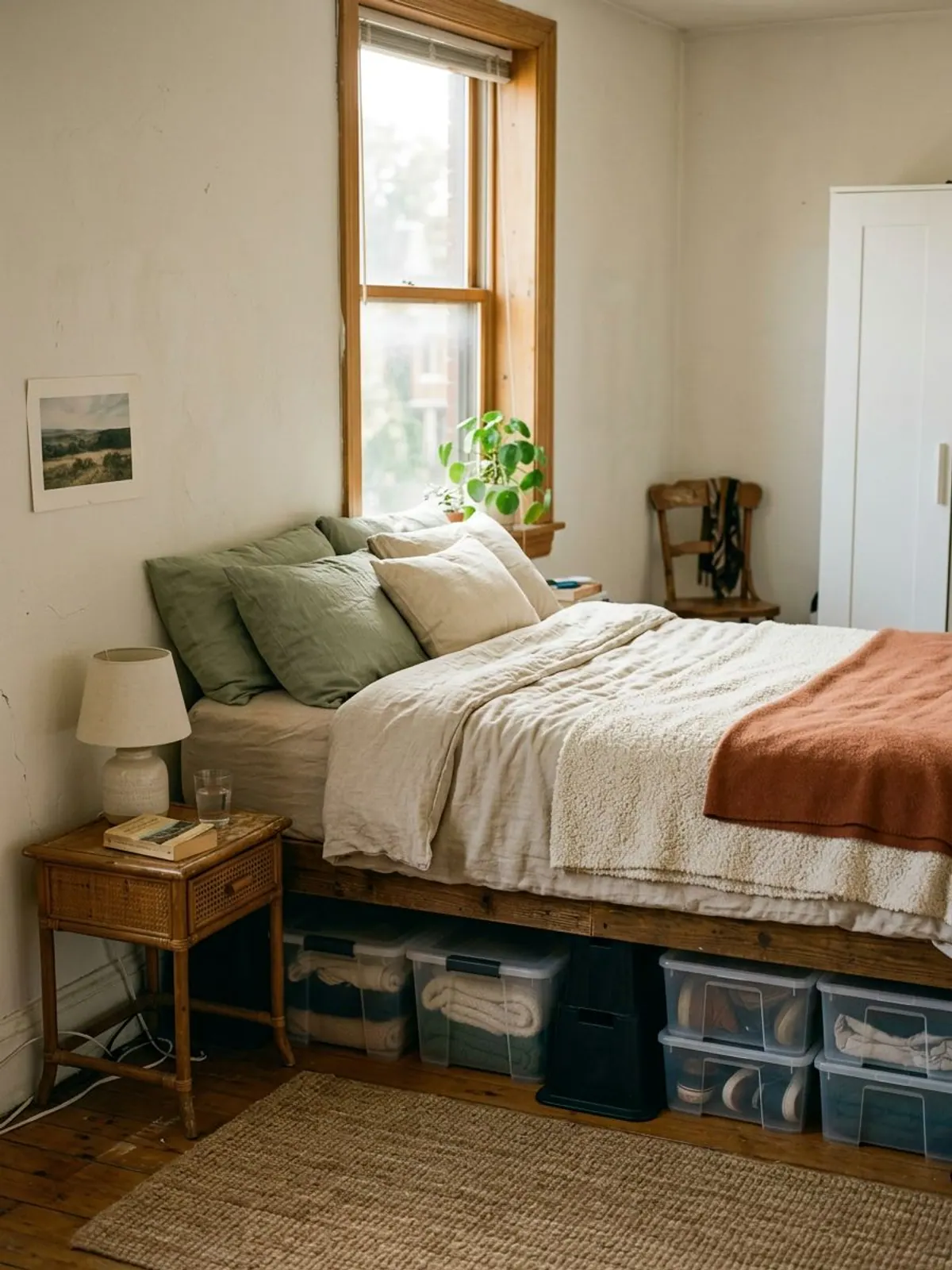
Risers lift the frame a few inches, which makes room for taller boxes. Pick a type with a locking cup and a rated load that covers the bed, mattress and two people.
Measure first:
Frame leg size and the weight rating. Check that the bed does not rock after you add them.
Typical cost:
About $20 to $40
- Never stack unmatched risers, and test with a firm push before you sleep on it.
Gives you taller storage under the bed.
4Hang a shelf organizer on the closet rod
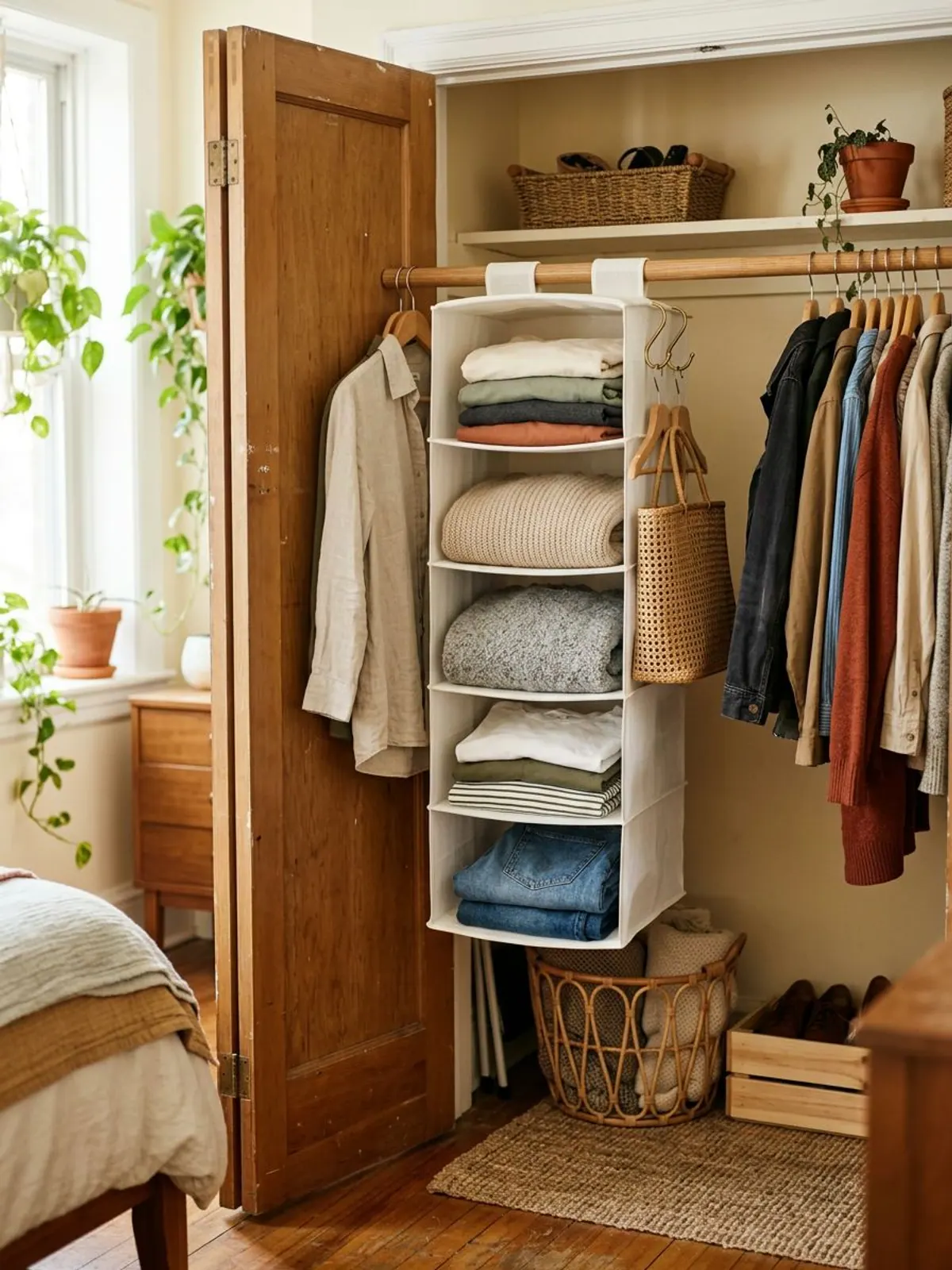
A hanging organizer turns the air below the rod into shelves. It is a quick fix for T-shirts, scarves and sweaters.
Measure first:
Rod height and the clearance to the floor or the next shelf. Our small closet organization guide covers more.
Typical cost:
About $12 to $30
- Fold clothes in thirds so the shelves stay stable.
Adds shelves under the rod.
Kitchen hacks
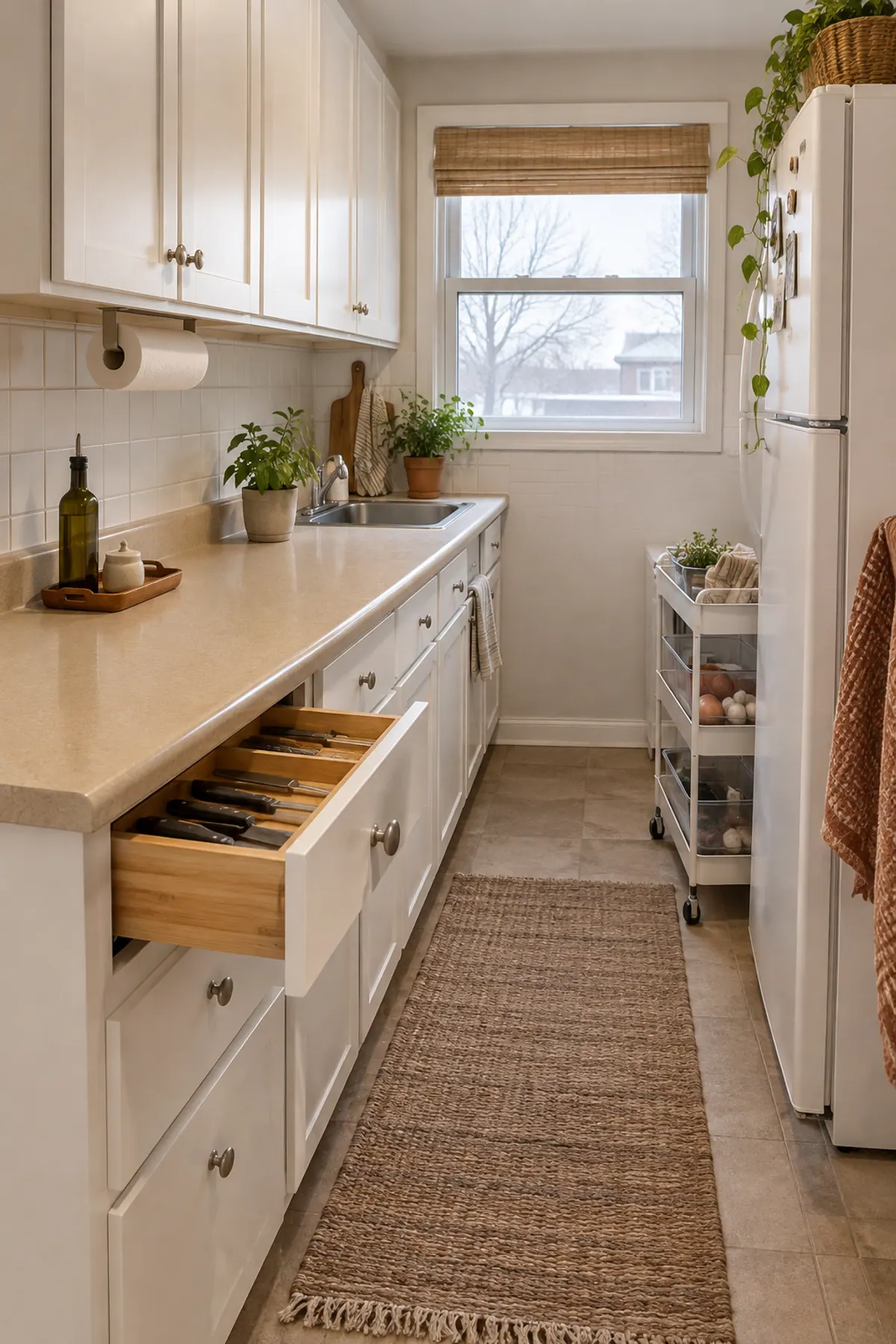
5Divide the kitchen drawer
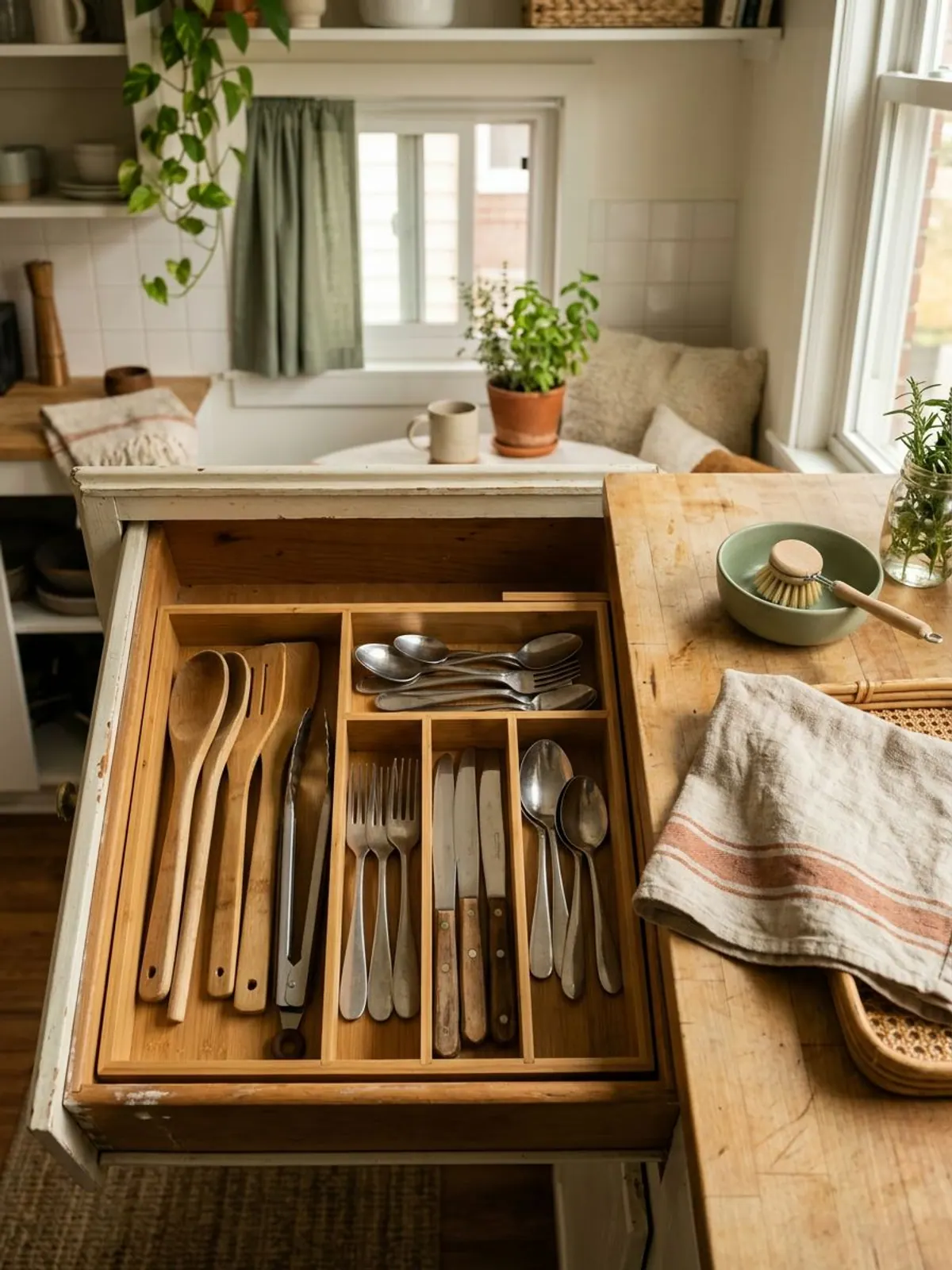
Adjustable dividers stop utensils from becoming one tangle and often free up a second drawer.
Measure first:
Inside drawer width, depth and height. Our kitchen organization ideas show more layouts.
Typical cost:
About $12 to $30
- Cut a non-slip liner to fit before you put the dividers in.
Sorts utensils and frees space.
6Double a cabinet shelf with a riser
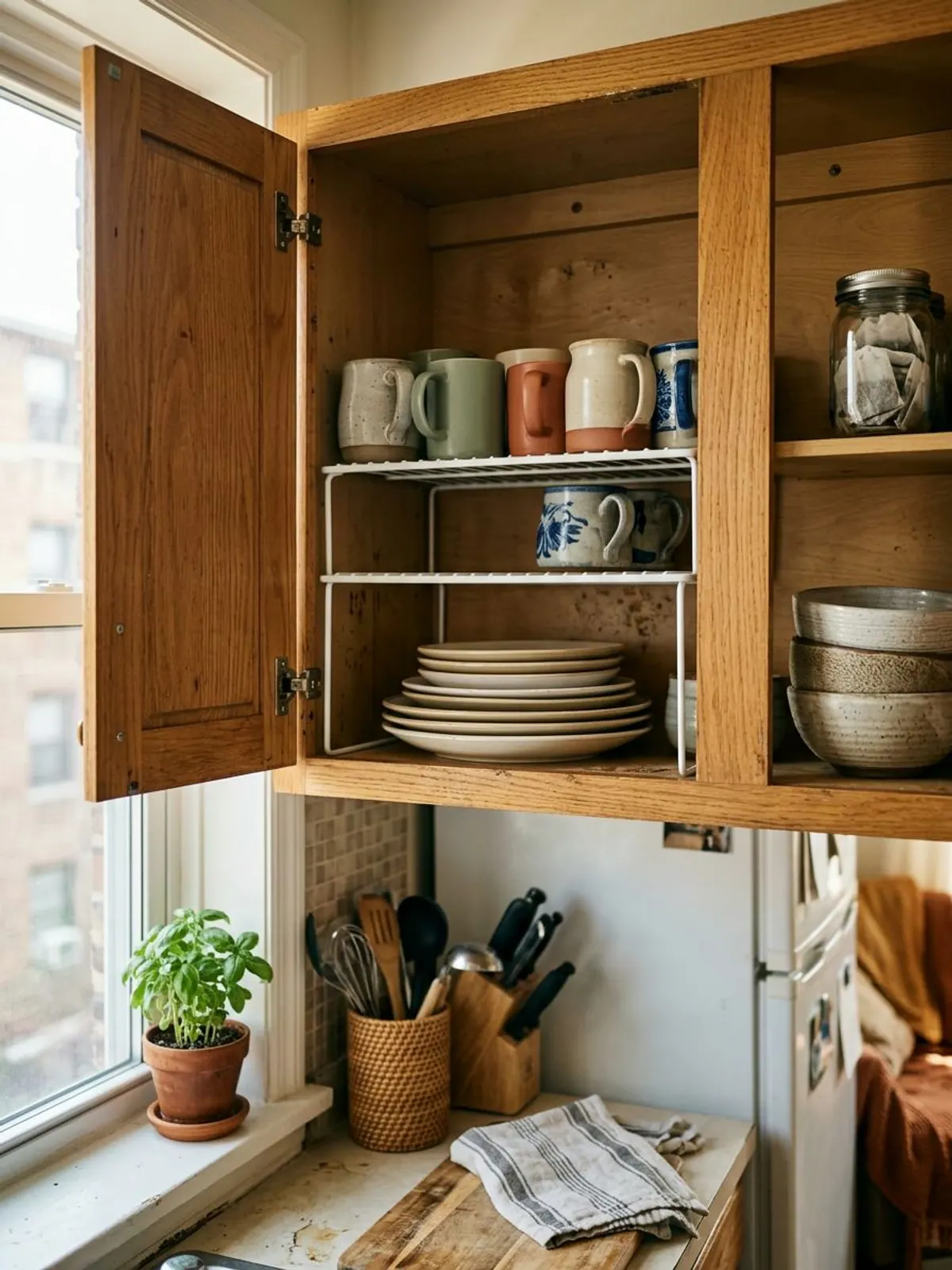
A wire riser stacks mugs or plates in one cabinet, so the shelf below the cabinet is not wasted.
Measure first:
Shelf depth and the clear height between shelves. Leave a finger of space above the top stack.
Typical cost:
About $10 to $25
- Put heavier plates on the bottom shelf and light mugs on top.
Doubles shelf capacity.
7Use the gap beside the fridge
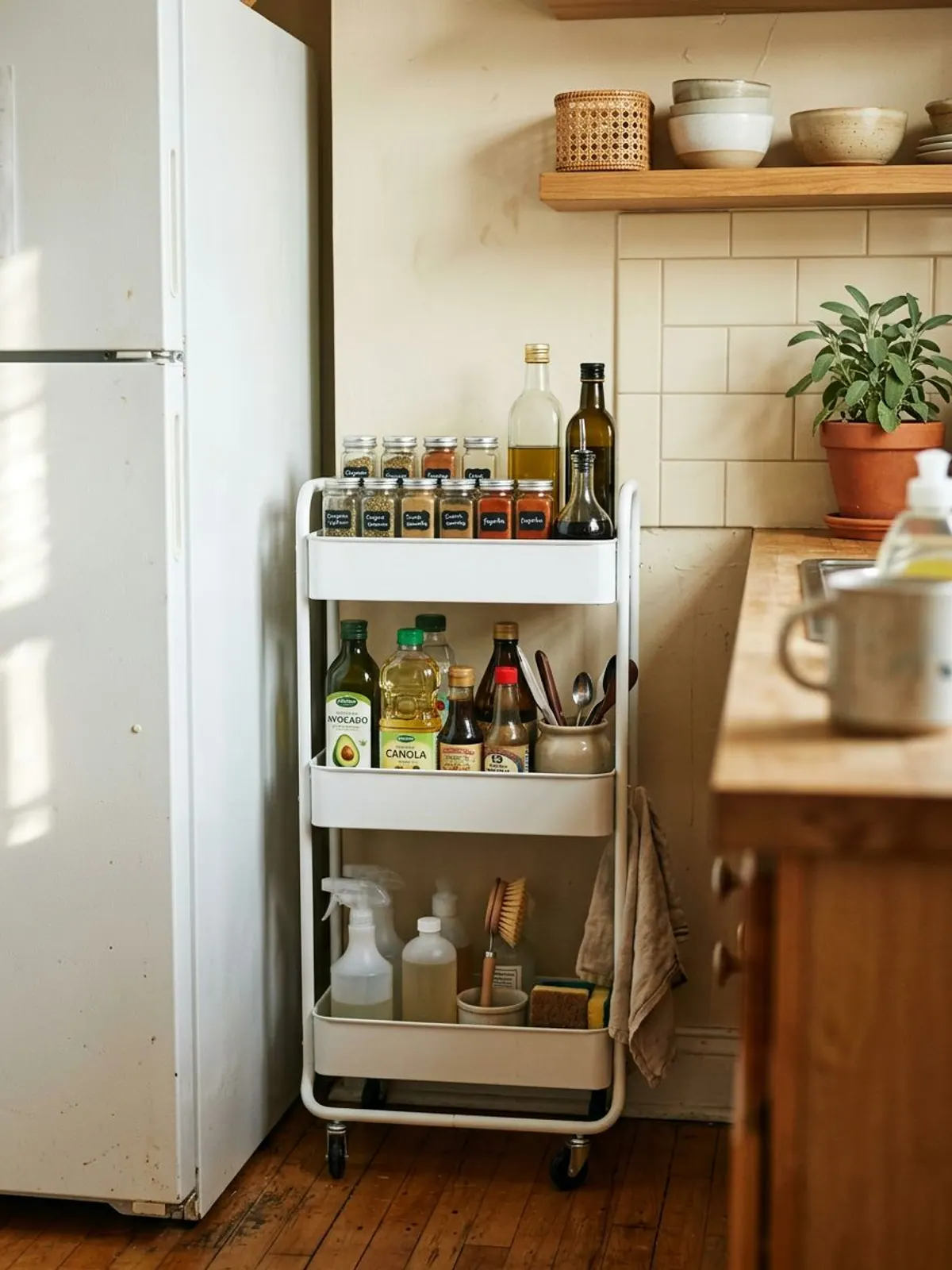
Most kitchens have a 6 to 9 inch gap next to the fridge or stove. A slim rolling cart turns it into a pantry.
Measure first:
Width of the gap at the floor and at the top, and whether the fridge door clears the cart.
Typical cost:
About $25 to $55
- Keep a gap of an inch or two on the stove side, and do not store anything flammable beside it.
Fits a narrow gap next to the fridge.
8Put spices on the side of the fridge
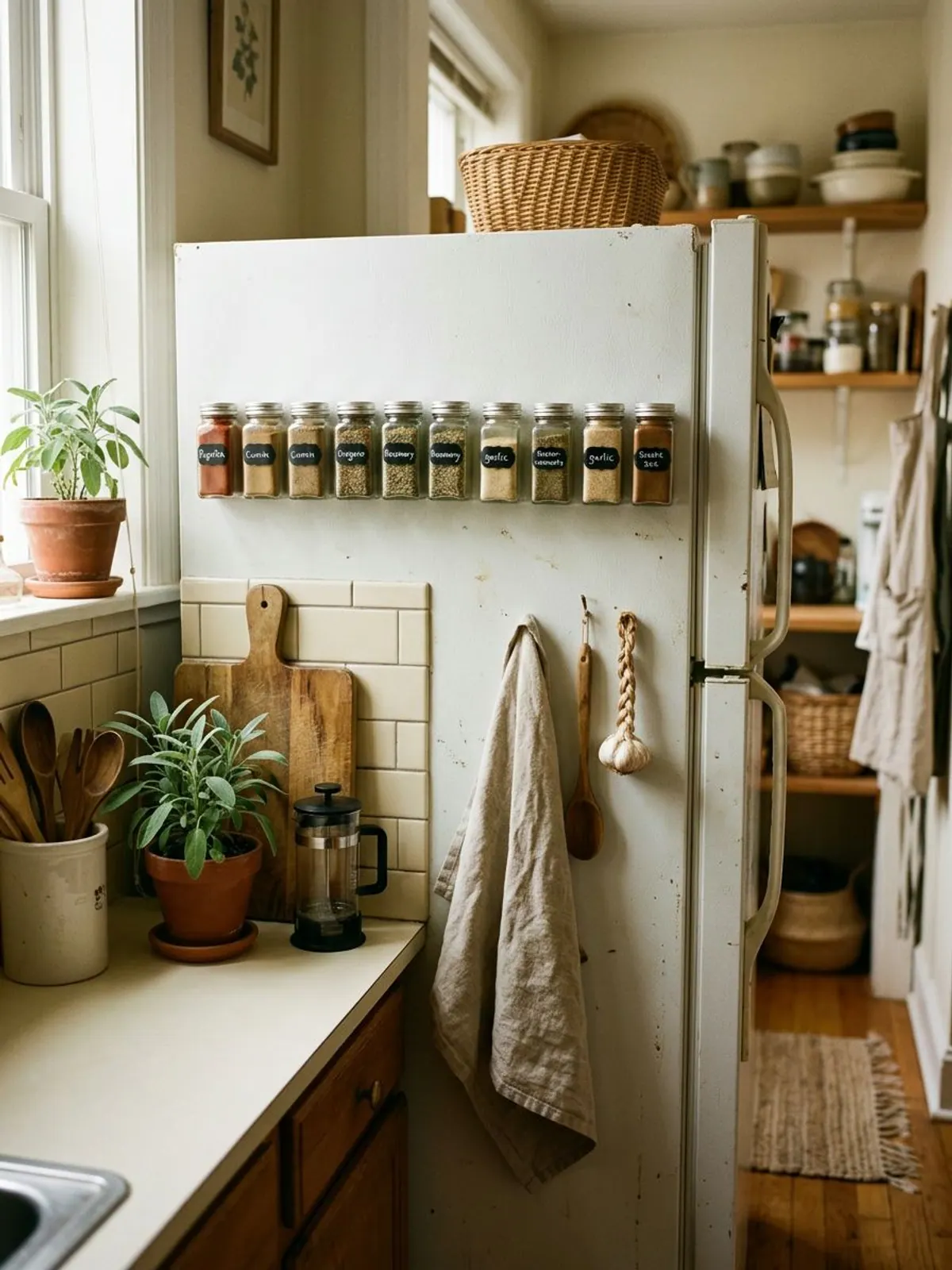
Magnetic jars or a magnetic shelf free a cabinet shelf. Check that your fridge side is steel and not wrapped in plastic.
Measure first:
Fridge side width and whether the fridge pulls out. A magnet test takes 5 seconds.
Typical cost:
About $15 to $35
- Keep only the five spices you use most on the fridge, and the rest in a drawer.
Frees a shelf.
9Sort the fridge with clear bins
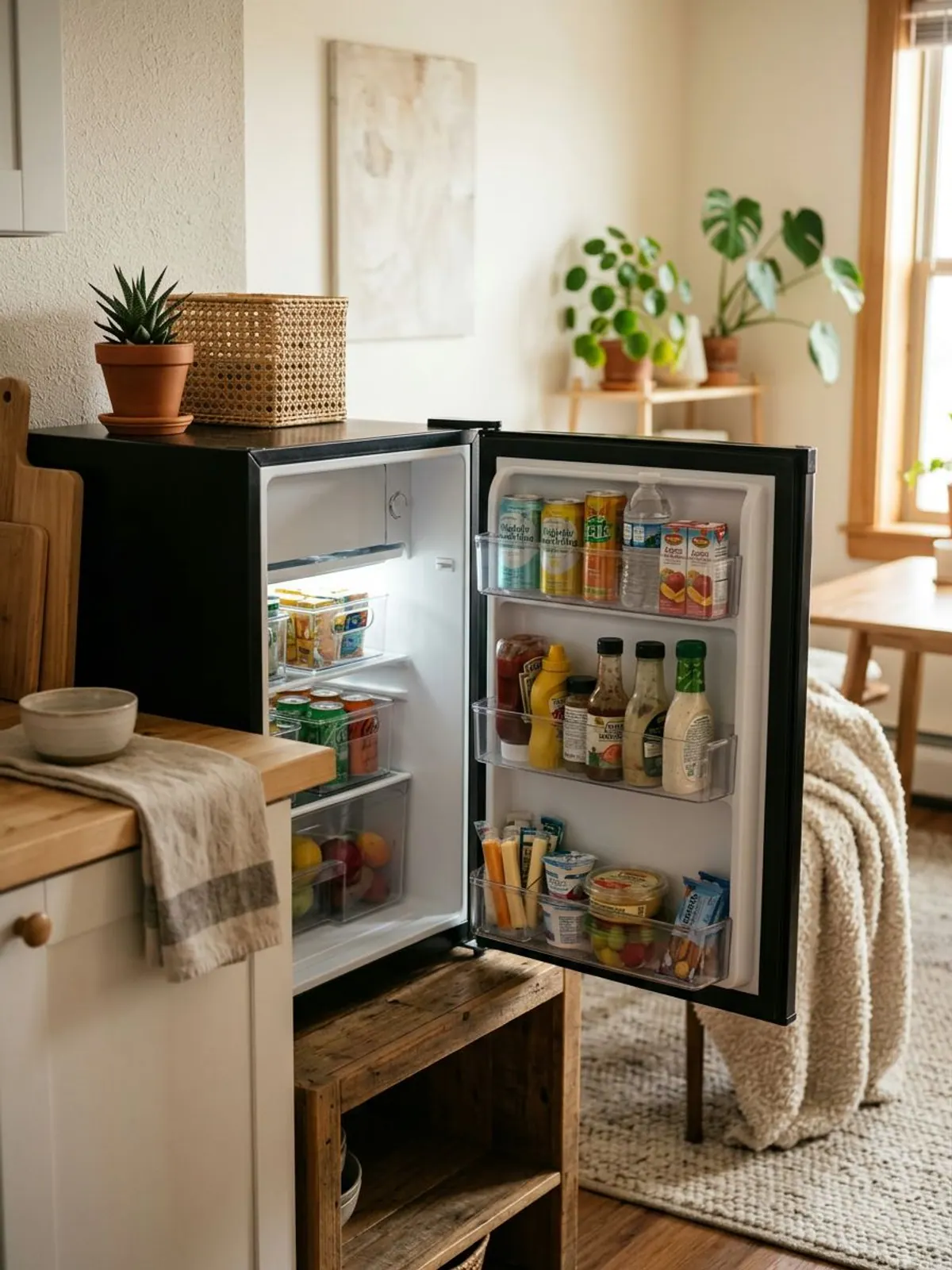
Clear bins group drinks, condiments and snacks, so you see what you have and stop buying duplicates.
Measure first:
Shelf height inside the fridge and the door storage depth.
Typical cost:
About $15 to $35
- Wash bins with warm soapy water on a regular basis.
Keeps small fridges sorted.
Entry, living room and bathroom hacks
10Hang everything on the back of a door
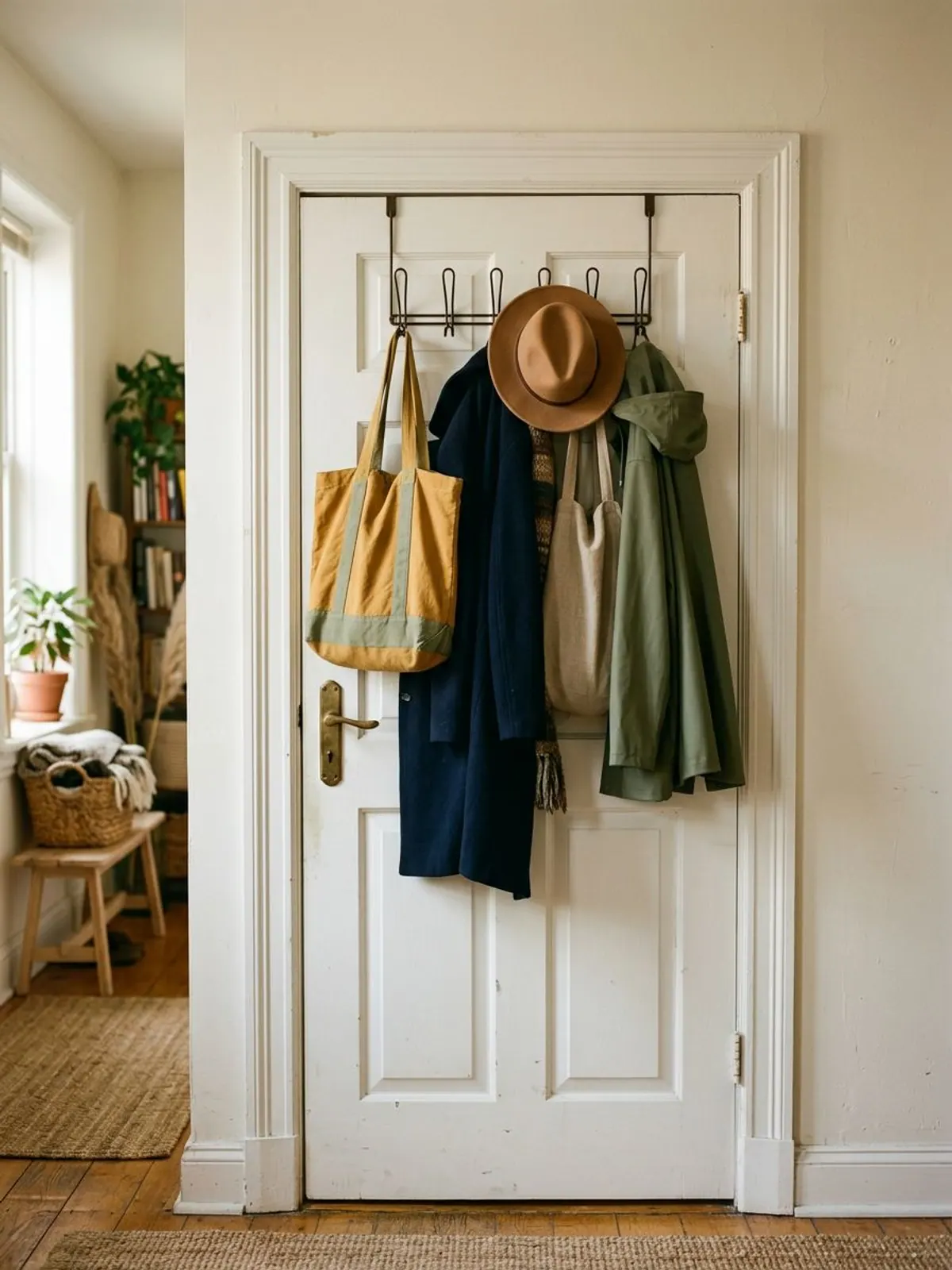
The back of a door is free wall space. An over-the-door rack takes coats, totes and hats with no screws.
Measure first:
Door thickness, which is often about 1.375 inches on interior doors, and whether the door still closes.
Typical cost:
About $12 to $30
- Pad the top hooks with a bit of felt so the door finish stays smooth.
Adds hooks with no drilling.
11Stack the shoes
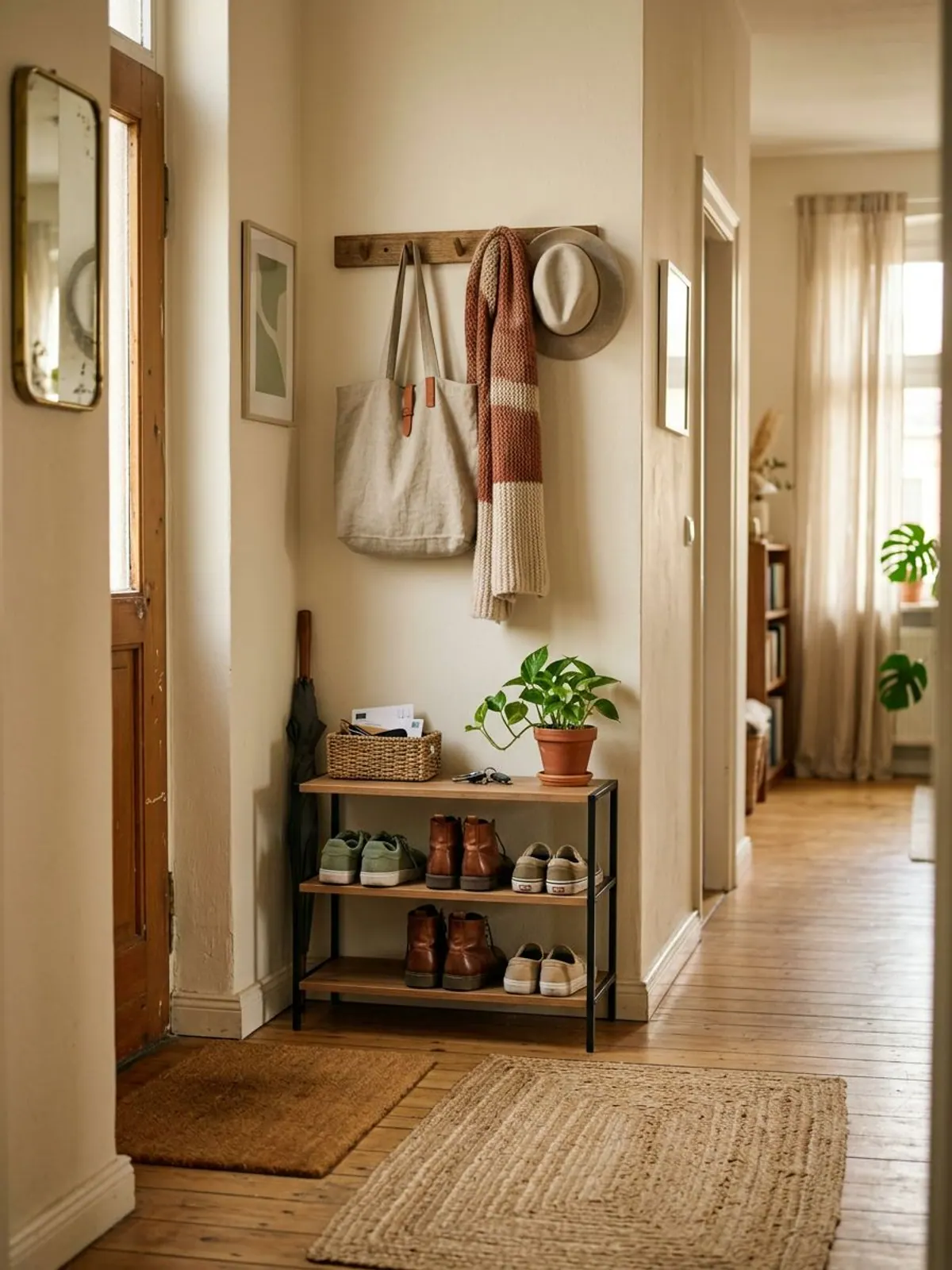
A slim stackable rack keeps shoes in a tidy column. Our shoe storage ideas cover more options.
Measure first:
Width of the entry wall and the height of your tallest boots.
Typical cost:
About $20 to $45
- Put your daily shoes on the top level for easy reach.
Fits a narrow wall.
12Stick on hooks where there are none
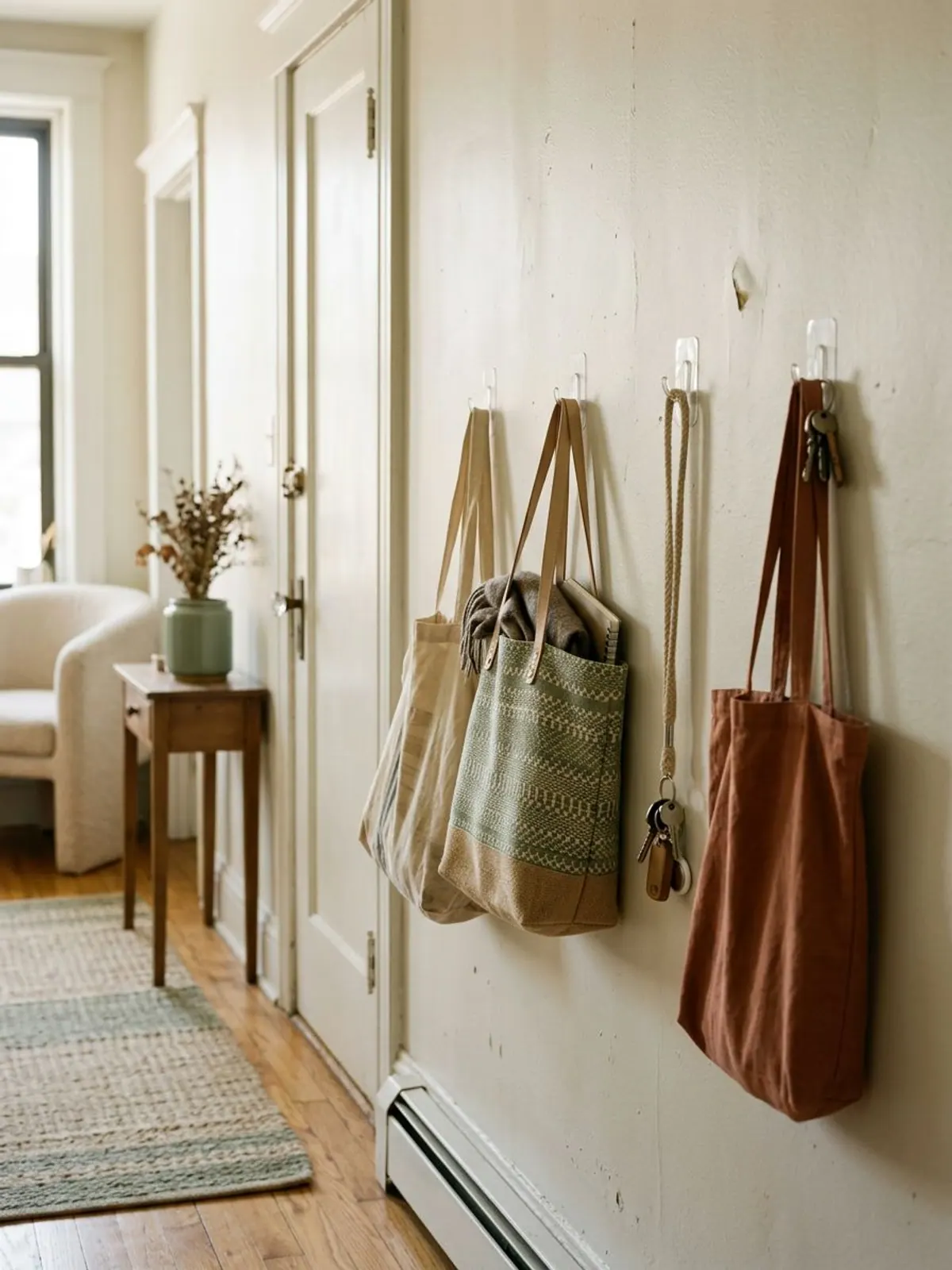
Removable adhesive hooks hold bags, keys and light items. Follow the label for how long the strip needs to set before you hang weight.
Measure first:
Hook weight rating and the wall finish. Test on a hidden spot, because peeling paint is a real risk.
Typical cost:
About $8 to $20
- Use two hooks side by side for anything heavier than the rating on one.
Hooks with no holes.
13Fold the dining table away
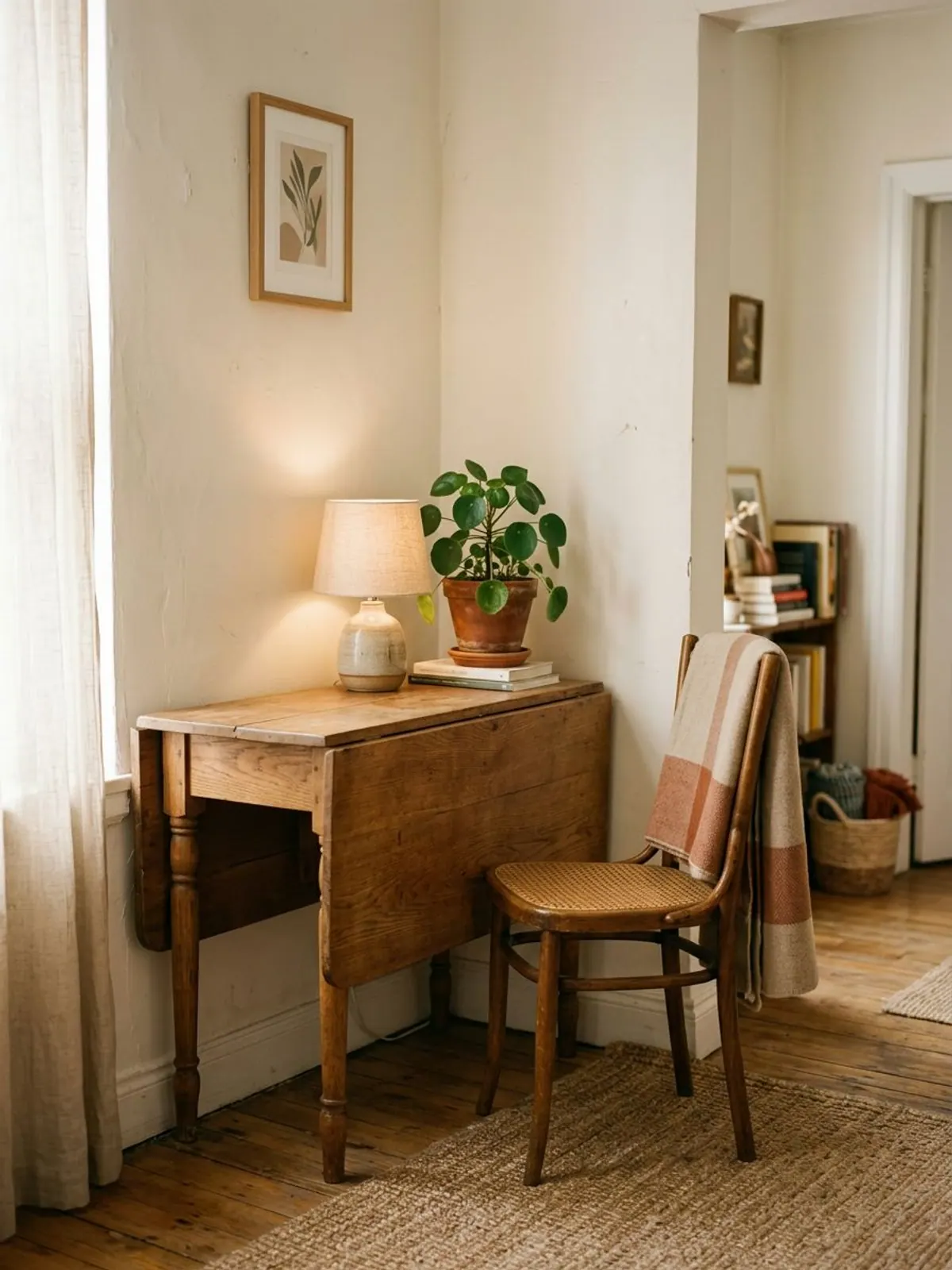
A drop-leaf or folding table gives you a table for dinner and a clear floor the rest of the day.
Measure first:
Table size open and closed, and the clearance behind the chairs, about 30 inches if you can.
Typical cost:
About $60 to $160
- Choose one with locking leaf supports.
One table, two sizes.
14Lean a ladder shelf in a corner
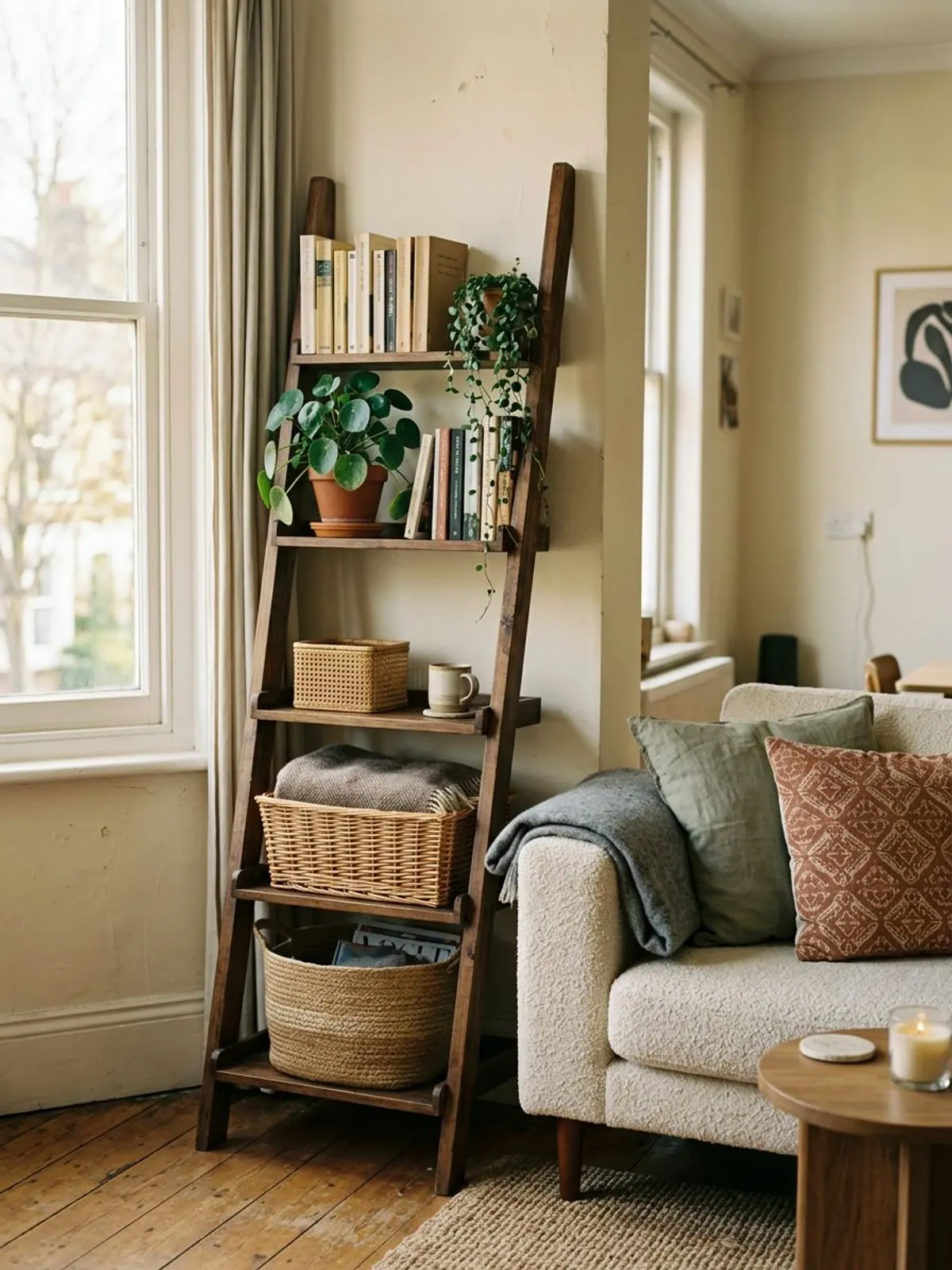
A ladder shelf adds vertical storage without wall holes. It leans on the wall, so the footprint stays small.
Measure first:
Floor depth at the base and the ceiling clearance. Keep heavy items on the bottom shelf.
Typical cost:
About $45 to $110
- Anchor tall furniture with a removable strap if you have kids or pets.
Adds vertical storage.
15Use the space over the toilet
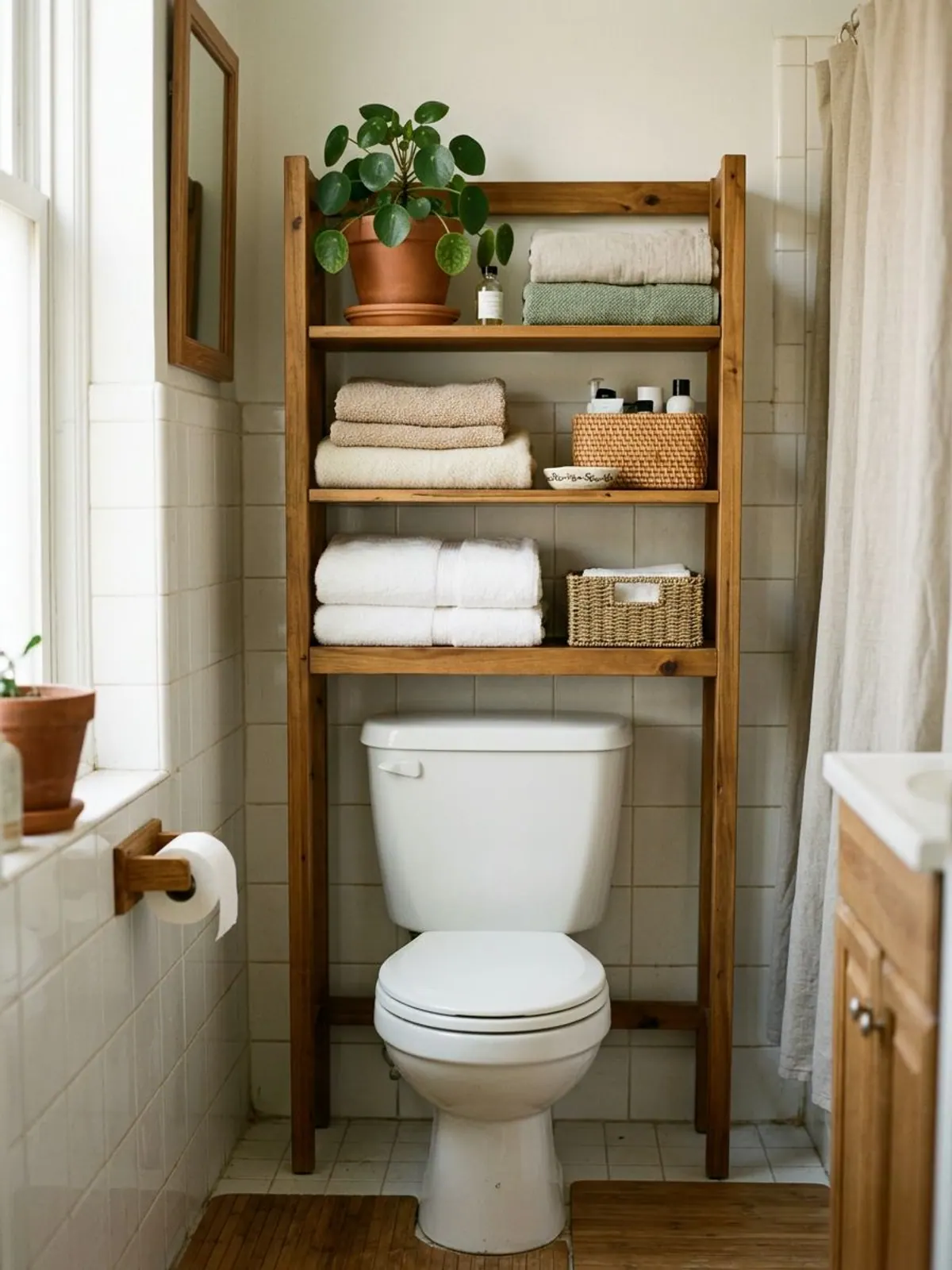
A freestanding shelf over the toilet holds towels and baskets with no screws. Our over-the-toilet storage guide has more.
Measure first:
Tank width, the toilet's total height and the space to the wall.
Typical cost:
About $35 to $90
- Keep the top shelf light, because most are rated for a small load.
Adds towel storage.
16Fold the laundry hamper flat
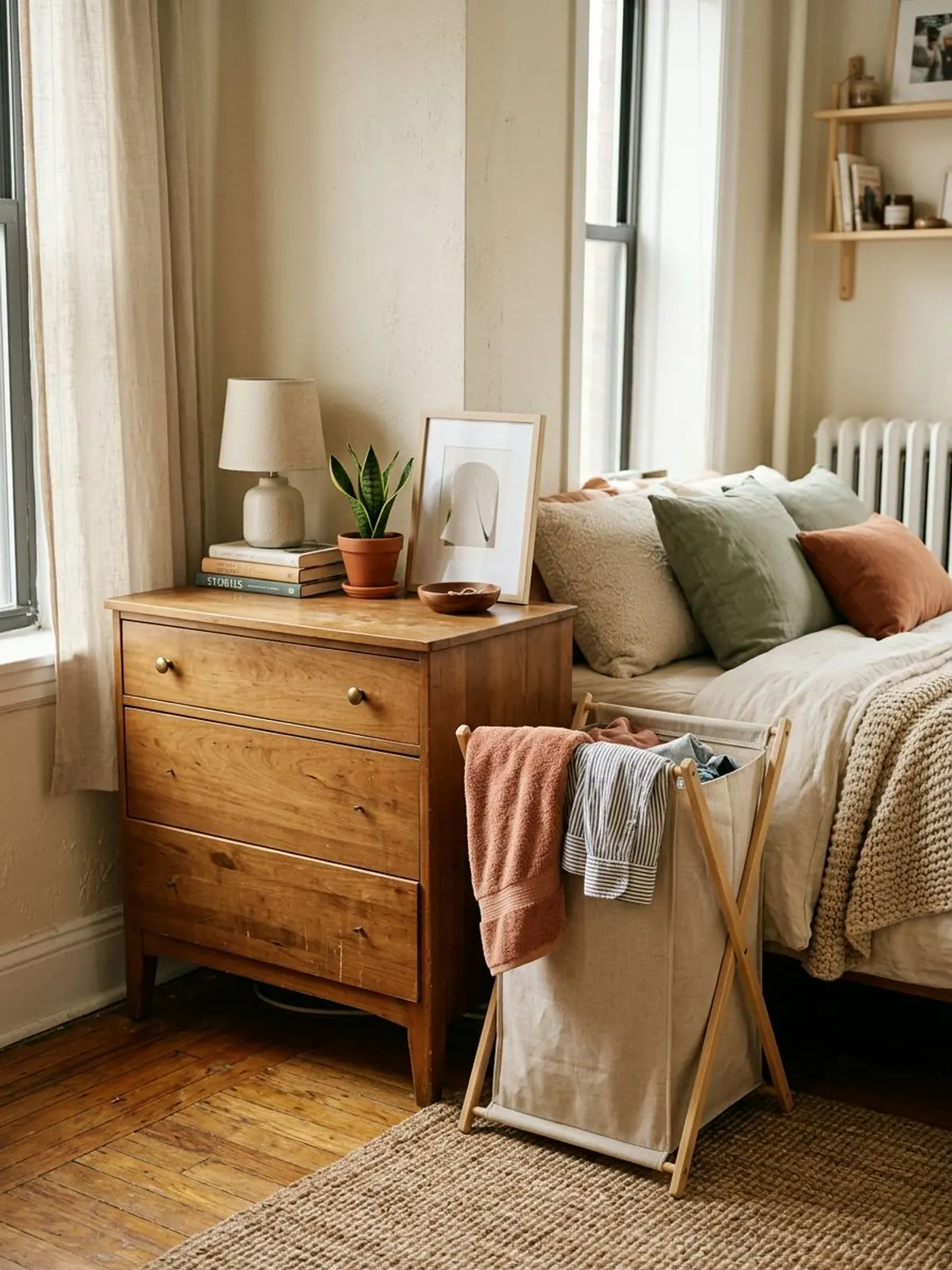
A collapsible hamper folds flat and stands in a narrow gap, so it does not take permanent floor space.
Measure first:
Gap width beside the dresser or closet door and the height.
Typical cost:
About $12 to $30
- Look for a frame with a mesh lining so damp items can dry.
Fits narrow gaps.
Which hacks to buy first
| Budget | Start with | Why |
|---|---|---|
| Under $15 | Adhesive hooks, a cabinet riser | Cheap, and they solve a problem today |
| $15 to $40 | Tension shelf, drawer dividers, over-the-door rack, hanging organizer | The most space for the money |
| $40 and up | Ladder shelf, folding table, rolling cart | Furniture-sized gains that need a measured spot |
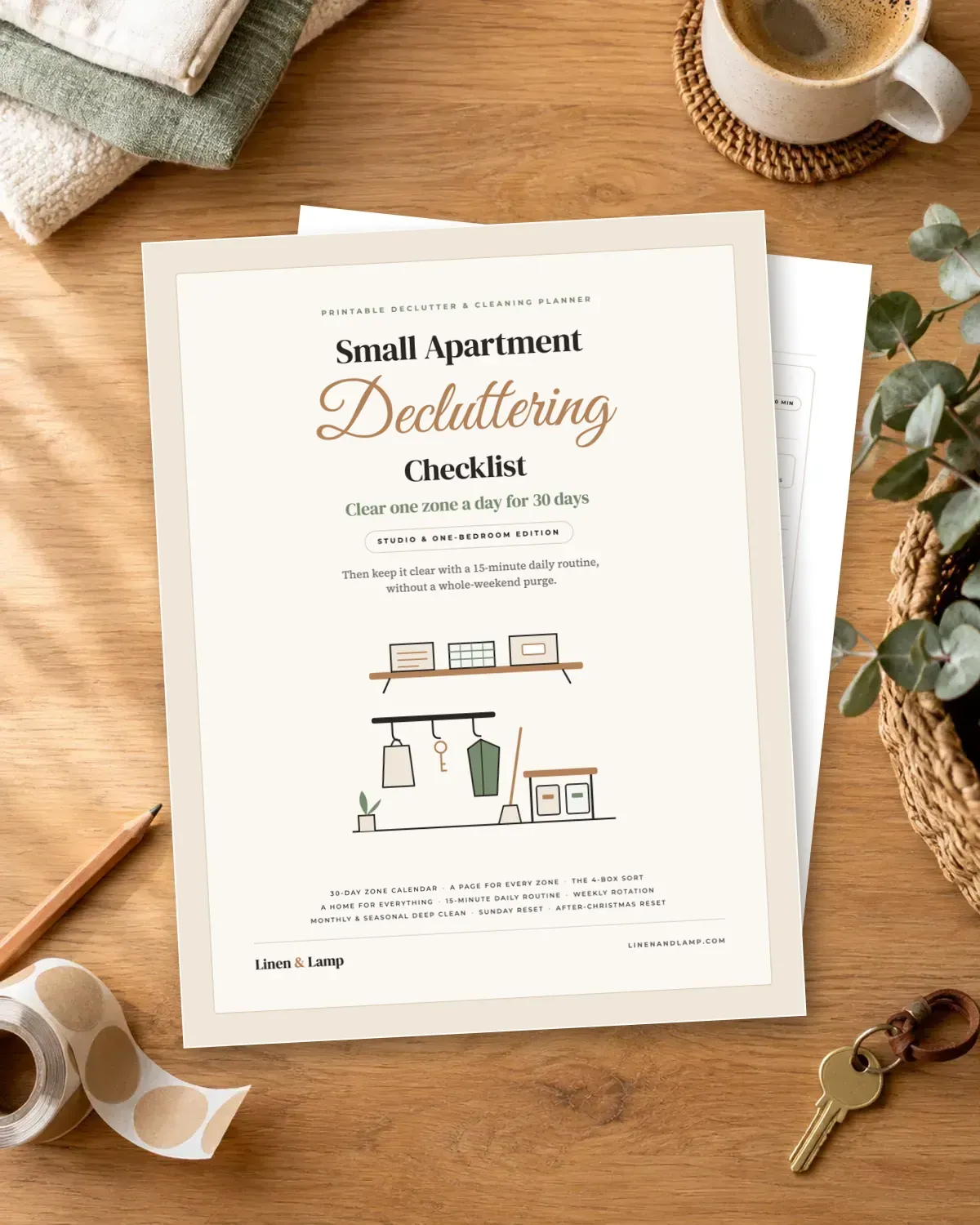
Not sure where your biggest gain is? Clear the clutter first: the small apartment decluttering checklist shows what to remove before you buy storage, and our apartment decor ideas cover making the room feel bigger.
The 30-Day Declutter Reset turns this into one zone a day, and the Whole Apartment Bundle adds a layout kit and hosting planner for the whole home.
Before you click buy
Shop the look
Product types used above. We have not tested these hands-on.
Best first buys for a small apartment
- Start here
Over-the-door hook rack
Typically $12 to $30
Biggest gain for the lowest cost.
Check price on Amazon for Over-the-door hook rack -
Adjustable drawer dividers
Typically $12 to $30
Quick kitchen win.
Check price on Amazon for Adjustable drawer dividers -
Rolling under-bed storage bins
Typically $20 to $45
Uses dead space.
Check price on Amazon for Rolling under-bed storage bins -
Expandable tension shelf
Typically $15 to $35
Second shelf in a closet.
Check price on Amazon for Expandable tension shelf -
Removable adhesive wall hooks
Typically $8 to $20
Hooks with no holes.
Check price on Amazon for Removable adhesive wall hooks
Frequently asked questions
What is the best way to maximize space in a small apartment?
Use dead space first: the back of doors, under the bed, beside the fridge and above the toilet. Then add vertical storage and furniture that does two jobs.
What small apartment hacks work for renters?
Tension shelves, over-the-door racks, freestanding shelves, removable adhesive hooks and under-bed bins need no drilling and come off clean at move-out.
How much should I spend on storage for a small apartment?
Start under $50 with hooks, a door rack and drawer dividers. Add a ladder shelf or a rolling cart once you have measured a spot for it.
Do removable adhesive hooks damage walls?
They can, especially on fresh paint or wallpaper. Follow the package instructions, test a hidden spot and remove them slowly at a low angle.
Should I declutter before buying storage?
Yes. Remove what you no longer use first, then measure what is left, so you buy only the storage you need.
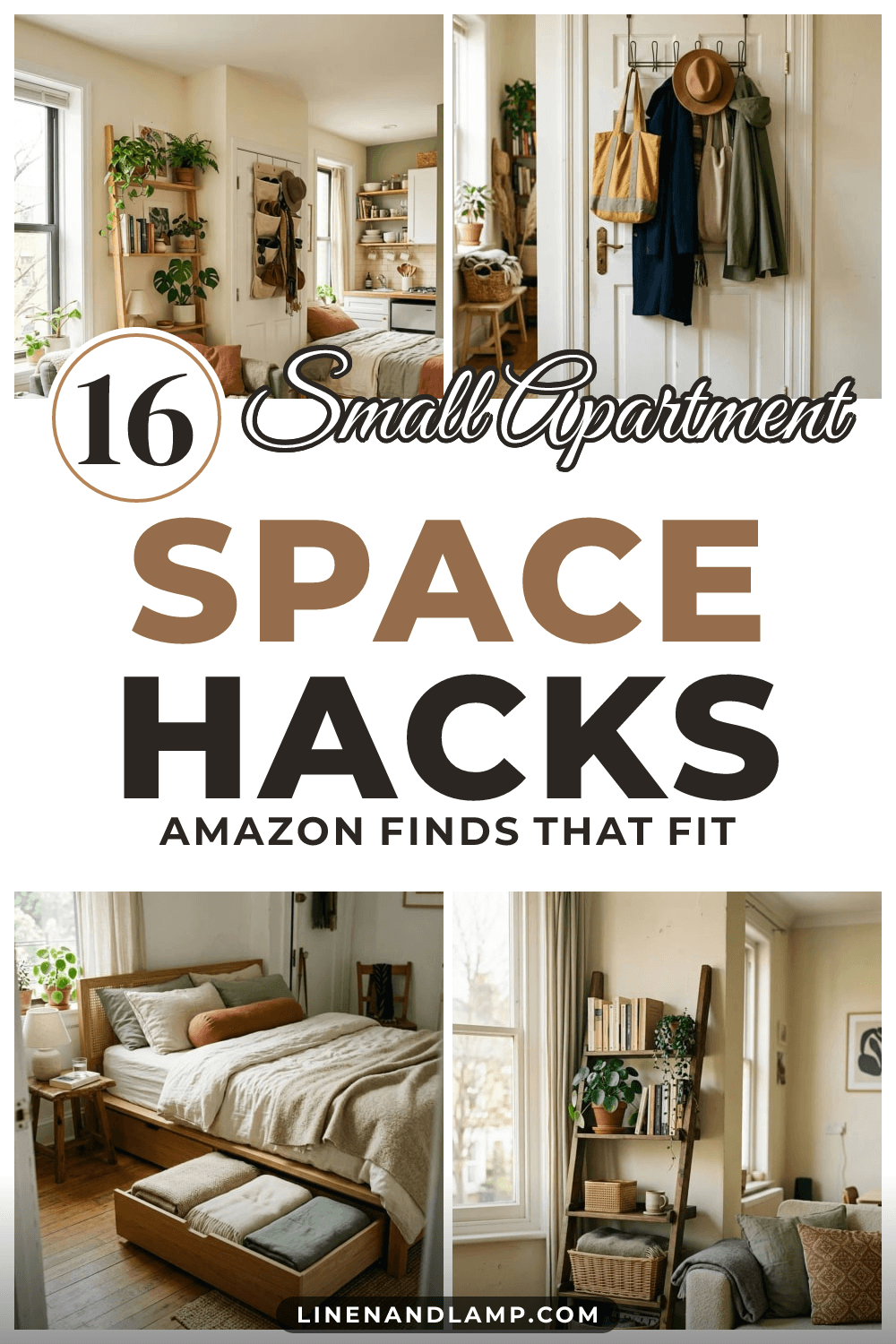
Save it for later
Pin this to your Small-Space Living board so it's there when you need it.
Save to Pinterest